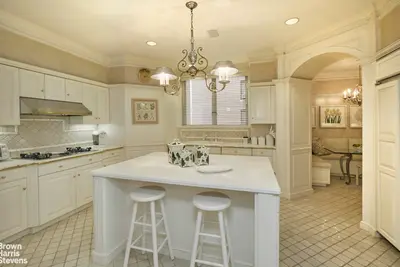
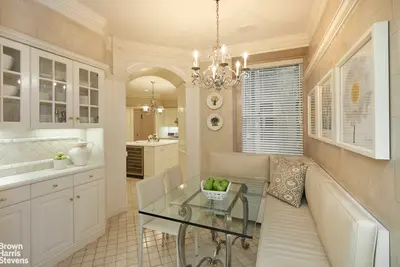
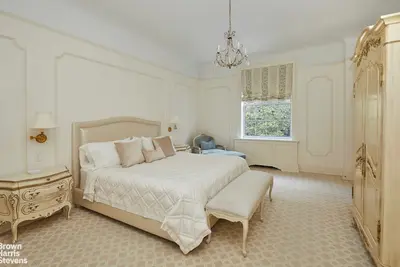
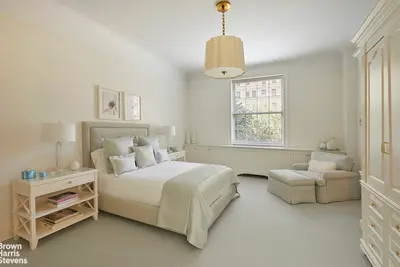
960 Park Avenue

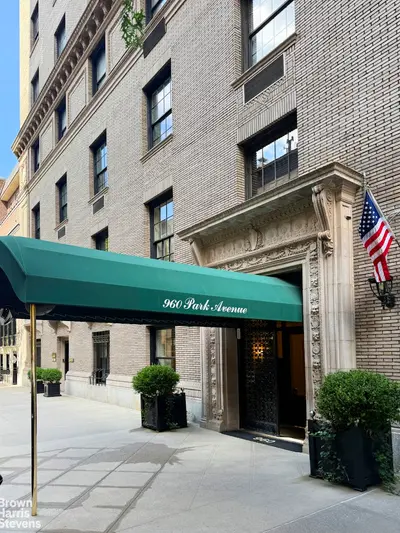
At the Northwest corner of 82nd Street
FOR MORE INFORMATION ABOUT 960 Park Avenue
Contact us about buying or selling an apartment in 960 Park Avenue .
Email Us OR Call (212) 755-5544


960 Park Avenue: CARTER'S REVIEW


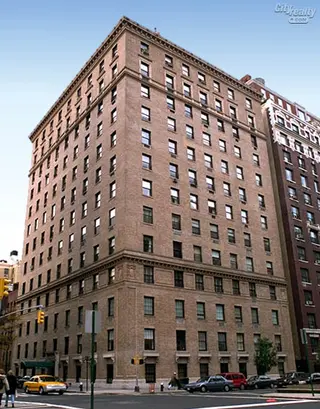
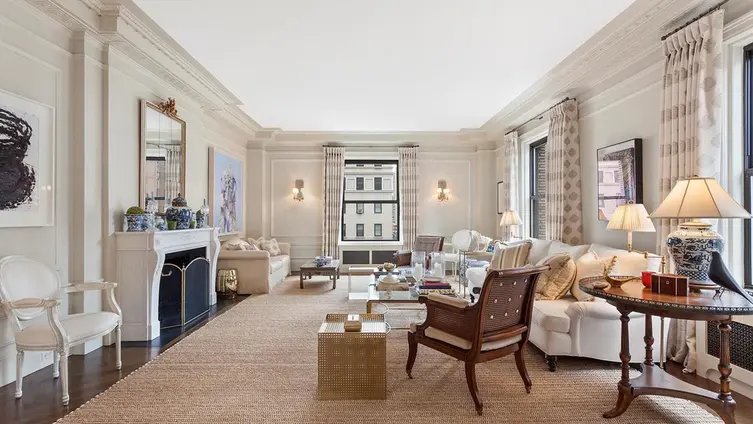
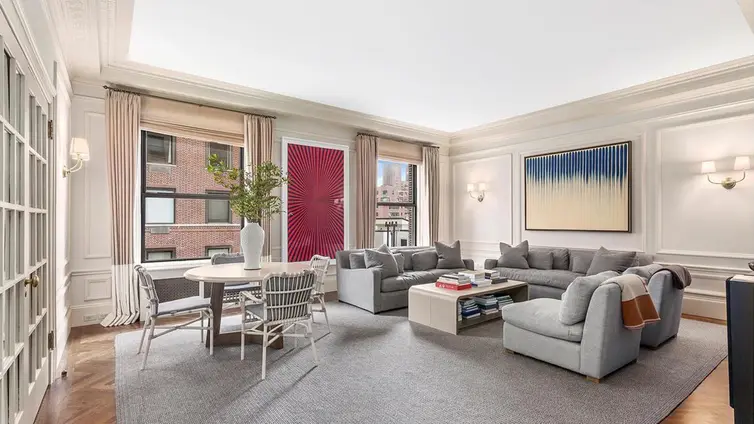
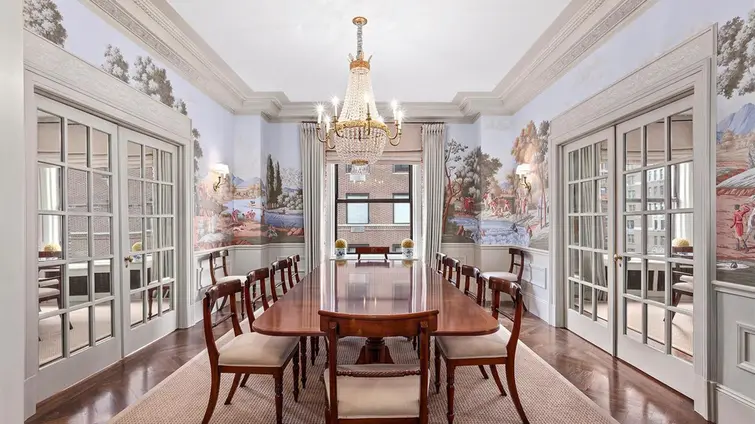
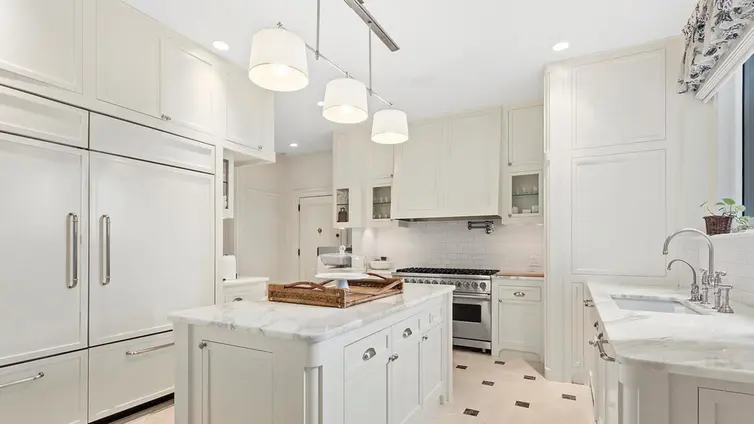
Erected in 1912, this apartment building was converted to a cooperative in 1958. The 13-story building contains 30 apartments and has a finely detailed, light-beige brick facade with a landscaped sidestreet entrance. According to James Trager, the author of "Park Avenue, Street of Dreams," (Atheneum, 1990), The handsome building presently on the site, however, pales with what was originally planned. It is now missing balconies at the 6th and 10th floors and has an inconsistent fenestration. The Dudley Construction Company hired the architectural firm of Howells and Stokes in 1910 to design an Italian Renaissance-palazzo-style apartment building occupying the entire frontage on the west side of the avenue between 82nd and 83rd Streets. "A more impressive firm would have been hard to find. While John Mead Howells was skilled and socially well connected, his partner. Isaac Newton Phelps Stokes, was even more prosperous and well known. Stokes was an advocate of improved housing for the working classes (in 1900, he had been appointed by President Theodore Roosevelt to a commission on tenement houses) and he would later produce the massive six-volume compendium The Iconography of Manhattan Island," wrote Andrew Alpern in his fine book, "Luxury Apartment Houses of Manhattan, An Illustrated History," (Dover Publications, Inc., 1992), which devotes an entire chapter to this site. The proposed building would have 54 apartments including three duplexes and three triplexes each with their own street entrances. The building, Alpern continued, was planned with large arched entrances on the avenue and the two sidestreets and a deep service drive. Each entrance would provide elevator service to only two apartments per floor and the roof was designed to include not only a recreational area and children s playground but also laundry and drying facilities. Apartments were to have fireplaces and wainscoting and no long corridors. In addition, Alpern wrote, the building planned to provide additional storage rooms for the residents in the basement both in the building and under the sidewalk. The prospectus called for sale prices of $24,000 to $52,000 with average maintenance charges ranging from $245 to $420 per month. It mentioned that the soon-to-be-constructed Lexington Avenue Subway would add to the convenience of the building's location, noted Alpern. Two years later, however, the plans were scaled back and redone by J. E. R. Carpenter, one of the most prolific and influential residential architects of his generation, in collaboration with D. Everett Waid. Carpenter's other Park Avenue buildings include 550, 580, 625, 630, 635, 640, 655, 812, 950, and 1050. His Fifth Avenue buildings include 810, 825, 907, 920, 950, 988, 1030, 1035, 1060, 1115, 1120, 1143, 1150, 1165 and 1170 as well as 2 East 66th Street. Robert A. M. Stern, Gregory Gilmartin and Thomas Mellins in their book, "New York 1930, Architecture and Urbanism Between The Two World Wars," (Rizzoli International Publications, Inc., 1987), suggest that Waid "may have been responsible for the building's gentle aesthetics achieved by the use of warm brick, laid with deep mortar joints." "As actually built, 960 occupies half the original lot with a more conventional luxury apartment house of 12 stories. This structure was designed with two apartments to a floor, but most of these have since been cut in half," Alpern wrote. The redesign by Carpenter and Waid used long halls in the apartment layouts. The building is close to several schools including P. S. 6 on Madison Avenue, one of the city's top-rated public schools. The express subway station is a few blocks away at 86th Street and Lexington Avenue, but a more important attraction for this building is that the major entrance to the Metropolitan Museum of Art is two blocks to the west and this neighborhood is one of the most desirable in the city.


BUILDING SUMMARY
  • Cooperative
  • Built in 1915
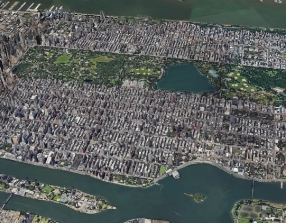
  • Located in Carnegie Hill
  • 81 apartments
  • 12 floors
FEATURES & AMENITIES
  • FT Doorman
  • Pre War
  • Elevator
PROS & CONS
PROS
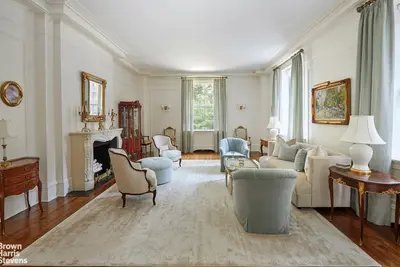
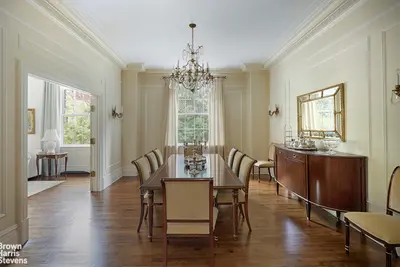
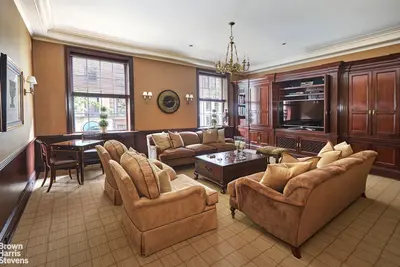
  • Large apartments
  • Prime location
  • Doorman
  • Convenient to the Metropolitan Museum of Art and schools
  • Finely-detailed masonry
  • Lanscaped sidestreet entrance

CONS
  • No sundeck
  • No garage
  • Missing balconies on the 6th and 10th floors
  • Inconsistent fenestration
  • No health club
  • Some traffic

SPONSORED BY

Comments or questions? · Phone: 212.755.5544
Copyright © 1994-2012 CITY REALTY.COM INC. All Rights Reserved.
568 Broadway, Suite 802 New York, NY 10012
Terms of Use · Our Privacy Policy · About CITY REALTY.COM · Advertise With Us · Site Map
Developed by REOL Services


An equal housing opportunity.

All data is deemed reliable but is not guaranteed accurate by the REBNY / RLS or CityRealty. See Terms of Service for additional restrictions. All information furnished regarding New York City property for sale, rental or financing is from sources deemed reliable, but no warranty or representation is made as to the accuracy thereof and same is submitted subject to errors, omissions, change of price, rental or other conditions, prior sale, lease or financing or withdrawal without notice. All dimensions are approximate. For exact dimensions, you must hire your own architect or engineer. The number of bedrooms listed on this website is not a legal conclusion. Each person should consult with his/her own attorney, architect or zoning expert to make a determination as to the number of rooms in the unit that may be legally used as a bedroom.