- Apartments
- Overview & Photos
- Maps
- Building Specialists
- Floorplans
- Sales Data & Comps
- Similar Buildings
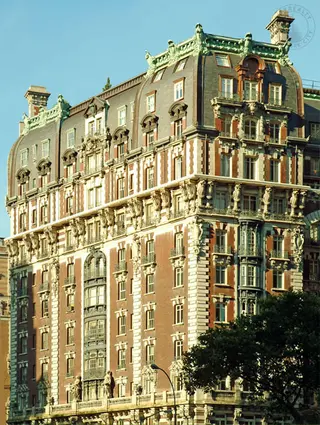
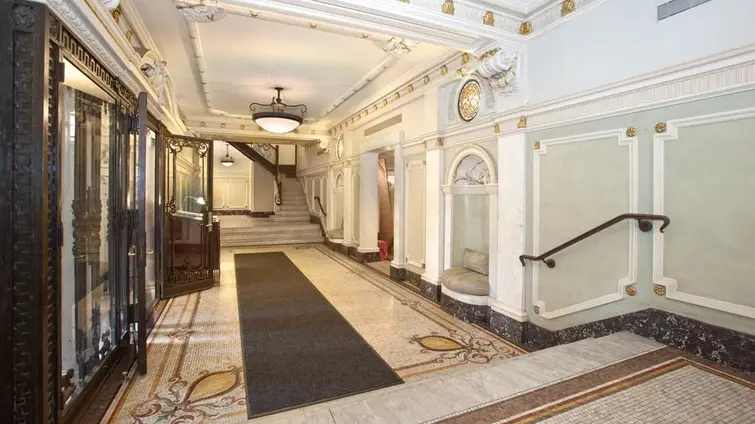
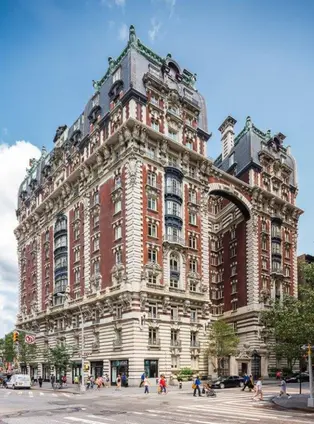
The Dorilton is a pre-war, 12-story building located on the Upper West Side of New York City, known for its grand gated entrance and landmark status. The building features a mix of Edwardian splendor with restored façade and interiors, as well as modern amenities in its apartments.

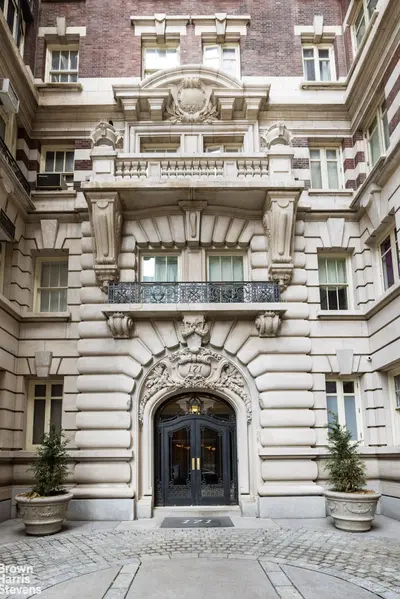
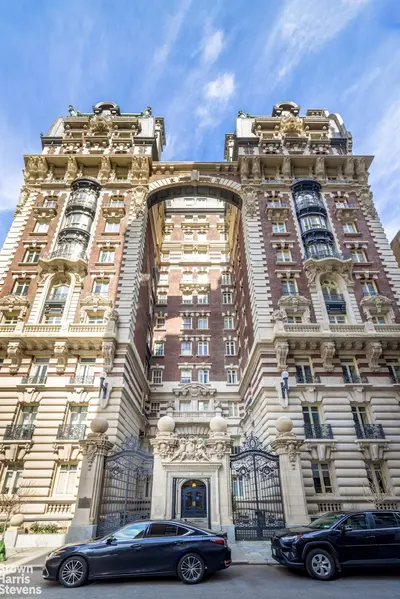
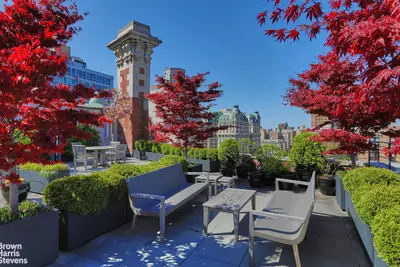
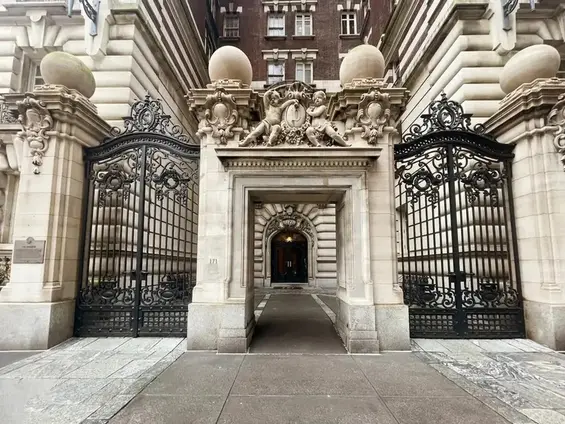
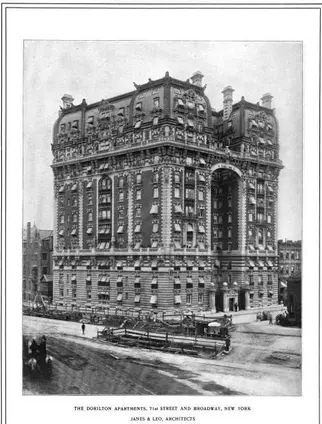
The Dorilton at 171 West 71st Street stands as one of Manhattan's most architecturally spectacular residential buildings, a Beaux-Arts masterpiece completed in 1902 that has earned both passionate admirers and fierce critics throughout its history. Designed by Elisha Harris Janes and Richard Leopold Leo for developer Hamilton M. Weed, this 12 story limestone and brick edifice features what many consider the most beautiful entrance gate in New York City, complete with ornate cast iron fencing, globe topped columns, and decorative putti. The building's flamboyant façade includes continuous balustraded balconies, sculptural figures supporting additional balconies, and a distinctive three story copper and slate mansard roof with chateau style chimneys that once housed artists' studios.
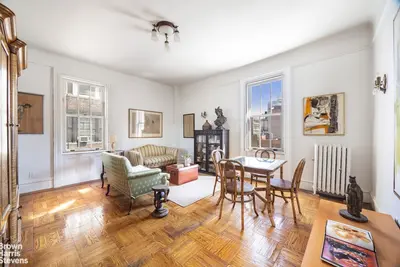
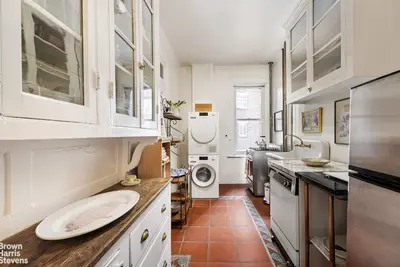
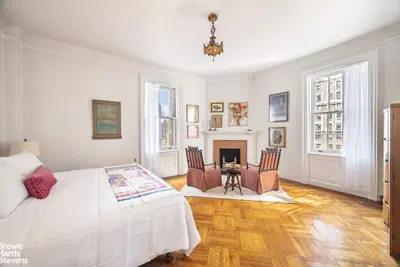
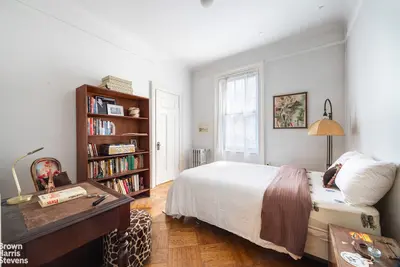
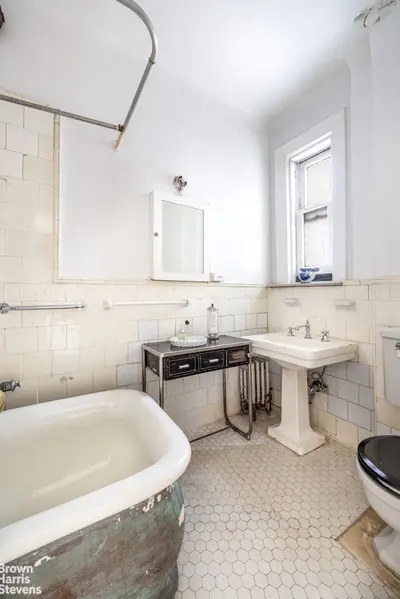
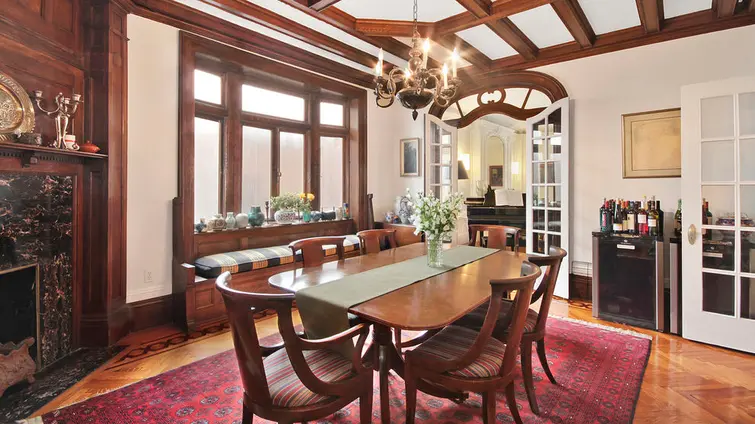
Originally containing 48 apartments, The Dorilton was converted to a co-op in 1984 and now houses 59 units after extensive restoration work that brought the building back to its Edwardian splendor. The apartments showcase a remarkable blend of original prewar details and modern amenities, with many units featuring decorative fireplaces, intricate wood molding, wainscoting, marble mantels, and projecting bay windows with Juliet balconies. Several units boast multiple exposures, formal dining rooms with beamed ceilings, libraries, and luxurious primary suites with spa like bathrooms.
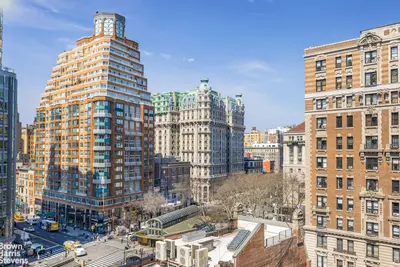
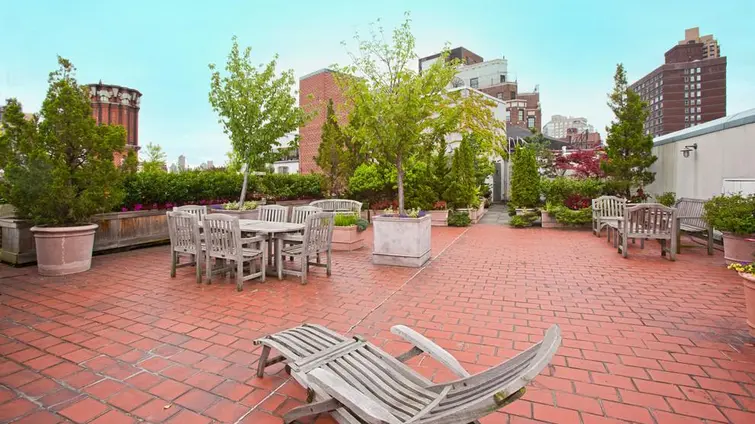
The building achieved New York City landmark status in the 1970s and has attracted notable residents including real estate mogul William Zeckendorf and actress Daryl Hannah. Despite early architectural criticism from figures like Montgomery Schuyler, who famously derided its "overblown ostentation" in 1902, The Dorilton has endured as what Robert A.M. Stern and colleagues described as expressing "the optimism of the new century" through its "intricacy and burly swagger." The full service building offers 24 hour doorman service, a landscaped roof deck, private courtyard, basement storage, and allows pets and pied-à-terres, making it one of the Upper West Side's most coveted addresses near Lincoln Center and Central Park.
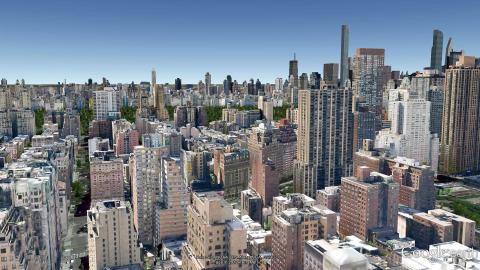
View school info, local attractions, transportation options & more.
Experience amazing 3D aerial maps and fly throughs.
For some co-ops, instead of price per square foot, we use an estimate of the number of rooms for each sold apartment to chart price changes over time. This is because many co-op listings do not include square footage information, and this makes it challenging to calculate accurate square-foot averages.
By displaying the price per estimated room count, we are able to provide a more reliable and consistent metric for comparing sales in the building. While we hope that this gives you a clearer sense of price trends in the building, all data should be independently verified. All data provided are only estimates and should not be used to make any purchase or sale decision.
Notable past and present residents at The Dorilton

 6sqft delivers the latest on real estate, architecture, and design, straight from New York City.
Like us on Facebook to keep up with the trends and
6sqft delivers the latest on real estate, architecture, and design, straight from New York City.
Like us on Facebook to keep up with the trends and 