The Heritage at Trump Place CLOSE 
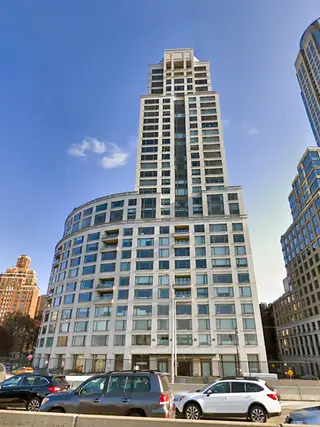
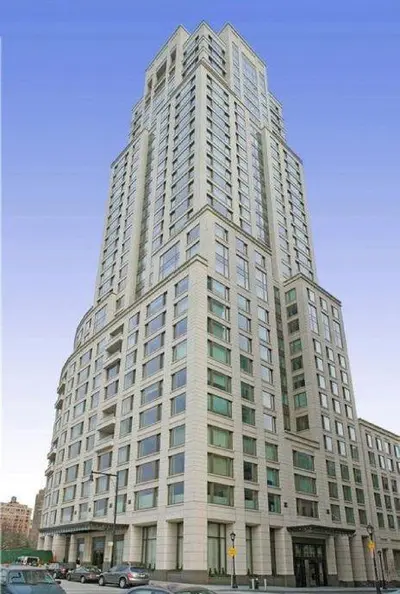
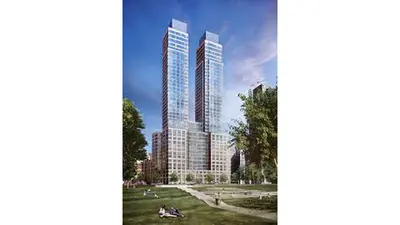
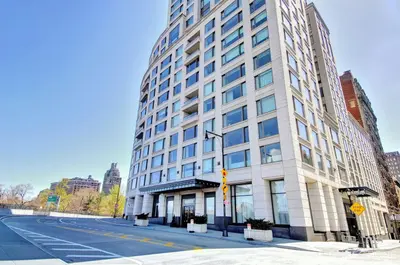
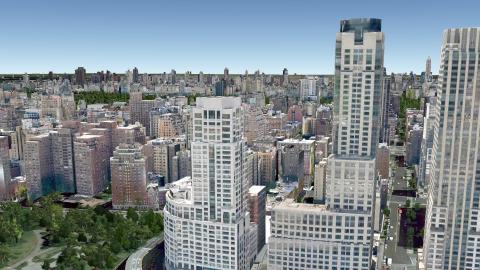
The Heritage is the very handsome, 31-story condominium apartment tower that was completed in 2005 as the northernmost building in Donald Trump's enormous redevelopment, known as Trump Place, of the former rail yards at the south end of Riverside Park.
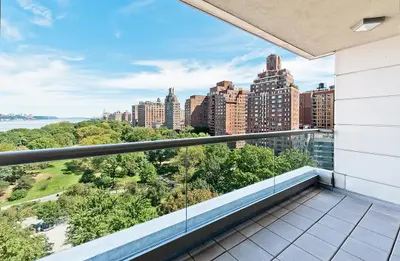
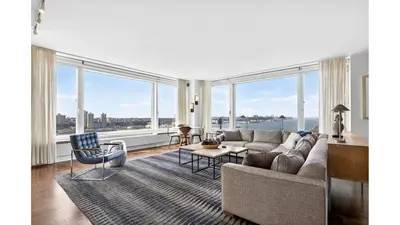
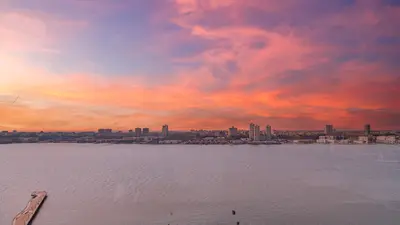
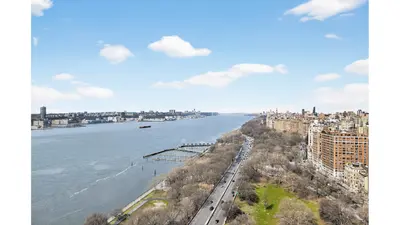
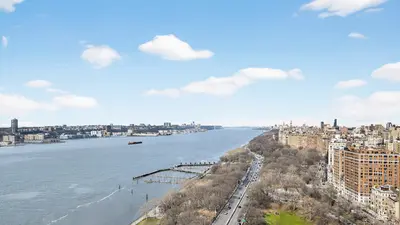
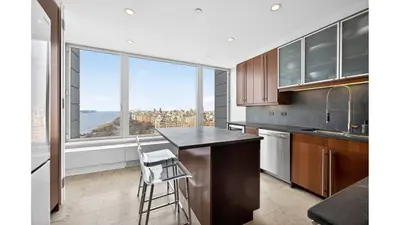
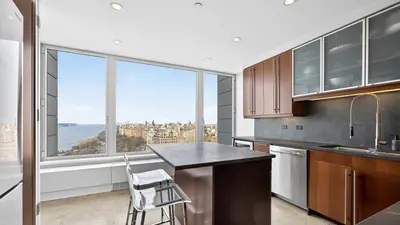
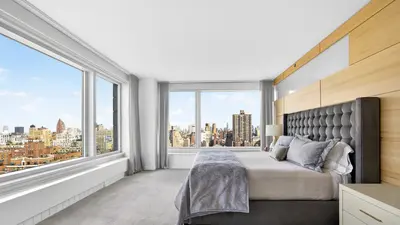
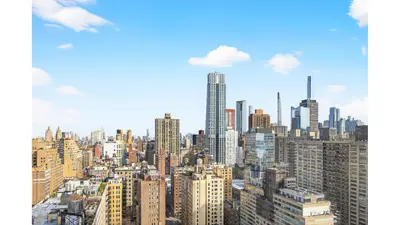
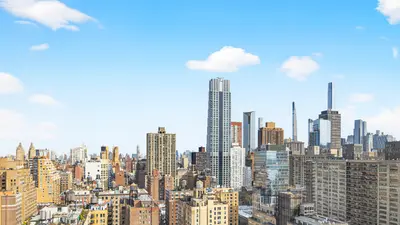
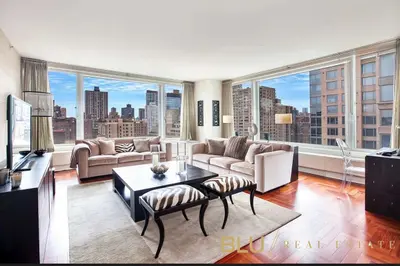
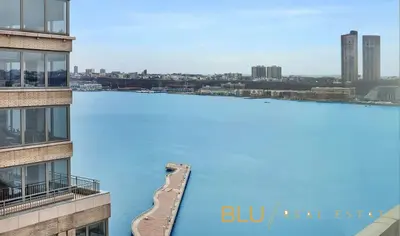
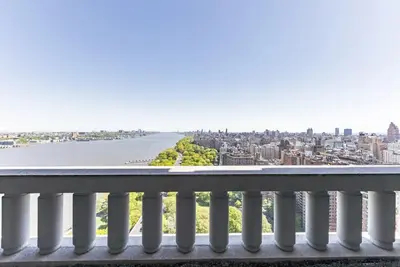
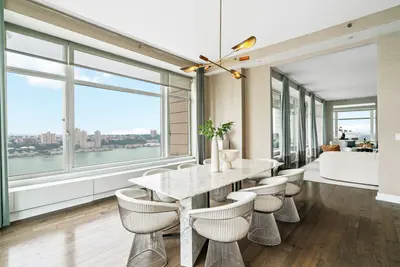
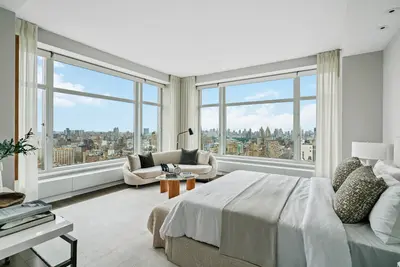
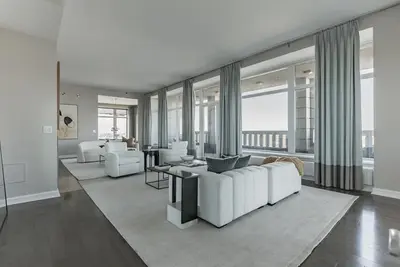
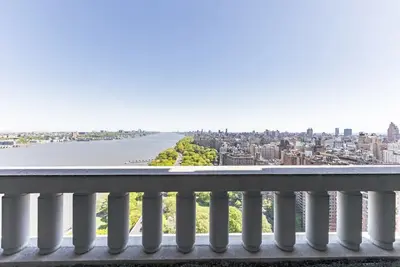
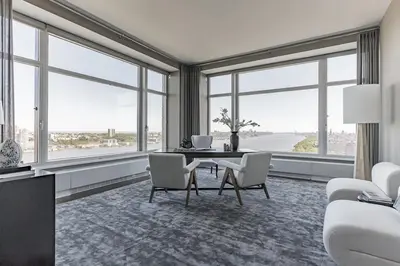
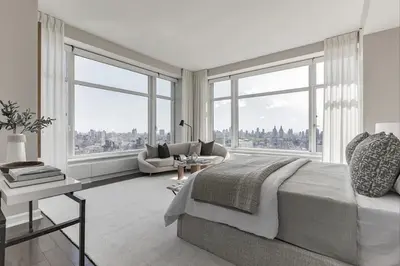
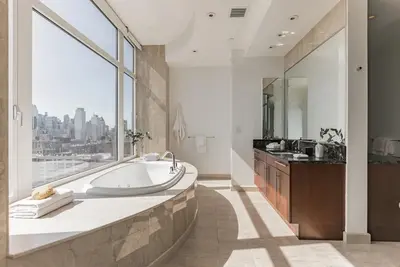
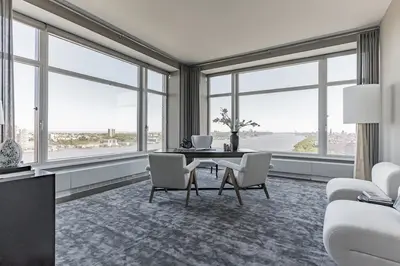
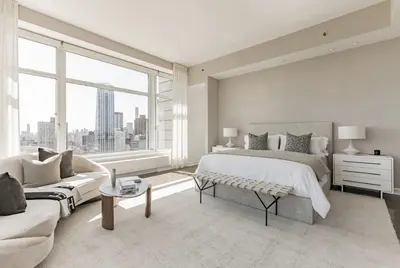
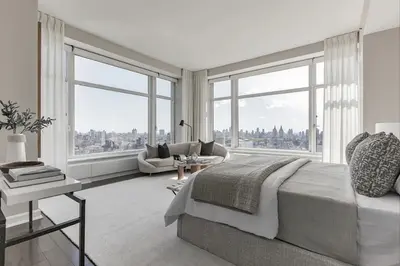
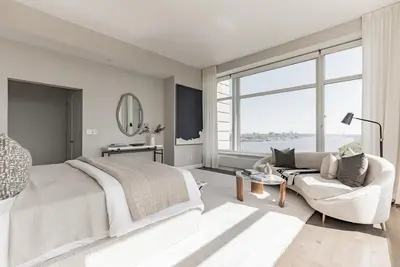
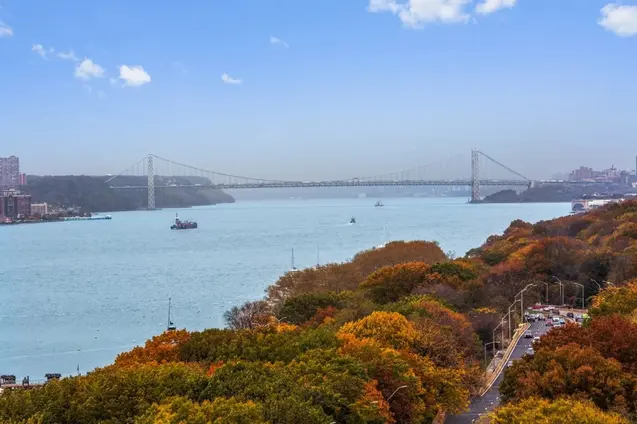
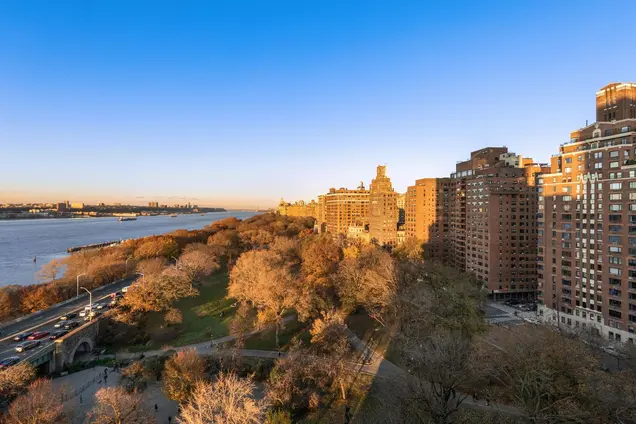
The tower, which has an address of 240 Riverside Boulevard, has 170 apartments and commanding views of the Hudson River and much of Upper Manhattan.
Designed by Costas Kondylis & Associates, the building is notable for its large, curved base.
The Heritage arguably has the finest site facing the Hudson River on the Upper West Side as its tower looms nicely over the bottom end of Riverside Park and Riverside Drive. In addition, it is the closest of all the buildings along Riverside South and Trump Place to the express subway station at 72nd Street, and it includes all the customary shiny Trump amenities.

Like the Paterno and Colosseum apartment buildings at Riverside Drive and 116th Street, the Heritage has a very handsome and very broad curve facing Riverside Park. Unlike those two elegant buildings, however, the very clean-looking Heritage has a substantial rectilinear tower set back considerably on its base. The tower itself has a couple of setbacks.
The Trump buildings along Riverside Boulevard/Riverside South come in a variety of sizes and massings but are generally related to those along Riverside Drive in terms of the cornice lines of their bases.
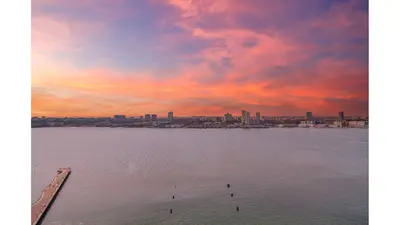
The elevated West Side Highway passes by them but at 70th Street a 750-foot-long pier with a scalloped south edge juts out into the Hudson River providing impressive vantage points to view the Riverside South skyline, which is cohesive if not captivating.
This tower faces an exit ramp from the West Side Highway at 72nd Street that the city agreed in 2004 to close to facilitate the widening of Riverside Boulevard, the interior north/south road in the complex.
Amtrak trains that run up along the Hudson River are in a tunnel at this site but the West Side Highway is elevated. The towers, however, are on a ridge so the highway's obstruction of views is minimized.
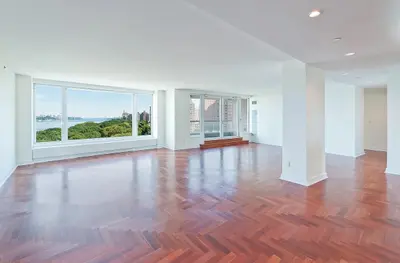
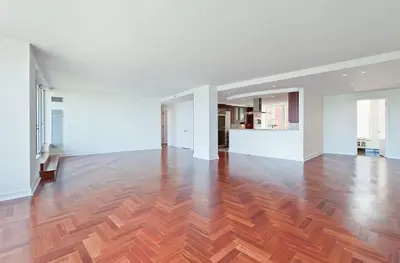
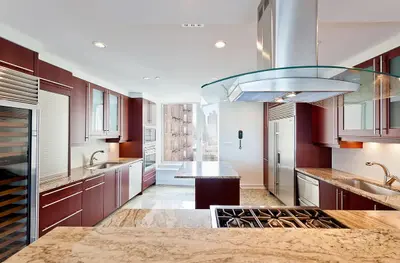
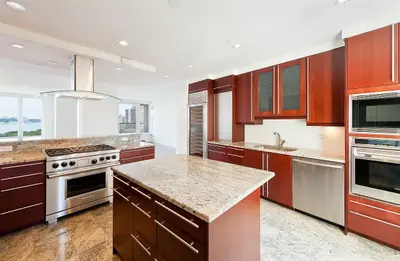
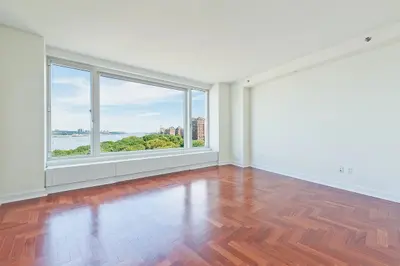
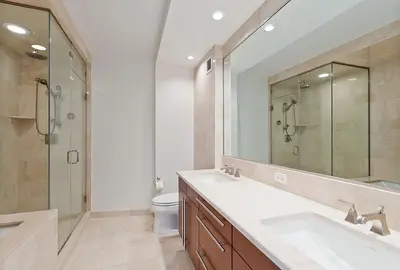
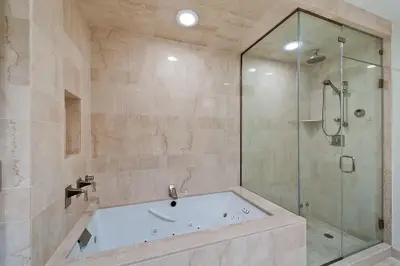
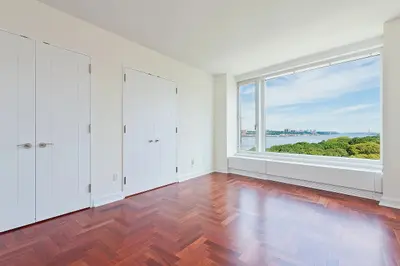
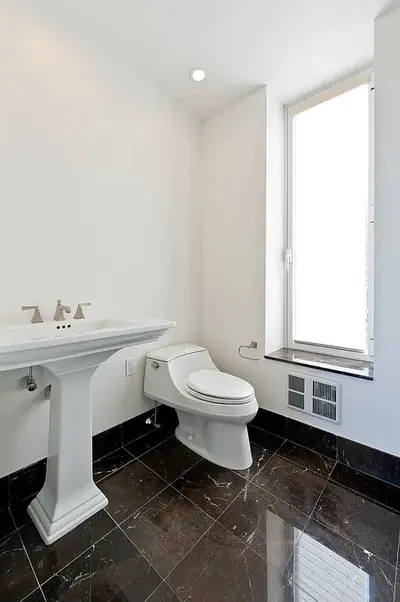
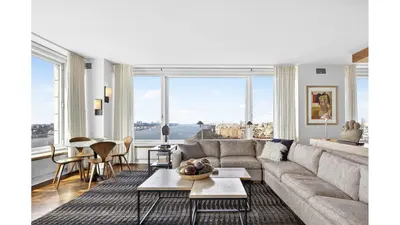
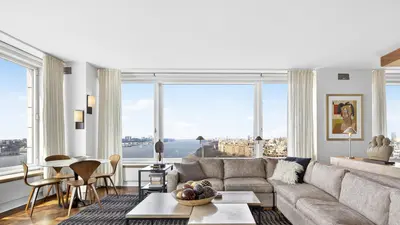
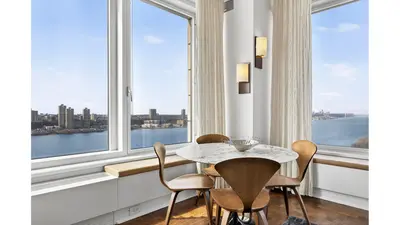
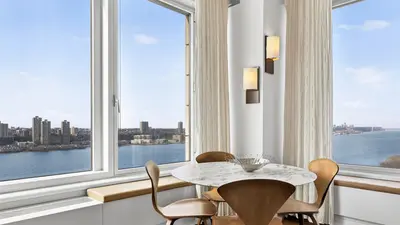
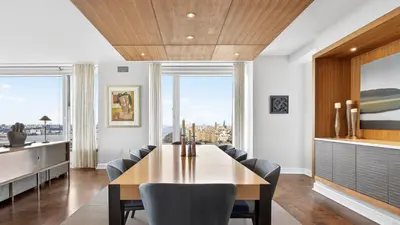
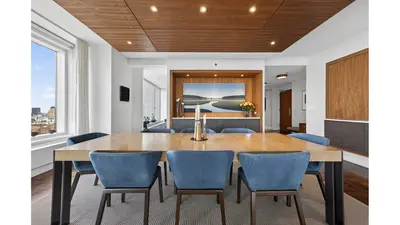
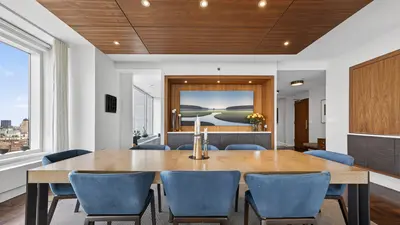
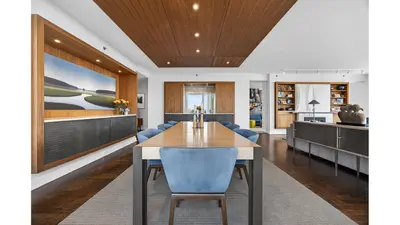
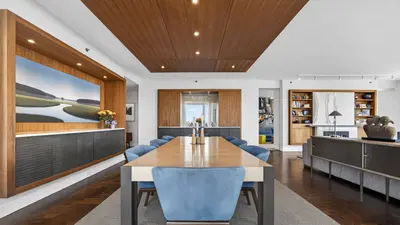
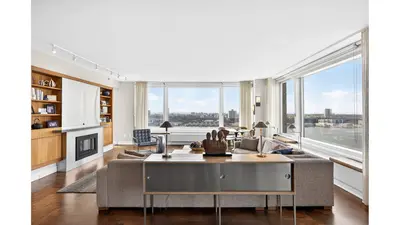
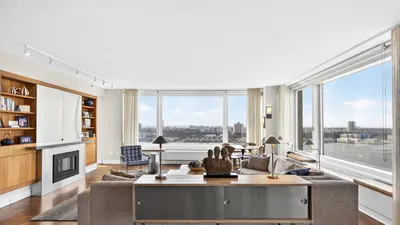
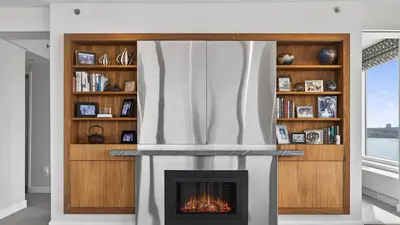
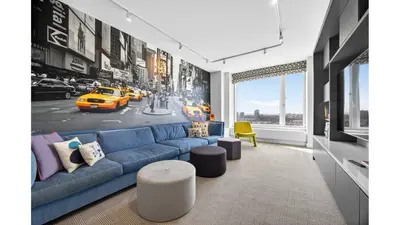
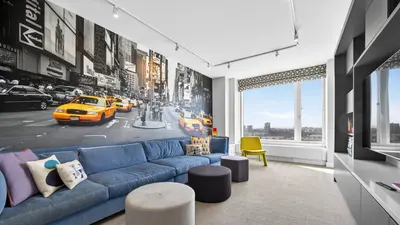
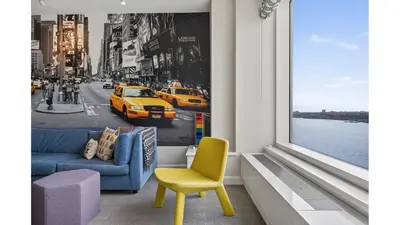
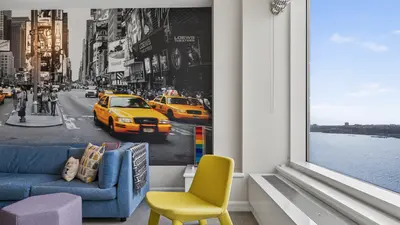
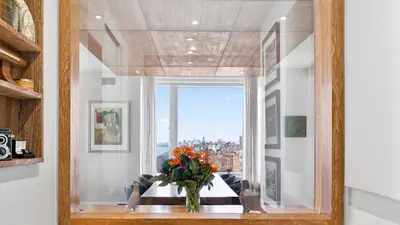
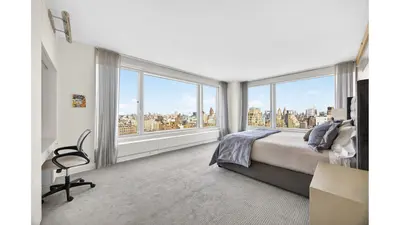
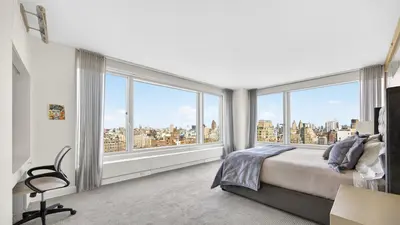
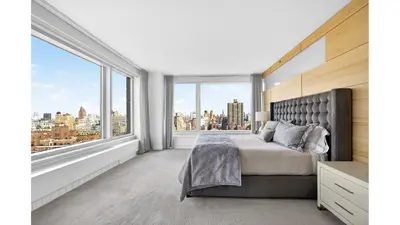
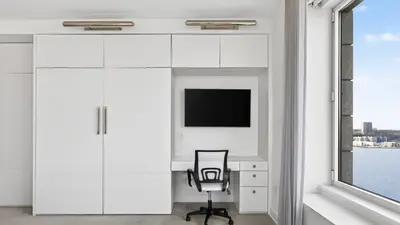
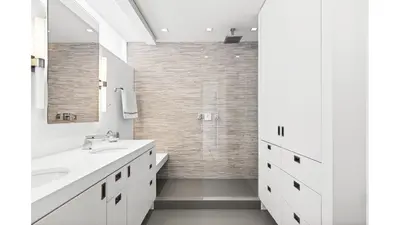
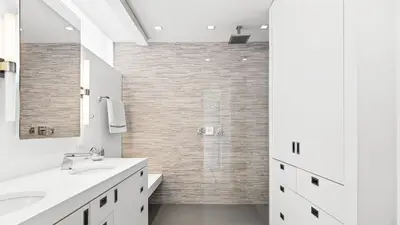
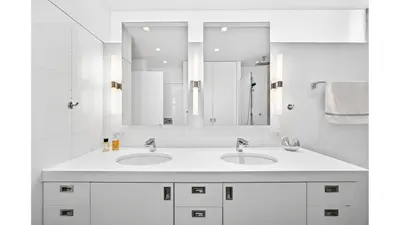
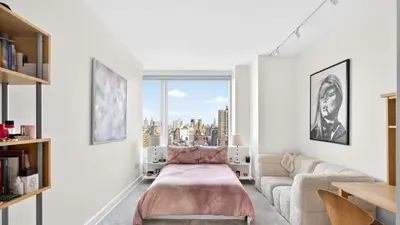
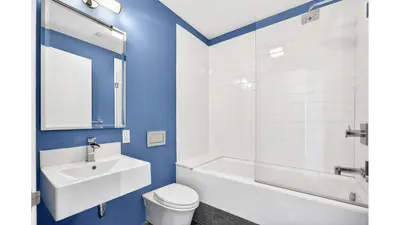
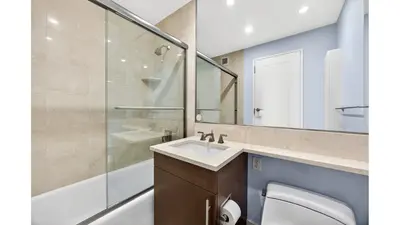
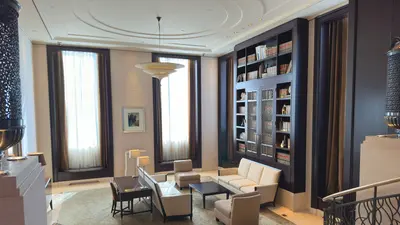
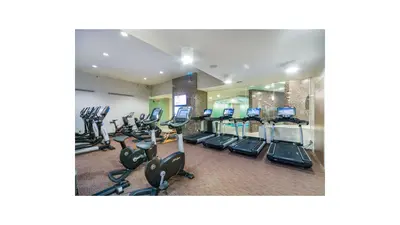
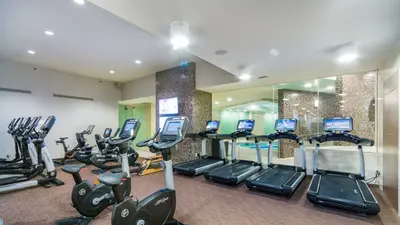
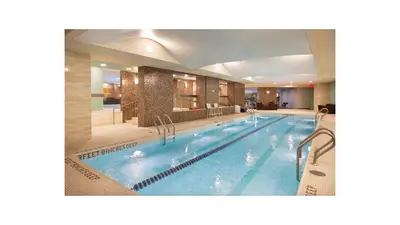
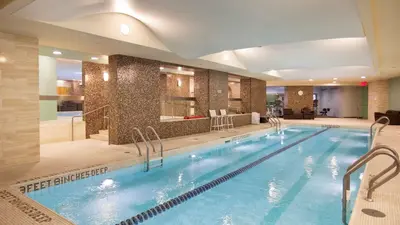
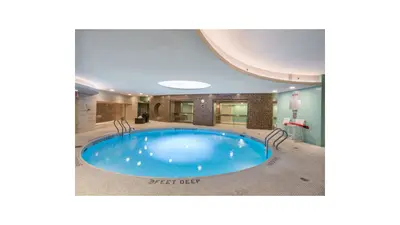
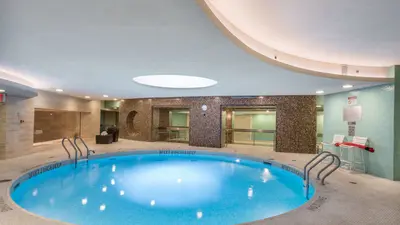
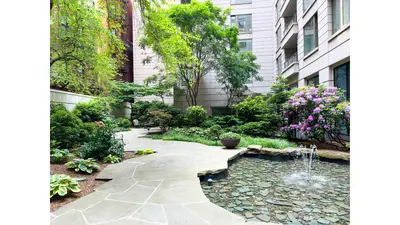
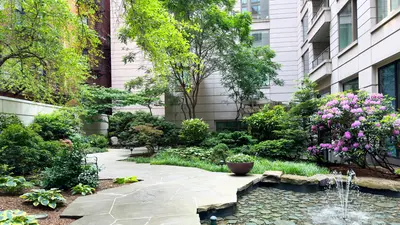
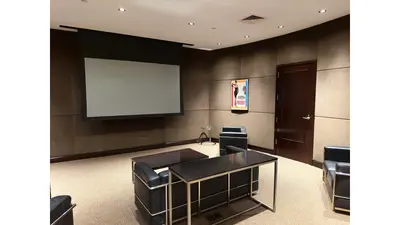
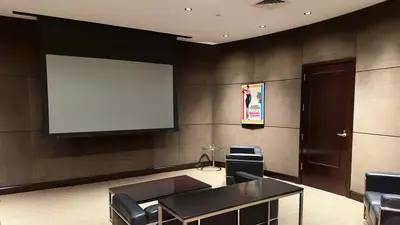
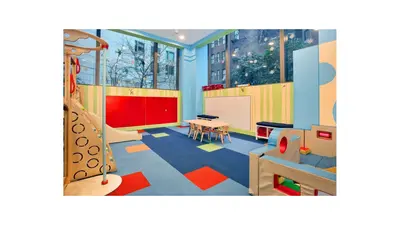
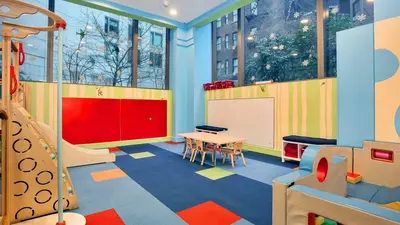
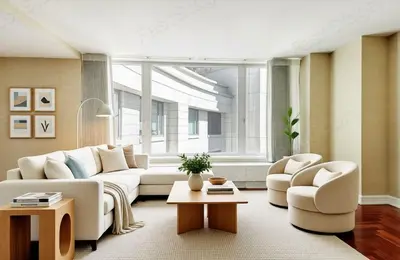
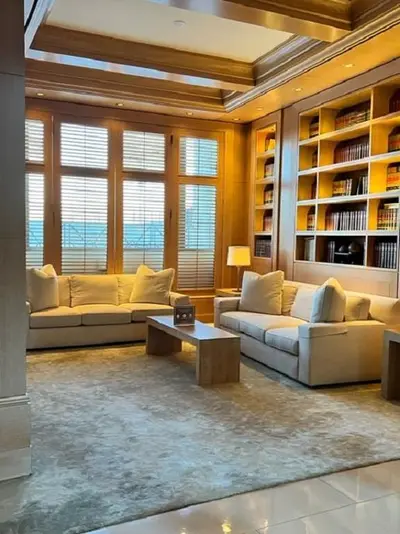
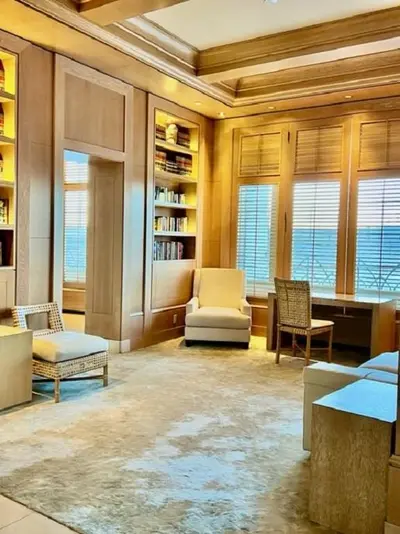
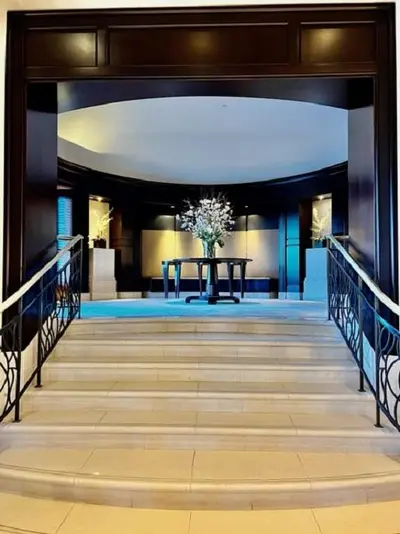
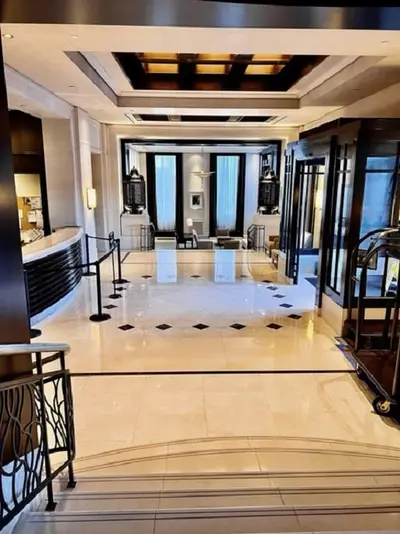
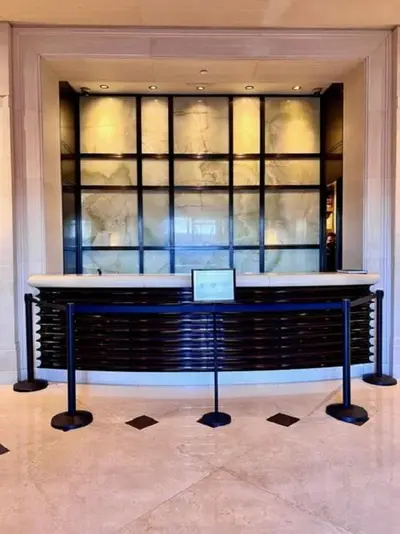
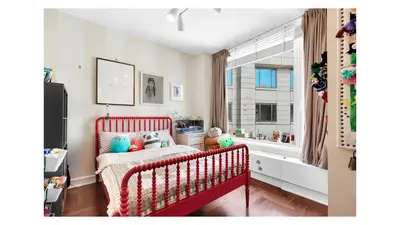
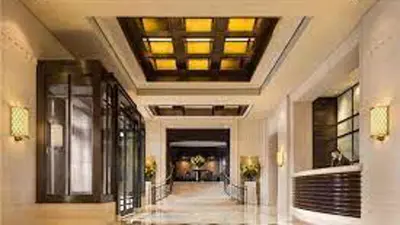
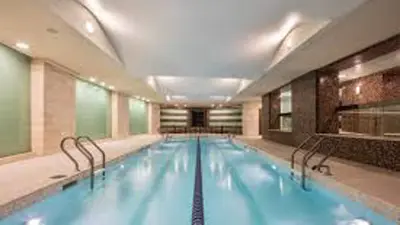
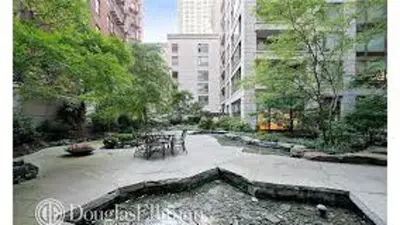
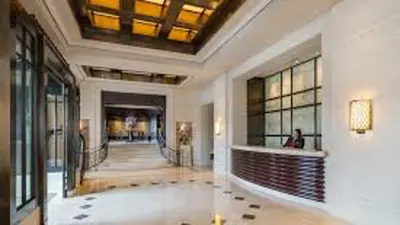
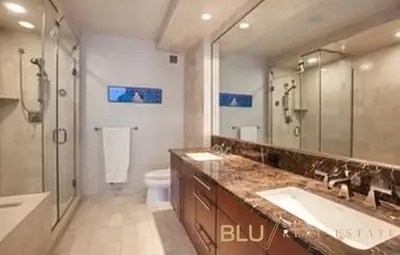
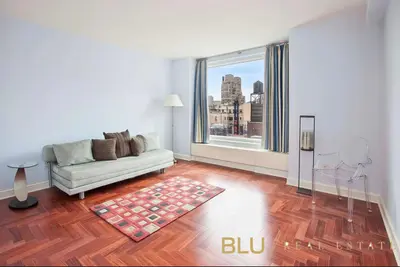
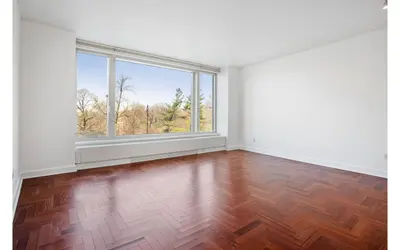
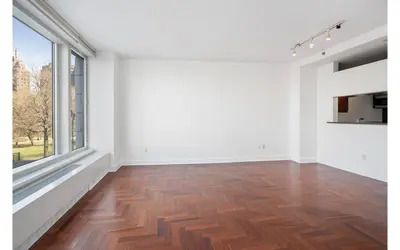
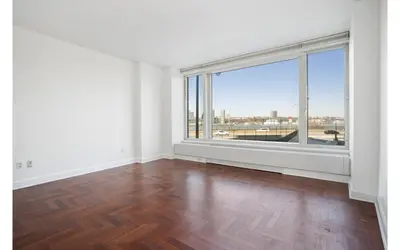
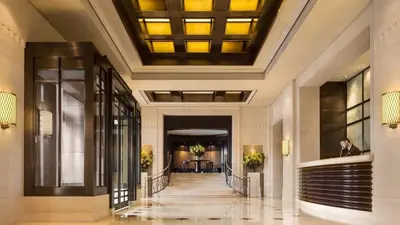
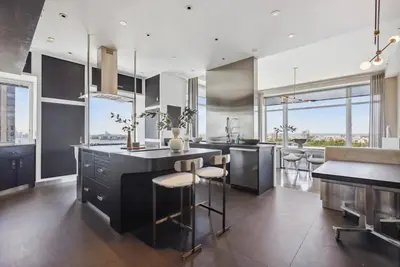
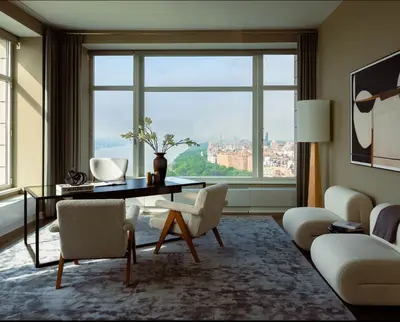
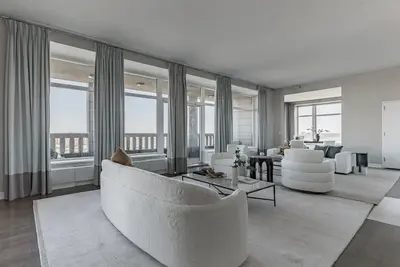
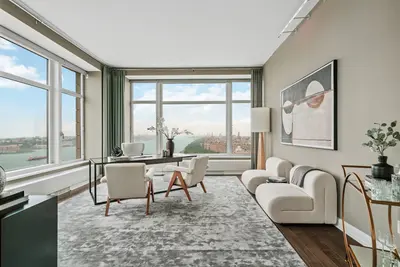
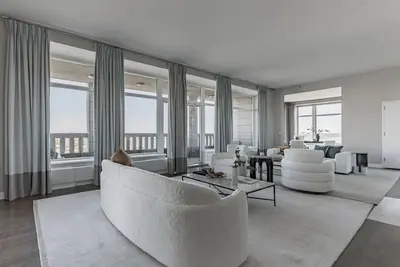
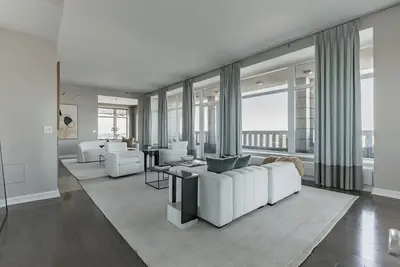
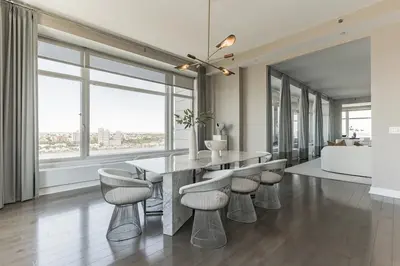
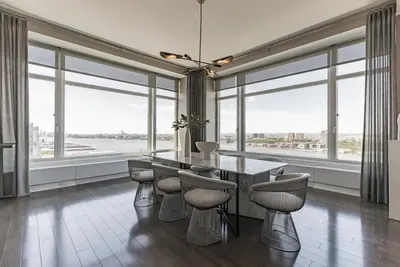
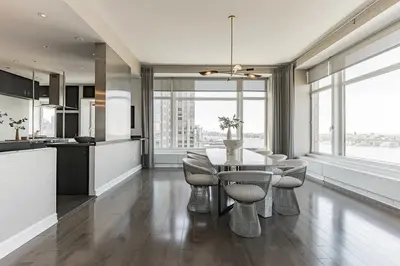
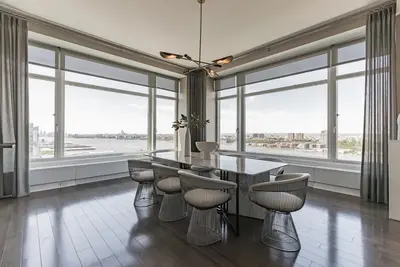
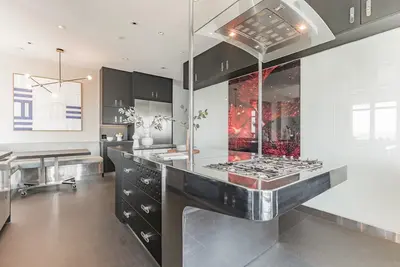
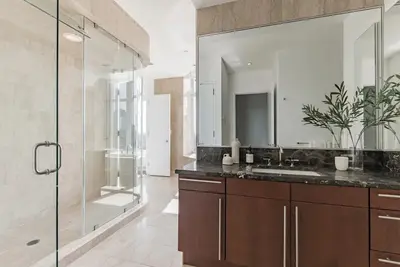
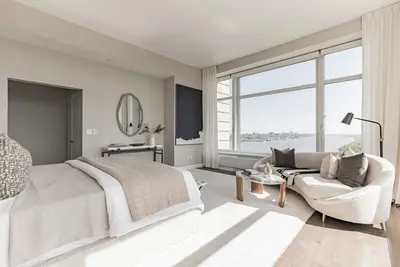
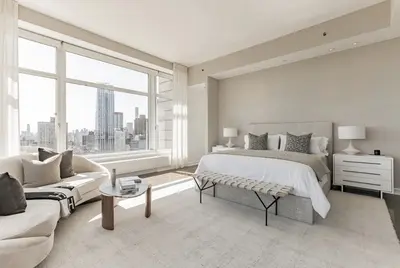
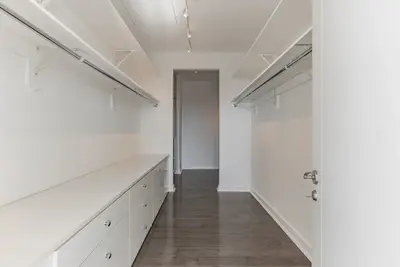
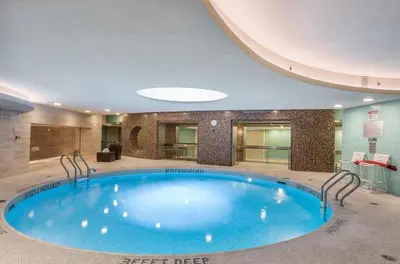
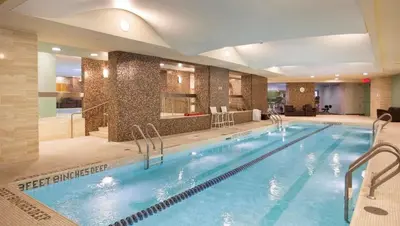
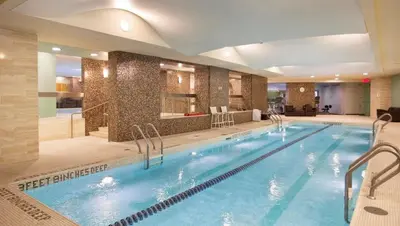
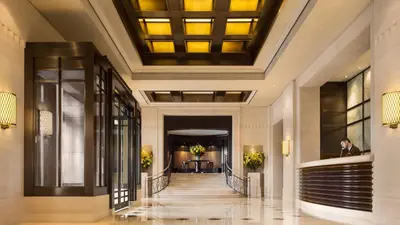
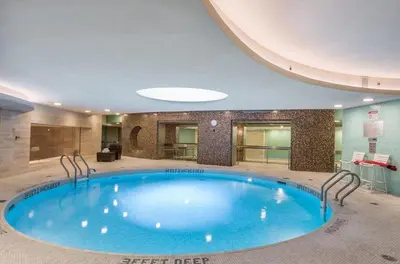
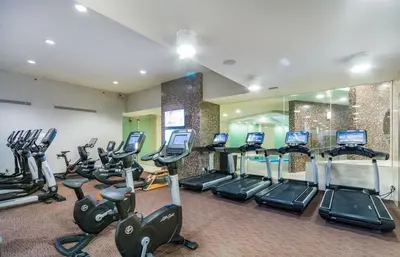
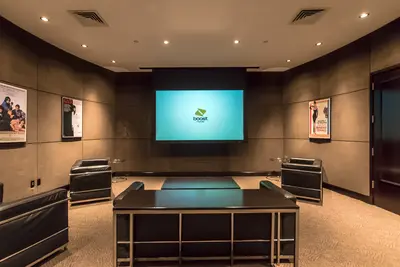
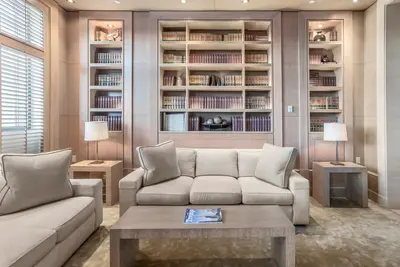
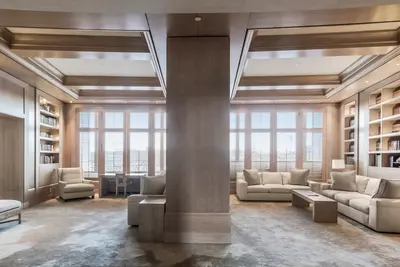
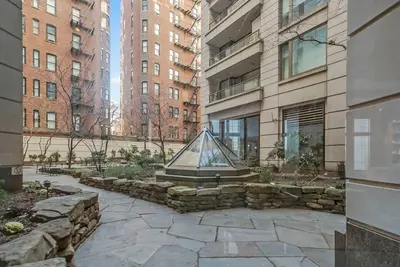
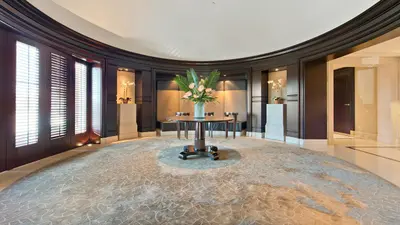
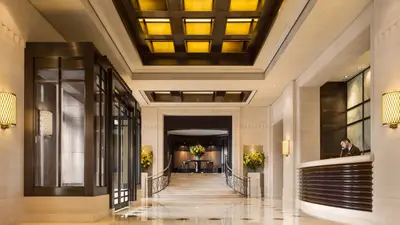
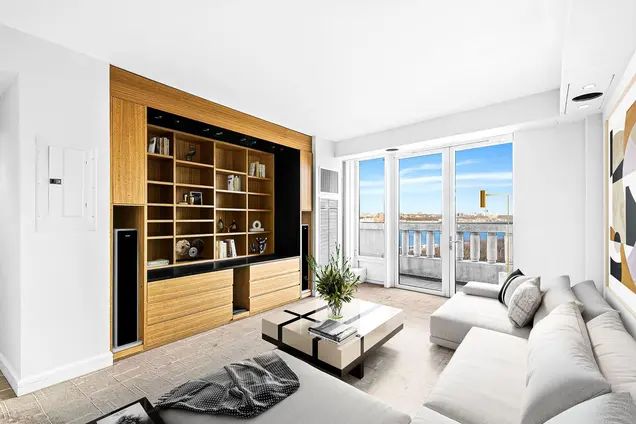
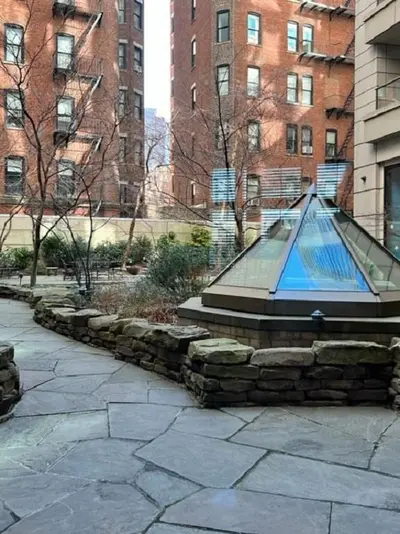
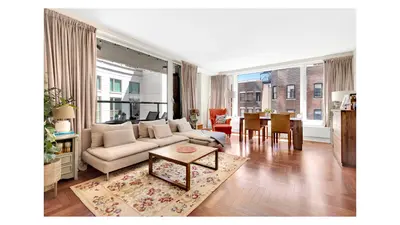
The Heritage has spectacular views of the Hudson River and Riverside Drive, a 24-hour concierge, a doorman, a garage, a 15,000-square-foot health club with two pools, a children’s playroom, a screening room, an event/party room, basement storage, a landscaped courtyard and central air-conditioning.
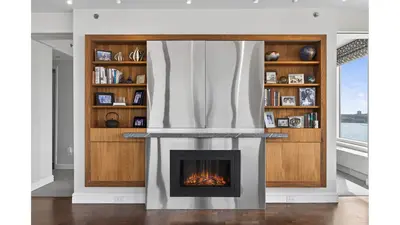
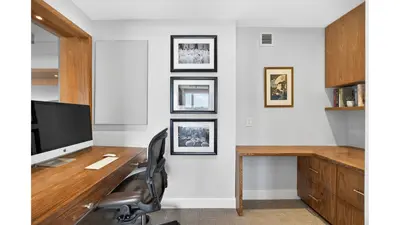
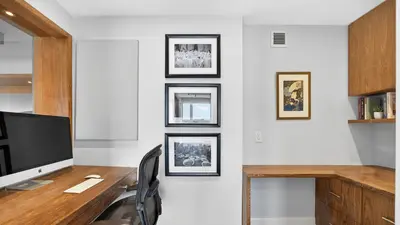
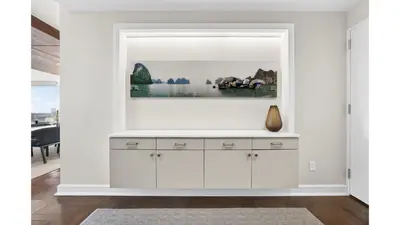
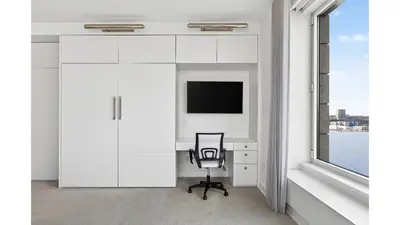
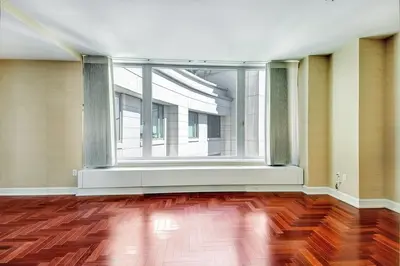
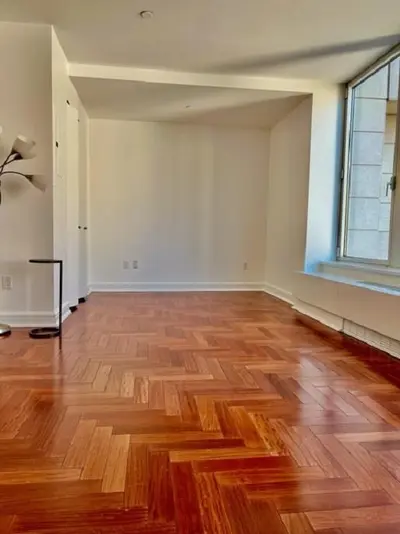
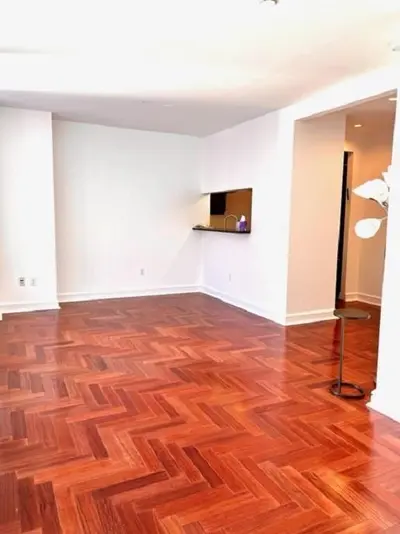
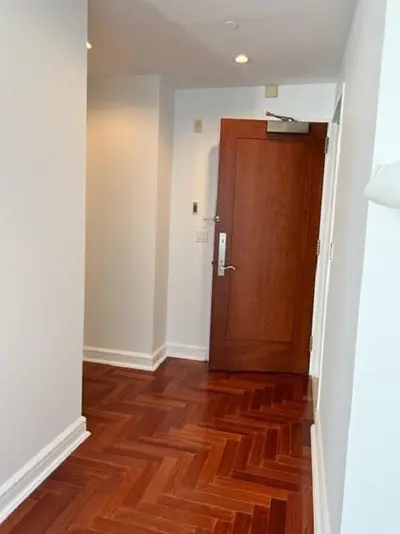
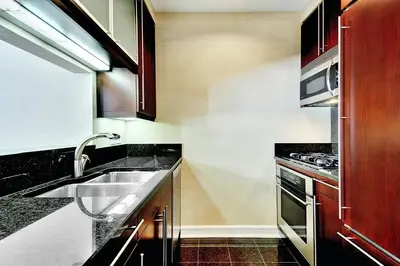
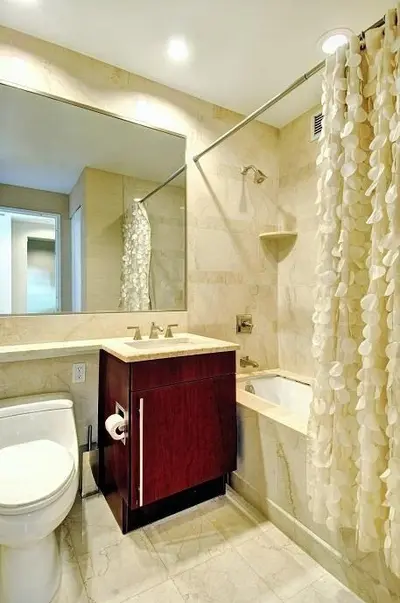
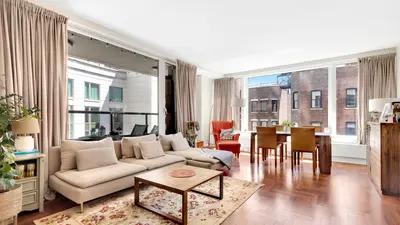
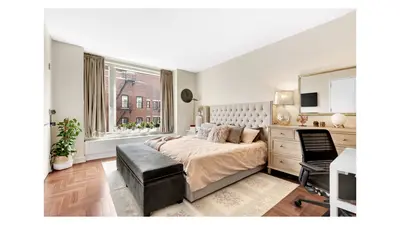
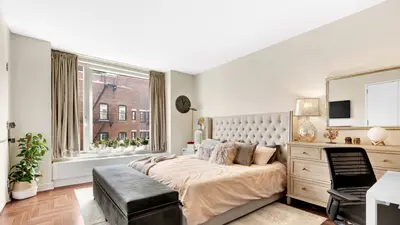
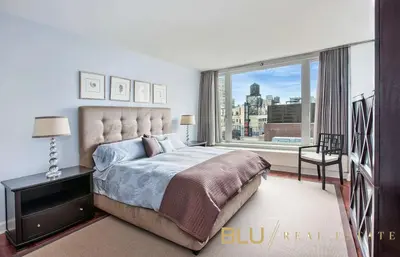
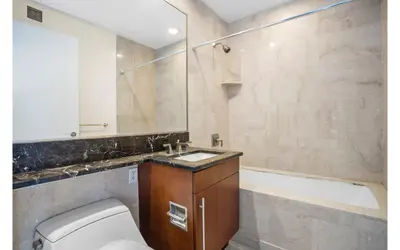
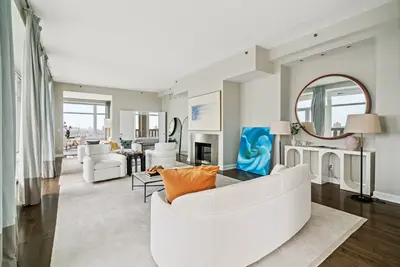
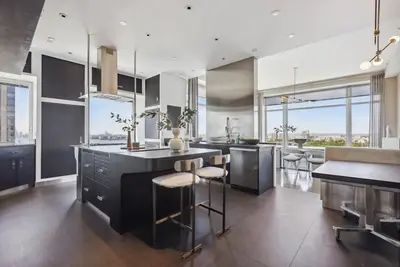
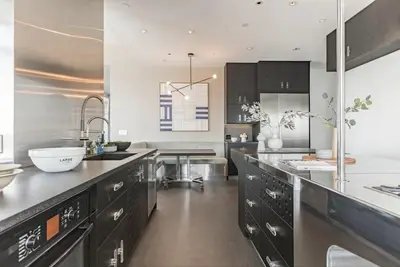
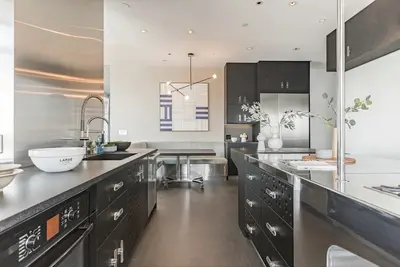
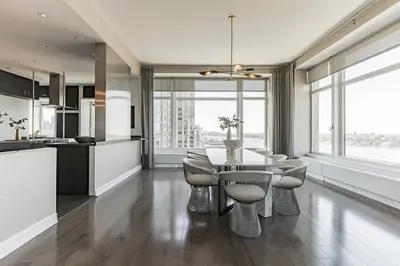
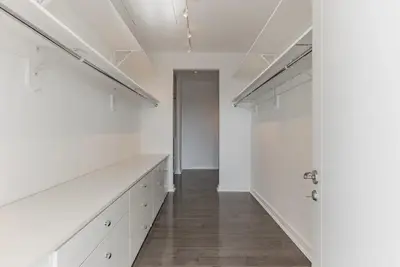
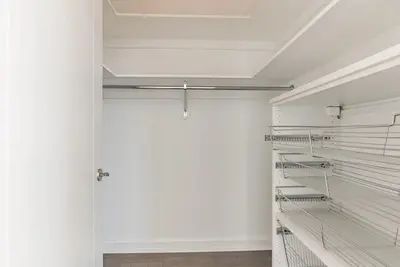
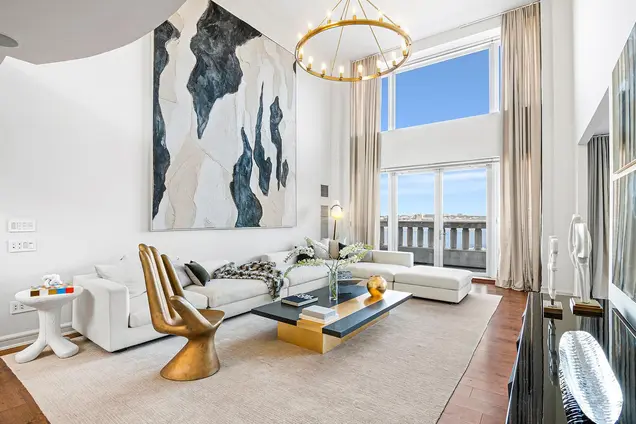
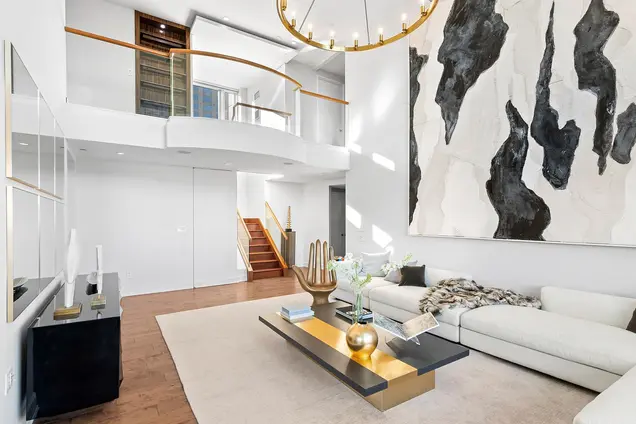
There is a wide variety of apartments at the Heritage.
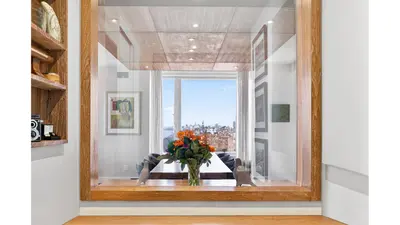
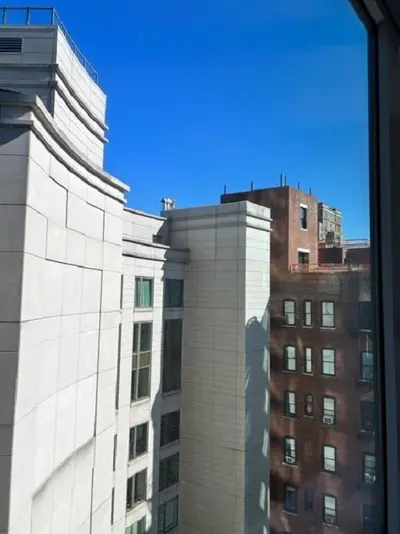
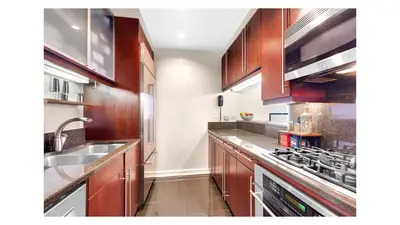
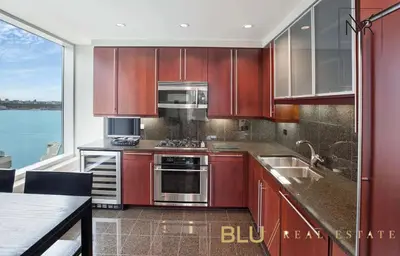
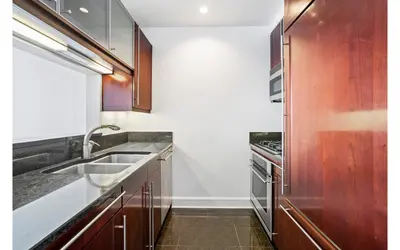
The P line studio units on the 6th through the 15th floors have pass-through kitchens with views of the back of the curved portion of the base.
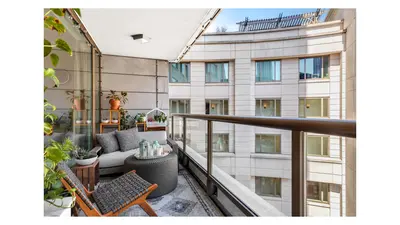
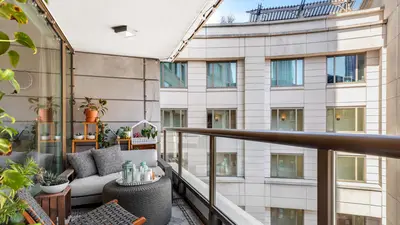
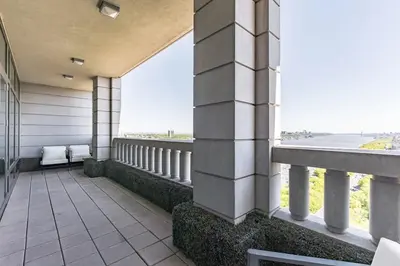
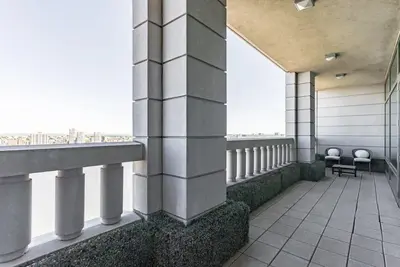
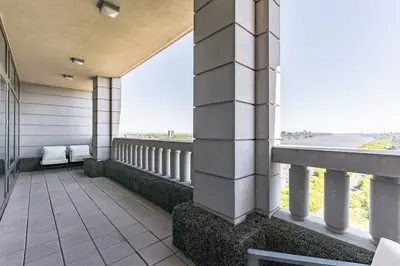
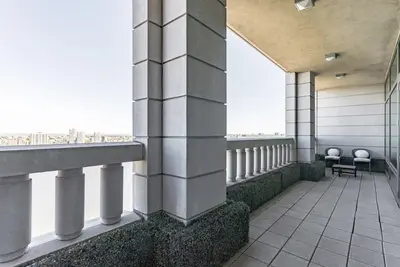
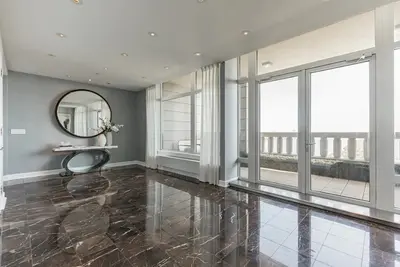
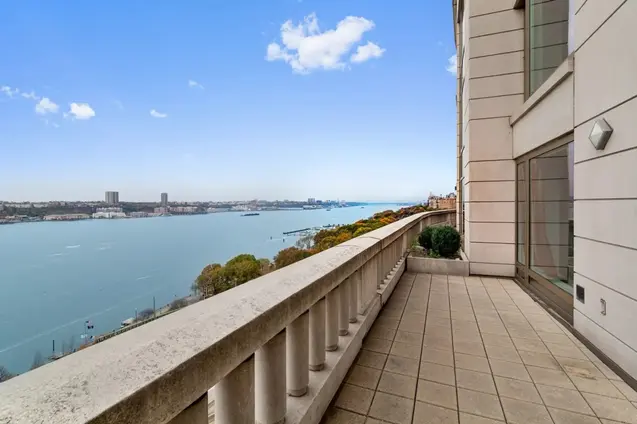
The D apartment on the 12th floor is a one-bedroom apartment with a foyer and a large terrace.
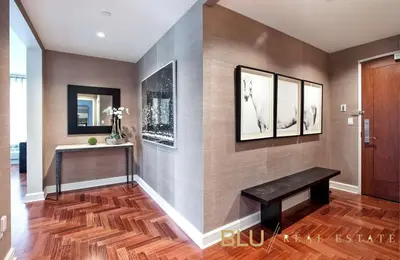
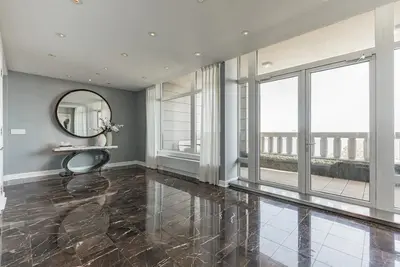
The two-bedroom O apartment on the 14th floor has a 19-foot-long foyer that leads to an enclosed kitchen and a large living room with a balcony.
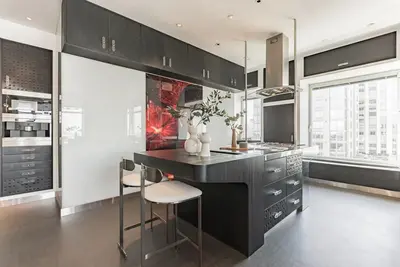
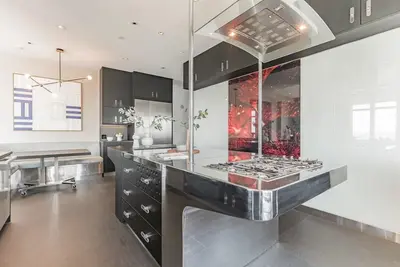
A three-bedroom apartment on the tenth floor has a foyer that leads to a reception room that leads to a large living/dining room with a balcony and a gallery that leads to a very large, windowed kitchen with butler’s pantry.
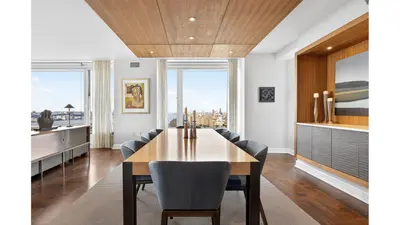
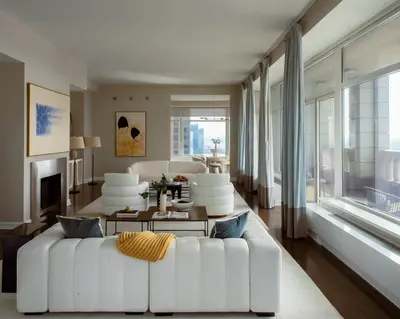
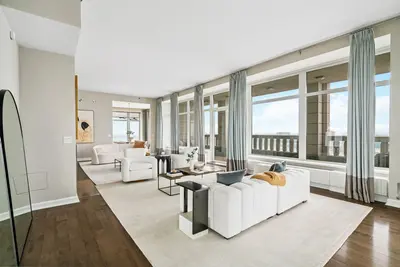
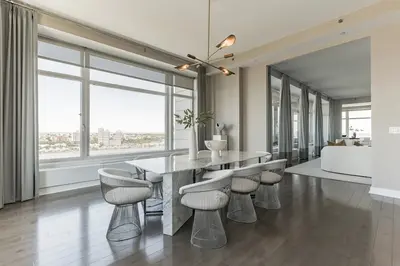
A two-bedroom apartment on the 10th floor has a foyer that opens into a 36-foot-long living room and adjoining large dining room with a balcony.
Penthouse 1A has east and west corner terraces and three bedrooms.
As originally planned, Trump Place was a $3 billion, 75-acre project that called for a total of about 5,700 apartments, about 140,000 square feet of retail space and a 21.5-acre park to be completed between 59th and 72nd Streets south of Riverside Park. After building the northern section of the site, Mr. Trump eventually sold off the southern section of the side to Extell Development, which completed several buildings planned by Mr. Trump as well as originating new plans for several more at the bottom part of the site.
With the completion of the Heritage at 240 Riverside Boulevard in 2005, Trump Place now has a major and impressive skyline along the Hudson River. As a group, the buildings are heavily influenced by the pre-war towers along Riverside Drive, which is not inappropriate. The existing buildings in the complex will be supplemented by more, many of which at the southern end will be developed by Extell, which acquired the properties from the Trump interests.
Mr. Trump had acquired the development rights from Penn Central many years before he finally won approval for the project in 1992 from the City Planning Commission.
At one point, Mr. Trump planned to erect the world's tallest building the middle of the site and hired Helmut Jahn, the flamboyant Chicago architect, to design it. The project at one point was called "Television City" when Mr. Trump sought to convince a major network to lease a lot of space at the project but he ran into considerable community opposition.
Mr. Trump sold part of his stake in the mid-1990s to a group of Hong Kong investors and in 2005 Extell and the Carlyle Group brought the rest for about $1.75 billion.
In an article by Eliot Brown in the August 11, 2008 edition of The New York Observer, Donald Trump recalled that this project was a "war to the death" with local politicians and community groups. The article reported that Extell was "seeking to reopen a can of worms…with plans to fidget with the hard-fought development restrictions approved in 1992."
Extell was not interested in the television studio space that had been approved for Trump and wanted five, mostly residential buildings on its “Riverside Center” sites designed by Christian de Portzamparc at a higher density than previously approved to allow for larger apartments, more affordable units, and better architecture.
The design of the Trump Place/Riverside South towers to date while not daring is not terrible and Mr. Trump has long wielded a golden wand as far as delivering a desirable residential product to his targeted consumers.
The cluster of towers planned for Extell’s “Riverside Center” is more daring and some of the buildings have angled bumps.
Some critics might insist that each age make its own "signature" stamp upon the built environment and "context" be damned. Others might caution that "context" can sometimes disguise timidity and a lack of imagination and creativity. And some might suggest that context should always be considered but not always followed.
Where some boulevards such as Park Avenue, West End Avenue, Fifth Avenue, Central Park West, Broadway and Riverside Drive have highly consistent and compatible development it is appropriate that new development take heed of that development and respect it and most likely follow it.
In the post-World War II era, these avenues have been aesthetically, albeit not lethally, compromised, but they have generally presented cohesive "environments." The basic nature of New York City, of course, is change and chaos, and there are instances throughout the city when strange and startling juxtapositions make the urban fabric surprising, if not sublime.
Given such considerations plus the not unimportant consideration of economic realities in long-term real estate developments, the Trump Place designs were logically appropriate: stylistically respective of the pre-war architectural triumphs of Riverside Drive and Central Park West, but also bigger in scale with less detailing to accommodate contemporary tastes and economic realities.
The site has considerable history.
In an article for the January, 2004, monthly newsletter of the Manhattan Institute's Center for Rethinking Development, Julia Vitullo-Martin provided the following commentary about the 40-year “war” fought over the 75-acre Penn Yards site between 59th and 72nd Street on the West Side:
"Amazingly, enough, the Penn Yards war is coming to a productive, fairly peaceful end with the construction of Riverside South, a development of 16 residential buildings holding 5,700 apartments, 1.8 million square feet of commercial space, and a 21.5-acre waterfront public park….Riverside South is a triumph of harmony out of acrimony."
"Trump was far from the first suitor for the site," the article continued, adding that "The first development proposal was made by Penn Central itself in 1962....Penn Central wanted to partner with the Amalgamated Lithographers Union to build a mixed-use development, Litho City, on platforms over the trains." The plan called for 5,000 housing units, parking for 5,000 cars, 1,000 dormitory rooms for foreign students and a 500,000-square-foot international conference facility.
In 1969, the New York City Educational Construction Fund proposed a 12,000-unit residential development but the proposal was soon abandoned and six years later, Trump optioned the site and also proposed 12,000 apartments but economic times were tough and nothing happened.
Then, according to Ms. Vitullo-Martin's article, "in 1980, the Macri Group, which came to be known locally as the Argentines, optioned the site, and quickly proposed Lincoln West - a 7.3-million-square-foot project with 4,300 residential units. They were serious. They got the necessary rezoning in 1982 from the Koch administration. But then they failed to get financing, and lost the site.”
The Lincoln West proposal of Macri Associates and Hirschfeld Realty was designed by Gruzen & Partners and Rafael Vinoly, an Argentine-educated architect, in 1981, although other architects such as Cesar Pelli, Edward Larrabee Barnes, Kohn Pedersen Fox, I. M. Pei & Partners, Mitchell/Giurgola and Richard Meier were expected to design individual buildings. As part of its proposals, the developers committed to a reconstruction of the 72nd Street subway station and to assist the New York State Department of Transportation in financing new rail freight facilities in the Harlem River Yard in The Bronx.
In their magnificent book, "New York 2000, Architecture and Urbanism Between The Bicentennial and the Millennium," Robert A. M. Stern, David Fishman and Jacob Tilove wrote that "in January, 1985, Donald Trump bought the site for $100 million in partnership with A. Hirschfield - who had also been a partner with the Argentines - and proposed a 16.5 million-square-foot project, Television City, designed by architect Helmut Jahn.”
“It included the world's tallest building at 152 stories,” the authors continued, and “Trump hoped to entice NBC to move in as the prime tenant. Outraged West Siders and civic groups, which had been active but relatively polite regarding Lincoln West, organized immediately in opposition. In late 1986, Trump proposed a new 14.5-million-square-foot project, with 7,600 apartments in 60- and 70-story towers, and a regional shopping mall. This time his architect was Alex Cooper, who had been the lead architect for Battery Park City's master plan and was well-regarded by nearly everybody, including the good government groups. But Cooper's reputation didn't diminish West Side outrage, and opposition to the project's size swelled. Mayor Koch aligned himself with the community opposition, and also rejected....Trump's request for zoning waivers and a $1 billion tax abatement to attract NBC. An uneasy NBC announced in 1987 that it would not be moving to Television City....In 1990, the banks restructured his $2 billion in loans for the project, which he began calling Trump City....Meanwhile, a coalition of civic groups led by the Municipal Art Society, that had been suing to stop the project, riveted Trump's attention. They were willing to see a much smaller project go forward.”
In June, 1990, the Penn Yards Task Force of the New York City Chapter of the American Institute of Architects opposed the project, noting that its density was twice what had been approved in 1982. Three weeks later, the Municipal Art Society, the Regional Plan Association and the Parks Council proposed a different plan that had been developed by Paul Willen, the chairman of the Penn Yards Task Force, Daniel Gutman and Andrews & Clarke.
In early 1991, six civic groups led by Richard A. Kahan, the former president of Battery Park City Authority, advocated a version of Willen's proposal that contained only about half of the square footage in Cooper's plan and Trump soon thereafter accepted the plan that also called for moving the elevated West Side Highway to the east where it would supposedly be rebuilt at grade level. The civic groups and Trump formed the Riverside South Planning Corporation and David Childs and Marilyn Taylor of Skidmore, Owings & Merrill replaced Mr. Cooper.
The plan’s size was now reduced by about 40 percent and the buildings would range in height from 30 to 40 stories and there would be a 23-acre waterfront park. The civic groups promised to go along with the plan but led by Congressman Jerrold Nadler, opponents, however, succeeded in killing the relocation of the highway.
In July, 1992, Community Board 7 voted to reject the plan by a vote of 35 to 1 but the plan passed the City Council in December, 1992. In November, 1993, Trump announced that Philip Johnson and Costas Kondylis would design the first four buildings and there were reports that Robert A. M. Stern, Frank Gehry and David Childs might design some of the later buildings.
Trump then agreed to contribute $5 million to the renovation of the 72nd Street subway station and to allocate 10 percent of the apartments for subsidized housing and to guarantee that the project would not increase sewage for the North River treatment plant in Harlem and to bear half of the annual maintenance costs for the new park.
At one point, Trump proposed, unsuccessfully, selling his site to the New York State Urban Development Corporation for $1, which would enable him as developer to avoid New York City zoning and building regulations.
Congressman Jerrold Nadler continued his opposition to the highway relocation, claiming that the park would be a "private backyard" for the people in the Trump buildings.
The issue of the elevated highway remains unresolved. Hopefully it will be buried beneath a new park, which would make a meaningful and important extension of Riverside Park, which, in fact, was erected over train yards that had long cut-off access to the waterfront.
Construction of the first two towers at Trump Place began in 1997. The 46-story, 377-unit building at 200 Riverside Boulevard between 69th and 70th Streets and the 40-story, 516-unit building at 180 Riverside Boulevard between 68th and 69th Streets were completed in 1999. The 34-story, 455-unit 160 Riverside Boulevard building between 67th and 68th Street was completed in 2001.
Kondylis designed, without Johnson, the 49-story 200 Riverside Boulevard tower between 70th and 71st Streets and the 30-story 140 Riverside Boulevard between 66th and 67th streets, both of which were finished in 2003.
In 2005, Trump completed 240 Riverside Drive, designed by Kondylis, between 71st and 72nd Street.
David Dunlap of The New York Times praised the waterfront park’s 750-foot-long Pier 1, which was completed in 2001 near 70th Street. It jutted at an angle into the river.
According to Dunlap, the pier provided “an entirely new way to see the towering palisade skylines of New York and New Jersey and the broad waterway between them, liberated from the shoreline and unconfined by gunwales….Even the towers of Trump Place momentarily take on Venetian magic, glimpsed as sensuous, rippled reflections in the wake of a passing ship.'"
To view all NYC apartment information and prices, log in or register now it's quick, easy and free.
You'll get access to all NYC apartments available including thousands of listings all for free.

Forgot Password?
If you need assistance, please call us at 212-755-5544.
|
Comments or questions? · Phone: 212.755.5544
|
|
An equal housing opportunity.
|
| All data is deemed reliable but is not guaranteed accurate by the REBNY / RLS or CityRealty. See Terms of Service for additional restrictions. All information furnished regarding New York City property for sale, rental or financing is from sources deemed reliable, but no warranty or representation is made as to the accuracy thereof and same is submitted subject to errors, omissions, change of price, rental or other conditions, prior sale, lease or financing or withdrawal without notice. All dimensions are approximate. For exact dimensions, you must hire your own architect or engineer. The number of bedrooms listed on this website is not a legal conclusion. Each person should consult with his/her own attorney, architect or zoning expert to make a determination as to the number of rooms in the unit that may be legally used as a bedroom. |