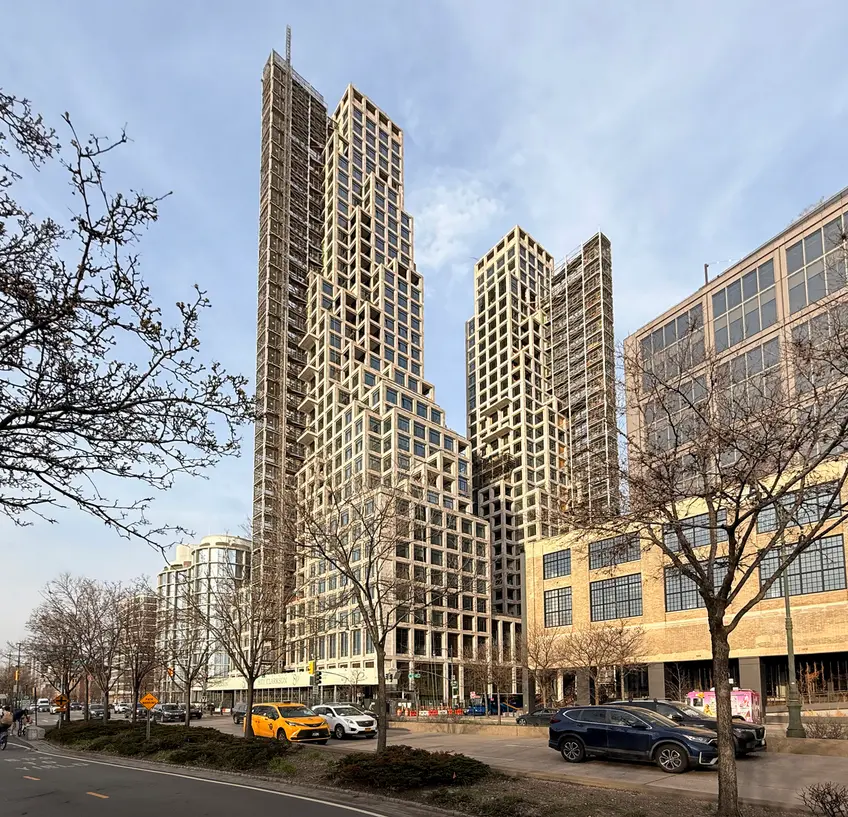
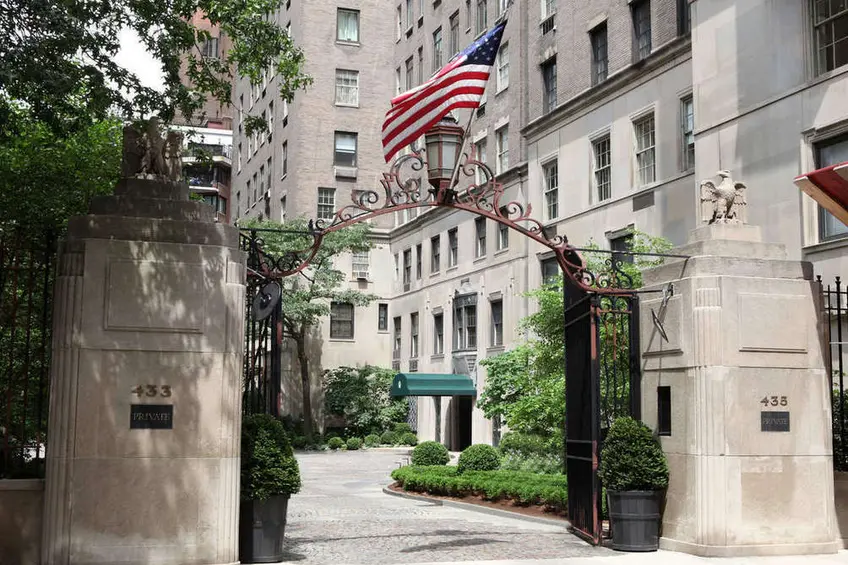
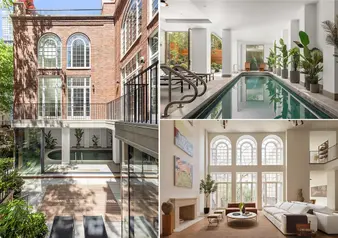
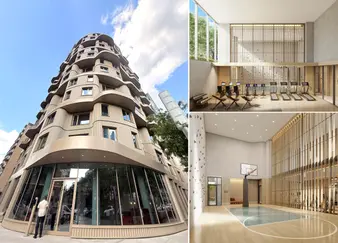
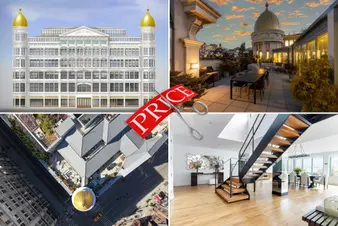
The major residential community, Battery Park City, is one of the more spectacular neighborhoods in the city.
Battery Park is one of Manhattan’s youngest neighborhoods. It was first conceived in 1962 when a plan was devised to revitalize NY’s shipping terminals to combine housing, offices, and industry. By 1972 the Battery Park City Authority issued $200 million in moral obligation bonds for the development of the landfill (most of it came from the excavation from the World Trade Center). By 1976, the 92-acre landfill was completed and the Battery Park community centers could start being developed.
This brief history explains why there are no walk-ups, brownstones or tenements buildings in Battery Park.
All structures are modern luxury hi-rises that are either condos or rentals.
Most residents are Wall Street businessman and women, and their families who enjoy the proximity of work-live scenario. The local infrastructure is centered around their lifestyles, with a number of gyms, restaurants, indoor tennis, racquetball or golf facilities. There is also a long strip of a boardwalk along the West Hudson where people take to biking, rollerblading and jogging.
The only possible draw back of the neighborhood can be a
large number of tourists who come here to visit the Statue of Liberty, Ellis Island and Governor’s Island.
Due to its somewhat remote location, Battery Park is truly a neighborhood on its own. There are not many things within walking distances, except office buildings and the entire area is rather empty and quiet on weekends. It is probably the closest thing to a
"suburban" lifestyle that New York has to offer.
After World War II, the dominance of Lower Manhattan as the city’s premier office center began to decline as companies began to relocate to midtown and the suburbs. The Chase Manhattan Bank, however, under the leadership of David Rockefeller, decided to build a mammoth new headquarters building downtown and in the 1960’s, Governor Nelson A. Rockefeller, David’s brother, commissioned plans to expand the land area of downtown. Some of the original plans for the project called for giant and very dramatic mixed-use megastructures along the Hudson River, and New York State created the Battery Park City Authority to oversee the huge landfill project. New plans were drawn up by the architectural firm of Harrison & Abramovitz, but financing did not materialize for a long time. At about the same time, similarly ambitious plans were being drawn up for Manhattan Landing, another proposed landfill project on the other side of the tip of Manhattan south of the South Street Seaport along the East River. The plans for Manhattan Landing never got off the ground, but the construction of the World Trade Center, which was completed in the early 1970’s, provided a lot of landfill and Battery Park City was created.
The first project to be completed was Gateway Plaza, a group of three 34-story apartment towers designed by Jack Brown and Irving E. Gershon with a total of 1,712 apartments. It was completed in 1983 and was developed by Sam Lefrak, who had previously been best known for his sprawling Lefrak City apartment complex in Queens.
Before the completion of Gateway Plaza, the Battery Park City Authority commissioned the architectural firm of Cooper Eckstut & Associates in 1979 to draw up new design guidelines for the future development of the project, reflecting widespread disappointment with the rather lackluster quality of Gateway Plaza.
Alexander Cooper was responsible for the guidelines for the planned commercial center of the project and Stanton Eckstut was responsible for the new residential guidelines. This would be the most important design commission since that for Roosevelt Island, the narrow island that is between midtown and Queens in the East River. Indeed, this was more important as the landfill project represented an opportunity to revitalize the downtown area and make it a 24-hour community.
The Post-Modern movement was then popular and rather than try to create an environment for exciting modern design, Cooper and Eckstut opted for more traditional, nostalgic designs, what Elliot Willensky and Norval White described, in their excellent book, "The A.I.A. Guide to New York City," (Harcourt Brace Jovanovich, 1988), as "instant past." Furthermore, they opted to lay out the project’s streets following the existing street pattern downtown across West Street, which is very wide and separates Battery Park City from Lower Manhattan.
The architectural consultants sought to create residential enclaves that combined some of the better features of such desirable and attractive neighborhoods as Gramercy Park, Tudor City and Riverside Drive.
The project got off to a great second beginning with the designation of Olympia & York as the developer of the commercial section. Olympia & York commissioned Cesar Pelli as the architect of its mammoth project, which became known as the World Financial Center. Pelli, who had been best known previously for his very bold "Blue Whale" at the Pacific Design Center in Los Angeles, created several massive towers, each with setbacks, mixed facade treatments, different rooflines, and very large lobbies and walkways. The center of Pelli’s design, and the centerpiece of Battery Park City, is the Wintergarden, what may well be the most spectacular interior space in the city, a huge, cascading, skylit vault with a very large glass wall facing the Hudson River and the "North Cove" marina.
The tallest buildings at the World Financial Center, which contains 7-million square feet of office space, significantly improve the skyline and scale of Lower Manhattan as well as give Battery Park City a very visible and impressive focus. The Battery Park City Authority, meanwhile, devoted considerable energies to its own art program and, again, its results are second only to Rockefeller Center in the city. Public art is in place all over the complex and special exhibitions take place regularly.
If the Wintergarden, which is about the size of the main concourse at Grand Central Terminal, is the heart of Battery Park City, the soul is the Esplanade, designed by Cooper Eckstut in a fashion similar to the famous Brooklyn Heights Esplanade. This broad walkway along the river is well lit with plenty of seating and great views of the Statue of Liberty and the now fairly impressive skyline of Jersey City across the river.
The authority opted, wisely, to develop the south portion of the project first since it has the best harbor views and is closest to the financial district. It opted, again wisely, for a diversity of building types, rental and tenant-owned, mid- and high-rise. The results, so far, have been laudable. Most of the residential buildings have red-brick facades with white stone bases and many have arcades and, most importantly, they are individually different.
There are, essentially, two rows of buildings along the river and the plan for the north portion of the site calls for serpentine layouts similar to Riverside Drive. The far north end of the site is occupied by the Stuyvesant High School, one of the city’s finest, and a very attractive pedestrian bridge over West Street. Among the standout residential buildings are
Liberty House at 377 Rector Place, designed by James Stewart Polshek & Partners,
Liberty Court at 200 Rector Place, designed by Ulrich Franzen, River Rose at 333 Rector Place, designed by Charles Moore and Rothzeid, Kaiserman, Thomson & Bee, Parc Place at 225 Rector Place, designed by Gruzen Samton Steinglass, Hudson View East at 250 South End Avenue, designed by Mitchell-Giurgola,
Hudson Tower at 350 Albany Street, designed by Davis, Brody & Associates, Hudson View West at 300 Albany Street, designed by Conklin & Rossant, and the
Regatta on South End Avenue, designed by Gruzen Samton Steinglass.
The south end of the development has a very attractive park designed by artist Jennifer Bartlett and a major museum about the Holocaust opened in 1997. Directly across from the project’s south end is the city’s delightful fireboat house and marina at the east end of Battery Park at the bottom tip of Manhattan.
The residential buildings have been developed by many different developers and spread out over a number of years to not overwhelm the market. Early residents/pioneers put up with minimal neighborhood retail and entertainment facilities, although there are many excellent restaurants and stores at the World Financial Center, but by the late 1990’s that situation was substantially improved. While some observers might have wished for more daring and more modern architecture at such a dramatic and wonderful, albeit isolated site, no one fails to be dazzled by what has been achieved so far. Indeed, the residential environment at Battery Park City is without equal in the city. The development obviously appeals tremendously to people who work downtown, but major subways are nearby.
On a pleasant day in the summer when there is an outdoor concert at the North Cove Marina, which is usually full of awesome yachts, and thousands of people at the vast outdoor cafes and sailboats and bigger ships in the glistening harbor and the Statue of Liberty in the background, there is no better place.
Battery Park City had a troubled, awkward start, but it has survived rather magnificently and there is plenty of space yet to be developed on the north end.