About Lower East Side

The Lower East Side is located north of Houston and South of Division Street, and is housed between the East River and the Bowery. It began its history with Russian and Polish Jews fleeing persecution. Its richest legacy is the immigrant tradition of poor people coping with, and often overcoming, horrendous living conditions. Despite its low-rise nature, this has been one of the world’s densest areas in terms of population. For more than a century and a half, the Lower East Side has been one of the city’s poorest areas and has been very slow to change. Although its crowded conditions were eased somewhat by the public housing programs that began in the 1930’s and from eventual abandonment, it remains as a vast and devastating indictment of the city that so large an area remains so neglected so close to its core.

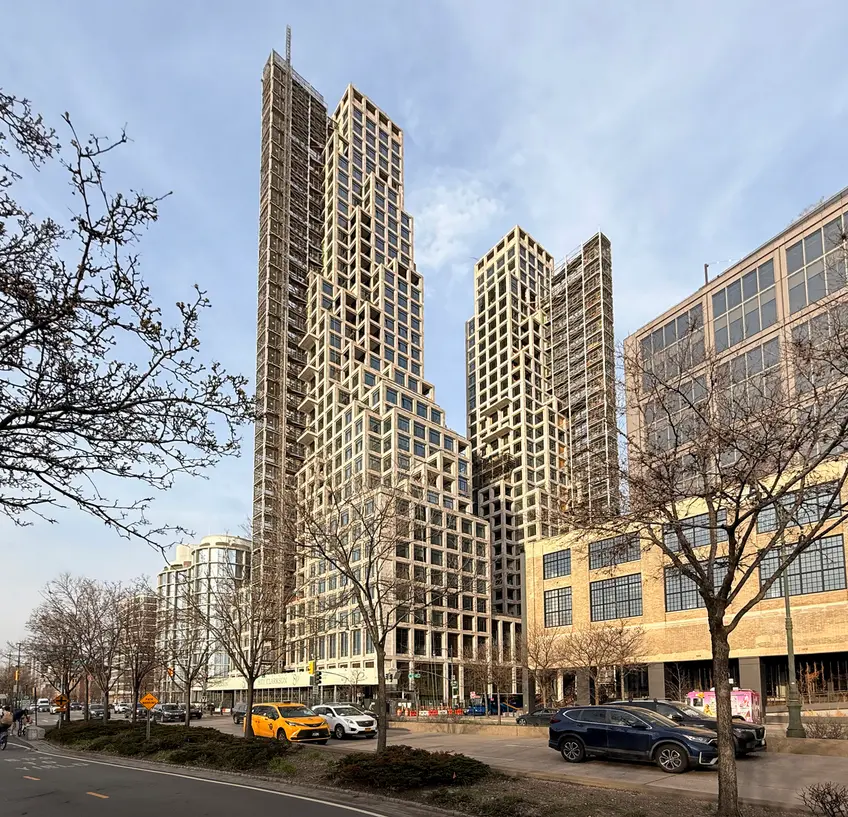
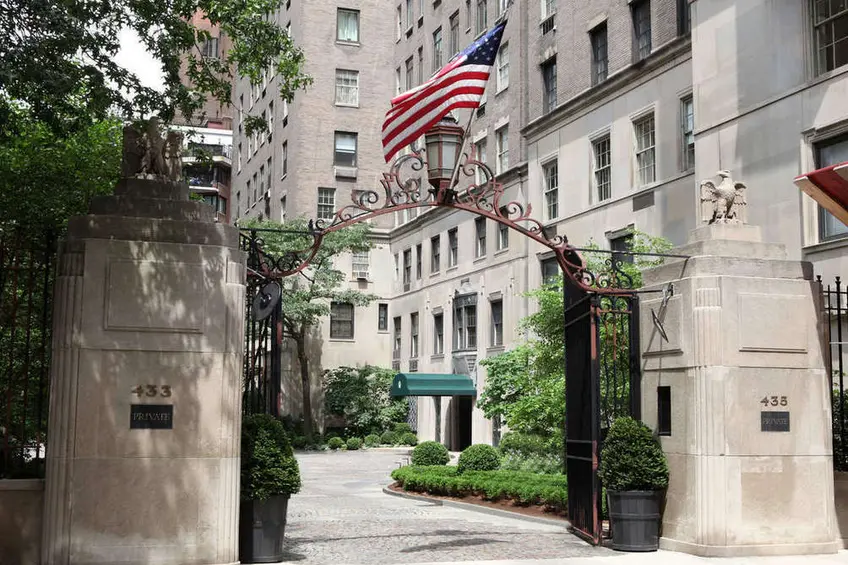
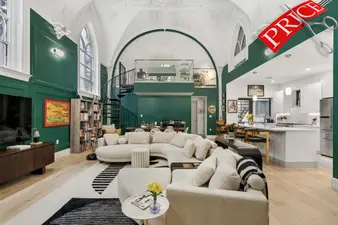
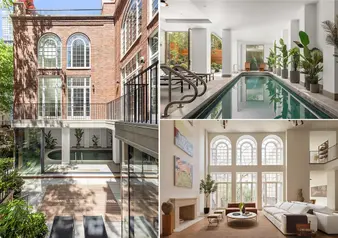
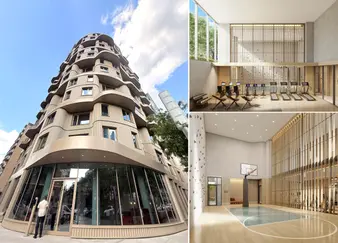
After years of neglect the neighborhood is making a complete turnaround. Older buildings have been renovated, new constructions were erected, so now one can find anything from pre-war walk-ups to full service luxury buildings catering to every need of a New Yorker. Even though the area is much cleaner and safer with a very vibrant and diverse nightlife (there are limitless options from hip bars to trendy theaters and comedy clubs for entertainment), it still managed to retain a very close quiet and friendly community atmosphere that has been so prevalent throughout its history.

Apartment prices are somewhat cheaper here than in the neighboring East Village or Chinatown, however, there are very few subway stops around and most people depend on walking or taking the bus. Proximity of the East Hudson and Brooklyn make this area a convenient location for all those who like to get away on weekends.

Among the area’s important landmarks are the following: Eldridge Street Synagogue (at No. 12), which was erected in 1887 as the first Orthodox synagogue in the area when other congregations were converting Christian churches. It was designed by Herter Bros., for the congregation of K’hal Adath Jeshurun Anshe Lubz and now houses a center for American Jewish history; the Educational Alliance at 197 East Broadway at Jefferson Street, the first settlement house, which was built in 1891; the Louis Abrons Arts for Living Center, designed by Prentice and Chan, Ohlhausen, and built in 1975 at 466 Grand Street between Willett and Pitt Streets, which is part of the Henry Street Settlement that has been active in the area since 1893; the Bialystoker Synagogue at 7 Willett Street between Grand and Delancey Streets that was built in 1826 as the Willett Street Methodist Episcopal Church; the Lower East Side Tenement Museum at 97 Orchard Street; Beckenstein, the large fabric store, at 130 Orchard Street, Schapiro’s House of Kosher and Sacramental Wines at 126 Rivington Street; Ratner’s and Katz’s, delicatessens at 138 Delauncy Street and 205 East Houston Street, respectively; the original building of the Jewish Daily Forward newspaper at 175 East Broadway; the retail strip on Orchard Street between Canal and East Houston Street; the Williamsburg Bridge that was completed in 1903; the Hamilton Fish Park Play Center, designed in 1900 by Carrhre & Hastings, at 130 Pitt Street between Stanton and East Houston Street; and such handsome housing projects as the Amalgamated Dwellings at 504-520 Grand Street, East River Houses/International Ladies Garment Workers Union Cooperative Village, the 1934 Knickerbocker Village, designed by Van Wart & Ackerman, and the 1952 Alfred E. Smith Houses, designed by Eggers & Higgins, both to the north of the Brooklyn Bridge.

In the 1931, the Regional Plan Association of New York called for the redevelopment of a large part of the Lower East Side with large skyscrapers, with beacons flashing from their roofs, spaciously set apart adjacent to a sunken parkway along the recently widened Christie and Forsyth streets. The ambitious and dramatic plan reflected the planners’ desire to remove much of the blight of tenements in the area and make better use of its convenient downtown location.

"This was an alarming image...since it imagined the Lower East Side as a gentrified paradise", noted Gregory Gilmartin in his monumental and superb book, "Shaping the City, New York and the Municipal Art Society", (Clarkson Potter, 1995).

The plan, however, did not advance very far and, although numerous large housing developments would be erected soon thereafter along, or near, the FDR Drive overlooking the East River, tenements remained the predominant building type for much of the southeast quadrant of Manhattan including the East Village, the Lower East Side, Little Italy and Chinatown.

This large area has many interesting landmarks, but its richest legacy is the immigrant tradition of poor people coping with, and often overcoming, horrendous living conditions. Despite its low-rise nature, this has been one of the world’s densest areas in terms of population. For more than a century and a half, the Lower East Side has been one of the city’s poorest areas and has been very slow to change. Although its crowded conditions were eased somewhat by the public housing programs that began in the 1930’s and from eventual abandonment, it remains as a vast and devastating indictment of the city that so large an area remains so neglected so close to its core.

Indeed, one of the city’s most infamous slums, known as the "Five Points", was just to the east of the city’s civic and court center at Chambers Street and what is now known as Foley Square. In the 18th Century, shanties were erected around what was then the Collect Pond and the area was a tannery district. Towards the end of the 19th Century, the block then bounded by Mulberry, Baxter, Bayard and Park Streets was known as Mulberry Bend and had many notorious alleys: Bandits’ Roost, Bone Alley, Thieves’ Alley, Ragpickers’ Row, Kerosene Row and Bottle Alley. This area became a focus of a journalist, Jacob A. Riis, whose famous 1890 book, "How The Other Half Lives", which was illustrated with many dramatic photographs, documented the wretched living conditions and spurred some social reforms such as new sanitary regulations and parks and settlement houses. The attention Riis brought to the area’s problems was not new as James D. McCabe had written about them in "Lights and Shadows of the Great City" in 1872, but Riis’s report was well documented with alarming statistics."

In his introduction to a 1997 edition of the Riis book published by Penguin Books, Luc Sante observed that "the book haunts us because so much of it remains true." "While its lasting social effects were many - there are no more windowless rooms, double-decker tenements, cellar apartments, dwellings accessible through alleys, doughnut bakeries in basements, sweatshop franchises in slum flats - the living conditions of the poor remain abominable," Sante maintained.

Overcrowding was already infamous in the area in the 1840’s and by 1879 the city passed a law that tried to improve tenement conditions somewhat by requiring that some provision be made for "light and air." By 1901, the city, confronted by the fact that "Old Law" tenements were still pretty uninhabitable except for the ever increasing hordes of desperate new immigrants, enacted another law to improve tenement conditions. The "New Law" tenements got a little more "light and air" and were mandated to include a toilet for each apartment, but they could still be erected with wooden stairs and air shafts had only to be three feet wide. Nevertheless, conditions scarcely improved over the next two decades or so: "...for the poor, things had gotten worse: more people lived in Old Law tenements in 1925 than in 1909," observed Gilmartin. The next year, August Heckscher, a philanthropist and real estate developer, unsuccessfully called for "the city to spend half a billion dollars over five years to building new housing in the slums", Gilmartin reported.

In the ensuing decades, planners debated the merits of open space and low density versus the "no-man’s land" of greenery and the "fracturing" of the "common space" of the street often created by superblocks and megaprojects. Some would also become disenchanted with the merits of high-rise housing, and all would be frustrated by insufficient public funds and long list of applicants.

Tenements were often quite attractive and solidly built, especially by modern standards, but exterior fire escapes usually marred, if not severely scarred, their facades. On the other hand, much of public housing differed little from most new apartment construction except in size and quality of lobbies and rooflines.

If the Lower East Side areas are not "The City Beautiful," it is the soul and the guts of the city, filled with aspirations and energy and passion and community, an isprit de la citi. At first glance, these tenement turfs may appear as urban wasteland, but they have also been heroic battlefields for millions of refugees, first mostly from Europe, who soon scraped and huddled together.

In his fine book, "New York, A Guide to the Metropolis, Walking Tours of Architecture and History, Second Edition, (McGraw-Hill, Inc., 1994), Gerard R. Wolfe describes the immigrant’s history in the area.

"They moved into the squalid, hastily constructed tenements that filled every block in the area. As new arrivals continuously swelled the teeming ghetto, it became the most densely populated district in the world. By 1884, the population reached an astonished 946 people per acre; one-and-a-half times that of Bombay, India. In spite of their grinding poverty, the struggle for survival, and the drudgery of daily life, Jewish institutions flourished. More than 500 synagogues and Talmud Torahs (religious schools) were constructed: a Yiddish theater was founded and Hebrew and Yiddish book publishers flourished; and more than a dozen Yiddish newspapers appeared on the newsstands....With the passage in the 1920’s of restrictive laws, the great flood of immigration was finally halted and the growth of the ghetto stemmed. As families moved to better neighborhoods in the city, the ’old neighborhood’ began to decline, and the Jewish ghetto is now largely gone....the hundreds of synagogues - many of them awesome architectural masterpieces - are reduced to a scant, crumbling handful, and the lingua franca, once exclusively Yiddish, is yielding to a babel of Spanish, Chinese, and Hindi."

"Nearly every part of New York has metamorphosed several times during the last two centuries," observed the eighth edition of "New York Access," by Richard Saul Wurman, (Access Press, 1998), "But in this area, it’s mainly the populace, rather than the architecture, that has changed. During the 1860’s, thousands of Germans arrived, forcing the long-settled Irish farther uptown. Between 1881 and 1910, 1.5 million Jews fled Romania, Hungary, and Russia, creating the largest Jewish settlement in the world on Manhattan’s Lower East Side. Italians, Greeks, Turks and Poles were among the other settlers," it continued.


Comments or questions? · Phone: 212.755.5544
Copyright © 1994-2012 CITY REALTY.COM INC. All Rights Reserved.
568 Broadway, Suite 802 New York, NY 10012
Terms of Use · Our Privacy Policy · About CITY REALTY.COM · Advertise With Us · Site Map
Developed by REOL Services


An equal housing opportunity.
All information furnished regarding New York City property for sale, rental or financing is from sources deemed reliable, but no warranty or representation is made as to the accuracy thereof and same is submitted subject to errors, omissions, change of price, rental or other conditions, prior sale, lease or financing or withdrawal without notice. All dimensions are approximate. For exact dimensions, you must hire your own architect or engineer.