|
About 1600 Broadway
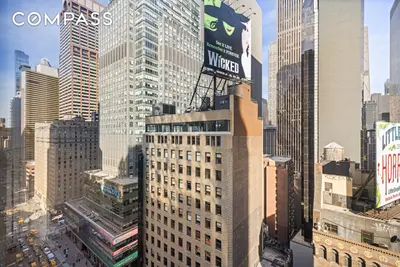
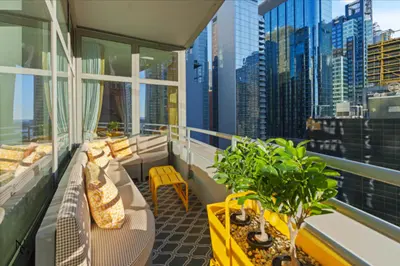
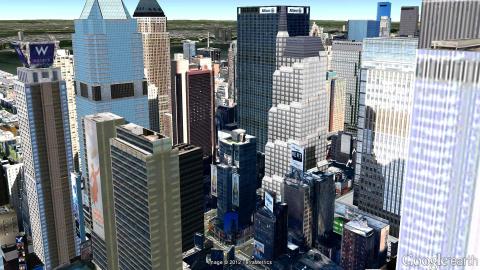
The 27-story residential condominium apartment building at 1600 Broadway at 48th Street offers a very full package of amenities, a fine Theater District/Times Square location, and many curved balconies.
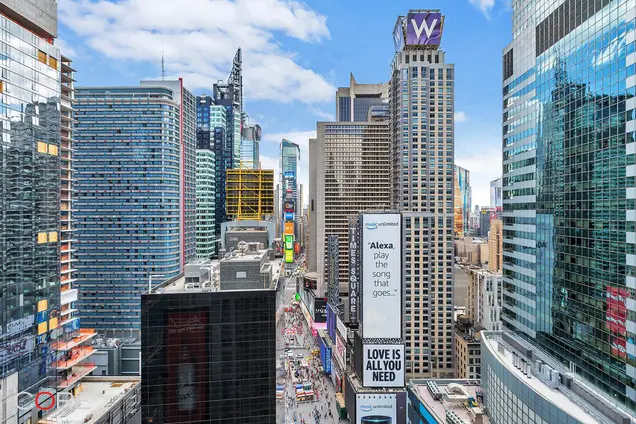
The building, which was developed by Sherwood Equities of which Jeffrey Katz is a principal, also has two huge advertising signs at its south corners that help give this rather complex structure something of a space-age sheen. It may not be a craft for landing on alien celestial bodies but it exudes energy compatible with the district’s bright lights. For those “wild-and-crazy” people bored with typical urban vistas of rivers and parks, this building offers the pulsating, razzle-dazzle of the Times Square district.
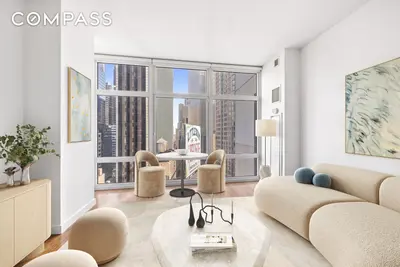
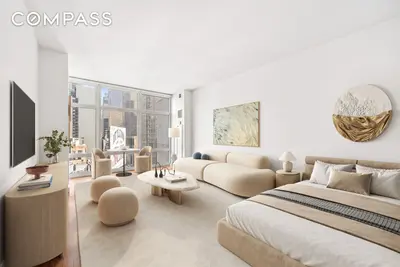
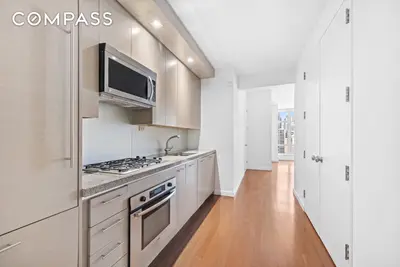
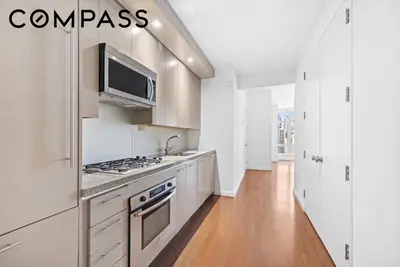
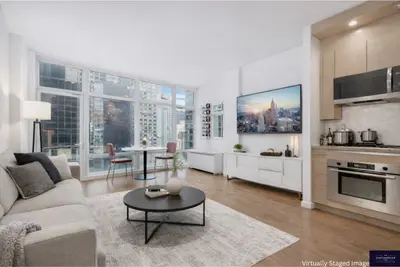
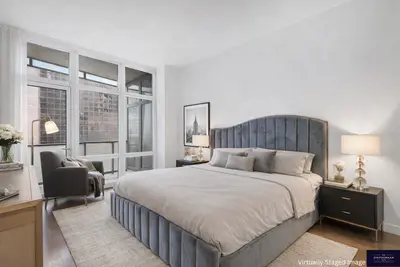
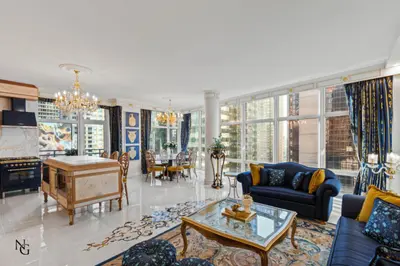
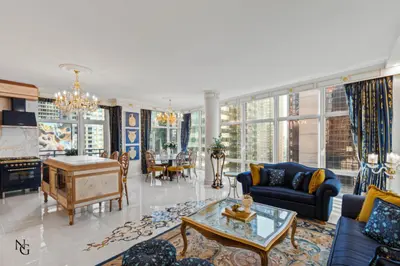
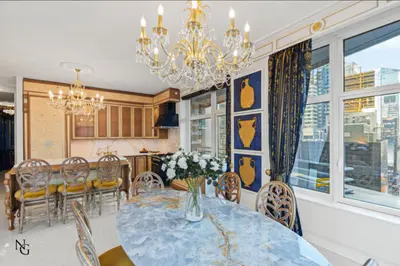
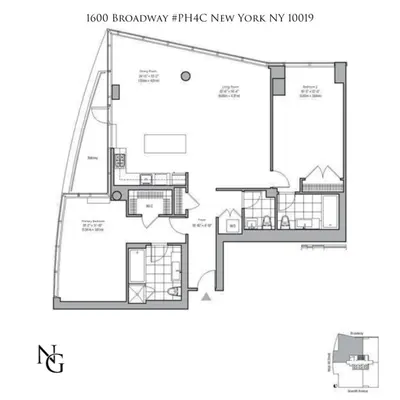
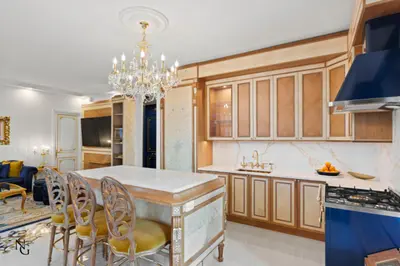
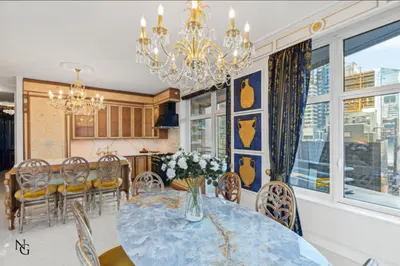
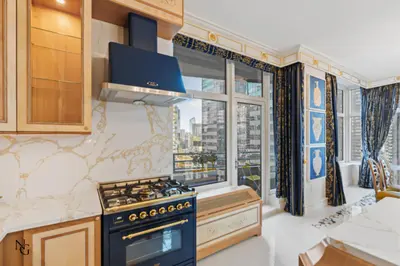
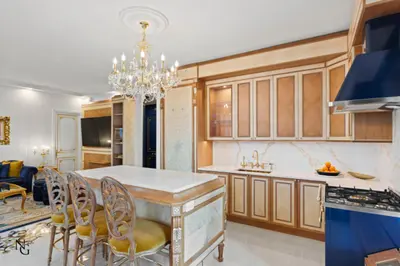
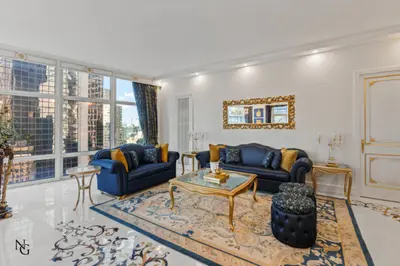
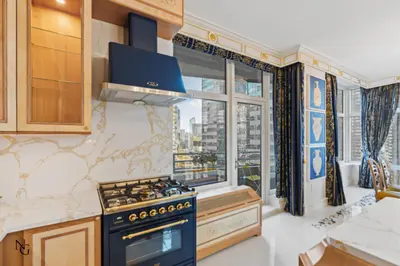
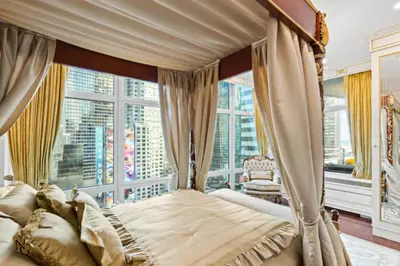
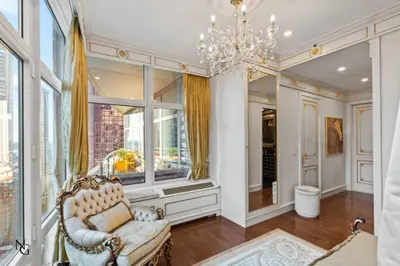
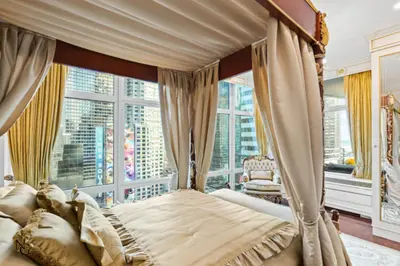
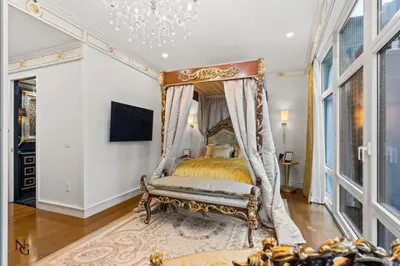
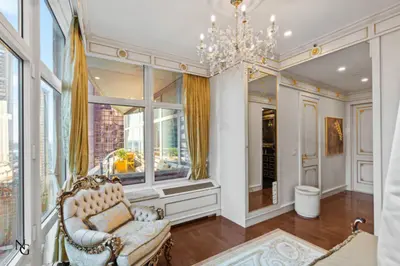
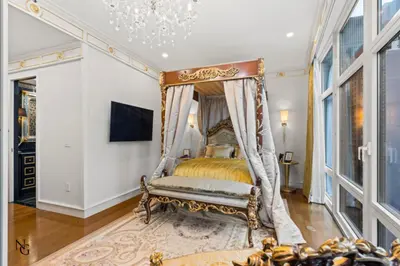
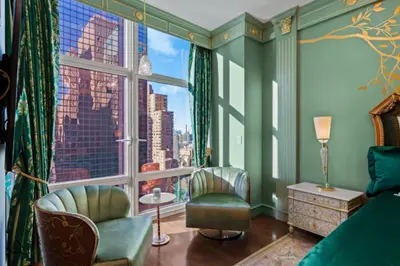
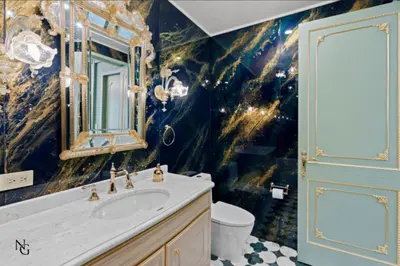
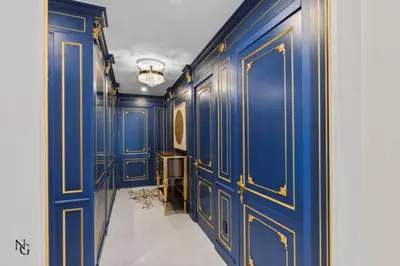
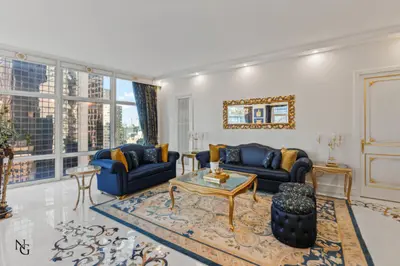
The 137 apartments have 9-1/2 foot high ceilings, floor-to-ceiling windows, and washers and dryers and the kitchens have Golden Leaf granite countertops, full height sandblasted mirrored backsplashes, and contemporary Italian rift cut oak cabinetry, as well as premium Subzero, Miele, LG and Bosch stainless steel appliances.
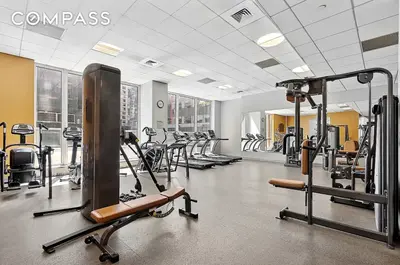
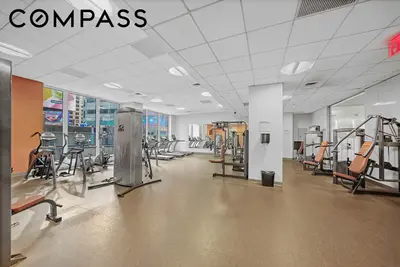
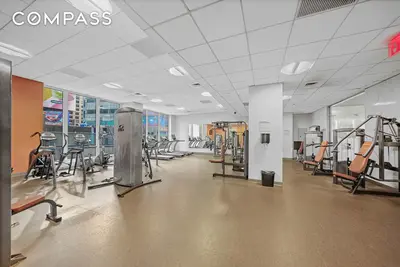
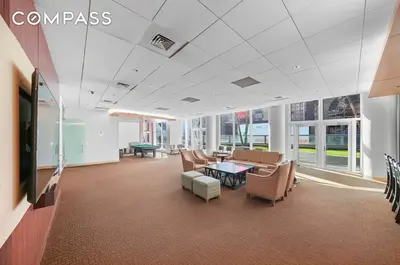
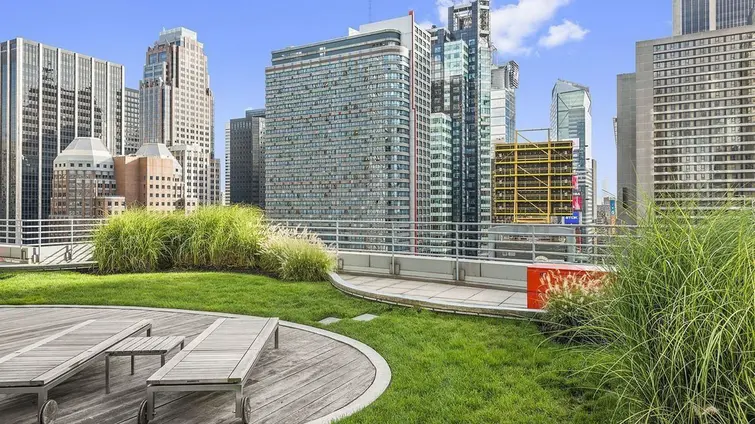
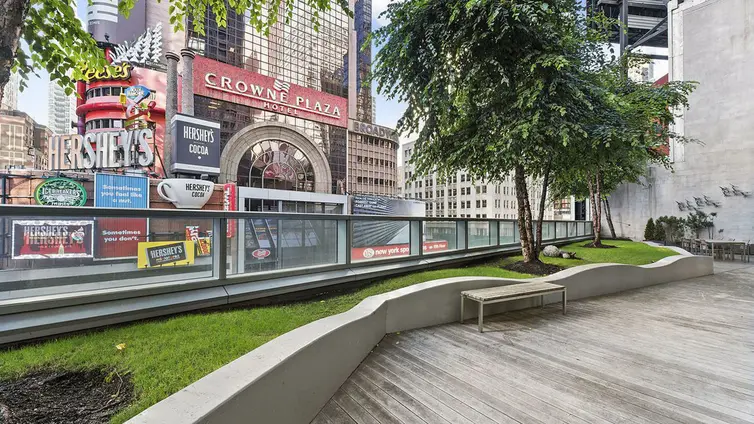
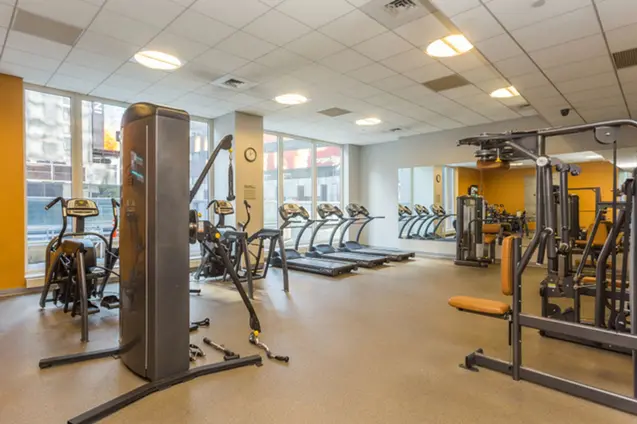
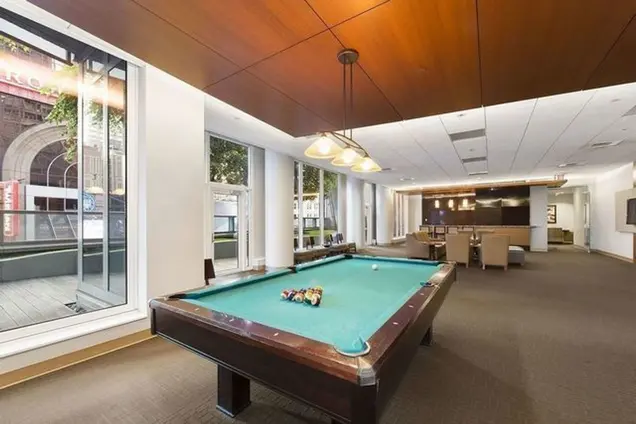
The building has also have “Club on the Square, a fitness center, entertainment lounge with television, bar and billiards, a virtual golf amenity and a business center. It also has a landscaped terrace on the fourth floor with trees, a putting green and rolling lawns and a rooftop “observatory” as well as a 24-hour attended lobby and private storage facilities.
The 290-foot-high building has nine-story-high advertising signs that project like wings from the middle of the tower’s south façade between Broadway and Seventh Avenue.
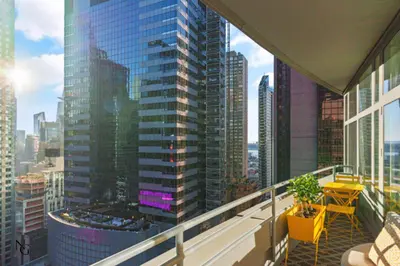
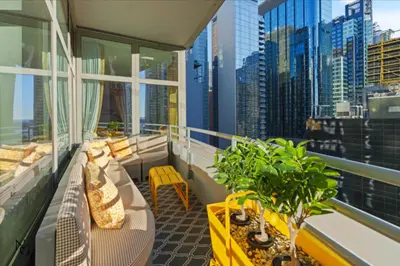
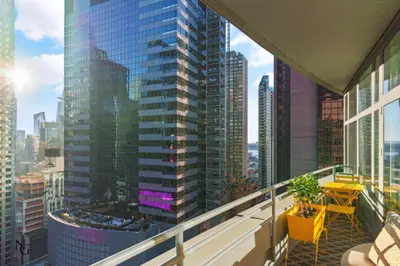
The building has a tower setback over a two-story-high base and the top five floors of the tower are angled outwards and the middle part of the east and west facades are also flare outwards. Some of the top floor balconies on the west façade are curved.
Sherwood Equities acquired the site in 1986, and it built the black-glass Renaissance Hotel that occupies much of the small block just to the south, at the north end of Times Square. Sherwood also owns a minority interest in 1 Times Square.
Jorge Szendiuch of Einhorn Yafee Prescot is the design architect and Cetra Ruddy and SLCE Architects are also involved and M. Paul Friedberg and Partners is the landscape architect for the building’s large terrace on the fourth floor, a club floor for the residents with virtual golf, and the “observatory” on the roof.
Prices started at $720,000 for studios, $820,000 for one-bedrooms, $965,000 for one-bedrooms with a home office, $1.25 million for two-bedrooms, $1.95 million for three-bedrooms and $2.5 million for penthouses.
The building replaced the former 10-story, Studebaker Brothers building that was erected in 1902 and designed by James Brown Lord, the architect of the Appellate Division of the State of New York building on Madison Square Park. Although it was certainly one of the more distinguished commercial structures in the Times Square area, it was not an official New York City landmark.
In a November 8, 2004 article in The New York Times, David Dunlap wrote that the handsome building was “one of New York’s most familiar unknown buildings” as it was adorned with large advertising signs for Maxwell House, Chevrolet, Braniff and Sony.
“Columbia Pictures may be said to have been born there,” Mr. Dunlap continued, “since it was in an office at 1600 Broadway that Harry Cohn, Joseph Brandt and Jack Cohn formed the C.B.C. Film Sales Company in 1920. Four years later, tired of the nickname ‘Corned Beef and Cabbage,’ they renamed the company Columbia. In the 1930s Joseph Hilton & Sons, a clothier, operated in the building and in 1939 the building, which had a large cornice, chamfered corners and large, arched windows on its 9th floor, was home to the Ripley Believe It or Not! Odditorium in 1939 and soon thereafter to Howard Clothes.
According to “Capt. Spaulding,” a poster at http://www.wirednewyork.com, “Bix Beiderbecke played there with two different bands. (The Wolverines, in 1924 at the Cinderella Ballroom, and with Adrian Rollini’s band at the Club New Yorker in 1927....The Paul Whiteman club was there too!”
|