|
About Lincoln Guild, 303 West 66th Street
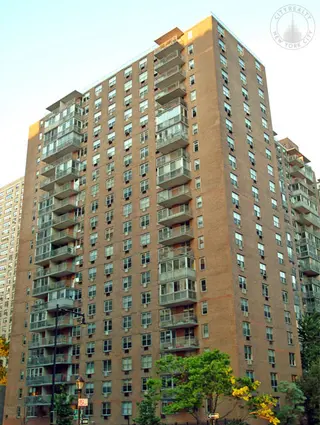
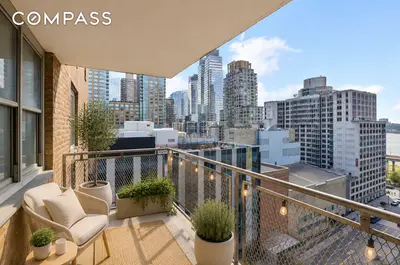
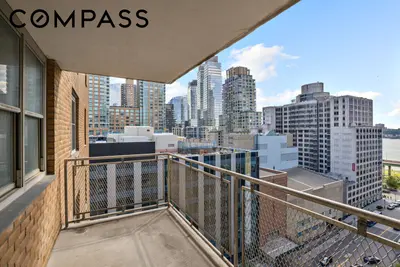
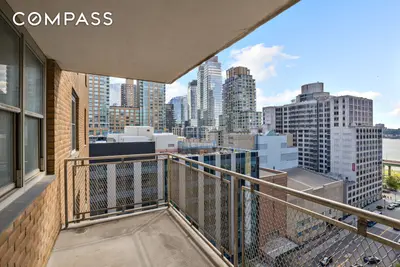
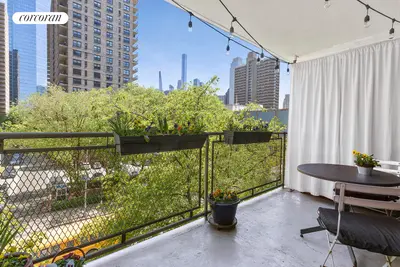
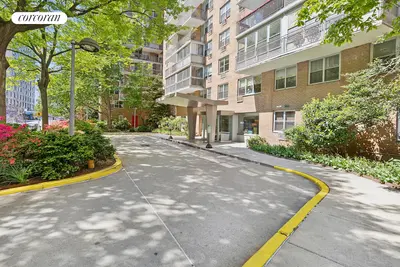
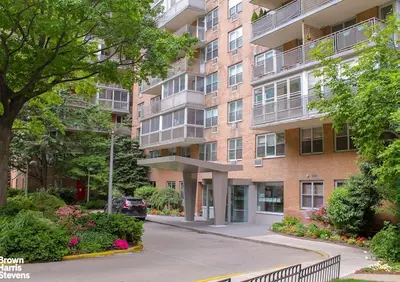
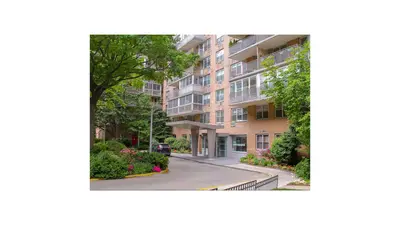
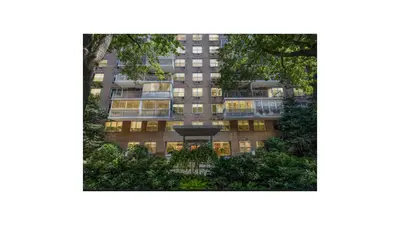
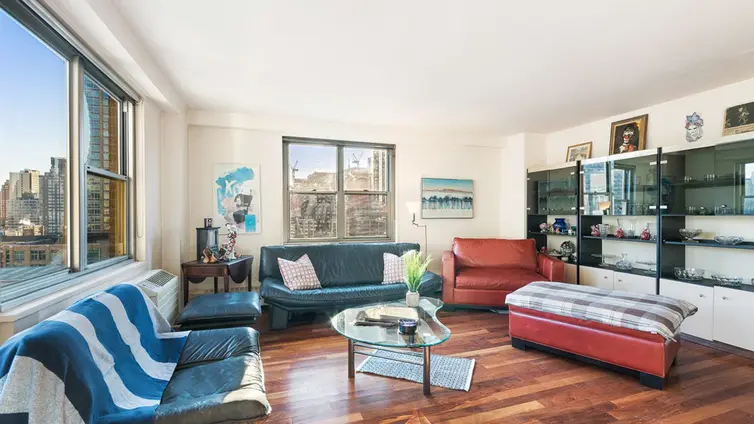
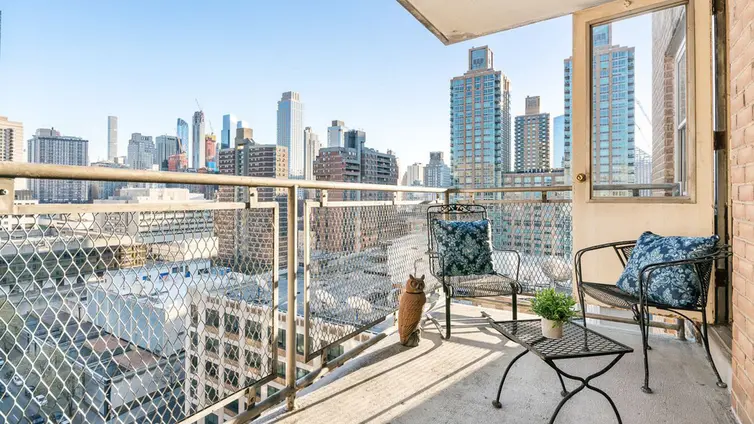
This red-brick apartment building at 303 West 66th Street was erected around 1961 and is notable for its lushly landscaped curved entrance driveway and its many balconies.
It is also known as 139-159 West End Avenue and 2-10 Freedom Place.
It is close to the large Lincoln Towers project that was erected around the same time. The Lincoln Towers buildings are large slabs and this building has a tall, setback central section and two lower wings that frame the driveway.
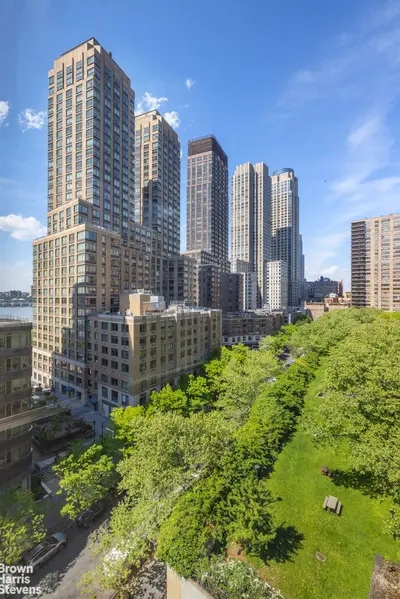
This building has 420 cooperative apartments and was known as Lincoln Guild.
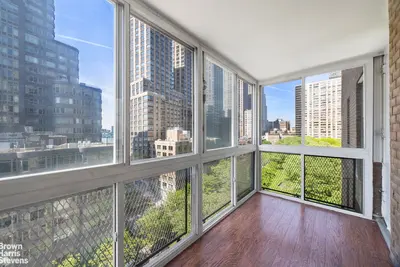
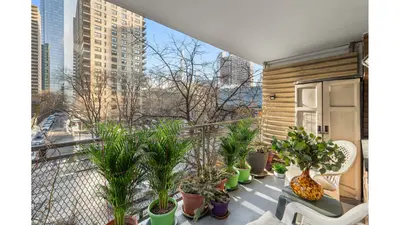
It is one of many buildings in the city where many residents have enclosed their balconies that significantly adds to the building’s floor-to-area ratio and probably violates its legally permissible residential space under zoning.
The building has a doorman, a bicycle room, a playroom and permits each apartment to have a cat but no dogs.
A January 23, 2008 article in The New York Times reported that some residents in the building were disturbed by a howling noise emanating from ventilating fans for the Amtrak train tunnel that runs beneath a neighboring building at 140 Riverside Boulevard.
The howling problem was eventually resolved.
An article by Andree Brooks in the New York Times February 14, 1993 reported that the building was involved in a case, Lincoln Guild Housing Corporation v. Stuckelman, in which Judge Peter Wendt of New York Housing Court ruled in November 1992 that Anna Stuckelman, a shareholder at 303 West 66th Street, had the right to let her grandniece occupy her apartment without board approval.
"Judge Wendt based his decision on an interpretation of the state's 1983 Roommate Law, which gave a primary tenant the right to bring one other person to live in the unit without the landlord's approval. Shareholders are frequently classified as primary tenants by the courts because they are, in essence, tenants of the co-op corporation. Thus, argued Judge Wendt, the customary language in a co-op proprietary lease restricting occupancy to the shareholder's immediate family is contrary to the intention of the roommate law and cannot be upheld. The Lincoln Guild co-op had argued that the grandniece was an illegal subtenant since Mrs. Stuckelman had been in a nursing home at the time."
Subleasing regulations have since been tightened.
An article by Alan Finder in the June 27, 1990 edition of The New York Times reported that New York City housing officials had moved "to take over a publicly subsidized, middle-income housing cooperative on Manhattan's Upper West Side, where auditors accused the co-op's board of engaging in 'irresponsible behavior.' The article said that the city took the unusual step of seeking to remove the board of the co-op on the basis that it has "systematically violated" city rules "that limit the incomes of those eligible to buy apartments, according to a report from the Department of Housing Preservation and Development."
"Besides income violations, the city report cited other improprieties at the building, which is known as Lincoln Guild. The estates of deceased residents have retained 39 apartments, subletting them for huge profits or keeping them vacant, the report said. In addition the owners of as many as one-quarter of the 420 apartments - which were built under a city program to create affordable housing - may be subletting them, keeping them vacant or using them part-time, according to the report. Because most of the practices do not violate specific rules in the contract between the cooperative and the city, they represent 'moral abuses, as opposed to legal abuses,' said Felice Michetti, the Commissioner of Housing Preservation and Development....Ordinarily when a tenant in a subsidized co-op leaves or dies, his apartment is sold for no profit at a very low price to the next eligible person on the waiting list. The lawyer representing the board of directors said the members had broken no rules. An audit in 1987 found no violations, said the lawyer, Howard Schechter. City regulators were aware then that the income restrictions were no longer being enforced, he said. Mr. Schechter said the co-op did not have to enforce the guidelines after its 25-year contract with the city expired in July 1986. City officials maintain that the rules must be applied because the building still receives a partial exemption from municipal property taxes....The city cannot prevent estates from holding apartments in such a co-op because of a 1988 court ruling. In a case involving a Brooklyn cooperative, Justice David B. Saxe of State Supreme Court said that while he did not think a public asset like a subsidized apartment should be handed down from generation to generation, he had to allow the practice because the city had failed to devise specific regulations forbidding it. The ruling applies to the 13 co-ops in the program, which are known as ''Article 5 redevelopment companies.'' Regulations for apartments in the city's largest subsidized co-op program, known as Mitchell-Lama, permit them to be passed on only to members of a deceased owner's immediate family who have been living in the apartment. City housing officials say the court ruling allows them to require that heirs meet the income guidelines for Lincoln Guild before taking an apartment - and that is the basis of their challenge to the board....The shareholders who first raised questions about abuses at Lincoln Guild are trying in court to prevent the building from leaving the public program. They have obtained an injunction temporarily blocking a vote."
The 20 acre Lincoln Towers campus runs from 66th Street to 70th Street on both sides of West End Avenue, bounded by Amsterdam Avenue on the east, and Donald Trump's Riverside South on the west.
Originally built as rental units, all of the 3,837 apartments in Lincoln Towers were rent stabilized until the eight buildings converted to co-ops on May 1, 1987. 37 apartments in Lincoln Towers were rent stabilized until the eight buildings converted to co-ops on May 1, 1987.
|