- Apartments
- Overview & Photos
- Maps
- Building Specialists
- Floorplans
- Sales Data & Comps
- Similar Buildings
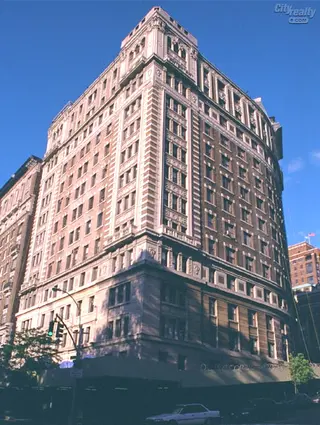
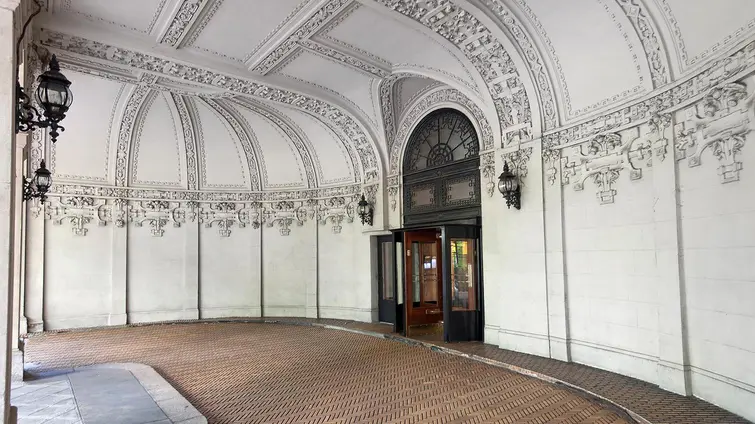
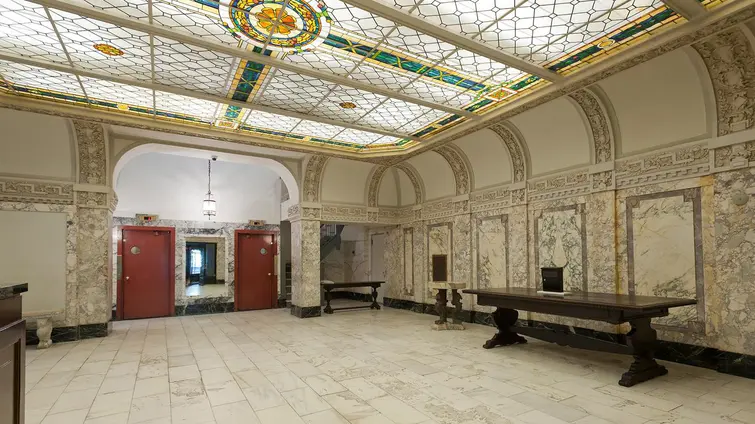
The Paterno, designed by Schwartz & Gross in 1910, stands at the corner of West 116th Street and Riverside Drive in Manhattan with an elegant curved façade and exquisite porte-cochere entrance. This pet-friendly, full-service co-op features a marble lobby with a stained glass ceiling, 24-hour doorman, and various amenities, located near Columbia University and Riverside Park in a thriving area with cultural and intellectual energy.

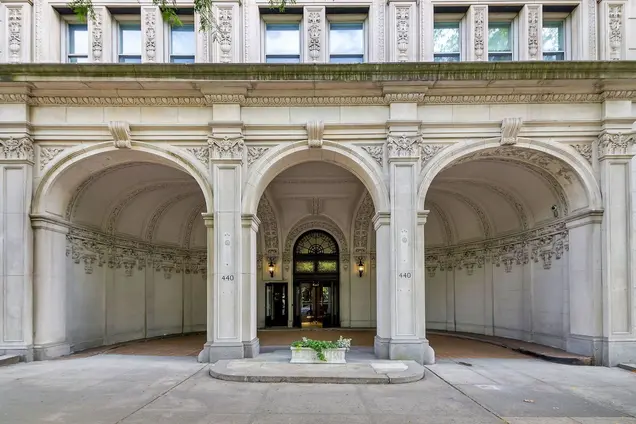
The Paterno, designed by renowned Morningside Height's architects Schwartz & Gross, has since 1910 stood at the northwest corner of West 116th Street and Riverside Drive in upper Manhattan. With its elegant façade curving around towards picturesque Claremont Avenue and the Columbia University campus. Its porte-cochere remains an exquisite entrance after more than a hundred years.
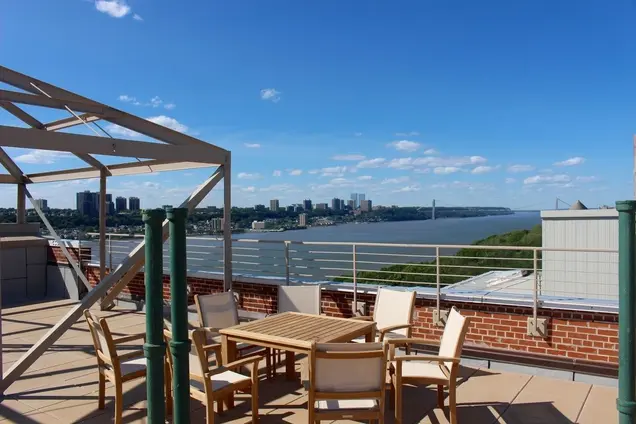
The building has a cavernous marble lobby with a stained glass ceiling is a monument to the elegance of a bygone era and it remains as one of the premier apartment houses in the area. The Paterno is a pet-friendly, full-service co-op with low maintenance, 24-hour doorman, live-in super, bike room, storage, and central laundry room. It is located near Columbia University and on a particularly beautiful stretch of Riverside Park with architecturally outstanding buildings. The thriving yet peaceful area offers a multitude of superb living experiences and has unrivaled cultural and intellectual energy.
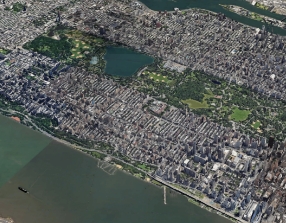
View school info, local attractions, transportation options & more.
Experience amazing 3D aerial maps and fly throughs.
For some co-ops, instead of price per square foot, we use an estimate of the number of rooms for each sold apartment to chart price changes over time. This is because many co-op listings do not include square footage information, and this makes it challenging to calculate accurate square-foot averages.
By displaying the price per estimated room count, we are able to provide a more reliable and consistent metric for comparing sales in the building. While we hope that this gives you a clearer sense of price trends in the building, all data should be independently verified. All data provided are only estimates and should not be used to make any purchase or sale decision.

 6sqft delivers the latest on real estate, architecture, and design, straight from New York City.
Like us on Facebook to keep up with the trends and
6sqft delivers the latest on real estate, architecture, and design, straight from New York City.
Like us on Facebook to keep up with the trends and 