The Normandy CLOSE 
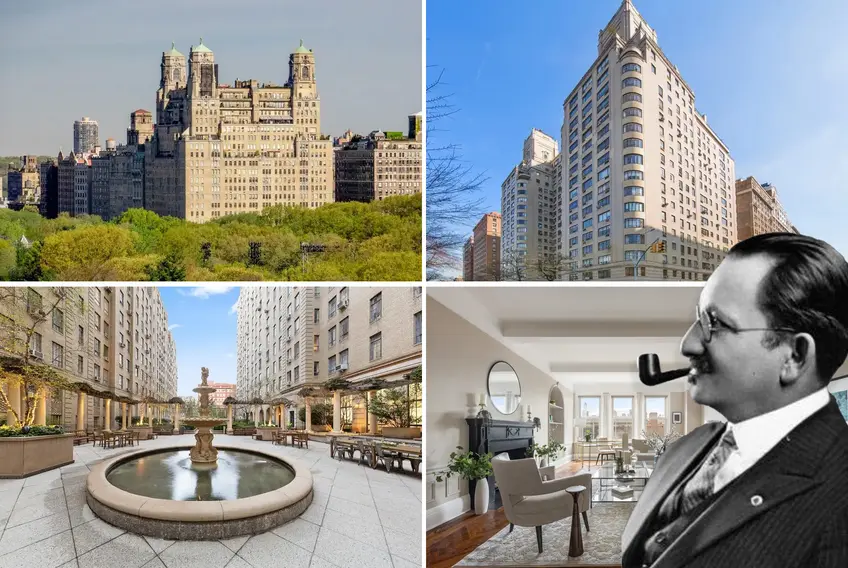
"The greatest of these was the Normandy, which represented the largest residential construction in New York since the onset of the Depression. It was, in fact, the most significant residential real estate project in the city since the completion of Roth’s two quintessential luxury buildings, the Beresford and the San Remo."
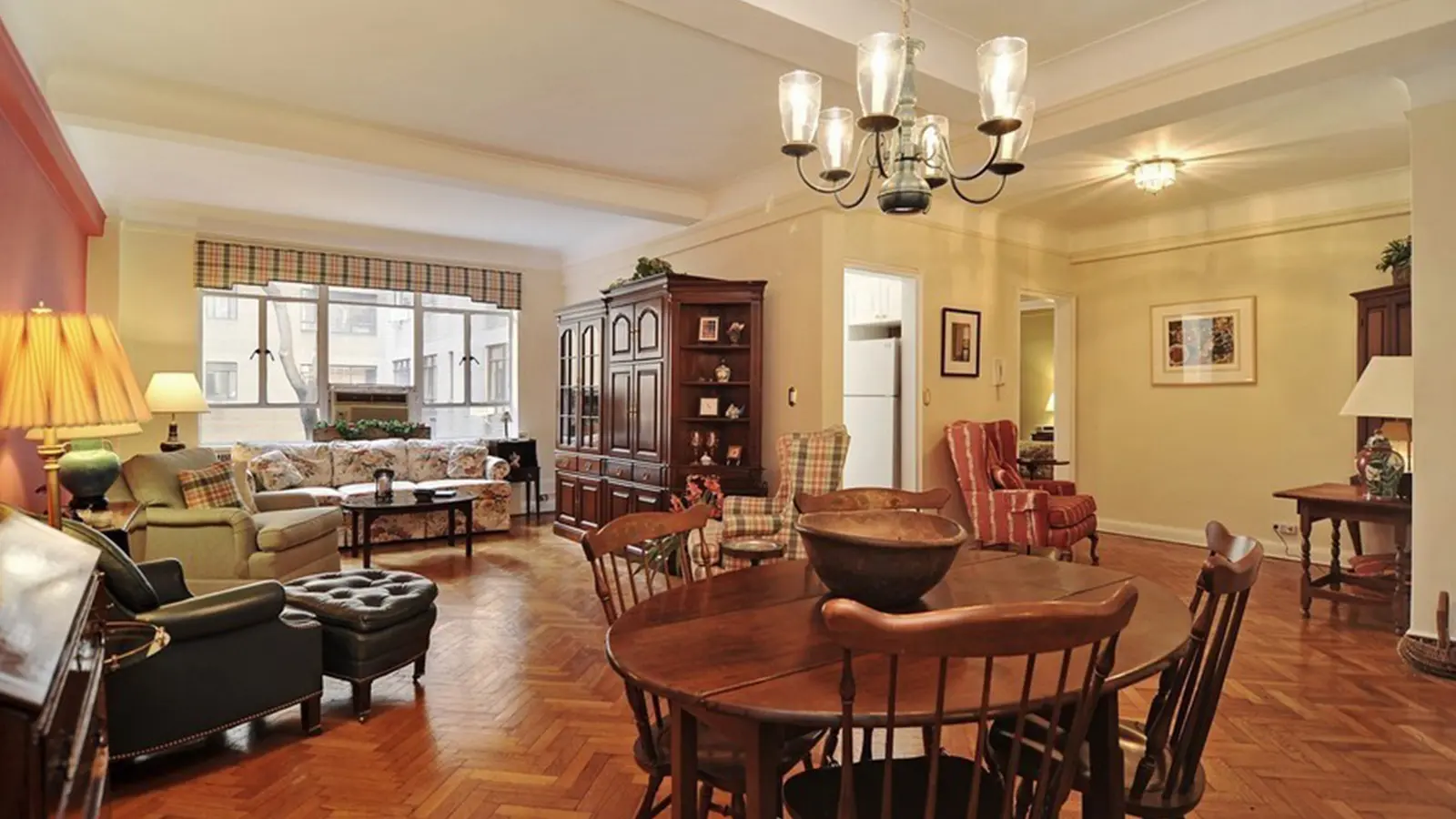
The Depression led to the breaking up of many larger "luxury" apartments in the city into smaller units and a redefinition of the word "luxury." In 1939, "there was a renewed interest in luxury apartments, albeit on a less grandiose scale than in the previous decade…Instead of grand spaces and opulent styling, new high-class buildings offered labor -saving gadgetry and amenities like terraces and duplex layouts. The Normandy was such a building. Rather than entrance galleries, there were modestly sized foyers; instead of large dining rooms, there were dinettes; and in the smaller apartments, there were no pantries or maids’ rooms at all. Even with these limitations, the Normandy was advertised as a modern building for people of means.":
Despite its great vistas of the Hudson River, Riverside Drive had had trouble establishing itself as a prestigious residential address because of the New York Central Railroad tracks that ran along the river until they were covered over in 1937.
"The building’s name, as well as its styling, were undoubtedly inspired by the French ocean liner, the Normandie, which set a speed record on her maiden trans-Atlantic voyage appointed in the most fashionable Moderne style by France’s leading designers and artists, and when the ship arrived in New York, it caused a sensation," Ruittenberg recalled. The oceanliner was seized as enemy property by the United States in 1940 and as it was being converted to a troopship it burned and capsized at a Hudson River pier.
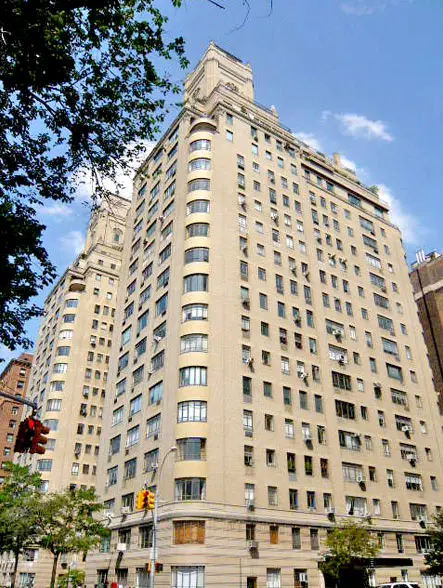
Architect Roth was one of the four development partners for the 20-story apartment building, which occupies the entire Riverside Drive blockfront between 86th and 87th Streets.
"This hybrid of Moderne and classical styling resulted in a graceful and unique composition which is at once conservative and forward-looking. For example, the two-story limestone base is rusticated, but it is executed in a modern, streamlined manner, unlike any palazzo from the past. The rustication is composed entirely of deep horizontal joints that sweep across the building’s facades. This movement is not even halted at the building’s corners, for they are not ninety-degree angles. Instead, the corners are rounded, so they allow the horizontal momentum to proceed unchecked. Even the entrances on Eighty-Sixth and Eighty-Seventh streets are scooped out of the base in concave, semicircular openings that recede into the interior, much the entrance at 888 Grand Course. To the walls of these cavities are applied marble mosaic tiles in abstract geometric patterns of gold, blue and tan. Above the base, segmental casement windows are fitted into the rounded corner, and these perpetuate the streamlined appearance almost all the way up.…Shallow pilasters of buff brick rise above the corners of the base….At the top, Roth employed many classical details, yet in an austere mode. Squat obelisks punctuate the setbacks at the eighteenth and nineteenth floors as they recede into the towers. These are ornamented in a simple manner with flat corner pilasters, denticulated panels and small glass brick windows surmounted by cartouches set within broken pediments. Finials provide additional vertical emphasis at the corners of he towers, and above them rise pyramidal, red mission tile roofs. The very peak of each roof is crowned by a finial-shape copper lantern."
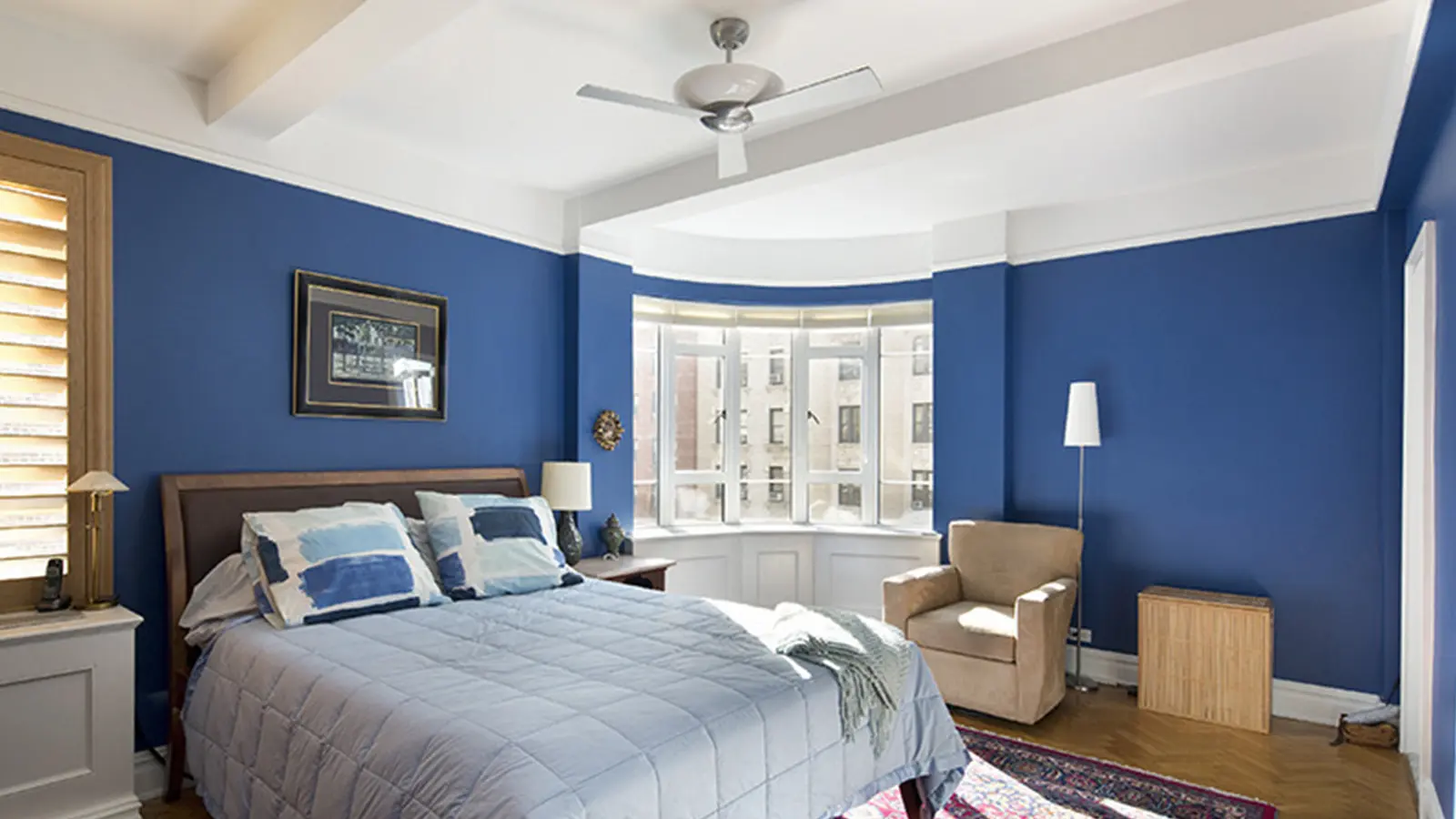
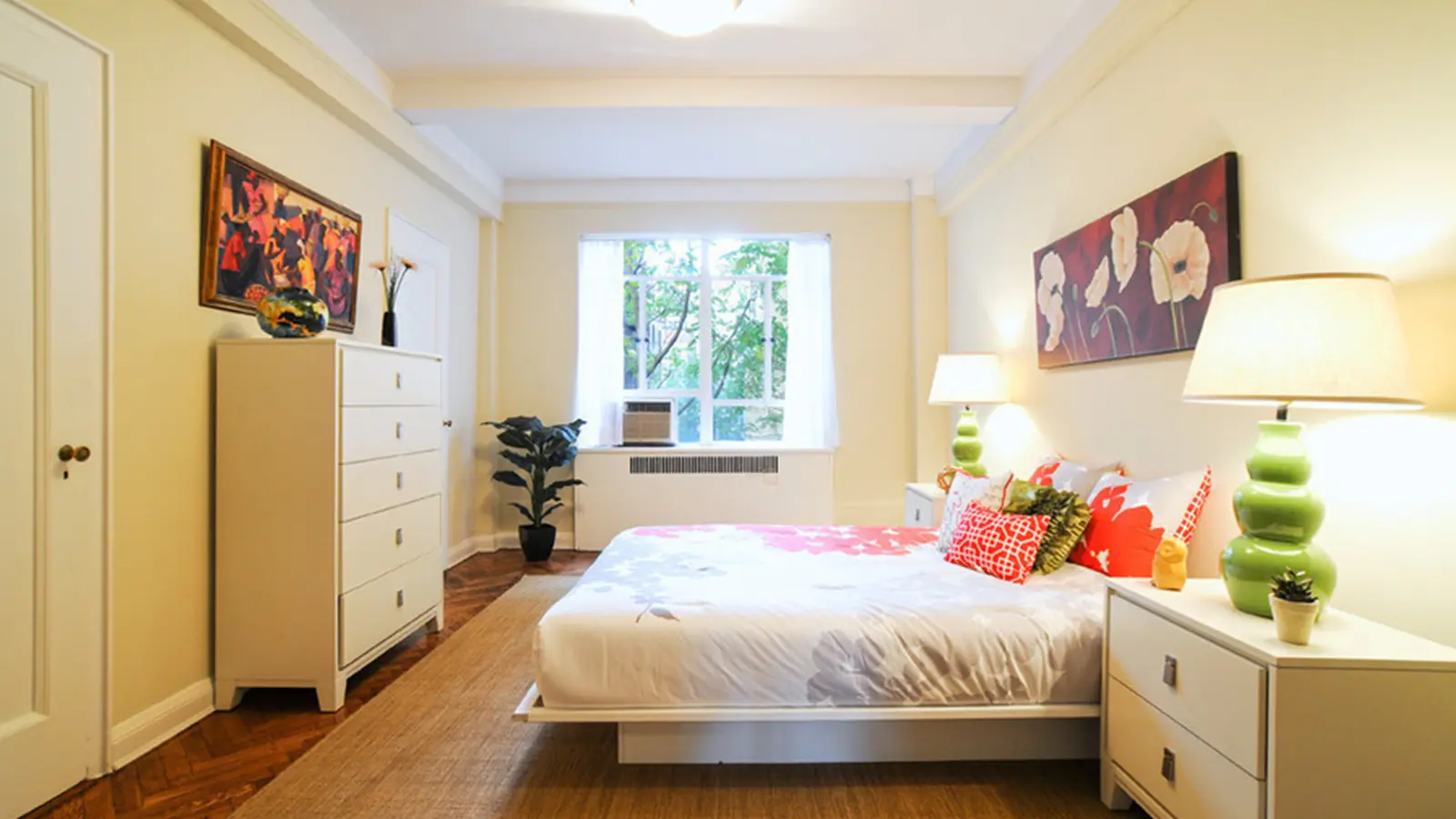
The H-shape of the building’s plan with courtyards cut into the front facing Riverside Drive the back facing east provided two exposures for each apartment, which helped air ventilation and circulation, and the apartments in the center of the building overlooked the east and west garden courts.
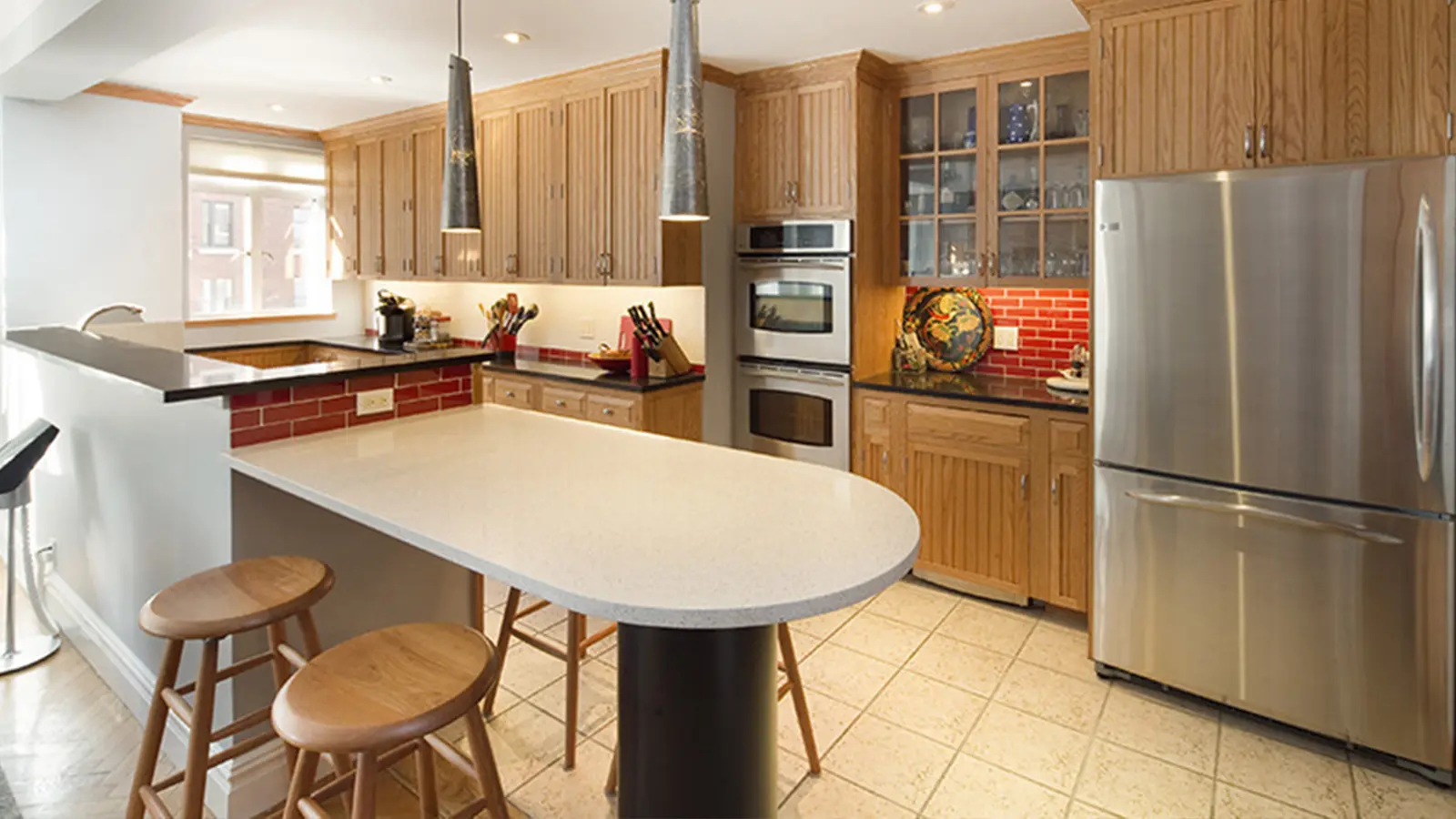
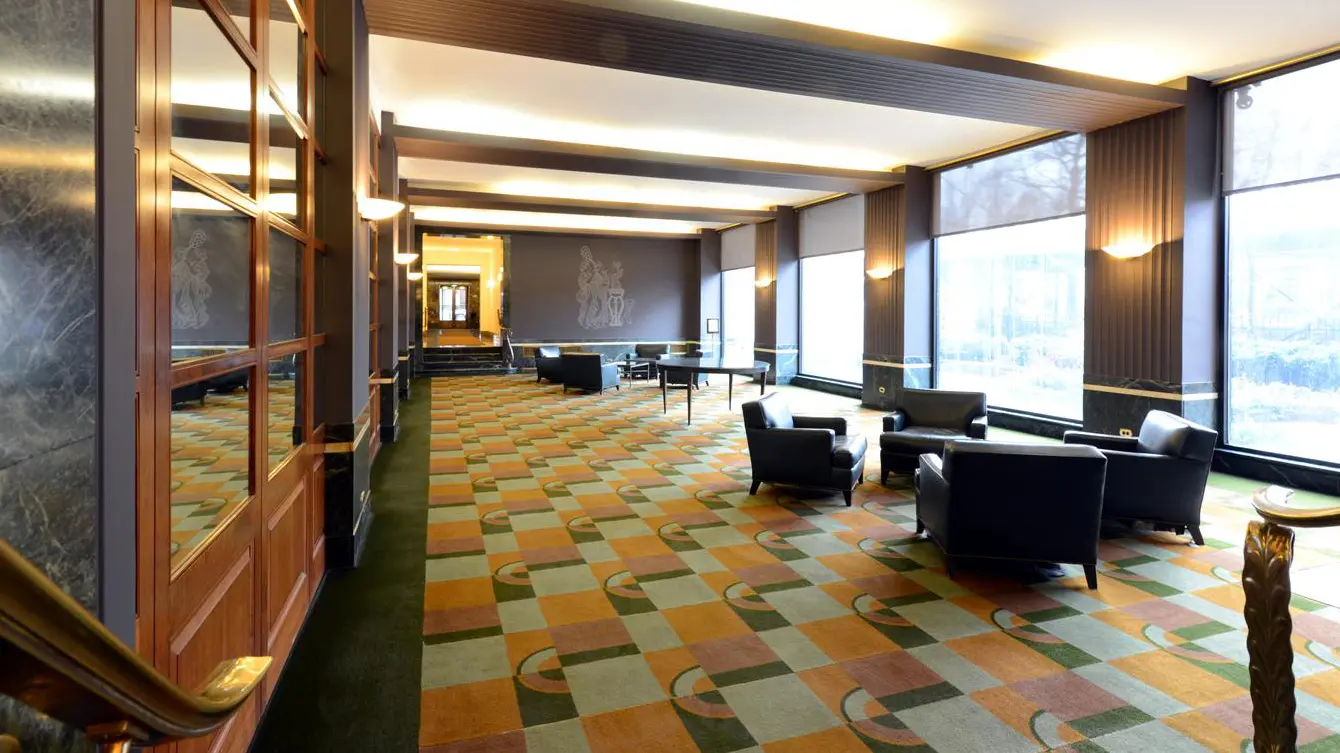
The lobby of the building, which originally contained 250 apartments - 15 per floor - with 1,060 rooms, is highlighted by a sunken "garden loggia" with green marble wainscoting with concealed cove lighting. Many of the apartments without dining rooms had "dinettes" that were separate from kitchens and not mere "alcoves". Some of the apartments’ foyers were circular and as wide as 14 to 16 feet and some employed glass brick. Many of the units, including the smaller ones, were duplexes, and balconies near the top of the building were rounded. The penthouses at the base of each tower were duplexes with glass-brick circular staircases and ceiling heights of 11 to 12 feet and fireplaces.
Ruttenbaum noted that Roth was not a fan of fireplaces and quotes him: "The architect, who puts in a lot of wood-burning fireplaces in a large building, will have the top of his structure bristling with chimneys, an ugly sight. All sides and all parts of a building should be beautiful. This is the modern idea."
The squat twin towers of the Normandy were repeated in similar style by the architect at 880 Fifth Avenue a few years later.
Although the Normandy and its Moderne style is less lavish than the great Beresford and San Remo towers by the same architect, it is a handsome and elegant building that manages its bulk with ´lan. By recessing its central facade from the corner wings considerably and making its formal towers relatively tall, like an ocean liner’s smokestacks, albeit without rakish tilts, the building has a dynamic, if slightly ungainly, presence on Riverside Drive. It’s interesting to note that the lower of the two rounded corner balconies end in vertical curves that rise to meet the building’s sides, a subtle but fine touch.
To view all NYC apartment information and prices, log in or register now it's quick, easy and free.
You'll get access to all NYC apartments available including thousands of listings all for free.

Forgot Password?
If you need assistance, please call us at 212-755-5544.
|
Comments or questions? · Phone: 212.755.5544
|
|
An equal housing opportunity.
|
| All data is deemed reliable but is not guaranteed accurate by the REBNY / RLS or CityRealty. See Terms of Service for additional restrictions. All information furnished regarding New York City property for sale, rental or financing is from sources deemed reliable, but no warranty or representation is made as to the accuracy thereof and same is submitted subject to errors, omissions, change of price, rental or other conditions, prior sale, lease or financing or withdrawal without notice. All dimensions are approximate. For exact dimensions, you must hire your own architect or engineer. The number of bedrooms listed on this website is not a legal conclusion. Each person should consult with his/her own attorney, architect or zoning expert to make a determination as to the number of rooms in the unit that may be legally used as a bedroom. |