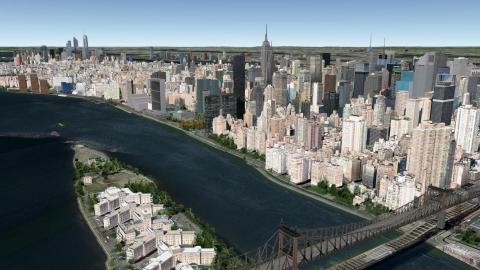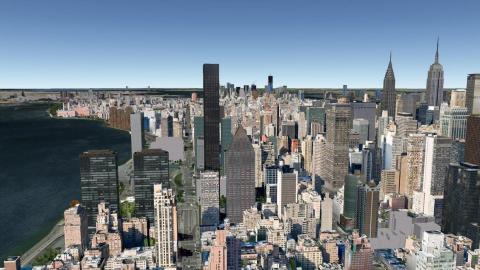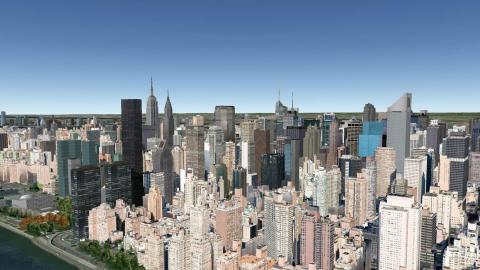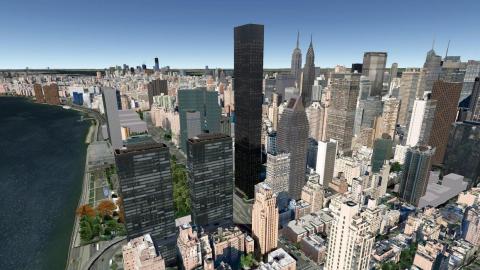
Trump World Tower CLOSE 
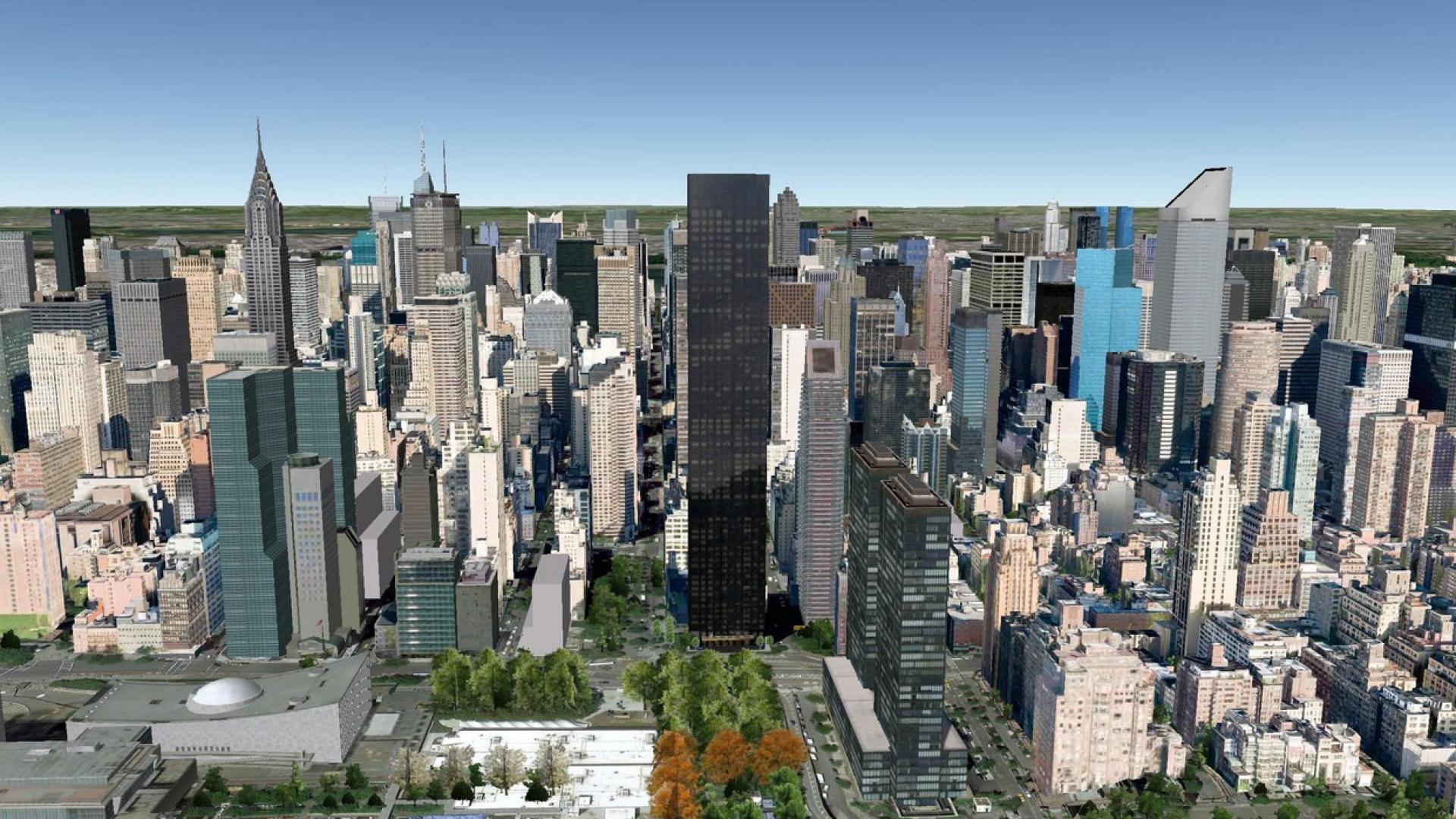
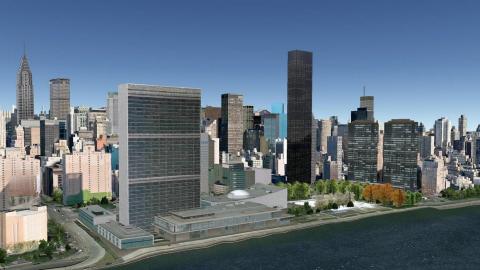
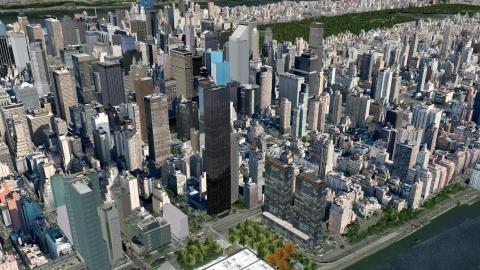
Trump World Tower, the tallest residential building in the city when it was completed in 2001, created a major controversy over the fact that it was much taller than the United Nations Secretariat Building.
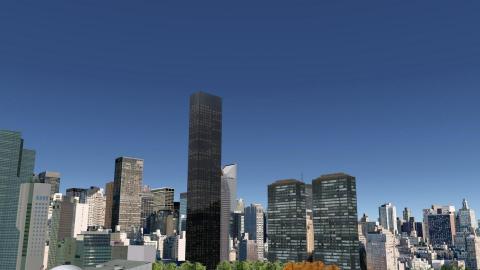
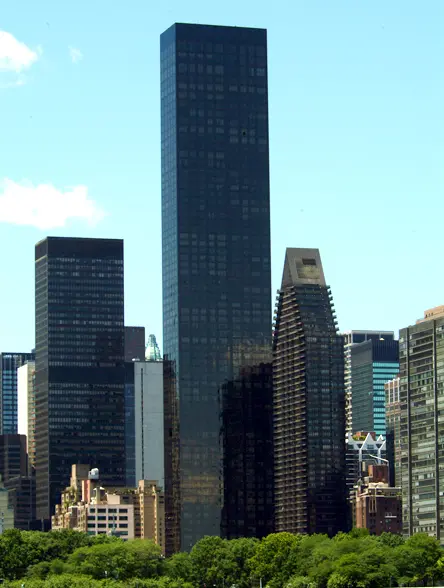
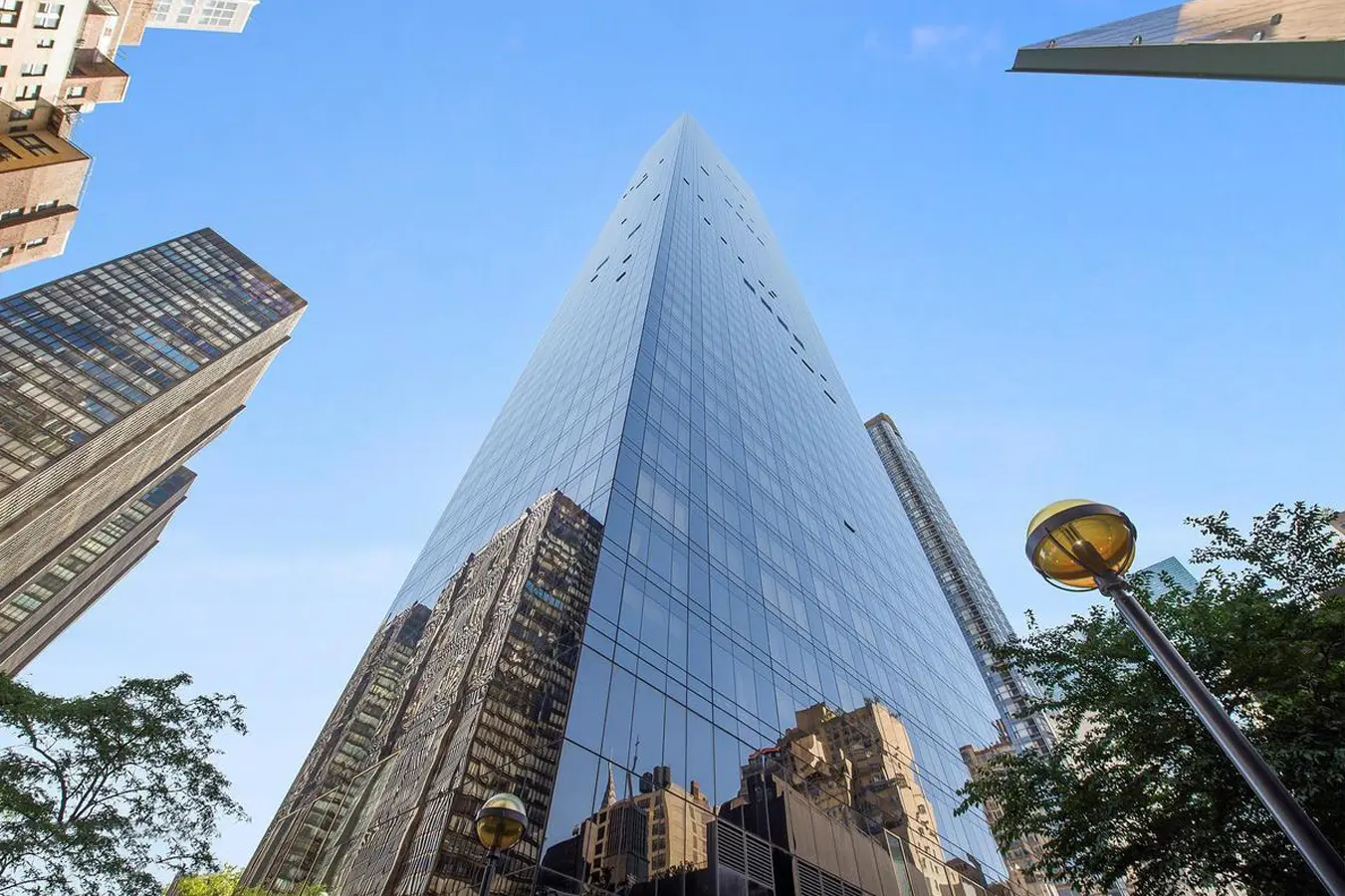
This monolithic, 861-foot-high, 72-story building at 845 United Nations Plaza on First Avenue between 47th and 48th Streets, is expected to be surpassed in height by One57, a 1,002-foot-high mixed-use tower at 157 West 57th Street across from Carnegie Hall that is being built by Extell Development and scheduled for completion in 2013.
Developed by Donald Trump, the city's most flamboyant builder, the Trump World bronze-glass tower has 376 condominium apartments and rises without setbacks and was erected "as-of-right," that is, within the existing zoning and building regulations and therefore did not require approval by various city agencies.
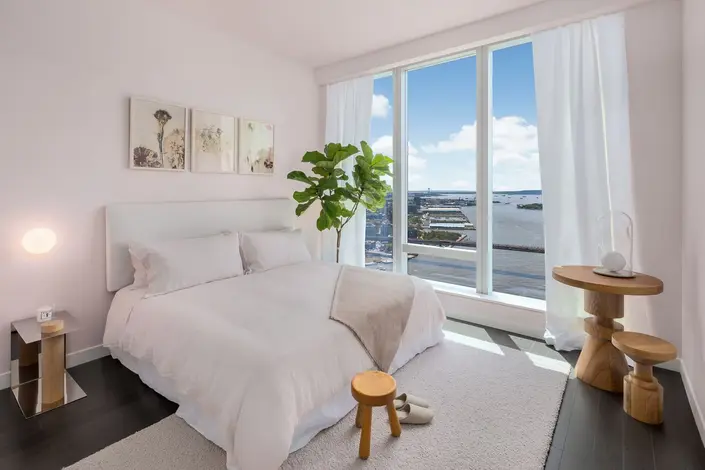
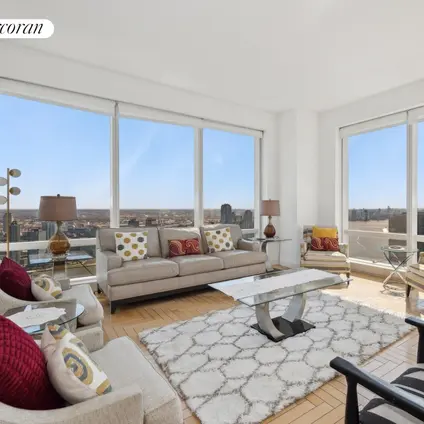
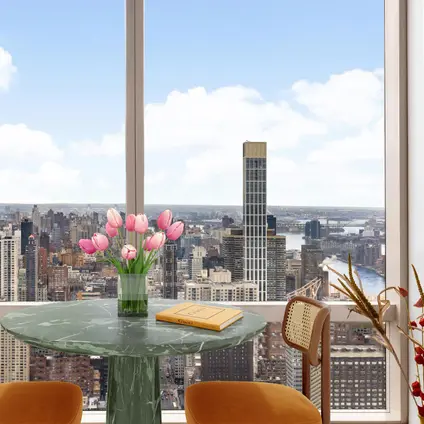
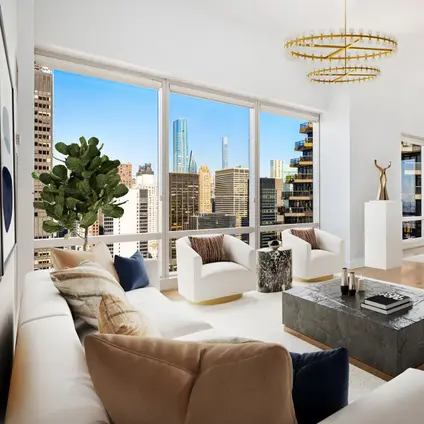
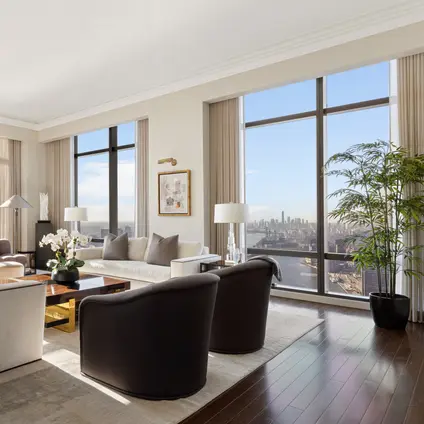
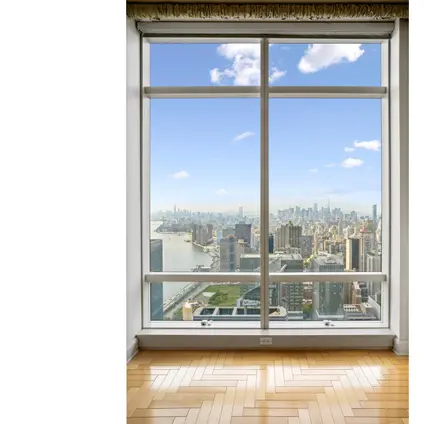
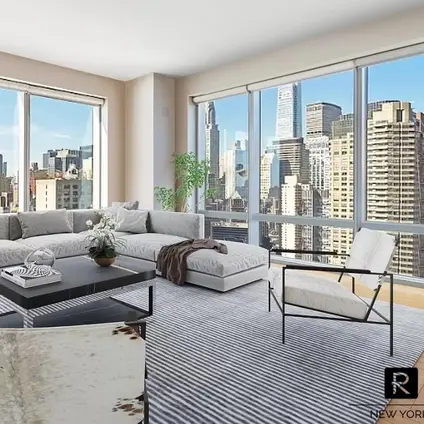
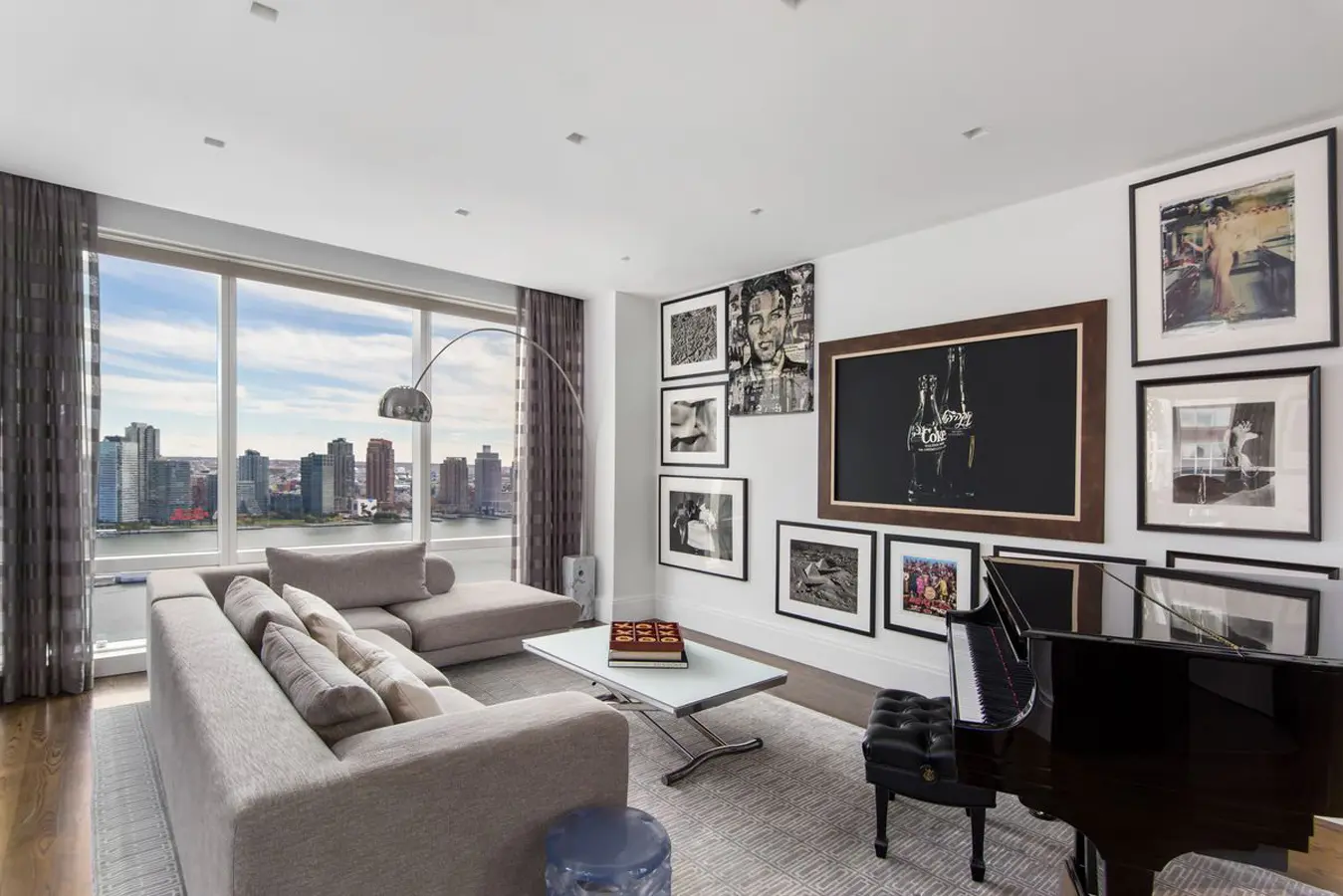
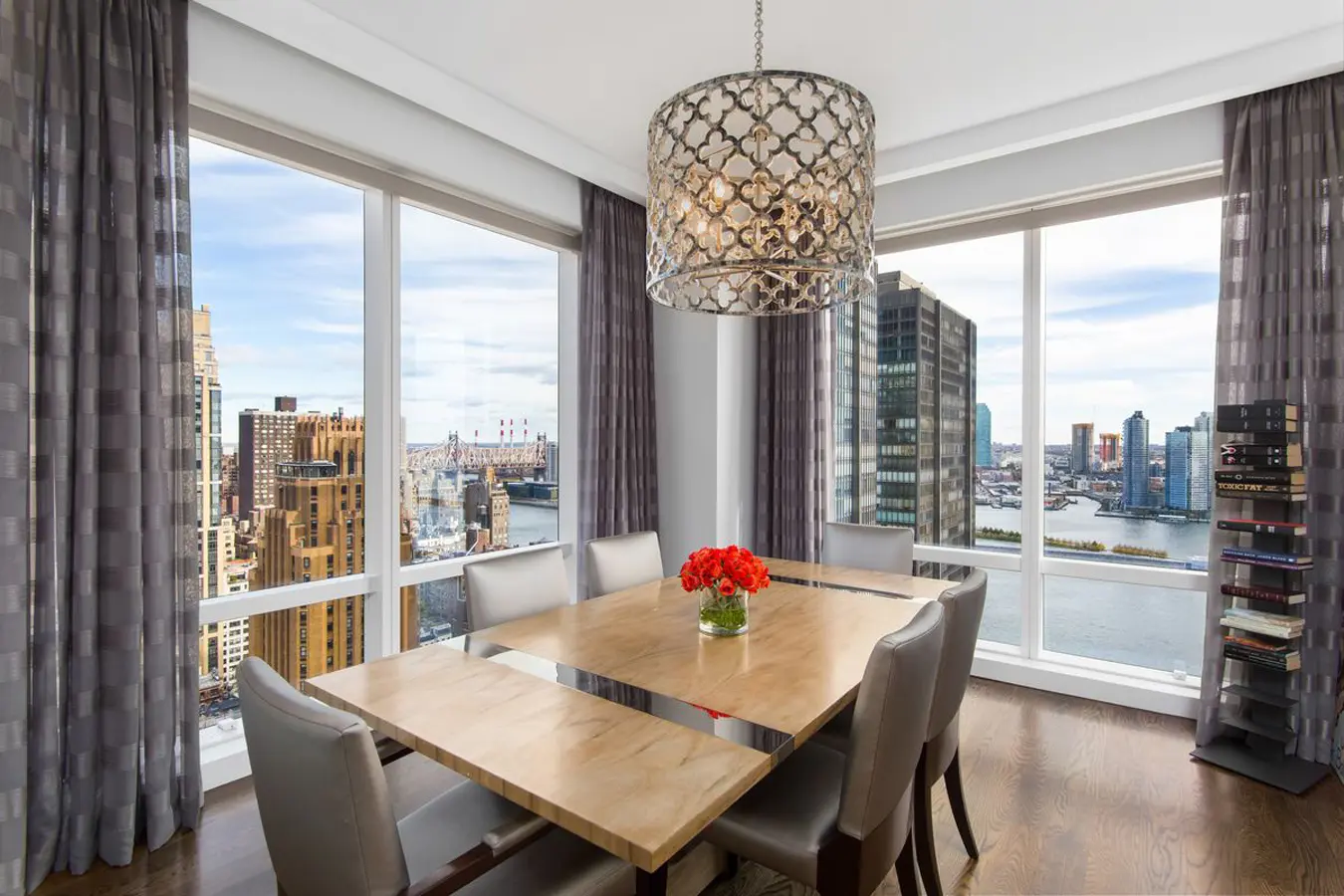
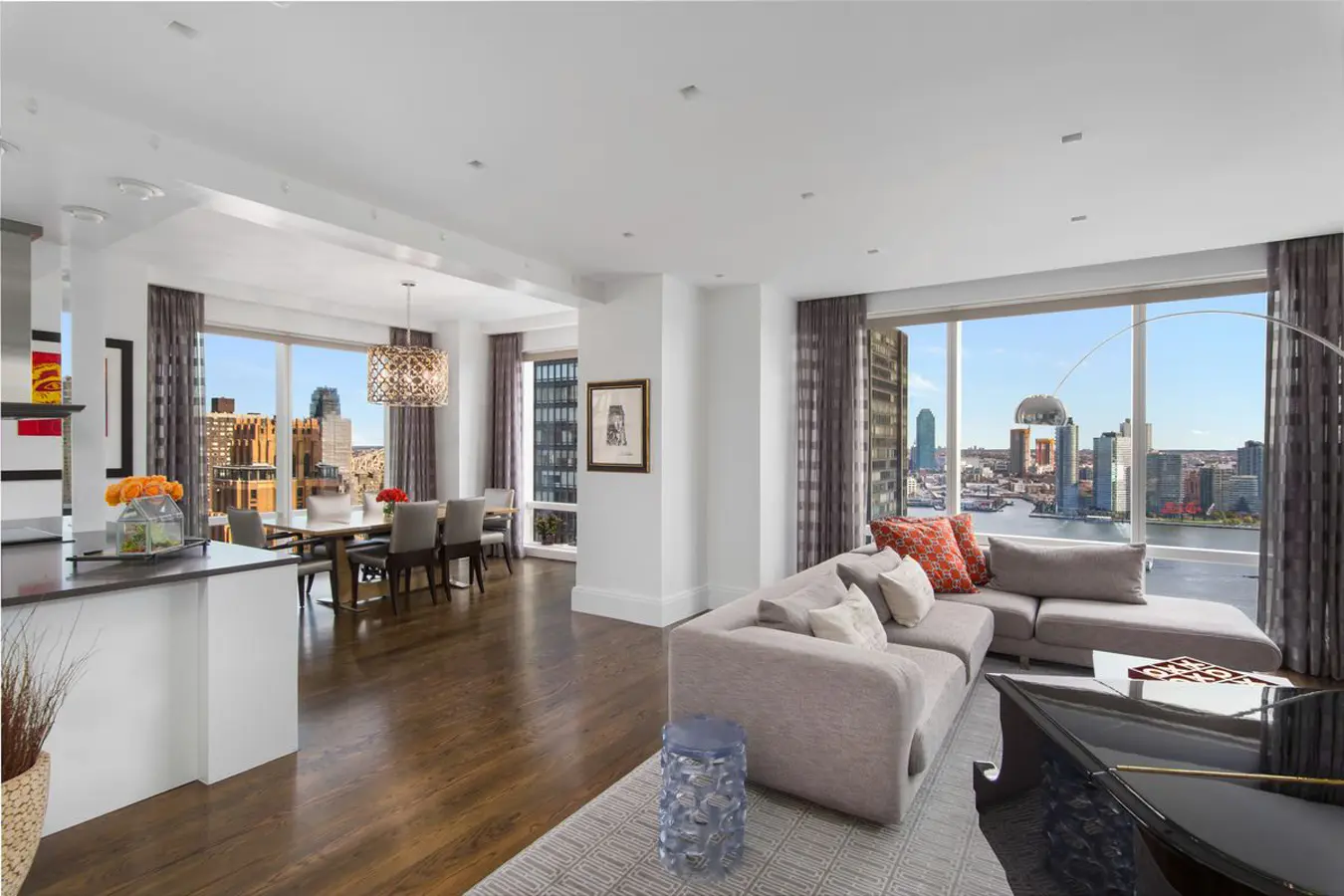
This extremely handsome and svelte Trump World Tower has sensational and protected views of the East River and the United Nations gardens and is convenient to the desirable Beekman Place and Sutton Place neighborhoods. It is as slick as Donald Trump, the developer who provides his luxury apartment buildings with sufficient glitz and amenities to attract residents from around the world, could make it. The fact that this was the city’s tallest residential tower when it was erected and had the cleanest lines architecturally of any of his projects didn’t hurt either.
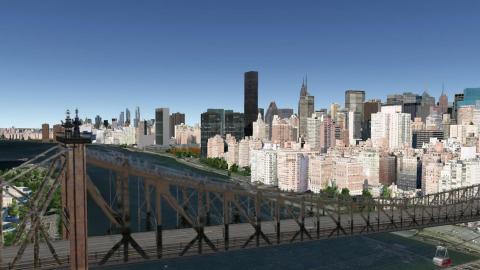
Because it fronts on the park on the northern part of the United Nations, Trump World Tower has sensational, protected views of the East River and the United Nations.
This free-standing building has a very broad entrance staircase with a large entrance marquee on First Avenue and sidewalk landscaping.
The sheer tower has no balconies and is the tallest building along the East River in Manhattan.
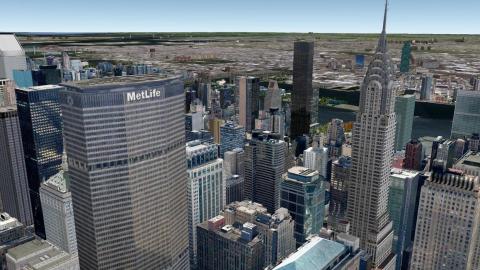
While its clean lines follow in the modern traditions of the United Nations complex, its dark brown bronze color sets it apart from the blue-green tone of the Secretariat Building and the United Nations Plaza complex to the south, but it has the same palette as the triangular-topped 100 United Nations Plaza apartment tower nearby on 48th Street, which it dwarfs.
There is considerable traffic on First Avenue and the building is quite far away from subways but there are cross-town buses on 42nd, 49th and 50th Streets. There are numerous restaurants and neighborhood stores further north on First Avenue and on Second Avenue.
In 2003, the International Real Estate Federation said Trump World Tower was
the “Best Residential Project in the World” for its superior design and amenities.
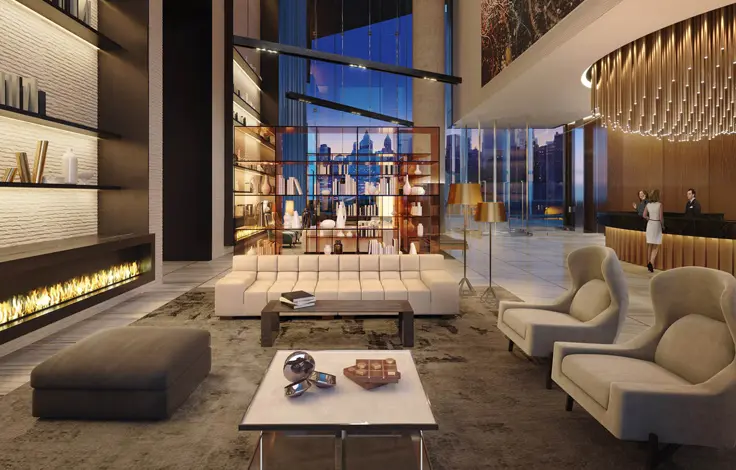
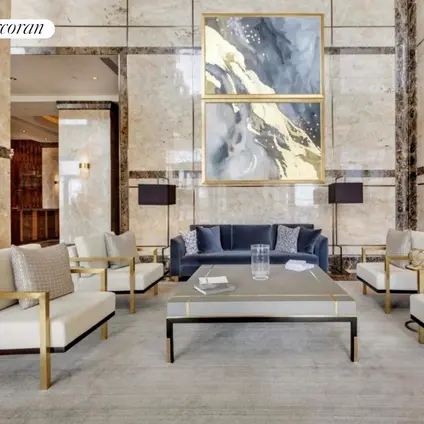
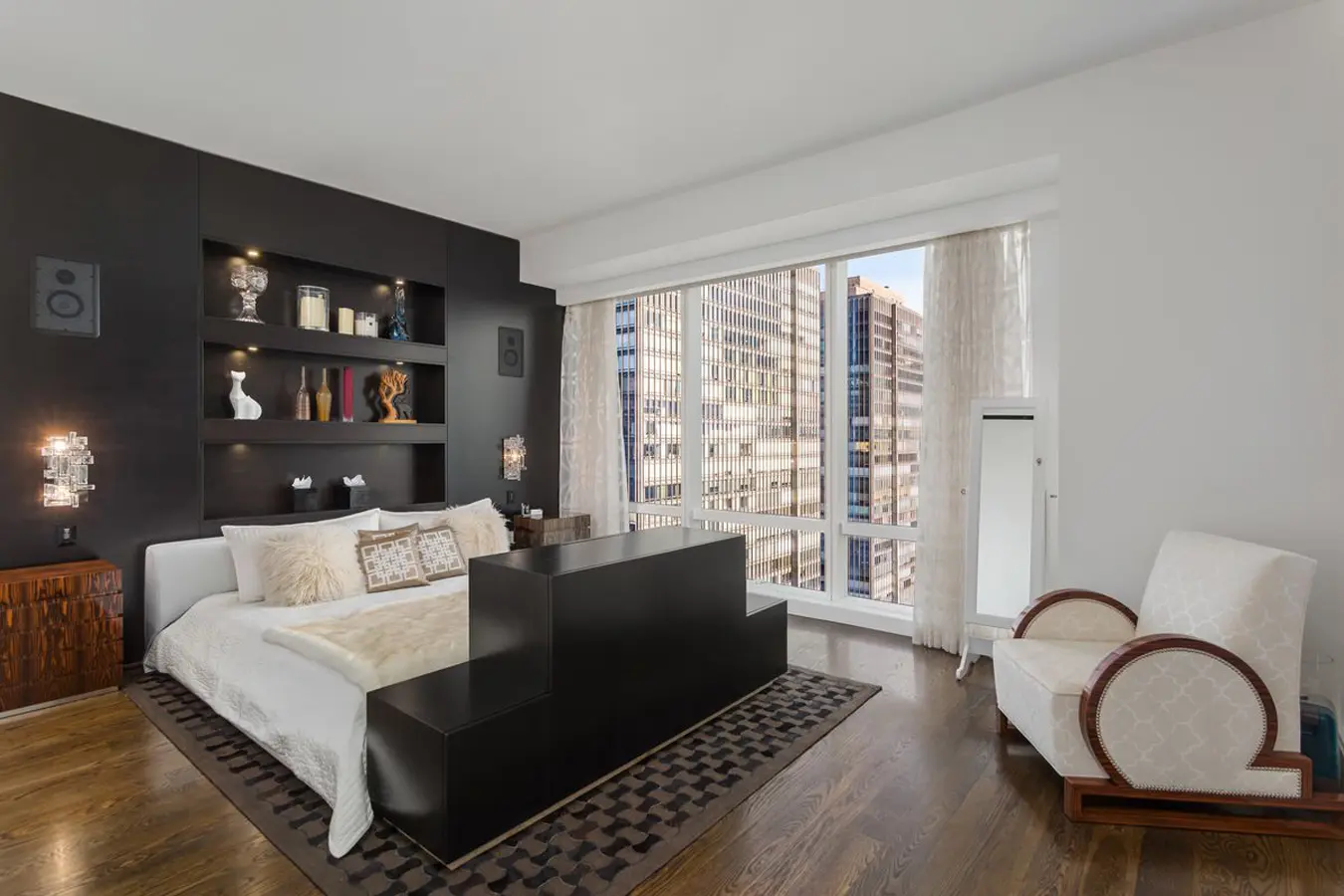
The building has a concierge and doorman and valet. It also has a landscaped garden and courtyard, a sixty-foot pool, private wine cellars and Megu, a well-known restaurant with room service. It also has a fitness center, a garage and cold storage.
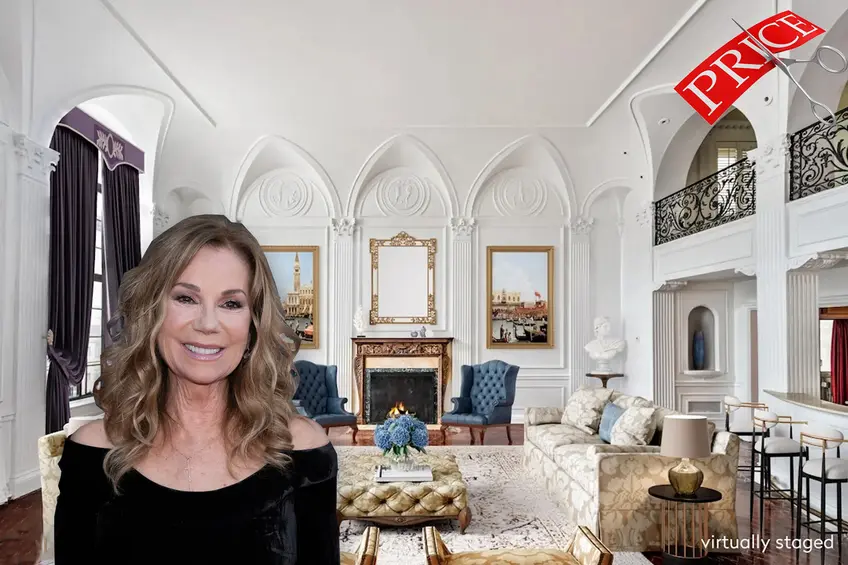
Some the "penthouse" units have wood-burning fireplaces and 16-foot-high ceilings.
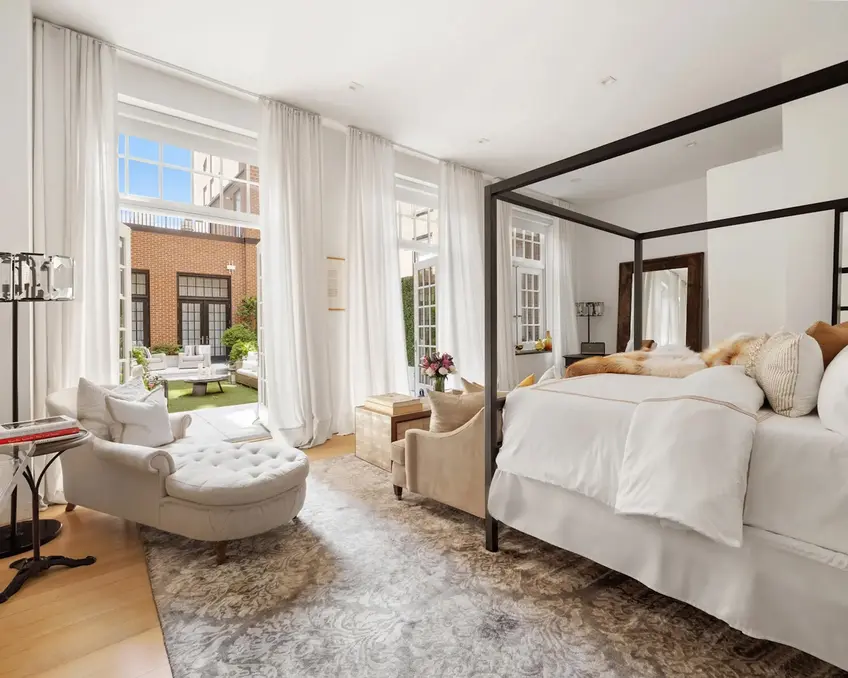
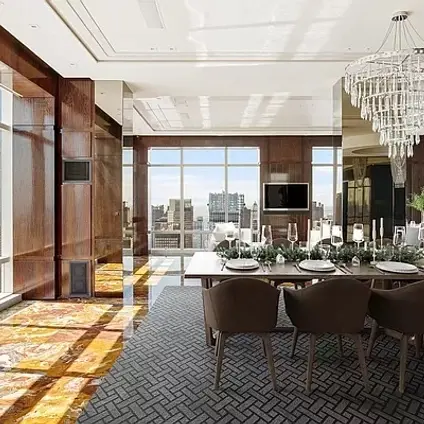
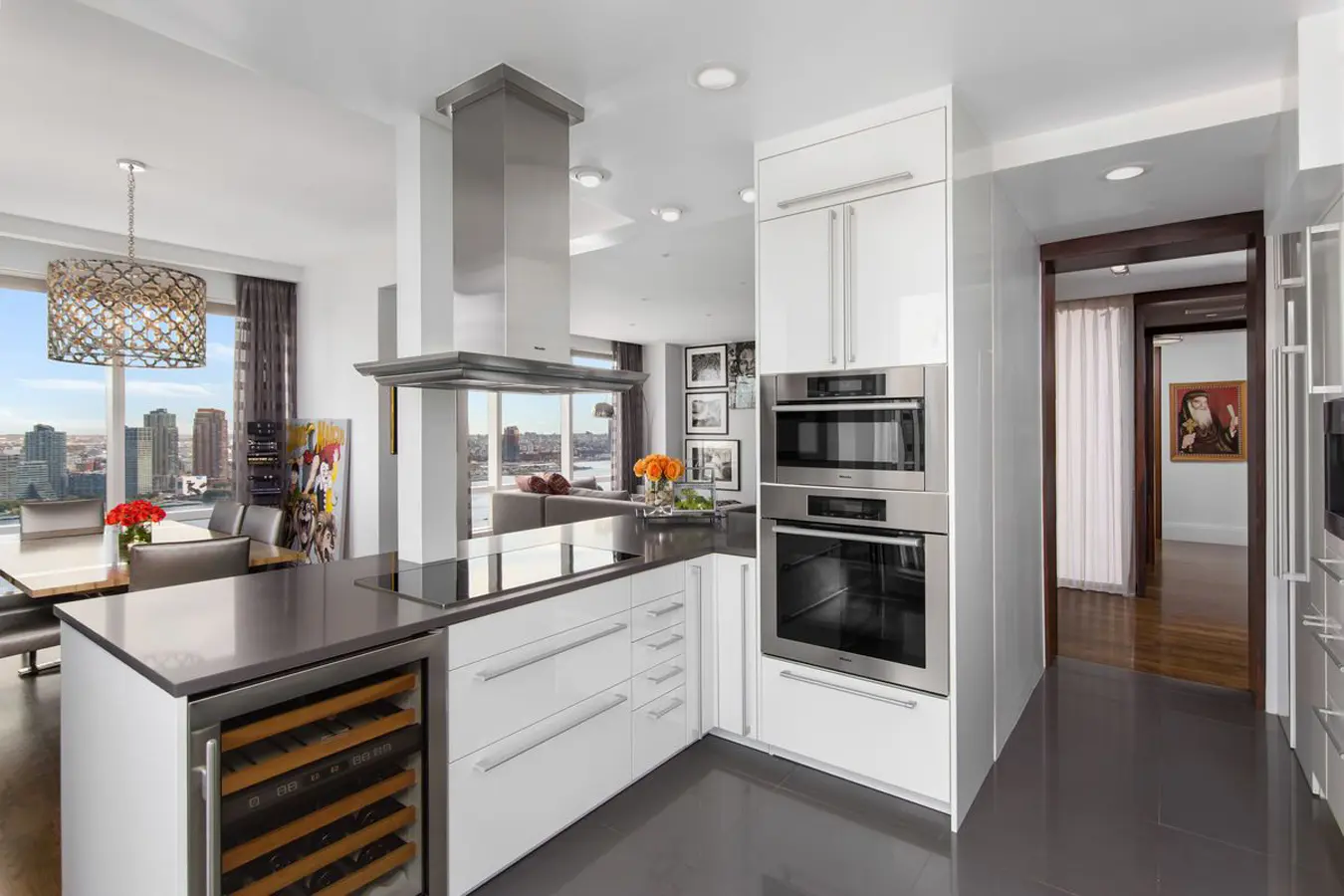
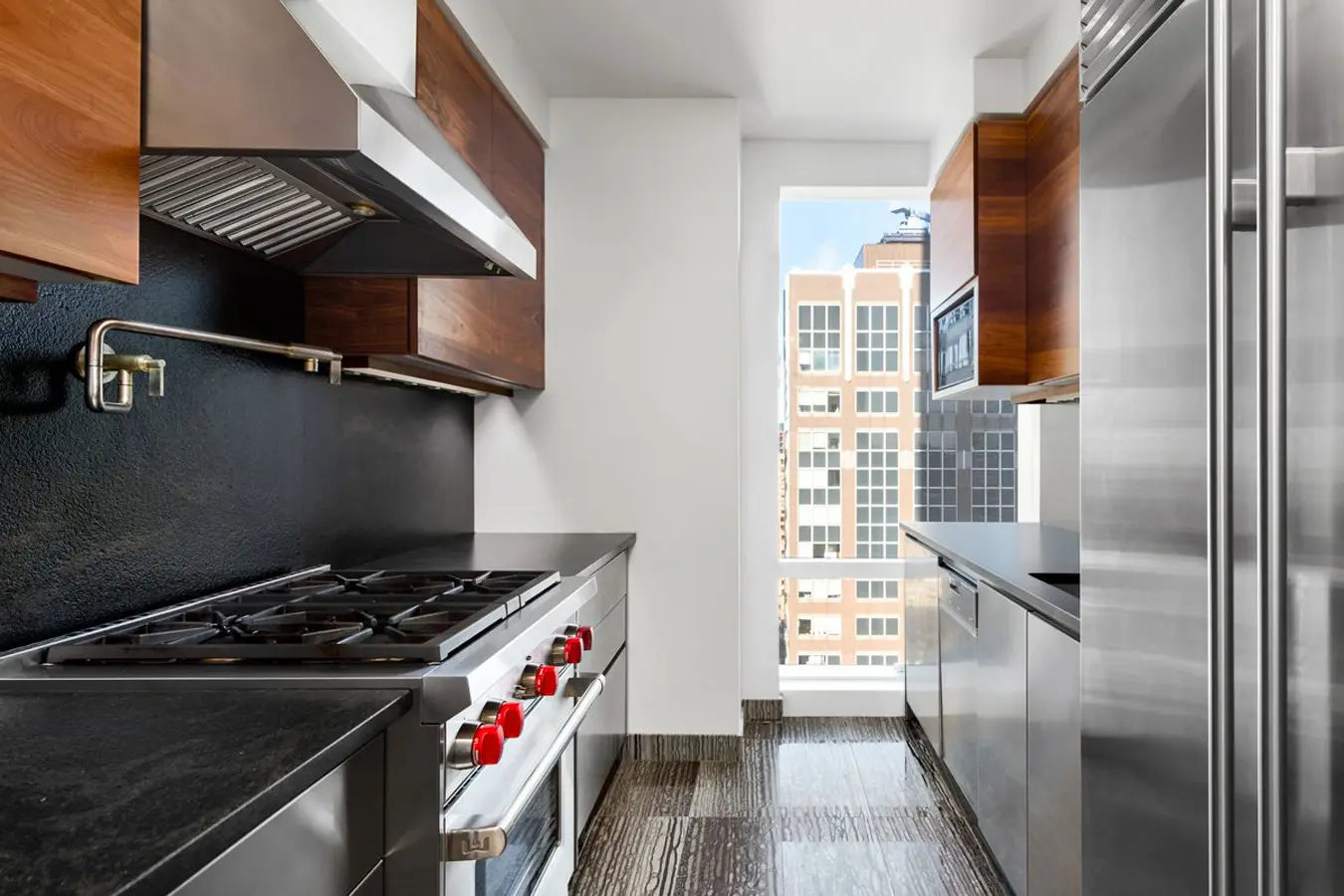
Many of the apartments have formal dining rooms and eat-in, windowed kitchens with high-gloss white cabinetry, and GE Monogram series stainless steel appliances including a double wall oven and a 5-burner cooktop.
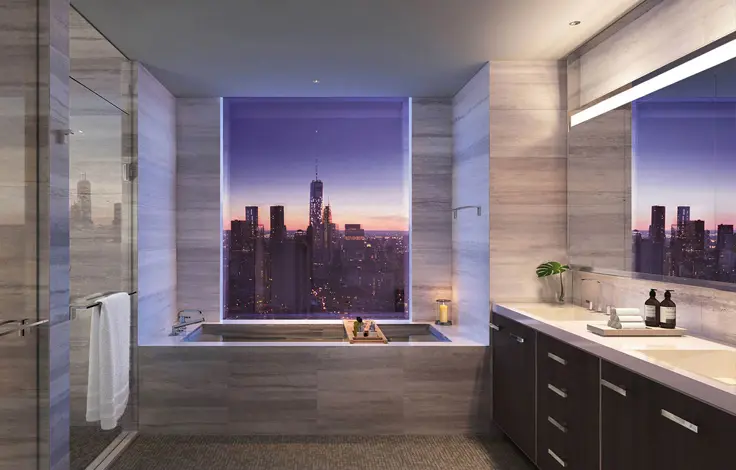
Most master bathrooms have a bidet and double vanity sinks and all are clad with imported marble.
All apartments have washers and dryers and individually controlled heating and air conditioning.
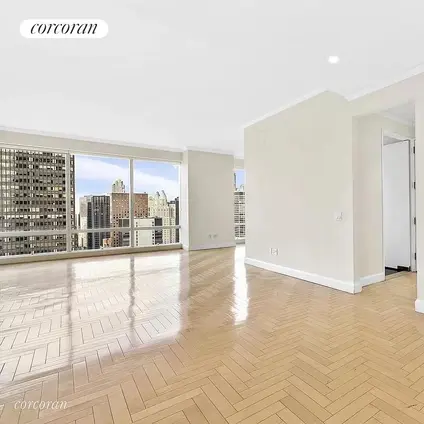
There are some studio units in the building. One has a very long entry foyer and gallery that leads to an 18-foot-long living/dining/sleeping area with an open kitchen.
A two-bedroom unit with two baths and a powder room has a 30-foot-long living/dining room with an enclosed kitchen.
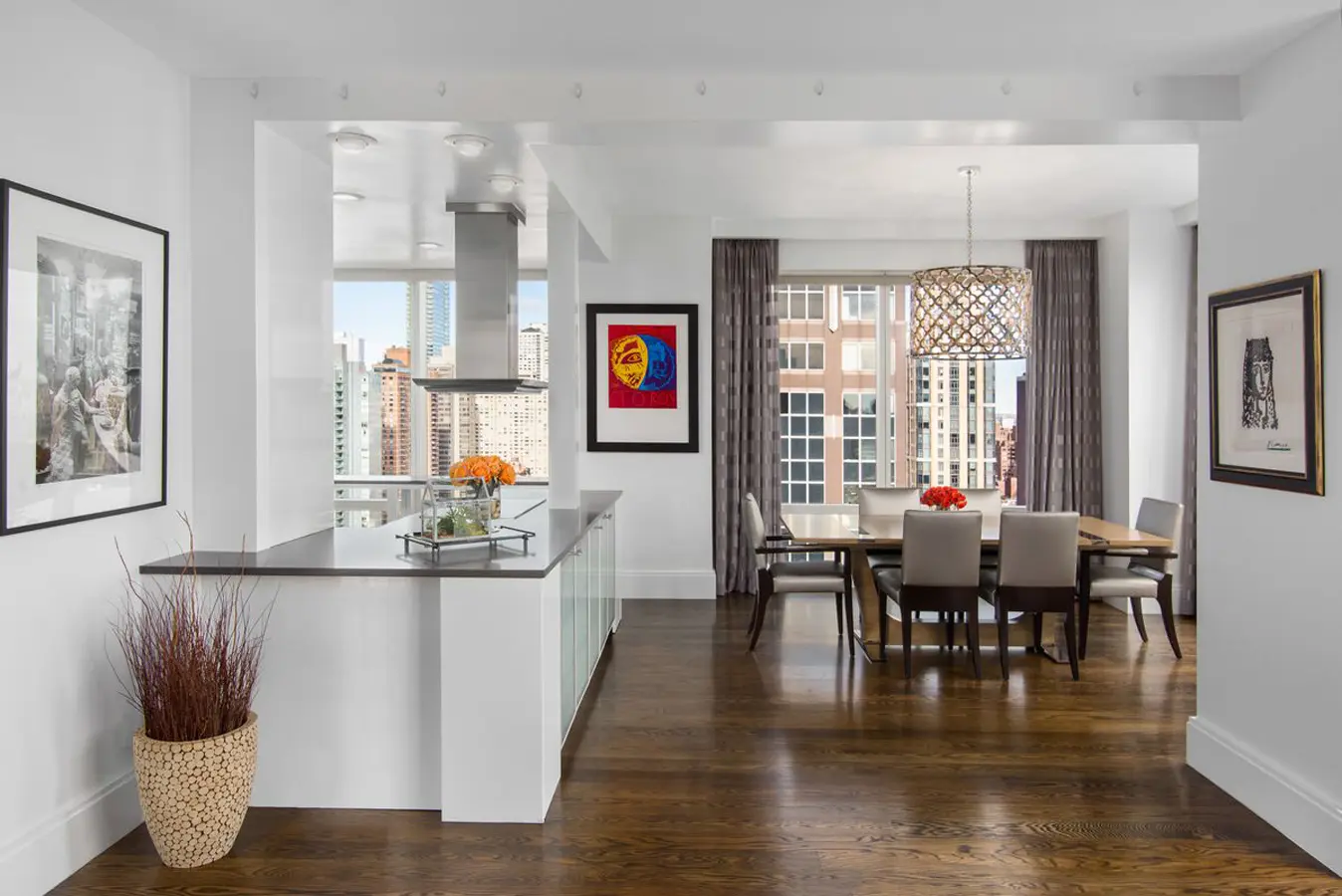
A two-bedroom unit has a small foyer that leads to a wide gallery that opens onto an 18-foot-wide dining room that opens onto an 18-foot-wide living room. The apartment has a large, enclosed kitchen and breakfast area with two doors.
A three-bedroom apartment has a 28-foot-long living room with a 20-foot-long dining room adjacent to an enclosed kitchen with breakfast area.
Trump World Tower replaced the former 20-story United Engineering Center that had been designed by Shreve, Lamb & Harmon in 1961.
Mr. Trump paid about $50 million for the site and assembled unused development rights from several contiguous lots, including the Japan Society and the Church of the Holy Family, to significantly increase the size of his tower.
Mr. Trump and his partner, the Daewoo Corporation, obtained financing for this project from Deutsche Bank and the Bayerische Hypo-und Vereinsbank.
Designed by Costas Kondylis, this tower is only slightly shorter than Citicorp Center on Lexington Avenue and about the same height, though more slender, than 30 Rockefeller Center and the MetLife (former PanAm) Building straddling Park Avenue.
Aesthetically, the glass facade design makes more sense in this context than the Post-Modern masonry designs of several other contemporary luxury apartment towers and the tower's proportions are very elegant. Indeed, Mr. Trump has fared well with bronze-glass towers at Trump Tower, designed by Der Scutt, on Fifth Avenue between 56th and 57th Streets and, designed by Philip Johnson, at 1 Central Park West at Columbus Center, a recladding of the former black-and-white Gulf & Western Building, and his Trump Plaza apartment tower designed by Philip Birnbaum on Third Avenue between 61st and 62nd Streets.
(Trump is not wedded to the bronze-glass motif as evidenced by the very attractive Trump Palace apartment tower designed by Frank Williams on Third Avenue at 68th Street and his redevelopment of the Barbizon Plaza Hotel on Central Park South into the Trump Parc apartment building, and his acquisition of the skyscraper at 40 Wall Street.)
Originally, Mr. Trump hoped to build the world's tallest building at Riverside South facing the Hudson River on the Upper West Side, and perhaps he considered this project a consolation prize. He scaled back and radically redesigned Riverside South to meet community opposition and which now has rather uniform, quasi-post-modern buildings, albeit quite tall, but no central landmark of great stature.
The project, which was marketed by Mr. Trump as the equivalent of 90 stories tall because of its high ceilings, flabbergasted and outraged many of its neighbors who fought unsuccessfully to block it.
Part of the controversy came from those who felt that this project demonstrated that the city's zoning was flawed and that such stupendous towers as this burst through the heart of its intentions.
Some residents in the neighborhood felt that the tower broke with the tradition in the area that no building fronting on the grounds of the United Nations on the other side of First Avenue should be taller than its famous Secretariat Building. While some thought this was part of existing zoning, it was not although it had been a “rule” that had been followed by such major projects as the nearby 860 United Nations Plaza, a twin-towered mixed-use complex on the north side of the UN's gardens, and the United Nations Plaza office and hotel complex, designed by Kevin Roche John Dinkeloo & Associates, across from it on First Avenue at 44th Street.
Among the many residents in the area around Trump World who protested against it was Walter Cronkite, the retired anchorman for CBS News. In a Sept. 8, 1999 article by Blaine Harden in The New York Times, Mr. Cronkite was quoted as saying that the protest was "supported by a whole lot more less-than-wealthy folks who are sharply offended by the unnecessary grossness of this project." The story noted that Mr. Cronkite lived in an apartment on the 25th floor at 870 United Nations Plaza and would have his view of the Chrysler Building blocked by Mr. Trump's tower.
Other protesters in the same building included Walter Wriston, the former chairman of Citibank, William H. Donaldson, a founder of Donaldson, Lufkin & Jenrette, the investment house, James Ivory, the film director, and Alberto Vilar, known for having given $25 million to the Metropolitan Opera.
The article said that Mr. Cronkite even wrote a letter to President Kim Dae Jung of South Korea imploring him to use his influence on the Daewoo Corporation, which was the project's principal lender, to get Mr. Trump to change his plans.
In November, 2000, the New York Court of Appeals refused to hear the neighbors’ appeal of a lower court ruling that said that the city had a legal basis for approving Trump World.
Mr. Trump has rarely shied away from controversy, or a building opportunity. Indeed, he is a classic New York builder: someone who builds to the limits of the law and its loopholes.
In a June 2, 2002 review of the tower in The New York Times, architecture critic Herbert Muschamps said that “Aggression and desire, violence and sex: put them together and they add up to Trump World Tower, undeniably the most primal building New York has seen in quite a while.”
Mr. Muschamps noted that Terence Riley, chief curator of architecture and design at the Museum of Modern Art said that the building “works urbanistically, and the glass curtain wall is the best New York has seen in a long time.”
To view all NYC apartment information and prices, log in or register now it's quick, easy and free.
You'll get access to all NYC apartments available including thousands of listings all for free.

Forgot Password?
If you need assistance, please call us at 212-755-5544.
|
Comments or questions? · Phone: 212.755.5544
|
|
An equal housing opportunity.
|
| All data is deemed reliable but is not guaranteed accurate by the REBNY / RLS or CityRealty. See Terms of Service for additional restrictions. All information furnished regarding New York City property for sale, rental or financing is from sources deemed reliable, but no warranty or representation is made as to the accuracy thereof and same is submitted subject to errors, omissions, change of price, rental or other conditions, prior sale, lease or financing or withdrawal without notice. All dimensions are approximate. For exact dimensions, you must hire your own architect or engineer. The number of bedrooms listed on this website is not a legal conclusion. Each person should consult with his/her own attorney, architect or zoning expert to make a determination as to the number of rooms in the unit that may be legally used as a bedroom. |