The Bank Building CLOSE 
In the old days, banks built their own, small, but very impressive bank buildings all over town rather than renting some prosaic ground floor corner space in apartment buildings. Many of their old, ornate bank buildings have been converted to retail uses or demolished, but a few remain.
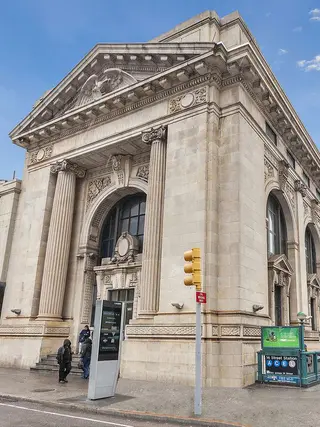
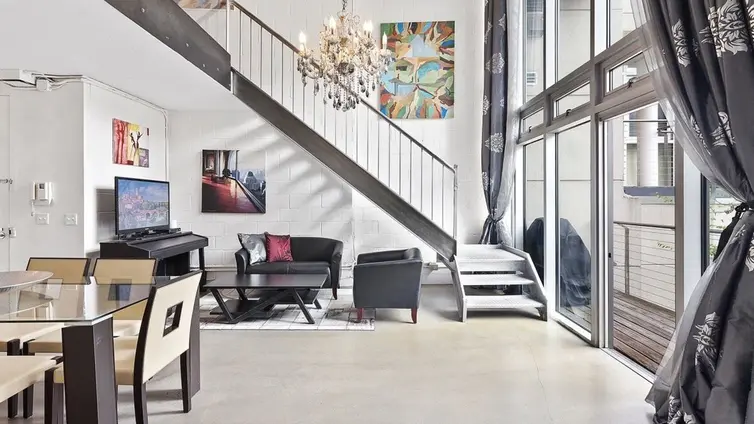
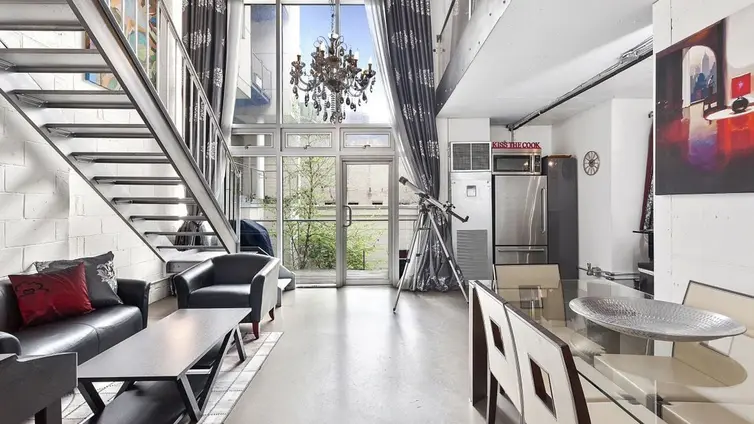
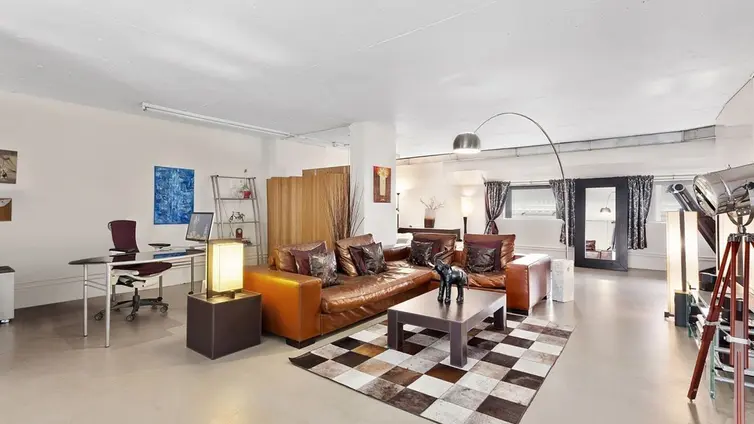
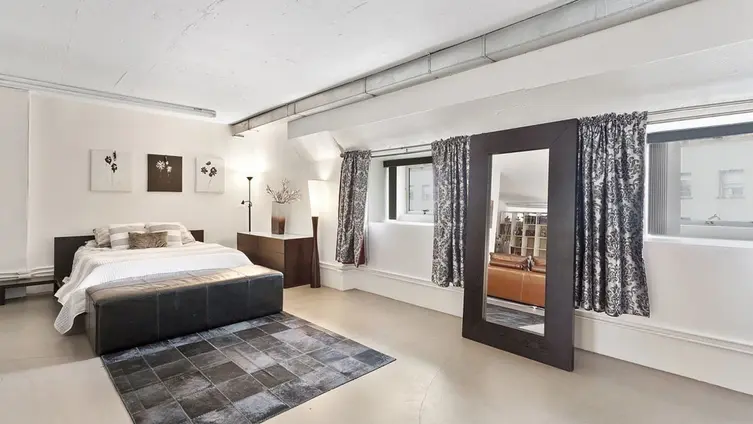
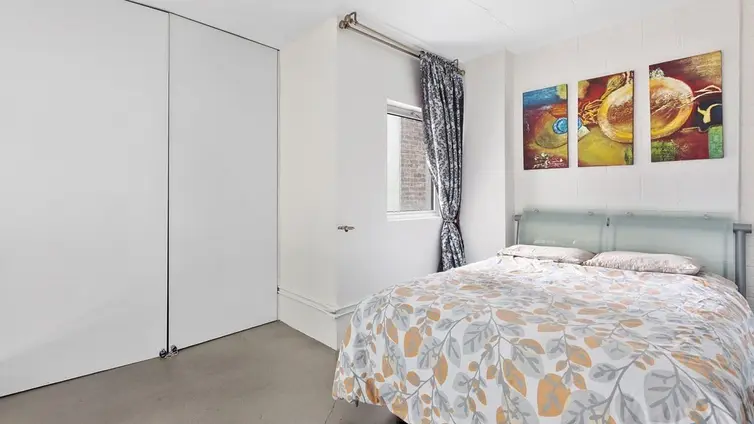
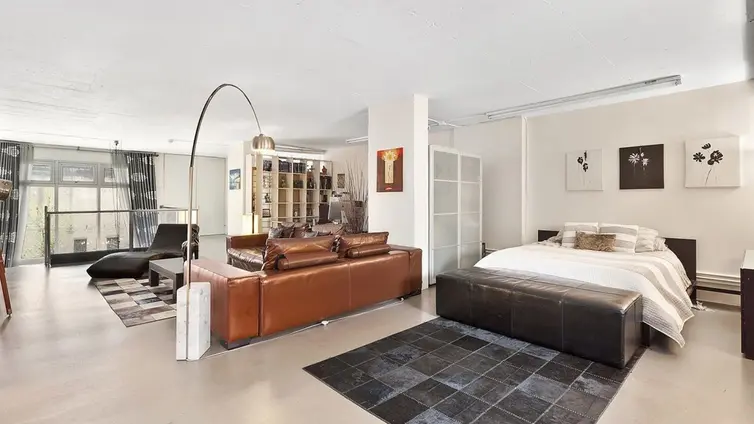
This former New York County Bank Building was built in 1907 and converted to 11 residential condominiums and 12,000-square feet of retail space by Richard Fiore and Laura Bohn in 1999 and the architect for the conversion was John Reimnitz. The conversion added a two-story penthouse with a fireplace.
The very impressive and ornate, limestone-clad building was designated an official New York City landmark in 1988.
The bank ran into financial troubles in 1902 but four years late had recovered enough to commission DeLemos & Cordes to design a building for the southwest corner of Eighth Avenue and 14th Street, directly across the street from the New York Savings Bank on the northwest corner.
The new bank's design was far more impressive than the savings bank building, which has a green dome.
DeLemos & Cordes firm was responsible for the magnificent Siegel-Cooper Dry Goods Store and the Adams Dry Goods Store on 6th Avenue, and for the beautiful new Macy s Department Store on 34th Street. Rudolph L. Daus, a graduate of the Paris Ecole des Beaux-Arts, was given the project.
Daus produced a, neo-classical temple with Beaux-Arts touches such as a eagle in almost full relief vigilantly surveying the cityscape from its perch in the pediment above the entrance flanked by large Corinthian columns. On 14th Street, Corinthian pilasters frame each arched window ornamented with caduceuses, the symbol of the medical profession but also a reference to Mercury, the god of commerce.
The A.I.A. Guide to New York City remarked that the two bank buildings are "a rare occurrence for this city; a pair of classically inspired sentinels guarding the western corridor of 14th Street" at the nexus of Greenwich Village and Chelsea.
In 1921, the New York County National Bank was taken over by the Chatham and Phoenix National Bank, which was absorbed in the 1930s by Manufacturers Trust Company, that late was renamed Manufacturers Hanover Trust in the 1960s. In 1994. that bank merged with Chemical Bank. Soon thereafter, however, the bank sat empty and was used for a while as a theater until 1999 when the main banking space was converted into a men's spa and 11 apartments were created.
The building is also known as 300 West 14th Street.
To view all NYC apartment information and prices, log in or register now it's quick, easy and free.
You'll get access to all NYC apartments available including thousands of listings all for free.

Forgot Password?
If you need assistance, please call us at 212-755-5544.
|
Comments or questions? · Phone: 212.755.5544
|
|
An equal housing opportunity.
|
| All data is deemed reliable but is not guaranteed accurate by the REBNY / RLS or CityRealty. See Terms of Service for additional restrictions. All information furnished regarding New York City property for sale, rental or financing is from sources deemed reliable, but no warranty or representation is made as to the accuracy thereof and same is submitted subject to errors, omissions, change of price, rental or other conditions, prior sale, lease or financing or withdrawal without notice. All dimensions are approximate. For exact dimensions, you must hire your own architect or engineer. The number of bedrooms listed on this website is not a legal conclusion. Each person should consult with his/her own attorney, architect or zoning expert to make a determination as to the number of rooms in the unit that may be legally used as a bedroom. |