The Artisan

406 Lorimer Street
FOR MORE INFORMATION ABOUT The Artisan
Contact us about buying or selling an apartment in The Artisan .
Email Us OR Call (212) 755-5544


The Artisan - 406 Lorimer Street: CARTER'S REVIEW


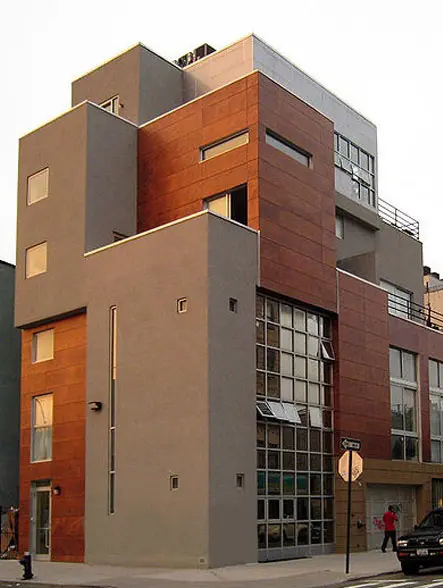
This small residential condominium building at 406 Lorimer Street in the Williamsburg section of Brooklyn is one of the most attractive in the city.

The architect, Robert M. Scarano Jr., has juggled a variety of different sized rectangular windows with boxy elements of dark red "faux-wood" panels and gray or white stucco to create an excellent example of classic modern architecture.

On its narrow street frontage, the lower three floors are partially setback slightly from the building line adjacent to a mostly blank wall that is perforated by a very tall and very slim window and two miniscule square inset windows.

Around the corner on the larger street frontage is a very large multi-story, multi-paned window with several openable small square windows. Adjacent to this are two smaller but still quite large windows with larger panes. The very large, multi-story, multi-paned window is beneath a slightly protruding box element, setback on two sides, with two quite narrow horizontal windows.

The red masonry of the building is in context with a nearby small builidng and the gray masonry blends well with the pale-green painted facade by a neighboring building.

The building is known as The Artisan Condominium and has 8 apartments. It is about six blocks from the Lorimer station of the L train.

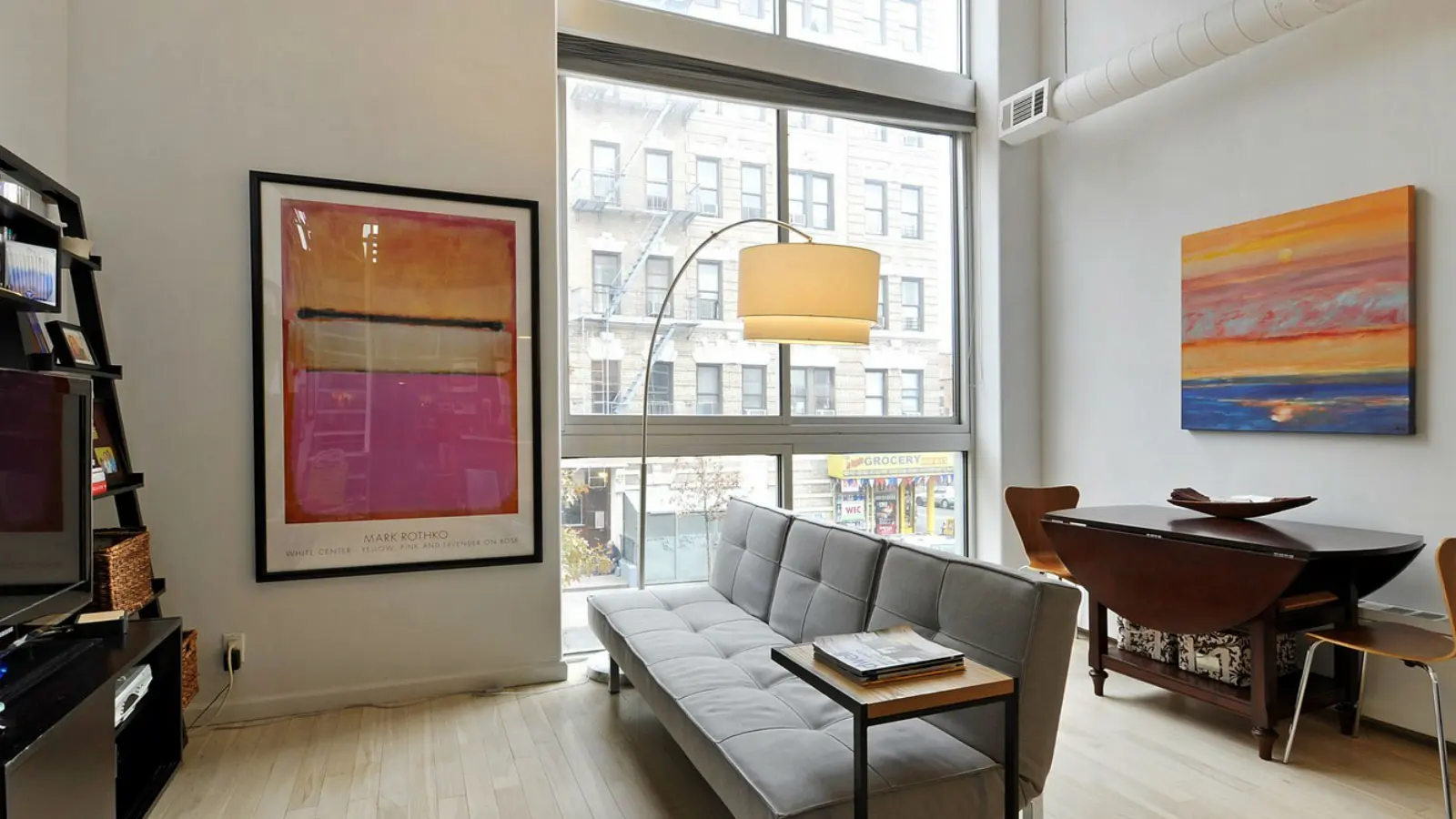
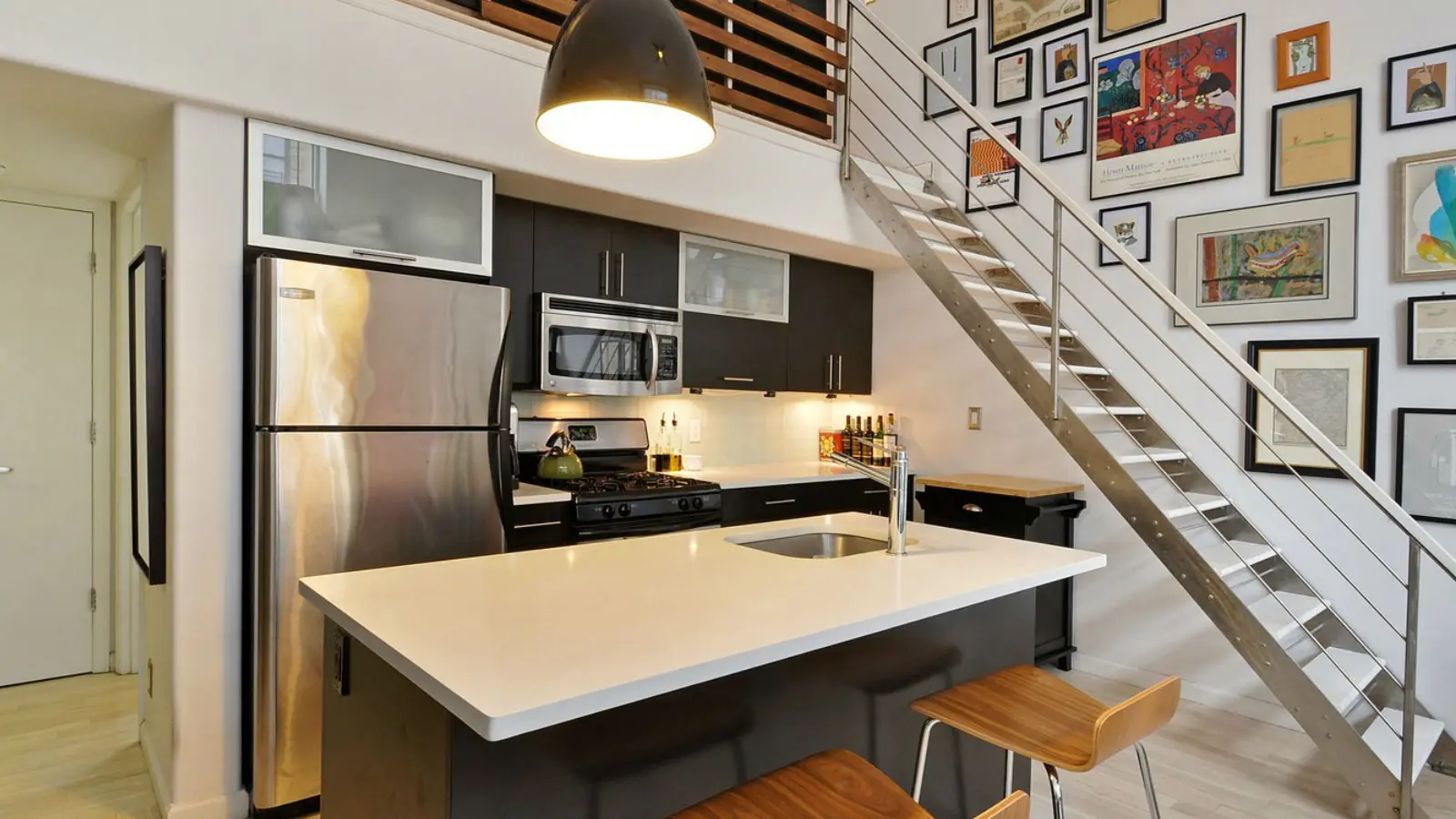
One unit has 16-foot-high ceilings and another has three terraces.

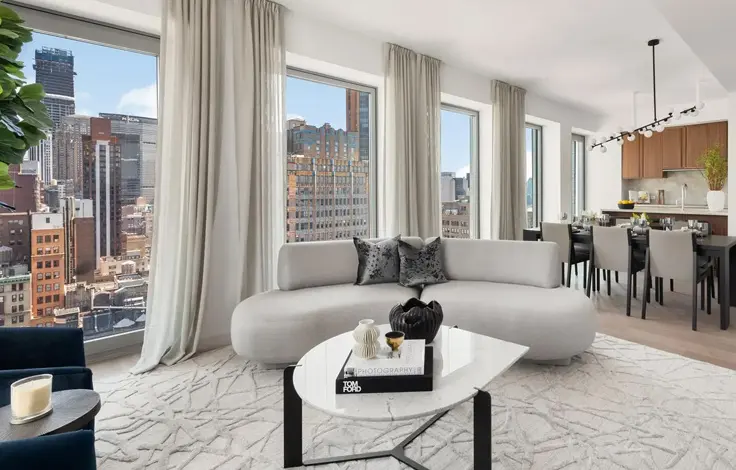
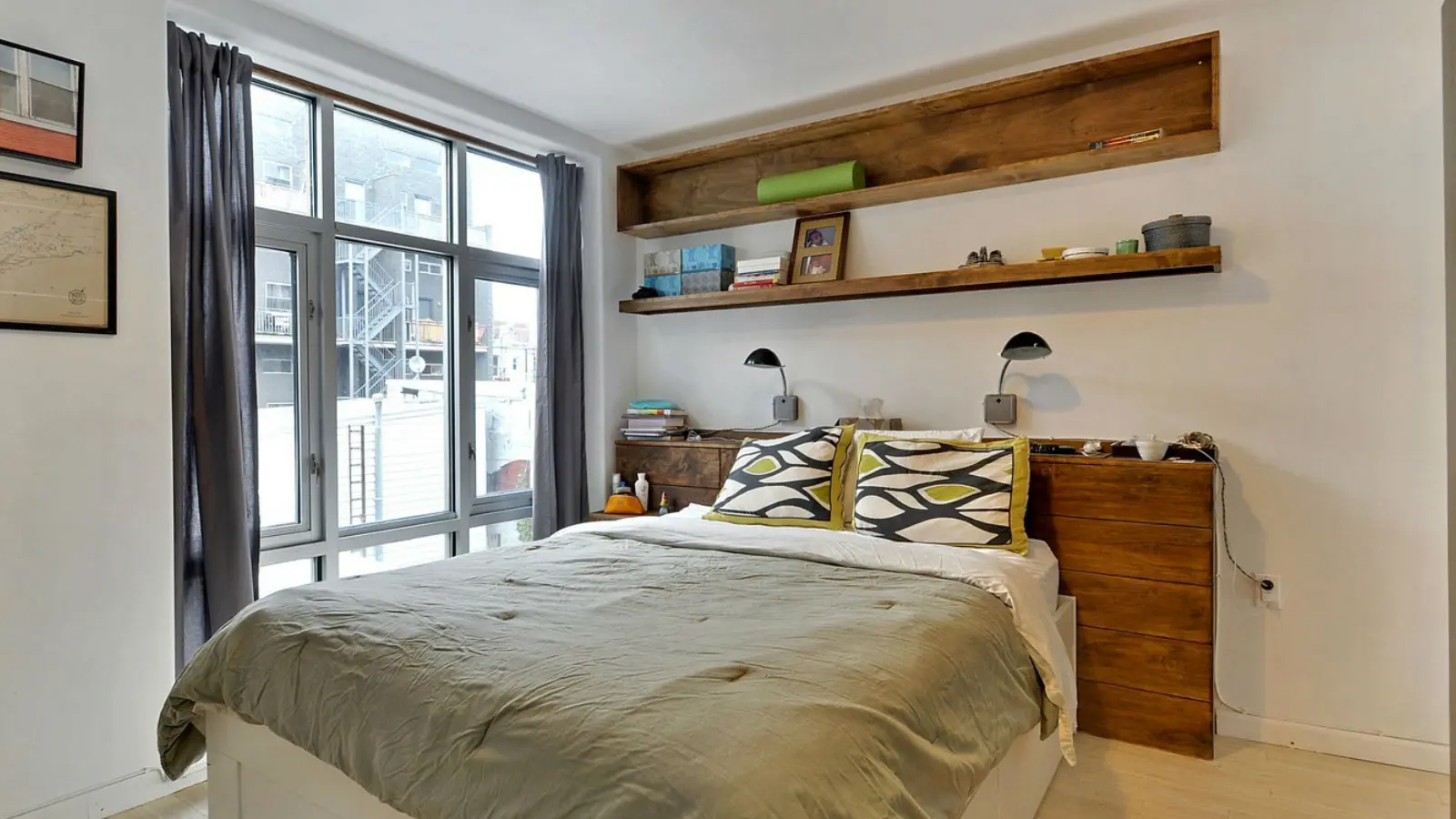
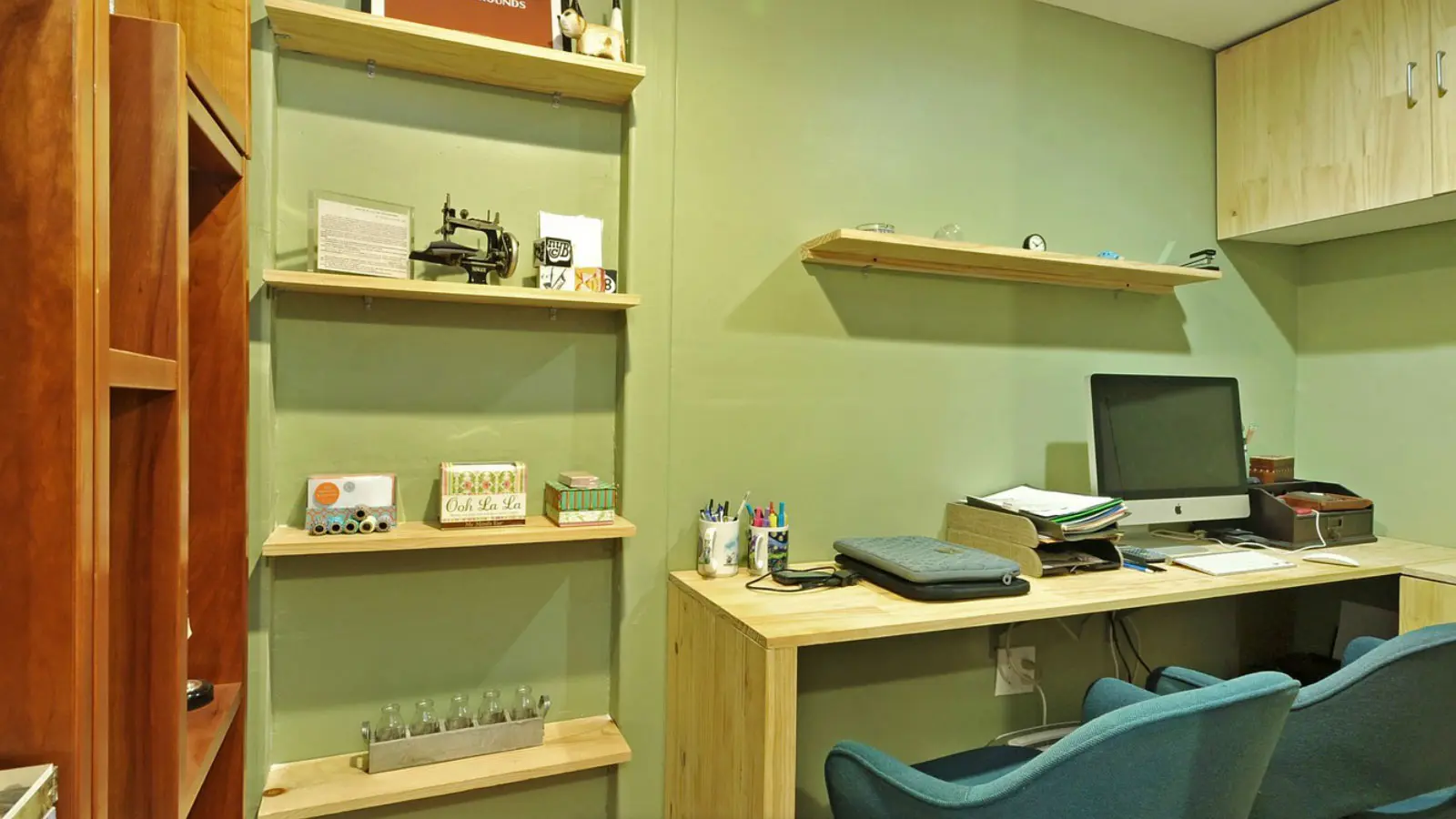
Apartments have central air-conditioning, washer/dryer hook-ups, whitewashed oak floors, and stainless steel kitchen appliances.

The building is across from the Williamsburg Houses that were designed by by R. H. Shreve of the architectural firm of Shreve Lamb Harmon, the architects of the Empire State Building.

Williamsburg Houses was the largest slum-clearance and low-rent housing project completed under the Federal Housing program and includes twenty apartment houses, four stories high, accommodating 1,622 low-income families.

The buildings occupy less than a third of the project's 23 acres and they are placed at a fifteen-degree angle to the streets to orient the buildings toward the sun.

T. F. Hamlin declared in an article in Pencil Points that the development offers more of the amenities of good housing than many expensive Park Avenue apartment houses: "In every really important general matter of land usage--in air, in light, in a sense of green and growing things as a concomitant of living; in the creation of an atmosphere of humanity and decency, a place where children would be glad to grow up; in the development of a community that brings with it a new vision of democracy and of progress," he said, "[this development has] qualities that no money can buy."

The very handsome buildings are official city landmarks and Robert B. Tierney, chairman of the Landmarks Preservation Commission, declared that "The Williamsburg Houses represent public housing and public architecture at their finest," adding that a recent restoration program "inspires all New Yorkers."

"Constructed between 1935 and 1938, the Williamsburg Houses were a

collaborative project of the Federal Public Works Administration and the newly established New York City Housing Authority. Among the ten

architects who worked on the project, the best known are Richmond H.

Shreve, of Shreve, Lamb & Harmon (the architects of the Empire State

Building), and William Lescaze, the Swiss-born architect who helped

introduce European-style modern architecture in the United States.

Lescaze was responsible for the overall design, which includes twenty T- and H-shaped, 4-story structures on four superblocks turned at a 15 degree angle to the street grid. To distinguish the complex from previous public housing projects, the building elevations are clad in light-colored brick and concrete, and the entrances are marked by dark blue tile and projecting stainless steel canopies."

The Artisan was developed by Alan Messner of Monsey, New York.


BUILDING SUMMARY
  • Condominium
  • Built in 2008
  • Located in Williamsburg
  • 8 apartments
  • 4 floors
FEATURES & AMENITIES
  • Post War
  • Central AC
  • Video Intercom
PROS & CONS
PROS
  • Architectural masterpiece
  • Few apartments
  • Some terraces
  • High ceilings
  • Video security
  • Some balconies
  • Garage

CONS
  • No roofdeck
  • No sicewalk landscaping
  • No fitness center

SPONSORED BY

Comments or questions? · Phone: 212.755.5544
Copyright © 1994-2012 CITY REALTY.COM INC. All Rights Reserved.
568 Broadway, Suite 802 New York, NY 10012
Terms of Use · Our Privacy Policy · About CITY REALTY.COM · Advertise With Us · Site Map
Developed by REOL Services


An equal housing opportunity.

All data is deemed reliable but is not guaranteed accurate by the REBNY / RLS or CityRealty. See Terms of Service for additional restrictions. All information furnished regarding New York City property for sale, rental or financing is from sources deemed reliable, but no warranty or representation is made as to the accuracy thereof and same is submitted subject to errors, omissions, change of price, rental or other conditions, prior sale, lease or financing or withdrawal without notice. All dimensions are approximate. For exact dimensions, you must hire your own architect or engineer. The number of bedrooms listed on this website is not a legal conclusion. Each person should consult with his/her own attorney, architect or zoning expert to make a determination as to the number of rooms in the unit that may be legally used as a bedroom.