- Apartments
- Overview & Photos
- Maps
- Building Specialists
- Floorplans
- Sales Data & Comps
- Similar Buildings

Manhattan apartment buildings have been designed by a select group of influential architects. The Gothic-style building at 44 West 77th Street, designed by Harde & Short in 1909, once featured an ornate facade that has since been partially stripped of its decorative elements.

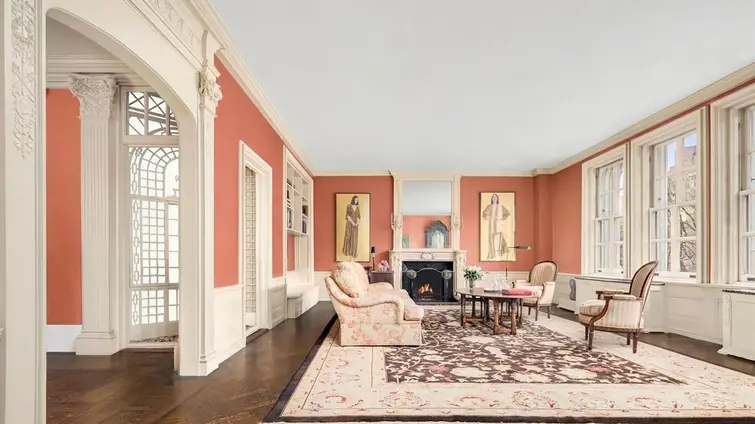
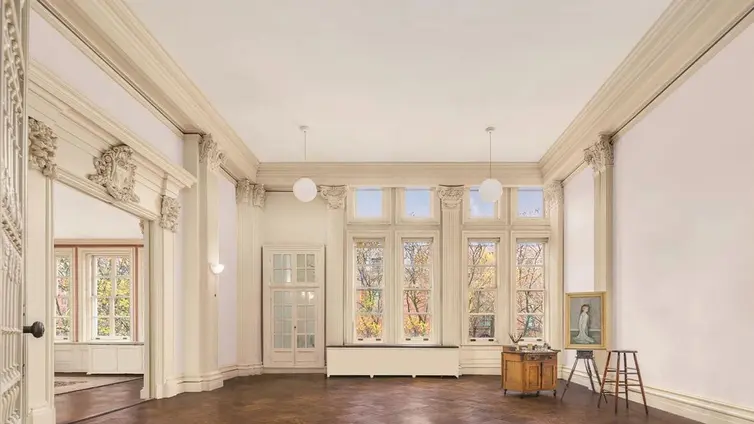
44 West 77th Street, completed in 1909, is a Neo-Gothic masterpiece designed by the celebrated architectural firm Harde & Short, who were also responsible for the ornate Alwyn Court. The 14-story building was originally developed by Walter Russell to house both traditional apartments and high-ceiling artist studios, including a notable 44-foot-long double-height unit created for sculptor Karl Bitter.
The building's original façade was an extraordinary example of Gothic Revival architecture, featuring elaborate terracotta ornamentation inspired by 15th-century Belgian civic architecture and French church designs. While much of its spectacular ornamental work was unfortunately removed in the 1940s, including a minaret and large triangular Gothic screen, the building retains its impressive groin-vaulted lobby and some of its original architectural character.
The property has an interesting ownership history, opening initially as a cooperative with rental units, converting to full rental during the Depression following mortgage foreclosure, and returning to cooperative status in 1965. Today, the 32-unit building maintains full-service amenities including a doorman, resident manager, storage facilities, bike room, playroom, and gymnasium.
Situated directly across from the American Museum of Natural History's south façade, the building enjoys a prime Upper West Side location less than a block from Central Park. The property benefits from proximity to Columbus Avenue's restaurants and boutiques, with convenient access to public transportation including cross-town bus service and the 81st Street subway station.
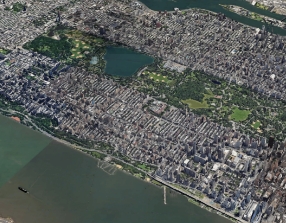
View school info, local attractions, transportation options & more.
Experience amazing 3D aerial maps and fly throughs.
For some co-ops, instead of price per square foot, we use an estimate of the number of rooms for each sold apartment to chart price changes over time. This is because many co-op listings do not include square footage information, and this makes it challenging to calculate accurate square-foot averages.
By displaying the price per estimated room count, we are able to provide a more reliable and consistent metric for comparing sales in the building. While we hope that this gives you a clearer sense of price trends in the building, all data should be independently verified. All data provided are only estimates and should not be used to make any purchase or sale decision.
Notable past and present residents at 44 West 77th Street

 6sqft delivers the latest on real estate, architecture, and design, straight from New York City.
Like us on Facebook to keep up with the trends and
6sqft delivers the latest on real estate, architecture, and design, straight from New York City.
Like us on Facebook to keep up with the trends and 