Millan House CLOSE 
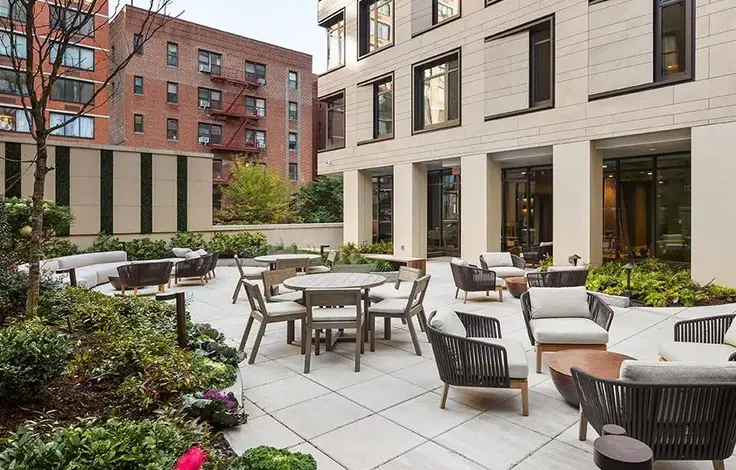
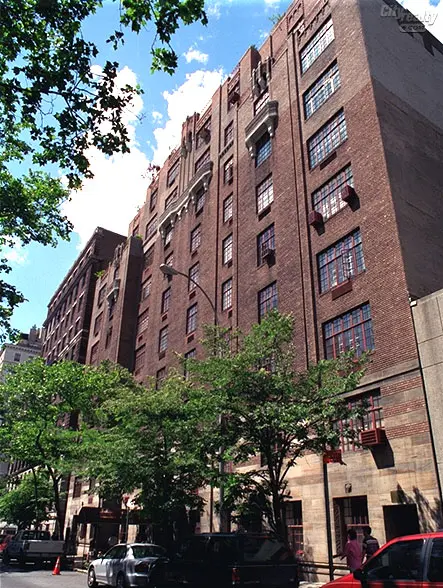
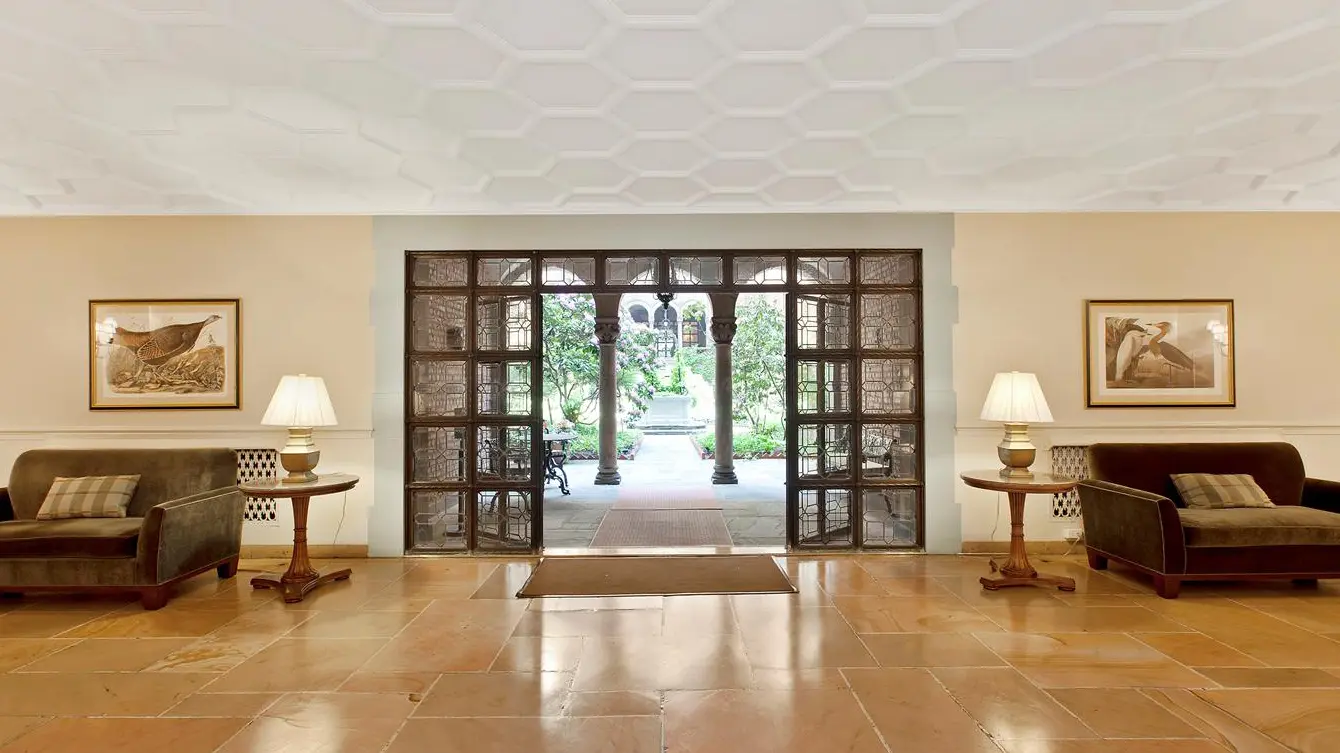
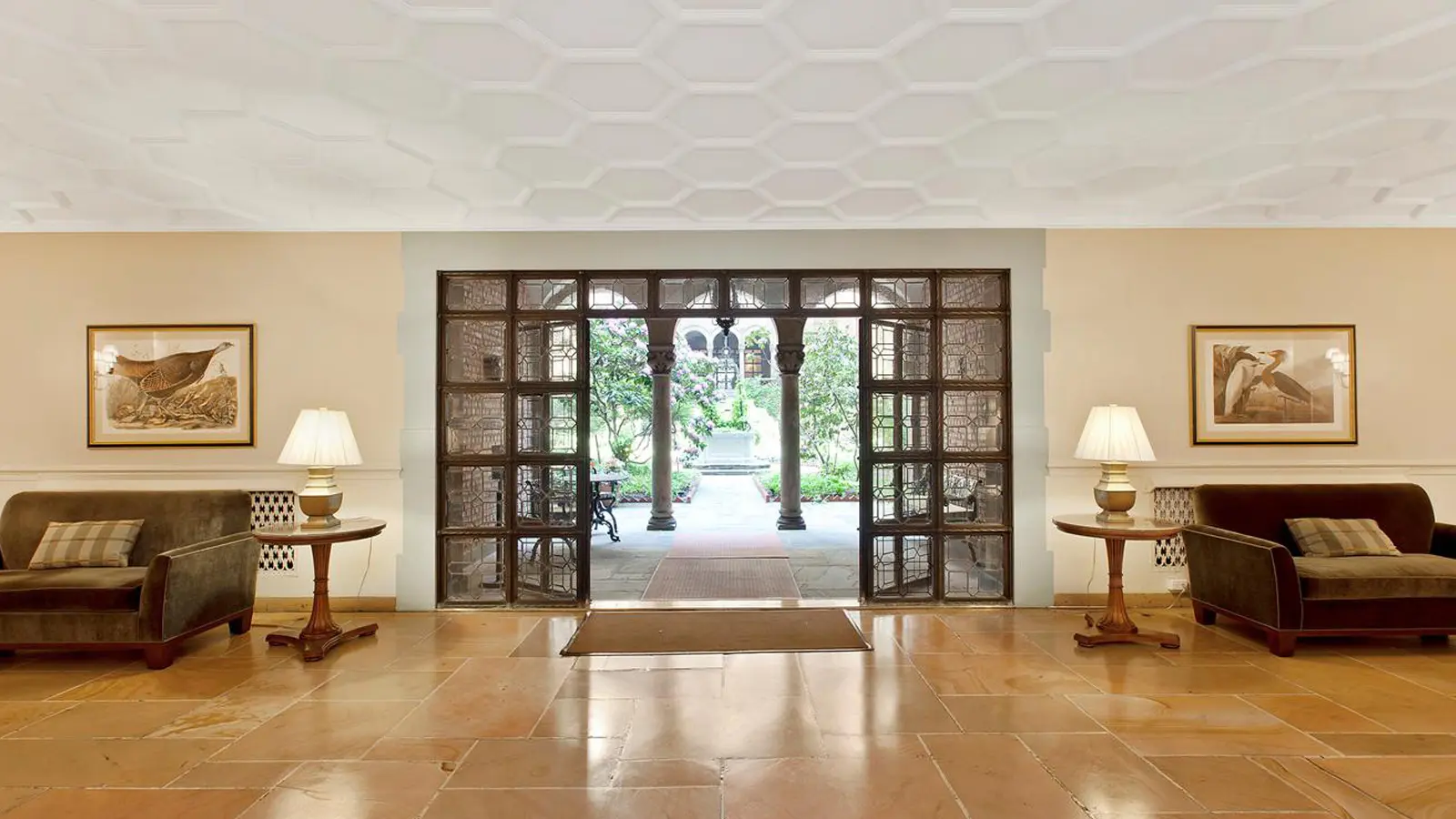
Built in 1931 and designed by Andrew J. Thomas, this 11-story compound has a magnificent center garden that is partially visible from the canopied entrances. While there are other residential buildings with larger gardens, such as the Dakota, the Apthorp and the Belnord on the West Side, they are much larger structures.
The garden is by no means the only attraction here as the facades abound in fanciful decorative sculptures of rabbits, squirrels, owls, eagles, dogs and the like.
In their great book, "The A. I. A. Guide to New York City, Fourth Edition, The Classic Guide to New York’s Architecture," (Three Rivers Press, 2000), Norval White and Elliot Wilensky provide the following commentary about this superb building:
"Two 11-story gems, complete with carved monsters, grotesques, and florid capital atop colonnettes, and wonderful multi-paned casements. Thomas was an important designer of enlightened apartment developments. The mid-block Italian garden court between the wings, barely visible through the entry doors, is a dream."
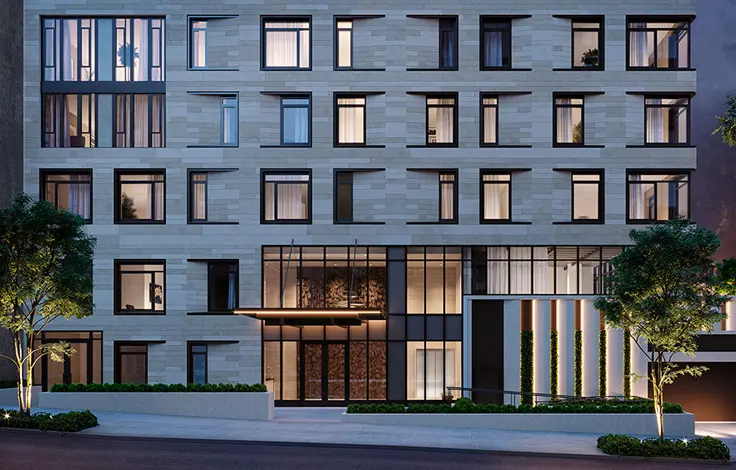
The building’s façade is red-brick to compliment that of the 7th Regiment Armory that it faces across 67th Street. The 67th Street wing has 57 apartments.
The building has a one-step-up, canopied entrance with sidewalk landscaping and a doorman and permits pets and protruding air-conditioners. It has no balconies, no health club and no sun deck.
The building has a prime Upper East Side location that is convenient to the area’s many fashionable boutiques and restaurants, art galleries and museums, and social clubs. It is close to Hunter College and there is cross-town bus service on this street and 65th Street and a subway station is nearby at 68th Street and Lexington Avenue.
115 East 67th Street and its back-to-back counterpart, 116 East 68th Street, were built by John D. Rockefeller Jr., according to a "Streetscapes" column by Christopher Gray in the July 17, 2011 edition of The New York Times.
"These sleeper buildings are wild and crazy on the outside, but most civilized within," Mr. Gray wrote.
"In 1929, John D. Rockefeller Jr. paid $1 million for the land," the article continued, adding that "Rockefeller was a vigorous donor to socially progressive causes, and particularly interested in housing for the poor and the working class. In the 1920s he sponsored both the Dunbar apartments in Harlem, for African-Americans, and the Thomas Garden Apartments in the Bronx, for ‘working men. His architect was Andrew J. Thomas, a rent collector turned builder turned self-trained architect. As early as the 1910s, Thomas was identified with a move to include gardens in apartment developments, and he fleshed out the idea in middle- and low-income projects including the Thomas apartments, which he surrounded with a Japanese garden."
The article said that at Millan House, the architect “used a dark, rusty brick, with deep-struck pointing to emphasize its earthy quality, consonant with its general Romanesque character. The water table - the lowest section of masonry - is made from a swirly butterscotch and brown stone….Flanking one doorway are two rabbits; one is stern, but the other is just plain malevolent.”
The building was converted to a co-op in 1947.
To view all NYC apartment information and prices, log in or register now it's quick, easy and free.
You'll get access to all NYC apartments available including thousands of listings all for free.

Forgot Password?
If you need assistance, please call us at 212-755-5544.
|
Comments or questions? · Phone: 212.755.5544
|
|
An equal housing opportunity.
|
| All data is deemed reliable but is not guaranteed accurate by the REBNY / RLS or CityRealty. See Terms of Service for additional restrictions. All information furnished regarding New York City property for sale, rental or financing is from sources deemed reliable, but no warranty or representation is made as to the accuracy thereof and same is submitted subject to errors, omissions, change of price, rental or other conditions, prior sale, lease or financing or withdrawal without notice. All dimensions are approximate. For exact dimensions, you must hire your own architect or engineer. The number of bedrooms listed on this website is not a legal conclusion. Each person should consult with his/her own attorney, architect or zoning expert to make a determination as to the number of rooms in the unit that may be legally used as a bedroom. |