610 West End Avenue CLOSE 
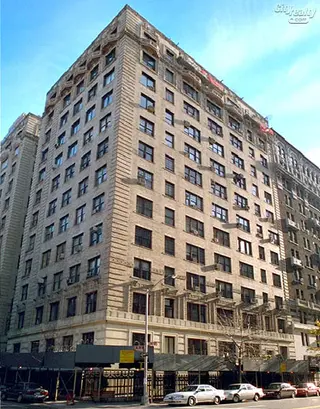
The beige-brick building, which has a two-story limestone base, originally had a large cornice that is now missing, but despite such a dreadful loss, it is still impressive. The 13-story building was converted to a cooperative in 1969 and has 57 apartments.
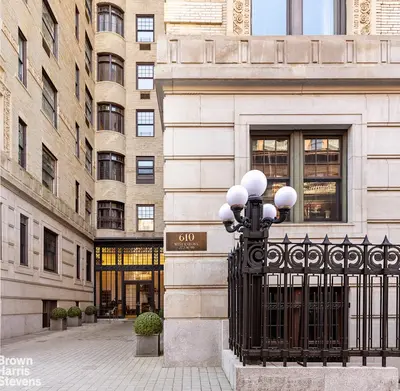
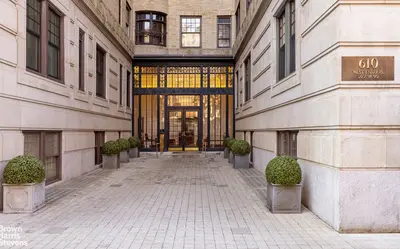
The building’s entrance is on the sidestreet in a deeply recessed court whose approach is flanked by five-globe lamposts. The east side of the rear of the courtyard has curved bay windows and the step-up entrance itself is framed in very large windows behind very ornate grillwork whose curvilinear design is repeated from the tall fences around the building. This decorative entrance is painted bright blue, which is not subtle, but quite fascinating because of the delicacy of the metalwork.
It was designed by George and Edward Blum, architects who also designed 277, 617, 760, 780 and 838 West End Avenue, 555, 791, 875, 940 and 1075 Park Avenue, 1435 Lexington Avenue, 676, 720 and 730 Riverside Drive, among many other Manhattan apartment buildings
In their fine book, "George & Edward Blum, Texture and Design in New York Apartment House Architecture," (The Friends of Terra Cotta Press, 1993), Andrew S. Dolkart and Susan Tunick note that the Evanston was built by George F. Johnson Jr., and Leopold Kahn. The Blums also designed the Admaston apartment building at 259 West 89th Street the same year for Johnson and Kahn. The Johnson-Kahn Company had previously built the Hendrick Hudson Apartments on Riverside Drive at 110th Street and the adjoining annex and the authors suggest that Edward Blum "may have been the designer" of these two major buildings for the architect of record, William L. Rouse.
"The Blums’ apartment houses are part of a third wave of quality multiple dwelling construction, and their finest buildings stand out from the hundreds of more pedestrian examples that appeared in Manhattan....they were among the few apartment house architects of the period to show an appreciation for expressive exterior design."
"George and Edward Blum were among a large number of Americans to study at the École des Beaux-Arts. Most American students had little first-hand knowledge of Paris or of French language and culture and remained unaware of new design trends beyond those taught at the École. The Blums’ French parentage and their experience growing up in France set them apart from most of their compatriots. It appears that they gained a greater familiarity with contemporary French architectural practice than most Americans, for their early buildings indicate a range of French influences far greater than those generally acquired through study at the École." "The manipulation of varied materials, especially the use of brick for decorative as well as functional purposes, exerted the most far-reaching influence on the Blums’ apartment houses. Brick had been used extensively in French architecture, notably in the Midi region, near Toulouse and Albi, where stone is scarce, and on major buildings erected throughout France during the reign of Louis XIII in the early seventeenth century and during the nineteenth century. Although brick had not been a traditional building material in Paris, it became especially popular in the late nineteenth century for apartment buildings for the middle and working classes and for public buildings such as schools and baths," the authors continued.
The building’s massing is modulated by attractive, angled balconies of ornamental terracotta on the top floor and originally had similar balconies on the third floor that have since been removed although their brackets remain.
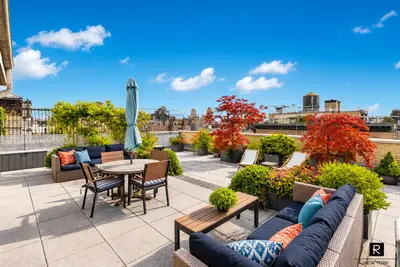
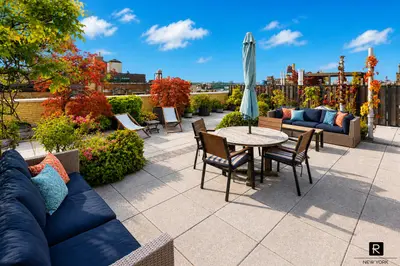
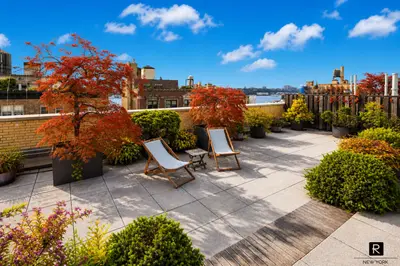
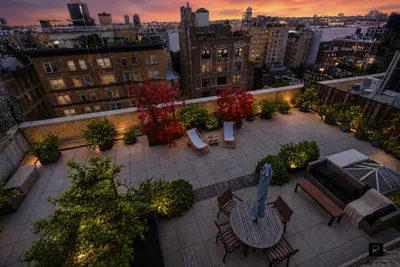
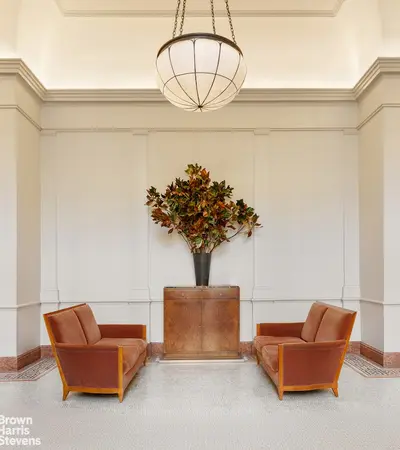
The building has a large lobby, doorman and landscaping.
The elaborate fence is so bold it almost looks like a later addition, but it serves to draw attention to this fine building whose cornice should be replaced.
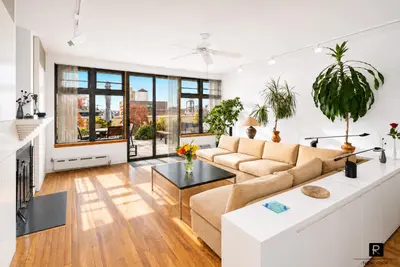
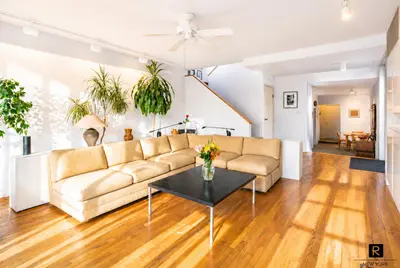
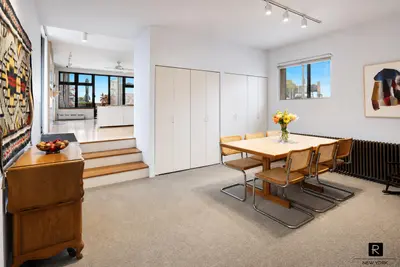
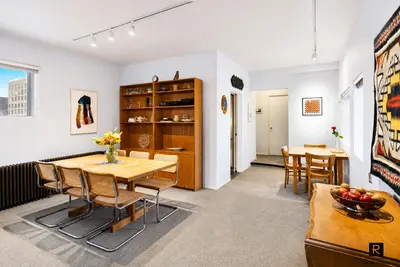
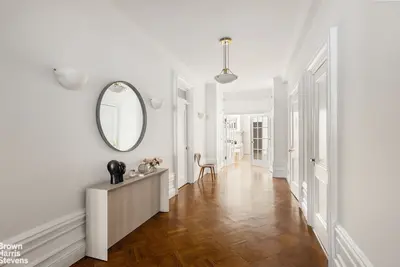
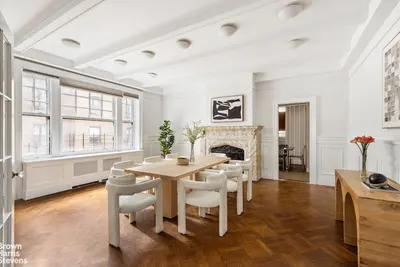
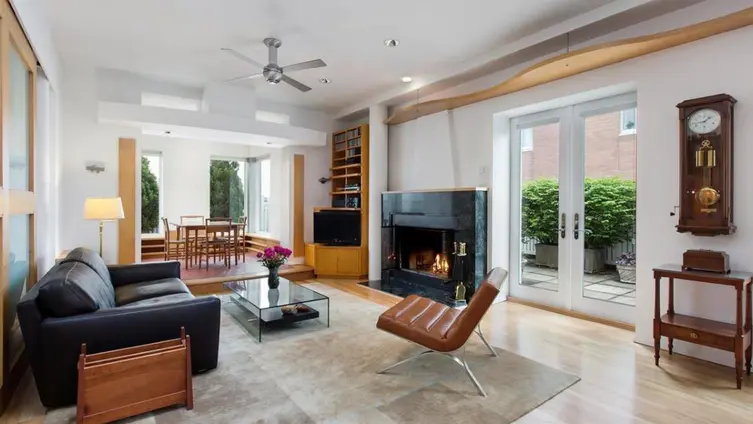
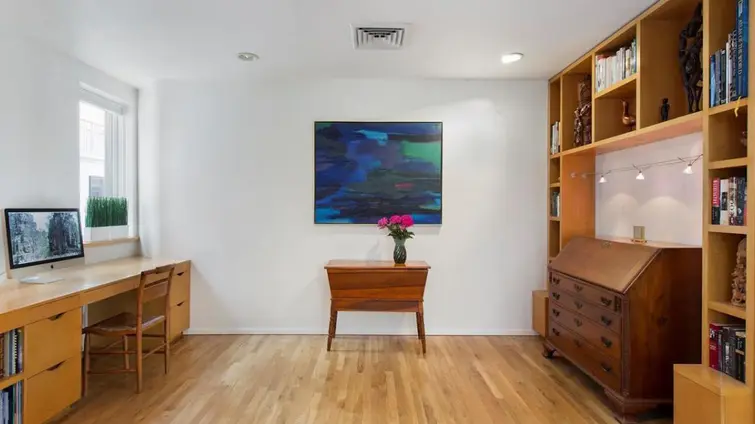
In his fine book, "New York’s Fabulous Luxury Apartments with Original Floor Plans from the Dakota, River House, Olympic Tower and Other Great Buildings," (Dover Publications, 1987), Andrew Alpern noted that while some apartments have been subdivided over the years that the "bland and rather conventional facade of this building conceals a very curious floor plan, which, surprisingly, has been changed only slightly over the years."
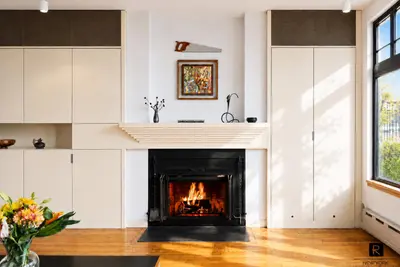
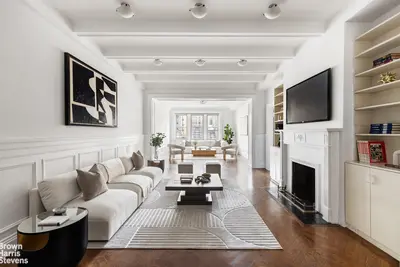
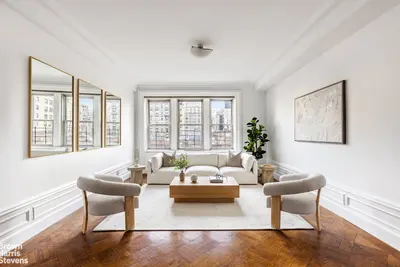
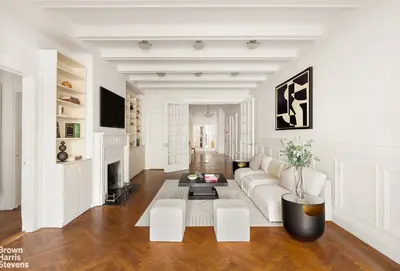
"Two of the apartments on each floor are duplexed," Alpern continued, adding that "the sleeping rooms one floor higher than the entertaining rooms, but not directly over them. This enabled each apartment to provide the feeling of a private house while keeping costs down by providing identical arrangements on each floor (except, of course, at the top and the bottom). Each of these apartments has a foyer plus a huge reception room (complete with fireplace but not window) bigger than any other room in the house."
Carter B. Horsley
To view all NYC apartment information and prices, log in or register now it's quick, easy and free.
You'll get access to all NYC apartments available including thousands of listings all for free.

Forgot Password?
If you need assistance, please call us at 212-755-5544.
|
Comments or questions? · Phone: 212.755.5544
|
|
An equal housing opportunity.
|
| All data is deemed reliable but is not guaranteed accurate by the REBNY / RLS or CityRealty. See Terms of Service for additional restrictions. All information furnished regarding New York City property for sale, rental or financing is from sources deemed reliable, but no warranty or representation is made as to the accuracy thereof and same is submitted subject to errors, omissions, change of price, rental or other conditions, prior sale, lease or financing or withdrawal without notice. All dimensions are approximate. For exact dimensions, you must hire your own architect or engineer. The number of bedrooms listed on this website is not a legal conclusion. Each person should consult with his/her own attorney, architect or zoning expert to make a determination as to the number of rooms in the unit that may be legally used as a bedroom. |