
By a 36-to-12 vote, the Council yesterday passed the most significant expansion of antismoking laws since Mayor Michael R. Bloomberg pushed to prohibit smoking in restaurants and bars in 2002. according to an article by Javier C. Hernandez in today's edition of The New York Times.
The Council speaker, Christine C. Quinn, said the ban was an affirmation of the rights of nonsmokers. "Their health and their lives should not be negatively impacted because other people have decided to smoke," Ms. Quinn said at a news conference.
Opponents of the bill spoke strongly against it; several members derided it as an overly broad law that would infringe on individual liberties.
"We're moving towards a totalitarian society if in fact we're going to have those kinds of restrictions on New Yorkers," said Councilman Robert Jackson of Manhattan, who described himself as a marathon runner and nonsmoker.
Others said the ban would set a dangerous precedent. Councilman Daniel J. Halloran III of Queens said, "Once we pass this, we will next be banning smoking on sidewalks, and then in the cars of people who are driving minors and then in the homes."
A compromise that would establish designated smoking areas outdoors, the article said, was scuttled by Council leaders in favor of an all-out ban. The bill, which will ban smoking in 1,700 city parks and along about 14 miles of city beaches, will become law 90 days after Mr. Bloomberg signs it, which he is expected to do this month.
"This summer, New Yorkers who go to our parks and beaches for some fresh air and fun will be able to breathe even cleaner air and sit on a beach not littered with cigarette butts," Mr. Bloomberg said in a statement. Enforcement of the law will fall to the Department of Parks and Recreation, which can impose $50 fines.
Councilwoman Gale A. Brewer of Manhattan, a longtime advocate for stricter antismoking laws, said increasing revenue for the city was not the goal. "I'm not interested in arrests; I'm not interested in revenue," she said. "I'm just interested in public health."
Ms. Quinn said she would look for more ways to reduce exposure to secondhand smoke but declined to provide specifics.
A city health department study published in 2009 found that 57 percent of nonsmoking adult New Yorkers had an elevated level of a nicotine byproduct in their blood indicating recent exposure to cigarette smoke. The comparable nationwide figure was 45 percent, according to the article.
City health officials say that people seated within three feet of a smoker are exposed to roughly the same levels of secondhand smoke, regardless of whether they are indoors or outdoors. The ban is also intended to help reduce trash in public places.
In addition to applying to parks and beaches, the ban approved on Wednesday would extend to pedestrian malls and plazas like those in and around Times Square. One group will be exempted from the restrictions: actors lighting up a cigarette in a park or on a beach for the purposes of a theatrical production.
The Council speaker, Christine C. Quinn, said the ban was an affirmation of the rights of nonsmokers. "Their health and their lives should not be negatively impacted because other people have decided to smoke," Ms. Quinn said at a news conference.
Opponents of the bill spoke strongly against it; several members derided it as an overly broad law that would infringe on individual liberties.
"We're moving towards a totalitarian society if in fact we're going to have those kinds of restrictions on New Yorkers," said Councilman Robert Jackson of Manhattan, who described himself as a marathon runner and nonsmoker.
Others said the ban would set a dangerous precedent. Councilman Daniel J. Halloran III of Queens said, "Once we pass this, we will next be banning smoking on sidewalks, and then in the cars of people who are driving minors and then in the homes."
A compromise that would establish designated smoking areas outdoors, the article said, was scuttled by Council leaders in favor of an all-out ban. The bill, which will ban smoking in 1,700 city parks and along about 14 miles of city beaches, will become law 90 days after Mr. Bloomberg signs it, which he is expected to do this month.
"This summer, New Yorkers who go to our parks and beaches for some fresh air and fun will be able to breathe even cleaner air and sit on a beach not littered with cigarette butts," Mr. Bloomberg said in a statement. Enforcement of the law will fall to the Department of Parks and Recreation, which can impose $50 fines.
Councilwoman Gale A. Brewer of Manhattan, a longtime advocate for stricter antismoking laws, said increasing revenue for the city was not the goal. "I'm not interested in arrests; I'm not interested in revenue," she said. "I'm just interested in public health."
Ms. Quinn said she would look for more ways to reduce exposure to secondhand smoke but declined to provide specifics.
A city health department study published in 2009 found that 57 percent of nonsmoking adult New Yorkers had an elevated level of a nicotine byproduct in their blood indicating recent exposure to cigarette smoke. The comparable nationwide figure was 45 percent, according to the article.
City health officials say that people seated within three feet of a smoker are exposed to roughly the same levels of secondhand smoke, regardless of whether they are indoors or outdoors. The ban is also intended to help reduce trash in public places.
In addition to applying to parks and beaches, the ban approved on Wednesday would extend to pedestrian malls and plazas like those in and around Times Square. One group will be exempted from the restrictions: actors lighting up a cigarette in a park or on a beach for the purposes of a theatrical production.
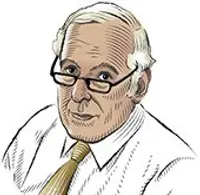
Architecture Critic
Carter Horsley
Since 1997, Carter B. Horsley has been the editorial director of CityRealty. He began his journalistic career at The New York Times in 1961 where he spent 26 years as a reporter specializing in real estate & architectural news. In 1987, he became the architecture critic and real estate editor of The New York Post.

 6sqft delivers the latest on real estate, architecture, and design, straight from New York City.
