
The largest public transit project in the nation, a commuter train tunnel under the Hudson River connecting New Jersey to Manhattan, was halted today by Gov. Chris Christie of New Jersey because, he said, the state could not afford its share of the project's rising cost, according to an article today at nytimes.com by Patrick McGeehan.
The governor, a Republican, said he decided to withdraw his support for the project "after hearing from state transportation officials that the project would cost at least $2.5 billion more than its original price of $8.7 billion," the article said, adding that "he said that New Jersey would have been responsible for the overrun and that he could not put the taxpayers of the state 'on what would be a never-ending hook.'"
"Mr. Christie's decision," the article said, "stunned other government officials and advocates of public transportation because work on the tunnel was under way and $3 billion of federal financing had already been arranged - more money than had been committed to any other transit project in America."
The tunnel was a project of New Jersey Transit and the Port Authority of New York and New Jersey, which gets its money from tolls, committed $3 billion for the plan after committing billions of dollars for the redevelopment of the World Trade Center site, the article said.
"In scrapping the project," the article continued, "Mr. Christie is forfeiting the money from the federal government and jeopardizing as much from the Port Authority. The state may also have to repay the federal government for its share of the $600 million that has already been spent on the tunnel.
"The tunnel, which would have stretched under the Hudson from North Bergen, N.J., to a new station deep below 34th Street in Manhattan, was intended to double the number of trains that could enter the city from the west each day. The project's planners said the additional trains would alleviate congestion on local roads, reduce pollution, help the growth of the region's economy and raise property values for suburban homeowners," the article said.
According to the article, "Mr. Christie admitted that the cancellation would be costly but he said it would be more prudent for the state to withdraw sooner rather than later. He said he also expected to be able to redirect the Port Authority's $3 billion to other projects in the state, though he did not identify any."
A month ago, Mr. Christie ordered a temporary halt to spending on the tunnel while state transportation officials reviewed its costs.
Some critics, the article noted, "said they suspected that the governor had decided to divert the money in highway tolls that the state would have spent on the tunnel to road and bridge repairs. The state's fund for such transportation improvements is nearly empty and the governor has ruled out raising the state's gasoline tax to replenish it."
Kate Slevin, executive director of the Tri-State Transportation Campaign, a group that had advocated for the tunnel, said that Mr. Christie's decision was unprecedented: "We've seen delays on transit projects before, but never when the financing was as solid as it was on this."
The planned tunnel was known as Access to the Region's Core, or the ARC tunnel, and it would have been used exclusively by New Jersey Transit, whose trains now share a two-track tunnel, nearly 100 years old, with Amtrak.
The ARC tunnel was a pet project of Mr. Christie's predecessor, Jon S. Corzine, and the state's two senators, Frank R. Lautenberg and Robert Menendez.
"Killing the ARC tunnel will go down as one of the biggest public policy blunders in New Jersey's history," Mr. Lautenberg said, adding that "Without increased transportation options into Manhattan, New Jersey's economy will eventually be crippled."
The governor, a Republican, said he decided to withdraw his support for the project "after hearing from state transportation officials that the project would cost at least $2.5 billion more than its original price of $8.7 billion," the article said, adding that "he said that New Jersey would have been responsible for the overrun and that he could not put the taxpayers of the state 'on what would be a never-ending hook.'"
"Mr. Christie's decision," the article said, "stunned other government officials and advocates of public transportation because work on the tunnel was under way and $3 billion of federal financing had already been arranged - more money than had been committed to any other transit project in America."
The tunnel was a project of New Jersey Transit and the Port Authority of New York and New Jersey, which gets its money from tolls, committed $3 billion for the plan after committing billions of dollars for the redevelopment of the World Trade Center site, the article said.
"In scrapping the project," the article continued, "Mr. Christie is forfeiting the money from the federal government and jeopardizing as much from the Port Authority. The state may also have to repay the federal government for its share of the $600 million that has already been spent on the tunnel.
"The tunnel, which would have stretched under the Hudson from North Bergen, N.J., to a new station deep below 34th Street in Manhattan, was intended to double the number of trains that could enter the city from the west each day. The project's planners said the additional trains would alleviate congestion on local roads, reduce pollution, help the growth of the region's economy and raise property values for suburban homeowners," the article said.
According to the article, "Mr. Christie admitted that the cancellation would be costly but he said it would be more prudent for the state to withdraw sooner rather than later. He said he also expected to be able to redirect the Port Authority's $3 billion to other projects in the state, though he did not identify any."
A month ago, Mr. Christie ordered a temporary halt to spending on the tunnel while state transportation officials reviewed its costs.
Some critics, the article noted, "said they suspected that the governor had decided to divert the money in highway tolls that the state would have spent on the tunnel to road and bridge repairs. The state's fund for such transportation improvements is nearly empty and the governor has ruled out raising the state's gasoline tax to replenish it."
Kate Slevin, executive director of the Tri-State Transportation Campaign, a group that had advocated for the tunnel, said that Mr. Christie's decision was unprecedented: "We've seen delays on transit projects before, but never when the financing was as solid as it was on this."
The planned tunnel was known as Access to the Region's Core, or the ARC tunnel, and it would have been used exclusively by New Jersey Transit, whose trains now share a two-track tunnel, nearly 100 years old, with Amtrak.
The ARC tunnel was a pet project of Mr. Christie's predecessor, Jon S. Corzine, and the state's two senators, Frank R. Lautenberg and Robert Menendez.
"Killing the ARC tunnel will go down as one of the biggest public policy blunders in New Jersey's history," Mr. Lautenberg said, adding that "Without increased transportation options into Manhattan, New Jersey's economy will eventually be crippled."
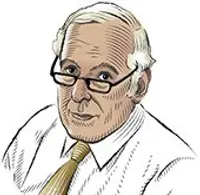
Architecture Critic
Carter Horsley
Since 1997, Carter B. Horsley has been the editorial director of CityRealty. He began his journalistic career at The New York Times in 1961 where he spent 26 years as a reporter specializing in real estate & architectural news. In 1987, he became the architecture critic and real estate editor of The New York Post.

 6sqft delivers the latest on real estate, architecture, and design, straight from New York City.
