| |
About 173 Perry Street
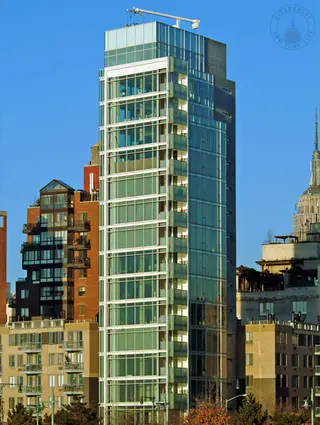
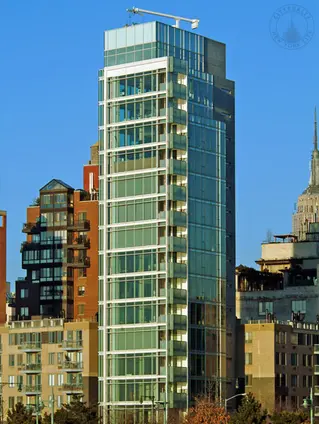
Completed in 2002, this is the narrower of two very similar towers that set a new design standard for mid-rise residential buildings in Manhattan.
Designed by Richard Meier, one of the "New York Five" architects who came to prominence in the late 1960s and early 1970's for their adoption of the clean and bright lines of Le Corbusier, these "mini" "twins" attracted many celebrities and significantly reinforced the lower Hudson River waterfront as the neighborhood of choice for the "hip" and "chic" and rich. (The other four architects of the "New York Five" were Charles Gwathmey, Peter Eisenman, Michael Graves and John Hedjuk.)
Although the design of these towers is not remarkable given the contemporary state of architecture, it was very classy for New York, sort of a white- and mini-Seagram Building aesthetic of sharp lines and nicely proportioned grids. Moreover, its "twinness" and downtown waterfront location also conjured memories of the fallen Twin Towers of the World Trade Center that were demolished in the terrorist attacks of September 11, 2001.
Meier's design attracted celebrity buyers such as Calvin Klein, the designer, Jean-Georges Vongerichten, the restaurateur, Ian Schrager, the hotelier, and Martha Stewart, the lifestyle guru. Mr. Vongerichten had plans to create a new restaurant in the lobby of 176 Perry Street, the other "twin" building." Other tenants in the Perry Street towers included NBC Universal president Michael Jackson and William Joy, the founder of Sun Microsystems.
A December 1, 2003 article in The New York Observer by Gabriel Sherman noted that "Not everyone has remained keen on the buildings since buying there." "Martha Stewart’s penthouse," it continued, "is currently on the market for $7.2 million, and the 10th floor triplex is listing for $19.5 million. Mr. Klein and Mr. Schrager have yet to move into their apartments. And according to brokers familiar with the building, some of the unoccupied lofts have had numerous leaks during this summer’s torrential rains, which caused water to cascade into the unfinished apartments....'There were some drainage issues; there were problems with terrace drains,' said Richard Born, the developer of the Perry Street buildings. 'The managing agents called, we got people involved, and that was that. It's fixed.'"
The same article noted, moreover, that that week "the developer juggernauts Izak Senbahar and Simon Elias – the team that built the $138 million Grand Beekman at East 51st Street and the $70 million David Rockwell-designed Alex Hotel at East 45th Street – will break ground on a third Richard Meier tower at 165 Charles Street. The building will be complete by spring 2005, and this time Mr. Meier gets to design the shower curtains. The $80 million project is considerably more ambitious than Mr. Meier’s Perry Street towers.
The 16-story building will feature 32 apartments with 11-foot ceilings that will cost approximately $2,500 per square foot. While Mr. Meier designed the Perry Street towers as raw space, he planned to completely outfit the Charles Street building, designing everything from kitchen space to the bathroom fixtures.
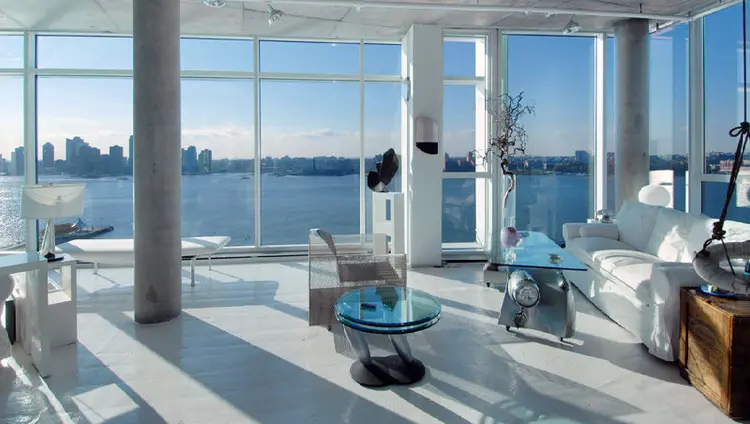
Another article by Gabriel Sherman in the June 14, 2004 issue of The New York Observer noted that Nicole Kidman, the actress who "joined the celebrity flotsam in her 4,000-square-foot loft at Perry Street," was "reportedly smarting over the pending construction of Mr. Meier’s third fishbowl tower at 165 Charles Street, as the building is set to steal the star’s coveted Hudson River views."
While imitation may be the sincerest form of flattery, the third Meier tower is quite a remarkable chapter in the city’s real estate one-up-man-ship history. Views, of course, are very important to buyers but they are not protected by the city’s zoning and building regulations. It is understandable that buyers in the southern Perry Street Meier tower were surprised to discover that their southern views would be blocked so quickly and, moreover, that the Richard Meier cachet of exclusive design would also be compromised so quickly.
From an urbanistic viewpoint, of course, a phalanx of three extremely attractive "modern" mid-rise towers along the waterfront is not a bad thing, especially when their design is coordinated by the same architect. It is unusual, of course, for them to have been erected by different developers. The Seagram Building and Lever House, of course, spawned countless imitators but not directly across the street.
The Perry Street towers are not perfect twins. The west façade of the south tower is slightly broader than that of the north tower. And the Charles Street tower by Meier is even broader, which actually makes for a more interesting ensemble.
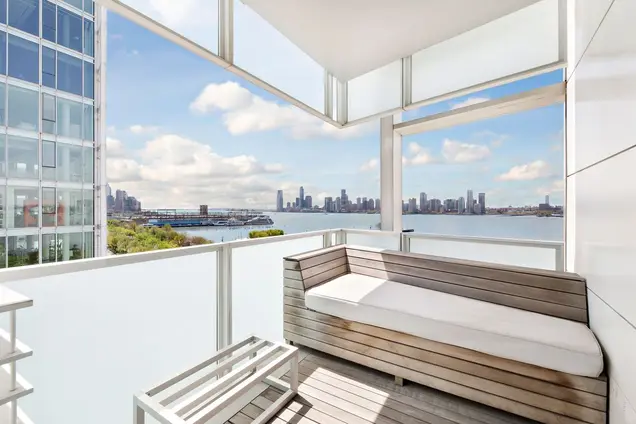
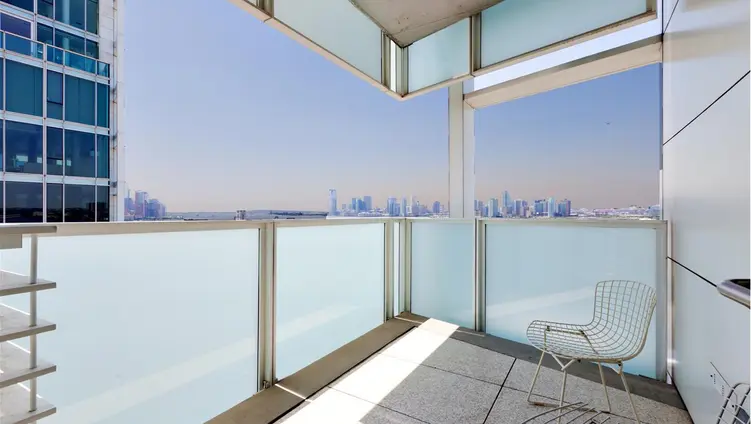
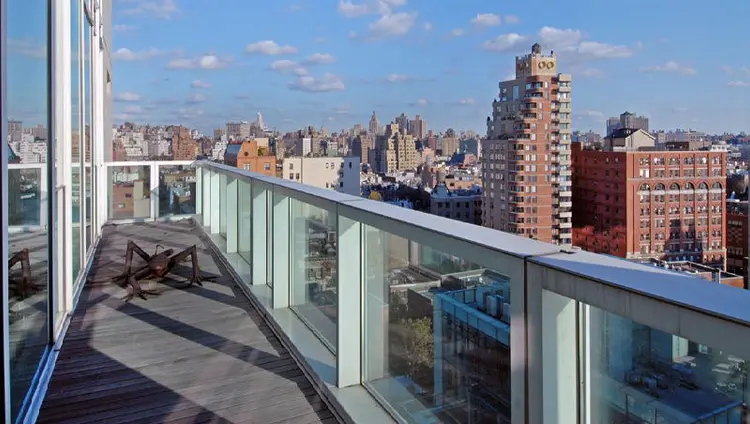
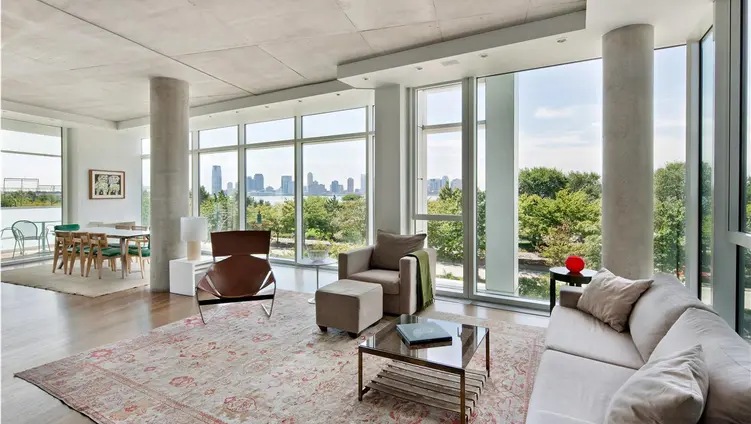
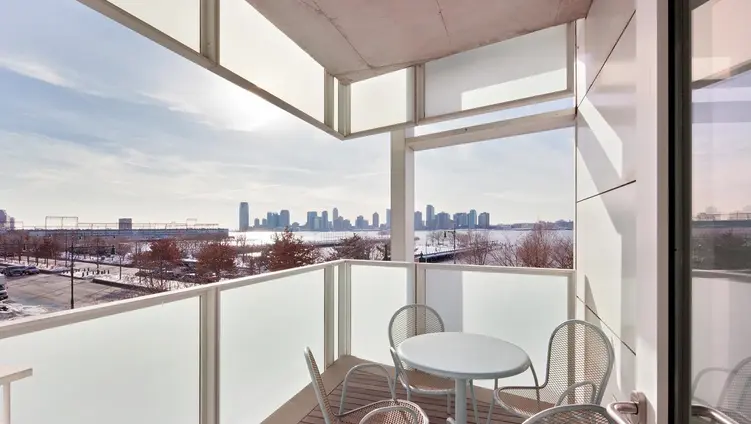
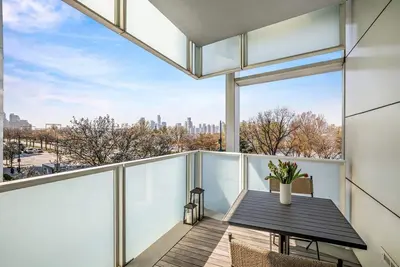
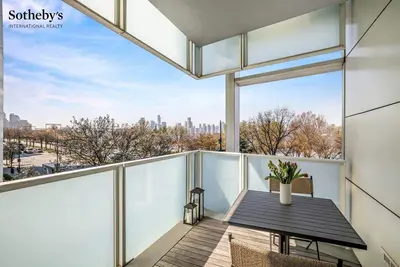
The facades of these Meier buildings combine floor-to-ceiling windows encased in white steel with slim green spandrels and the southwest corners of the Perry Street towers have small green-glass balconies. The white steel elements of the Perry Street towers protrude a bit, giving the buildings a nice, handsome texture.
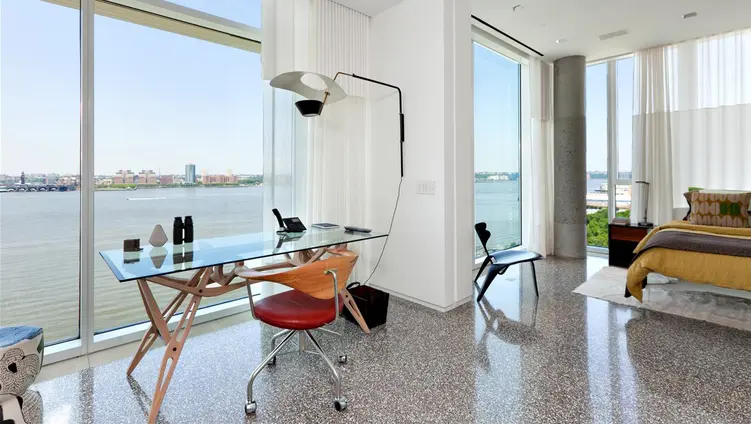
The western facades have a white-steel "frame" that extends beyond the building at the southwest corner and is in front of the balconies that extend even further. The extended frame is something of a conceit as is gratuitous construction but is not glaringly offensive. The north tower, which is the narrowest, has one apartment per floor while the south tower has two apartments.
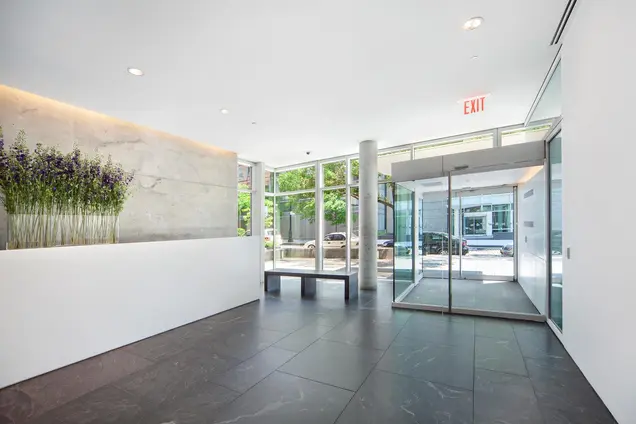
Both buildings are set in minimalist dark gray granite plazas and have handsome and abstract entrance canopies. The overall design is not dissimilar from that of good-looking small suburban office buildings.
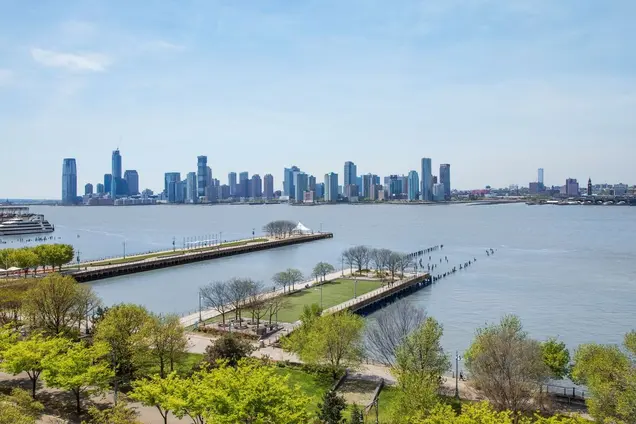
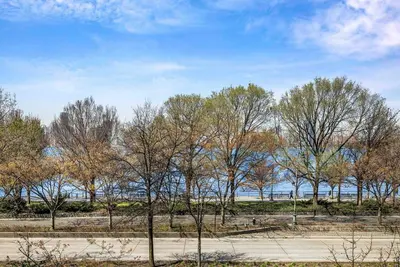
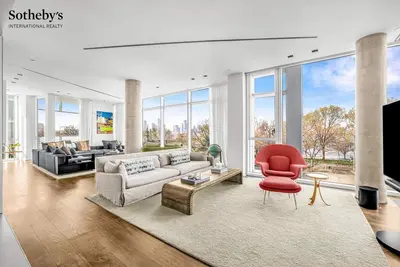
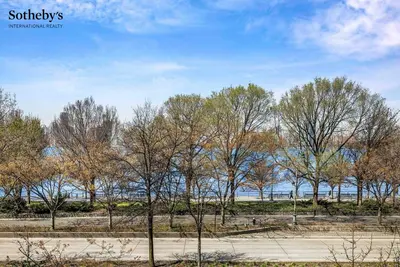
They are across West Street from the Hudson River Park, which opened about the same time and is extremely attractive with broad lawns and plentiful seating for watching sunsets and gazing at the Lower Manhattan and Jersey City skylines.
Richard Meier is best known for his 1970 renovation of a former Bell Labs building in the West Village for the Westbeth artists and West and Bethune Streets, his design of the huge Getty Center in Los Angeles, the High Museum in Atlanta, Georgia, the Atheneum in New Harmony, Indiana, and the former Bronx Developmental Center, which was erected in 1978 and had been operated by the New York State Office of Mental Retardation and Developmental Disabilities.
Richard Born, Ira Drukier and Charles Blaichman were the developers of 173 and 176 Perry Street, and Mr. Meier said, in an interview in Architectural Record magazine, that the two towers "create a gateway for the Village near the water" and make "Perry Street a symbol of the regeneration of this area."
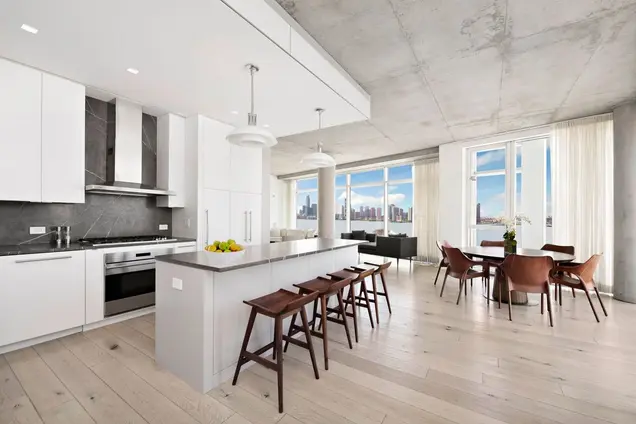
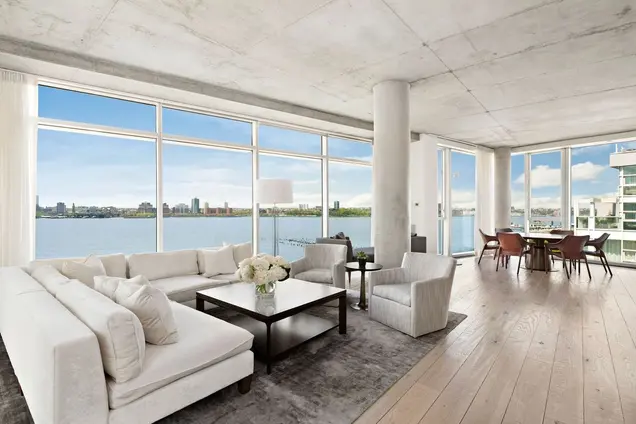
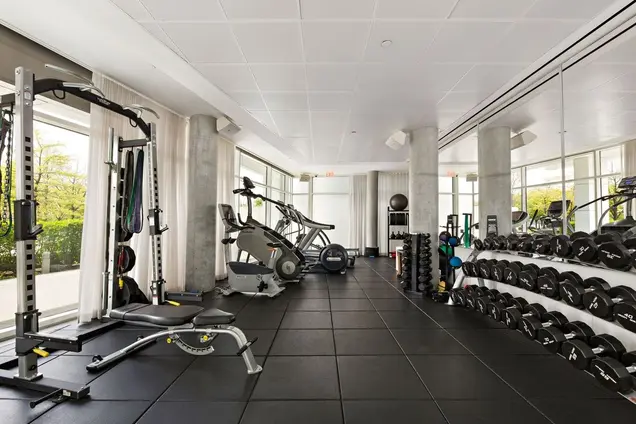
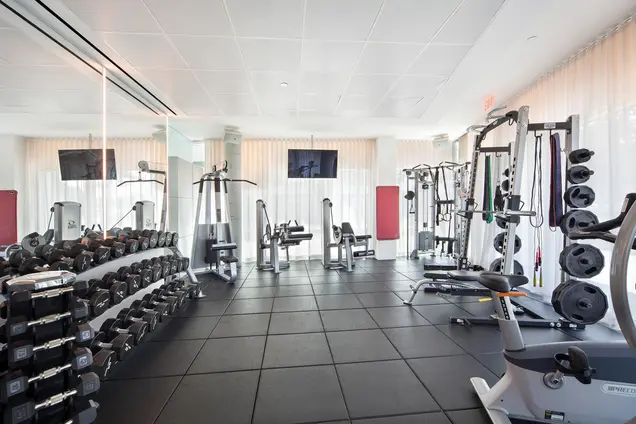
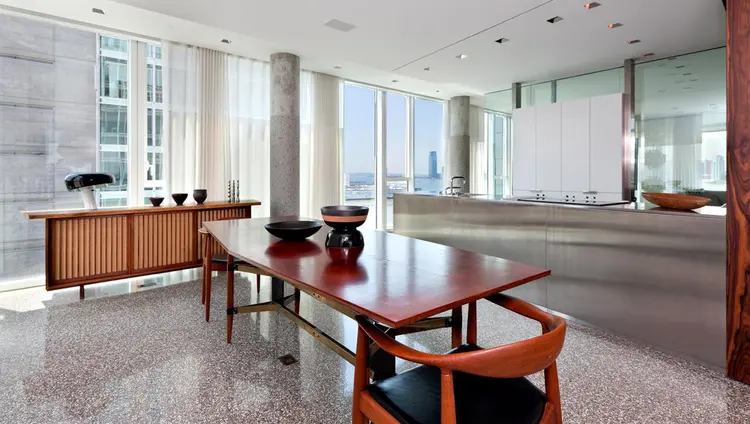
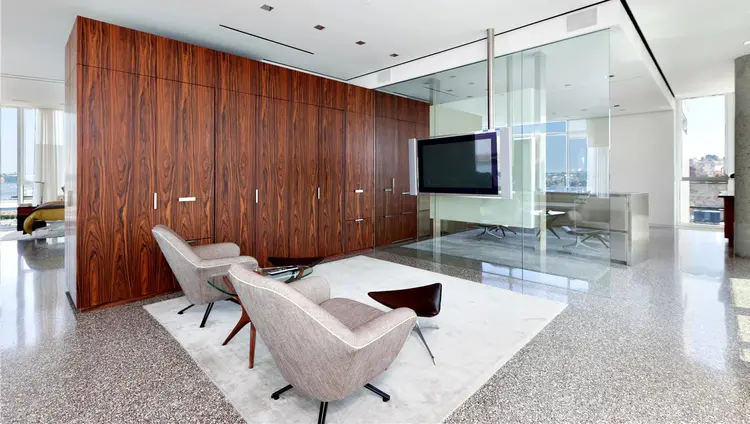
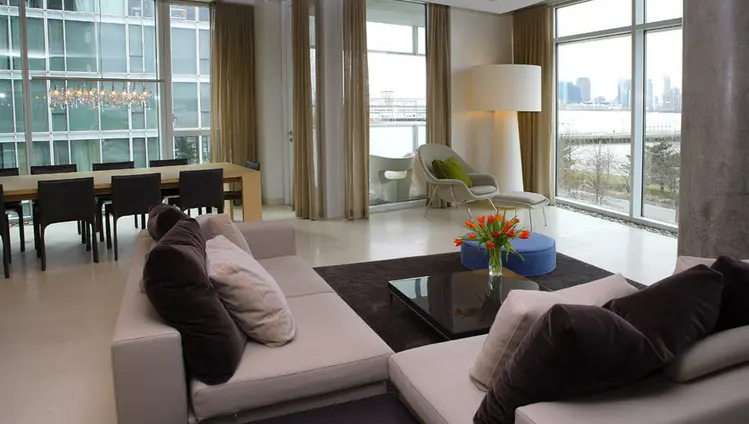
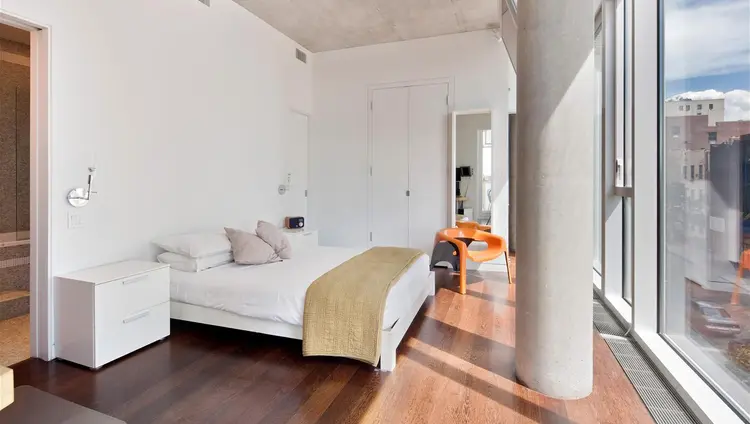
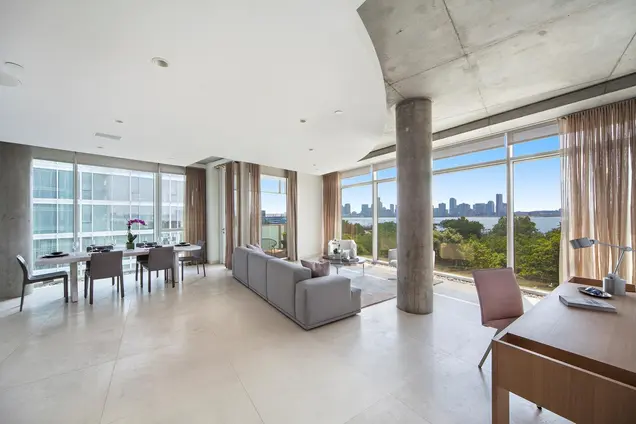
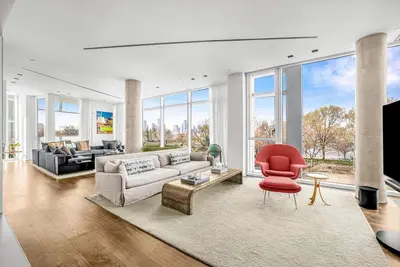
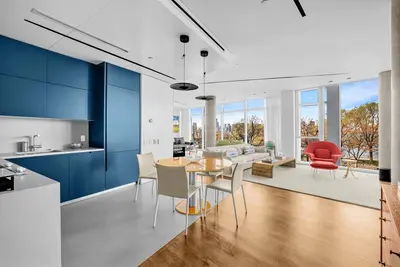
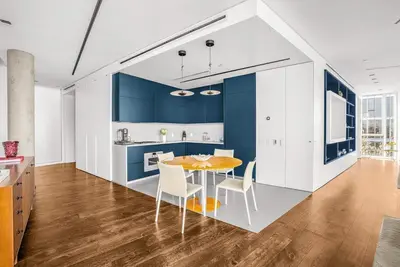
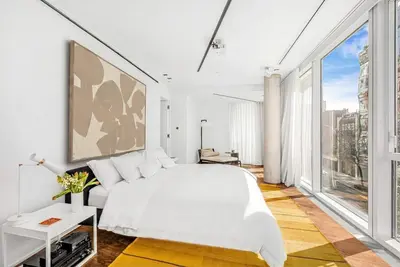
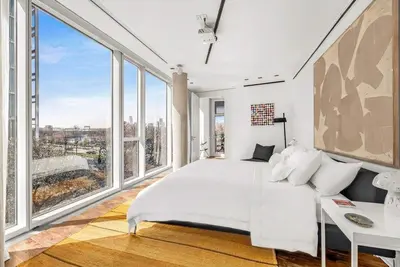
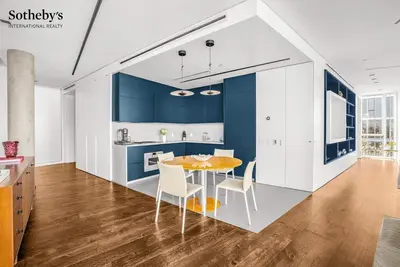
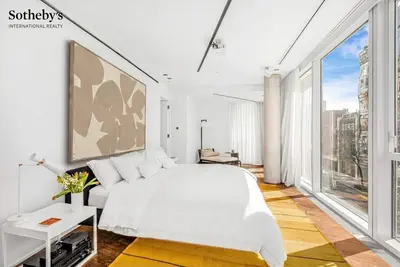
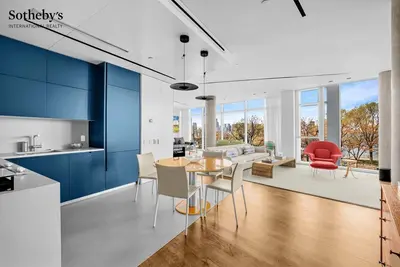
The buildings have 11-foot ceilings, concierges and a fitness center.
An April 27, 2004 article by Sam Lubell in Architectural Record magazine quoted Mr. Meier, who won the Pritzker Prize for Architecture in 1984, as saying that the third tower on Charles Street "gives us the opportunity to further develop and evolve the design of my first two towers," adding that "It's like music. One note is nice, but as you add notes you can create something different."
An article by Lincoln Anderson in the October 8-14, 2003 issue of The Villager, reported on the third Meier tower at 165 Charles that was being developed by Stuart Marton and Izak Senbahar on a site that "was once home to Pathfinder, a socialist publishing company, and at another point, to a succession of gay bars." "Glenn Bristow, a former Community Board 2 member, recalled a mural of revolutionary leaders on the building’s south side, which, she said, was blocked from view by a yellow wall put up a few years ago because a neighbor didn’t want to see it."
Mr. Anderson observed that the Charles Street project was in "an area unprotected by landmarking, west of the Greenwich Village Historic District and south of the newly designated Ganesvoort Market Historic District," adding that "in between the new Meier site and his two existing towers is Charles Lane, a historic, cobblestone street....The Greenwich Village Community Task Force has pushed for the landmarking of the area along the waterfront, which it calls the 'Maritime mile.' But so far the city's Landmarks Preservation Commission has not bitten."
"Hoping to block further development, residents and Councilmember Chris[tine] Quinn recently fought off an attempt by the city to rezone a section of the northern part of Hudson Square, between Barrow and Leroy Sts., and Hudson and West Sts., to allow residential development."
Mr. Anderson quoted Katy Bordonaro, co-chairperson of the Greenwich Village Society for Historic Preservation, as maintaining that "a wall of buildings on the waterfront would jeopardize the existing Greenwich Village Historic District." Such an attitude of course would not tolerated Riverside Drive and probably would have been intolerant also of Central Park! Of course there are those in Greenwich Village who perhaps think that urban planner Jane Jacob’s West Village Housing complex of low-rise brick buildings along Washington Street is wonderful even though it is perhaps uglier than any public housing project in the country!
A March 22, 2004 article in The New York Observer by Gabriel Sherman argued that the third Meier tower made the first two, "which drew such singular praise and attention, in part because of the scarcity of residential buildings by the world-renowned architect," look "a little less special. It was they who made the $50 million development the de facto dormitory for downtown A-listers. The high-profile names paid upward of $2,000 per square foot to own a piece of Mr. Meier’s cutting-edge design, and the cachet of living in a building designed by a Pritzker Prize-winning architect."
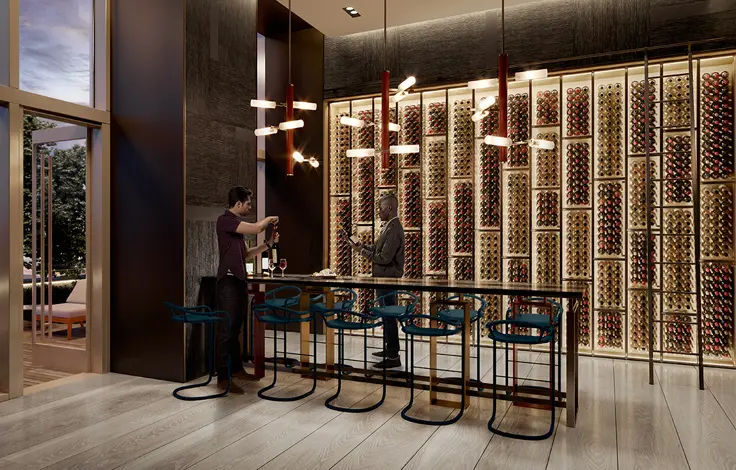
"On March 12," the article continued, "Mr. Meier and the developer, Izak Senbahar, formally unveiled the 165 Charles Street tower design at a fashionable party in the white-walled Charles Street gallery. There, guests (including novelist Salman Rushdie), nibbled sushi rolls and clinked champagne flutes as they mingled among clear acrylic models, artists' renderings and architectural plans for the $80 million Charles Street tower. Mr. Meier, wearing a midnight-blue pinstriped suit that contrasted with his flowing white mane, dismissed the notion that this new development will overshadow his Perry Street twins. 'It's like a cousin, not a brother or a sister. So it's related, but it's different,' the 69-year-old architect said....The building is being marketed by the Sunshine Group at $2,500 per square foot and up....For that, buyers also get other amenities absent in its Perry Street 'cousins,' such as a 12,000-square-foot-finished cellar, a professional screening room with 36 seats, a 50-foot-long swimming pool with a cascading waterfall, an exercise room, and a wine cellar for each apartment that can accommodate 360 bottles."
The tower at 173 Perry Street has attractive sidewalk landscaping along West Street. The tower at 176 Perry Street has a long low pool along West Street but no sidewalk landscaping.
|