
100 Newel Street
100 Newel Street is a pre-war co-op building in Brooklyn's Greenpoint neighborhood, completed in 1928 with 8 units across 4 stories. The walk-up building offers amenities such as a garden and intercom, and is located between Nassau Avenue and Norman Avenue.

All Apartments For Sale
- Recent Sales (2) $1,143 Avg. price/ft2
- All Units in Building (8)
Overview of 100 Newel Street
100 Newel Street is a 1928 Neo Grec co op in Greenpoint, a four story walk up with just eight apartments. Its townhouse scale and pre war construction are paired with a recurring floor through layout, giving apartments dual exposures and flexible railroad arrangements. Several homes have ceilings of roughly 10 to 10.5 feet, while original fireplaces, tin ceilings, bay windows, hardwood or pine floors, crown molding, and transoms preserve the building’s historic character.
Apartments range from one bedroom homes with office or dining areas to layouts that can be reconfigured as two bedrooms. Eastern and western exposures recur, with some homes facing the shared garden and others opening to views toward Manhattan and the Williamsburg Bridge. The building’s most distinctive spatial quality is the combination of parlor level proportions, long floor through plans, and rooms that can be adapted for sleeping, work, library, or storage use.
The co op is owner run and has a communal garden with a grill, basement laundry, bike storage, and a personal storage room of approximately 100 square feet for each apartment. Pets are allowed, and subletting is permitted after two years of residency for up to two years out of five, subject to board approval. Heat and hot water are included in maintenance, and an intercom serves the building.
100 Newel Street sits on a tree lined block between Nassau and Norman Avenues, just off the Nassau Avenue corridor and close to McGolrick Park. McCarren Park is also a short distance away, and the Nassau Avenue G train station is approximately three to four blocks from the building.
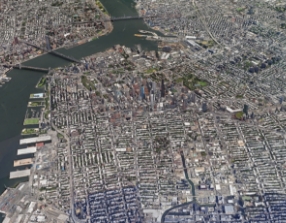
Maps &
3D Aerial Views
View school info, local attractions, transportation options & more.
Experience amazing 3D aerial maps and fly throughs.
Amenities
- Pre War
- Walk Up
- Garden
- Intercom
- G
Sales History
Why are we displaying the estimated price per room?
For some co-ops, instead of price per square foot, we use an estimate of the number of rooms for each sold apartment to chart price changes over time. This is because many co-op listings do not include square footage information, and this makes it challenging to calculate accurate square-foot averages.
By displaying the price per estimated room count, we are able to provide a more reliable and consistent metric for comparing sales in the building. While we hope that this gives you a clearer sense of price trends in the building, all data should be independently verified. All data provided are only estimates and should not be used to make any purchase or sale decision.
Sales Summary
Sales History by Apartment Size
View Full Closing HistoryPricing Comparison of Similar Buildings
View Detailed ComparisonAlternate Address
- 100 Newell Street
-
Search
NYC Apartments for Sale NYC Apartments for Rent New Development Condos Condo & Co-Ops Rental Buildings Sell Your Apartment -
Market Data
Market Reports & Research NYC Real Estate Sales Stats Recent Sales Search NYC Closed Sales CityRealty Indices -
Market Insight
Features Top 10 Lists Rental Building Offers Our Magazine 6sqft Carter's View -
CityRealty
Promote Yourself on CityRealty Contact Us -
My Account
Sign In Sign Up

 6sqft delivers the latest on real estate, architecture, and design, straight from New York City.
Like us on Facebook to keep up with the trends and
latest news around New York City real estate. Follow us on Twitter to keep up with the trends and
latest news around New York City real estate. Follow us on Instagram. Follow us on Linkedin.
All information furnished regarding property for sale, rental or financing is from sources deemed reliable, but no warranty or representation is made as to the accuracy thereof and same is submitted subject to errors, omissions, change of price, rental or other conditions, prior sale, lease or financing or withdrawal without notice. All dimensions are approximate. For exact dimensions, you must hire your own architect or engineer and for no listing shall the number of bedrooms listed be considered a legal conclusion.
All closed sales data has been provided by the New York City Department of Finance via the Automated City Register Information System (ACRIS). No warranty or representation is made as to the accuracy of any data provided by ACRIS or any other sources.
CityRealty is committed to ensuring digital accessibility for individuals with disabilities. We are continuously working to improve the accessibility of our web experience for everyone, and we welcome feedback and accommodation requests. If you wish to report an issue or seek an accommodation, please contact us at accessibility@cityrealty.com.

District\/BPC","_fd"],"4":[40.682676,-73.973007,"Brooklyn","_b"],"12":[40.8444,-73.9376,"Upper Manhattan","_um"],"5":[40.7477089,-73.930411,"LIC \/ Queens","_qns"],"18":[40.8889782,-73.9025,"The Bronx","_bx"]}