
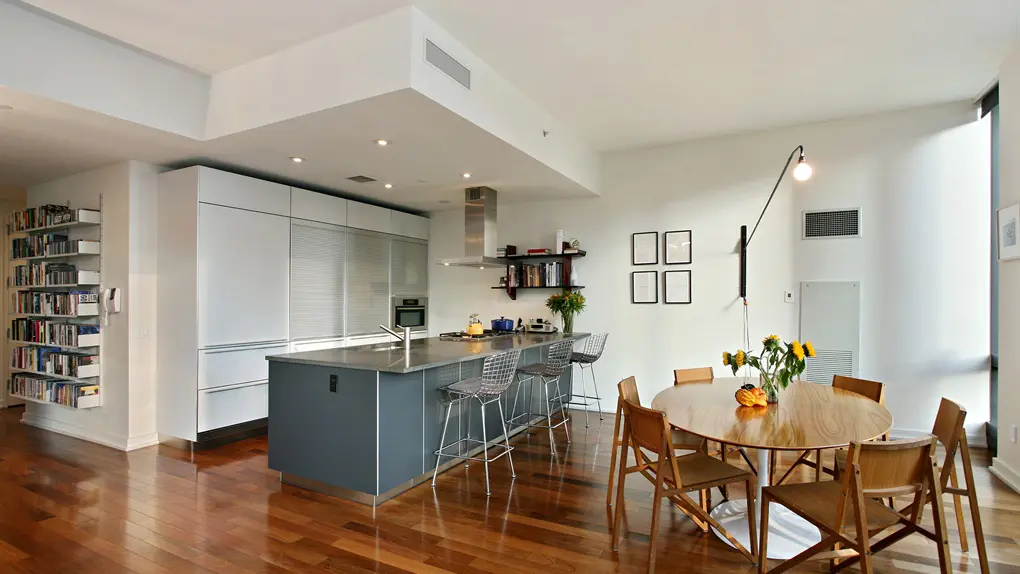
Designed by the renowned architectural firm Skidmore, Owings & Merrill and completed in 2008, 101 Warren Street is a striking 35-story condominium tower that occupies nearly an entire city block in southern TriBeCa. The building's distinctive façade features elongated checkerboard-like arcades clad in sand-colored textured granite from India, creating one of the neighborhood's most recognizable silhouettes. Developed by Edward J. Minskoff Equities, the full-service luxury building houses 227 condominium residences and 163 rental units, with interiors originally designed by Victoria Hagan and layouts by Ismael Leyva Architects.
The building's 227 condominiums range from one to five bedrooms, with units spanning from 923 square feet to over 4,000 square feet. Most apartments feature floor-to-ceiling windows, 10-12 foot ceilings, and South American walnut Lapacho wood floors. Kitchens are outfitted with Bulthaup cabinetry and high-end Sub-Zero, Miele, and Bosch appliances, while master bathrooms showcase Imperial Danby marble and Wenge wood vanities. Many units include private outdoor loggias, and the building's crown jewel penthouses on floors 32-33 feature duplex layouts with 20-foot-high outdoor terraces and Ipe wood decking. Notable residents have included Symon Garber, known as the "Taxi-King" of NYC.
The building underwent a multimillion-dollar amenity renovation designed by Clodagh Design, creating over 9,130 square feet of resort-quality facilities. The centerpiece is a unique fifth-floor "Artrium" featuring a pine forest of 101 Austrian pine trees designed by Thomas Balsley Associates, who also designed Riverside Park. Additional amenities include a state-of-the-art fitness center managed by The Wright Fit, spa with sauna and steam rooms, yoga/Pilates studio, residents' lounge with fireplace and screening area, children's playroom, and multiple outdoor decks with a Zen water garden. The building also features original artwork including a 14½-foot sculpture by Joel Shapiro at the entrance and large tapestries by Roy Lichtenstein in the double-height lobbies.
Strategically positioned between West and Greenwich Streets, 101 Warren Street offers exceptional convenience with Whole Foods Market and SoulCycle located directly at ground level. The building provides 24-hour attended parking and is steps from Washington Market Park, Hudson River Park, and excellent public transportation including 11 subway lines and PATH trains. Residents enjoy proximity to acclaimed TriBeCa restaurants, Brookfield Place and Westfield World Trade Center shopping, and are directly across from the highly regarded P.S. 234, noted for its distinctive nautical design by Richard Dattner.
For screen reader users all content above is visible so you may ignore the show more button below.
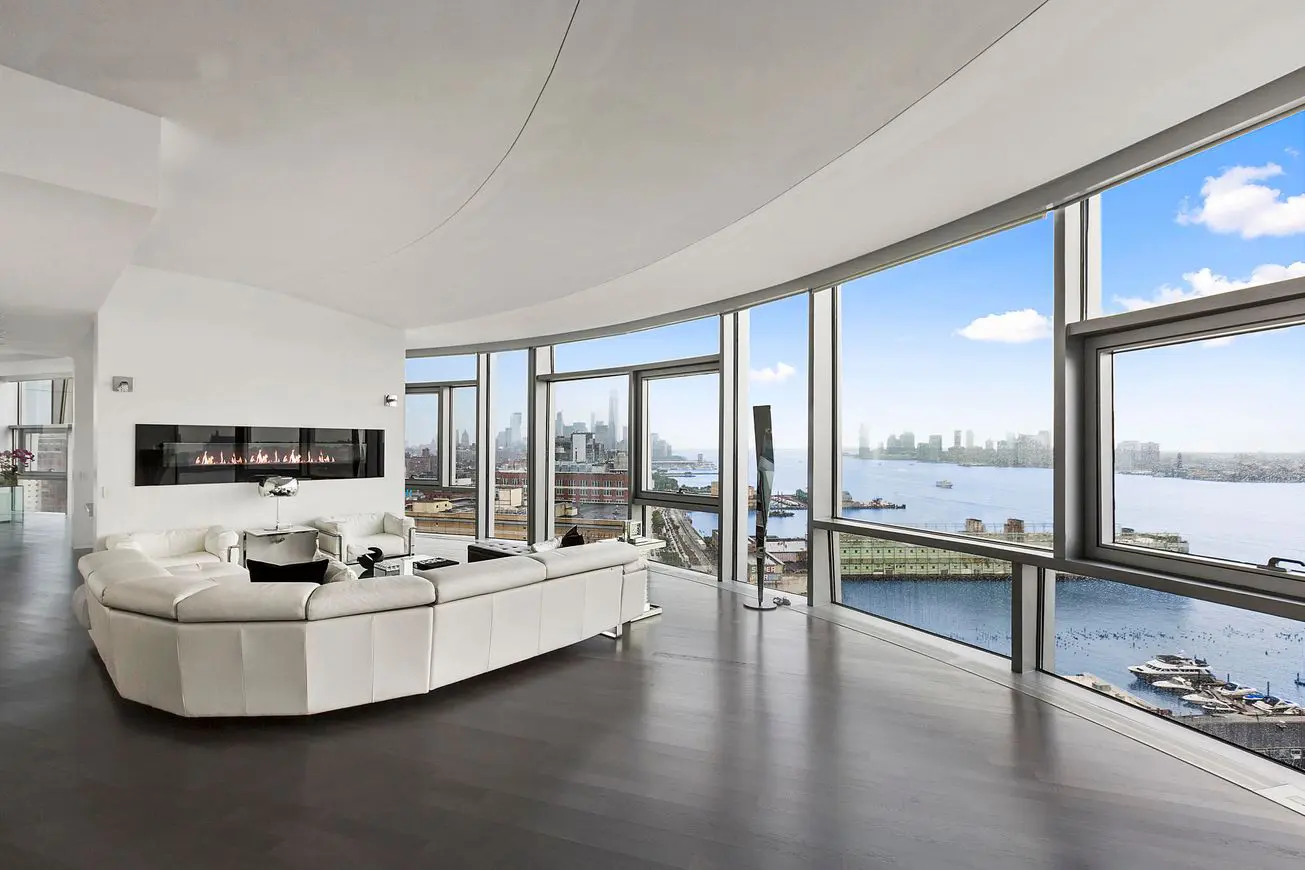
Designed by Pritzker Prize winning architect Jean Nouvel, 100 Eleventh Avenue stands as one of Chelsea's most distinctive architectural landmarks since its completion in 2010. Nouvel described the 21 story building as a "vision machine," featuring what the project claims to be the most highly engineered and technologically advanced curtain wall ever constructed in New York City. The building's dramatic façade consists of nearly 1,700 different sized panes of colorless glass, each set at a unique angle and torque, creating what Nouvel envisioned as a "dazzling, Mondrian like window pattern" inspired by the stained glass windows of Paris's 13th century Gothic cathedral of Saint Chapelle.
The building contains 72 apartments ranging from studios to four bedrooms, spanning 890 to 4,675 square feet. Most apartments feature south and west views and are distinguished by Nouvel's custom designed elements including white terrazzo floors throughout, custom terrazzo kitchen islands with built in mobile units, and touch sensitive bathroom fixtures designed specifically for Jado. The building's unique seven story street wall creates a semi enclosed atrium with suspended gardens that appear to float in mid air, while some residences feature private indoor and outdoor terraces.
Residents enjoy white glove amenities including 24 hour doorman service, concierge, a 70 foot indoor/outdoor heated swimming pool, fitness center with steam room and sauna, private screening room, and valet parking. The building is strategically located between 19th and 20th Streets, directly across from Frank Gehry's IAC Building and within walking distance of the High Line, Chelsea Piers, Whitney Museum, and over 300 art galleries in the West Chelsea Gallery District.
Notable residents have included Kelsey Grammer, Stevie Nicks, Vincent Gallo, and former NFL quarterback John Elway. The building's development was not without controversy, as Nouvel publicly criticized changes made to his original lobby design in 2010, when developers replaced his elegant polished granite lobby with carpeting and added decorative boulders, leading the architect to declare they had "gone off course." Despite these disputes, 100 Eleventh Avenue remains what critics called an "instant landmark" and continues to be recognized as a major architectural achievement.
For screen reader users all content above is visible so you may ignore the show more button below.
Completed in 2000, 515 Park Avenue stands as one of the tallest residential buildings on Park Avenue above 59th Street, rising 43 stories with only 30 apartments. Developed by the Zeckendorf General Partnership and designed by Frank Williams & Associates, this limestone and beige-brick tower replaced a pre-war Italian Renaissance palazzo, though its post-modern interpretation drew sharp criticism from architectural critics. Robert A.M. Stern described its silhouette as "awkward," while Paul Goldberger called it "particularly ungainly" with a "pretentious muddle" façade, despite its commercial success during the late 1990s luxury boom.
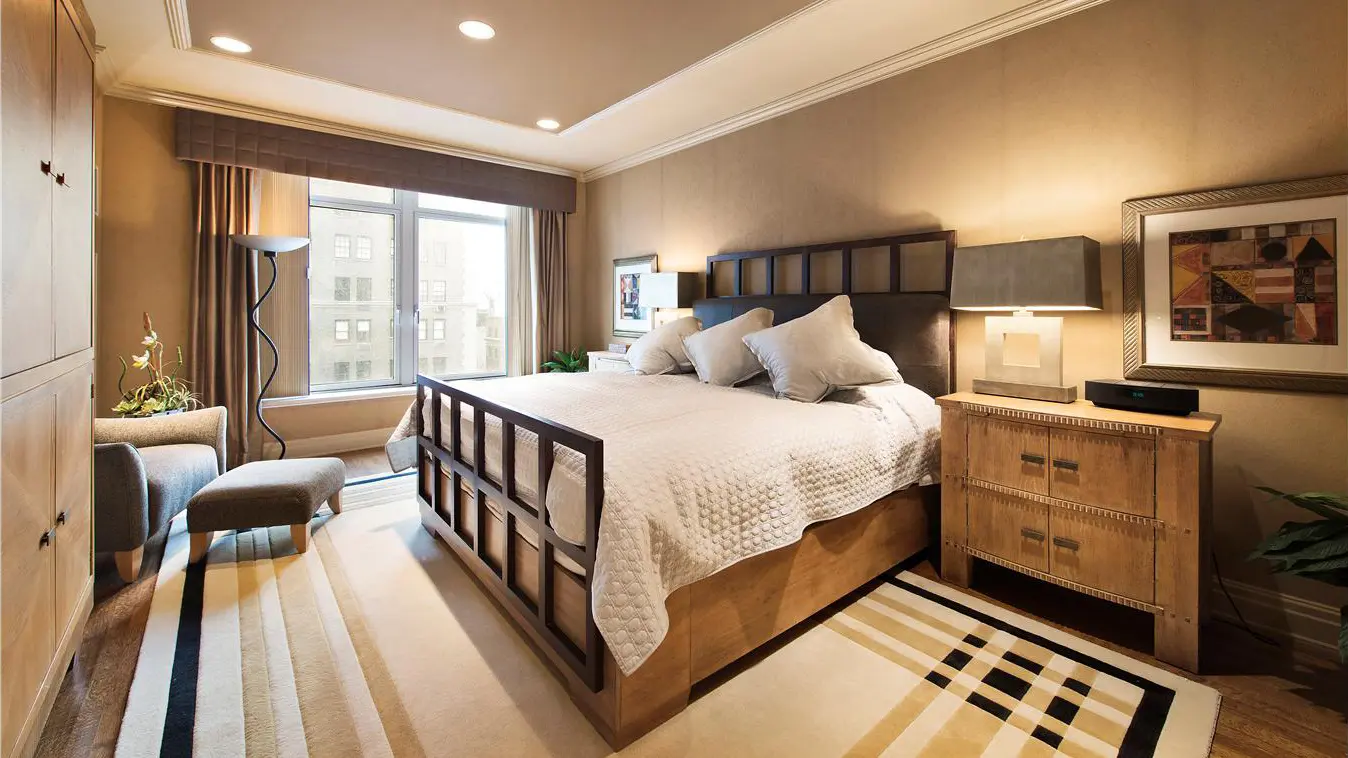
The building has attracted notable residents including theater impresario James L. Nederlander, luxury magnate François Pinault (owner of Christie's), music executive L.A. Reid, and Vivendi Universal chairman Jean-Marie Messier. Apartments showcase grand prewar-inspired proportions with 10 to 11.5-foot ceilings, herringbone hardwood and parquet de Versailles floors, and floor-to-ceiling windows offering Central Park and city views. Many units feature chef's kitchens with high-end Thermador, SubZero, and Miele appliances, marble and onyx bathrooms, and multiple bedrooms with en-suite baths. Twelve of the 38 apartments are duplexes, including spectacular 5,000-square-foot penthouses on floors 36-37 designed by renowned decorator Juan Pablo Molyneux, complete with private interior elevators and sweeping onyx staircases.
The building offers white-glove service with Chef Daniel Boulud as exclusive caterer, along with 15 private climate-controlled wine cellars, 38 storage rooms, and individual staff suites on the second floor for residents' use. Additional amenities include a state-of-the-art fitness center, private dining room with full catering kitchen, concierge and valet services, and 24-hour security. Located at the corner of Park Avenue and 60th Street, the building provides easy access to Central Park, Madison Avenue shopping, and Midtown's business district while maintaining the quieter residential character of the Upper East Side.
For screen reader users all content above is visible so you may ignore the show more button below.
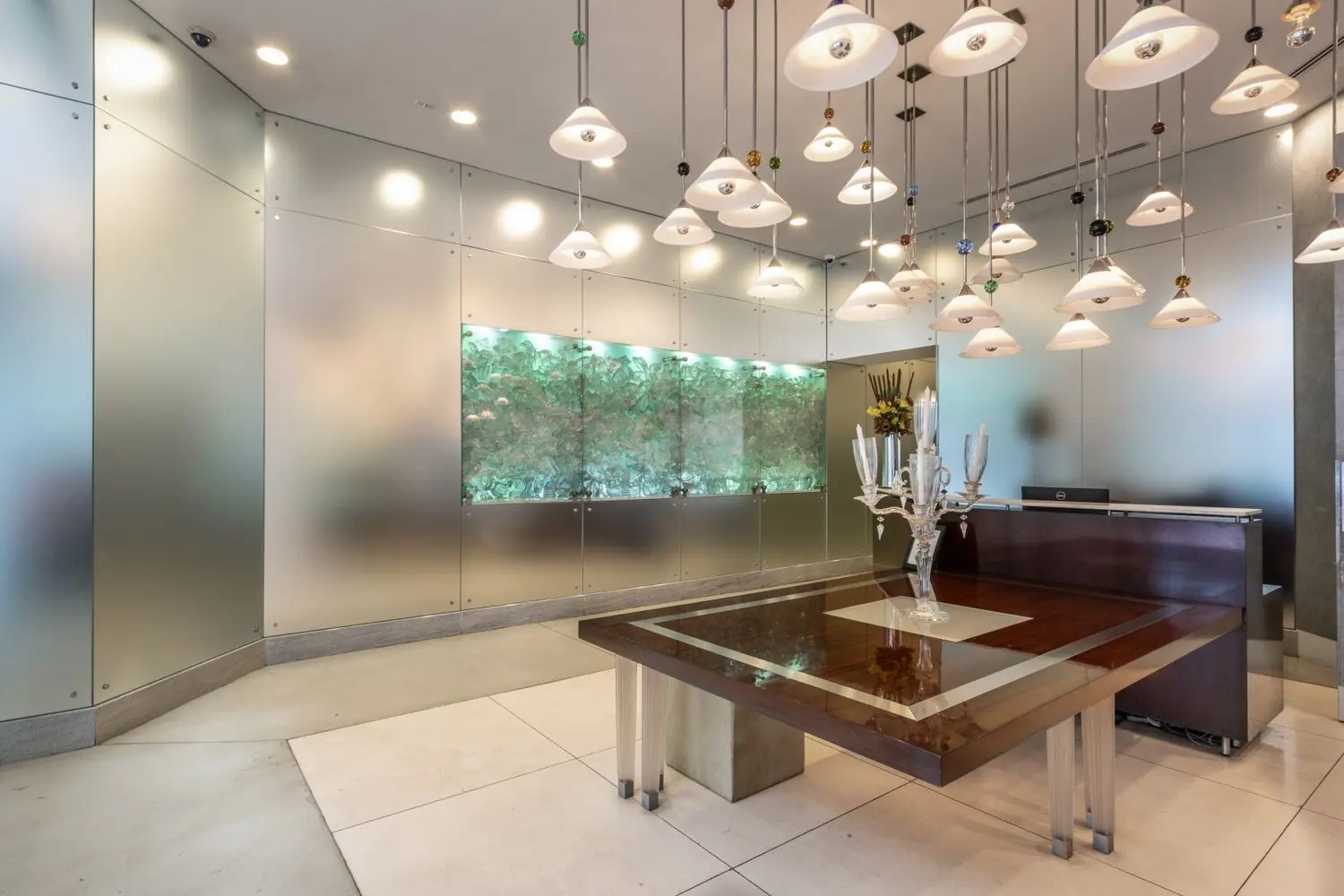
Place 57 is a striking 36 story reflective glass tower at 207 East 57th Street, completed in 2006 and designed by acclaimed architect Ismael Leyva. Developed by The Clarett Group in partnership with renowned French crystal maker Baccarat, the building features a distinctive angled façade and dramatic cantilever at its northwest corner. The tower contains just 68 luxury residences with a maximum of two apartments per floor, ensuring exceptional privacy and exclusivity. Interior designer Vicente Wolf created the building's sophisticated lobby adorned with Baccarat crystal lighting and fixtures, along with an outdoor garden featuring crystal chandeliers.
The building's apartments, ranging from two to four bedrooms, showcase premium finishes throughout including Brazilian walnut or mahogany flooring, floor-to-ceiling windows, and sweeping city and Central Park views. Kitchens feature Viking appliances with custom cabinetry and stone countertops, while bathrooms are outfitted with Waterworks fixtures, whirlpool soaking tubs, and separate glass enclosed showers. Most units include spacious galleries, abundant walk in and reach in closets, in-unit washers and dryers, and individual safes. Notable residences include duplex units and the penthouse, which was once occupied by Oprah Winfrey and features three bedrooms with a large private terrace.
Place 57 offers white glove service with 24 hour doorman and concierge services, along with amenities including a state of the art fitness center, residents' lounge, children's playroom, private storage units, and a landscaped rooftop terrace. The prime Midtown East location provides exceptional convenience, with Whole Foods directly across the street, Bloomingdale's two blocks away, and easy access to Central Park, Fifth Avenue shopping, and multiple subway lines. The building welcomes pets and maintains its reputation as one of the most attractive reflective glass residential towers in midtown Manhattan.
For screen reader users all content above is visible so you may ignore the show more button below.
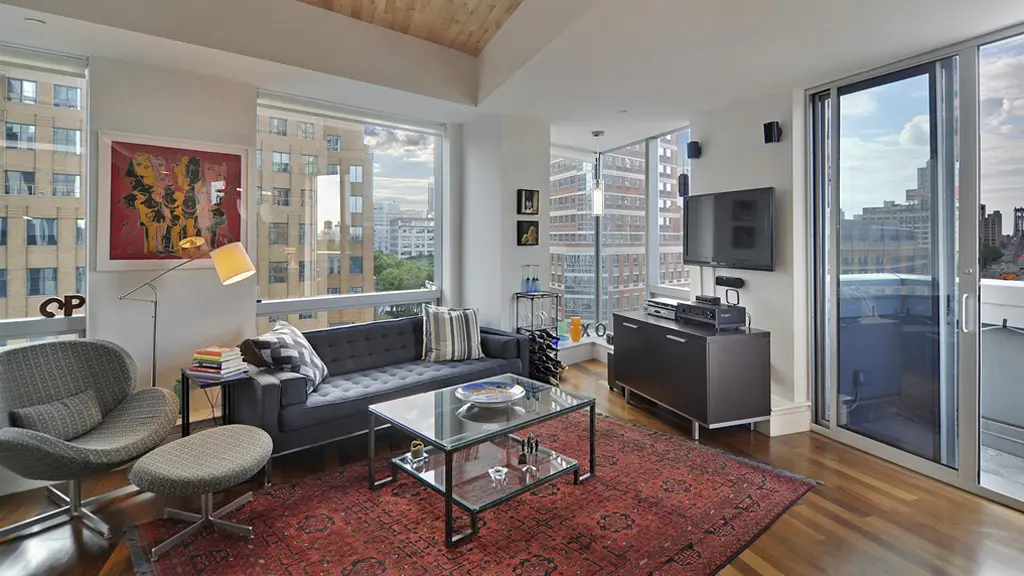
Toren, a 38-story condominium tower located at 150 Myrtle Avenue in Downtown Brooklyn, was completed in 2010 and designed by the renowned architectural firm Skidmore, Owings & Merrill (SOM). Its distinctive and dynamic façade features asymmetrical patterns and energy-efficient glass panels in contrasting light and dark shades, creating a visually striking appearance. The building houses 198 market-rate units and 42 affordable condos.
A hallmark of Toren is its sustainability. It holds LEED Gold certification and boasts an on-site cogeneration plant that efficiently provides power, heating, and cooling. Additional green features include Energy Star appliances, occupancy sensors, low-VOC materials, and optimized ventilation systems, ensuring both comfort and eco-conscious living.
Residents enjoy a wealth of amenities, including a heated indoor pool, a yoga studio, his-and-hers saunas, a 2,000-square-foot fitness center equipped with Peloton bikes, a library, a two-level roof deck, bike storage, and a 24-hour attended lobby. The apartments range from studios to two-bedroom units, with penthouses starting on the 30th floor. Many residences feature double-height ceilings, custom kitchens, and spa-inspired bathrooms.
Toren’s location offers exceptional convenience, with quick access to multiple subway lines that connect to Manhattan in minutes. It is situated near NYU’s Tandon School of Engineering and the newly developed CityPoint complex, which includes Trader Joe’s, Target, and the Dekalb Food Market. The neighborhood also features the Brooklyn Commons, hosting events like pickleball and ice skating, along with attractions like Whole Foods and the Apple Store.
For screen reader users all content above is visible so you may ignore the show more button below.
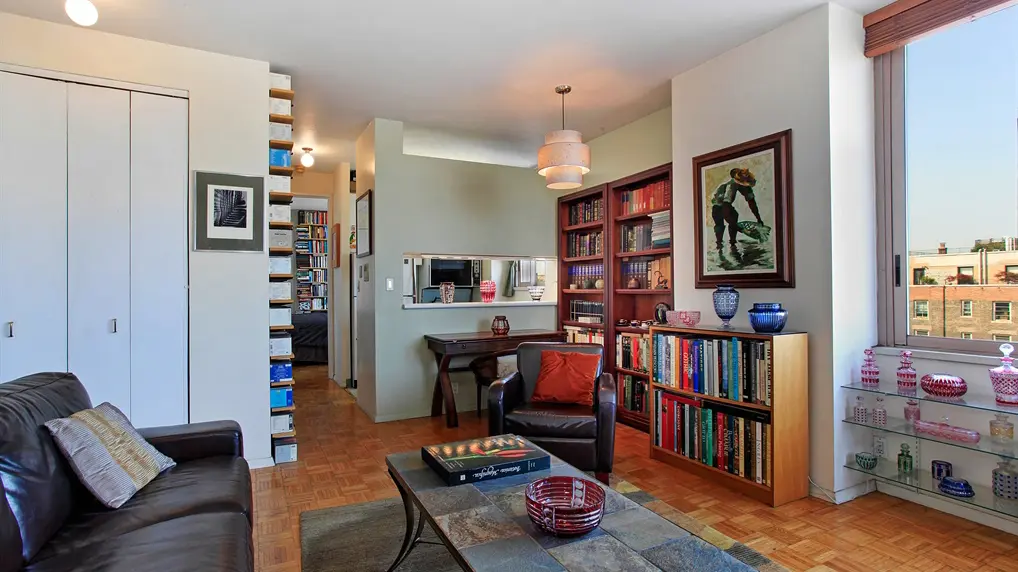
The Park Belvedere, completed in 1985, is a distinguished 31-story luxury condominium tower located at the northwest corner of 79th Street and Columbus Avenue. Designed by architect Frank Williams and developed by William Zeckendorf Jr., this slender spire contains 154 residences and stands as one of the Upper West Side's most prominent architectural landmarks.
The building offers an intimate living experience with only three to four apartments per floor, featuring units with spectacular views of Central Park, the American Museum of Natural History, and the Manhattan skyline. Residents enjoy full-service amenities including 24-hour doorman and concierge services, a roof deck with panoramic views, bike storage, and laundry facilities.
Situated in a prime Upper West Side location, The Park Belvedere provides immediate access to Central Park, the Museum of Natural History, and an array of cultural attractions. The pet-friendly building's position on Columbus Avenue helped establish the avenue's upscale character, while its proximity to public transportation, fine dining, and shopping makes it one of the neighborhood's most coveted addresses.
For screen reader users all content above is visible so you may ignore the show more button below.
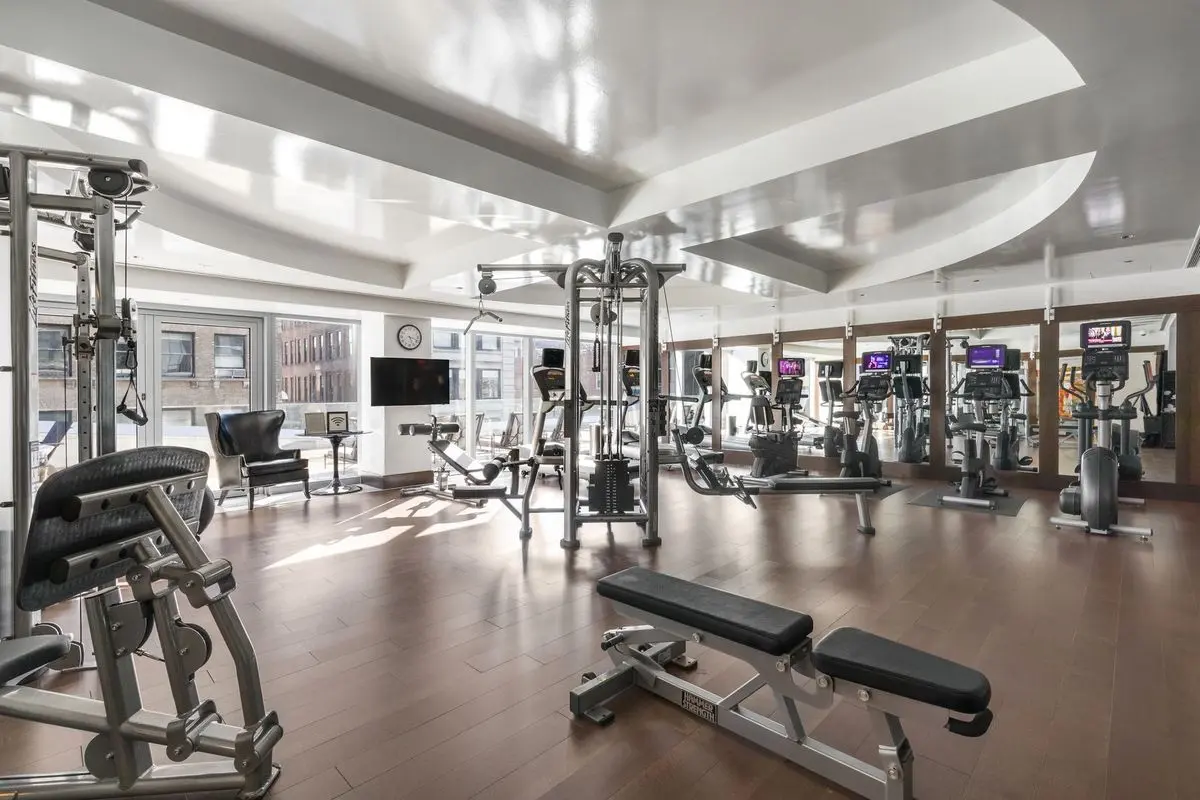
35XV is a 24-story, 55-unit condominium at 35 West 15th Street, strategically positioned at the intersection of Chelsea, Union Square, Greenwich Village, and the Flatiron District. Completed in 2014 by Alchemy Properties and designed by FXFOWLE Architects, this mixed-use tower features a unique arrangement where Xavier High School occupies the first six floors, with residential units beginning on the eighth floor approximately 100 feet above street level. The building's development involved an ingenious air rights deal with the Jesuit school that won the Real Estate Board of New York's award for "most ingenious deal of the year" in 2010.
Architecturally, 35XV stands out as a striking glass and stone structure that has been compared to a high-tech "grater" for its distinctive angled façades and cantilevered design. The building features reflective silvery glass curtain walls with staggered windows that create a shingle-like pattern, supported by flying buttress-style steel columns. The six-story base is clad in white Mount Airy granite, while the tower's south and north façades are angled to align with the street's sky exposure plane, creating dramatic visual interest and maximizing natural light.
Residences feature interiors by Benjamin Noriega-Ortiz with consistent high-end finishes including 10-foot ceilings, floor-to-ceiling windows, solid oak hardwood floors, and Lutron home automation systems for lighting, shading, and temperature control. Kitchens are equipped with Poggenpohl white lacquer cabinetry, Sub-Zero refrigerators, and Miele appliances, while bathrooms showcase marble floors with radiant heating, steam showers, and deep soaking tubs. Many apartments feature circular columns and expansive living spaces, with units ranging from one to four bedrooms, including a notable full-floor penthouse spanning nearly 5,000 square feet.
The building offers a full floor of amenities on the seventh floor, including a health and fitness center overlooking a 75-foot-wide outdoor terrace, children's playroom, entertainment lounge, formal dining room, and a fully refrigerated wine cellar with personal storage for each residence. Additional services include 24-hour lobby attendant and live-in superintendent.The building's prime location provides easy access to multiple subway lines and the neighborhood's renowned dining, shopping, and cultural attractions.
For screen reader users all content above is visible so you may ignore the show more button below.
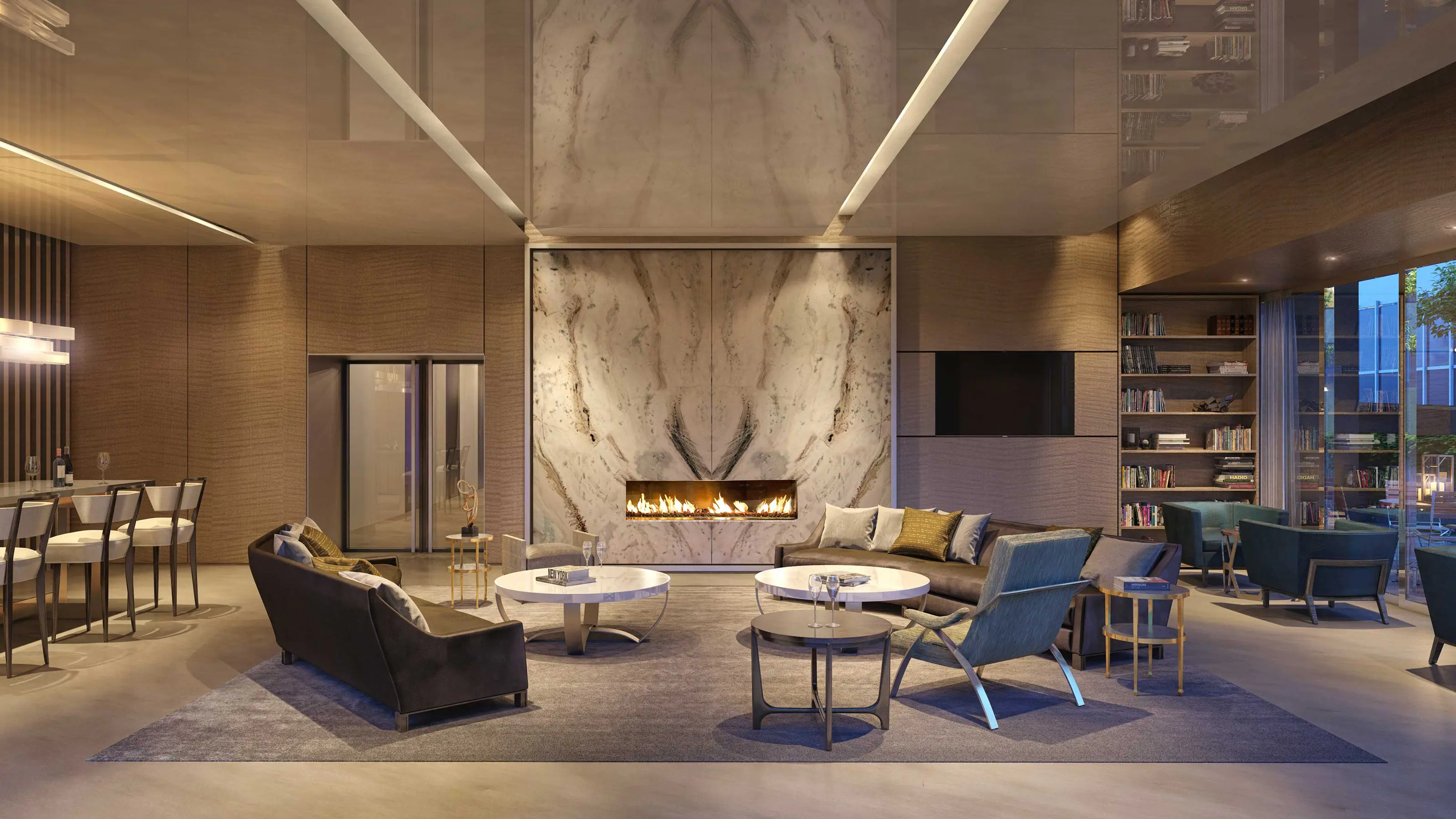
135 West 52nd Street is a 47-story luxury condominium in Midtown Manhattan, converted in 2014 from the former Flatotel by The Chetrit Group and Clipper Equity. The building, originally constructed in 1985 and designed by Rafael Vinoly, was transformed by CetraRuddy Architects into 109 residences. A striking architectural feature is the 423-foot lighting installation by renowned designer Thierry Dreyfus, who previously illuminated the Grand Palais in Paris and Chateau de Versailles.
The building's distinctive design includes a dramatic three-story glass entrance leading to a 35-foot-high lobby featuring walnut wood-paneled walls, White Onyx stone, and custom chandeliers. The façade combines Dark Pearl granite at its 7-story base with gunmetal gray and bright stainless steel above, punctuated by five set-back terraces. The building features a through-block arcade to 53rd Street, part of a city initiative to create a six-block-long pedestrian passageway in the west 50s. This thoughtful urban planning element adds to the building's integration with the surrounding neighborhood.
Residences feature 10-foot ceilings, 5-inch-wide rift sawn white oak floors, and Dada Italian walnut kitchens with Calacatta Vision marble countertops and Miele appliances. Select units include gas fireplaces with Bianco Puro marble surrounds and Rimadesio sliding glass walls. Master baths showcase Siberian white marble and radiant heated floors.
The building offers 12,000 square feet of amenities spread across multiple floors, including a 75-foot indoor swimming pool, state-of-the-art fitness center, spa facilities with steam and sauna, golf simulator, private screening room, children's playroom, and furnished outdoor terrace. A 24-hour doorman and concierge service the building.
The property has an intriguing history, having gone through several iterations including a period of vacancy in the late 1980s before becoming the Flatotel. Its location provides convenient access to the Theater District, Rockefeller Center, Fifth Avenue shopping, and numerous subway lines.
For screen reader users all content above is visible so you may ignore the show more button below.
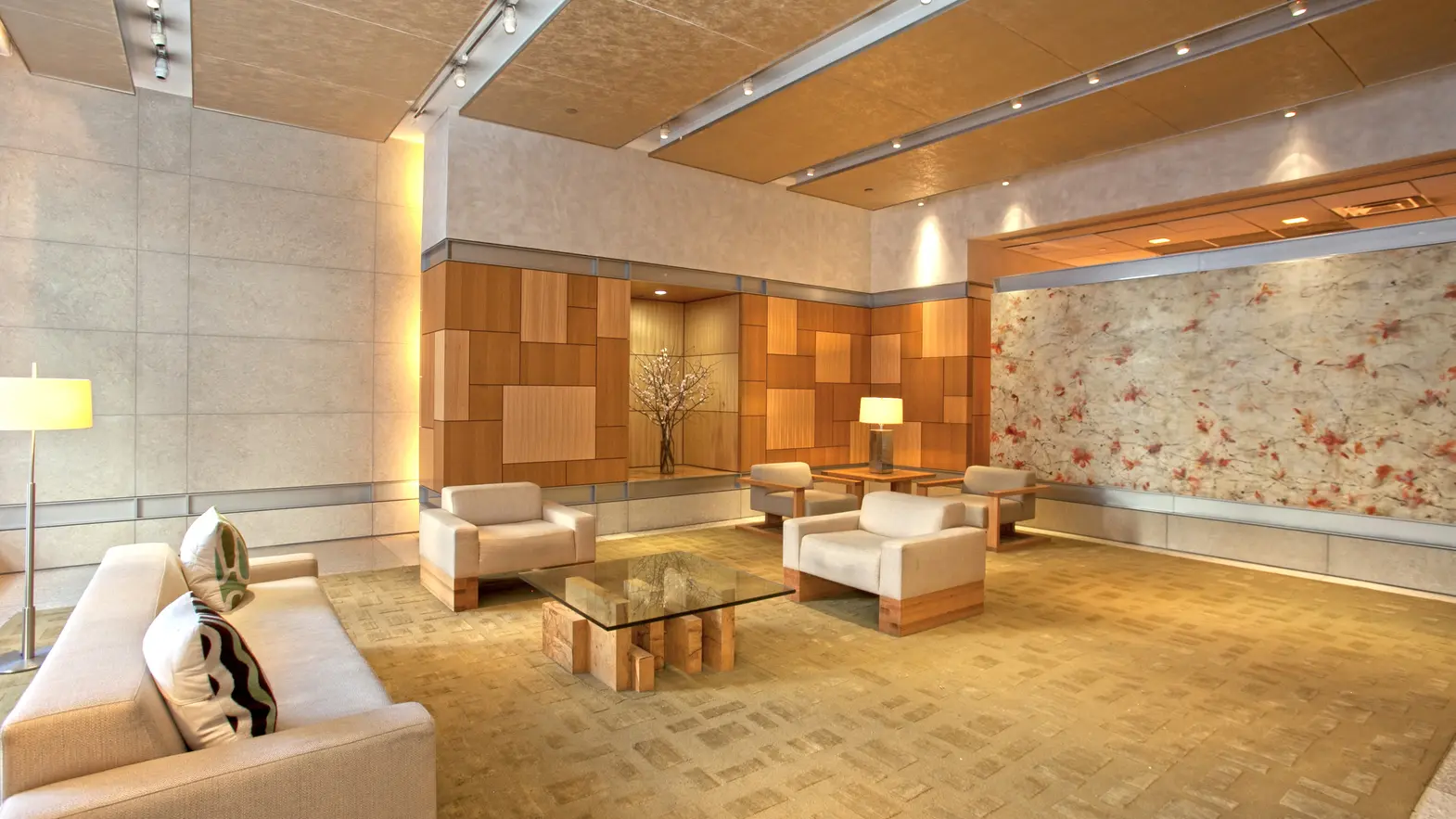
The Cielo is a 27 story luxury condominium at 450 East 83rd Street and York Avenue that opened in 2006 with 128 residences. Developed by J.D. Carlisle Development Corporation and designed by Perkins Eastman, this white glove building features a striking setback tower design with abundant corner windows and vertical piers that emphasize its height. The building's most distinctive feature is the commissioned Richard Haas mural directly across 83rd Street—a 77 foot wide trompe l'oeil depicting a painted glockenspiel flanked by New York City police officers, created at a cost of approximately $200,000 as a nod to Yorkville's Germanic heritage.
Residents enjoy comprehensive amenities including 24 hour doorman and concierge service, a live-in superintendent, fitness center, children's playroom, 44 car on-site garage, bicycle storage, cold storage, and stroller room. The building also houses about 4,000 square feet of medical office space. The lobby features paintings by Betsy Eby, and original buyers received complimentary Whitney Museum memberships as part of the building's artistic focus, which included an "art concierge" service.
Apartments feature 10 to 11 foot ceilings and high end finishes throughout, including Bulthaup kitchens with Pietra Cardosa countertops and Sub-Zero, Wolf, and Miele appliances. Bathrooms showcase Villefort limestone floors, custom ebonized black walnut cabinetry, and double Kohler sinks with Waterworks fixtures. Units range from studios to expansive penthouses, with many featuring wraparound terraces, floor-to-ceiling windows, and in-unit washer and dryer. The penthouse boasts a 32 foot long living and dining room, while corner units offer particularly dramatic city and river views.
Located just one block west of Carl Schurz Park and the East River promenade, the building provides easy access to outdoor recreation and waterfront leisure. The neighborhood offers convenient shopping at Morton Williams, Dorian Seafood Market, and the renowned Ottomanelli Bros. Butcher Shop, while transportation options include nearby Q and 4/5/6 subway lines plus excellent bus service along the 86th Street crosstown route.
For screen reader users all content above is visible so you may ignore the show more button below.
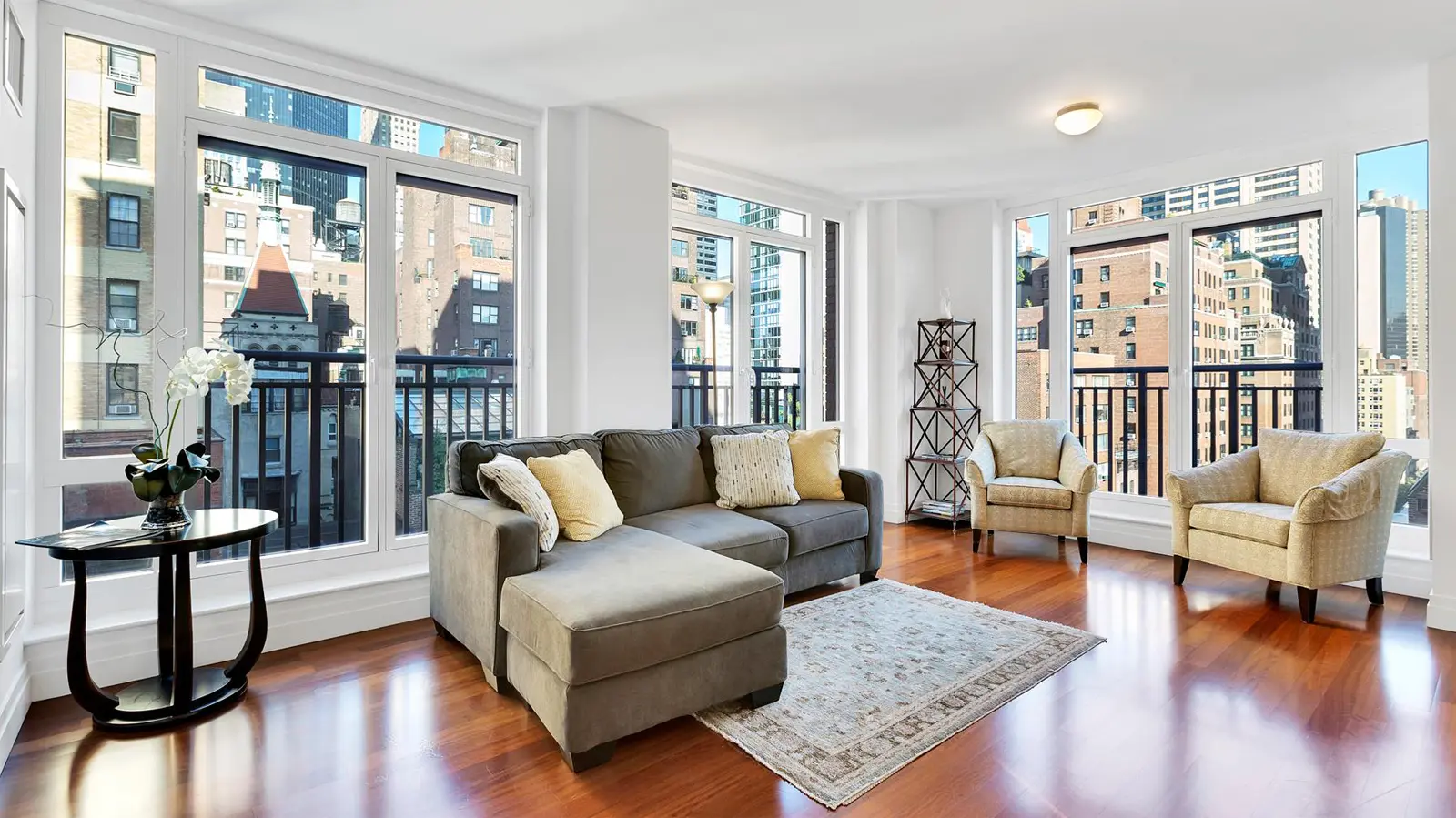
45 Park Avenue is a 21-story residential condominium building located in Murray Hill between 36th and 37th Streets. Completed in 2006 by SJP Residential Properties and designed by architect Costas Kondylis, the building replaced the historic Sheraton Russell Hotel from 1923. The red-brick structure features 106 residences and a distinctive two-story limestone base with an angled glass marquee entrance.
The building's elegant lobby showcases Crema Marfil and Oro Toscano marble floors, Moazamique wood walls, and oil-rubbed bronze accents. Residences feature floor-to-ceiling windows, Juliette balconies, and 9-10 foot ceilings. Apartments are equipped with Viking and Sub-Zero appliances, granite countertops, and marble bathrooms with custom wood vanities.
The full-service building offers a 24-hour doorman and concierge, a fitness center, a residents' lounge with outdoor terrace, and a 21-space self-parking garage. Its location across from the Union League Club places it near notable landmarks including the Morgan Library, Bryant Park, and Grand Central Station.
For screen reader users all content above is visible so you may ignore the show more button below.
For screen reader users all content above is visible so you may ignore the show more button below.
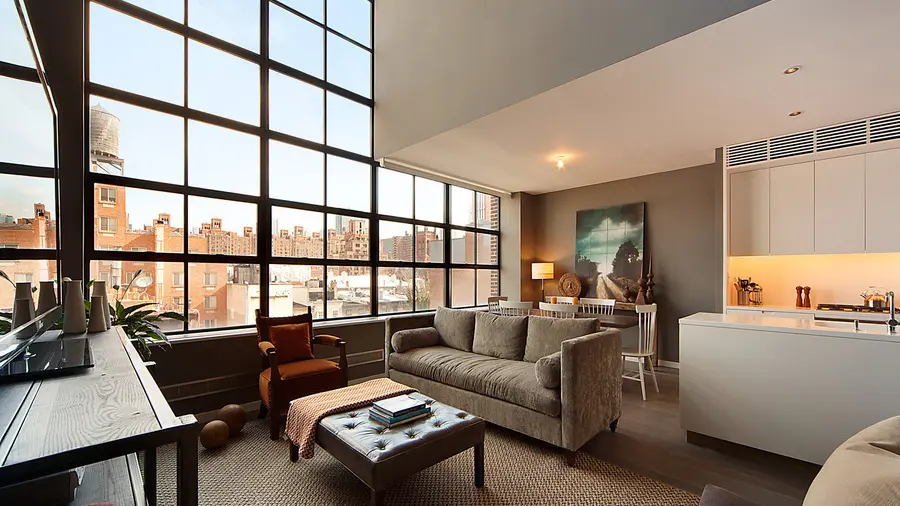
456 West 19th Street is located in Chelsea between Ninth and Tenth Avenues and was designed by Cary Tamarkin. It is distinguished by its top half, which is set back and curved.
It is near the High Line, an elevated park that stretches along the Hudson River, and, after two years of construction, opened in 2010. 456 West 19th Street contains 22 duplex units that are light-filled and spacious, ranging from 1,100 to 3,000 square feet. Residences also feature large windows offering expansive views of the Manhattan skyline and Hudson River and kitchens and bathrooms equipped with modern appliances from Miele and Sub Zero and premium, Arne Jacobsen fixtures.
456 West 19th Street amenities include an attended lobby, central air conditioning, a roof deck and washer and dryer units. It is also located close to the neighborhood’s shops, restaurants and art galleries, as well as the Chelsea Piers entertainment complex.
For screen reader users all content above is visible so you may ignore the show more button below.
The Park 900, completed in 1973 and designed by Philip Birnbaum, stands as a 28-story limestone tower with 124 apartments at the prestigious corner of 79th Street and Park Avenue. This building was one of two structures that significantly pierced Park Avenue's traditional cornice line in the 1970s, replacing a grand 1917 mansion designed by John Mead Howells and Isaac Newton Phelps Stokes. Developed by Jack Resnick & Sons, the building features a distinctive landscaped plaza set below street level and is notable as one of the few condominiums on Park Avenue among the avenue's predominantly co-operative buildings.
Architecturally, the building sparked considerable controversy when constructed, with critics like Paul Goldberger calling it a serious violation of Park Avenue's spirit. However, time has softened these criticisms, and the building has become more accepted as part of the Upper East Side landscape. The plaza features a charming bronze cat sculpture by Botero, which replaced earlier works by Henry Moore and Francisco Zuniga. The building's circular driveway remains one of the most attractive landscaped driveways on Park Avenue, providing an elegant porte-cochère entrance.
Apartments typically feature expansive Park Avenue views, with many units offering multiple exposures and floor-to-ceiling windows that flood spaces with natural light. Common features include renovated chef's kitchens with high-end appliances (Sub-Zero, Viking, Miele), hardwood floors, marble bathrooms, and in-unit washer/dryers. Layouts range from one-bedroom units with dining alcoves to sprawling 4-bedroom residences approaching 5,000 square feet, with many apartments featuring separate dining areas, home offices, and custom built-in storage throughout.
The building operates as a white-glove, full-service condominium with 24-hour doorman, concierge, elevator operators, and live-in superintendent. Amenities include a recently renovated fitness center, new resident lounge, on-site parking garage with direct building access, and bike storage. Located just two blocks from Central Park and moments from Museum Mile, Madison Avenue shopping, and world-class dining, the building offers convenient access to multiple subway lines and crosstown buses.
For screen reader users all content above is visible so you may ignore the show more button below.

 6sqft delivers the latest on real estate, architecture, and design, straight from New York City.
Like us on Facebook to keep up with the trends and
6sqft delivers the latest on real estate, architecture, and design, straight from New York City.
Like us on Facebook to keep up with the trends and 