
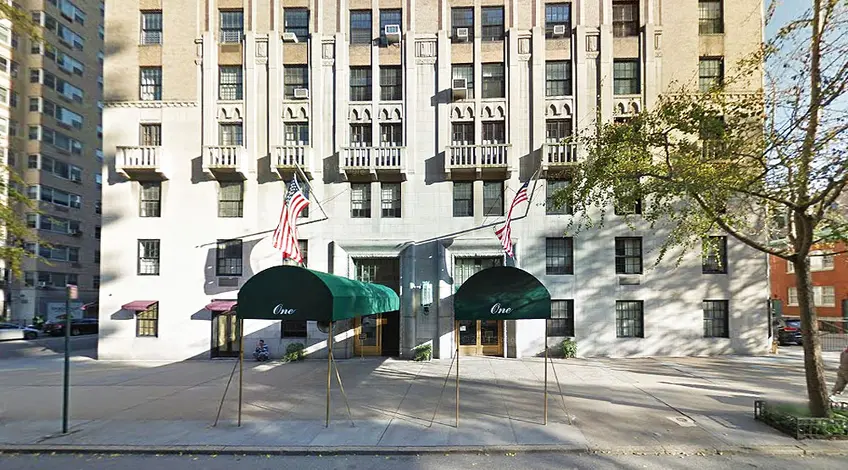
Perhaps some numerologists understand the hierarchy of street addresses, but for most New Yorkers, there is little magic.
Many of the best buildings are known by their names, not their numbers, including River House at 435 East 52nd Street, and the Time Warner Center, which has a variety of Columbus Circle addresses, depending on whether one is looking for an office, a hotel, an apartment, or a store.
A low number, of course, indicates that a building is close to the beginning, which might be a good thing, but numbers can be misleading. One Fifth Avenue, for example, is actually half a block away from the base of Fifth Avenue at Washington Square Park, and 1049 Fifth Avenue is not on the avenue at all, but on East 86th Street, in the middle of the block. More surprising, Manhattan's skyscraper of the moment 432 Park Avenue is not even on Park Avenue.
Everyone has seen the online maps that show the nearest cross street for an avenue address, but they are a bit like programming a thermostat -- far from simple.
There is almost a reverse snobbism in building addresses.
Some buildings proclaim that they are the Clarendon, or The Lucida, or The Brompton, and shy away from a numbered address, presumably for marketing reasons.
Unlike some European cities, which have a fine tradition of enamel plaques on the corner of buildings, New York City has no standards about letting the public know what a building address is. Sometimes it is proclaimed on a canopy over the building's entrance. Or it is engraved in an escutcheon above the entrance. Many buildings in Soho have their street number engraved in stone several floors up at the corners.
A few buildings, however, do it right. 1060 Fifth Avenue, for example, not only has its entrance nicely applied to its limestone base in bronze at the corner, but also tops it with its side-street address -- 1 East 87th Street -- and it does so on both the avenue and the side street, just in case its nice sidewalk landscaping obscures part of one.
One might think a building would take some pride in its address. Put it in lights. Engrave it in stone. Project it with lasers onto the street. Send it out wirelessly to passersby...
Many of the best buildings are known by their names, not their numbers, including River House at 435 East 52nd Street, and the Time Warner Center, which has a variety of Columbus Circle addresses, depending on whether one is looking for an office, a hotel, an apartment, or a store.
A low number, of course, indicates that a building is close to the beginning, which might be a good thing, but numbers can be misleading. One Fifth Avenue, for example, is actually half a block away from the base of Fifth Avenue at Washington Square Park, and 1049 Fifth Avenue is not on the avenue at all, but on East 86th Street, in the middle of the block. More surprising, Manhattan's skyscraper of the moment 432 Park Avenue is not even on Park Avenue.
Everyone has seen the online maps that show the nearest cross street for an avenue address, but they are a bit like programming a thermostat -- far from simple.
There is almost a reverse snobbism in building addresses.
Some buildings proclaim that they are the Clarendon, or The Lucida, or The Brompton, and shy away from a numbered address, presumably for marketing reasons.
Unlike some European cities, which have a fine tradition of enamel plaques on the corner of buildings, New York City has no standards about letting the public know what a building address is. Sometimes it is proclaimed on a canopy over the building's entrance. Or it is engraved in an escutcheon above the entrance. Many buildings in Soho have their street number engraved in stone several floors up at the corners.
A few buildings, however, do it right. 1060 Fifth Avenue, for example, not only has its entrance nicely applied to its limestone base in bronze at the corner, but also tops it with its side-street address -- 1 East 87th Street -- and it does so on both the avenue and the side street, just in case its nice sidewalk landscaping obscures part of one.
One might think a building would take some pride in its address. Put it in lights. Engrave it in stone. Project it with lasers onto the street. Send it out wirelessly to passersby...
Related Articles

Great Listings
Where would the Knicks live? See the ultimate NYC apartments for watch parties
Thursday, June 11, 2026
Future New York
Top 10 condos in Turtle Bay and Beekman-Sutton Place + New developments and price-reduced listings
Thursday, June 11, 2026
Future New York
NYC's top 10 limestone buildings that exemplify architectural excellence + New developments continuing the tradition
Friday, June 5, 2026
Get To Know
Seven tips for getting past NYC's toughest co-op boards + Prewar gems with open houses
Friday, June 5, 2026
Great Listings
Price Cuts: O'Neill Building penthouse reduced by $1.25M; Cara Delevingne relists Gramercy penthouse for a loss
Friday, May 29, 2026
Get To Know
Pre-war vs. Post-war: Pros, cons, and featured listings
Wednesday, May 27, 2026
Future New York
Manhattan contracts led by prestigious co-ops at The San Remo and 740 Park Ave; "Wolf of Wall Street" penthouse finds a buyer
Tuesday, May 26, 2026
Get To Know
How historic districts impact property values and affordability + Charming NYC homes in landmarked properties
Tuesday, May 19, 2026
Architecture Critic
Carter Horsley
Since 1997, Carter B. Horsley has been the editorial director of CityRealty. He began his journalistic career at The New York Times in 1961 where he spent 26 years as a reporter specializing in real estate & architectural news. In 1987, he became the architecture critic and real estate editor of The New York Post.

 6sqft delivers the latest on real estate, architecture, and design, straight from New York City.
