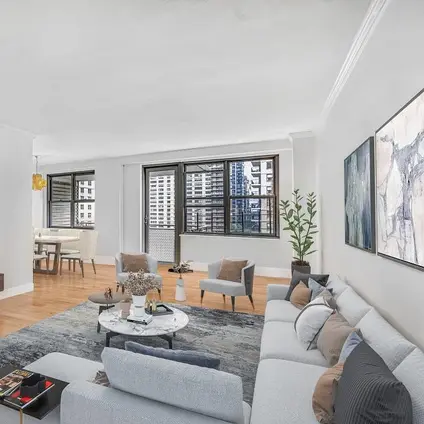
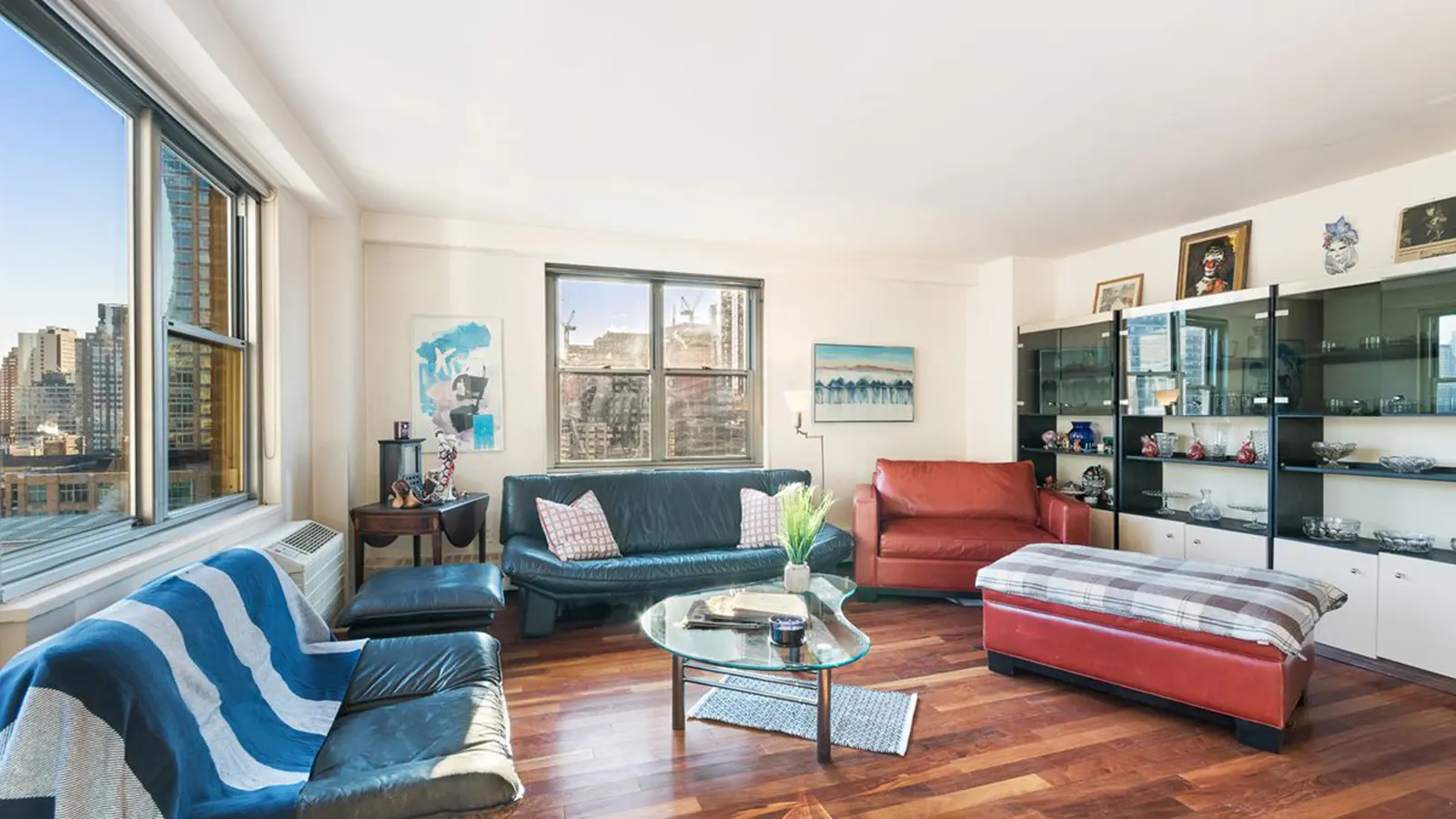
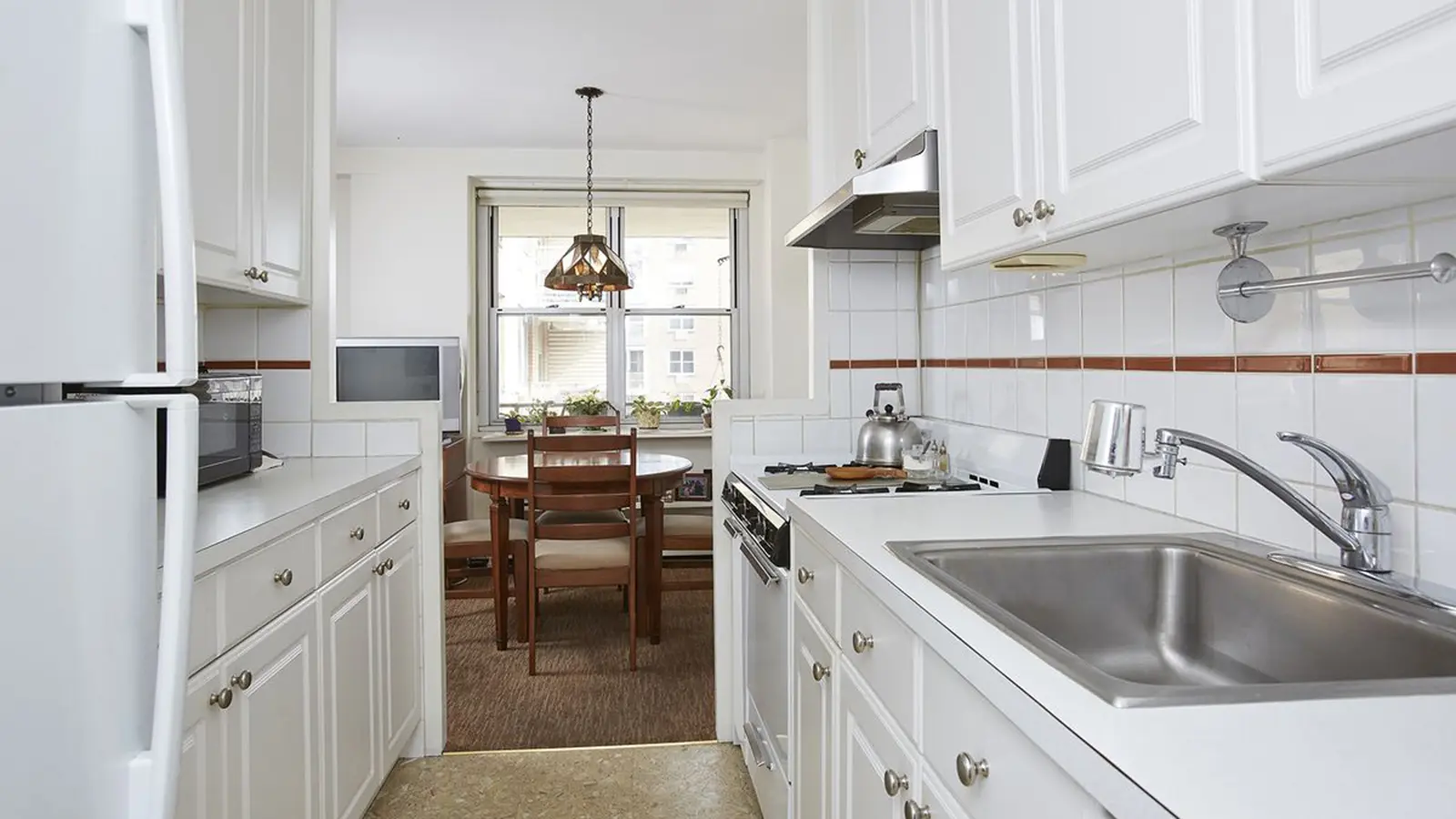
Lincoln Guild

303 West 66th Street (Between West End Avenue & Joe DiMaggio Highway)
PRICING INFORMATION FOR Lincoln Guild
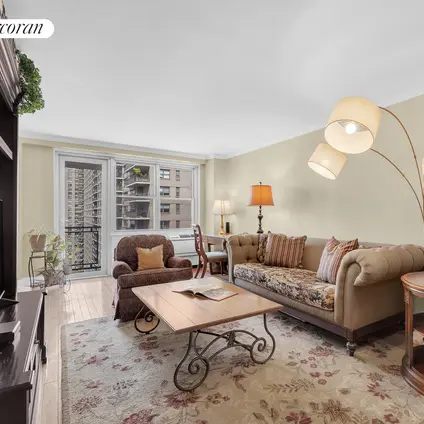
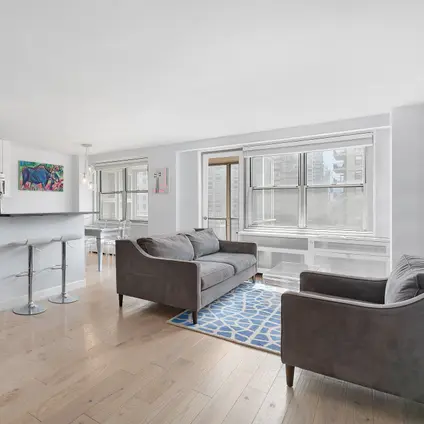
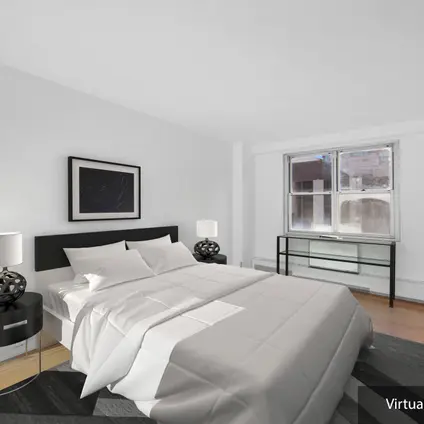
One Bedroom from $495,000 (updated February 8, 2012)

FOR MORE INFORMATION ABOUT Lincoln Guild
Contact us about buying or selling an apartment in Lincoln Guild .
Email Us OR Call (212) 755-5544


Lincoln Guild - 303 West 66th Street: CARTER'S REVIEW


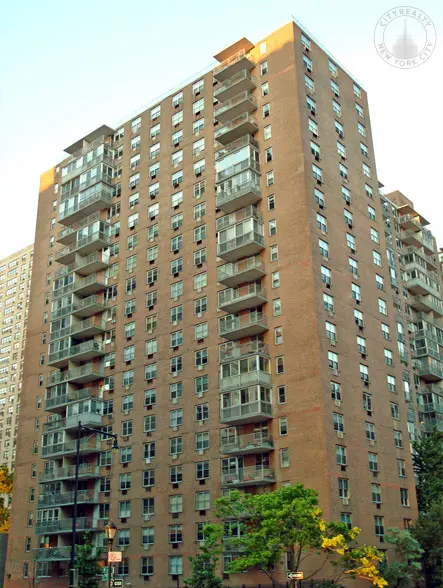
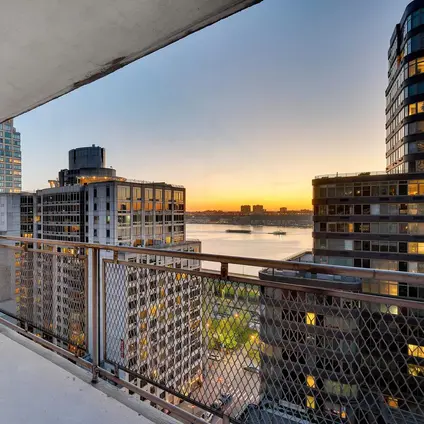
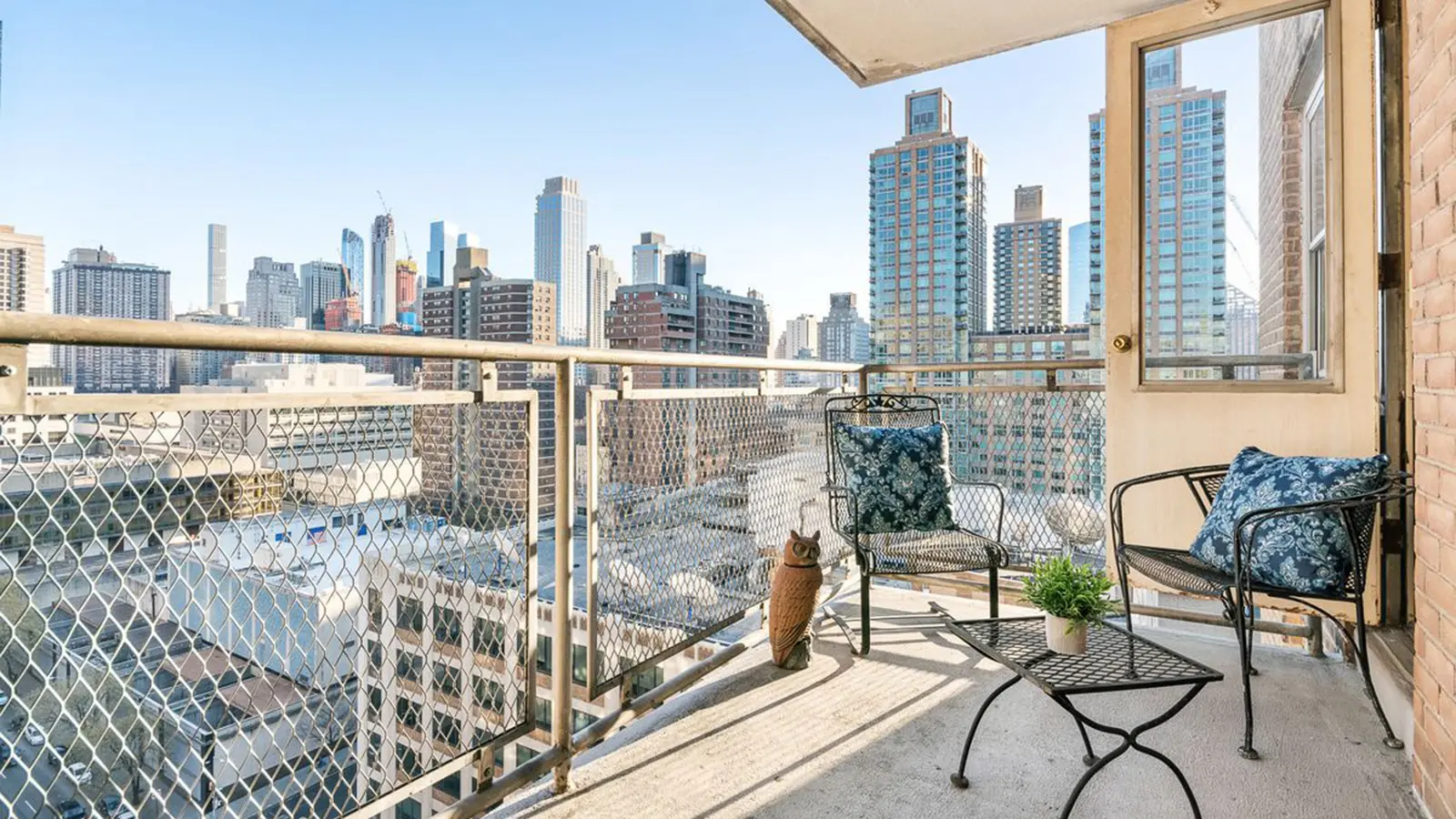
This red-brick apartment building at 303 West 66th Street was erected around 1961 and is notable for its lushly landscaped curved entrance driveway and its many balconies.

It is also known as 139-159 West End Avenue and 2-10 Freedom Place.

It is close to the large Lincoln Towers project that was erected around the same time. The Lincoln Towers buildings are large slabs and this building has a tall, setback central section and two lower wings that frame the driveway.

This building has 420 cooperative apartments and was known as Lincoln Guild.

The building has a doorman, a bicycle room, a playroom and permits each apartment to have a cat but no dogs.

It is one of many older buildings in the city where many residents have enclosed their balconies.

An article by Andree Brooks in the New York Times February 14, 1993 reported that the building was involved in a case, Lincoln Guild Housing Corporation v. Stuckelman, in which Judge Peter Wendt of New York Housing Court ruled in November 1992 that Anna Stuckelman, a shareholder at 303 West 66th Street, had the right to let her grandniece occupy her apartment without board approval.

"Judge Wendt based his decision on an interpretation of the state’s 1983 Roommate Law, which gave a primary tenant the right to bring one other person to live in the unit without the landlord’s approval. Shareholders are frequently classified as primary tenants by the courts because they are, in essence, tenants of the co-op corporation. Thus, argued Judge Wendt, the customary language in a co-op proprietary lease restricting occupancy to the shareholder’s immediate family is contrary to the intention of the roommate law and cannot be upheld. The Lincoln Guild co-op had argued that the grandniece was an illegal subtenant since Mrs. Stuckelman had been in a nursing home at the time."

Subleasing regulations have since been tightened.

The building was erected as a publicly subsidized, middle-income housing cooperative and in 1992 it was converted from a public to a private cooperative.

The building has no mortgages.


BUILDING SUMMARY
  • Cooperative
  • Built in 1961
  • Located in Lincoln Center
  • 420 apartments
  • 21 floors
  • Approx. avg. price per sq ft: $785
FEATURES & AMENITIES
  • FT Doorman
  • Hi Rise
  • Post War
  • Central AC
  • Full Service Garage
  • Washer/Dryer in building
  • Elevator
  • Children's Playroom
PROS & CONS
PROS
  • Quiet block
  • Substantial landscaping
  • Near Lincoln Center and Riverside Boulevard
  • Bicycle room
  • Central Laundry room
  • Garage
  • Canopied entrance
  • Nearby bus service
  • Many balconies

CONS
  • Many apartments
  • Many enclosed balconies
  • No roofdeck

SPONSORED BY

Comments or questions? · Phone: 212.755.5544
Copyright © 1994-2012 CITY REALTY.COM INC. All Rights Reserved.
568 Broadway, Suite 802 New York, NY 10012
Terms of Use · Our Privacy Policy · About CITY REALTY.COM · Advertise With Us · Site Map
Developed by REOL Services


An equal housing opportunity.

All data is deemed reliable but is not guaranteed accurate by the REBNY / RLS or CityRealty. See Terms of Service for additional restrictions. All information furnished regarding New York City property for sale, rental or financing is from sources deemed reliable, but no warranty or representation is made as to the accuracy thereof and same is submitted subject to errors, omissions, change of price, rental or other conditions, prior sale, lease or financing or withdrawal without notice. All dimensions are approximate. For exact dimensions, you must hire your own architect or engineer. The number of bedrooms listed on this website is not a legal conclusion. Each person should consult with his/her own attorney, architect or zoning expert to make a determination as to the number of rooms in the unit that may be legally used as a bedroom.