|
About 40 Bond Street
This relatively modest condominium apartment project east of Lafayette Street in NoHo was one of the city's most eagerly awaited new residential projects in 2005 because its developers, Ian Schrager and Aby Rosen and his partner Michael Fuchs, commissioned Herzog & de Meuron, the architectural firm famous for its design of the Tate Modern Museum in London, a twisting structure for the de Young Museum in San Francisco, a multi-faceted building for Prada in Tokyo and the main stadium for the Olympic Games in Beijing.
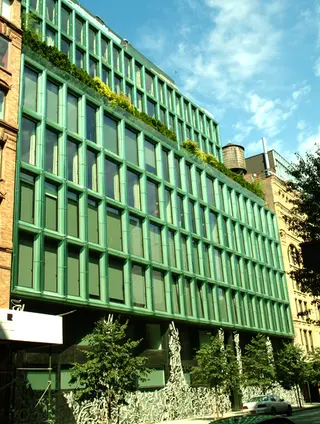
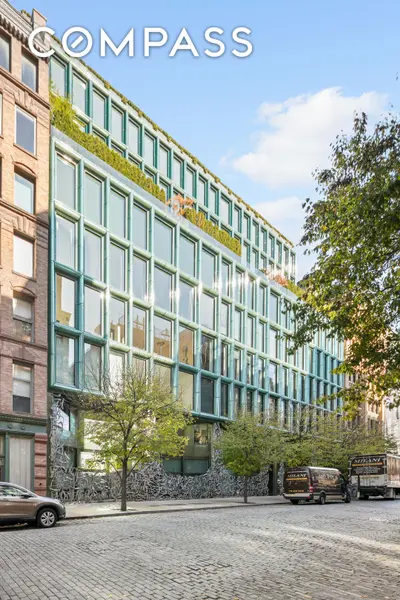
Herzog & de Meuron, which won the prestigious Pritzker Prize for Architecture in 2001, delivered the goods with a stunning re-interpretation of the traditional low-rise commercial loft buildings of SoHo that substituted a dark-green glass for cast-iron. The design was also highlighted by a large white "scrawl" fence whose organic form contrasted dramatically with the building's fine glass grid.
In press materials for the project, architect Jacques Herzog provided the following commentary:
"We like radical positions and we try to offer them. The idea of gates came to us first. It gave us a signature, a scale and an individuality. The gates introduce the scale of the townhouses. The question was what kind of structure or grid or image would they have on them. We tested different things and most of them looked too traditional but we then came up with the idea of something very chaotic which we thought could be seen as coming from urban street culture, where graffiti is part of the landscape. So we took graffiti and manipulated it on the computer, the result is radical, but it was a classical process of transformation."
The "gate" extends the width of the mid-block project and is thematically repeated in the lobby where its design is etched onto Corian panels. The design of the gate conjures some of the highly intricate lace-like Art Nouveau designs of Antonio Gaudi. The two-story-high lobby leads to a common garden in the rear and a fitness center in the basement.
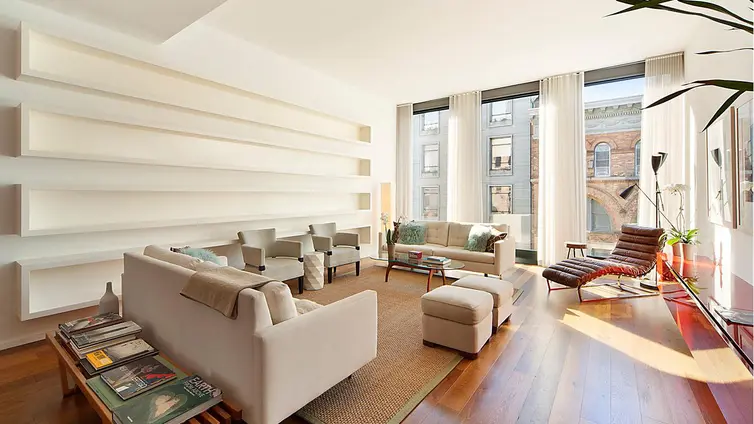
This building has five, 3-story townhouse units with 22-foot-high living rooms and front yards behind the "gate" and 27 apartments. Three of the townhouses are 25 feet wide and two are 17 feet wide and all have wood-burning fireplaces.
The apartments have 11-foot-high ceilings and ranged in price initially from about $3,350,000 for a 1,269-square-foot unit on the fourth floor to $11,500,000 for an 8th floor apartment with 3,288 square feet of interior space and 1,342 square feet of exterior space.
The penthouse has 6,626 square feet of interior space and 3,529 square feet of exterior space and had a price tag of $18.5 million and Mr. Schrager indicated that he was "taking the penthouse."
Mr. Schrager gained famed as Steve Rubell's partner at Studio 54, the infamous New York disco of the late 1970s, and for his subsequent career as a hotelier whose projects included the Royalton and Paramount hotels in New York and the Delano in Miami.
Mr. Rosen is a major figure in New York City real estate who is an owner of the Seagram Building and Lever House on Park Avenue and who has commissioned Sir Norman Foster to build a mixed-use tower behind the Seagram Building on Lexington Avenue and to make plans for the redevelopment of the Carlyle Galleries Building on the west side of Madison Avenue between 76th and 77th Street.
Mr. Schrager and Mr. Rosen were also partners in the 50 Gramercy Park North development adjacent to the Gramercy Park Hotel where Mr. Schrager commissioned Julian Schnabel to do the interiors.
Apartments at 40 Bond Street have 24/7 access to all Gramercy Park Hotel services including pet walking, room service, turn-down service, housekeeping service, valet parking, and fresh flower service.
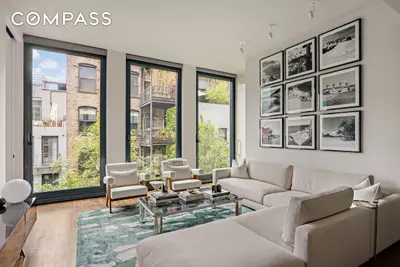
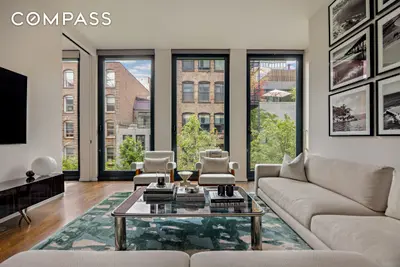
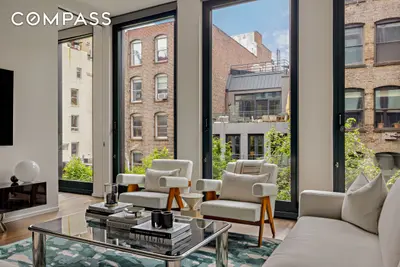
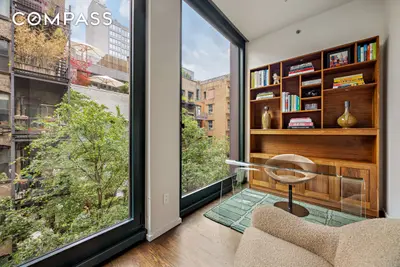
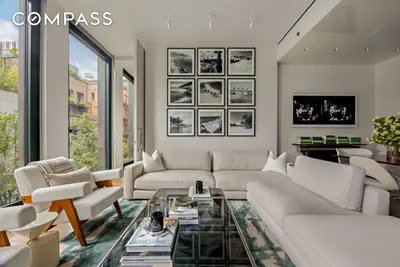
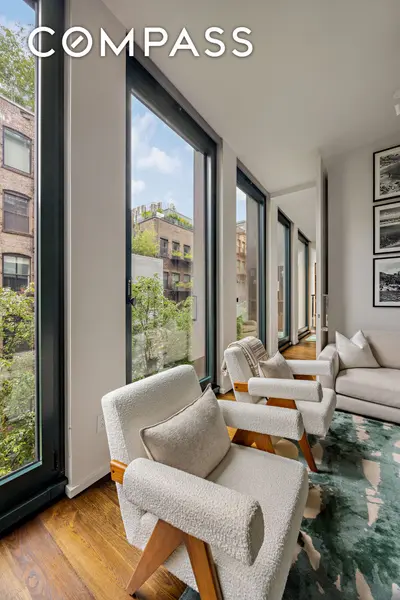
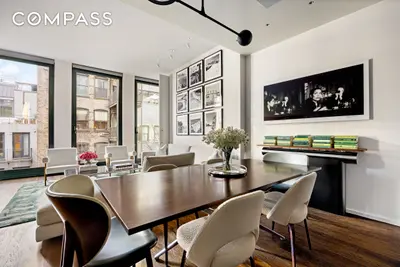
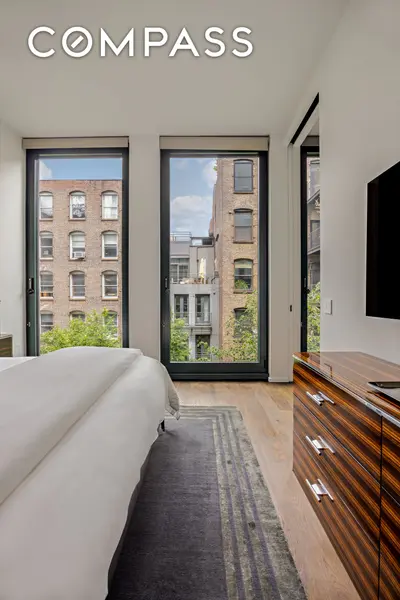
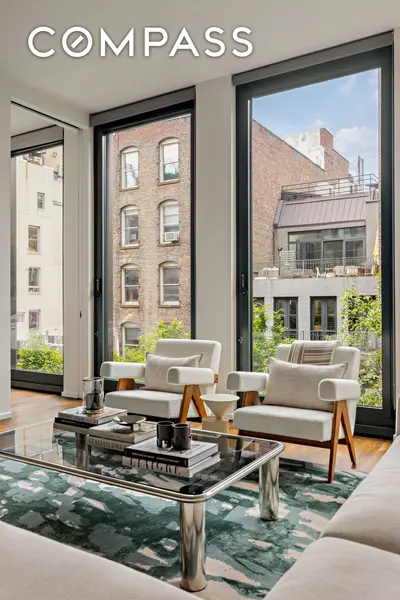
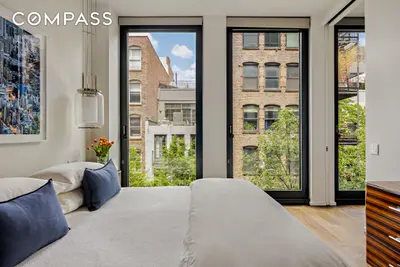
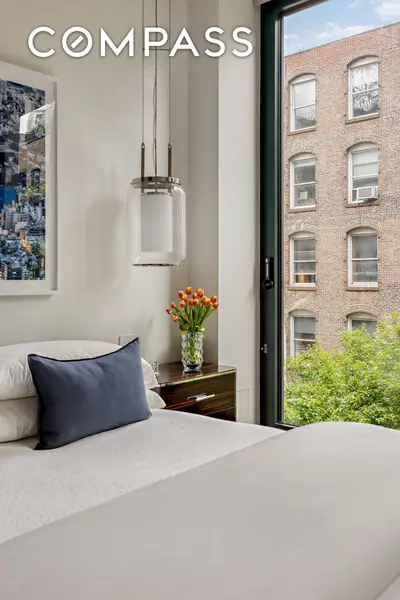
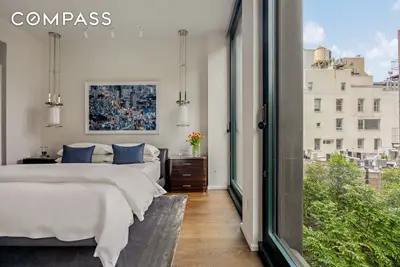
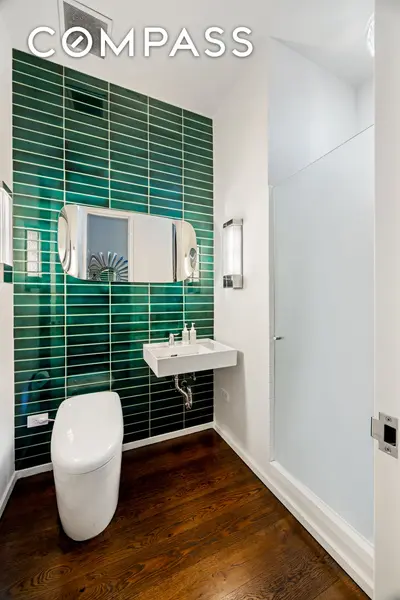
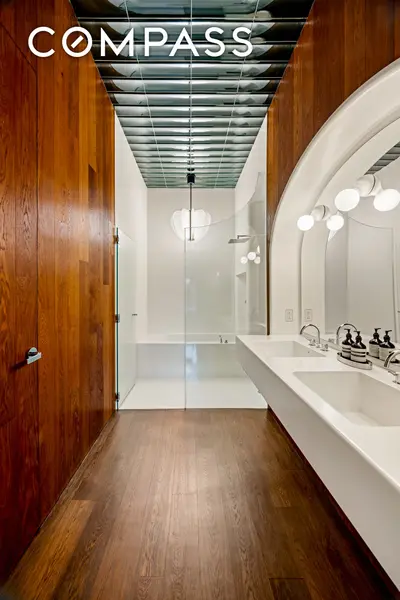
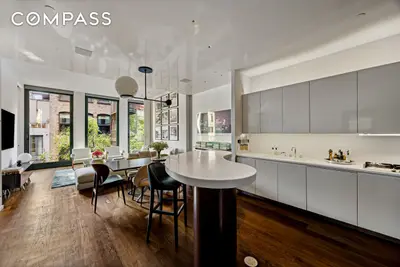
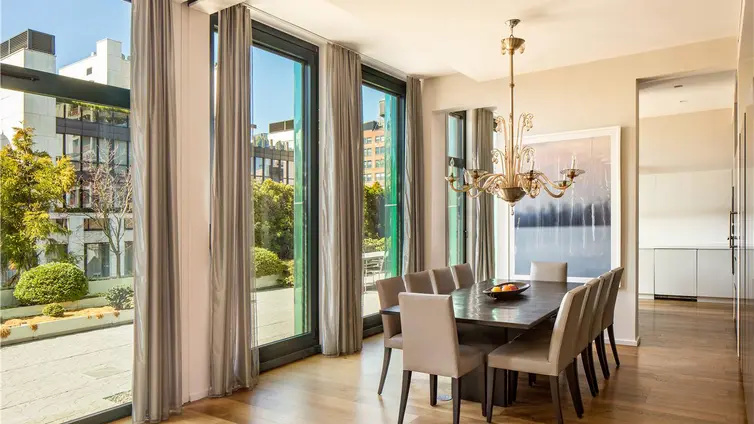
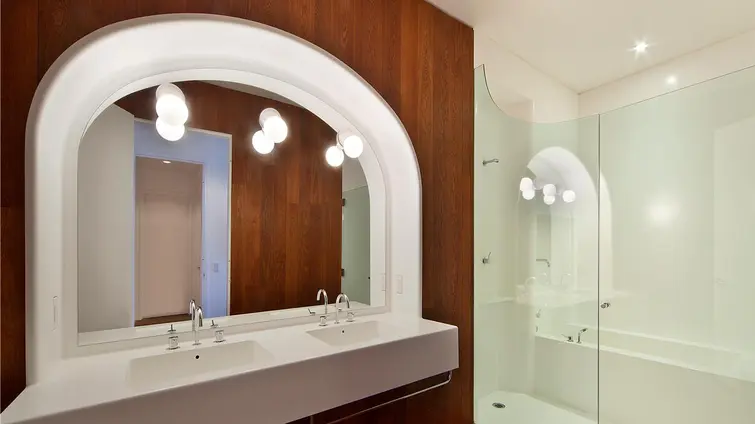
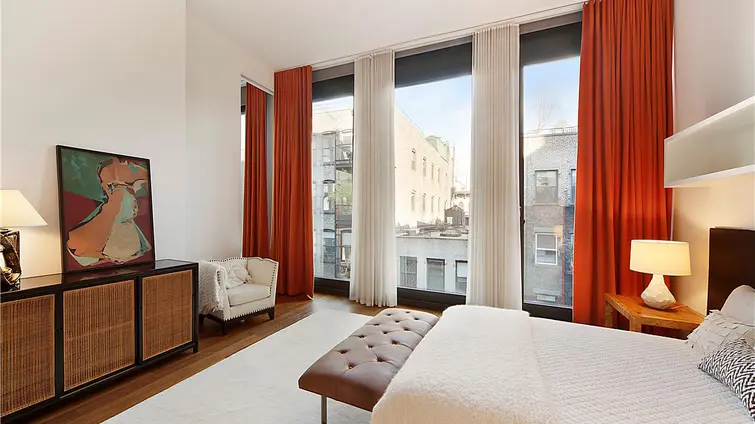
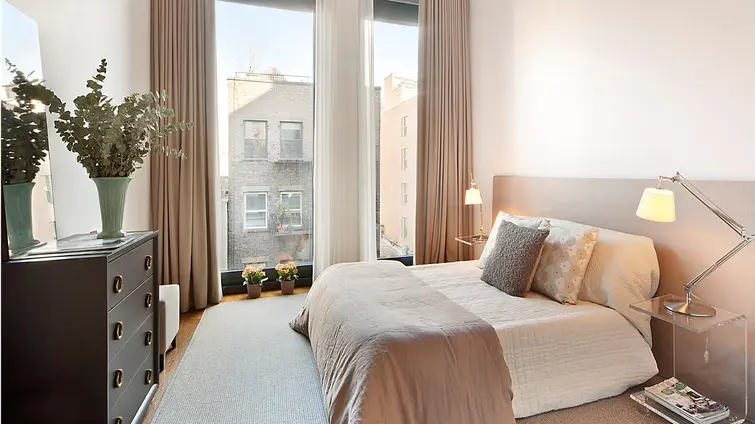
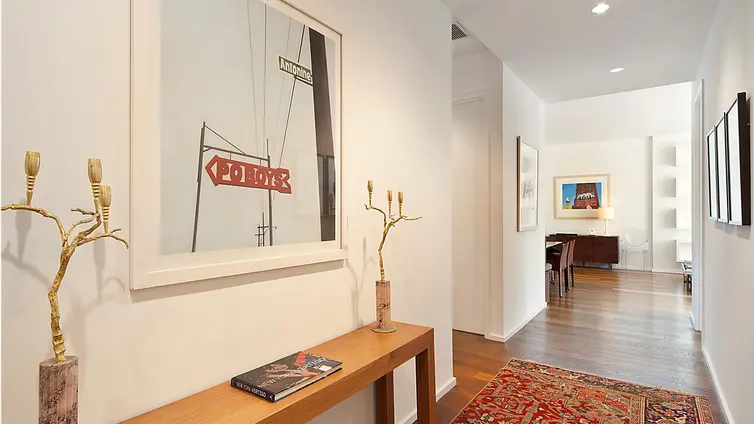
Apartments at 40 Bond Street have floor-to-ceiling, fully operable windows, Austrian Smoked Oak floors, sliding pocket doors between Great Rooms and master bedroom suites, and "wet rooms" with seamless Glacier White Corian walls and shower floor embossed with a grafitti pattern, Vola tub and shower fixtures, and Miele washers and dryers.
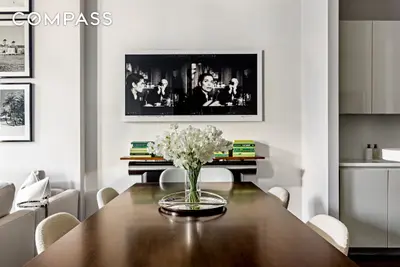
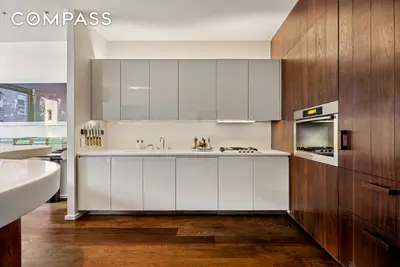
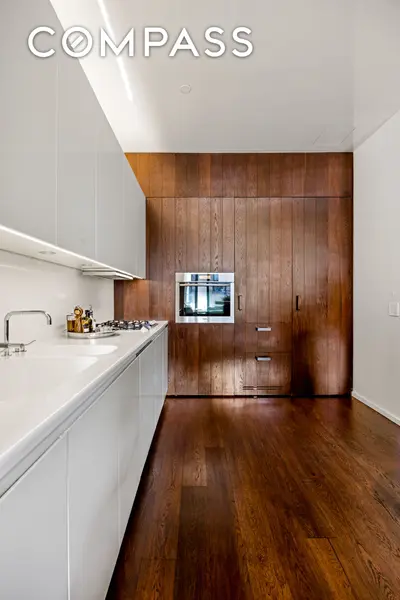
Kitchens have Italian cabinets and pantry units finished in smoked oak and high gloss lacquer by Varenna, Glacier White Corian countertops, under-cabinet lighting, Miele cooktaps and ovens and dishwashers, and Sub-Zero refrigerators.
In a mailing, Mr. Schrager noted that 40 Bond Street will be the architects' first residential project in America,” adding that he considers "them to be the most brilliant architects working today."
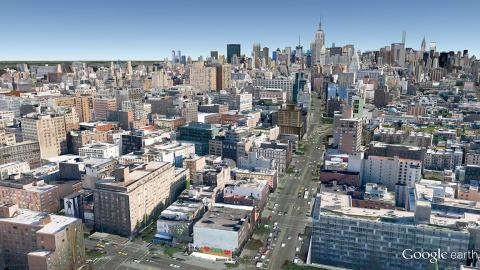
A parking lot formerly occupied this site, which is east of Lafayette Street in NoHo. This block has several other new developments at 25 and 48.
In 2003, Mr. Schrager had planned a hotel for this site with Richard Born and Ira Drucker, but changed plans for a 14-story, 65-unit residential building designed by Gary Handel, whose firm Handel Architects is still associated with the project.
According to a December 8, 2005 amendment filed with the New York State Attorney General’s office, the townhouse units ranged in price from $6,975,000 for about 2,881 square feet of interior space and about 570 square feet of exterior space to $9,450,000 for 3,739 square feet of interior space and 1,138 square feet of exterior space.
The contrast of the white "graffiti" fence that seems to climb like ivy with the dark glossy green of the building's facade is very dramatic and impressive. The large, rounded glass columns that frame the very large windows appeared in rendering without little black wiring that apparently helps to hold them in place in the finished building. Despite the little wires, the green glass is jewel-like, only on a gargantuan and marvelous scale.
The critical euphoria that greeted this project did not dissipate upon completion, but was diverted a bit by some other new sensational projects such as Jean Nouvel's curved column of angled windows at 100 Eleventh Avenue in Chelsea and mixed-use tower with bold diagonal bracing just to the east of the Museum of Modern Art in midtown.
|