- Apartments
- Overview & Photos
- Maps
- Building Specialists
- Floorplans
- Sales Data & Comps
- Similar Buildings
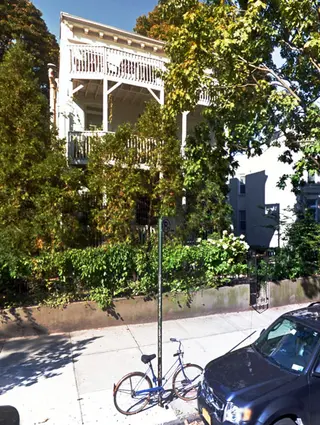
110 Clinton Avenue is a pre-war co-op building in Brooklyn's Clinton Hill neighborhood, built in 1900. The 3-story walk-up building contains 8 units and features an intercom system. Currently, 1 apartment is for sale.

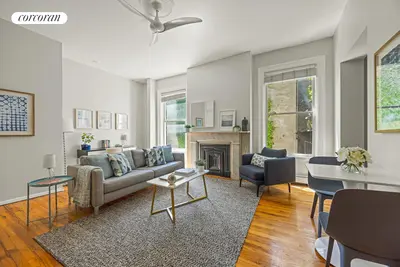
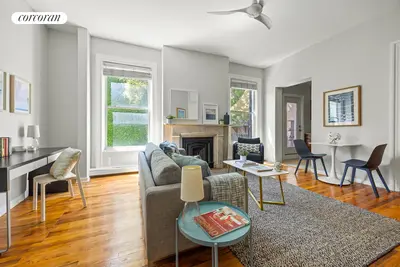
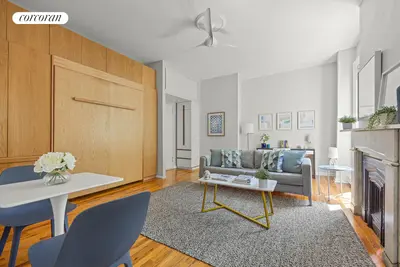
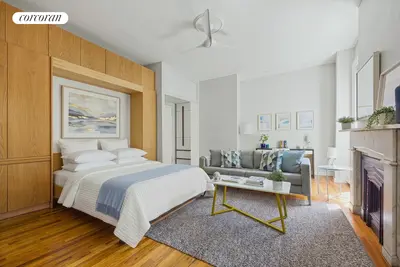
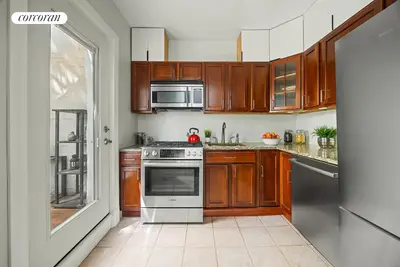
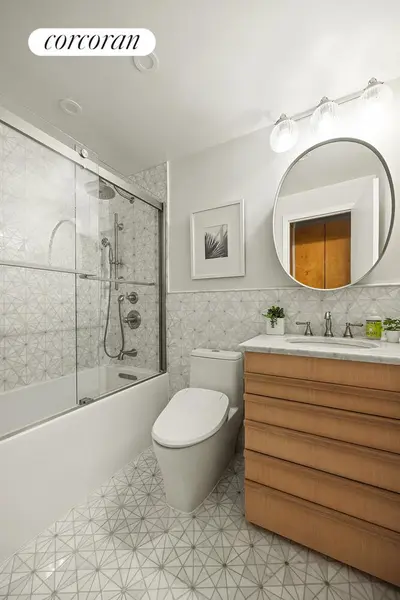
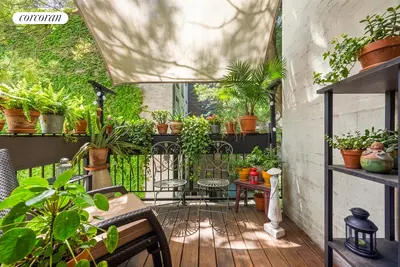
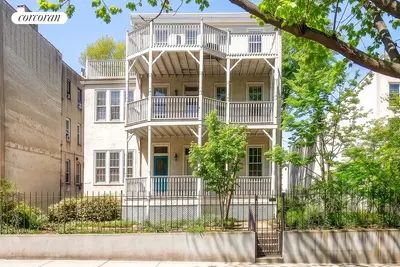
110 Clinton Avenue is a prewar co-op housed in a former 1870s mansion on Clinton Hill's historic mansion row. Originally constructed around 1870 by William E. Bird, who operated an ironworks business, the building showcases classic Italianate architectural style and was possibly designed by architect Ebenizer Roberts. Bird's son, also named William E. Bird, went on to become a prominent wine importer in New York City, and the family initially owned six lots around the property. The mansion was converted into a co-op in the mid 1980s and now contains 8 units across 3 stories.
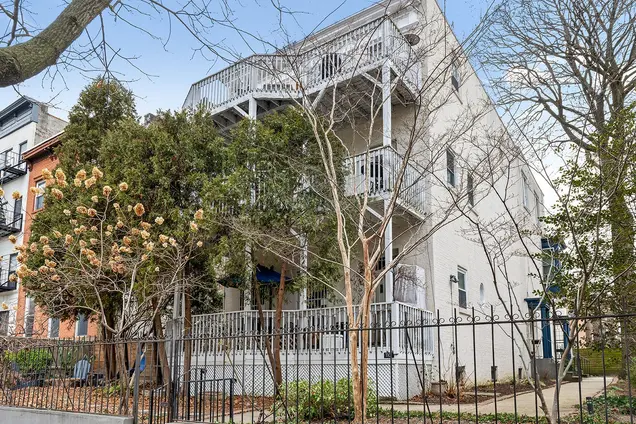
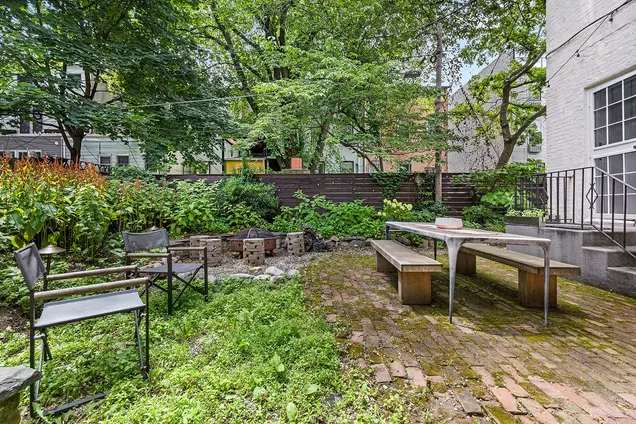
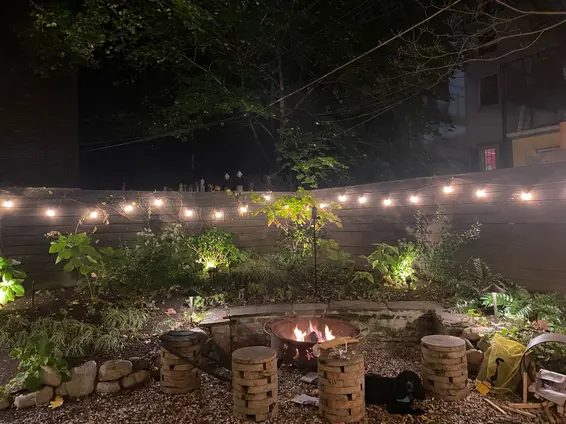
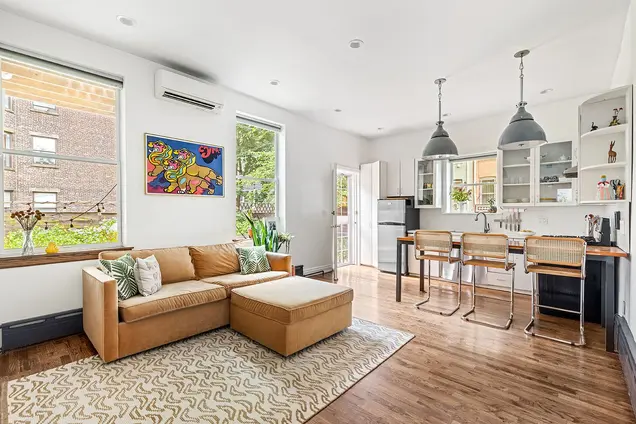
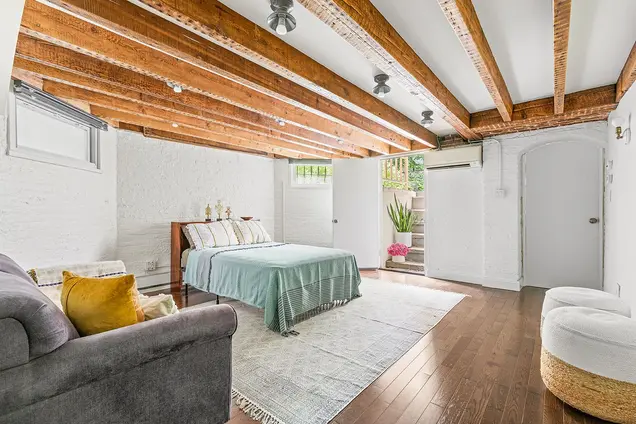
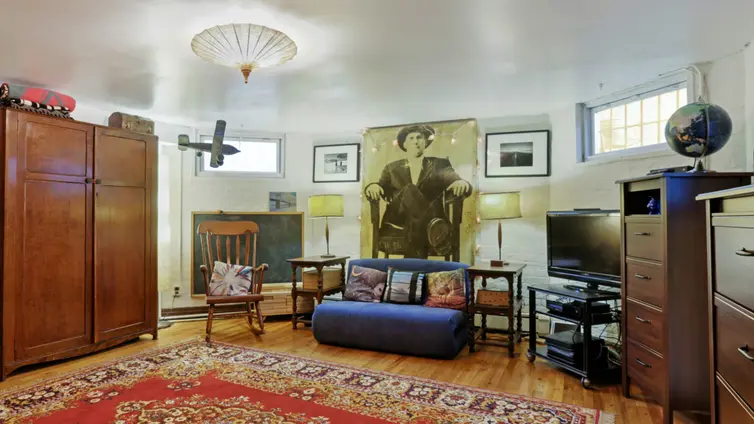
What sets this building apart is that every apartment features its own private outdoor space, from expansive gardens to tree lined porches. Several units boast impressive duplex layouts with private gardens reaching up to 1,600 square feet, complete with mature trees including a towering 70 year old maple. The apartments retain their original grandeur with high ceilings, original marble mantels, decorative fireplaces, and hardwood floors, while incorporating modern conveniences like in-unit washers and dryers, central air conditioning, and stainless steel appliances. Many units feature unique architectural details such as spiral staircases, exposed beams and brick, and multiple skylights that flood the spaces with natural light.
The building sits on a double wide lot with beautifully landscaped communal grounds, benches, and walkways. Residents enjoy a free common laundry room, storage facilities, bike storage, and individual gas fired boilers and water heaters for each unit. The self managed co-op maintains a strong sense of community with well planned capital improvements and expert maintenance.
Located steps from Myrtle Avenue's diverse dining and shopping scene, the building offers convenient access to the G train on Lafayette Avenue. The neighborhood provides easy access to Fort Greene Park, the Fort Greene farmers market, BAM, Barclays Center, Pratt Institute, and the evolving Brooklyn Navy Yard, making it an ideal location for those seeking historic charm with modern urban conveniences.
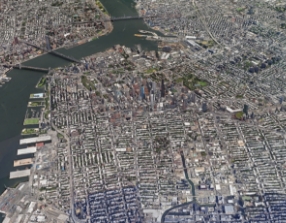
View school info, local attractions, transportation options & more.
Experience amazing 3D aerial maps and fly throughs.
For some co-ops, instead of price per square foot, we use an estimate of the number of rooms for each sold apartment to chart price changes over time. This is because many co-op listings do not include square footage information, and this makes it challenging to calculate accurate square-foot averages.
By displaying the price per estimated room count, we are able to provide a more reliable and consistent metric for comparing sales in the building. While we hope that this gives you a clearer sense of price trends in the building, all data should be independently verified. All data provided are only estimates and should not be used to make any purchase or sale decision.

 6sqft delivers the latest on real estate, architecture, and design, straight from New York City.
Like us on Facebook to keep up with the trends and
6sqft delivers the latest on real estate, architecture, and design, straight from New York City.
Like us on Facebook to keep up with the trends and 
Broker & Buyer Comments