- Apartments
- Overview & Photos
- Maps
- Building Specialists
- Floorplans
- Sales Data & Comps
- Similar Buildings
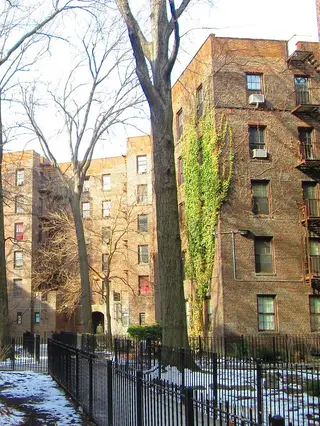

Dunbar Apartments stands as a landmark achievement in American housing history, representing the first large cooperative project in the nation built specifically for Black occupancy. Developed by John D. Rockefeller Jr. in 1928 and designed by architect Andrew J. Thomas, this full-block complex at 250 West 150th Street was named after Paul Laurence Dunbar, the celebrated Black poet who died in 1906. The six red-brick buildings, rising 5-6 stories and containing 536 apartments, won first prize for walkup apartments from the New York Chapter of the American Institute of Architecture in 1927, establishing it as both an architectural and social milestone.
The complex attracted an extraordinary roster of prominent African American figures who called it home, including W.E.B. DuBois, Paul Robeson, A. Philip Randolph, Bill "Bojangles" Robinson, and Matthew Henson, the explorer who accompanied Admiral Peary to the North Pole. Henson was known to sit on the building's stoops telling children stories about his Arctic adventures, while the central courtyard featured Christmas trees and caroling during the holidays. This concentration of intellectual and cultural luminaries made Dunbar a vital center of Black achievement during the Harlem Renaissance era.
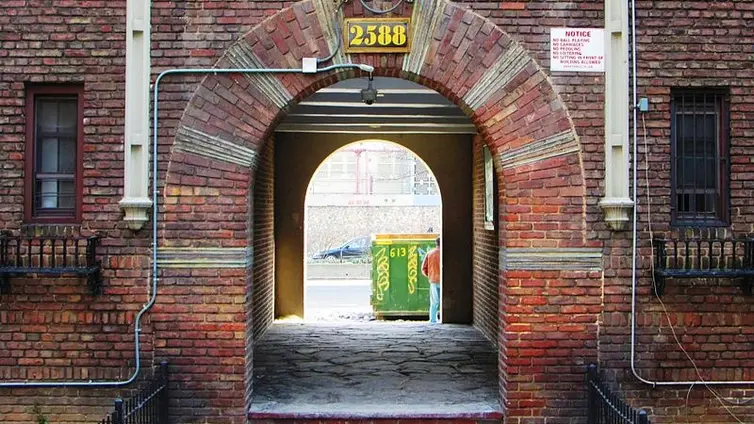
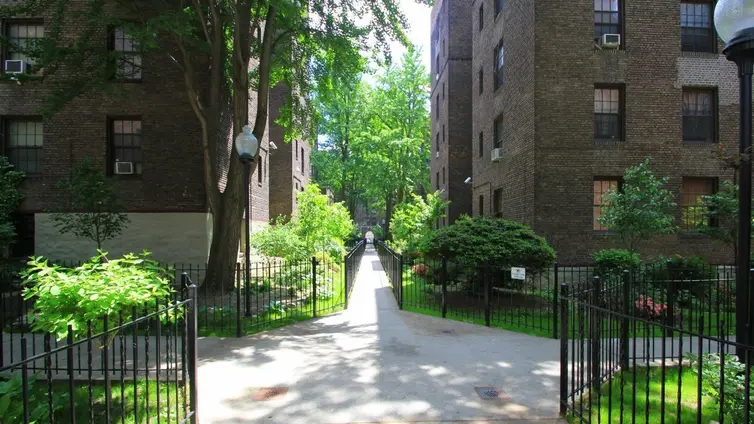
Architecturally, Dunbar pioneered the "garden apartment" concept that would influence public housing for decades. Thomas designed the complex with six brownish brick walk-ups arranged around a landscaped central courtyard, featuring wrought iron balconies, window guards, and terracotta and limestone decorative details with numerous arched entrances. The design created an urban oasis that people would travel from near and far to tour, as it was hailed as a prototype for what housing in Harlem should aspire to become.
The building's history reflects the broader economic challenges facing urban housing. Originally a cooperative, it converted to rental during the Depression when residents could no longer afford their payments. The complex has weathered multiple ownership changes, financial difficulties, and rehabilitation efforts, including an $11.8 million renovation in the 1980s. Its designation as an official New York City landmark in 1970 has preserved its historical significance while creating unique challenges, such as requiring expensive custom windows that match the original specifications.
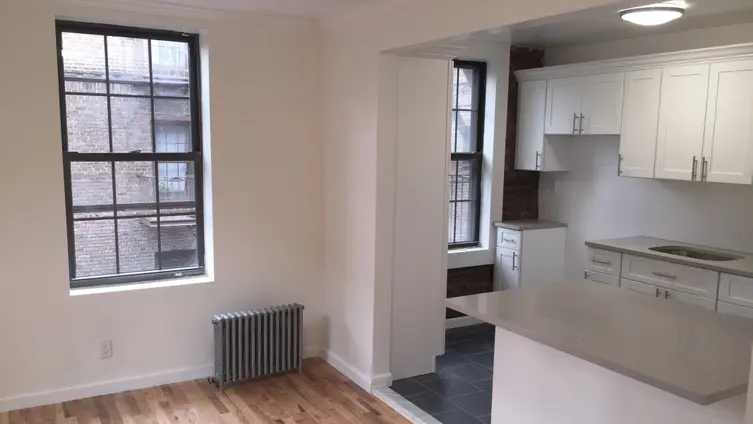
Today's renovated apartments blend historical character with modern amenities, featuring wide-plank oak hardwood floors, stone counters, subway tile backsplashes, and stainless steel appliances. Units range from one to three bedrooms, with many offering large windows, exposed brick, and views of the verdant courtyard gardens. Typical layouts include 13-14 foot living rooms, windowed dining rooms, and windowed kitchens, with apartments like 6J offering entry foyers leading to spacious living areas.
The complex's prime Harlem location provides excellent transportation access to both the 3 train and A/B/C/D express lines, while being just blocks from Jackie Robinson Park and across the Harlem River from Yankee Stadium. Current amenities include newly renovated laundry facilities, the signature landscaped gardens, on-site management, and virtual doormen. The building continues to serve as both a residential community and a testament to a pivotal moment in American housing and civil rights history.
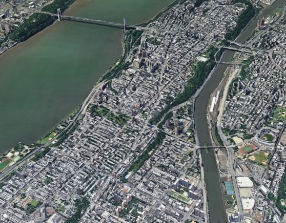
View school info, local attractions, transportation options & more.
Experience amazing 3D aerial maps and fly throughs.



Notable past and present residents at Dunbar Apartments

 6sqft delivers the latest on real estate, architecture, and design, straight from New York City.
Like us on Facebook to keep up with the trends and
6sqft delivers the latest on real estate, architecture, and design, straight from New York City.
Like us on Facebook to keep up with the trends and 