
The New York Metropolitan Transportation Commission has released a study, which began in 2002, that calls for Canal Street to be made friendlier for pedestrians by adding significant amounts of sidewalk space, according to an article by Noah Kazis yesterday at Streetsblog.com.
"Fortunately, the funds are in place for an eventual reconstruction and re-imagination of the street, thanks to federal World Trade Center emergency relief aid," the article said.
"The NYMTC team studied a wide array of congestion-busting ideas for the corridor. Some, like two-way tolling on the Verrazano Bridge or congestion pricing, were dismissed because they required legislative approvals well outside the project's scope. Transit expansions, like bringing the PATH train north from the World Trade Center or building light rail on Canal, were rejected as too costly. Some ideas were nixed because they lacked community support or because they conflicted with New York City's Street Design Manual. Other ambitious proposals, like keeping traffic off side streets including Pell, Doyers, Mosco, and Mulberry, were referred to the appropriate agency for further study," the article said.
In addition to a few recommendations that have already been implemented, like a HOV lane on the Manhattan Bridge and a median on Bowery, the plan calls for significant new pedestrian amenities. Those include leading pedestrian intervals at intersections and a redesign for the intersection of Bowery and Canal, at the foot of the Manhattan Bridge.
Curb extensions would be built on Canal at Varick Street, between Elizabeth and Mulberry and between Baxter and Lafayette, replacing traffic lanes.
NYMTC also looked into turning Canal Street one-way headed east, pairing it with a westbound Grand Street. While that option would have allowed for even wider sidewalks on Canal, wrote NYMTC, "the wider Canal Street sidewalks in the one-way alternative would be offset by the negative traffic impact of the one-way pair on both Grand Street and Spring Street." In other words, the cars won out over the pedestrians on that one.
"Putting a HOV3 lane through the Holland Tunnel, the NYMTC model found, would shift cars with one or two passengers," the article said, "from the Holland Tunnel to the Lincoln Tunnel, George Washington Bridge, and Staten Island crossings. A NYMTC spokesperson added that those new trips, since less direct, would likely add extra vehicle miles traveled overall, and that a HOV lane already exists for the approach to the tunnel on the Jersey City side. While the tunnel itself would have less traffic with a HOV lane, NYMTC projected, the Manhattan streets it empties into would just fill up again with other traffic from the over-congested streets nearby."
The study said that constructing a parking garage in the air rights at the Holland Tunnel Manhattan exit rotary had been determined not feasible due to operational and local impacts and that realigning Church Street with Greene Street to eliminate right and left jog from Canal Street was concluded by the NYCDOT to not be a significant issue nor cost effective.
NYCDOT also concluded roadway capacity issues restrict the implementation of light rail or people movers on Canal Street and that building an express Lexington Avenue subway stop at Canal Street was more capital intensive than other options. The agency also concluded that building pedestrian bridges on the Bowery to cross Canal Street and connect to the Manhattan Bridge pedestrian/bike path was not feasible as was building a pedestrian bride across Delancey Street at Allen Street.
"Fortunately, the funds are in place for an eventual reconstruction and re-imagination of the street, thanks to federal World Trade Center emergency relief aid," the article said.
"The NYMTC team studied a wide array of congestion-busting ideas for the corridor. Some, like two-way tolling on the Verrazano Bridge or congestion pricing, were dismissed because they required legislative approvals well outside the project's scope. Transit expansions, like bringing the PATH train north from the World Trade Center or building light rail on Canal, were rejected as too costly. Some ideas were nixed because they lacked community support or because they conflicted with New York City's Street Design Manual. Other ambitious proposals, like keeping traffic off side streets including Pell, Doyers, Mosco, and Mulberry, were referred to the appropriate agency for further study," the article said.
In addition to a few recommendations that have already been implemented, like a HOV lane on the Manhattan Bridge and a median on Bowery, the plan calls for significant new pedestrian amenities. Those include leading pedestrian intervals at intersections and a redesign for the intersection of Bowery and Canal, at the foot of the Manhattan Bridge.
Curb extensions would be built on Canal at Varick Street, between Elizabeth and Mulberry and between Baxter and Lafayette, replacing traffic lanes.
NYMTC also looked into turning Canal Street one-way headed east, pairing it with a westbound Grand Street. While that option would have allowed for even wider sidewalks on Canal, wrote NYMTC, "the wider Canal Street sidewalks in the one-way alternative would be offset by the negative traffic impact of the one-way pair on both Grand Street and Spring Street." In other words, the cars won out over the pedestrians on that one.
"Putting a HOV3 lane through the Holland Tunnel, the NYMTC model found, would shift cars with one or two passengers," the article said, "from the Holland Tunnel to the Lincoln Tunnel, George Washington Bridge, and Staten Island crossings. A NYMTC spokesperson added that those new trips, since less direct, would likely add extra vehicle miles traveled overall, and that a HOV lane already exists for the approach to the tunnel on the Jersey City side. While the tunnel itself would have less traffic with a HOV lane, NYMTC projected, the Manhattan streets it empties into would just fill up again with other traffic from the over-congested streets nearby."
The study said that constructing a parking garage in the air rights at the Holland Tunnel Manhattan exit rotary had been determined not feasible due to operational and local impacts and that realigning Church Street with Greene Street to eliminate right and left jog from Canal Street was concluded by the NYCDOT to not be a significant issue nor cost effective.
NYCDOT also concluded roadway capacity issues restrict the implementation of light rail or people movers on Canal Street and that building an express Lexington Avenue subway stop at Canal Street was more capital intensive than other options. The agency also concluded that building pedestrian bridges on the Bowery to cross Canal Street and connect to the Manhattan Bridge pedestrian/bike path was not feasible as was building a pedestrian bride across Delancey Street at Allen Street.
Architecture Critic
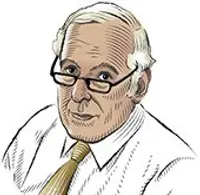
Carter Horsley
Since 1997, Carter B. Horsley has been the editorial director of CityRealty. He began his journalistic career at The New York Times in 1961 where he spent 26 years as a reporter specializing in real estate & architectural news. In 1987, he became the architecture critic and real estate editor of The New York Post.

 6sqft delivers the latest on real estate, architecture, and design, straight from New York City.
