
The Obama administration yesterday pumped $3 billion into programs intended to stop the unemployed from losing their homes, according to an article by David Streitfeld in today's edition of The New York Times.
The Treasury Department said it was adding $2 billion to its Hardest Hit Fund, roughly doubling its size. The fund was first announced by President Obama in February and expanded in March and it goes to housing finance agencies in some states to create local aid programs.
"Most of the state programs from the first two rounds are barely under way," the article said, "but Treasury officials said it was clear that more funds were needed. 'In this very deep recession, people have tended to be out of work a little longer,' Herbert M. Allison Jr., assistant secretary for financial stability, said. 'That's why we think this additional relief for people searching for a job is so important.'"
The second program, announced by the Department of Housing and Urban Development, will draw on $1 billion authorized by the new financial overhaul law and the agency said it would work with local aid groups to offer interest-free bridge loans of up to $50,000 to eligible borrowers to help them pay their mortgage principal, interest, insurance and taxes for up to 24 months.
"Until now," the article continued, "the Hardest Hit Fund had been projected to help about 140,000 borrowers. Treasury officials said that number would grow with the new infusion of money, but offered no estimate. HUD also did not say how many homeowners would be eligible for its program. If the new money is spent in the same way as the previous money, both programs would eventually aid about 400,000 borrowers - a large number, but not when set against the 14.6 million unemployed or three million contemplating foreclosure."
The Hardest Hit Fund will draw on the $45.6 billion set aside for housing in the Troubled Asset Relief Program (TARP), the rescue measure begun in the fall of 2008.
"Initially," the article said, "the fund gave $1.5 billion to five hard-hit states: Arizona, California, Florida, Michigan and Nevada. The second round in March of $600 million went to North Carolina, Ohio, Oregon, Rhode Island and South Carolina. The expanded list of states eligible for the latest funding includes Alabama, Illinois, Kentucky, Mississippi and New Jersey, as well as the District of Columbia. Each state's share of the money is based on its population."
"The other housing money in the Troubled Asset Relief Program," according to the article, "is earmarked for the modification programs ($30.6 billion) and a Federal Housing Administration refinancing program ($11 billion). The administration can shift money between the programs only until Oct. 3, the two-year anniversary of the program."
The Treasury Department said it was adding $2 billion to its Hardest Hit Fund, roughly doubling its size. The fund was first announced by President Obama in February and expanded in March and it goes to housing finance agencies in some states to create local aid programs.
"Most of the state programs from the first two rounds are barely under way," the article said, "but Treasury officials said it was clear that more funds were needed. 'In this very deep recession, people have tended to be out of work a little longer,' Herbert M. Allison Jr., assistant secretary for financial stability, said. 'That's why we think this additional relief for people searching for a job is so important.'"
The second program, announced by the Department of Housing and Urban Development, will draw on $1 billion authorized by the new financial overhaul law and the agency said it would work with local aid groups to offer interest-free bridge loans of up to $50,000 to eligible borrowers to help them pay their mortgage principal, interest, insurance and taxes for up to 24 months.
"Until now," the article continued, "the Hardest Hit Fund had been projected to help about 140,000 borrowers. Treasury officials said that number would grow with the new infusion of money, but offered no estimate. HUD also did not say how many homeowners would be eligible for its program. If the new money is spent in the same way as the previous money, both programs would eventually aid about 400,000 borrowers - a large number, but not when set against the 14.6 million unemployed or three million contemplating foreclosure."
The Hardest Hit Fund will draw on the $45.6 billion set aside for housing in the Troubled Asset Relief Program (TARP), the rescue measure begun in the fall of 2008.
"Initially," the article said, "the fund gave $1.5 billion to five hard-hit states: Arizona, California, Florida, Michigan and Nevada. The second round in March of $600 million went to North Carolina, Ohio, Oregon, Rhode Island and South Carolina. The expanded list of states eligible for the latest funding includes Alabama, Illinois, Kentucky, Mississippi and New Jersey, as well as the District of Columbia. Each state's share of the money is based on its population."
"The other housing money in the Troubled Asset Relief Program," according to the article, "is earmarked for the modification programs ($30.6 billion) and a Federal Housing Administration refinancing program ($11 billion). The administration can shift money between the programs only until Oct. 3, the two-year anniversary of the program."
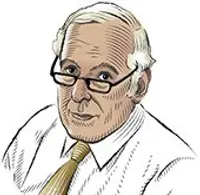
Architecture Critic
Carter Horsley
Since 1997, Carter B. Horsley has been the editorial director of CityRealty. He began his journalistic career at The New York Times in 1961 where he spent 26 years as a reporter specializing in real estate & architectural news. In 1987, he became the architecture critic and real estate editor of The New York Post.

 6sqft delivers the latest on real estate, architecture, and design, straight from New York City.
