
With over 177,000 housing units in its portfolio, the New York City Housing Authority (NYCHA) is the largest landlord in the city, with more residents than some major cities in the United States. As such, keeping the buildings maintained is a massive undertaking, especially considering some of the newest were completed in the 1970s. This is where the Permanent Affordability Commitment Together (PACT) program, which engages public-private partnerships to fund renovations of NYCHA buildings, comes in.
PACT has been in effect since 2016, but came to new attention this year when a judge issued a restraining order preventing the demolition of two buildings, including one for senior residents, in the Fulton and Elliott-Chelsea Houses NYCHA complex so that new buildings could take shape under a PACT partnership. Now that the restraining order has been lifted, demolitions and construction can proceed, and we look at this and other projects taking shape in PACT partnerships below.
In this article:




What is PACT?
PACT partnerships cause NYCHA developments to be included in the federal Rental Assistance Demonstration (RAD) program and transition to the federally funded Project-Based Section 8, which thus commands higher payments from the government.
Under this arrangement, NYCHA acts as landlord, leasing the land to private developers and non-profit partners, who conduct repairs and construction, serve as new property managers, and provide social services and community programs. Through it all, and after the major work is complete, NYCHA continues to own the land, monitor buildings' conditions and repair requests, and administer their subsidies and waitlists.
What does PACT mean for tenants?
With the logic being that "no one knows NYCHA developments better than NYCHA residents," NYCHA works to include residents in the PACT process as much as possible. This includes gathering input on the most important repairs and improvements, engaging residents in the selection of PACT partners, and holding ongoing information sessions to keep residents abreast of every step of the process.
It is important to mention that under the terms of PACT, NYCHA is legally obligated to replace each unit "one-for-one." Residents who would be displaced amidst construction and repairs would be relocated elsewhere in the complex while work is taking place, and retain their right to return. Upon their return, residents' rent calculations and other costs will remain the same, and their leases will automatically renew.
What are residents afraid of?
Despite all the promises and legalities under PACT, some residents are afraid that private developers' involvement will lead to them being pushed and priced out of their long-time homes. Moving is one of the most stressful life events anywhere in the world, but that is an especially scary undertaking for NYCHA residents who are unlikely to find anything market-rate in New York City for the rents they were paying on their current homes (legally capped at 30 percent of their adjusted gross household income), least of all in their current neighborhoods in some cases. This is especially notable at Fulton and Elliott-Chelsea Houses, where some of the most expensive real estate in the city has risen directly to the west.
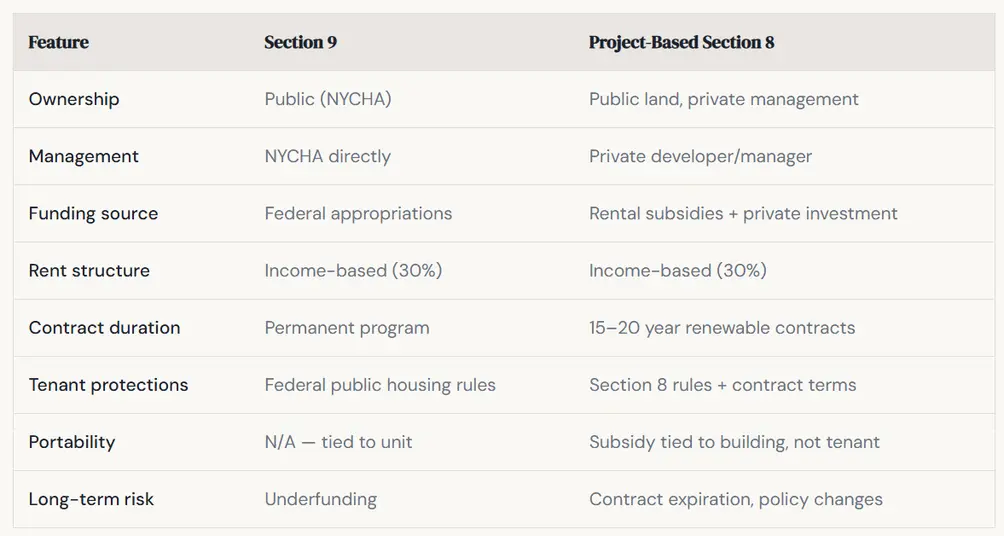 (Fulton Voices) | https://fultonvoices.org/section-8-vs-section-9-nycha
Some opponents are calling for new attention to and funding for the traditional Section 9 public housing program, which keeps private developers out, is funded by the federal government, and offers permanent contracts and tenant protections under federal housing rules. But Human Rights Watch notes that Congress has increased appropriations to subsidize Section 8 private housing while reducing funding under Section 9 since 2000, and that doesn't look likely to change under the current administration.
As such, meaningful changes for NYCHA may be up to the city. Mayor Mamdani's "Block by Block" plan dedicated $5.6 billion over five years, the most in recent history, for the improvement of existing NYCHA campuses, creating new housing and empowering resident through job training and economic mobility programs. This applies to both conventional public housing and those in PACT partnerships.
PACT Projects
Fulton and Elliott-Chelsea Houses, Chelsea
Developed by NYCHA in partnership with Related Companies, and Essence Development
Design by Ismael Leyva Architects
15 buildings | 5,510 total units
Developed by NYCHA in partnership with Related Companies, and Essence Development
Design by Ismael Leyva Architects
15 buildings | 5,510 total units
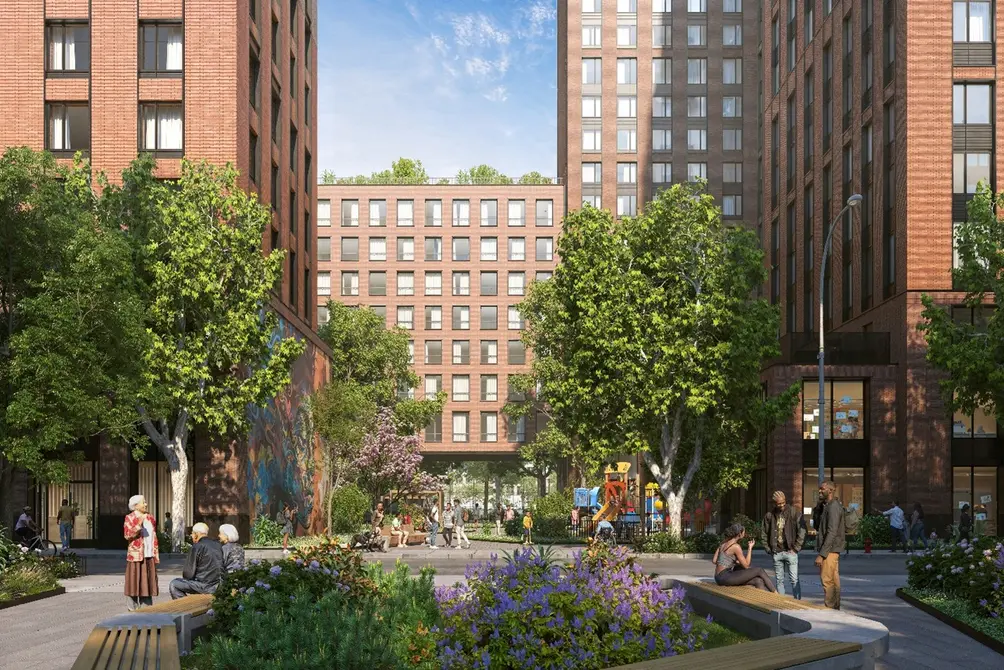 Rendering of Fulton and Elliott-Chelsea Houses (NYCHA)
When the Elliot Houses, the oldest buildings on NYCHA's Chelsea campus, opened in 1947, they were heralded as "landmarks of the New Deal" and praised for their design by William Lescaze, who was involved with NYCHA in its early days. But in present times, they and the neighboring Fulton Houses and Chelsea Houses have reached such a point of disrepair that NYCHA found that reconstruction would cost as much as renovation.
Through the PACT partnership, the new Chelsea campus will feature six high-rise towers for public housing residents, as well as nine new towers containing a total of 1,000 affordable housing units and 2,500 market-rate apartments. All buildings will feature energy-efficient infrastructure, and the apartments will include custom-designed finishes and in-unit laundry. The project will also bring community improvements like a new healthcare facility, a new grocery store, expanded childcare offerings, and new landscaped outdoor space.
The timing of the construction means that The Chelsea Addition, a building dedicated to senior housing, will be one of the first to be demolished, with some protesting their eviction on the grounds that they may not live to see the project completed. But while the holdouts have garnered significant attention, some other residents say that new and improved buildings can't come soon enough in light of issues like heat and hot water outages, elevator outages, and mold. Iindeed, The Architect's Newspaper notes that the majority of residents have moved out.
95 West 119th Street, Harlem
Developed by NYCHA in partnership with Ascendant Neighborhood Development, McCormack Baron Salazar, and Vaya Development
Design by Curtis + Ginsberg Architects LLP (alteration)
7 stories | 46 units
Developed by NYCHA in partnership with Ascendant Neighborhood Development, McCormack Baron Salazar, and Vaya Development
Design by Curtis + Ginsberg Architects LLP (alteration)
7 stories | 46 units
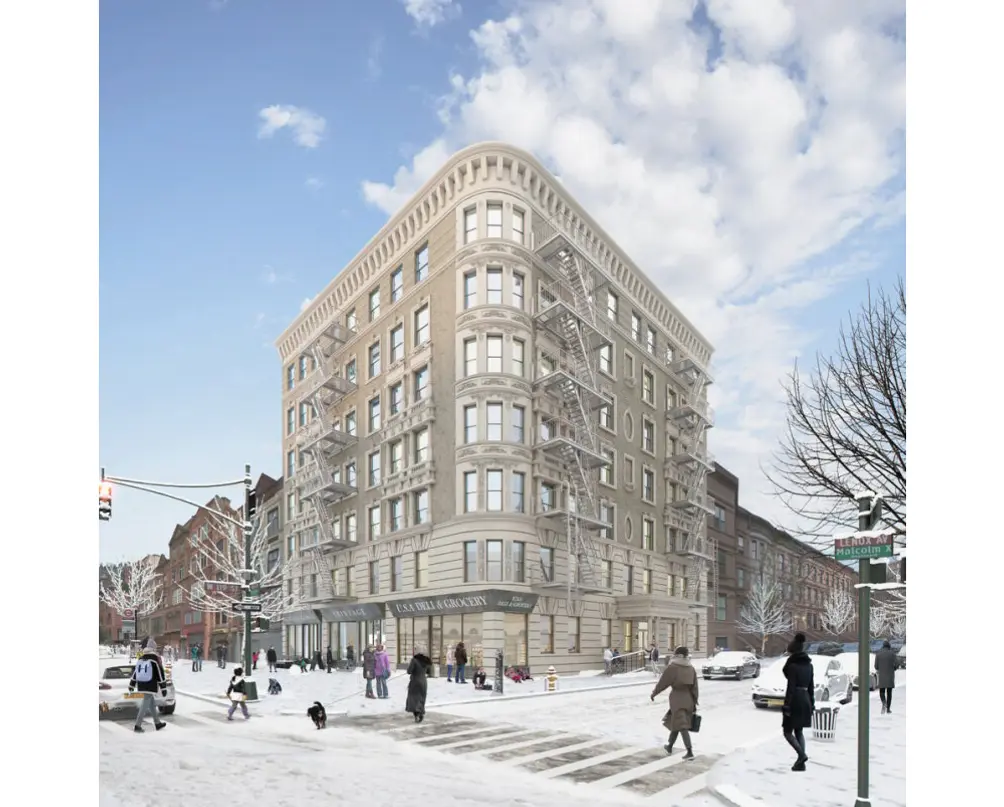 Renderings of 95 West 119th Street (NYCHA)
In December 2025, over $450 million in funding was secured for 10 NYCHA buildings in Harlem that entered PACT partnerships. These included Taft Rehabs, three scattered Harlem sites that include the prewar building at 95 West 119th Street. Work is now underway, and permits filed with the Department of Buildings call for improvements like replacing the roof, repairing original exterior architecture details, updating infrastructure like the boiler and sprinkler systems, and replacing kitchen and bathroom fixtures in all apartments.
Enlarge Image
Enlarge Image
Enlarge Image
Enlarge Image
218 West 112th Street, Harlem
Developed by NYCHA in partnership with Ascendant Neighborhood Development, McCormack Baron Salazar, and Vaya Development
Design by Curtis + Ginsberg Architects LLP (alteration)
7 stories | 42 units
Developed by NYCHA in partnership with Ascendant Neighborhood Development, McCormack Baron Salazar, and Vaya Development
Design by Curtis + Ginsberg Architects LLP (alteration)
7 stories | 42 units
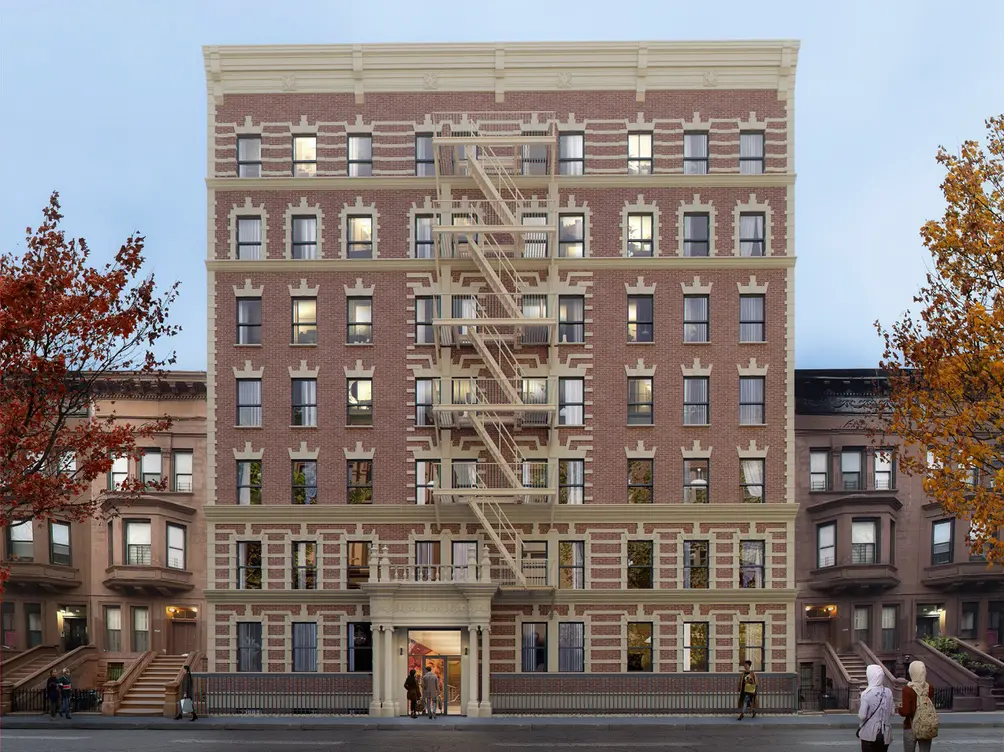 Rendering of 218 West 112th Street (NYCHA)
Another Taft Rehabs building that entered a PACT partnership (see above) is 218 West 112th Street, a prewar building near Central Park. Permits filed with the Department of Buildings call for such improvements as facade work, a new boiler, plumbing repairs, a new sprinkler system, and updating the kitchens and bathrooms in all apartments.
203 West 117th Street, Harlem
Developed by NYCHA in partnership with Ascendant Neighborhood Development, McCormack Baron Salazar, and Vaya Development
Design by Curtis + Ginsberg Architects LLP (alteration)
7 stories | 32 units
Developed by NYCHA in partnership with Ascendant Neighborhood Development, McCormack Baron Salazar, and Vaya Development
Design by Curtis + Ginsberg Architects LLP (alteration)
7 stories | 32 units
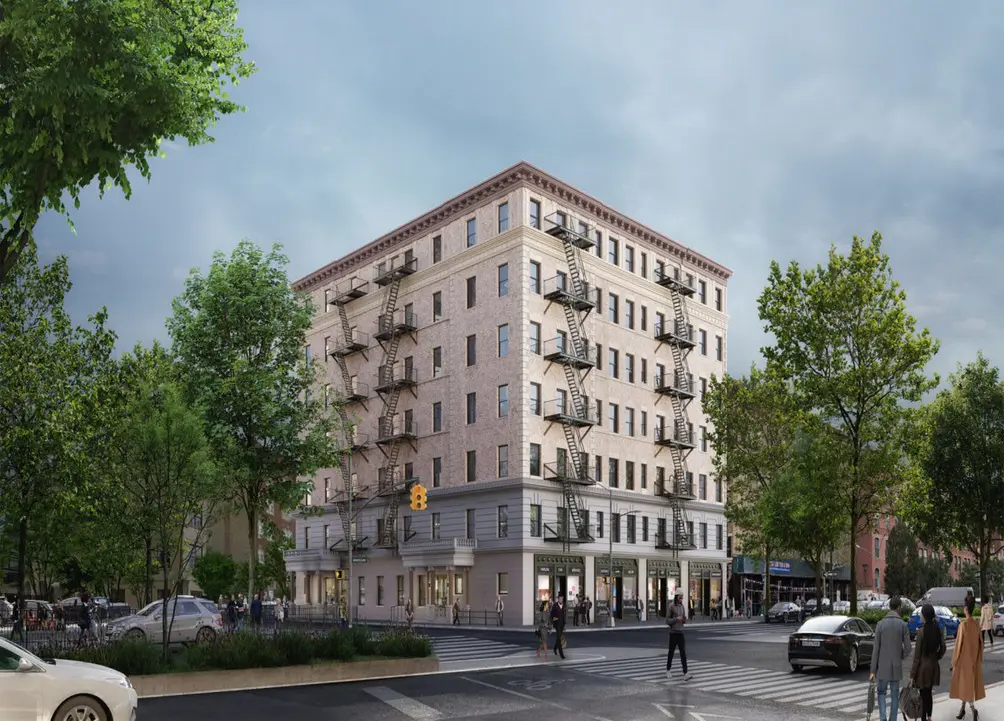 Rendering of 201-203 West 117th Street (NYCHA)
The third lot grouped in Taft Rehabs is the prewar building at 203 West 117th Street. Repairs underway include replacing the roof, installing a new boiler, modernizing the elevator, and updating kitchen and bathroom fixtures in all apartments.
Saint Nicholas Houses, Harlem
Developed by NYCHA in partnership with Saint Nicholas Revitalization Partners and Community Modernization Group
13 buildings | 1,526 units
Developed by NYCHA in partnership with Saint Nicholas Revitalization Partners and Community Modernization Group
13 buildings | 1,526 units
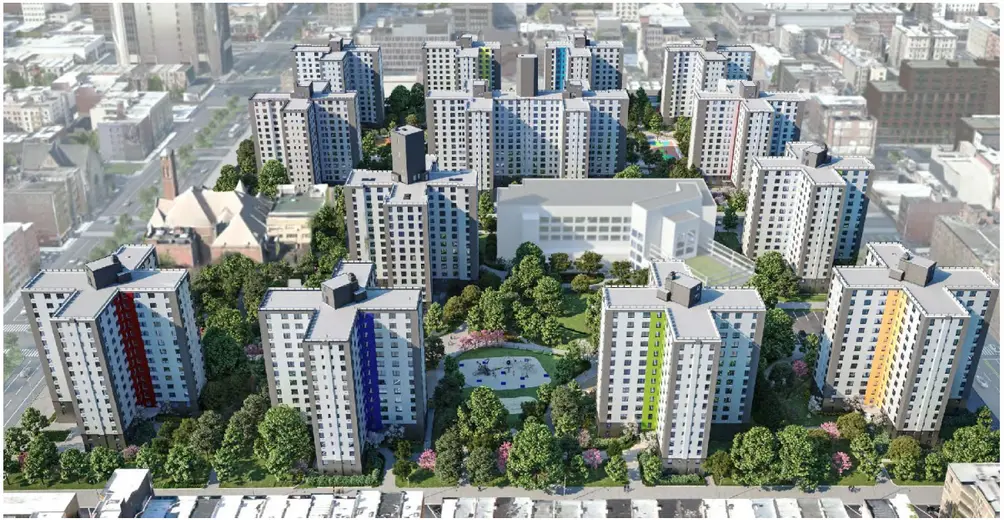 Rendering of Saint Nicholas Houses (NYCHA)
Renovations and modernizations of the sprawling Saint Nicholas Houses complex have been in the works since May 2021, when a City Capital Action Plan was approved, and work was able to begin in earnest after a design-build contract was awarded in March 2024. The developer is a joint venture between Douglaston Development and Bronx Pro Group, and improvements will include removing hazardous materials like lead paint and mold, facade repairs, window replacements, new elevators and plumbing, upgraded electricity and heating, and kitchen and bathroom renovations in all apartments. Major construction began last year, and work is expected to take about four and a half years.
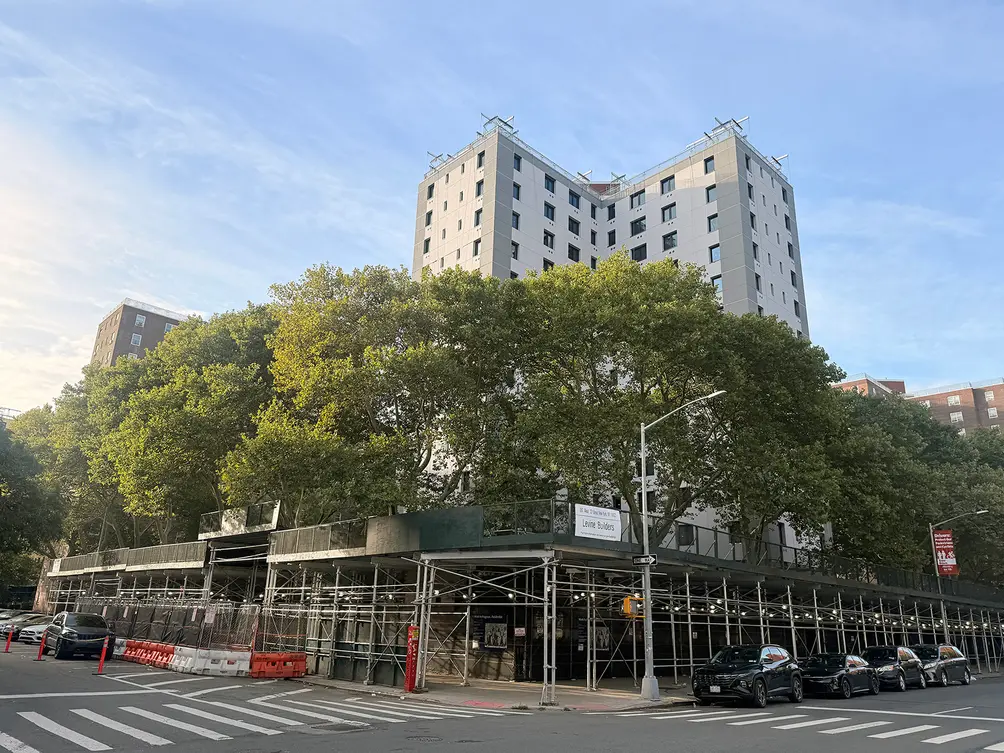 Saint Nicholas Houses construction progress, October 2026 (CityRealty)
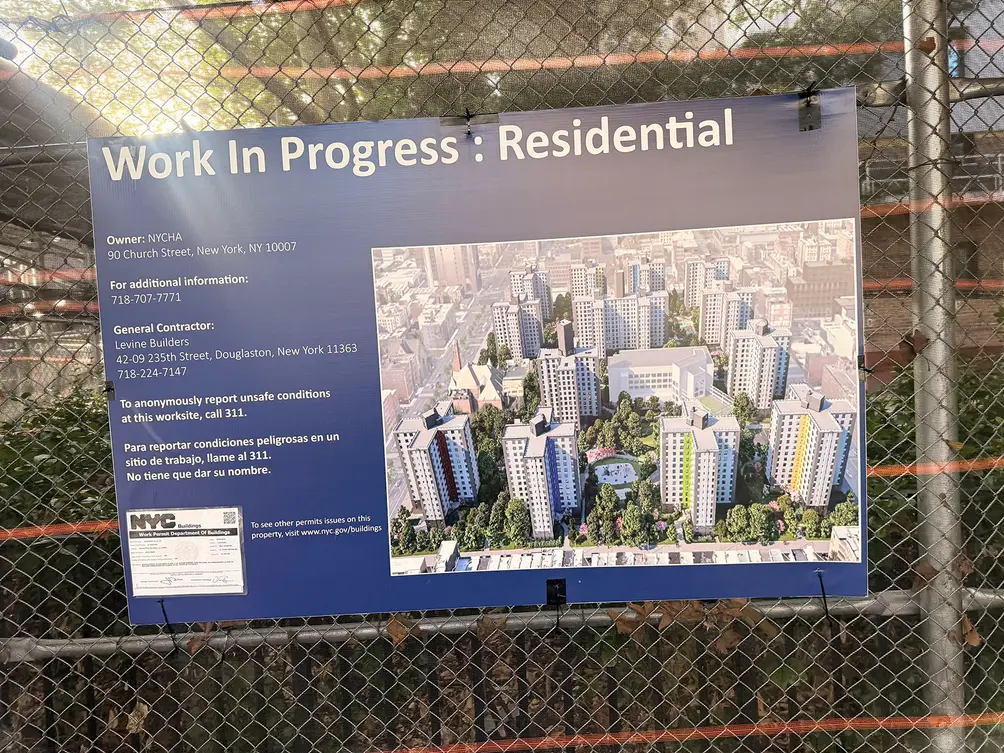
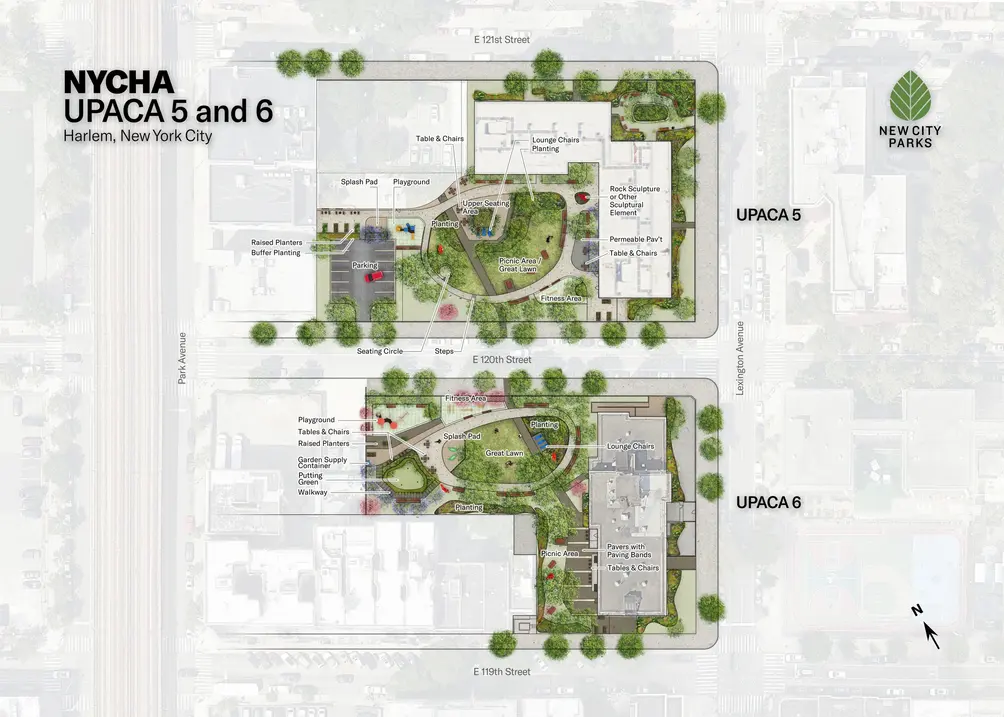 Map of new outdoor space at UPACA 5+6 (New City Parks)
When two senior housing developments built in 1986 by Upper Park Avenue Community Association were selected for PACT partnerships in 2023, community outreach found that outdoor improvements were near the top of residents' wish lists. As a result, the team partnered with New City Parks to create an inviting new campus with green lawns, sitting and fitness areas, raised planters for gardening, and playgrounds with splash pads to accommodate visiting grandchildren. Moreover, not only will newly planted trees and shrubs look pleasant, but they will make the developments more environmentally friendly.
In addition to the new outdoor space, improvements to UPACA 5 + 6 will include facade repairs, new intercom and security systems, infrastructure upgrades, new flooring and windows in apartments, and aging-in-place upgrades for senior residents. Construction of the outdoor space will be done in phases amidst the building renovations, and completion of the entire project is estimated for 2028.
Morris Park Senior Citizens Home, East Harlem
Developed by NYCHA in partnership with Ascendant Neighborhood Development, McCormack Baron Salazar, and Vaya Development
Design by Curtis + Ginsberg Architects LLP (alteration)
9 stories | 97 units
Developed by NYCHA in partnership with Ascendant Neighborhood Development, McCormack Baron Salazar, and Vaya Development
Design by Curtis + Ginsberg Architects LLP (alteration)
9 stories | 97 units
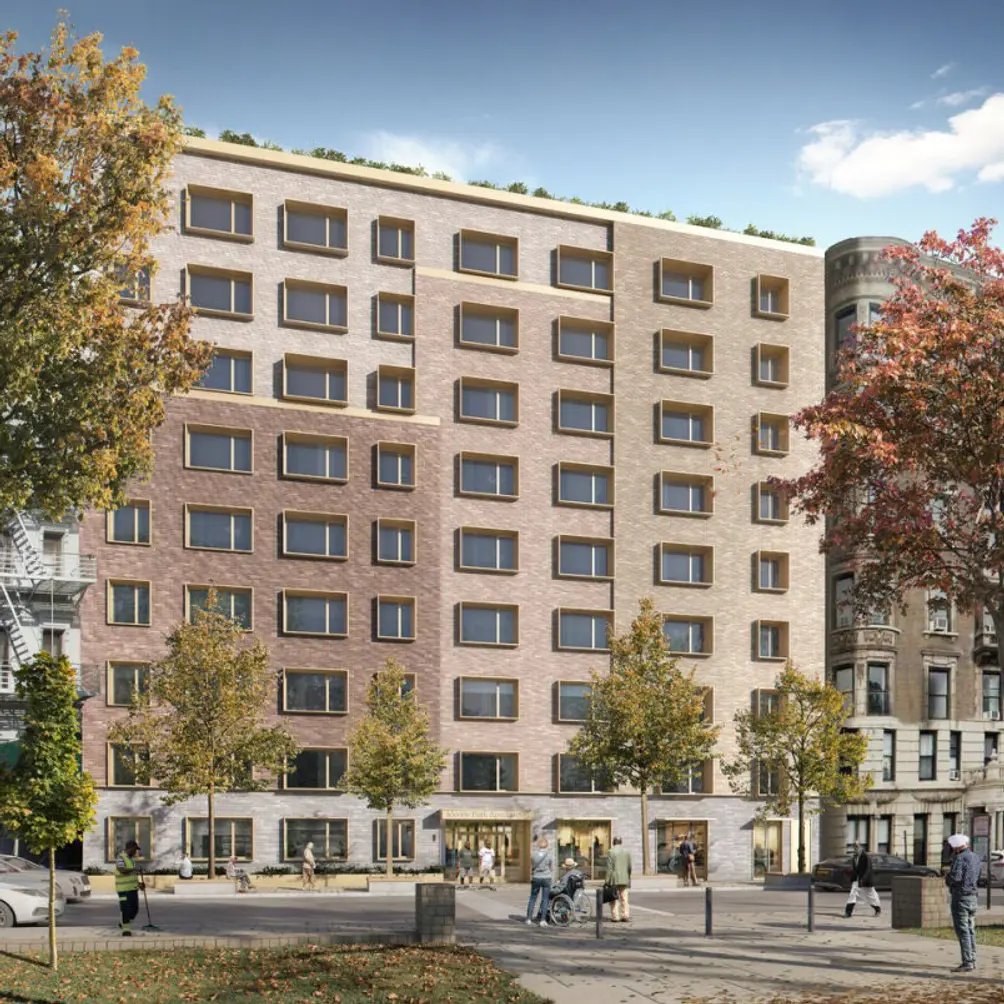 Rendering of Morris Park Senior Citizens Home (NYCHA)
The Morris Park Senior Citizens Home was included in the PACT buildings that secured $453 million in funding in December 2025. Permits filed with the Department of Buildings show that improvements to this building will include electrical service and sprinkler system upgrades, a new boiler, a new door lock monitoring system, and updated fixtures in all kitchens and bathrooms.
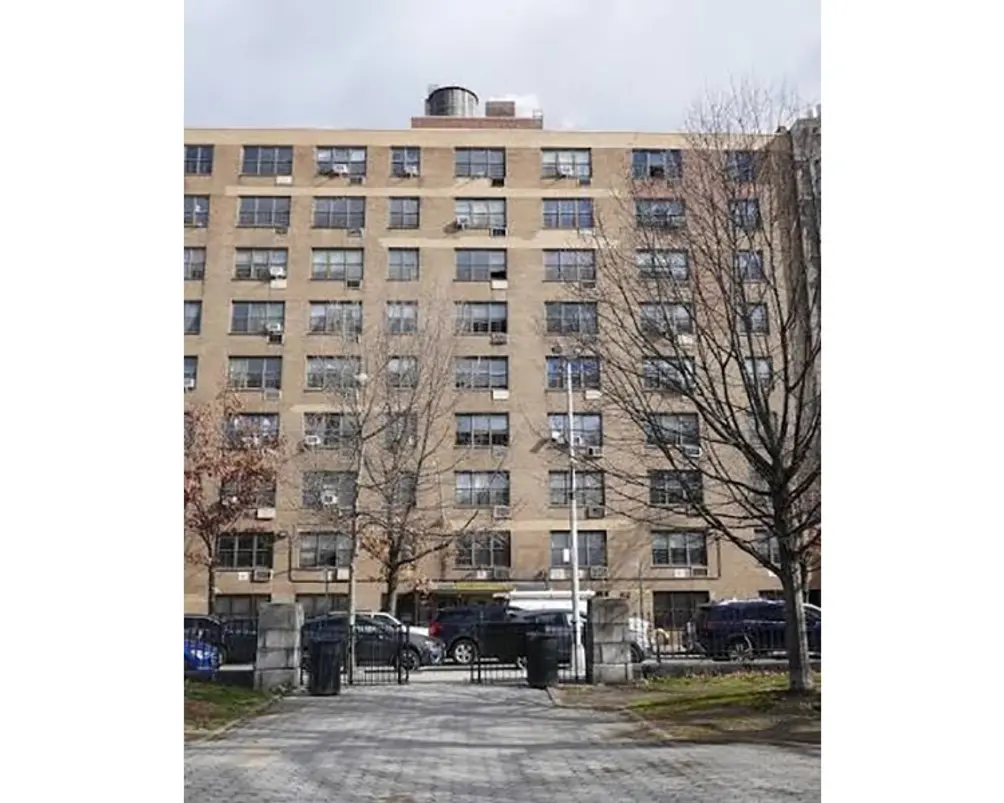 Current conditions at Morris Park Senior Citizens Home
Manhattanville Houses, Harlem
Developed by NYCHA in partnership with Gilbane Development, Apex Building Group, and West Harlem Group Assistance
Design by CTA Architects
6 buildings | 1,272 units
Developed by NYCHA in partnership with Gilbane Development, Apex Building Group, and West Harlem Group Assistance
Design by CTA Architects
6 buildings | 1,272 units
Enlarge Image
Enlarge Image
Enlarge Image
Enlarge Image
As of December 2024, the William Lescaze-designed Manhattanville Houses NYCHA campus is part of a PACT partnership, and work is underway on new upgrades that include new building envelopes, boiler plant and elevator overhauls, new roofs with solar panels on top, landscaped grounds with new playground equipment, and expanded lobbies, new laundry rooms, and new package rooms in all buildings. Apartment improvements will include fresh paint, LED light fixtures, new kitchens and baths, and new windows and doors. Moreover, as Manhattanville was listed on the National Register of Historic Places in 2024, project financing also includes historic tax credits.
Related Articles

Financial District
Best New Financial District Rentals: FIVE amenity-packed buildings in FiDi offering up to 3 months free rent
Sunday, October 25, 2026
Future New York
Fireplaces in NYC homes: The romance, reality and listings to warm up to
Sunday, October 25, 2026
Get To Know
Gallery Gossip Girl: The Extraordinary in the Ordinary +Extraordinary listings with room for an art collection
Saturday, October 24, 2026
Roosevelt Island
Scary Good Listings: Availabilities in haunted NYC properties
Saturday, October 24, 2026
Future New York
12 newly revealed NYC projects include the condo transformation of the MONY Building and 3 new housing lotteries
Friday, October 23, 2026
Future New York
Byron Allen’s $34M 220 CPS buy leads over $420M in Manhattan sales; Siggi’s founder buys in Tribeca, Dick Grasso sells
Wednesday, October 21, 2026
Future New York
Sales launch at RAMSA’s 200 West 88th Street, a rare new Upper West Side condo with palatial layouts
Wednesday, October 21, 2026
Future New York

 6sqft delivers the latest on real estate, architecture, and design, straight from New York City.
