
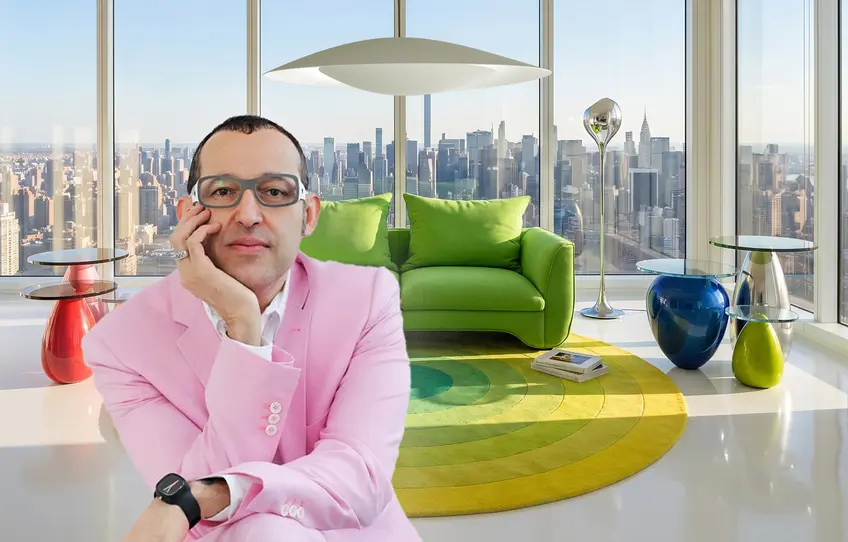
You may not recognize Karim Rashid immediately, but you have almost certainly encountered his work. The Egyptian-born, Canadian-raised designer has more than 4,000 designs in production, 400-plus international awards, and projects realized in over 47 countries, with work held in permanent collections including MoMA and Centre Pompidou.
Rashid has built his career on “designocrasy,” his belief that good design should not be reserved for the elite. His work spans democratic household objects, furniture, lighting, packaging, interiors, hotels, restaurants, and residential projects, with clients ranging from Alessi, Umbra, and Artemide to Veuve Clicquot, Kenzo, Pepsi, and Natuzzi.
For more than 30 years, New York City was part of that story. But after watching the city become more expensive, more corporate, and less hospitable to artists, Rashid left for New Jersey, where he built a home and studio around space, light, privacy, and nature. CityRealty spoke with him about why New York no longer made financial or creative sense, what the city risks losing as artists leave, and why he believes design is not decoration, but “the signature of civilization.”
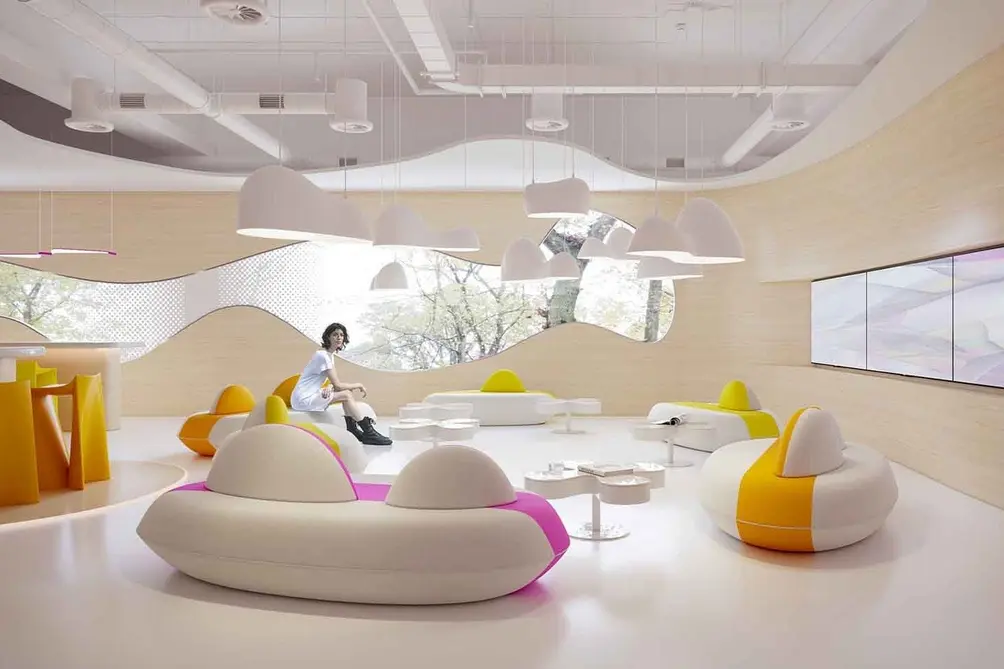 Interior by Karim Rashid | https://www.karimrashid.com/
“Artists are the soul of every city. They create culture long before developers monetize it.”
—Karim Rashid
Michelle Sinclair Colman: After more than 30 years in New York City, was there a specific moment when you realized that staying was no longer financially or creatively sustainable?
Karim Rashid: It wasn’t one defining moment, but a gradual realization. I arrived in New York in 1993 with very little money, just as so many artists, designers, musicians, and entrepreneurs before me had done. The city rewarded ambition, experimentation, and hard work. That was its magic.
By around 2016, I began to feel that New York was no longer essential to my profession. I was traveling constantly, and 98 percent of my work was outside the United States. I realized I didn’t need a New York address to have a global career. At the same time, many of the artists and independent thinkers who had given the city its energy had quietly disappeared. The balance had shifted toward finance, luxury real estate, and corporate interests. I found myself spending more energy sustaining a life in New York than creating meaningful work.
You’ve said the city has become too expensive for creatives. How did rising costs affect both your life and your work?
Karim Rashid: It’s important to clarify that I didn’t leave because I could no longer afford New York. I left because it no longer made financial or creative sense. At one point my studio on West 54th Street employed 25 people. Between salaries, rent, insurance, taxes, and operating costs, the overhead became enormous. I found myself spending more time managing finances than designing. No designer dreams of becoming an accountant for their own studio.
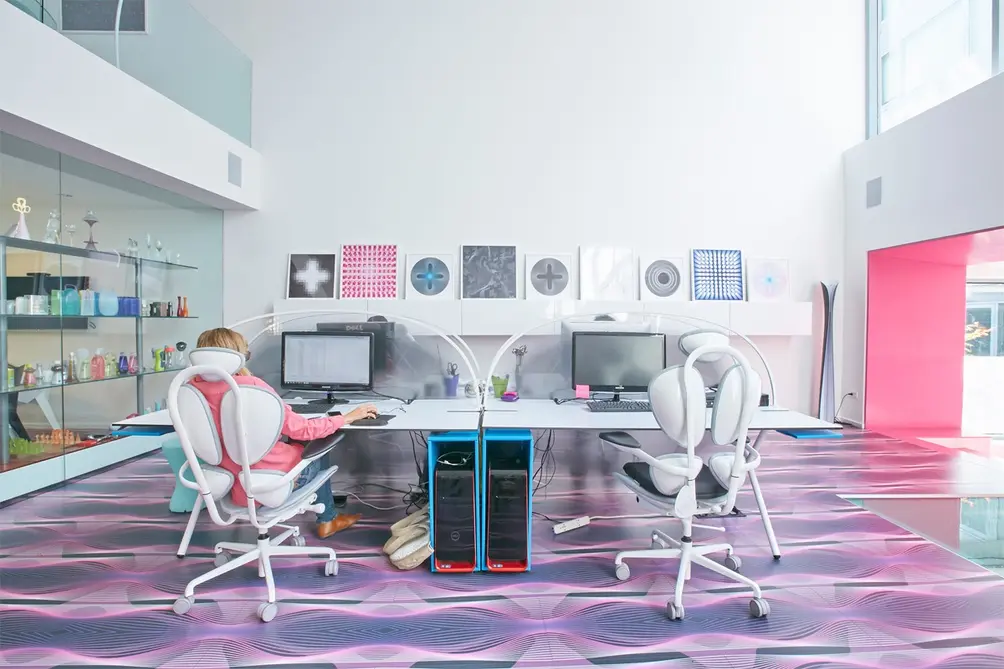 Karim Rashid's studio | https://www.karimrashid.com/overview#studio
“No designer dreams of becoming an accountant for their own studio.”
The same applies to housing. I have never understood why homeowners should continue paying such high property taxes and common charges after purchasing their home. In many countries, a primary residence is exempt from property taxes or taxed far more lightly, while higher taxes are reserved for second homes or investment properties. That makes far more sense to me. Homeownership should provide stability, not become an endless financial burden.
Creativity needs freedom. When so much of your energy is consumed by overhead, bureaucracy, and unnecessary expenses, there is inevitably less room for experimentation, optimism, and innovation.
Beyond affordability, what do you think New York has lost over the past three decades that made it a less attractive place for artists?
Karim Rashid: The greatest loss has been its eclecticism.
The New York I fell in love with was unpredictable. Every neighborhood had its own identity. It was filled with eccentric people, independent galleries, bookstores, music venues, artists, and small businesses. You constantly collided with different ideas and different cultures.
The New York I fell in love with was unpredictable. Every neighborhood had its own identity. It was filled with eccentric people, independent galleries, bookstores, music venues, artists, and small businesses. You constantly collided with different ideas and different cultures.
When I first arrived, there were numerous design galleries, independent furniture stores, and design boutiques. I designed a manhole cover for Con Edison, newspaper boxes for Madison Avenue, and several restaurants. There was a sense that design could improve everyday life and shape the identity of the city.
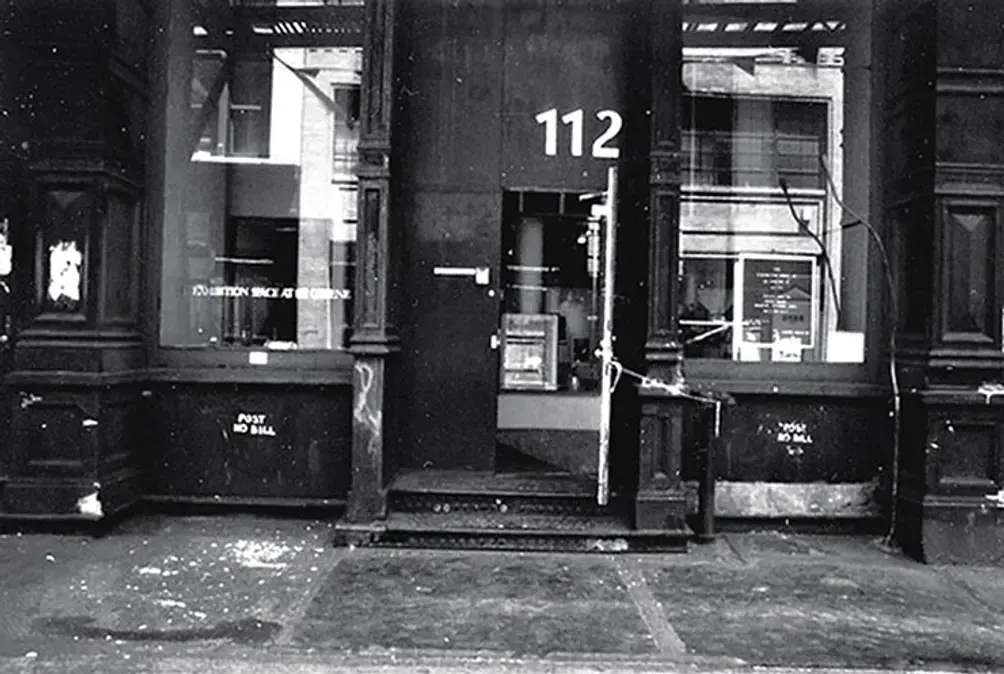 Soho's first artist collective at 112 Greene Street. The space opened in the early 1970s and is today home to a Stella McCartney boutique. Image via Market Fine Arts
Over time, I watched that ambition fade. Corporate chains replaced many independent businesses, and design became less central to the city’s thinking. The city still has extraordinary talent, but it feels increasingly driven by commerce rather than culture.
Ironically, design could have played a major role in addressing many of New York’s challenges. Better transit experiences, better street furniture, more thoughtful public spaces, improved traffic systems, more beautiful infrastructure, better signage, and a more humane urban environment all begin with design. Design is not decoration. It is a methodology for solving problems and improving everyday life.
Where did you decide to move, and what made that place the right fit for this next chapter of your life and career?
Karim Rashid: I moved to New Jersey, just outside Manhattan.
Ironically, I can reach Midtown in less than thirty minutes, but my daily life is completely different. I built a home and studio designed around my own philosophy, with space, light, privacy, and nature. Instead of adapting to the city, I designed an environment that supports creativity, wellbeing, and daily life.
Ironically, I can reach Midtown in less than thirty minutes, but my daily life is completely different. I built a home and studio designed around my own philosophy, with space, light, privacy, and nature. Instead of adapting to the city, I designed an environment that supports creativity, wellbeing, and daily life.
What does your new community offer that New York no longer can, whether that’s affordability, creative opportunities, quality of life, or something else?
Karim Rashid: The greatest luxury today is time.
I have more space, lower daily stress, easier access to nature, and fewer distractions. I spend less time commuting, managing buildings, or worrying about unnecessary expenses, and more time actually designing.
Creativity doesn’t require chaos. It flourishes when you have clarity, balance, and room to think.
I have more space, lower daily stress, easier access to nature, and fewer distractions. I spend less time commuting, managing buildings, or worrying about unnecessary expenses, and more time actually designing.
Creativity doesn’t require chaos. It flourishes when you have clarity, balance, and room to think.
Do you see other artists making similar moves? Are there particular cities or regions emerging as new creative hubs?
Karim Rashid: Absolutely. Technology has liberated creativity from geography. Young designers can collaborate globally from almost anywhere. Many are choosing cities where they can afford larger studios, enjoy a better quality of life, and still remain connected to the world.
Creativity is becoming decentralized, and I think that’s healthy. Great ideas are no longer confined to a handful of global capitals.
What do you think New York stands to lose if more artists continue to relocate elsewhere?
Karim Rashid: Artists are the soul of every city. They create culture long before developers monetize it.
If enough artists leave, New York risks becoming a city that consumes culture instead of producing it. Financial success alone does not make a great city. Great cities are defined by experimentation, diversity, curiosity, and imagination. Without creatives, cities become efficient, but less inspiring.
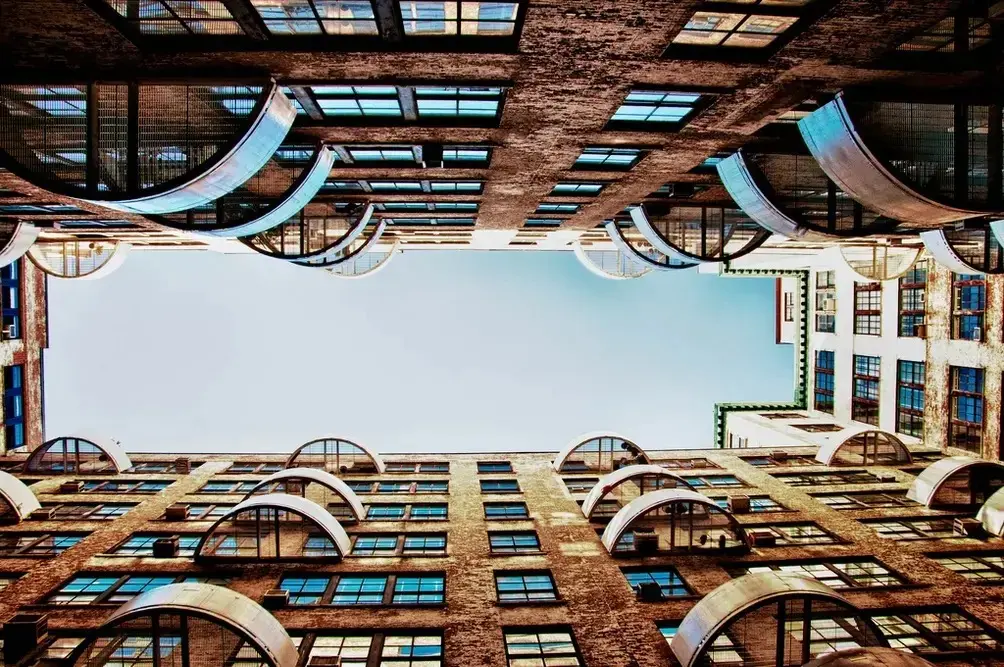 Westbeth in the West Village | Photo Credit: Jorge Quinteros' Flickr Photostream
If a young artist asked you today whether they should move to New York to build a career, what would you tell them?
Karim Rashid: I would tell them that New York can still be an extraordinary place to experience museums, galleries, architecture, people, and culture.
But I would also tell them not to believe that success depends on having a New York address.
When I arrived, geography mattered. Today your work can reach the world from almost anywhere.
Choose the place that gives you the greatest freedom to create, not the place with the most expensive ZIP code.
What could the city do to reverse this trend?
Karim Rashid: New York needs to remember that artists are not a luxury. They are essential infrastructure.
The city should create more affordable live-work spaces, protect independent businesses, encourage local manufacturing, support artist residencies, and provide meaningful tax incentives for creative industries. It should also rethink how housing is taxed. Homeownership should be encouraged, not continually penalized through escalating property taxes.
Most importantly, New York should embrace design as a strategic tool for shaping the future of the city. Design should be integrated into government at every level. Great industrial design, architecture, landscape architecture, wayfinding, mobility design, lighting, and public furniture can improve transportation, sanitation, accessibility, parks, and the overall urban experience. New York has some of the greatest creative minds in the world, yet it rarely asks them to help solve its biggest challenges.
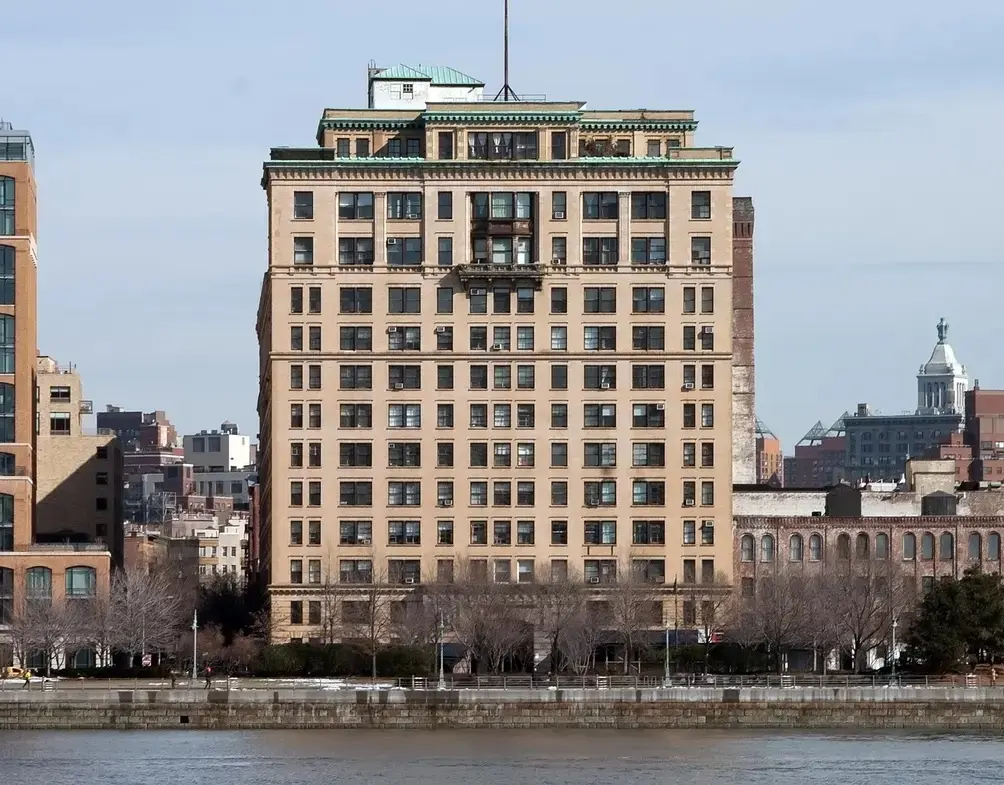 Westbeth Artist Community at 55 Bethune Street in the West Village
More broadly, America needs to rediscover its design culture. During the middle of the twentieth century, the United States produced some of the world’s most influential architects, industrial designers, and visionaries. Design was understood as a driver of innovation and progress.
Today, design is too often reduced to styling or marketing instead of being recognized as a methodology for improving products, businesses, infrastructure, cities, and everyday life. My own career reflects this reality. Nearly all of my work has been international because many countries place greater value on design as a strategic cultural and economic asset.
Design is not decoration. Design is the signature of civilization. If New York once again embraces design as a force for innovation and human progress, it can become one of the world’s great creative capitals again.
"Design is not decoration. Design is the signature of civilization.”
Related Articles
Get To Know
Where to find salvaged architectural materials around NYC + 21 homes with character on the market now
Tuesday, July 28, 2026
Future New York
Views, Light, and Value: A Q&A with Kayla Lee on what today’s NYC buyers really want
Friday, July 24, 2026
Get To Know
What to know about Legionnaires' disease and NYC's cooling towers
Friday, July 24, 2026
Get To Know
Selling a home in NYC? Everything you need to know about capital gains taxes
Wednesday, July 22, 2026
Future New York
NYC apartments with on-site parking from $350K as new Empire Bins to claim curb space
Tuesday, July 21, 2026
Get To Know
Steals & Deals from $345K: Listings with "Motivated Sellers" or "Priced to Sell"
Friday, July 17, 2026
Get To Know
Could free childcare make New York more family-friendly again? + New affordable housing lottos with family-sized units
Thursday, July 16, 2026
Great Listings
How Big Is It Really? Vickey Barron on why layout matters more than square footage
Thursday, July 16, 2026
Contributing Writer
Michelle Sinclair Colman
Michelle writes children's books and also writes articles about architecture, design and real estate. Those two passions came together in Michelle's first children's book, "Urban Babies Wear Black." Michelle has a Master's degree in Sociology from the University of Minnesota and a Master's degree in the Cities Program from the London School of Economics.

 6sqft delivers the latest on real estate, architecture, and design, straight from New York City.
