
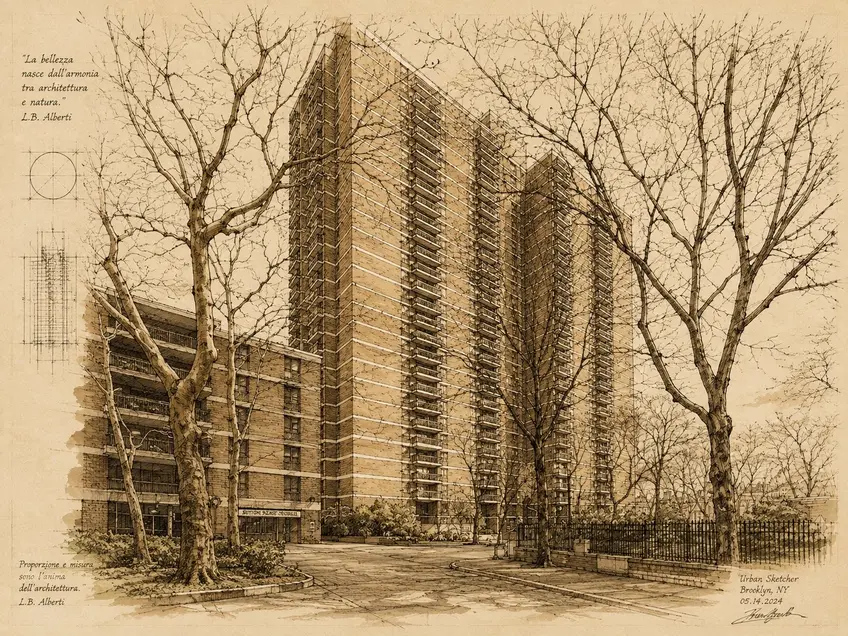
After years of anticipation and an unsuccessful court challenge, Local Law 97, which aims to reduce carbon emissions from local properties, is now in its first enforcement period, but that doesn’t mean that the fight to amend the law is over. Last week, a group of co-op leaders and residents gathered at Southbridge Towers in Lower Manhattan to demand that city lawmakers amend Local Law 97 before its more stringent carbon emissions threshold takes effect in 2030. Their reasons for continuing to fight Local Law 97 have less to do with opposition to the law itself and everything to do with the cost of implementing the law.
In this article:





Why some New Yorkers continue to fight Local Law 97
Last week's rally was organized by Co-ops and Condos United of New York (CCU), a coalition launched earlier this year to represent the interests of New York’s more than one million co-op and condo residents. To be clear, CCU is not seeking to eliminate the city’s climate goals. Instead, the organization is calling for changes to the law’s implementation schedule and penalties. They are also asking for additional protections for owner-occupied co-ops and condos, especially those with large populations of seniors and residents living on fixed incomes.
Jane Menton, CCU’s legislative director, emphasized that the recent rallies are strong evidence of growing solidarity among local residents. “The momentum we’re building across the City shows the importance of our political priorities,” she said. Still, the impetus for the recent rallies reflects broader concerns about the cost of owning in New York, particularly as increasingly stringent facade repair requirements and Local Law 97 upgrades lead to hefty assessments and, in some cases, permanently increased co-op and condo fees.
Why Southbridge Towers has become a rallying point
Would you like to tour any of these properties?
Just complete the info below.
Or call us at (212) 755-5544
 Southbridge Towers | https://www.southbridgetowers.com/
It is no coincidence that CCU’s most recent rally took place at Southbridge Towers. The nine-building, 1,651-unit complex in Lower Manhattan was originally developed under the Mitchell-Lama program, but in 2015, Southbridge converted into a private co-operative. Although Southbridge apartments can now be sold as market-rate apartments, the complex is still home to many longtime residents from the Mitchell-Lama era, and strives to keep its monthly charges for heat, electricity, gas, and water and other costs as low as possible.
As Southbridge Towers board secretary Charles Chawalko explained, “Local Law 97 poses an existential threat to our community: the costs of optimization and retrofitting will easily outweigh all the other financial challenges we have faced in the past decade.” Chawalko warned that, depending on how the co-op proceeds, this could negatively affect the co-op and/or the personal finances of the shareholders, including retirees living on fixed incomes.
Southbridge Towers isn’t the only NYC co-op concerned about the rising cost of meeting Local Law 97 requirements. Charles Herzog, president of the board at Sunnyside co-op Celtic Park, which has already invested in several environmental upgrades, including solar panels, has also expressed concern about the long-term impact of coming into compliance with Local Law 97. As he explained, his co-op is now facing a huge financial burden, “Despite decades of proactive investments in green, modern upgrades.”
So how much could Local Law 97 cost some local co-op or condo owners? According to a recent study by the Council of New York Co-operatives & Condominiums, coming into compliance with Local Law 97 could result in additional costs of more than $90,000 per family in some smaller residential buildings between now and 2030.
The ongoing challenge of implementing Local Law 97
As the Southbridge Towers case reveals, while some co-ops and condos may be well-positioned to cover any upgrades needed to meet the city’s increasingly stringent carbon emissions thresholds, for some buildings, coming into compliance will deplete the building’s reserves and could put individual residents at financial risk as well. But should the city foot the bill for residential buildings unable to cover Local Law 97 upgrades, and if so, is it fair if the city only foots the bill for some but not all buildings?
Only time will tell if the new administration finds a way to amend the Local Law 97 timeline or come up with additional money to support co-ops and condos that are struggling to comply. Still, with both groups like the CCU and Council of New York Co-operatives & Condominiums drawing attention to the challenges, there is growing hope the city will work to strike a compromise with co-op and condo owners.
For buyers, the renewed debate over Local Law 97 is worth watching. If a potential buyer is looking to purchase a unit in an older co-op or condo that will likely need upgrades to meet Local Law 97 targets, they are strongly advised to investigate the impact on the building’s finances and co-op or condo fees before putting in an offer.
Related Articles

Financial District
As CityPicklePalooza takes over Times Square, see NYC buildings with pickleball and padel courts
Wednesday, August 26, 2026
Get To Know
Maintenance Fees 101 + NYC co-ops with rock-bottom monthlies under $1,000/month
Monday, August 10, 2026
Get To Know
NYC Co-ops vs. Condos: What you save, what you give up
Tuesday, October 6, 2026
Get To Know
Five ways to make buying in NYC affordable + NYC listings under $1 million
Monday, October 5, 2026
Get To Know
Who is responsible for pest control in NYC rentals, co-ops, and condos?
Monday, October 5, 2026
Get To Know
Gallery Gossip Girl: Think outside the box
Saturday, October 3, 2026
Get To Know
Dramatic NYC apartments for sale with sunken living rooms from $369K
Friday, September 25, 2026
Coney Island
As Manhattan rental vacancy rate hits post-pandemic low, see new housing lottos + 10 upcoming projects with affordable apartments
Wednesday, September 23, 2026
Contributing Writer
Cait Etherington
Cait Etherington has over twenty years of experience working as a journalist and communications consultant. Her articles and reviews have been published in newspapers and magazines across the United States and internationally. An experienced financial writer, Cait is committed to exposing the human side of stories about contemporary business, banking and workplace relations. She also enjoys writing about trends, lifestyles and real estate in New York City where she lives with her family in a cozy apartment on the twentieth floor of a Manhattan high rise.

 6sqft delivers the latest on real estate, architecture, and design, straight from New York City.
