- Apartments
- Overview & Photos
- Maps
- Building Specialists
- Floorplans
- Sales Data & Comps
- Similar Buildings
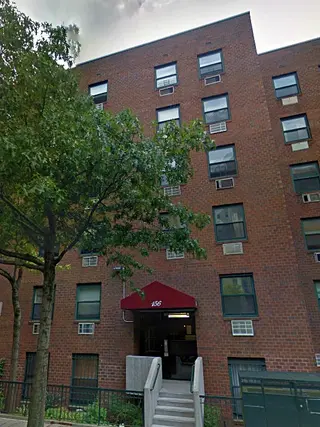
West Village Houses is a 42-building low-rise complex in Manhattan's Far West Village, completed in 1974 and converted to cooperative ownership in 2006. Originally built under the Mitchell-Lama program, the development's location has become highly desirable due to nearby Hudson River Park and redevelopment in the area.

West Village Houses is a cooperative complex comprising 42 low-rise buildings located between Bank and Morton Streets and Washington and West Streets in the Far West Village. Originally designed by Perkins & Will and completed in 1974 under the Mitchell-Lama housing subsidy program, the complex underwent a cooperative conversion in 2006. The development, which features numerous gardens, was initially a focal point of contention regarding urban development in Greenwich Village, as noted by Elliot Willensky and Norval White in their architectural guide.
Over the years, the area has transformed into one of the most sought-after neighborhoods in New York City, largely due to the nearby Hudson River Park and the revitalization of the Far West Village and Chelsea. The buildings are characterized by their plain brown façades and fire escapes, offering a unique historical charm amidst modern urban living.
Residences within West Village Houses are known for their spacious layouts and modern renovations. Common features include updated kitchens with stainless steel appliances, luxurious bathrooms with radiant heated marble floors, and generous closet space. Many apartments also boast large windows that provide ample natural light, enhancing the serene atmosphere of the community. The cooperative offers shared green spaces, bike storage, and a welcoming community vibe, making it an attractive option for potential residents.
Notably, the complex has been home to various celebrities, adding to its allure. The cooperative's pet-friendly policy and on-site management further enhance its appeal, making it a desirable choice for those seeking a blend of historic charm and contemporary living in the heart of the West Village.
 West Village Houses
West Village Houses
West Village Houses
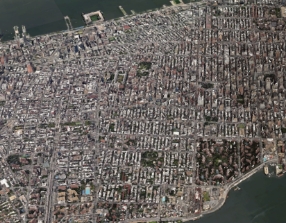
View school info, local attractions, transportation options & more.
Experience amazing 3D aerial maps and fly throughs.
For some co-ops, instead of price per square foot, we use an estimate of the number of rooms for each sold apartment to chart price changes over time. This is because many co-op listings do not include square footage information, and this makes it challenging to calculate accurate square-foot averages.
By displaying the price per estimated room count, we are able to provide a more reliable and consistent metric for comparing sales in the building. While we hope that this gives you a clearer sense of price trends in the building, all data should be independently verified. All data provided are only estimates and should not be used to make any purchase or sale decision.

 6sqft delivers the latest on real estate, architecture, and design, straight from New York City.
Like us on Facebook to keep up with the trends and
6sqft delivers the latest on real estate, architecture, and design, straight from New York City.
Like us on Facebook to keep up with the trends and 