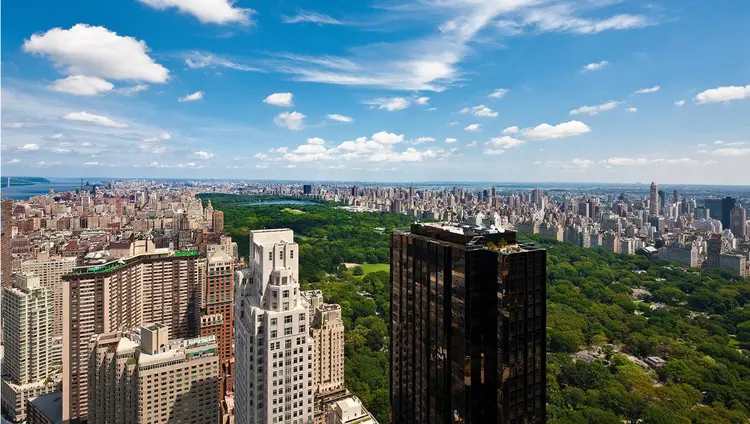
Time Warner Center

80 Columbus Circle (Between West 58th Street & West 59th Street)
PRICING INFORMATION FOR Time Warner Center
Four Bedrooms from $42,500,000 (updated February 3, 2012)

FOR MORE INFORMATION ABOUT Time Warner Center
Contact us about buying or selling an apartment in Time Warner Center .
Email Us OR Call (212) 755-5544


Time Warner Center - 80 Columbus Circle: CARTER'S REVIEW


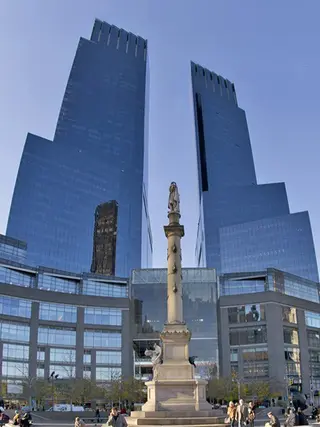
The Time Warner Center, a very large, twin-towered, mixed-use building, is the anchor to the southwest corner of Central Park and it dominates Columbus Circle.

The complex, which extends from 58th to 60th streets, consists of 198 residential condominium apartments, offices, a Mandarin Oriental hotel, a jazz facility for the Lincoln Center for the Performing Arts, which is located a few blocks up Broadway, CNN TV studios, and substantial retail spaces.

It was completed in 2004 after a very protracted controversy over the development of such a major site at the western terminus of Central Park South.

The highly visible site incurred a tremendous amount of criticism as plans changed over the years and its design history is convoluted and mind-boggling.

As developed by the Related Cos., this 750-foot-high project is a major midtown landmark and its famous luxury restaurants on its fourth floor and the enormous Whole Foods store in its basement make it a major destination for many New Yorkers.

Bottom line

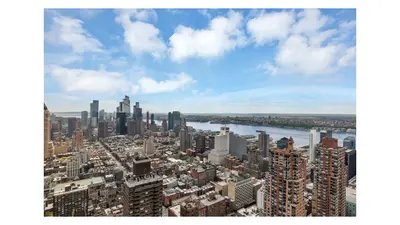
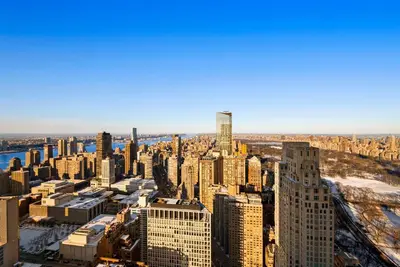
This sleek, stunning and stupendous project is hard to resist: fabulous vistas; the city’s best grocery; great restaurants; prestigious commercial tenants; a very luxurious hotel; a lot of luxury stores; and great transportation. The Time Warner Center is one of the city’s top buildings and has attracted numerous celebrities.

Description

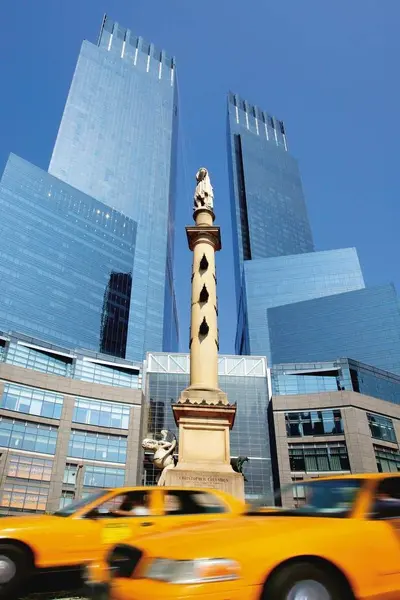
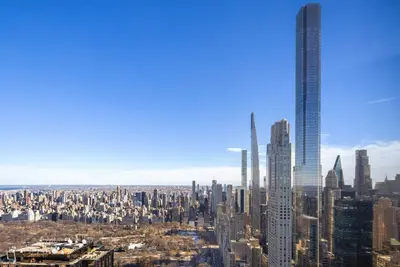
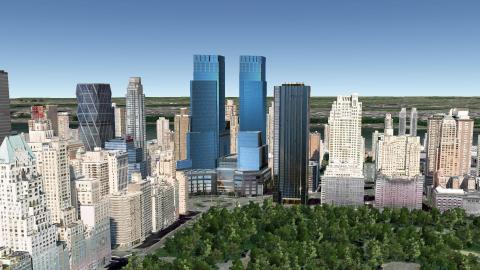
The Time Warner Center consists of two large towers rising over a curved, low-rise base with a four-story glass wall overlooking Columbus Circle and Central Park South.

The broad separation between the towers and their height give this gigantic development very nice proportions and the massing of the towers is more complex than initially apparent.

The southern end of the base has a "light" sculpture that extends fully to Eighth Avenue at 58th Street and is over an important subway station at Columbus Circle.

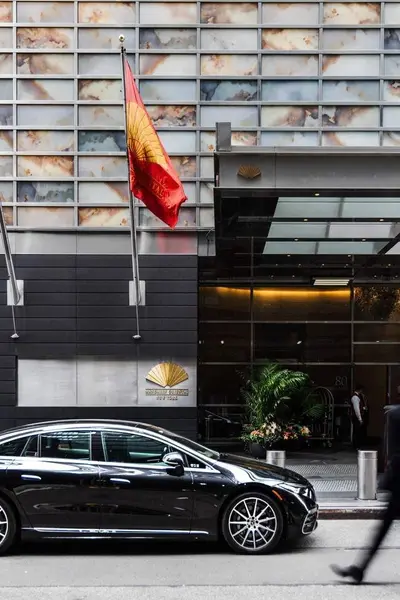
The complex extends about half way to Ninth Avenue with the main office entrance midblock on 58th Street and the main hotel entrance midblock on 60th Street.

Its main retail atrium faces Columbus Circle and has escalators down to the sprawling Whole Foods store, that instantly gained a reputation as the finest grocery in the city when it opened, and the atrium has a broad "spine" whose curve mirrors closely that of Columbus Circle.

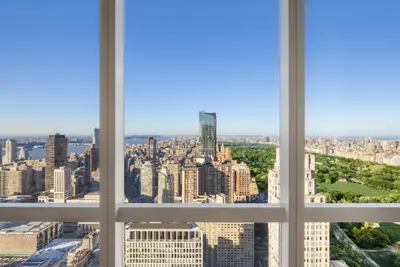
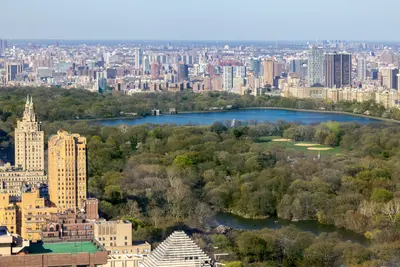
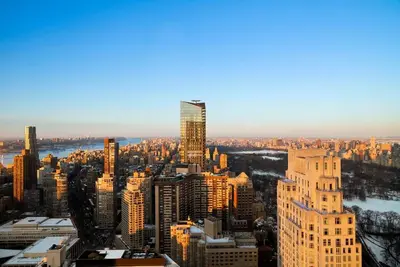
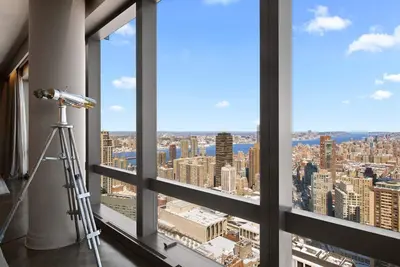
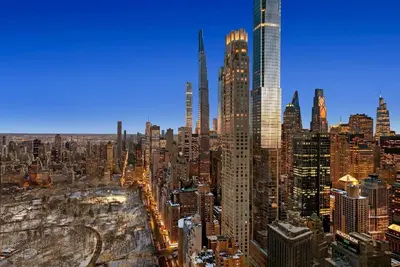
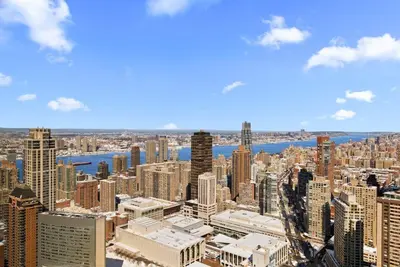
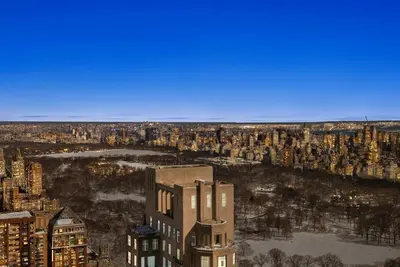
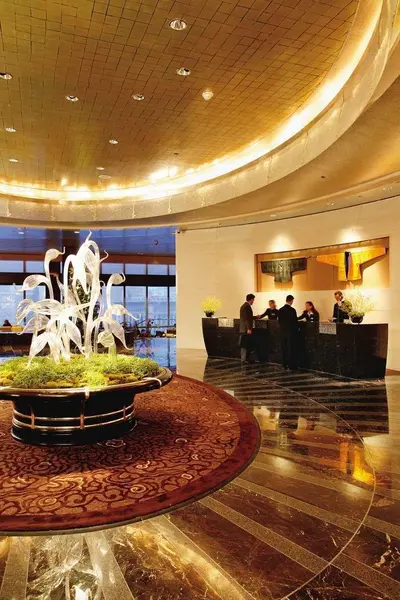
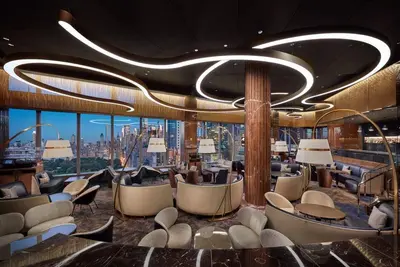
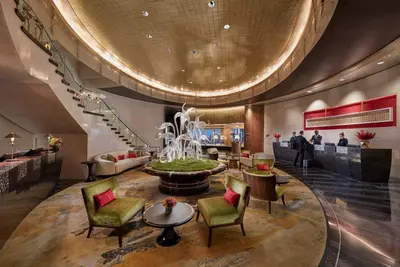
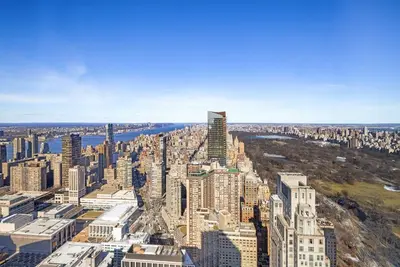
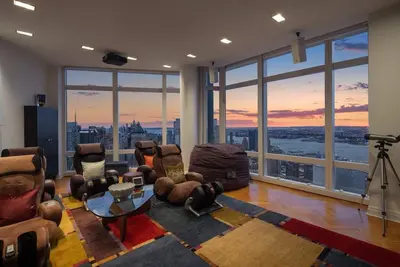
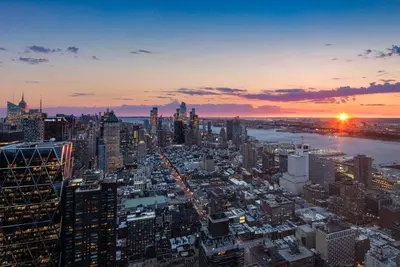
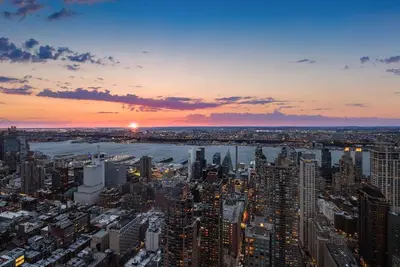
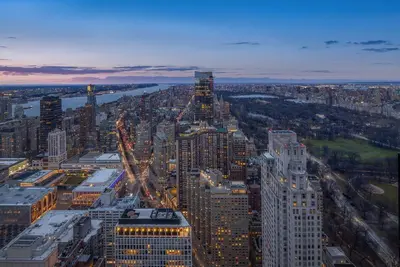
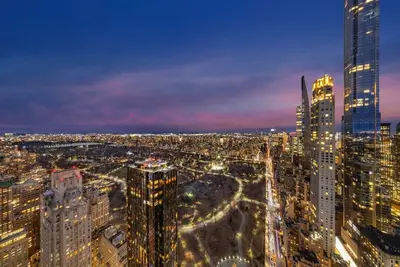
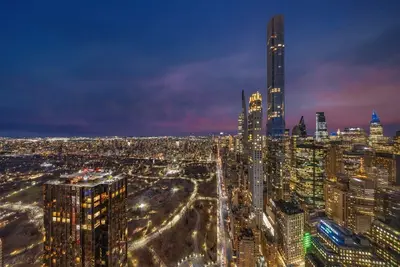
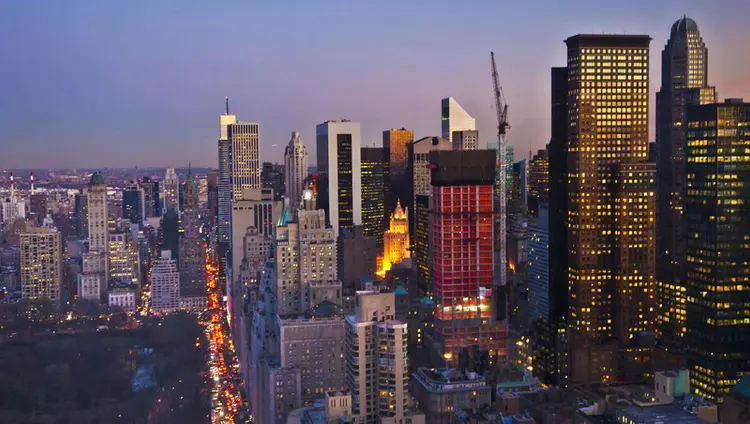
The restaurants on the fourth floor as well as the very large cocktail lounge in the 35th floor lobby in the north tower of the Mandarin Oriental Hotel command dazzling views of Central Park and the midtown skyline as does the jazz concert hall atop the atrium.

The project’s apartments occupy the top of the towers and tops of the towers are illuminated at night with quite tall vertical elements. The apartments in the south tower have a One Central Park address and those in the north tower are The Residences at the Mandarin Oriental.

The towers appear to be almost identical from some angles but are a bit dissimilar because of their site along the Broadway corridor.

Furthermore, they are considerably more complex in their massing than is initially apparent as they have large but thin slab protrusions facing eastward.

The facades are reflective glass.

Amenities

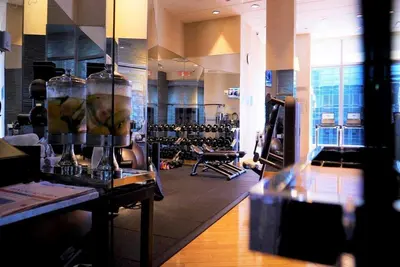
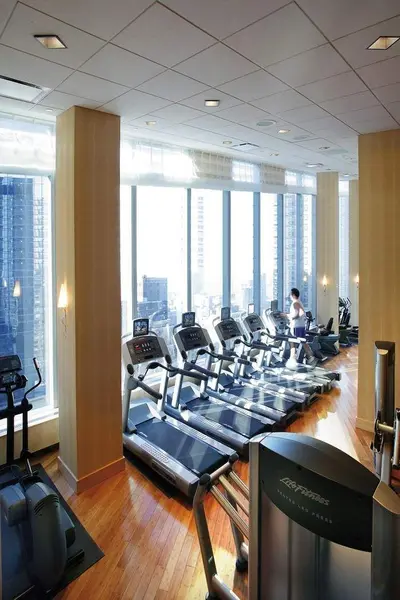
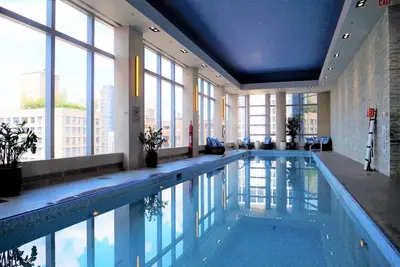
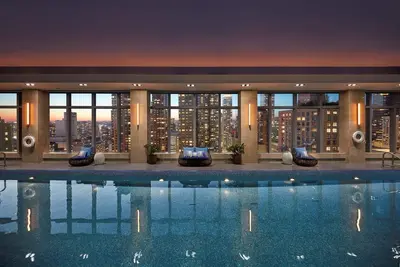
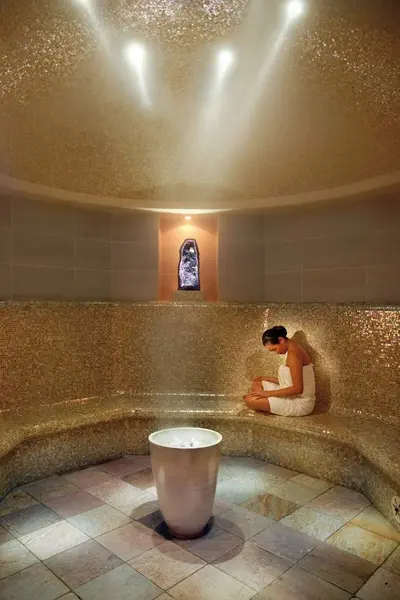
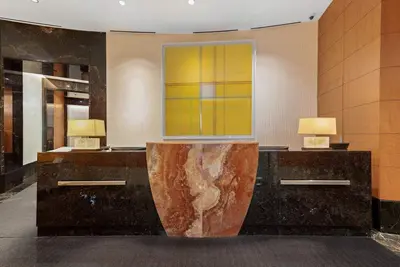
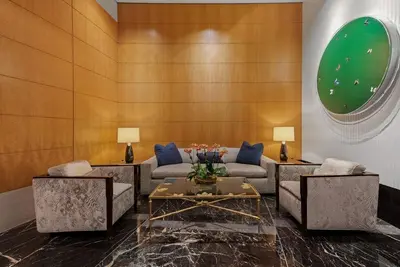
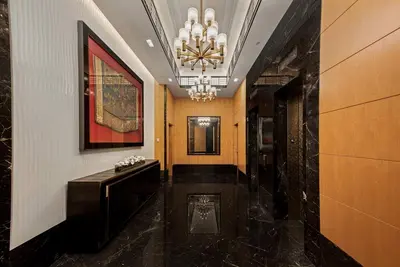
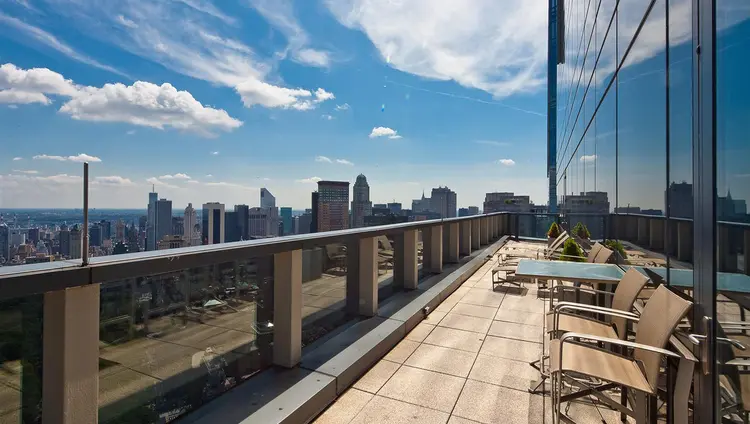
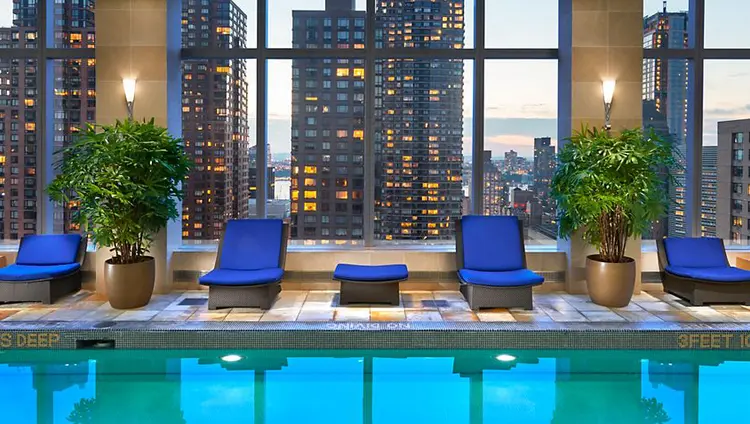
The building has doormen, concierges, a garage, a children’s playroom, roof decks, a screening room and access to the Mandarin Oriental Hotel’s 75-foot, glass-enclosed swimming pool and the hotel’s spa, maid service, storage, valet service, roof decks, and screening room.

Apartments

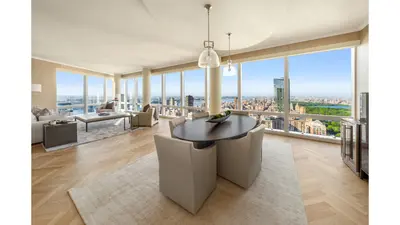
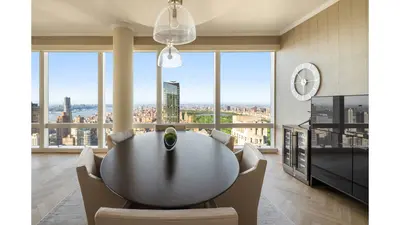
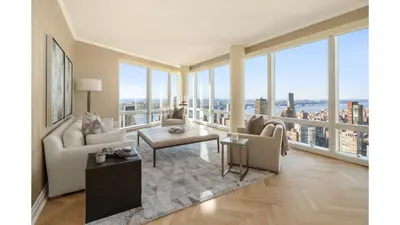
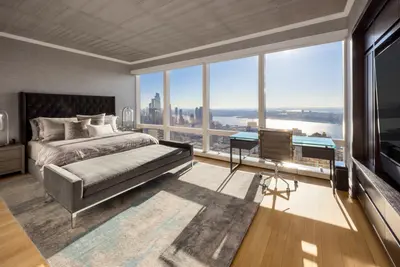
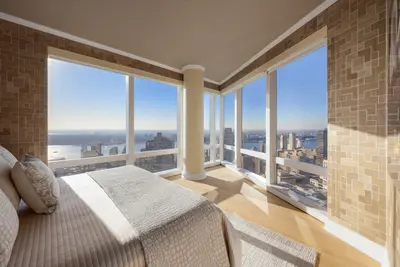
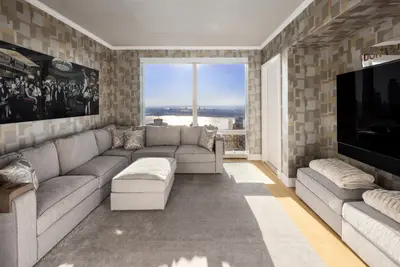
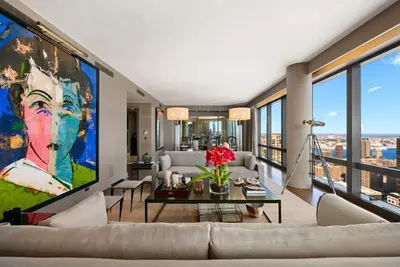
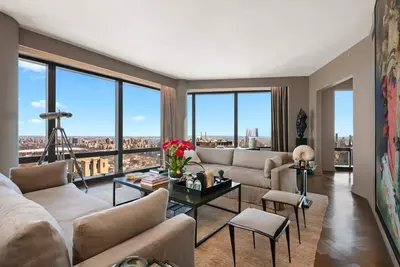
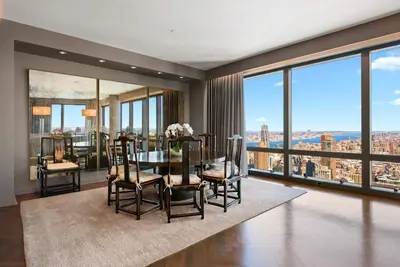
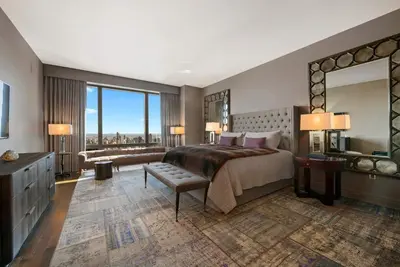
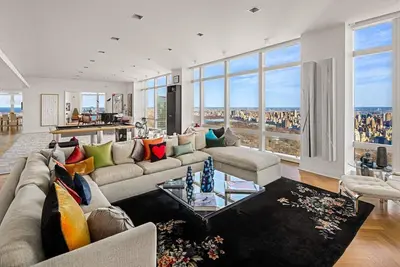
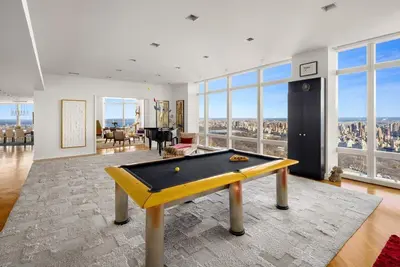
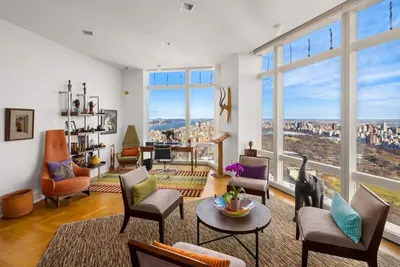
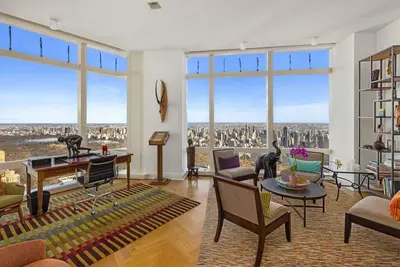
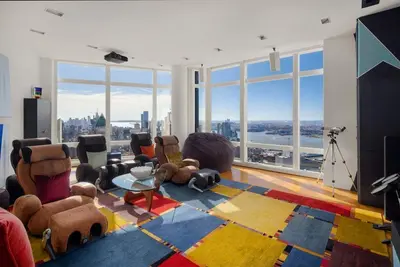
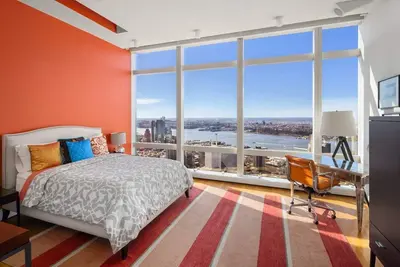
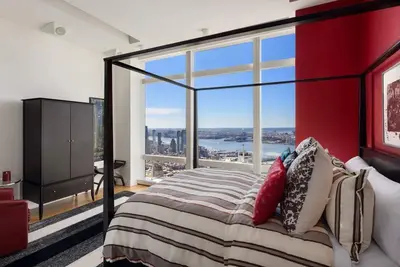
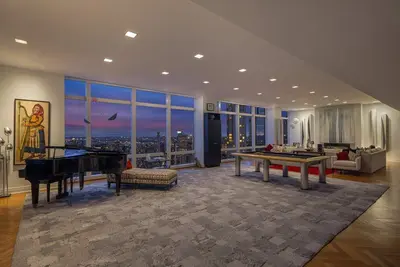
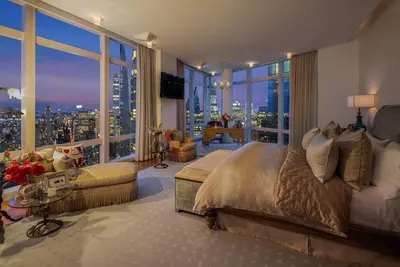
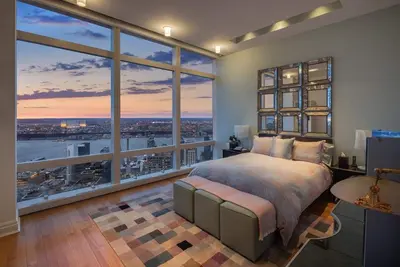
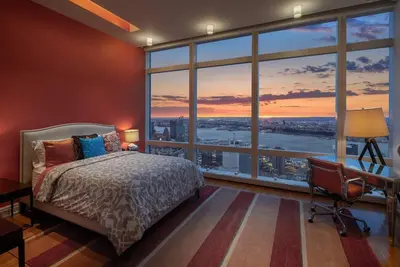
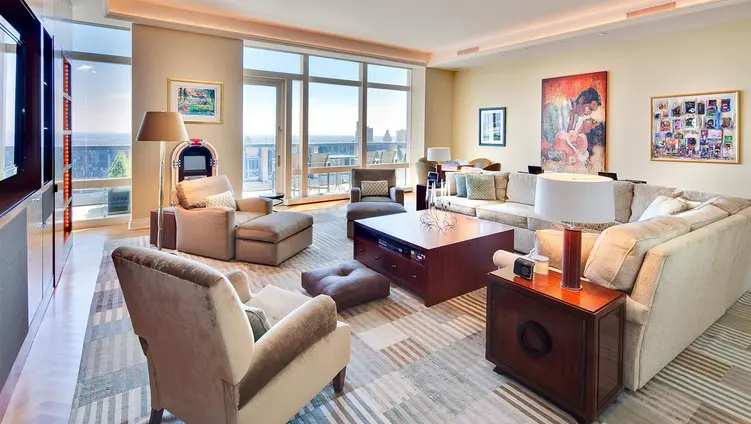
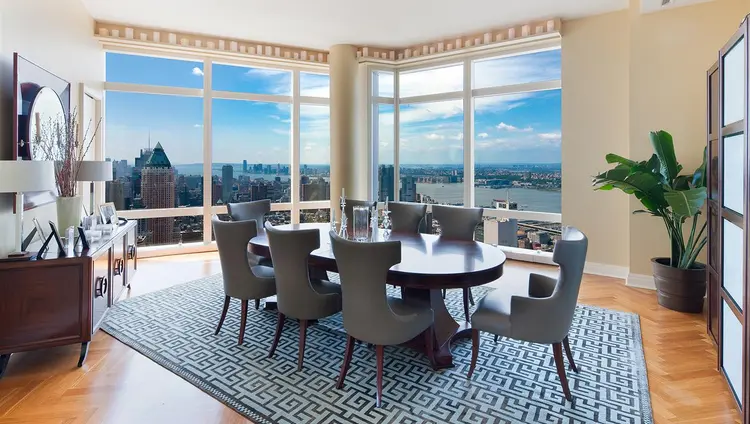
Some ceilings are as high as 14 feet.

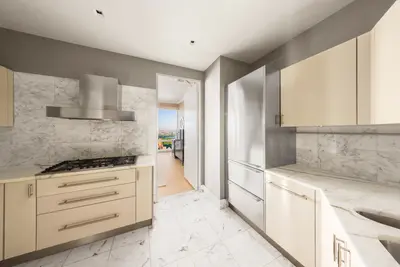
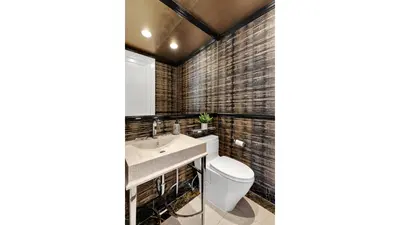
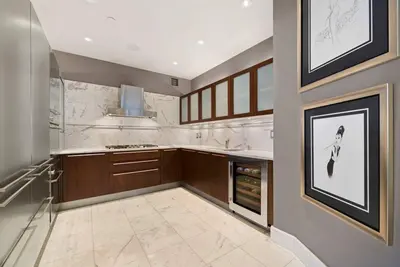
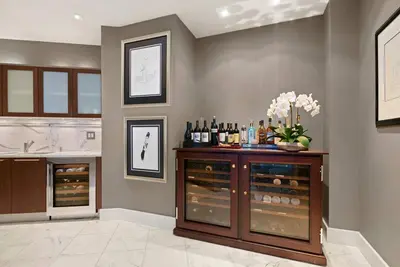
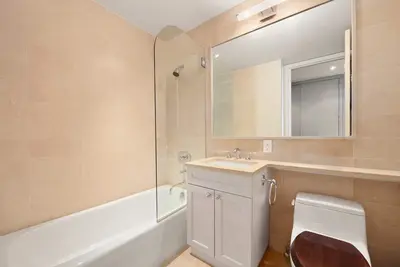
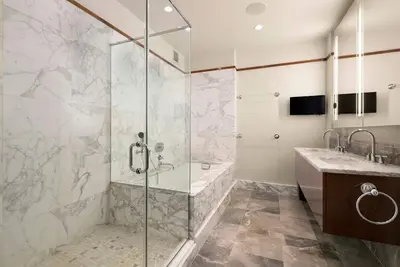
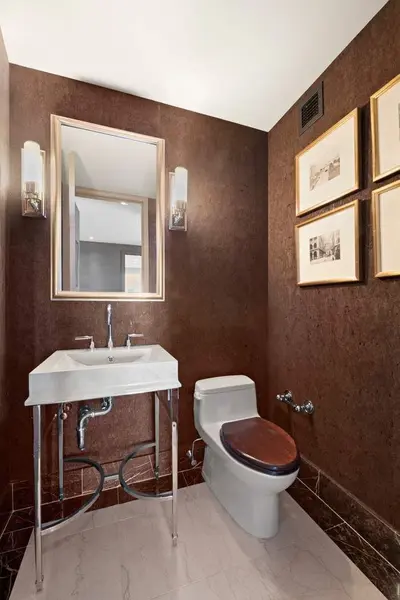
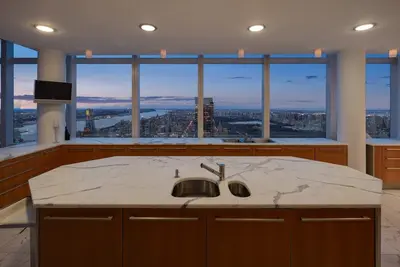
Apartments have Sub-Zero appliances, Miele appliances, a wine cooler and marble-accented windows in the bathrooms.

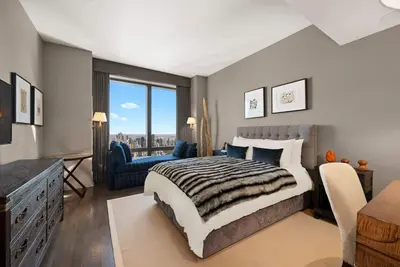
At the Time Warner Center there are more than 60 different apartment layouts and many are duplexes.

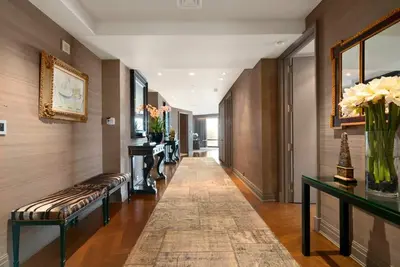
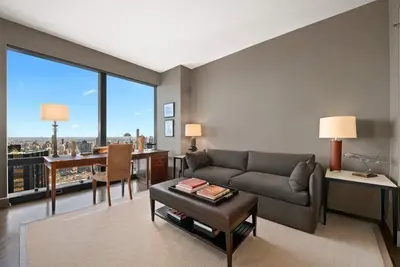
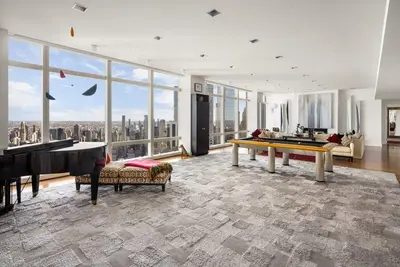
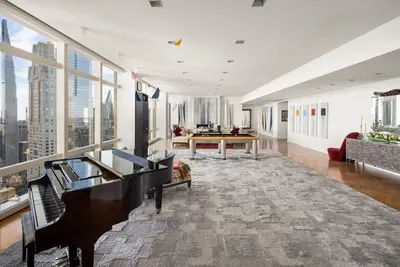
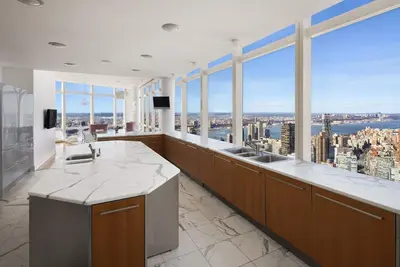
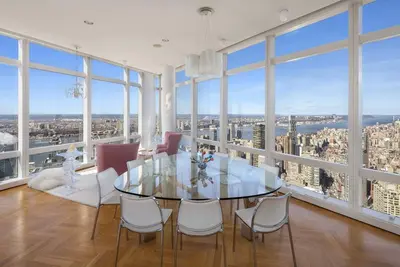
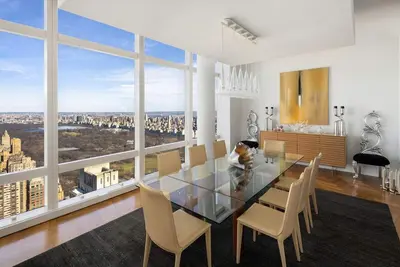
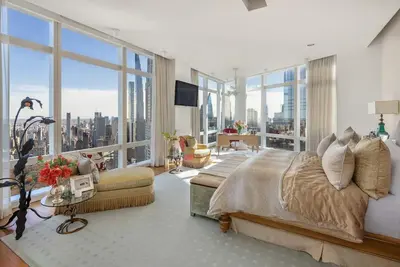
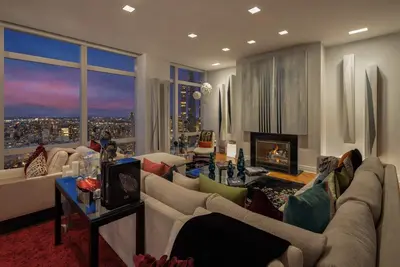
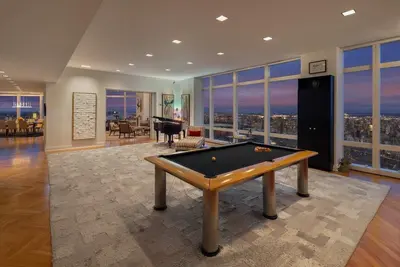
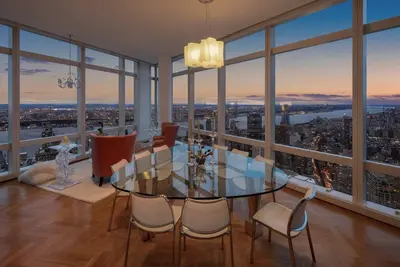
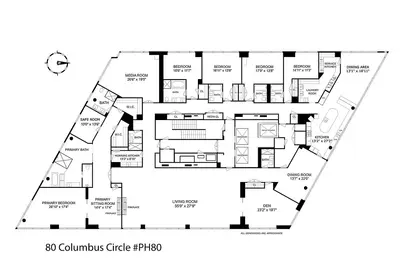
One of the most spectacular units is Penthouse 78, a full-floor in one of the towers that has a 37-foot-long private landing that leads to a very large living room and a very large corner office/library. Facing north is a very large dining room next to a large pantry and kitchen and a large breakfast area. The south side of the apartment has a 38-foot-long master bedroom with a very large study and a very large gym/dressing room. The apartment also has four other bedrooms, a coat room and a screening room.

The duplex unit #56A57AG has a very long suite of open spaces for a library, living room, dining room and kitchen on the top floor that also includes a bedroom and a second level with 3 bedrooms.

History

This development replaced the former New York Coliseum, which had been the city’s major convention center despite its relatively small size. It had been built in 1954 and was widely considered uninspired.

The development of this major site at the southwestern corner of Central Park and the western end of Central Park South, came after the decision to erect a new convention center for the city near the Hudson River at 35th Street designed by I. M. Pei that was substantially larger but would soon be dwarfed by several others across the country.

The redevelopment of this site became controversial because the development competition was based on money rather than design.

The city initially sought out proposals from developers with the main consideration being the purchase price and a 20 percent zoning bonus for improving the subway station.

Thirteen developers responded. Among them were: The Lefrak Organization and Galbreath-Ruffin proposed at 135-story tower designed by the Chicago office of Skidmore, Owings & Merrill; Donald Trump and Peter Kalikow proposed a 137-story tower designed by Eli Attia; William Zeckendorf and A. Alfred Taubman planned a mixed-use complex design by Michael Graves and Gruzen & Partners: Larry Silverstein, Robert Bass and Mel Simon proposed three towers designed by the New York office of Skidmore, Owings & Merrill: George Klein and Bechtel Investments offered to keep the Coliseum’s office building and build adjacent to it an 83-story building designed by Kevin Roche: Rich-Eichner had Cesar Pelli design two 520-foot-high towers and a 950-foot-tower: Hirschfeld Realty, Rapid American Corp., and Drexel Burnham Lambert had James Stewart Polshek design a 80-story tower; and Boston Properties and Salomon Brothers had Moishe Safdie design two towers, the taller of which was 70 stories.

Boston Properties, headed by Mortimer Zuckerman, was named the winner with its bid of $455 million for the property, which was less than what had been offered by the New York Land Company and Kumagi Gumi, a Japanese construction company, but it promised $300 million more in tax revenue over 15 years and Salomon Brothers pledged to lease 1.5 million square feet for its corporate headquarters and to increase its staff in the city by about 3,500 persons.

The plan was approved unanimously by the City Planning Commission and by a vote to 10 to 1 by the Board of Estimate.

At the urging of Joan Davidson and Paul Byard, the Municipal Art Society filed suit against the city, citing environmental concerns, while critics expressed less than enchantment with Safdie’s complex design. Civic groups, led by Jacqueline Kennedy Onassis and Bill Moyers, took extreme umbrage over the shadows the tall project might cast on Central Park.

The straw that broke the plan’s back, however, was Salomon Brothers’ financial condition that led Mr. Zuckerman to say he would reduce the building’s bulk. Finally on December 7, 1987 Justice Edward H. Lehner of the State Supreme Court in Manhattan declared the city’s sale of the land “null and void” arguing that “zoning benefits are not cash items.”

Boston Properties then replaced Mr. Safdie with David Childs of the New York office of Skidmore, Owings & Merrill. His first redesign did not win over all of the project’s opponents but his second redesign did. The original Safdie plan was 925 feet high. The final Childs version was cut down to 752 feet.

As the real estate market faltered and as the city administration changed, the project faced so many hurdles that a decision was made to issue a new “request for proposals” that limited the height of buildings on the site to 59 stories.

Nine developers responded this time but the jockeying became more complicated when Mayor Giuliani urged that the program be revised to include a cultural component.

Subsequently, only five developers responded, but then in April 1998 Time Warner joined the Related Cos., team and on July 27, 1998 it was awarded the contract for $345 million and their architect was David Childs who now clad his two-tower scheme with glass rather than masonry.

Mr. Childs’s new design for The Related Companies, Apollo Real Estate Advisors and the Palladium Company was about the same size of his last design for Boston Properties but instead of a Post-Modern, Art Deco-style design the plan was "modernized’ with glass façades and the massing of the towers was more sharply outlined with less architectural detailing.

The towers are lighter in color than the bronze-color recladding by Donald Trump of the former Gulf & Western building at 1 Central Park West just to the north on Columbus Circle and their glossiness is more in context with that structure than with the very rigorous and interesting green-metal clad tower at One Central Park Place one block to the south on the northwest corner of Eighth Avenue and 57th Street that was designed by Davis Brody. Safdie’s more rugged, but ungainly modernism was in more context with the Davis Brody building.

Donald Trump had some fun when he put up a large sign near the top of the west side of his Trump International Hotel and Tower that proclaimed, when this project was nearing completion, that his building did not have obstructed park views.

In its October 15, 2001 issue, Crain’s New York Business gave the following commentary about this project:

"There seems to be no end to the superlatives used to describe the emerging AOL Time Warner complex at Columbus Circle: The biggest construction project in New York City since the World Trade Center. The largest construction loan for a private project in U.S. History. The next Rockefeller Center. When it opens in late summer or fall of 2003, the complex will have five floors of stores and restaurants, 1.1 million square feet of offices, Jazz at Lincoln Center, a hotel, TV studios and more....Perhaps the biggest impact of the project is an unanticipated and symbolic one: Just as the city’s two tallest towers have been destroyed, two more that resemble them are slowing rising uptown."

The project is impressive in scale and detailing. Seen from the north, its towers are surprisingly "thin" while from Fifth Avenue they appear massive.

This project obviously became a major new "gateway" to the Upper West Side, a role significantly reinforced by the erection a few years later by the Zeckendorfs of a smaller but still huge two-building luxury residential condominium development on the full block just to the north of Trump International Hotel and Apartments. That project, known as 15 Central Park West, quickly sold out at very high prices and in 2008 the graceful former Huntington Hartford Museum on the south side of Columbus Circle was reclad for a different museum after an unsuccessful campaign to have it declared a city landmark. In addition, the dark-brown brick office building on the block bounded by 57th and 58th streets and Broadway and Eighth Avenue was reclad with reflective glass and the traffic circle itself was redesigned and improved and a “glass box” Apple Store opened a few blocks to the north.

Not only was the radical upgrading of Columbus Circle complete, the transformation of the Upper West Side that began with building of the Lincoln Center for the Performing Arts was strongly reinforced with a dramatic new "welcome mat" that made the lower part of the Upper West Side substantially more vibrant and exciting than the Upper East Side.

A November 1, 2011 article in The New York Times by Amy Chozick said that Time Warner was considering moving out of the project and was "studying how to consolidate most of its four million square feet of office space" in the city. "That most likely means finding a new headquarters in a less expensive part of Manhattan and vacating the Time Warner Center, the Time & Life building at Rockefeller Center, and many of its 13 remaining 13 New York area buildings. The company estimated that cutting back on its real estate footprint could save as much as $150 million a year."

Should the company relocate, it will not be the first time that a major building in the city may have to change its name to the dismay of some. A building’s name, of course, is a big bargaining chip in office leasing but usually only is offered to a really big tenant so to the disappointment of some gourmets it probably won’t become the Whole Foods Building.


FEATURES & AMENITIES
  • Attended Lobby
  • Concierge
  • FT Doorman
  • Hi Rise
  • Post War
  • Central AC
  • Full Service Garage
  • Health Club
  • Pool
  • Elevator
PROS & CONS
PROS
  • Twin towers
  • Doorman
  • Concierge
  • Mixed-use building
  • Whole Foods store in basement
  • Subway entrance in building
  • Spectacular views
  • Mandarin Oriental Hotel
  • Good public transportation
  • Garage
  • Across Columbus Circle from Central Park
  • Close to the Lincoln Center for the Performing Arts

CONS
  • No balconies
  • No roofdeck
  • Many apartments
  • Considerable traffic

SPONSORED BY

Comments or questions? · Phone: 212.755.5544
Copyright © 1994-2012 CITY REALTY.COM INC. All Rights Reserved.
568 Broadway, Suite 802 New York, NY 10012
Terms of Use · Our Privacy Policy · About CITY REALTY.COM · Advertise With Us · Site Map
Developed by REOL Services


An equal housing opportunity.

All data is deemed reliable but is not guaranteed accurate by the REBNY / RLS or CityRealty. See Terms of Service for additional restrictions. All information furnished regarding New York City property for sale, rental or financing is from sources deemed reliable, but no warranty or representation is made as to the accuracy thereof and same is submitted subject to errors, omissions, change of price, rental or other conditions, prior sale, lease or financing or withdrawal without notice. All dimensions are approximate. For exact dimensions, you must hire your own architect or engineer. The number of bedrooms listed on this website is not a legal conclusion. Each person should consult with his/her own attorney, architect or zoning expert to make a determination as to the number of rooms in the unit that may be legally used as a bedroom.