
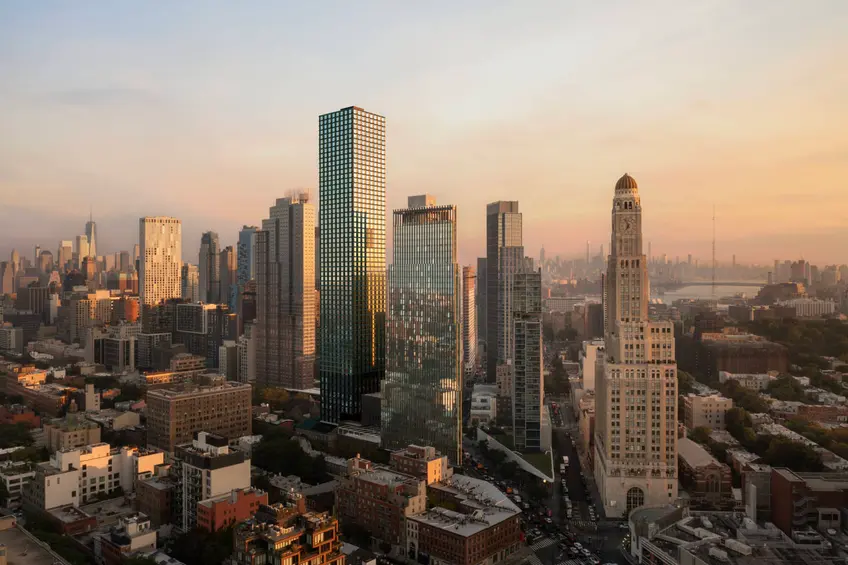
Under New York State's All Electric Buildings Act, which passed in 2023, new construction buildings seven stories or shorter are required to be built to use electric heat and appliances. The law also applies to commercial buildings with 100,000 square feet or more, and will be expanded to include taller residential buildings and smaller commercial buildings in 2029.
The aspect of the law that has attracted the most attention is the fact that fuel-generated power, including gas stoves, will be banned in new construction under the new requirements. It should be noted that existing gas stoves and appliances will not be ripped out of people's homes or places of business, that existing gas appliances can still be replaced with new gas appliances, and that exemptions are in place for buildings like restaurants, hospitals, factories, and agricultural buildings.
In this article:

The law was set to take effect on January 1, 2026, but Governor Hochul delayed implementation in November 2025 amidst a lawsuit by gas and construction trade groups who challenged it. It is playing out in the Second Circuit U.S. Court of Appeals, and will likely not be reconsidered until at least September 2026. In the meantime, the Induction Stove Challenge will replace existing gas stoves in NYCHA buildings with energy-efficient induction cooktops, and Governor Hochul recently announced up to $150 million in supplemental funding to support the installation of energy-efficient heat pump systems in small residential buildings as part of the state's Sustainable Green Futures Program.
At a city level, under Local Law 154, New York City is effectively ending its reliance on gas, including both gas heating systems and hook-ups for gas stoves, in new construction buildings, making it the largest city in the world to adopt such legislation. This article explains how the move, which will be fully impacted by the end of 2027, will likely impact the local real estate market.
Local Law 154
Local Law 154, which was passed in 2021, places strict emission limits on new construction buildings across New York City. As per the law, “No person shall permit the combustion of any substance that emits 25 kilograms or more of carbon dioxide per million British thermal units of energy, as determined by the United States energy information administration, within such building.” In practice, this means that anyone hoping to build a new construction with gas stoves or gas heating is out of luck.
Understandably, one might wonder why natural gas is being singled out when other energy sources, including oil, electric, and steam, also contributor to carbon emissions. The reality is that the gas, specifically in residential buildings, is disproportionately responsible for the City’s high carbon emissions. Data shared on City Comptroller Mark Levine’s website reveals that in residential buildings, carbon emissions from natural gas are more than double carbon emissions from electricity.
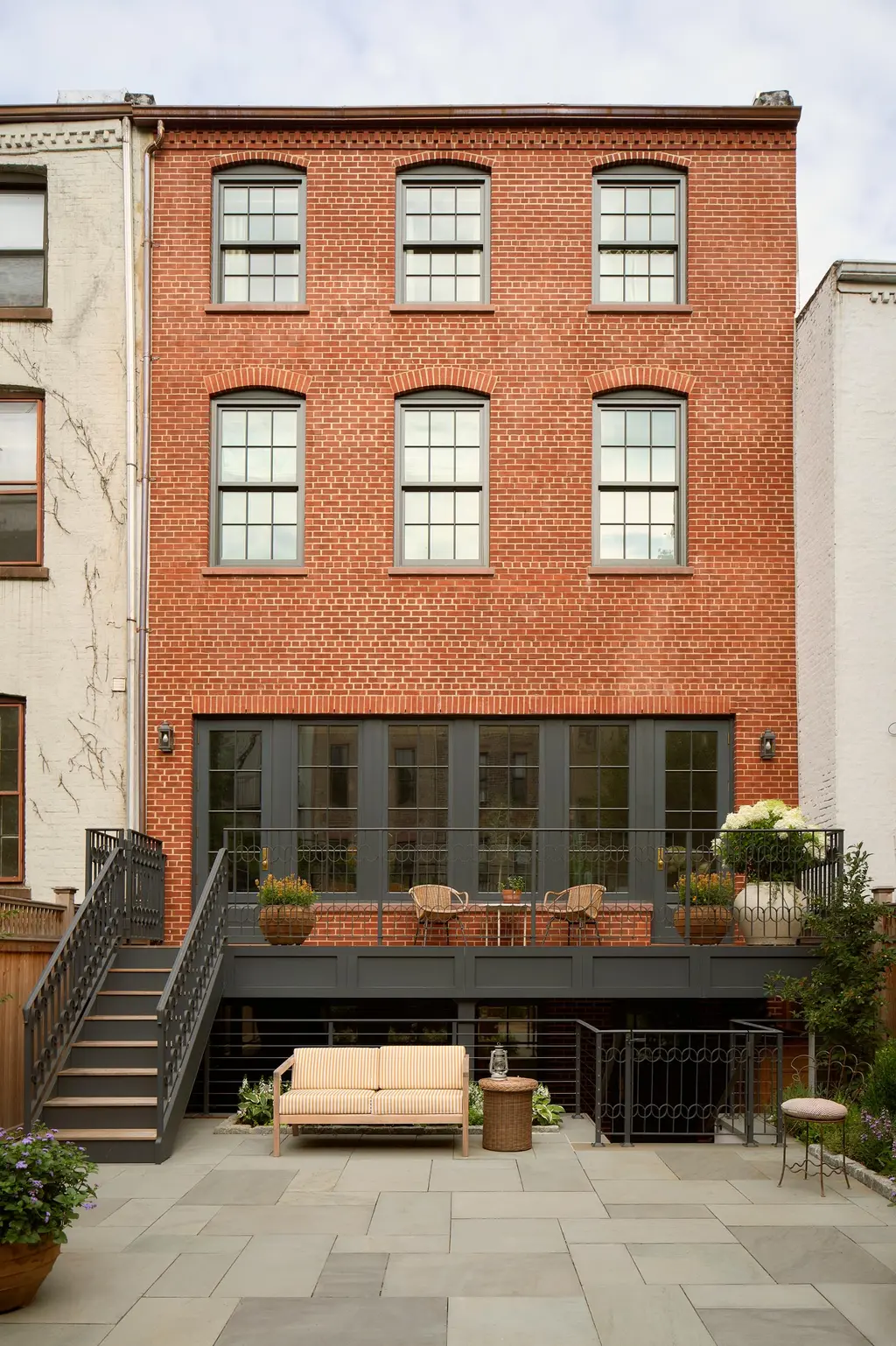
39 Willow Place, #TH (Brick Real Estate LLC)


Although electric is not the only alternative to gas, it happens to be the most viable one. Alternatives include steam, which is generally viewed as inefficient, and oil, which his problematic because it is both a depleting resource and one that also has a negative impact on the environment. For this reason, electric, which can be fueled by renewal sources of energy such as solar or wind, is a clear winner when it comes to scalable energy solutions in multi-unit buildings.
With new-construction building’s effectively banning natural gas, there is hope that the City will meet the ambitious environmental targets it has set for itself under Local Law 97. But what will the move from gas to electric mean for the local real estate market?
How the Move from Gas to Electric Will Impact NYC Real Estate
From construction and energy costs to amenities, the move from gas to electric will impact NYC real estate on several key levels, though the nature of the impact also remains difficult to predict.
Construction costs
Generally, constructing all-electric buildings is somewhat less expensive than constructing gas buildings. However, optimizing the benefits of all-electric construction means doing more than swapping gas for electric. In fact, the City’s guide on the subject emphasizes the need to adopt several best practices that mirror those associated with Passive House construction, including paying close attention to the building envelope and air barrier design. Since Passive House construction is generally more expensive, only time will tell if Local Law 154 raises or lowers construction costs on new building.Energy costs
As a rule, monthly energy costs are generally higher in all-electric buildings. However, if the building is constructed with Passive House principles (even if it doesn’t fully meet Passive House certification) energy costs could be considerably lower, benefiting residents over time.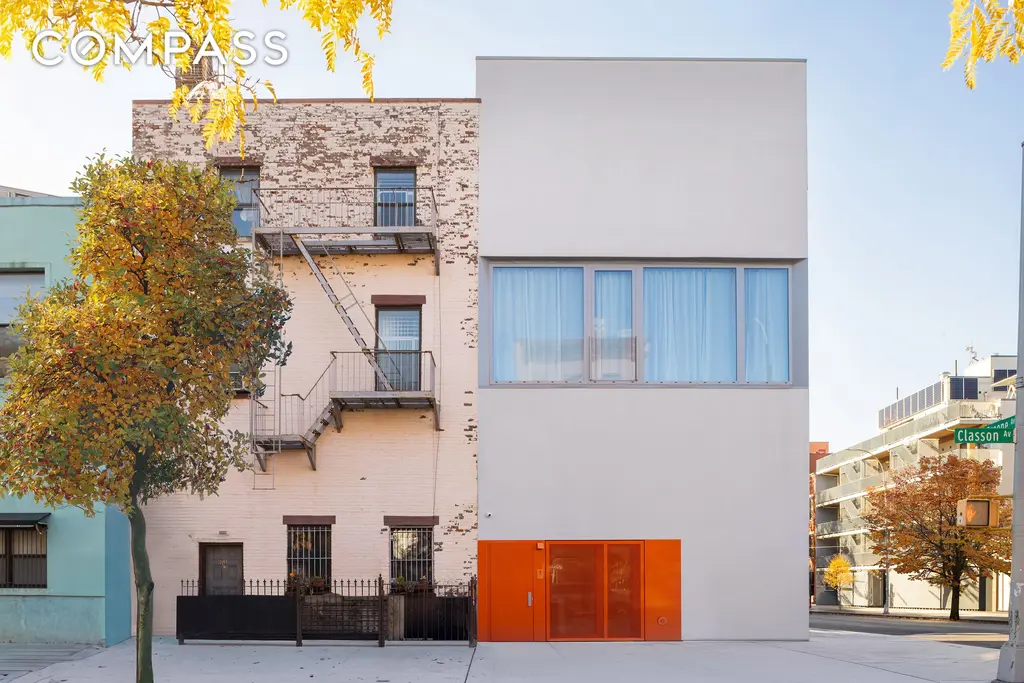
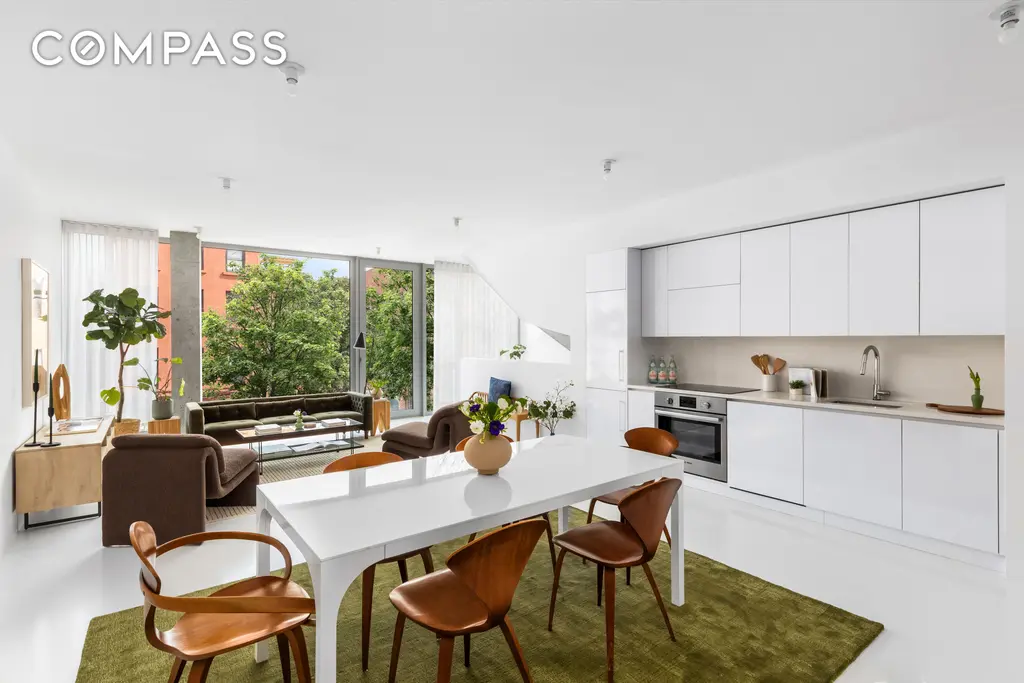
272 Greene Avenue, #TH (Compass)

Major renovations may be impacted
While most renovations in gas buildings will not force the building to convert to electric, some major renovations (e.g., those that more than double the size of the floor surface) may also be subject to the Local Law 154.Gas-to-electric conversions could rise
With the City intent on reaching net-zero emissions by 2050, all buildings, not just newly constructed buildings, are under pressure to reduce their emissions. Although specific standards different based on the building size, property type, and compliance year, it seems likely that conversions from gas to electric may become increasingly common as more buildings attempt to come into compliance and avoid future fines.Gas stoves could become a coveted amenity
In the culinary world, gas stoves are almost always preferred over electric stoves. In addition to offering access to instant heat, gas stoves are known to offer greater precision and versality and to interact with certain materials, including cast iron, more effectively than electric stoves or induction cooktops. As more buildings go all-electric and gas stoves will become rarer, it also seems likely that some New Yorkers may begin to see access to a gas hook-up in the kitchen as a coveted amenity.While gas buildings seem unlikely to disappear any time soon, it is possible that as all-electric construction becomes the norm, demand for units in gas buildings may decline, lowering their overall value. On the flip side, if electric costs continue to spike, the opposite may also hold true. What’s clear is that moving forward, nearly all New York City buyers will have yet another major decision to make when they go on the housing market—to buy in a gas or all-electric building.
All-electric NYC towers
505 State Street, Downtown Brooklyn
Developer and designer: Alloy Development
38 stories | 441 rental units
Completed in 2024
Developer and designer: Alloy Development
38 stories | 441 rental units
Completed in 2024
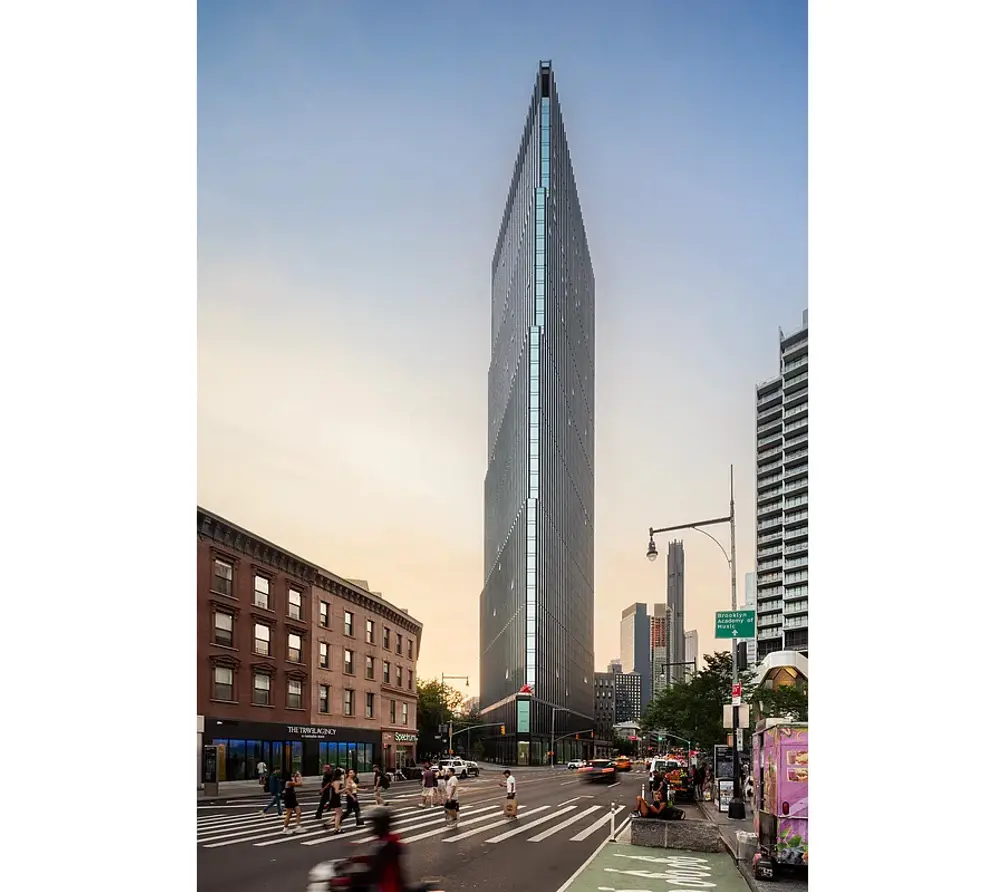 505 State Street
505 State Street is the first of two new towers to be completed on the five-building Alloy Block. In addition to its all-electric stoves, heating, and hot water, sustainable features include a high-performance building envelope, heat pump climate control, and triple-pane windows. Amenities include includes a fitness center with yoga studio, a living room lounge with terrace access, flexible workspace, a Sky Lounge, a rooftop terrace with cabanas and a rooftop pool, and a bike room, but notably no parking. See full details here.
1515 Surf, Coney Island
Developer: LCOR
Designer: Studio V Architecture
16 stories | 463 rental units
Completed in 2024
Developer: LCOR
Designer: Studio V Architecture
16 stories | 463 rental units
Completed in 2024
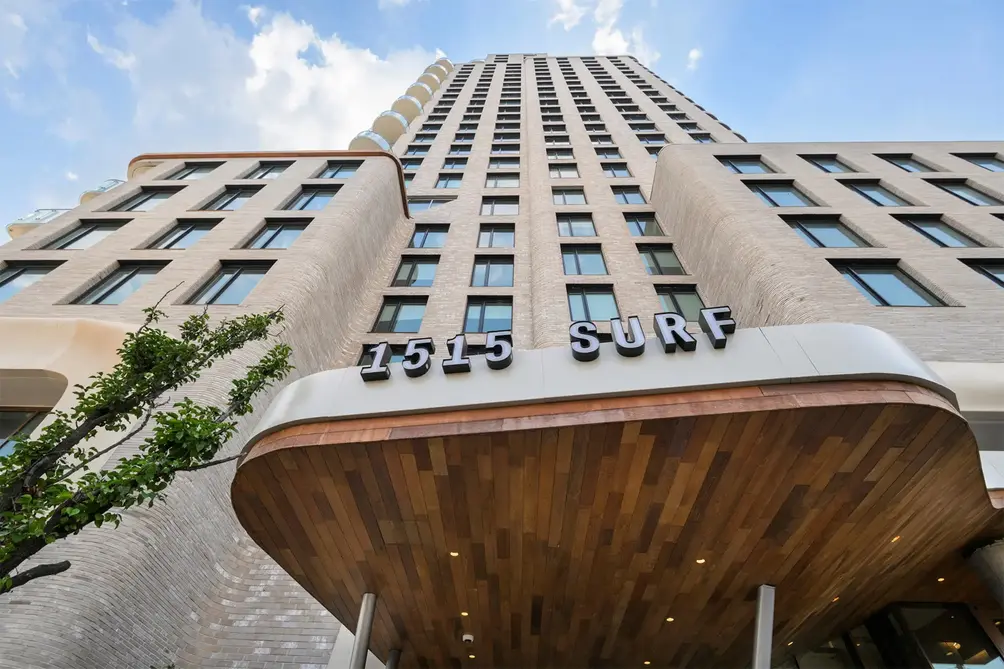 1515 Surf (LCOR)
1515 Surf is the largest residential geothermal building to date in New York City and was constructed with an all-electric infrastructure. It offers an expansive package of resort-style indoor and outdoor amenities, and is located directly adjacent to the Coney Island Boardwalk. See full details here.
1975 Madison Avenue, East Harlem
Developer: Round Square Development
Designer: DXA Studio
8 stories | 93 rental units
Completed in 2025
Developer: Round Square Development
Designer: DXA Studio
8 stories | 93 rental units
Completed in 2025
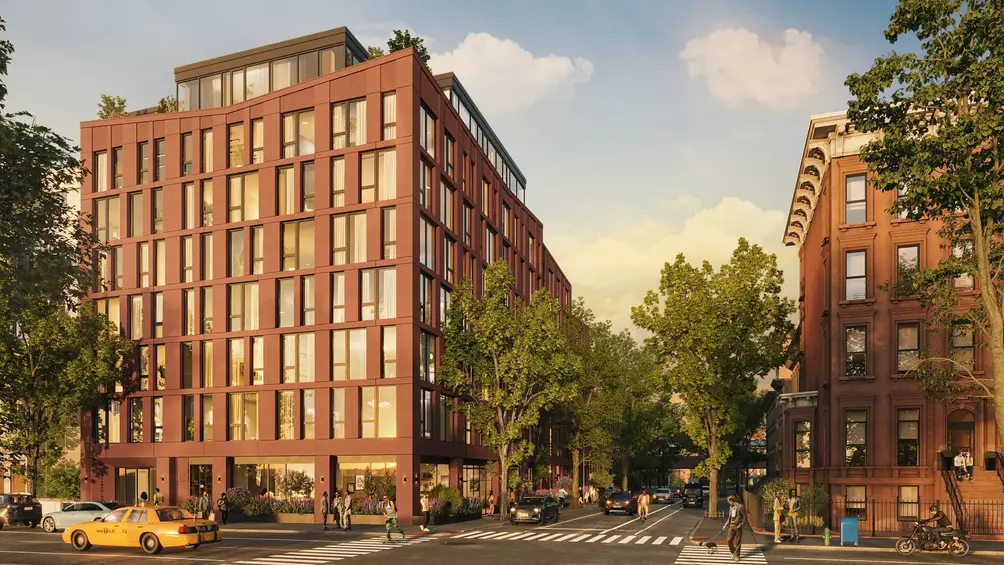 1975 Madison Avenue (MNS)
1975 Madison Avenue is a fully electric rental building located near the existing 125th Street 4/5/6 trains and Phase 2 of the Second Avenue subway extension. All apartments feature abundant natural light from high-performance windows, LED lighting, and energy-efficient appliances, including washers and dryers. See full details here.
Eighty Nine Dekalb, Downtown Brooklyn
Developers: RXR and LIU
Designer: Perkins Eastman
30 stories | 324 rental units
Completed in 2025
Developers: RXR and LIU
Designer: Perkins Eastman
30 stories | 324 rental units
Completed in 2025
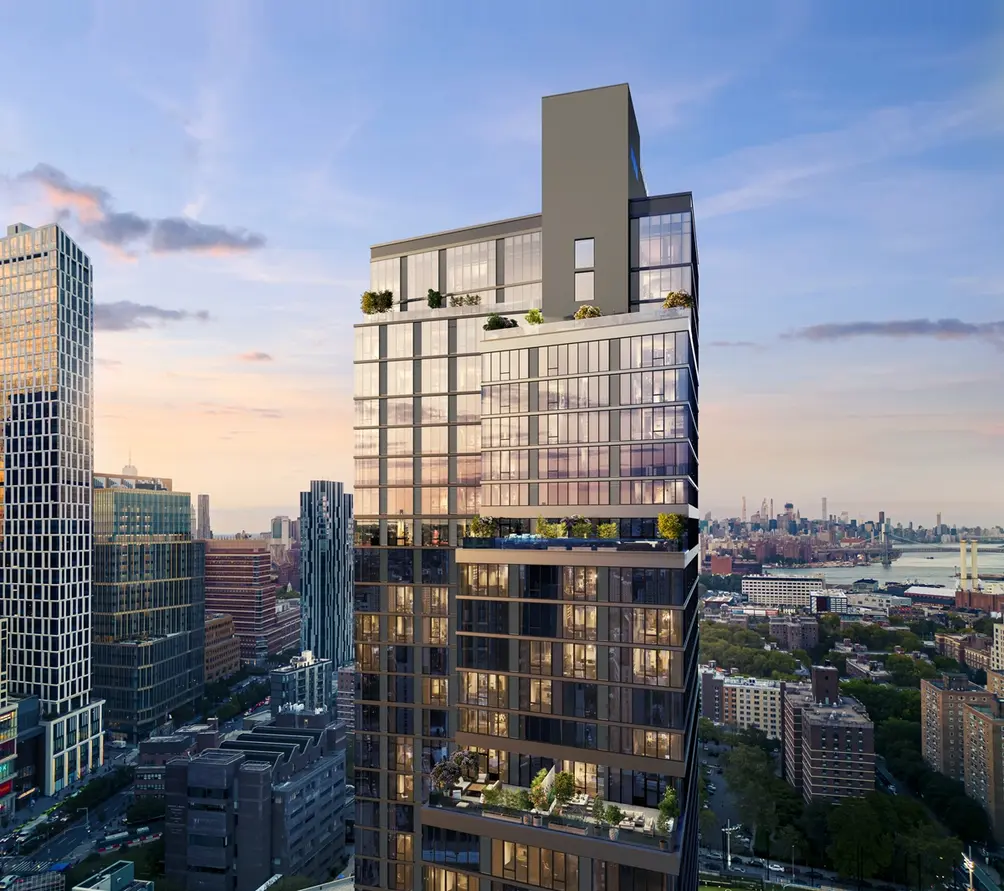 Eighty NIne Dekalb (RXR)
Eighty Nine Dekalb is a high-rise tower with a fully electric power system, a smart glass facade, and electric vehicle charging stations. The apartments start on top of academic and office space for Long Island University, the better to make the most of open views through oversized windows. See full details here.
The Riverie, Greenpoint
Developer: Lendlease
Designer: Marvel Architects
37 stories | 834 rental units
Completed in 2026
Developer: Lendlease
Designer: Marvel Architects
37 stories | 834 rental units
Completed in 2026
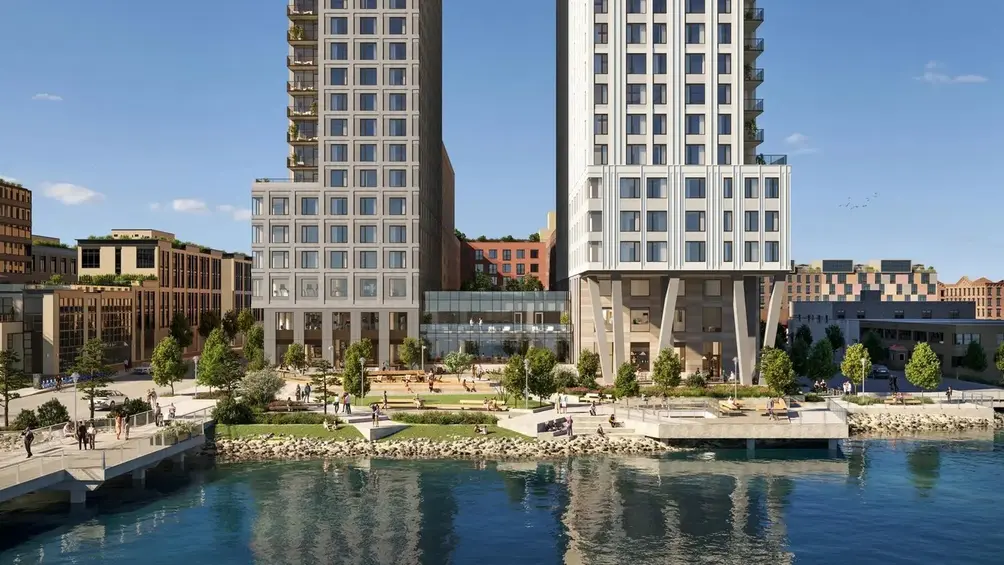 The Riverie (Lendlease)
Waterfront Greenpoint tower The Riverie was designed for net-zero carbon operations. It uses an all-electric, closed-loop energy system to heat and cool the apartments and amenities inside. See full details here.
Powerhouse Apartments, Mott Haven
Developers: Lemle & Wolff Development Co., LLC, HELP Development Corp, and True Development New York, LLC
Designer: STAT Architecture
8 stories | 80 affordable housing units
Completion estimated for 2028
Developers: Lemle & Wolff Development Co., LLC, HELP Development Corp, and True Development New York, LLC
Designer: STAT Architecture
8 stories | 80 affordable housing units
Completion estimated for 2028
 Rendering of Powerhouse Apartments (STAT Architecture)
Powerhouse Apartments is among the first projects to take advantage of the newly approved Expedited Land Use Review Procedure (ELURP) that shortens the public review process for affordable housing and climate resiliency projects. Upon completion, this all-electric building will include 80 affordable housing units, a 4,000-square-foot theater, and a 3,000-square-foot workforce development space. See full details here.
395 Flatbush Avenue Extension, Downtown Brooklyn
Developers: Rabina and Park Tower Group
Designer: TenBerke Architects
72 stories | 1,263 rental units
Completion estimated for 2029
Developers: Rabina and Park Tower Group
Designer: TenBerke Architects
72 stories | 1,263 rental units
Completion estimated for 2029
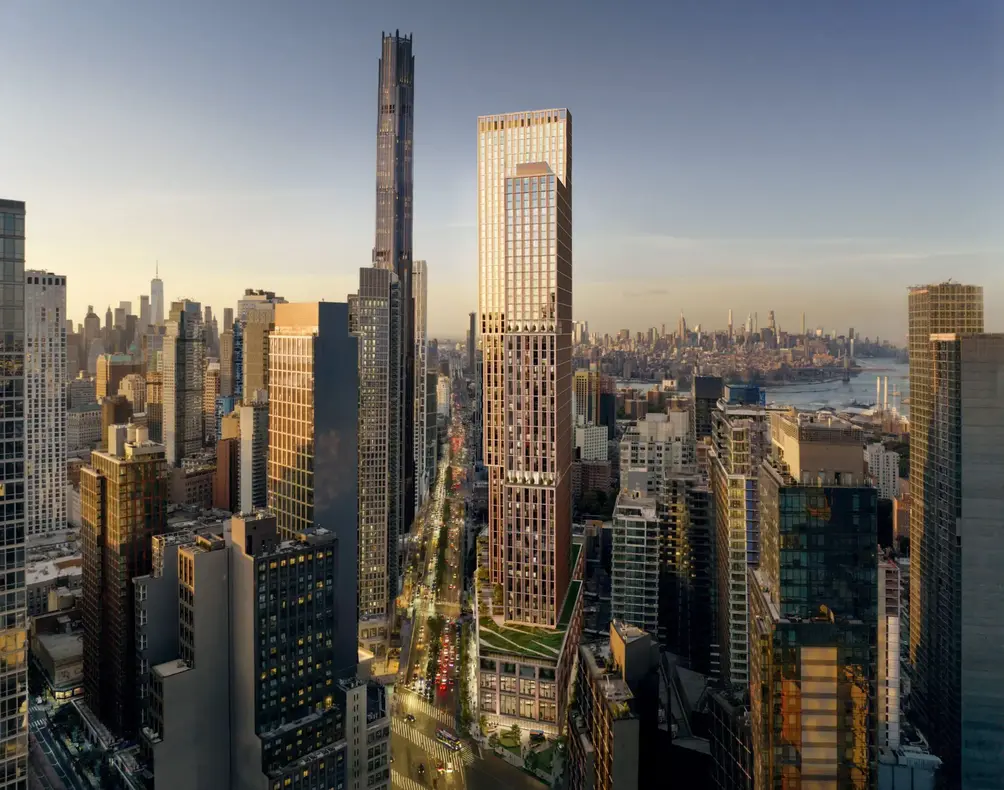 Rendering of 395 Flatbush Avenue Extension (Binyan Studio and TenBerke Architects)
In March 2026, the New York City Council approved a plan to transform the seven-story Verizon call center building at 395 Flatbush Avenue Extension into a new tower that will be the second-tallest in Brooklyn, not to mention built with all electric heating, hot water, and appliances. Upon completion, it will include 66,000 square feet of retail space, approximately 75,000 square feet of office and/or community facility space for use by the city's Department of Health and Mental Hygiene, and 1,263 new housing units, 325 of which will be affordable to households earning an average of 60 percent of the Area Median Income; of these, 80 are anticipated be "family-size" two- and three-bedroom units. See full details here.
One Third Avenue, Downtown Brooklyn
Developer and designer: Alloy Development
63 stories | 583 rental units
Completion estimated for 2029
Developer and designer: Alloy Development
63 stories | 583 rental units
Completion estimated for 2029
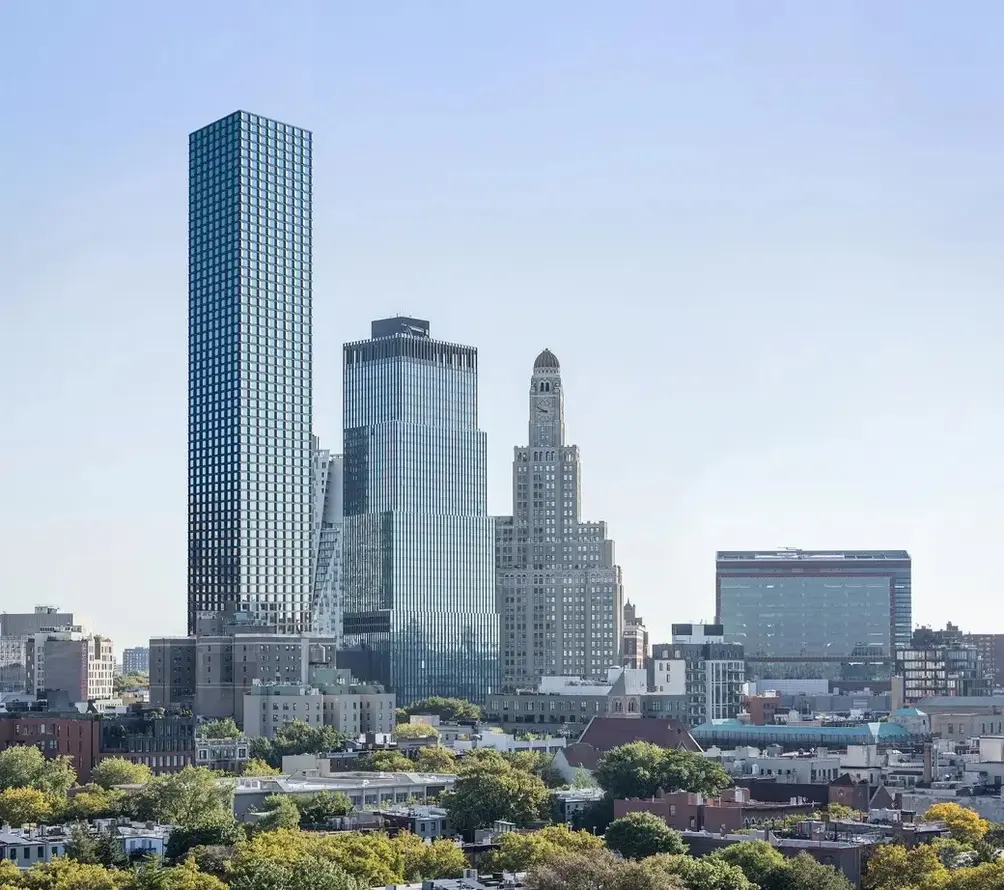 Rendering of One Third Avenue (left; Alloy Development)
A stone's throw from 505 State Street (see above) on Alloy Block, One Third Avenue aims to be the world's tallest tower build to Passive House standards. Features like an airtight building envelope, multipane windows, filtered fresh air, and an electric infrastructure will likely help it achieve the notoriously rigorous certification standards. See full details here.
Robert A. Iger Building, Hudson Square/Soho
Developer: The Walt Disney Company
Designer: Skidmore Owings & Merrill
22 stories
Completed in 2024
Developer: The Walt Disney Company
Designer: Skidmore Owings & Merrill
22 stories
Completed in 2024
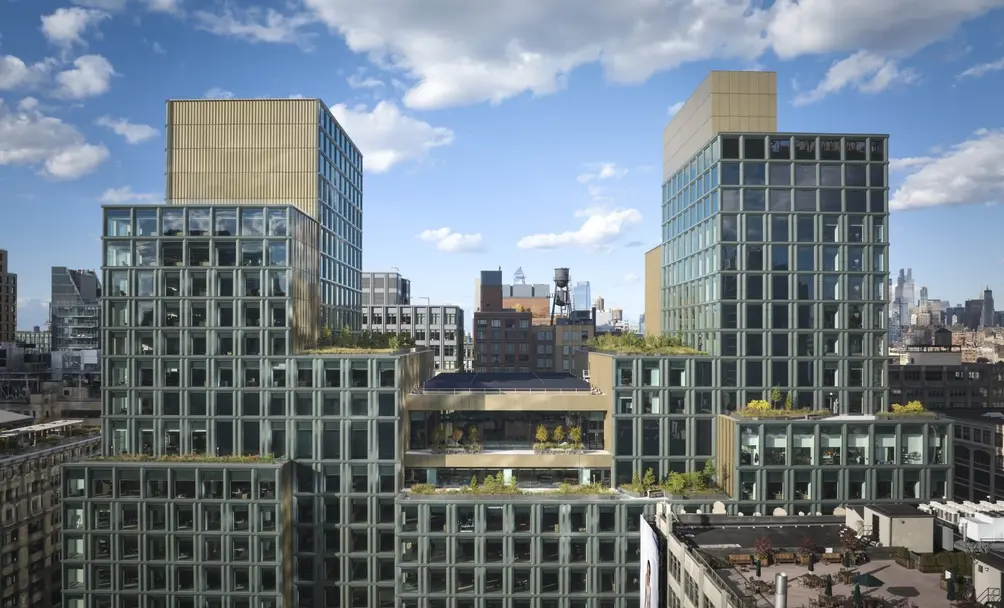 Robert A. Iger Building (SOM)
In late 2024, Disney moved its New York City operations, including The View, Live with Kelly and Mark, and World News Tonight, from Lincoln Center to a new full-block campus in Hudson Square. The state-of-the-art, all-electric building has high-performance facades, electric heat pumps, waste heat recovery, and high efficiency dedicated outside air systems. See full details here.
270 Park Avenue, Midtown East
Developer: JPMorganChase
Designer: Foster + Partners
70 stories | 1,400 feet high
Completed in 2025
Developer: JPMorganChase
Designer: Foster + Partners
70 stories | 1,400 feet high
Completed in 2025
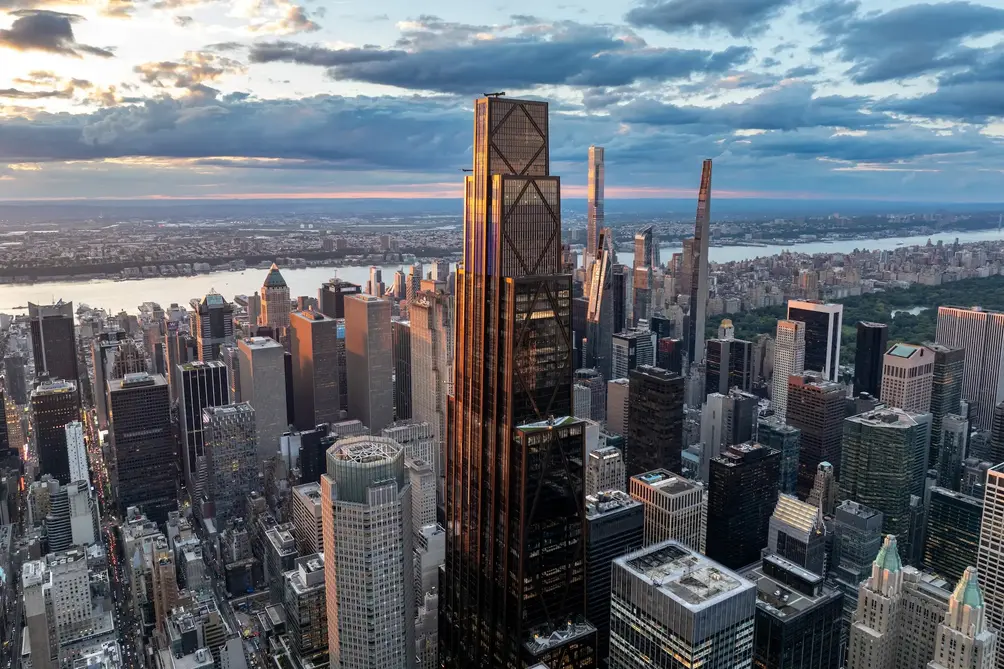 270 Park Avenue (Max Touhey for JPMorganChase)
JPMorganChase's new headquarters are the tallest all-electric skyscraper in New York City. It is fully powered by renewable energy from an upstate hydroelectric plant, and incorporates advanced sustainability features and recycled materials from the previous tower's demolition. See full details here.
665 Fifth Avenue, Midtown East
Developer: Rolex
Designer: David Chipperfield Architects
30 stories | 469 feet high
Completed in 2026
Developer: Rolex
Designer: David Chipperfield Architects
30 stories | 469 feet high
Completed in 2026
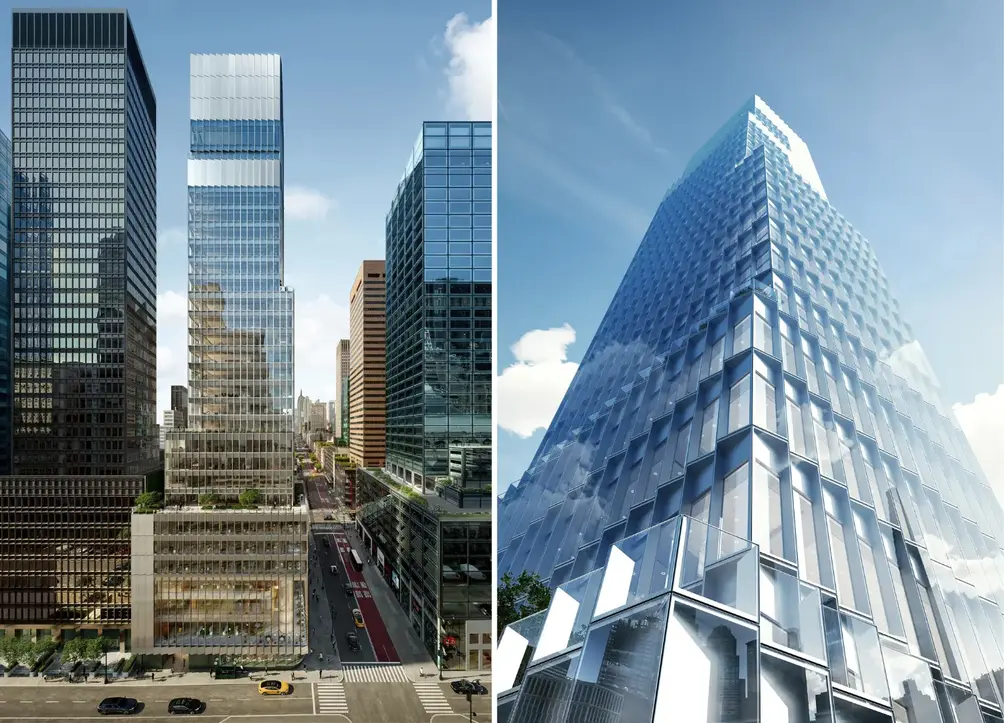 Rendering of 665 Fifth Avenue (Rolex)
In fall 2026, luxury watch brand Rolex will open its new flagship retail and office tower on the corner of Fifth Avenue and East 53rd Street. There will be a multi-level retail space on the first four floors, office space on the uppermost levels, and a double-height dining and event space with adjoining terrace on the top two floors. The building is targeting LEED and WELL Platinum certifications with features like a double-skin facade to improve thermal performance, advanced heating and cooling systems, on-site greywater and rainwater recycling systems, and all-electric operations. See full details here.
Vagelos Innovation Laboratories, Washington Heights
Developer: Columbia University
Designer: Kohn Pedersen Fox
8 stories
Completion estimated for fall 2026
Developer: Columbia University
Designer: Kohn Pedersen Fox
8 stories
Completion estimated for fall 2026
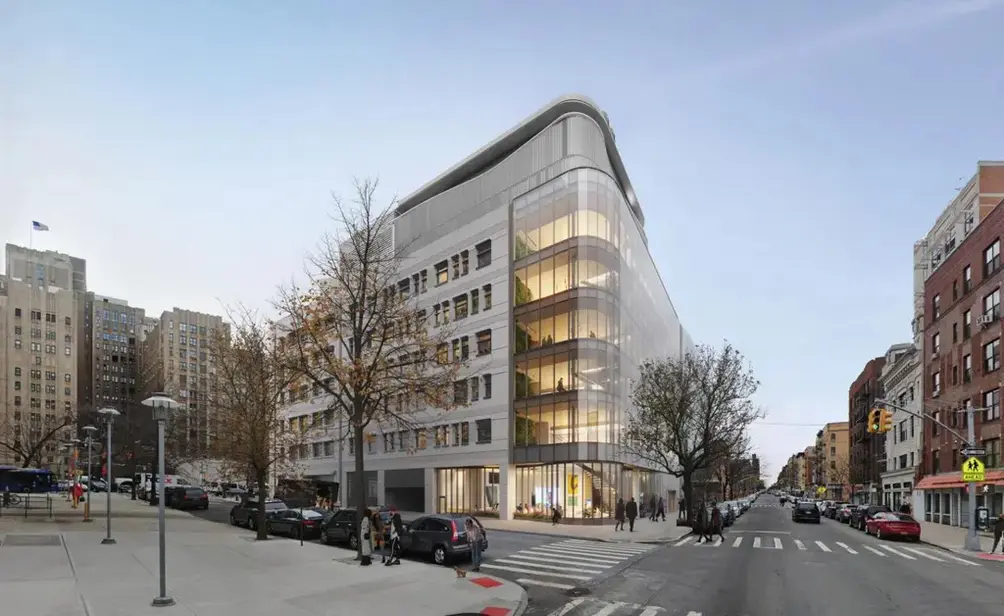 Rendering of Vagelos Innovations Laboratories (Kohn Pedersen Fox)
The eight-story building at West 167th Street and Audubon Avenue will be New York City's first university-owned research building that does not rely on fossil fuels. The design integrates biophilic principles like green walls and natural materials, and interiors will feature corner lounges between state-of-the-art research spaces to encourage spontaneous interactions between scientists, technicians, researchers, and graduate students. See full details here.
Etihad Park, Flushing
Developers: NYC Football Club, Related Companies, and Sterling Equities
Designer: HOK
7 stories
Completion estimated for 2027
Developers: NYC Football Club, Related Companies, and Sterling Equities
Designer: HOK
7 stories
Completion estimated for 2027
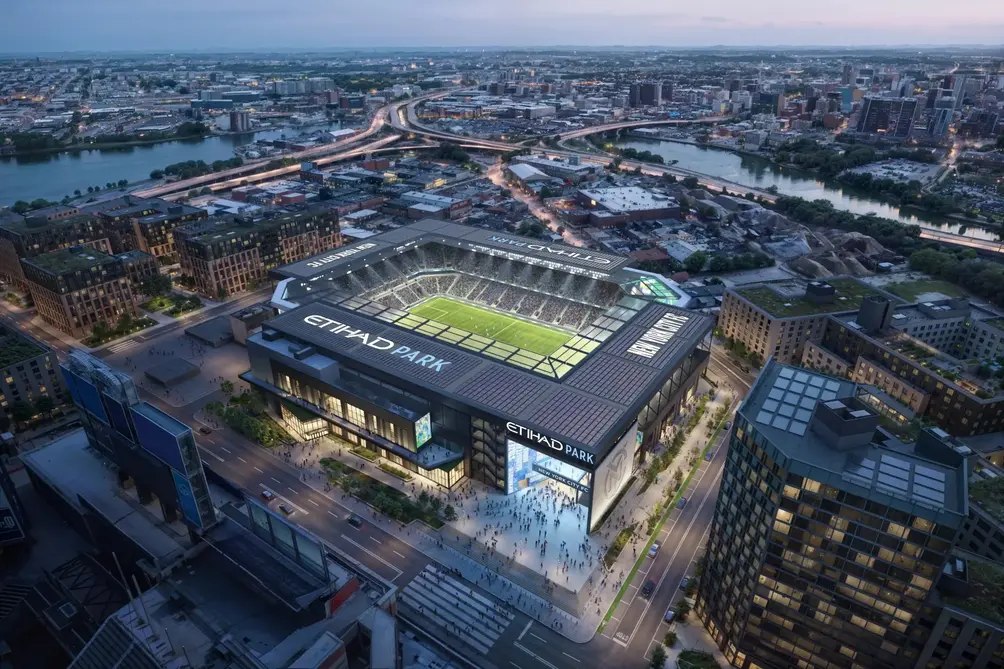 Rendering of Etihad Park (NYCFC)
In March 2026, construction topped out on Etihad Park, New York City's first professional soccer stadium. Located across from Citi Field, the all-electric stadium is part of the broader Willets Point redevelopment, and completion is estimated to be in time for the 2027-28 Major League Soccer season. See full details here.
175 Park Avenue, Midtown East
Developers: RXR Realty, TF Cornerstone
Designer: Skidmore Owings & Merrill
95 stories | 1,545 feet high
Completion estimated for 2032
Developers: RXR Realty, TF Cornerstone
Designer: Skidmore Owings & Merrill
95 stories | 1,545 feet high
Completion estimated for 2032
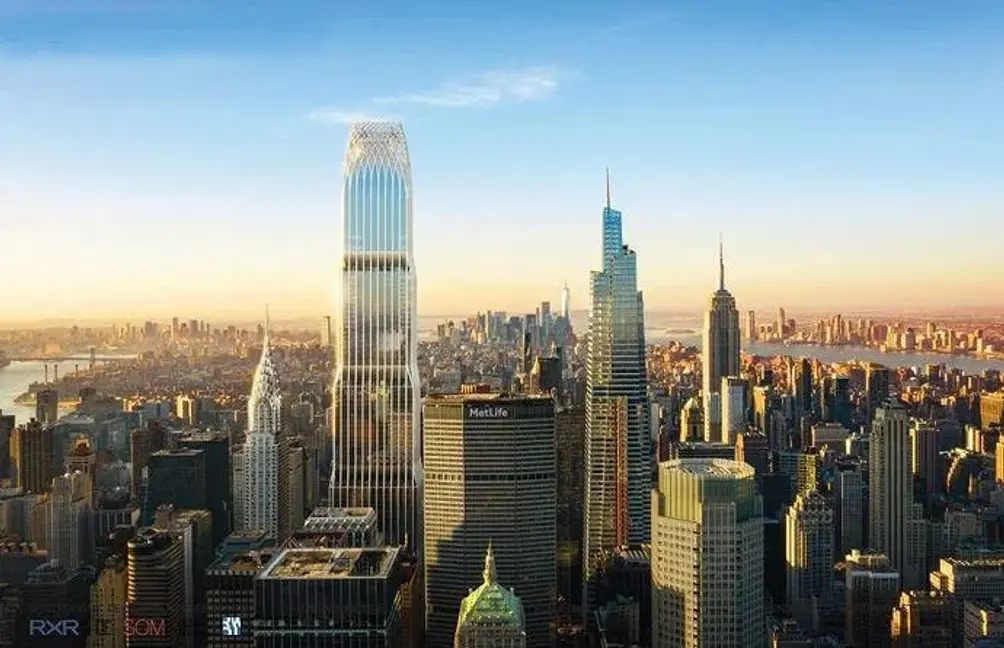 Rendering of 175 Park Avenue (SOM)
Permits were recently filed for the all-electric 175 Park Avenue, which is among the tallest new towers in the works for New York City. Upon completion, it will include Class A office space on floors 10-82 and a 500-room Hyatt hotel on the uppermost levels. See full details here.
350 Park Avenue, Midtown East
Developers: Vornado Realty Trust, Citadel, and Rudin Management
Designer: Foster + Partners
62 stories | 1,600 feet high
Completion estimated for 2032
Developers: Vornado Realty Trust, Citadel, and Rudin Management
Designer: Foster + Partners
62 stories | 1,600 feet high
Completion estimated for 2032
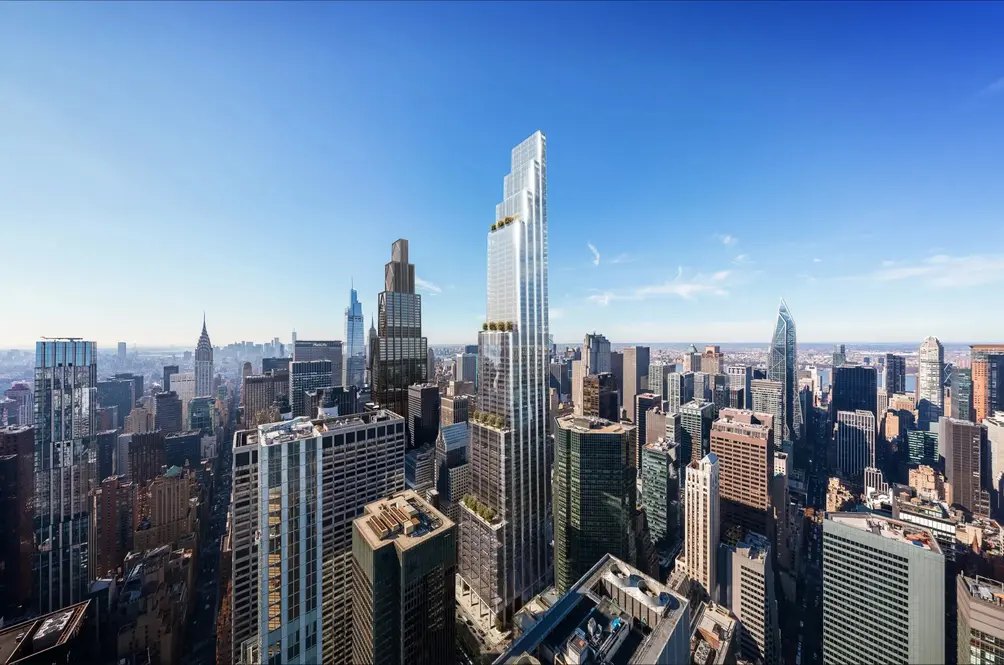 Rendering of 350 Park Avenue (DBOX for Foster + Partners)
In September 2025, the New York City Council approved construction of an all-electric supertall at 350 Park Avenue. Citadel and Citadel Securities will serve as anchor tenants, and the project also includes a new public plaza, new retail and restaurants, and widened sidewalks on East 51st and 52nd Streets. See full details here.
Related Articles
Coney Island
Knicks in Five: 35 NYC condo and rental buildings with basketball courts
Thursday, June 18, 2026
Future New York
See 20 Flatiron-style buildings and their availabilities as Landmarks tables "spaceship-like" addition in Meatpacking
Tuesday, May 12, 2026
Get To Know
What to know about Legionnaires' disease and NYC's cooling towers
Friday, July 24, 2026
Future New York
Views, Light, and Value: A Q&A with Kayla Lee on what today’s NYC buyers really want
Friday, July 24, 2026
Future New York
Flurry of new condos coming to Chelsea include redevelopment of the Corlears School
Friday, July 24, 2026
Future New York
Price Cuts: Four-bed at The Dakota slashed by $3.8M; Majestic 30-foot-wide Brooklyn Heights house trimmed by $500K
Wednesday, July 22, 2026
Get To Know
Selling a home in NYC? Everything you need to know about capital gains taxes
Wednesday, July 22, 2026
Future New York
Greenwich Village leads nearly $700M in Manhattan sales; Tribeca penthouse tops the week at $13.25M
Wednesday, July 22, 2026
Contributing Writer
Cait Etherington
Cait Etherington has over twenty years of experience working as a journalist and communications consultant. Her articles and reviews have been published in newspapers and magazines across the United States and internationally. An experienced financial writer, Cait is committed to exposing the human side of stories about contemporary business, banking and workplace relations. She also enjoys writing about trends, lifestyles and real estate in New York City where she lives with her family in a cozy apartment on the twentieth floor of a Manhattan high rise.

 6sqft delivers the latest on real estate, architecture, and design, straight from New York City.
