
On June 11, 2025, New York’s FARE (Fairness in Apartment Rental Expenses) Act went into effect, banning broker fees on all rental apartments. This means that local renters will no longer be saddled with broker fees for agents they did not hire.
Prior to the ban, renters generally paid 10 and as much as 20 percent of their first year’s rent in brokers' fees. As a result, even securing an apartment listed below market averages—for example, a one-bedroom apartment renting for $3,000 monthly— often required a tenant to come up with more than $11,000 once one factored in security deposits and broker fees. With the FARE Act, the money needed to secure an apartment will decrease, but there are already signs that renters may end up paying more over time.
Prior to the ban, renters generally paid 10 and as much as 20 percent of their first year’s rent in brokers' fees. As a result, even securing an apartment listed below market averages—for example, a one-bedroom apartment renting for $3,000 monthly— often required a tenant to come up with more than $11,000 once one factored in security deposits and broker fees. With the FARE Act, the money needed to secure an apartment will decrease, but there are already signs that renters may end up paying more over time.
In this article:




What renters need to know about the FARE Act
What is the FARE Act?
As stated on NYC’s Department of Consumer and Worker Protection (DCWP) site, Local Law 119 of 2024, or the FARE Act, “prohibits landlords from passing on to prospective tenants the fees of landlords’ hired agents (brokers); and requires landlords to explicitly disclose all fees that tenants must pay to rent an apartment before tenants sign a rental agreement.” The FARE Act is an amendment to Chapter 4 of Title 20 of the New York City Administrative Code.What fees aren’t impacted by the FARE Act?
While broker fees are banned, landlords can still charge prospective tenants fees to carry out background checks and credit checks. Additionally, if a tenant hires a broker to carry out a search on their behalf, they will still be required to pay a broker fee.What happens if a local broker or landlord attempts to charge a broker’s fee?
If an agent or landlord attempts to charge a broker fee, prospective tenants can report the violation. The first step is to file a complaint with NYC’s DCWP. You can also contact 311 online or by phone to initiate a complaint. In the event that a violation occurs, the landlord and or agent may be subject to civil penalties and may be required to cover any legal fees incurred by the tenant.
Who Backs and Opposes the FARE Act
Unsurprisingly, the FARE Act has plenty of backers and opponents. The act itself, which is not the first attempt to ban broker fees in New York City (this earlier Market Insight article includes a summary of recent attempts to ban broker fees in the city), was championed by local City Councilmember Chi Ossé. It has also received overwhelming support from local affordable housing activists and renters.
While widely endorsed by many politicians, housing activists, and renters, the FARE Act has received less support from people who work in the real estate industry, and for several legitimate reasons. Some critics continue to worry about the wording of the act. Others have raised concerns about the impact the act will have on brokers. Still others predict that it may not even support renters in the long run.
A comment on the FARE Act issued by the Real Estate Board of New York (REBNY) on May 12, 2025 noted, “The FARE Act states that prior to executing a lease, the landlord or her agent shall provide to the tenant ‘an itemized written disclosure of any fees that the tenant must pay to the landlord or to any other person at the direction of the landlord in connection with such rental.’” Yet, as REBNY emphasized, the terms of the disclosure leave at least some things open to interpretation—for example, “Should prospective fees such as lost key or move-in fees be included? Should fees for damaging common space property be included? Or City-imposed penalties for illegal short-term subletting where the landlord has no authority to enforce?”
REBNY has also argued that brokers, who are mostly middle-income earners who pay their own professional fees and healthcare costs, will likely suffer, emphasizing, “The proposed rules establish fines that almost reach the maximum statutory amounts.”
REBNY has also argued that brokers, who are mostly middle-income earners who pay their own professional fees and healthcare costs, will likely suffer, emphasizing, “The proposed rules establish fines that almost reach the maximum statutory amounts.”
One concern about the new broker fee ban, shared not only by REBNY but also by local politicians and renters, is that forcing landlords to pay broker fees will lead to higher rents over time, as landlords pass on the cost of broker fees to tenants by incorporating them into the rent. Although this won’t impact rent-stabilized units, market-rate units, which represent the majority of rentals in New York City, are at risk of being impacted.
In fact, the day the ban came into effect, The Wall Street Journal reported that some local landlords were already raising rental rates in response. If this does become a widespread practice, unfortunately, short-term tenants who hop from apartment to apartment will no longer be the only ones shelling out thousands of dollars on broker fees. Long-term tenants, including those who opt to stay in their units for years, will also be paying more as a result.
Rent-Stabilized Listings in NYC

2647 Frederick Douglass Boulevard, #5C (Corcoran Group)
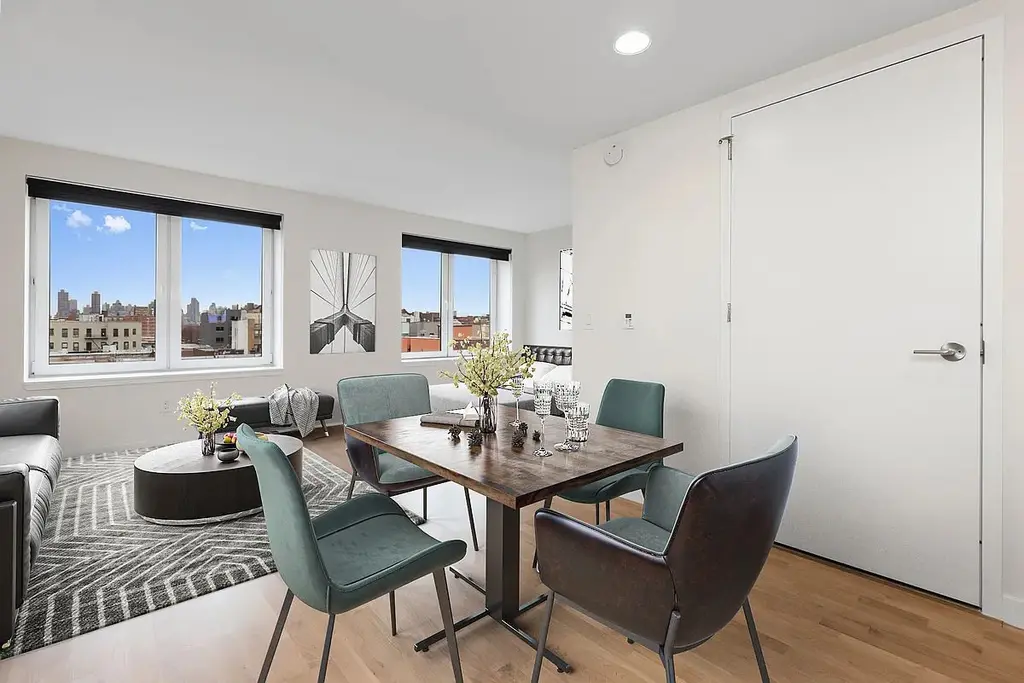
Astoria Central, #409 (Real New York)
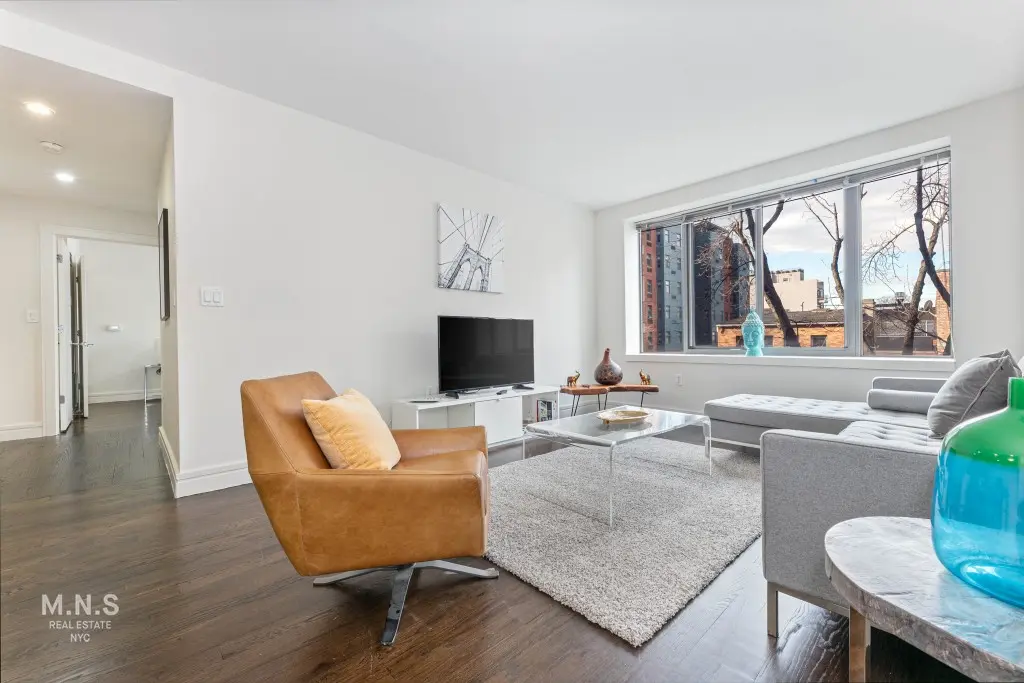

Denizen Bushwick, #836 (Corcoran Group)

Tower 119, #803 (Peter Ashe)

665 West 160th Street, #3C (Corcoran Group)

319 East 78th Street, #3D (Living New York)

Packard Square North, #2F (Corcoran Group)
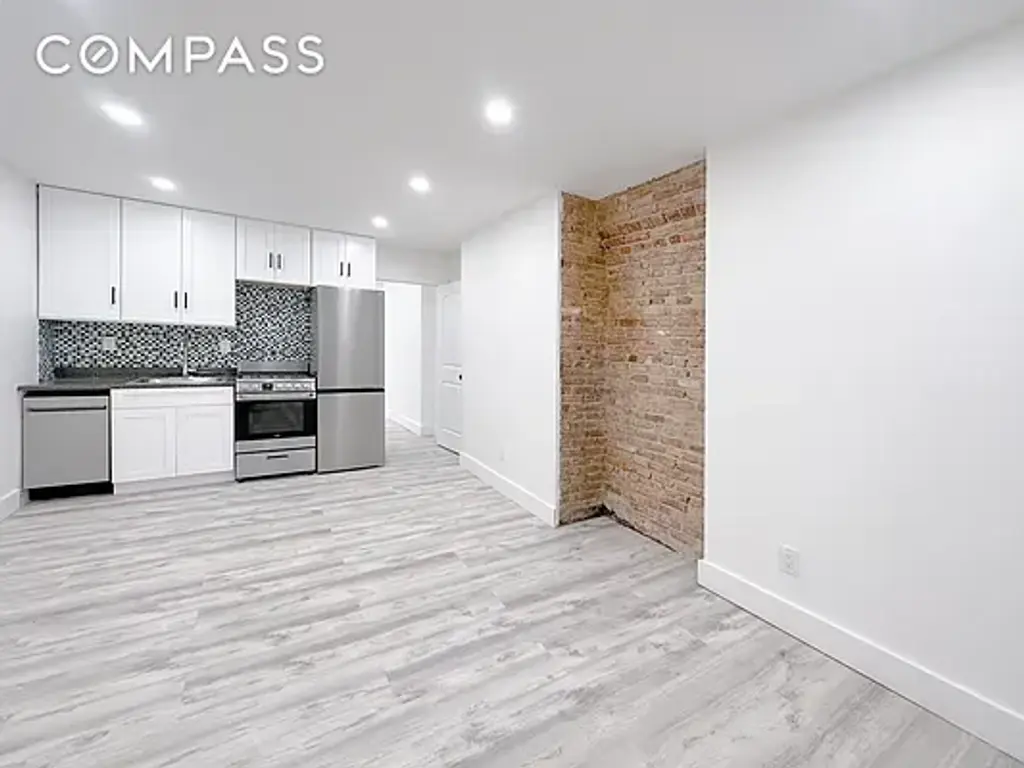
55 Spring Street, #7 (Compass)

The Lane, #11D (Corcoran Group)
Related Articles
Get To Know
Roommates, peepholes, and pet loopholes: NYC housing rules you didn’t know existed
Thursday, August 20, 2026
Get To Know
Open Houses: Two-plus bedrooms in Manhattan's top-ranked public school districts
Thursday, August 20, 2026
Get To Know
Gallery Gossip Girl: NYC asks, “What is art,” anyway?
Thursday, August 20, 2026
Get To Know
Opposition to Local Law 97 heats up as older buildings brace for financial fallout
Wednesday, August 19, 2026
Get To Know
Should you buy first or sell first? + Below-market NYC homes from $299K
Tuesday, August 18, 2026
Get To Know
Five reasons to buy a garden home in NYC + Listings with backyards include home where FDR married Eleanor Roosevelt
Saturday, August 15, 2026
Get To Know
The risks and benefits of buying in an NYC building currently undergoing façade repairs
Thursday, August 13, 2026
Get To Know
Triple-mint NYC apartments with ensuite five-fixture baths; Sorin launches sales near Hudson Yards
Tuesday, August 11, 2026
Contributing Writer
Cait Etherington
Cait Etherington has over twenty years of experience working as a journalist and communications consultant. Her articles and reviews have been published in newspapers and magazines across the United States and internationally. An experienced financial writer, Cait is committed to exposing the human side of stories about contemporary business, banking and workplace relations. She also enjoys writing about trends, lifestyles and real estate in New York City where she lives with her family in a cozy apartment on the twentieth floor of a Manhattan high rise.

 6sqft delivers the latest on real estate, architecture, and design, straight from New York City.
