
New York City is often described through its skyline, but many of its most meaningful buildings are not very tall and are best appreciated individually. The Landmarks Preservation Commission has protected more than 38,000 landmark properties across the five boroughs, most of them are within historic districts. Both within and outside these districts are 1,470 individual landmarks, 125 interior landmarks, and 12 scenic landmarks. Individual landmarks are the city’s stand-alone treasures. They are buildings, structures, and sites whose architecture, history, or cultural meaning rises above the ordinary, whether they are world-famous icons, neighborhood anchors, or places that quietly preserve a chapter of New York life.
Individual landmarks differ from properties located in historic districts, though the two categories often overlap. A historic district is a collection of buildings that together create a distinct sense of place, such as swaths of Brooklyn Heights, Greenwich Village, or Tribeca. An individual landmark is designated on its own merits, and approval from its owner is not required for an individual landmark designation in New York City. However, the owner must receive notice of the public hearing and has the opportunity to testify or object, but the LPC can still designate a property over the owner’s opposition if the building meets the legal criteria. The city’s designation criteria require an individual landmark to be at least 30 years old and to have “special character or special historical or aesthetic interest or value” as part of the city, state, or nation’s heritage.
In this article:



This has also been addressed directly by the courts. In a New York Court of Appeals case involving landmark designation, the court stated that nothing in the Landmarks Law requires an owner’s consent as a prerequisite to designation, and that the Commission may make a valid designation over an owner’s objection if the statutory criteria are met.
In both cases, landmark status does not mean a building is frozen in amber, but it does mean the LPC must review most exterior changes, alterations, reconstruction, demolition, or new construction affecting the protected property.
As many New Yorkers know well, the city’s landmark law was born out of loss. The LPC was created in 1965, after the demolition of many historically significant buildings across the city, most famously the original Pennsylvania Station, a Beaux-Arts masterpiece by McKim, Mead & White that came down in 1963. The law gave the city a formal way to protect buildings and places that reflect New York’s cultural, social, economic, political, and architectural history. Preservation helps foster civic pride, foster tourism, strengthen the city’s economy, and keep the physical record of the city's past eras visible in everyday life.
That mission has protected an extraordinary range of landmarks, from the Woolworth Building, Chrysler Building, Brooklyn Bridge, Grand Central Terminal, and Coney Island Cyclone to smaller houses, churches, schools, theaters, civic buildings, and industrial structures that tell less obvious but equally important stories. Their value is not only in their age or ornament, but in the continuity they provide. In a city where blocks can change almost overnight, landmarks remind us that the city's character is not made only of what rises next, but also what survives.
For apartment residents, a protected landmark across the street or outside the window offers more than a nice view, it can give a home a sense of place, history, and architectural drama that no amenity package can replicate. Below, we look at New York City apartments with views of individually designated landmarks, where the scenery comes with the rare pleasure of looking out at something the city has explicitly chosen to keep.
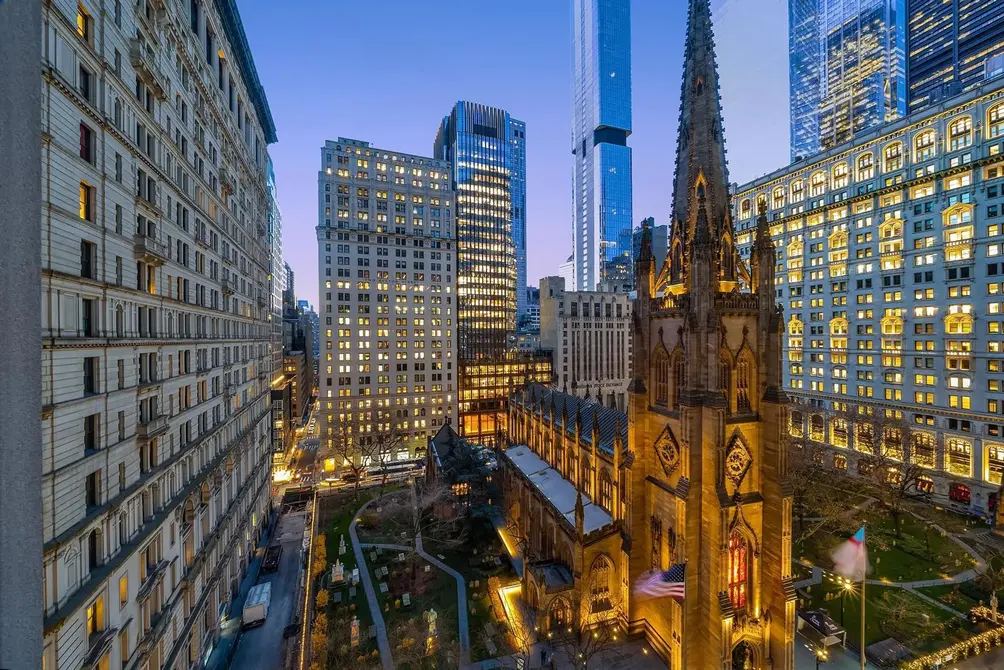 Trinity Church from One Wall Street, which is also an individual NYC landmark
Trinity Church and Graveyard, located at Broadway and Wall Street in the Financial District, was completed in 1846 and designed by Richard Upjohn. Designated an individual New York City landmark in 1966, it is significant as one of the city’s great Gothic Revival monuments and one of New York’s most historic religious sites, with a graveyard that includes Alexander Hamilton, Robert Fulton, Albert Gallatin, Captain James Lawrence, and Francis Lewis.
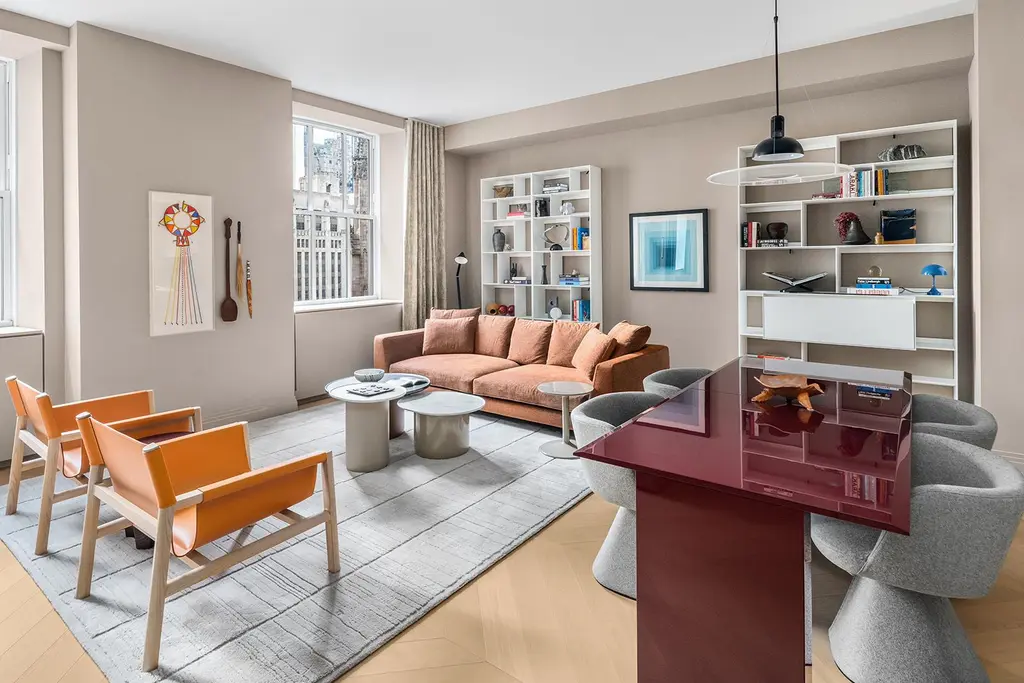
One Wall Street, #1602 (One Wall Street Sales LLC)
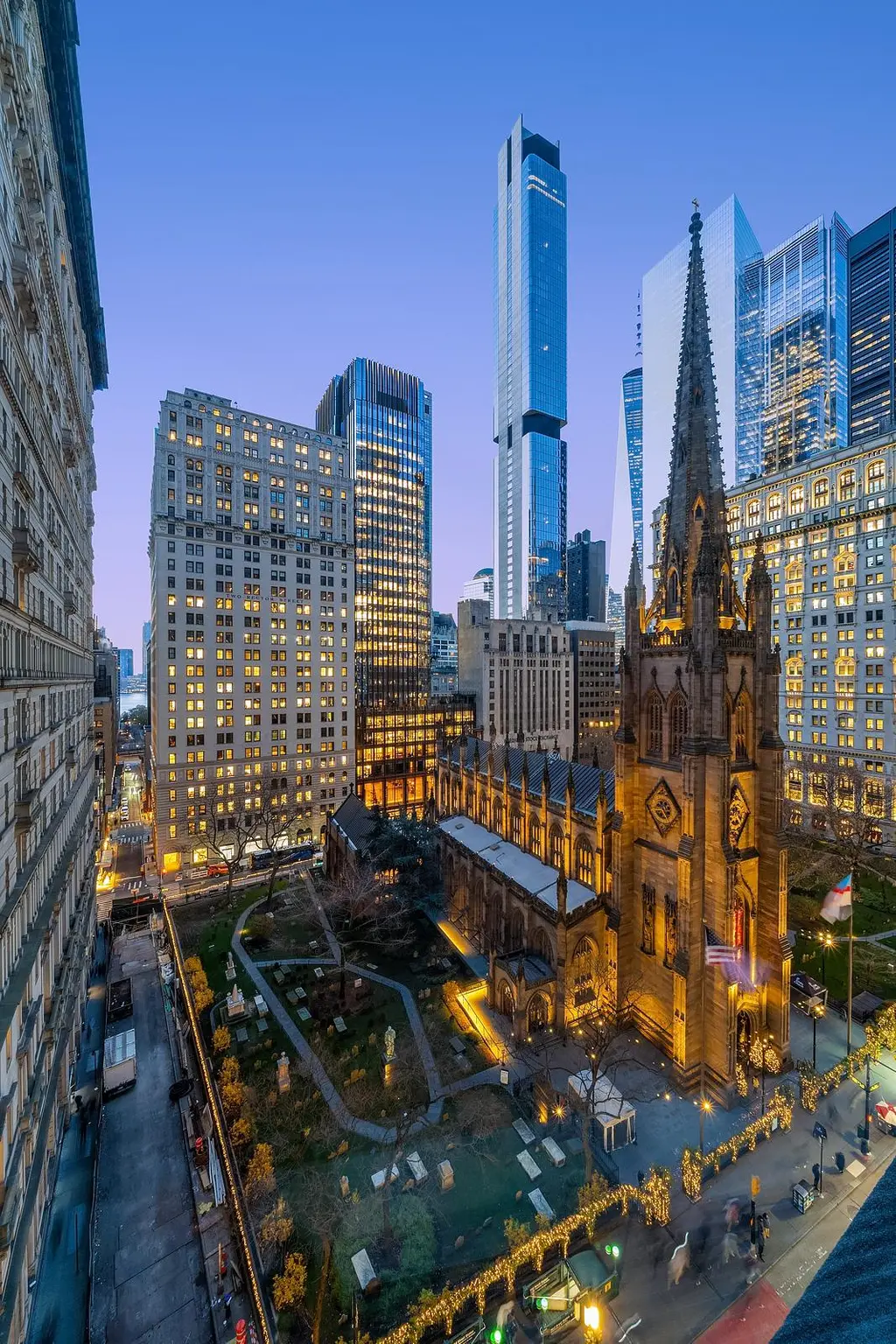
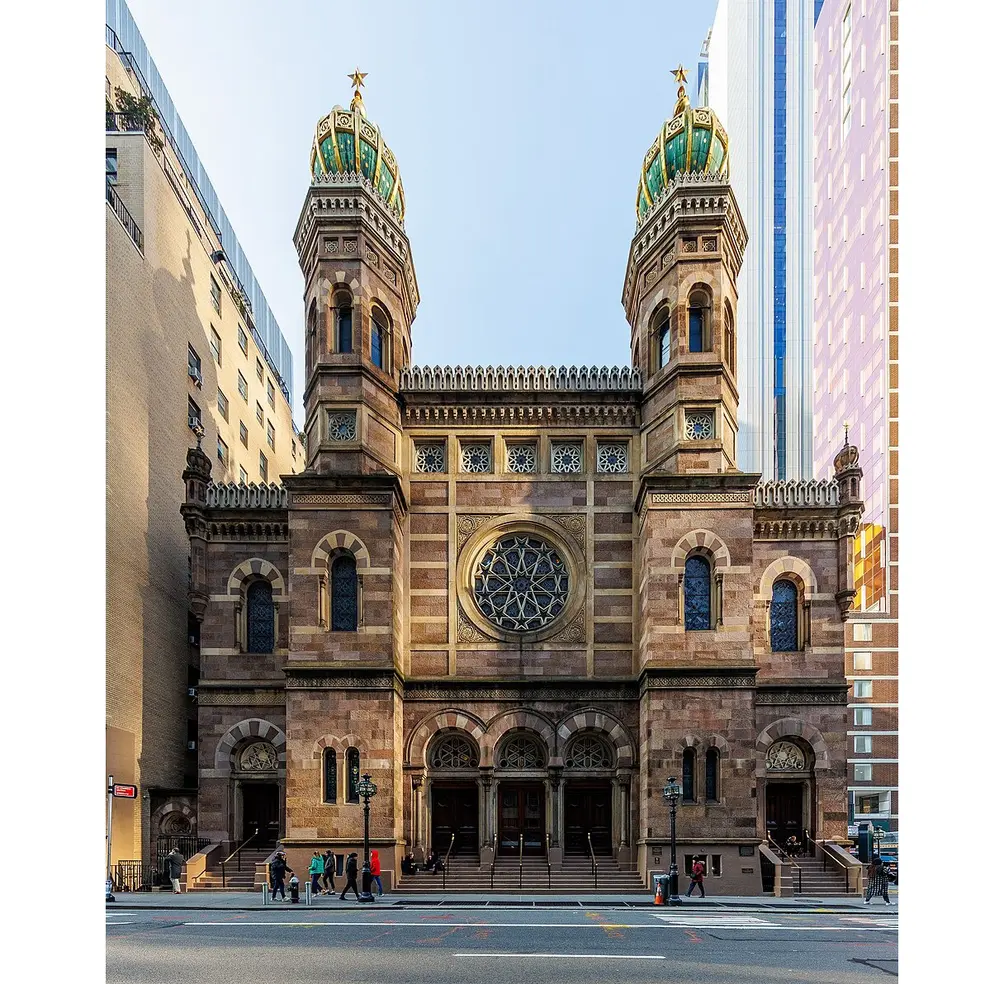 Photo of Central Synagogue by Kenneth C. Zirkel - Own work, CC BY 4.0, https://commons.wikimedia.org/w/index.php?curid=141959377
Central Synagogue, located at 652 Lexington Avenue in Midtown East, was begun in 1871, completed in 1872, and designed by Henry Fernbach. Designated an individual New York City landmark in 1966, it is significant as the city’s finest extant example of Moorish Revival architecture and the oldest Jewish house of worship in continuous service in New York State.
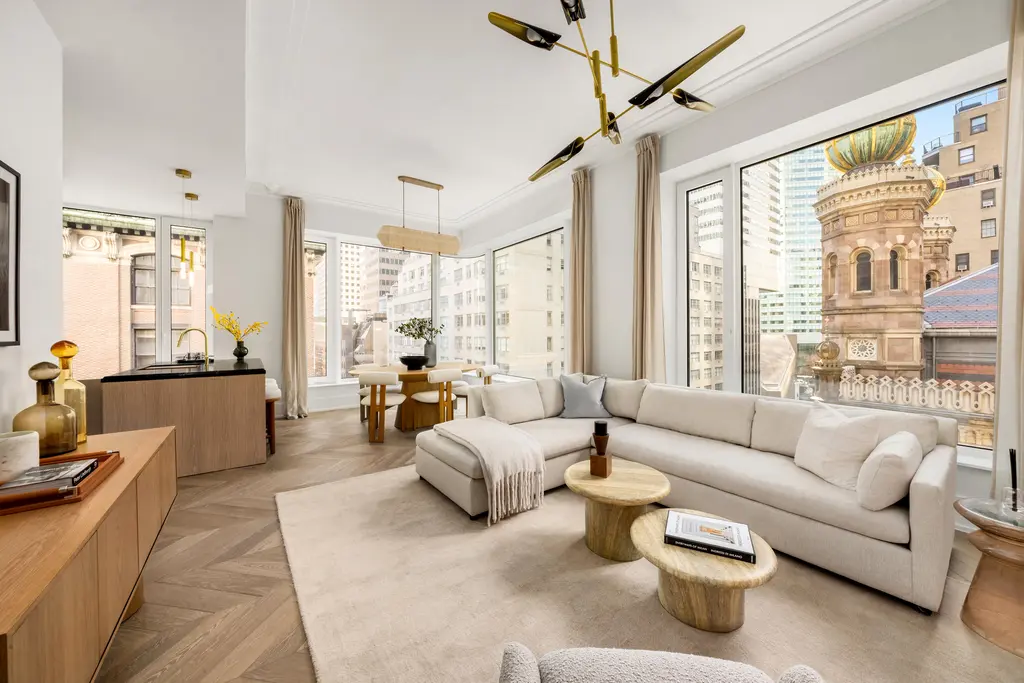
660 Lexington Avenue, #5B (Douglas Elliman Real Estate)
The Chrysler Building, located at 405 Lexington Avenue in Midtown East, was built in 1928–1930 and designed by William Van Alen for automaker Walter P. Chrysler. Designated an individual New York City landmark in 1978, it is one of the city’s defining Art Deco skyscrapers, celebrated for its stainless-steel crown, automobile-inspired ornament, and brief reign as the tallest building in the world.
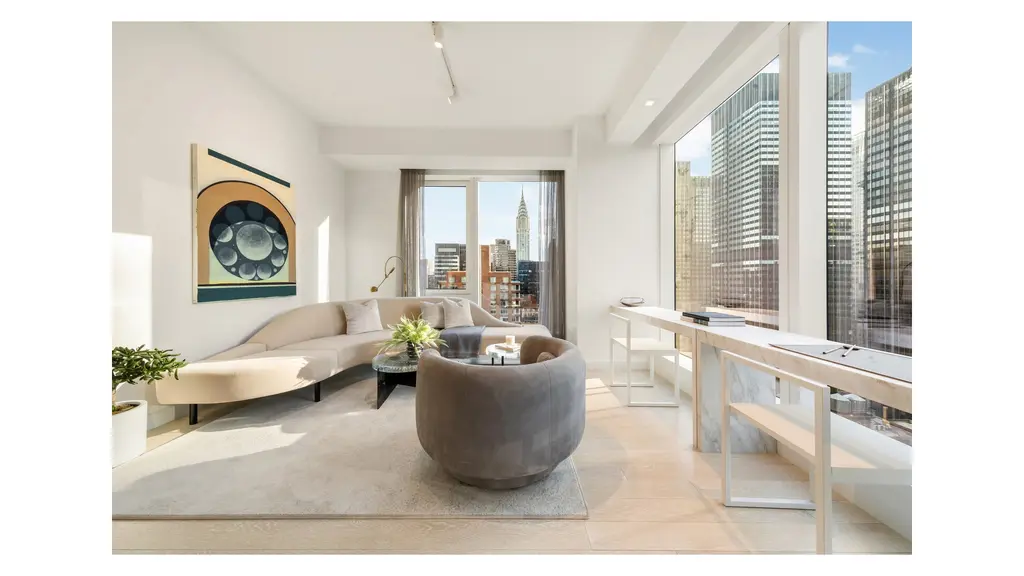
The Centrale, #30A (Douglas Elliman Real Estate)
Would you like to tour any of these properties?
Just complete the info below.
Or call us at (212) 755-5544
Riverside Church, located at 490–498 Riverside Drive and 81 Claremont Avenue in Morningside Heights, was built in 1928–1930 and designed by Henry C. Pelton and Allen & Collens. Designated an individual New York City landmark in 2000, the neo-Gothic church is significant as one of the city’s best-known religious structures, with a monumental tower and a history tied to John D. Rockefeller Jr., Harry Emerson Fosdick, and the rise of interdenominational Protestant worship in New York.
Claremont Hall, #36B
$2,995,000
Morningside Heights | Condominium | 2 Bedrooms, 2.5 Baths | 1,514 ft2
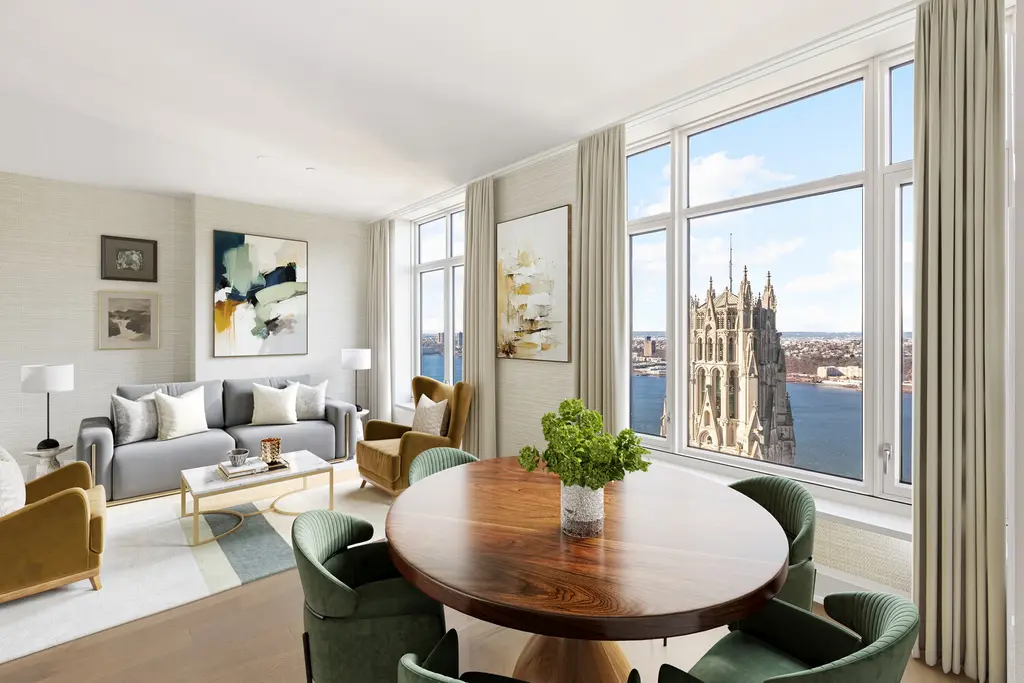
Claremont Hall, #36B (Corcoran Sunshine Marketing Group)
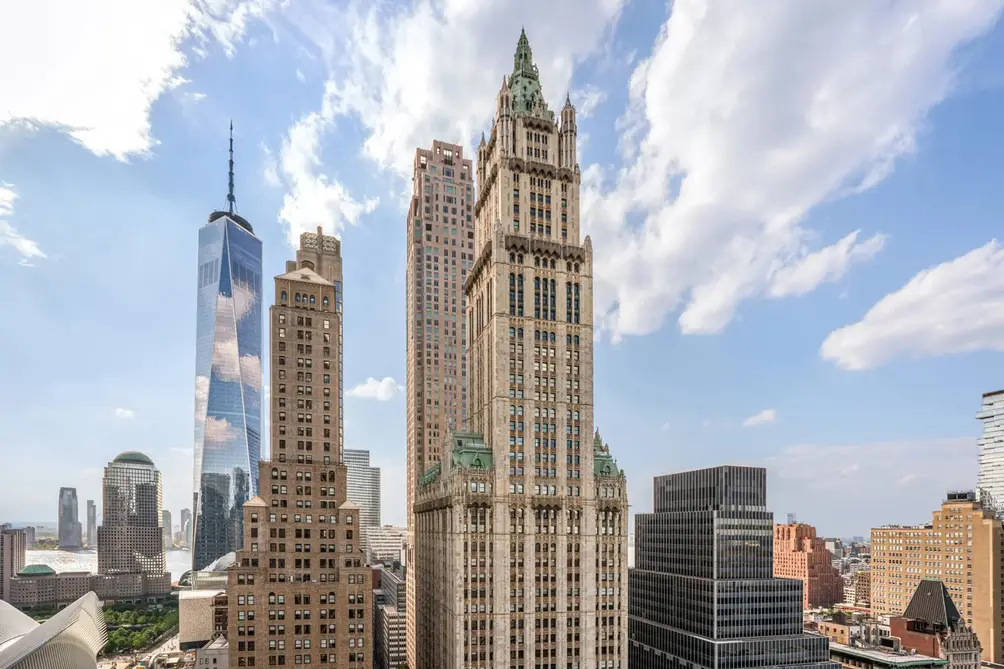 The Woolworth Building from 25 Park Row (Corcoran)
The Woolworth Building, located at 233 Broadway overlooking City Hall Park, was built between 1911 and 1913 and designed by Cass Gilbert for five-and-dime magnate Frank W. Woolworth. Designated an individual New York City landmark in 1983, the neo-Gothic skyscraper was the tallest building in the world when completed and remains one of Lower Manhattan’s most recognizable landmarks, famously nicknamed the “Cathedral of Commerce.”
25 Park Row, #25CNORTH
$3,995,000
Financial District | Condominium | 2 Bedrooms, 2.5 Baths | 1,725 ft2
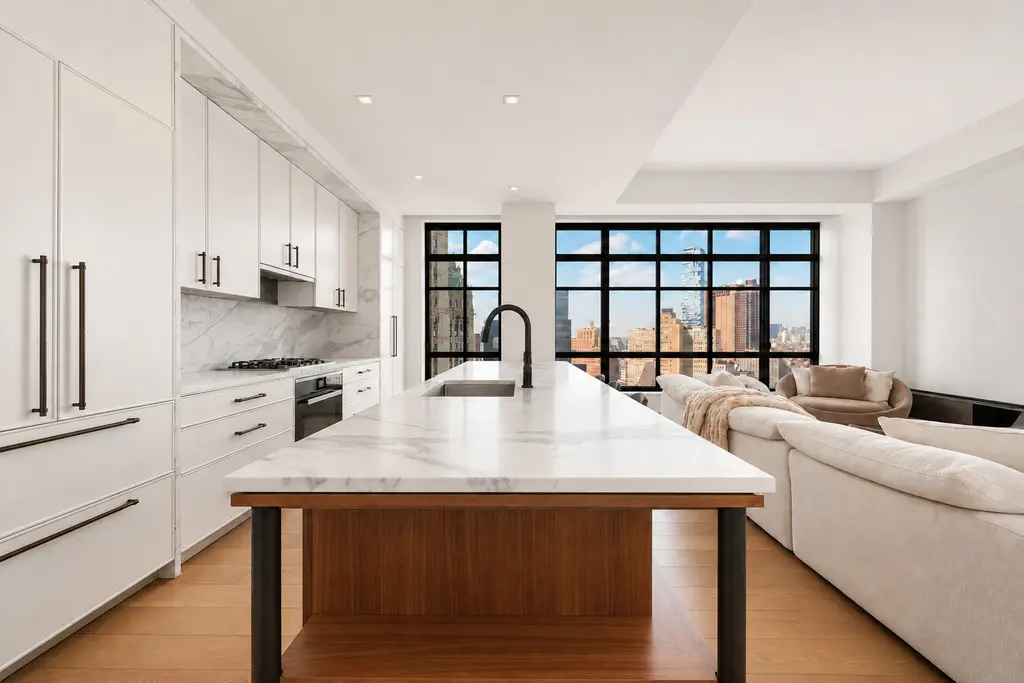
25 Park Row, #25CNORTH (Corcoran Group)
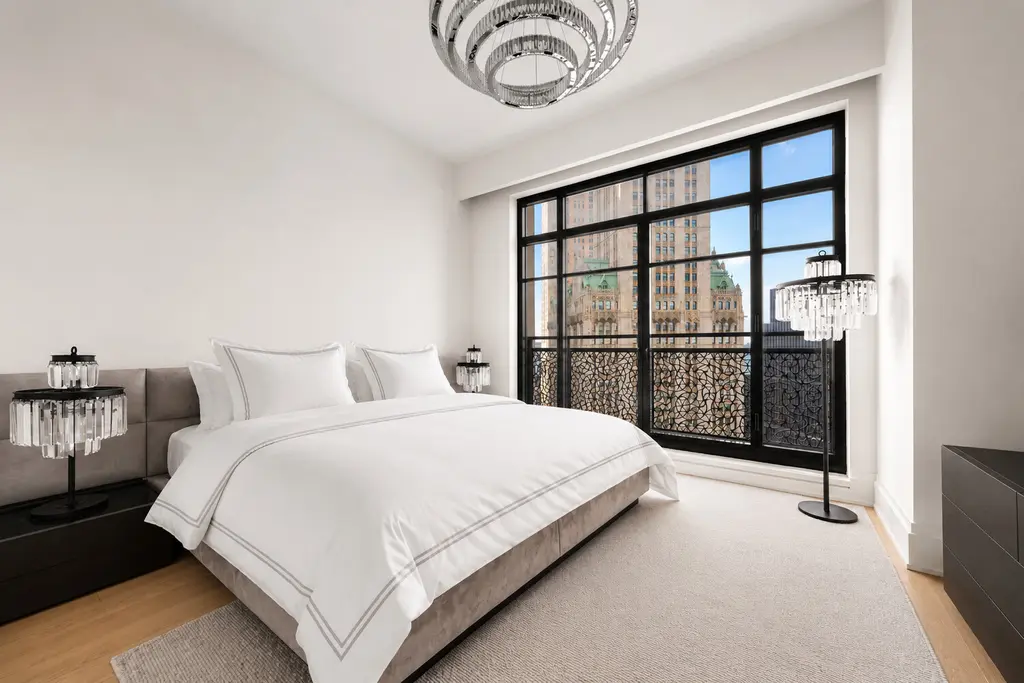
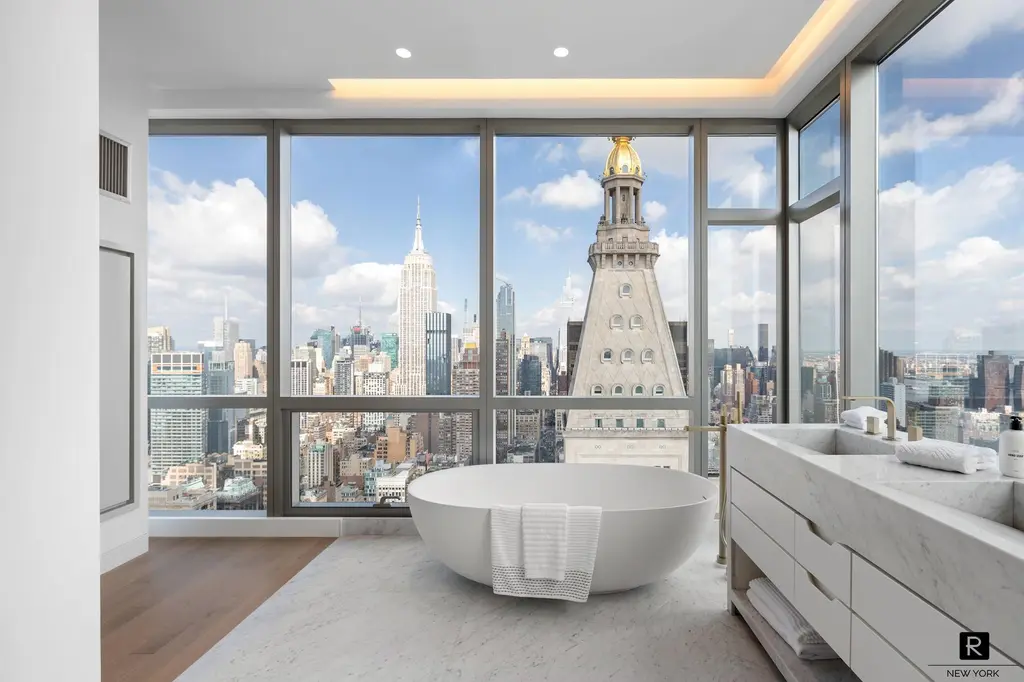
The Metropolitan Life Insurance Company Tower, located at 1 Madison Avenue overlooking Madison Square Park, was built in 1907–1909 and designed by Napoleon LeBrun & Sons. Designated an individual New York City landmark in 1989, the Italian Renaissance Revival tower was modeled after the Campanile of San Marco in Venice and was once the tallest building in the world, making it one of the great early skyscraper landmarks of New York’s commercial skyline.
One Madison, #55B
$16,995,000
Flatiron/Union Square | Condominium | 4 Bedrooms, 3.5 Baths | 3,310 ft2
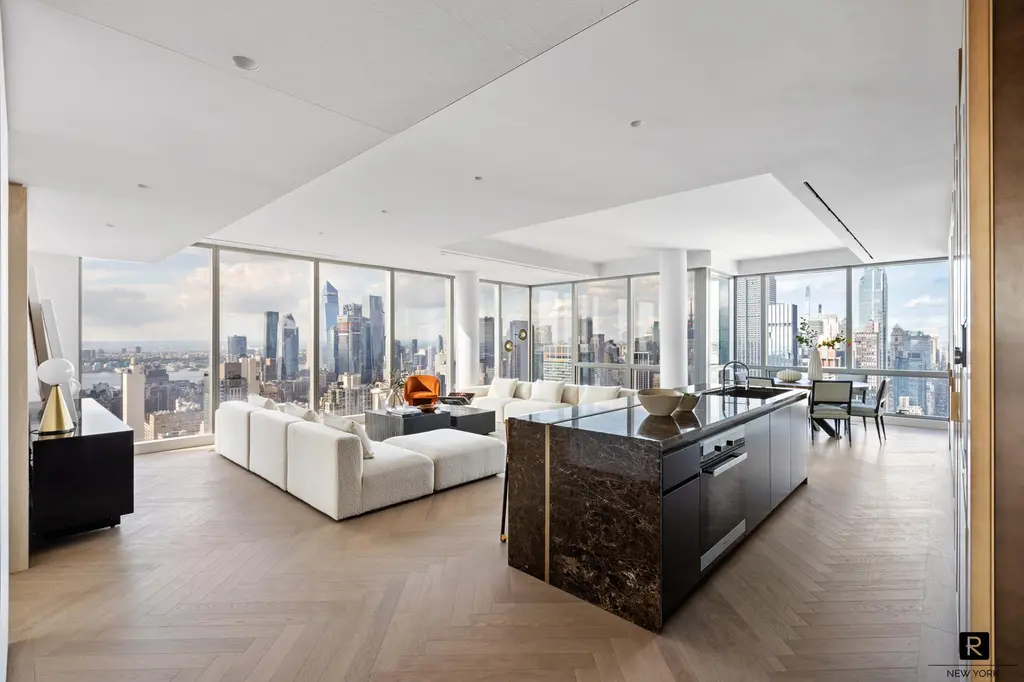
One Madison, #55B (R New York)
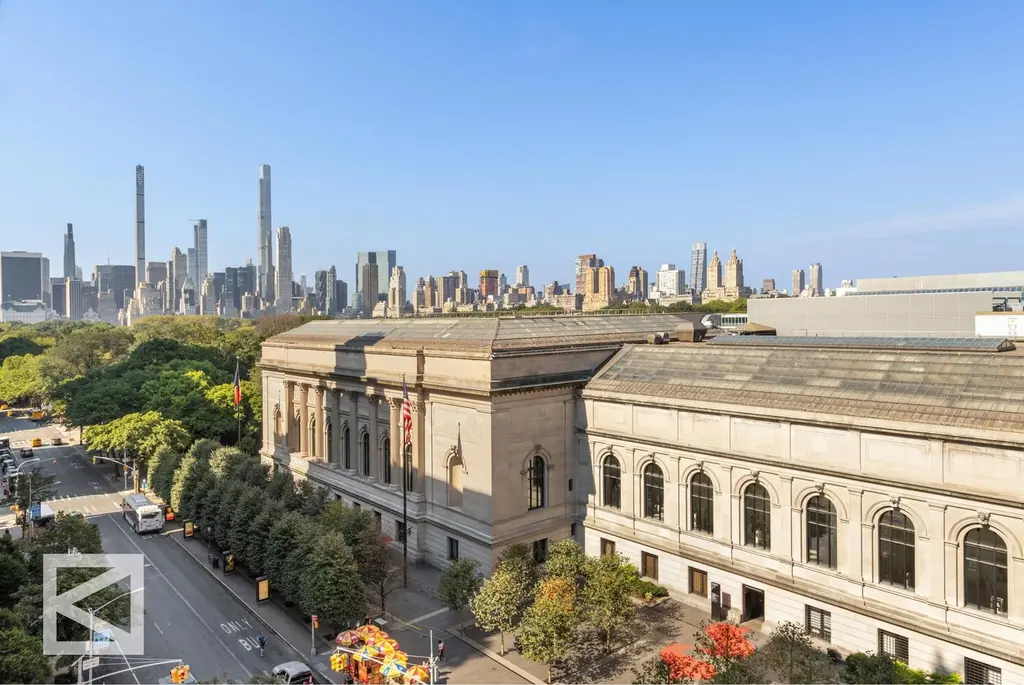
The Metropolitan Museum of Art, located at Fifth Avenue and 82nd Street, was built in multiple phases beginning in 1880, with major campaigns completed in 1894, 1902, 1911, 1913, 1916, 1926, 1956, and 1965 by architects including Vaux and Mould, Richard Morris Hunt, McKim, Mead & White, and Brown, Lawford & Forbes. Designated an individual New York City landmark in 1967, it is significant as one of the city’s great monumental structures and one of the world’s leading art institutions, with Hunt’s grand Fifth Avenue entrance helping define the museum’s architectural identity.
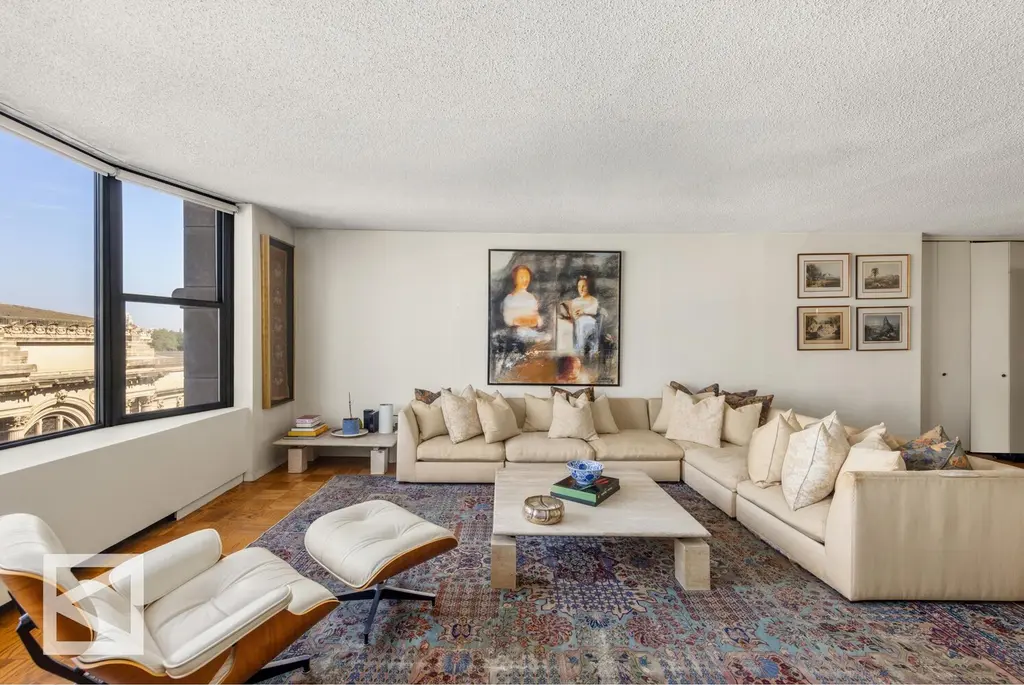
1001 Fifth Avenue, #110C (Douglas Elliman Real Estate)
Carnegie Hall, located at 881 Seventh Avenue between West 56th and 57th Streets, was begun in 1889, completed in 1891, and designed by William B. Tuthill for industrialist and philanthropist Andrew Carnegie. Designated an individual New York City landmark in 1967, it is significant as one of the world’s most celebrated concert halls and a rare surviving 19th-century performance venue, admired for both its Renaissance Revival architecture and its extraordinary cultural history.
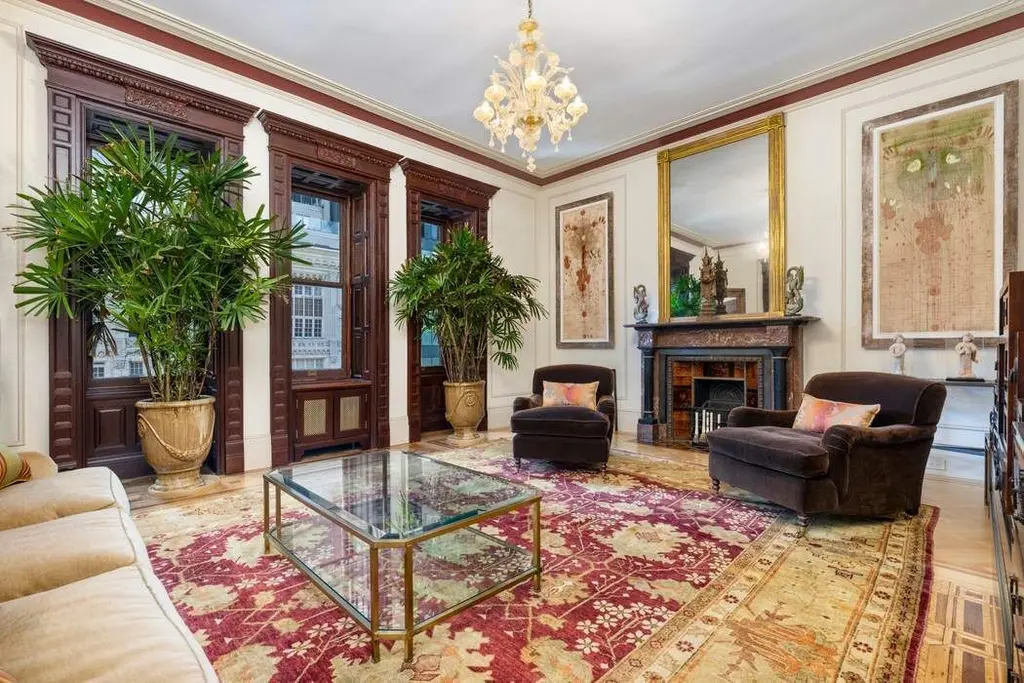
The Osborne, #9BBA (Sothebys International Realty)
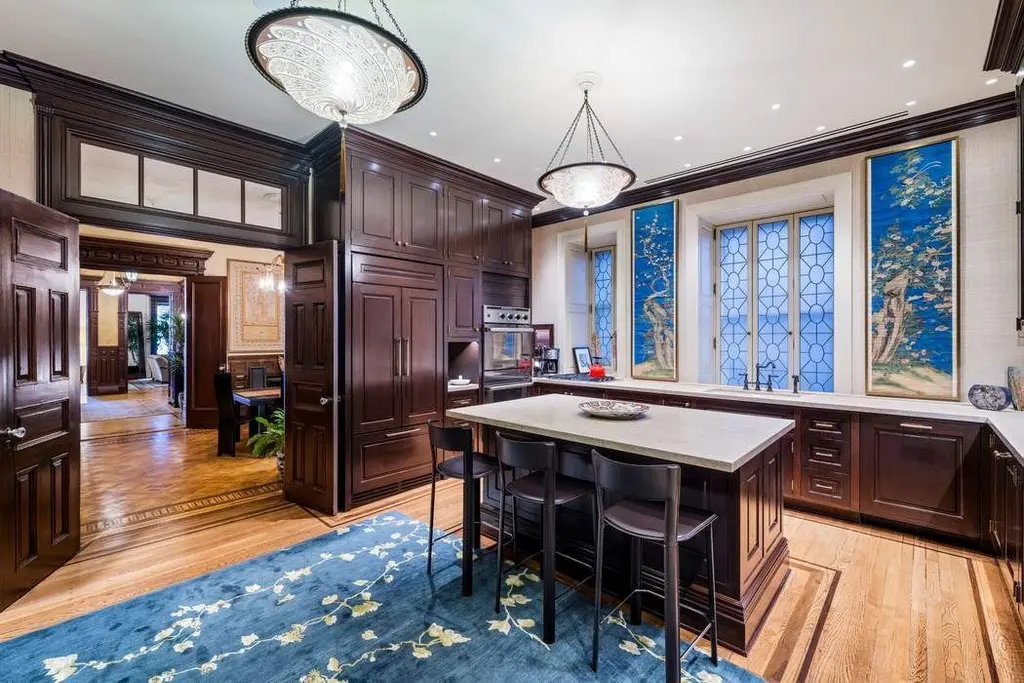
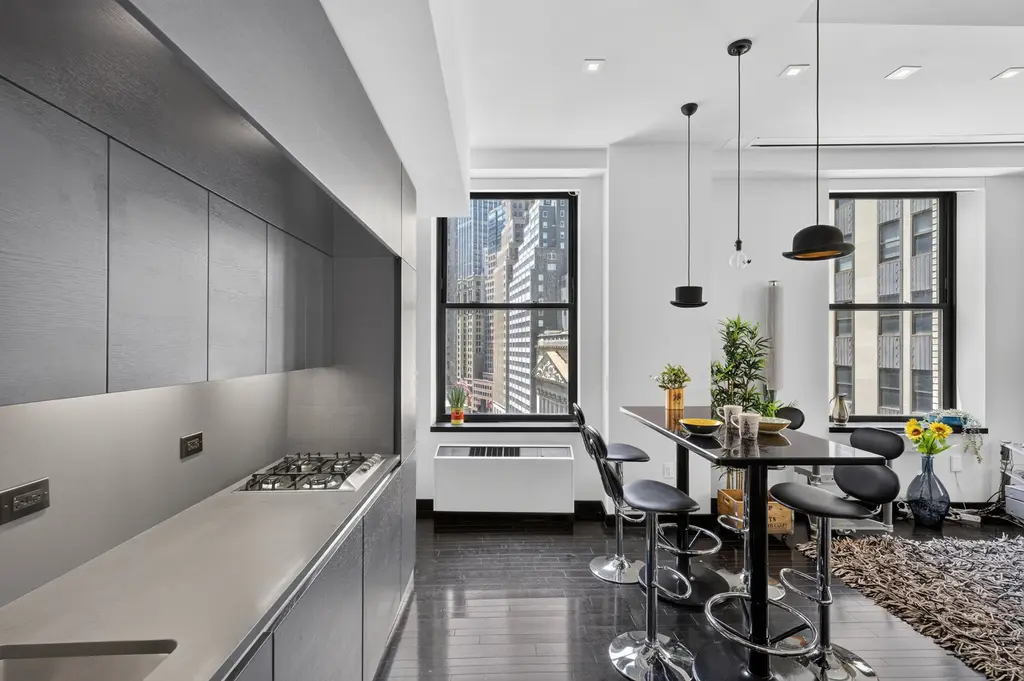
The New York Stock Exchange Building, located at 8–18 Broad Street in the Financial District, was built in 1901–1903 and designed by George B. Post, with a later Wall Street annex by Trowbridge & Livingston. Designated an individual New York City landmark in 1985, it is significant as one of the city’s great Beaux-Arts monuments and the symbolic home of American finance, instantly recognizable for its temple-like Broad Street facade, monumental Corinthian columns, and sculptural pediment.
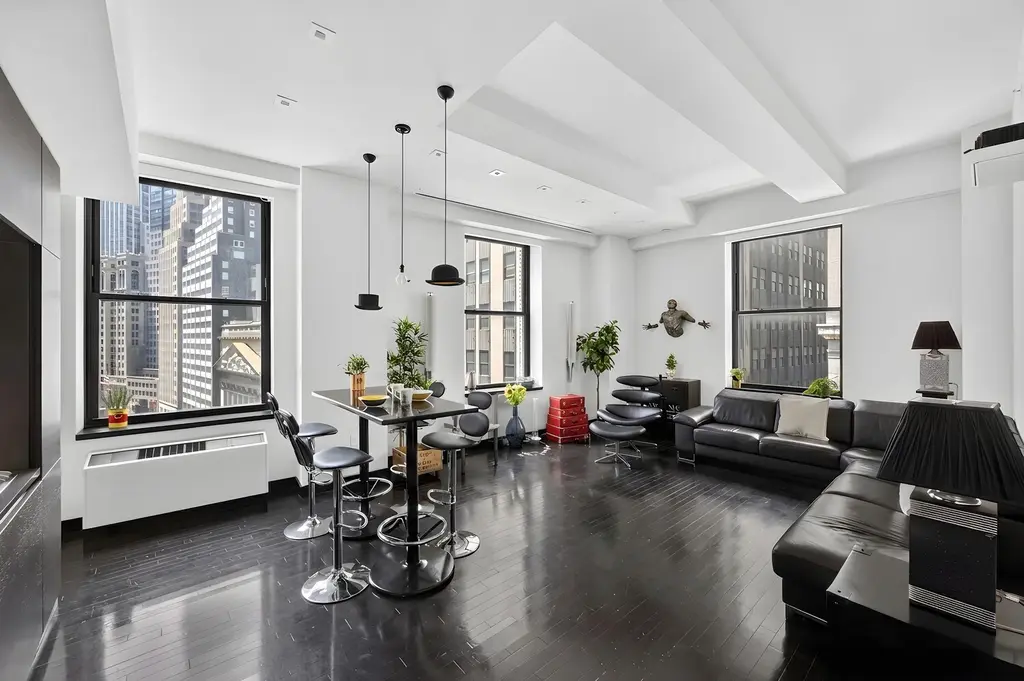
The Collection, #908 (Serhant)
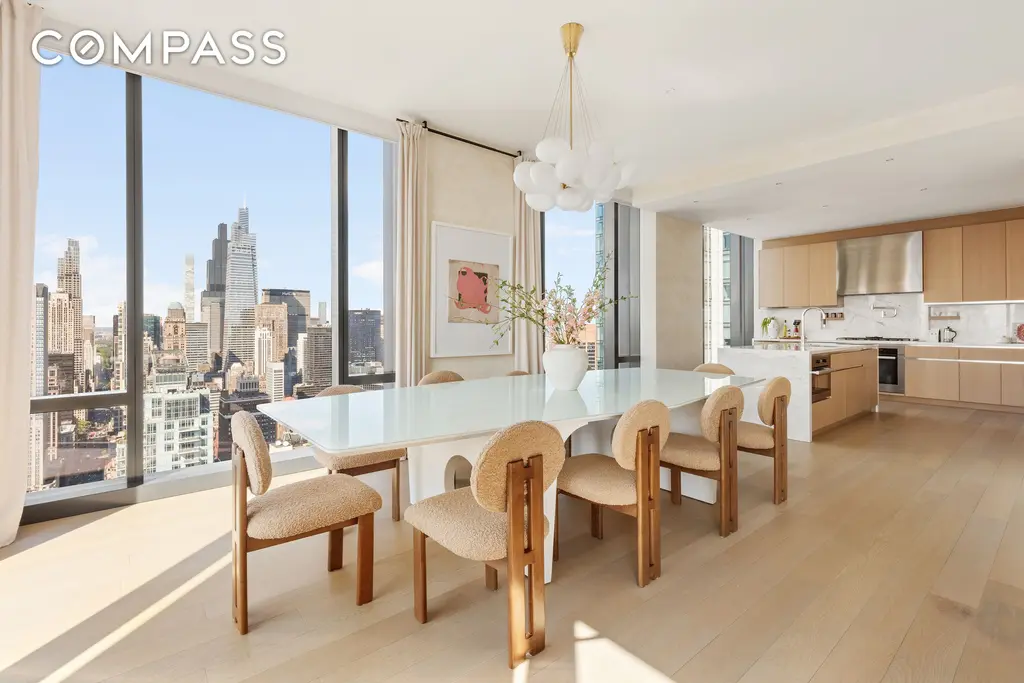
The Empire State Building, located at 350 Fifth Avenue in Midtown South, was built in 1930–1931 and designed by Shreve, Lamb & Harmon, with William F. Lamb as chief designer. Designated an individual New York City landmark in 1981, it is significant as one of the world’s most famous Art Deco skyscrapers, a Depression-era feat of engineering and construction, and the tallest building in the world from its completion until the World Trade Center surpassed it in the 1970s.
277 Fifth Avenue, #PH53
$15,000,000
Flatiron/Union Square | Condominium | 4 Bedrooms, 4 Baths | 3,870 ft2
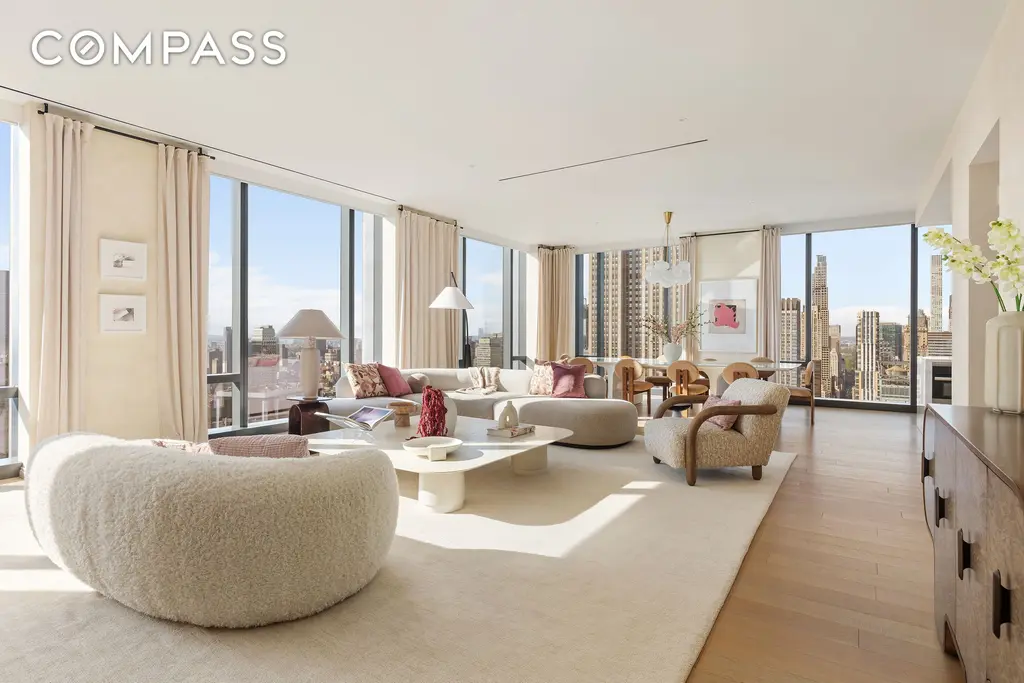
277 Fifth Avenue, #PH53 (Compass)
Related Articles
Future New York
‘Indiana Jones’ penthouse finds buyer as $22.5M Fifth Avenue maisonette tops Manhattan contracts
Tuesday, September 15, 2026
Future New York
Top 25 NYC condos with the best playrooms and kid-friendly amenities
Thursday, September 3, 2026
Future New York
Top 10 most prestigious condos in Midtown East + 12 new towers transforming the premier district
Friday, August 14, 2026
Get To Know
Triple-mint NYC apartments with ensuite five-fixture baths; Sorin launches sales near Hudson Yards
Tuesday, August 11, 2026
Future New York
Price Cuts: Sandie Tilotson's penthouse at Mandarin Oriental reduced by $15M; UWS brownstone with underground pool now 20% off
Thursday, August 6, 2026
Future New York
For the Love of Loggias: Rare New York City listings with private outdoor rooms
Tuesday, August 4, 2026
Great Listings
25 NYC residential buildings with acclaimed in-house restaurants as Polo Bar plans move to 625 Madison
Tuesday, July 28, 2026
Great Listings

 6sqft delivers the latest on real estate, architecture, and design, straight from New York City.
