- Apartments
- Overview & Photos
- Maps
- Floorplans
- Sales Data & Comps
- Similar Buildings
- All Units
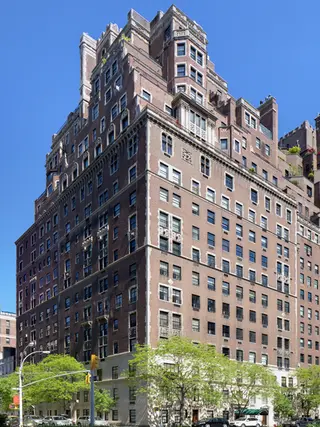
Rosario Candela and Cross & Cross collaborated to design 720 Park Avenue, creating an ornate red-brick facade with limestone trim. The building features palatial apartments with high ceilings, fireplaces, and upper-floor terraces, some adorned with brick archways. Currently, 1 apartment is for sale.

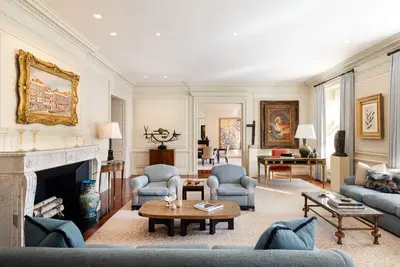
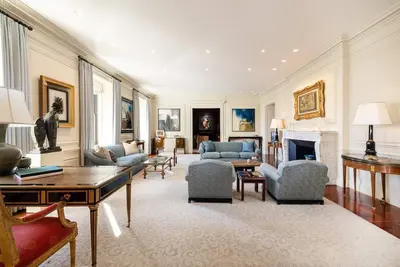
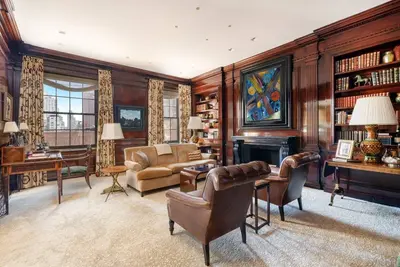
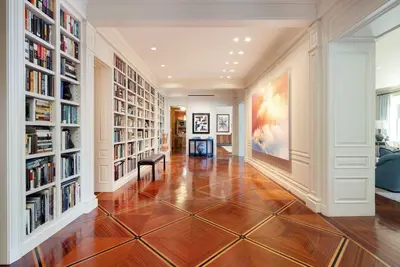
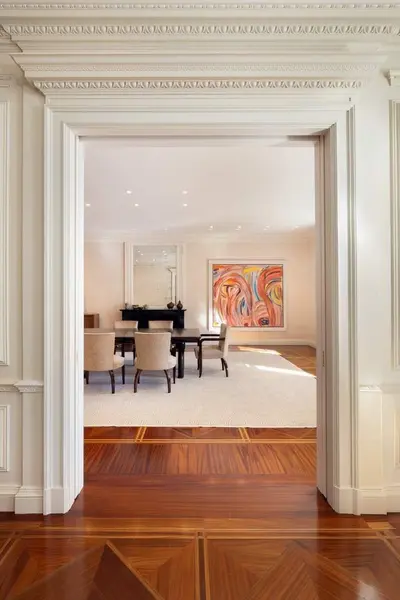
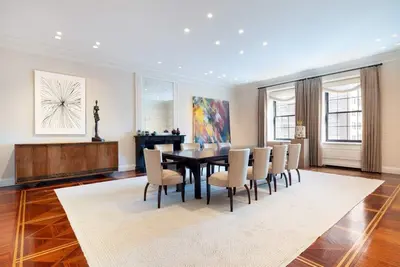
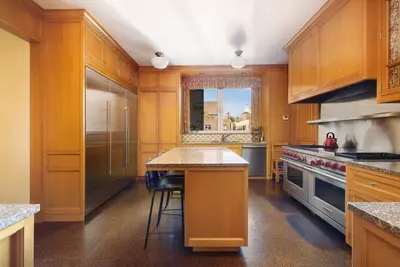
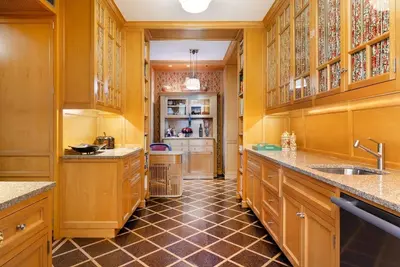
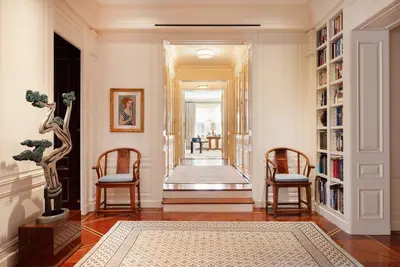
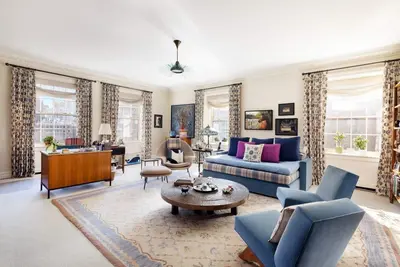
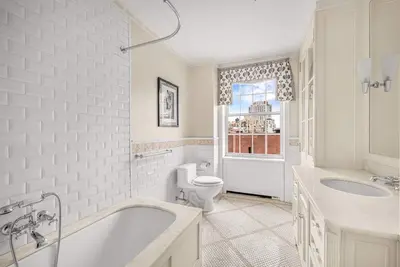
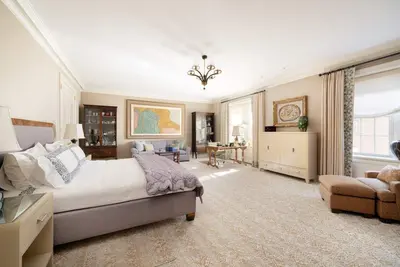
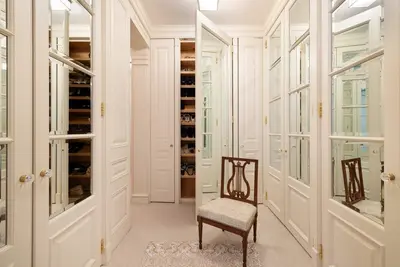
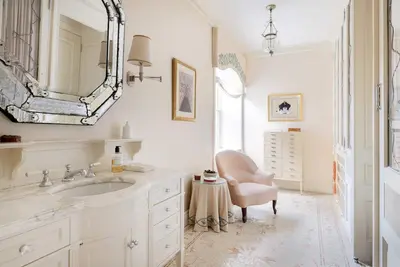
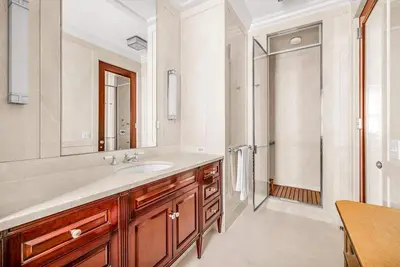
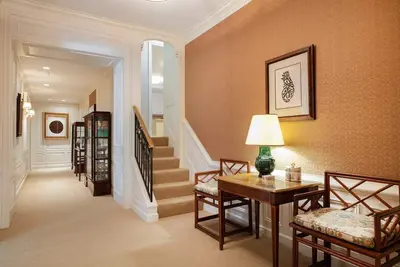
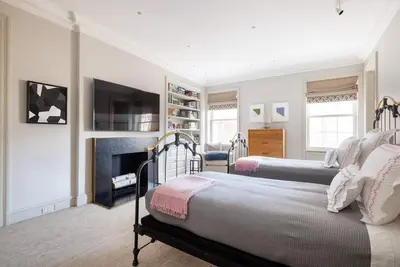
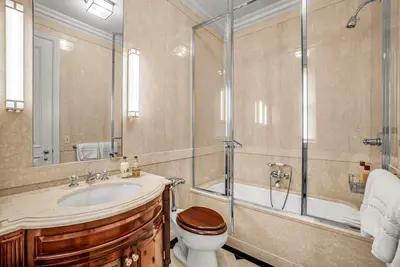
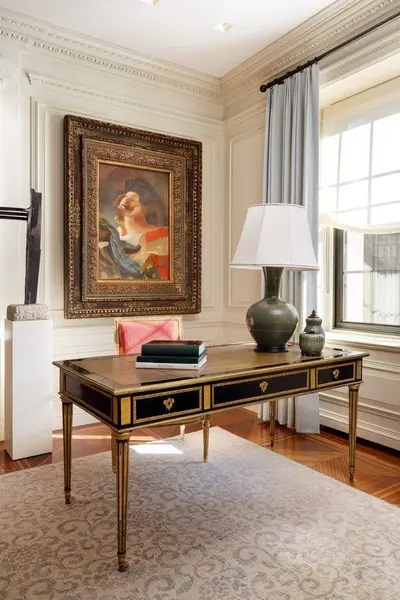
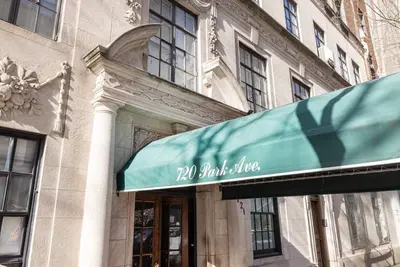
Completed in 1929, 720 Park Avenue represents a prestigious collaboration between two of New York's most celebrated architectural talents: Rosario Candela and Cross & Cross. Located on the northeast corner of Park Avenue and 70th Street, this 29 unit, 18 story co-op showcases an ornate red brick façade trimmed in limestone, with a distinctive design featuring multiple setbacks, bay windows, and decorative elements that create what one contemporary critic called "a jumble of setbacks, stick outs, bays, battlements, and buttresses." The building was developed by Starrett Brothers and sits on part of the former Presbyterian Hospital site.
The building has attracted an impressive roster of residents over the decades, most notably Jesse Isidor Straus, the philanthropist and founder of Macy's, whose original terraced duplex featured a 40 foot entrance gallery and a nearly 1,000 square foot library with a baronial stone fireplace. Other distinguished residents have included William E. Iselin (banker and New York Yacht Club member), Carl Spielvogel (advertising executive), Leonard Riggio (Barnes & Noble), Jamie Tisch (ex wife of Giants owner Steve Tisch), and Lawrence T. Babbio (former Verizon president).
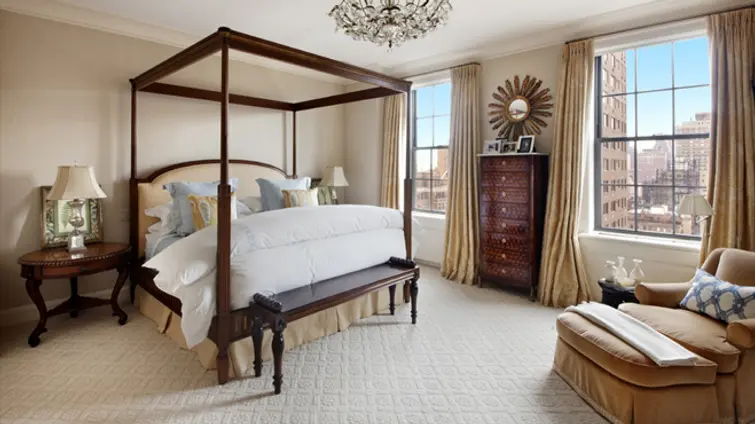
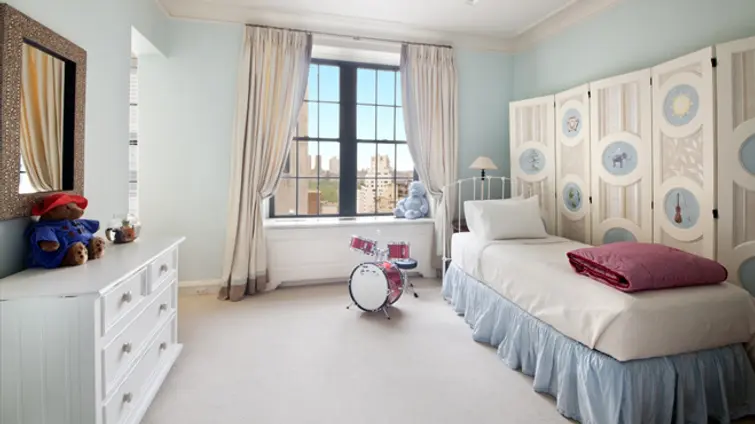
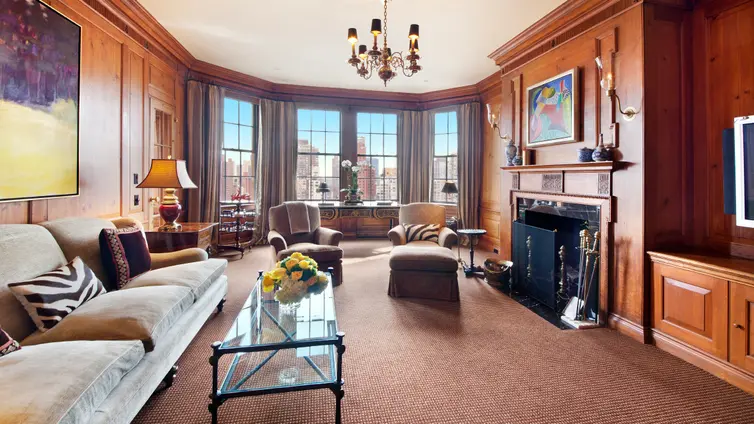
The apartments at 720 Park Avenue are truly palatial in scale, with most units spanning several thousand square feet and featuring soaring ceilings up to 14'9", multiple wood burning fireplaces, and expansive terraces with brick archways on upper floors. Some units feature 80 to 90 feet of Park Avenue frontage, private elevator landings, wine cellars, and elaborate original details including herringbone floors and period millwork.
Residents enjoy white glove service with a concierge and doorman, along with building amenities including a state-of-the-art fitness center and private squash court. The pet friendly building maintains the highest levels of privacy and security, though it notably lacks a garage. With its combination of Candela's masterful interior planning and Cross & Cross's architectural expertise, 720 Park Avenue remains one of the city's most exclusive and sought after addresses.
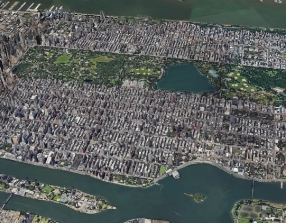
View school info, local attractions, transportation options & more.
Experience amazing 3D aerial maps and fly throughs.



For some co-ops, instead of price per square foot, we use an estimate of the number of rooms for each sold apartment to chart price changes over time. This is because many co-op listings do not include square footage information, and this makes it challenging to calculate accurate square-foot averages.
By displaying the price per estimated room count, we are able to provide a more reliable and consistent metric for comparing sales in the building. While we hope that this gives you a clearer sense of price trends in the building, all data should be independently verified. All data provided are only estimates and should not be used to make any purchase or sale decision.
Notable past and present residents at 720 Park Avenue

 6sqft delivers the latest on real estate, architecture, and design, straight from New York City.
Like us on Facebook to keep up with the trends and
6sqft delivers the latest on real estate, architecture, and design, straight from New York City.
Like us on Facebook to keep up with the trends and 