
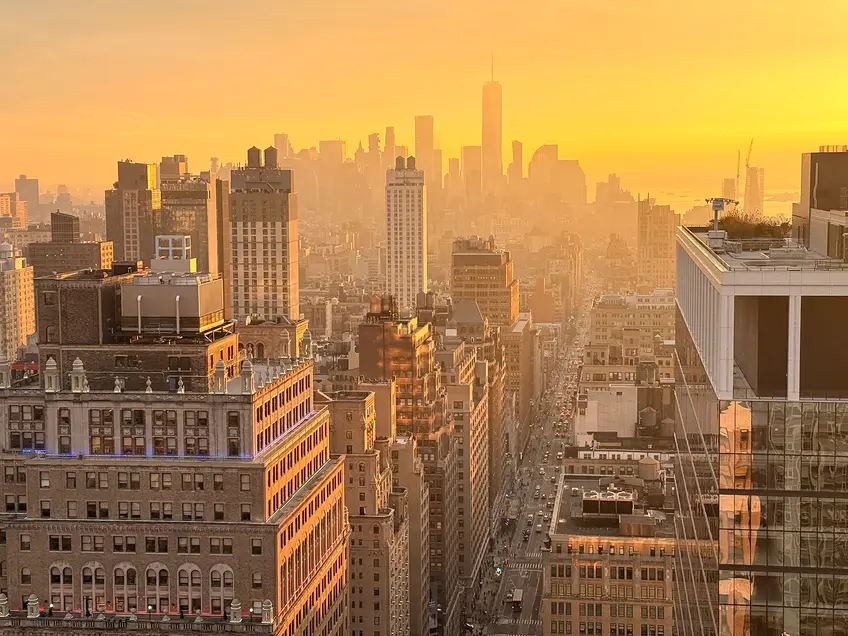
The meeting between President Donald Trump and Mayor-elect Zohran Mamdani on Friday, November 21, 2025, sent a strong signal to the New York City real estate market.
The headline takeaway is an unlikely "populist alignment" on affordability. Instead of the anticipated clash between a Republican President and a Democratic Socialist Mayor-elect, the two found common ground on the high cost of living.
For the NYC residential real estate sector, this surprising support from the White House signals political stability regarding federal funding but significantly heightened regulatory risk for landlords and developers.
1. The "Rent Freeze" Just Got Political Cover
The most critical takeaway for residential owners is that Mamdani’s primary campaign promise (a rent freeze on NYC’s one million-plus rent-stabilized units) likely faces no federal headwinds.
The Signal: Trump explicitly stated, "He wants to see rents coming down... things that I agree with."
The Implication: Landlords hoping the Trump administration would intervene or pressure the city against strict rent controls have lost that hope. Trump’s "populist" stance on inflation aligns with Mamdani’s tenant-focused agenda.
Market Impact: Expect immediate downward pressure on the valuations of rent-stabilized multifamily buildings. The "value-add" business model for these assets (buying, renovating, deregulating/raising rents) is effectively dead for the near term.
2. Federal Funding is Safe (For Now)
During the campaign, Trump threatened to withhold federal funds if Mamdani won. This meeting reversed that threat.
The Signal: Trump pledged to "help him do a great job" and acknowledged Mamdani’s mandate.
The Implication: The city’s budget, and by extension, property tax stability, is less fragile than feared. A withdrawal of federal funds would have forced the city to hike property taxes aggressively to cover deficits. That immediate "doomsday" tax risk has subsided.
3. A Shift from Incentives to Public Mandates for Development
Mamdani’s platform focuses on government-led housing production (200,000 affordable units) rather than private developer incentives (like the old 421-a tax break).
The Signal: Trump’s praise for Mamdani’s "building housing" goals suggests the federal government might support these public-centric projects, potentially through HUD or infrastructure spending, rather than forcing a return to supply-side tax cuts.
The Implication: Private developers may find themselves sidelined or facing stricter requirements (e.g., higher affordable set-asides, union labor mandates) without the tax abatements they previously relied on. The "luxury condo" market remains untouched by this specific meeting, but the rental development math has become much harder for private equity.
4. The Capital Flight Risk vs. Market Reality
Real estate industry leaders have reacted with fear and caution, with some stocks (like Vornado and SL Green) taking a hit following Mamdani’s election.
The Fear: Investors worry this alliance validates an anti-landlord regulatory environment, potentially driving capital to friendlier markets (like Miami or Dallas).
The Reality: While stabilized assets are risky, market-rate (unregulated) apartments may actually see increased demand and pricing power. If the supply of new rental units slows down because private developers pull back (due to lack of incentives), and existing stabilized units are frozen (locking tenants in place), the scarcity of available market-rate units could drive their rents up further.
5. Certainty Trumps Policy
“I have over 35 listings on the market right now. The past couple of weeks, they were very quiet. However, the last few days have been nonstop with showings. I have buyers who have reached out and want to engage and get back into the market. I am seeing interest from both local and international buyers which is a great sign…
History teaches us this, political shifts create short term hesitation not long-term change. Inventory, interest rate, and buyer sentiment, those are the real market drivers and right now buyers are engaged, motivation is back.” — Kathy Murray, Founder of The Kathy Murray Team at Corcoran
Why this matters now:
The "Uncertainty Tax" is Gone: Markets hate uncertainty more than they hate "bad" policy. Before the meeting, the fear was that Trump would bankrupt NYC to punish Mamdani. Now that Trump has pledged support, the doomsday scenario is off the table. Buyers who were sitting on the sidelines, fearing a property tax spike or city service collapse, now feel safe enough to re-enter.
Bifurcation of the Market: Murray’s optimism highlights a critical split. The investment class (people buying rent-stabilized buildings) is facing a crisis due to the rent freeze. However, the residential class (people buying apartments to live in) is seeing "business as usual."
International Confidence: Murray’s mention of international buyers is key. Global capital often views NYC real estate as a safe haven. Trump’s endorsement of the city ("I'd feel very comfortable living in New York") likely signaled to foreign investors that despite the socialist mayor, the city remains a protected asset class under the federal umbrella.
The Bottom Line
The meeting between Trump and Mamdani created a completely unexpected macro-political ceasefire, and the market has digested the news that Mamdani is Mayor, but Trump won't let the city fail.
Related Articles
How property values are assessed in NYC + Great new listings with open houses from $445K
Saturday, June 20, 2026
Swim with a View: 30 Manhattan buildings with high-floor swimming pools and fitness centers
Saturday, June 20, 2026
What's old is new again: Mass timber construction in NYC as Timberburg readies to launch sales
Tuesday, June 16, 2026
What New York’s transparency bill could mean for whisper listings + Public listings with open houses
Friday, June 12, 2026
What the pied-à-terre tax could mean for Manhattan prices + NYC penthouse listings from $499K
Friday, June 12, 2026
Where would the Knicks live? See the ultimate NYC apartments for watch parties
Thursday, June 11, 2026
Inside Mayor Mamdani's "Block by Block" housing plan + 12 forthcoming new developments
Friday, June 5, 2026
Seven tips for getting past NYC's toughest co-op boards + Prewar gems with open houses
Friday, June 5, 2026

 6sqft delivers the latest on real estate, architecture, and design, straight from New York City.
