Username:
Password:

How City Realty Works:
· For Buyers>
· For Renters>
· For Brokers>
· For Building Owners>
· The City Realty Advantage>
· Buyers Guide>
· Renters Guide>
· Co-op & Condos>
· Luxury Condo Guide>
· New Developments>
· Rental Buildings>
· Relocation Guide>
· Neighborhood Guide>
Register now to find the perfect apartment - it's easy and it's free >>
To buy, rent or sell
an apartment
please call us at:
2 1 2 - 7 5 5 - 5 5 4 4
or email us at:
contact@cityrealty.com
The Alwyn Court > 180 West 58th Street
located between Seventh Avenue & Sixth Avenue
Bookmark and Share
  

Pricing Information


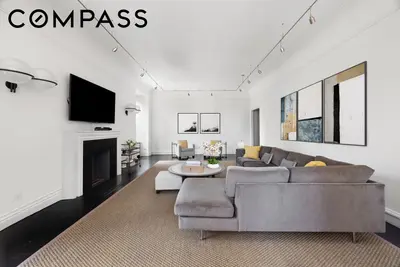
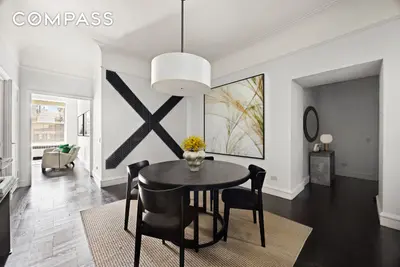
Approx. Prices for Apartments at The Alwyn Court, 180 West 58th Street

2 Bedrooms from $1,495,000 to $2,350,000 (updated 01/20/2010)
1 Bedroom from $985,000 to $1,300,000 (updated 01/05/2010)


Overview

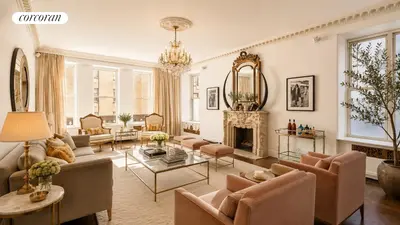
   About The Alwyn Court, 180 West 58th Street

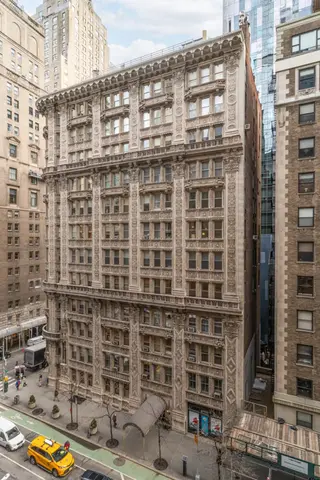
The city's most ornate building, the Alwyn Court is a classic New York real estate story of riches to rags and back.

When it was completed in 1910, the area around Carnegie Hall had several of the city's most important apartment buildings such as the Osborne on the northwest corner of Seventh Avenue at 57th Street, the Rembrandt, the city's first co-op at 152 West 57th Street and the Navarro Flats on Central Park South, east of Seventh Avenue.
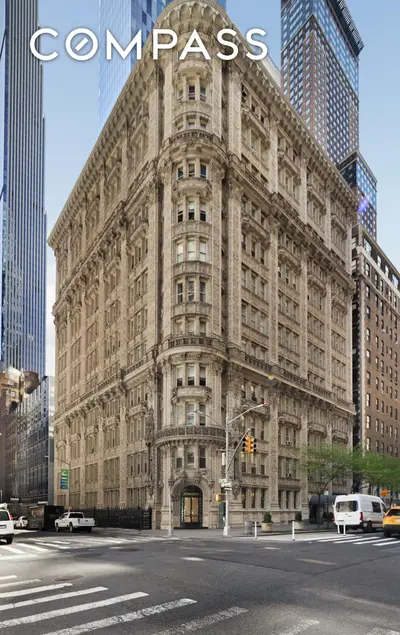
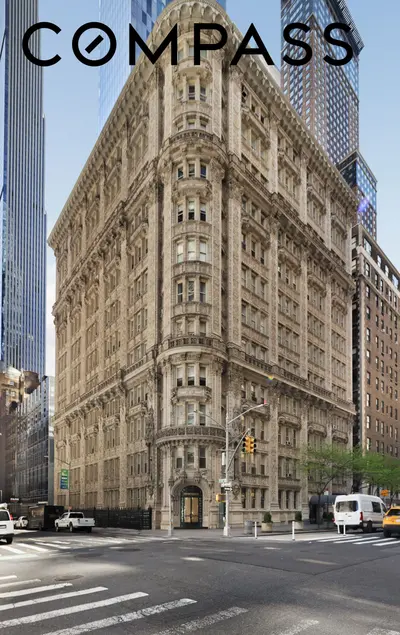
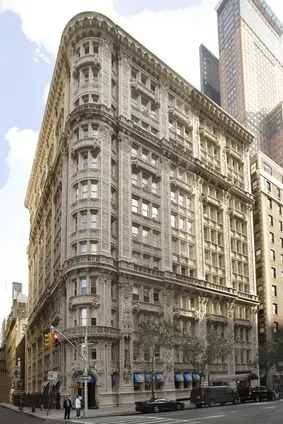
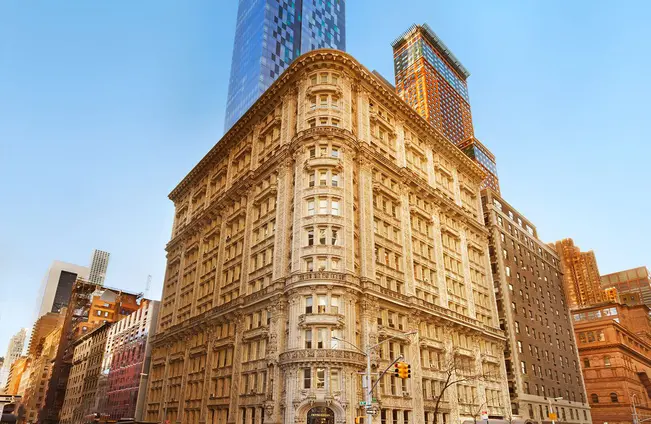
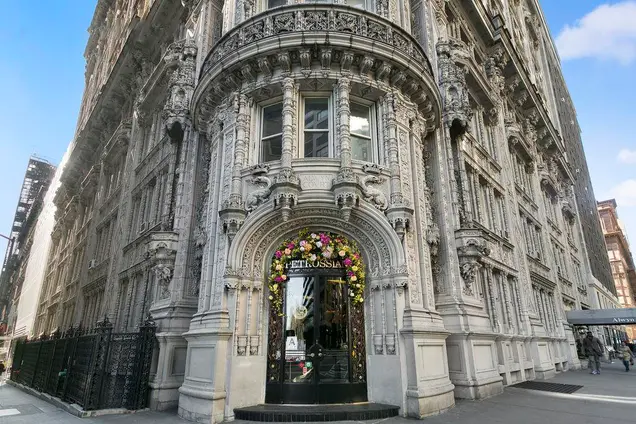
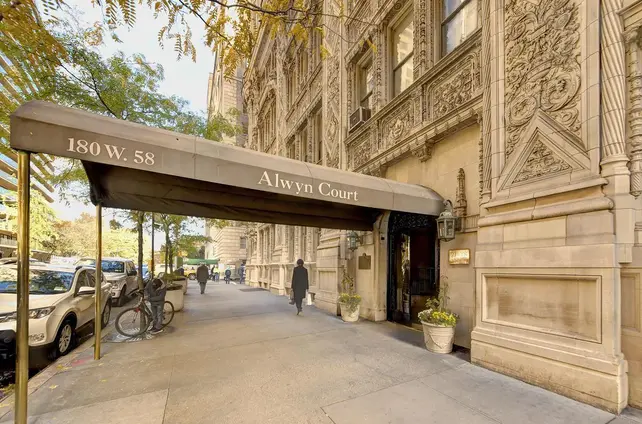
This 12-story building instantly became one of the city's most famous because its facades are completely covered in French Renaissance-style, glazed terra-cotta decoration.
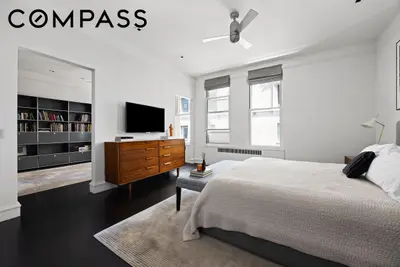
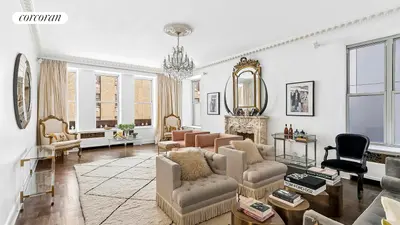
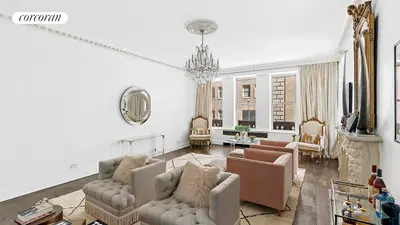
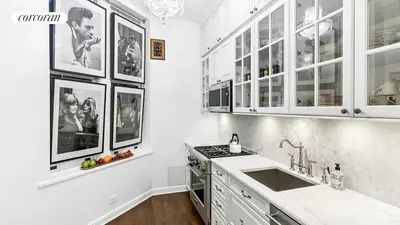
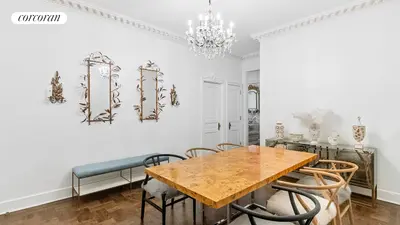
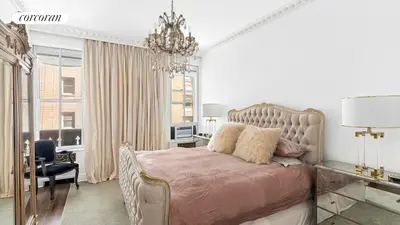
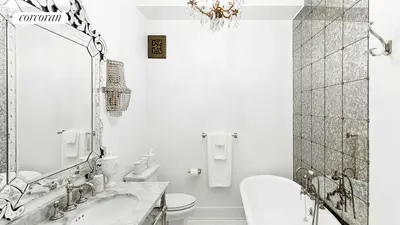
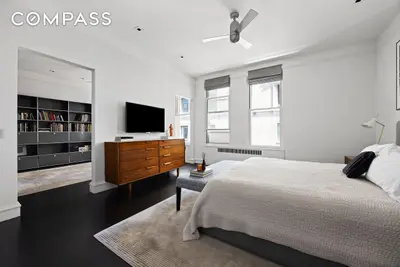
The exterior lavishness was not isolated and the building had only two large apartments, with 14 rooms and five baths each, per floor with carved Caen stone, marble and fine wood paneling, according to Andrew Alpern in his excellent book, "New York's Fabulous Luxury Apartments With Original Floor Plans From The Dakota, River House, Olympic Tower And Other Great Buildings," Dover Publications, Inc., 1987, a reprint of "Apartments For The Affluent: A Historical Survey of Buildings in New York," originally published in 1975 by McGraw-Hill Book Company. "The dressing rooms had storage closets fitted with plate glass shelves and multiple full-length mirrors," he added.

The building, according to a "Streetscapes" column by Christopher Gray in the April 6, 1997 edition of The New York Times, originally was planned by Walter Russell, an artist who had been involved in the development of artists' studio buildings on West 67th Street and had commissioned the architectural firm of Harde & Short to work on another such project at 44 West 77th Street in 1907. That year he and developer Alwyn Ball Jr. bought the site of the Alwyn Court for a "studio palace," also to be designed by Harde & Short.

The building's first tenants, Gray noted, included Jacob Wertheim, president of United Cigar Stores, who left a 50-foot-wide house at 5 West 76th Street…[and] Frederick Steinway; in 1925, as president of his family's piano company, Steinway moved the first from East 14th Street to its new headquarters at 119 West 57th Street."

Within months of its opening, however, the building suffered a major fire, but recovered and was fully rented through the 1920's. "But by the 1930's Seventh Avenue was no longer a desirable address and there were only six residential telephone listings in the building in 1936. By 1937 the building was empty," Gray wrote.

The building was taken over by Edgar Ellinger and the Dry Dock Savings Institution and they gutted the building and removed the very large cornice and balustrade. Louis S. Weeks was the architect of the remodeling. Some notion of the building's former great cornice can be sensed from the cornice that remains on the building at 45 East 66th Street, another wonderful building designed by Harde & Short.

The dastardly remodeling, at least in terms of scalping the building's cornice, fortunately did not disturb the rest of the facades although the entrance was moved from the corner, which became retail space and eventually the very lavish quarters of the Petrossian Restaurant, celebrated for its caviar. More dramatically, however, the building's interior was redone and the number of apartments increased to 75.

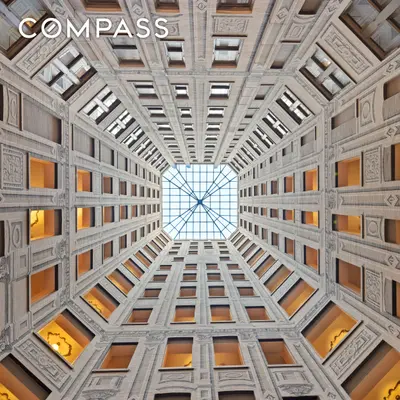
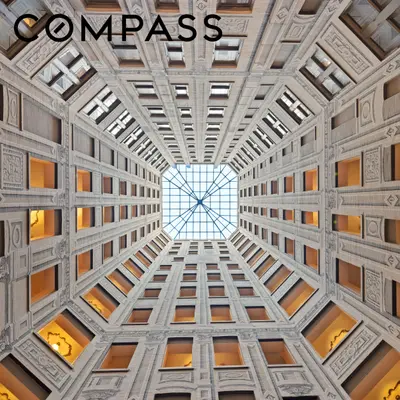
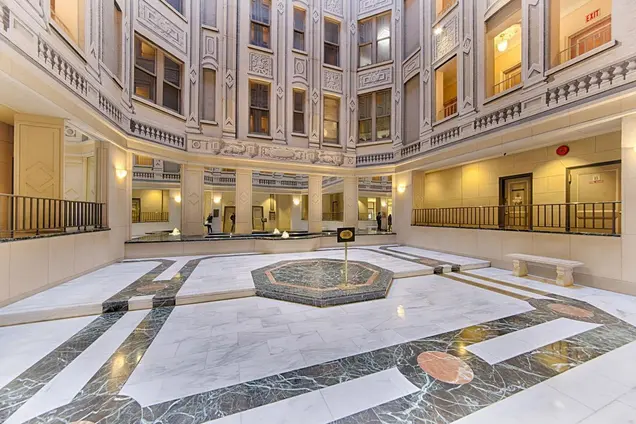
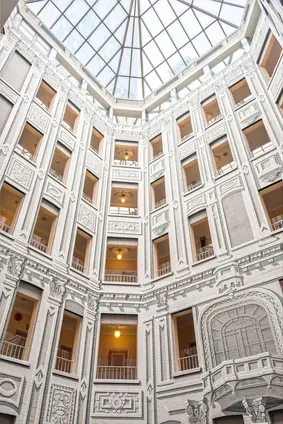
In 1980, when the building was converted to a co-op, a restoration of the facades was undertaken under the direction of the architectural firm of Beyer Blinder Belle and Richard Haas, the painter, was commissioned to paint a trompe l'oeil mural the full height of the building's central courtyard, which was covered with a skylight to become an atrium. Haas's most famous work in New York was a giant painting of the former Times Tower building that for several years graced the mostly blank façade of a building across 42nd Street from the famous edifice whose highly decorative façade had been stripped and reclad in plain marble after The New York Times decided it no longer needed the building and sold it.

More façade restoration work was undertaken in 1997.

The building, whose entrance is now on Seventh Avenue, is a confection, a hint of great follies and wonderful imaginations, the promise of fertile creativity - the promise of New York.

Christopher Gray noted that the "consummate skill" of the Atlantic Terra Cotta Company was praised by Architecture, the magazine, shortly after the building was erected, "but it added that while the design of the façade 'if made by a pastry cook, would be of the highest excellence…it can hardly be considered at all in the light of architecture.'"

So much for architectural criticism then!

Today, the Alwyn Court is once again a highly desirable address, especially as its surrounding neighborhood has undergone dramatic and beneficial changes in the 1990's.

What is most remarkable about the flamboyant and exuberant Alwyn Court is its fairly sedate location on a narrow cross street as opposed to fronting on the park. In this regard, however, it is not the city's most startling surprise as that honor still is held by Louis Sullivan's quite ornate Condict-Bayard Building at 65 Bleecker Street between Broadway and Lafayette Street.


For More Information

For more information about buying an apartment in The Alwyn Court, please call us at 212-755-5544, or contact us by email  »

Building Summary

Features Amenities

Building Features

>Cooperative
>Built in 1908
>Located in Midtown West
>74 Apartments
>12 Floors
>25% Down
>47% tax deductable
>Attended Lobby
>Full-time Doorman
>Pre War
>Basement Storage
>Washer/Dryer in building
>Elevator
>World-famous building
>Fabulous atrium with enormous trompe l'oeil mural by Richard Haas
>One block from Central Park
>Convenient to public transportation
>Concierge

The Alwyn Court > 180 West 58th Street

Apartments For Sale  »
Schedule An Appointment  »
Save Bldg. (Email Updates)  »
Peer Buildings  »
Area Maps  »
Building Ratings  »
Pros & Cons  »
Sell Your Apartment  »
Inquire About Buying Here  »

Peer Buildings


45 East 66th Street

Carnegie House

Jumeirah Essex House

110 Central Park South

Berkeley House


Comments or questions? · Phone: 212.755.5544
Copyright © 1994-2010 CITY REALTY.COM INC. All Rights Reserved.
568 Broadway, Suite 802 New York, NY 10012
Terms of Use · Our Privacy Policy · About CITY REALTY.COM · Advertise With Us · Site Map
Developed by REOL Services


An equal housing opportunity.

All information furnished regarding New York City property for sale, rental or financing is from sources deemed reliable, but no warranty or representation is made as to the accuracy thereof and same is submitted subject to errors, omissions, change of price, rental or other conditions, prior sale, lease or financing or withdrawal without notice. All dimensions are approximate. For exact dimensions, you must hire your own architect or engineer.