
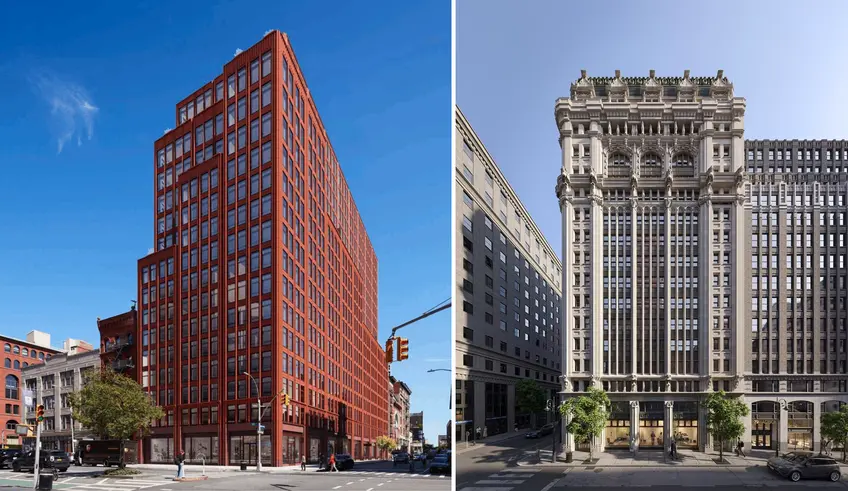
On March 10, the Landmarks Preservation Commission reviewed an application by Minskoff Equities and Skidmore Owings & Merrill (SOM) to build a pair of 19-story, 195-foot-tall buildings at 375 Lafayette Street, which is now a parking lot on the northeast corner of Great Jones Street in the Noho Historic District Extension. The mixed-use project comes in the wake of the 2021 Soho/Noho rezoning, and is to contain 200-210 new housing units, with as many as 53 units designated at affordable to households earning 40-60 percent of the Area Median Income.
In this article:

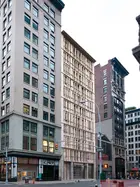
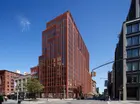
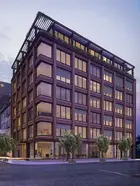
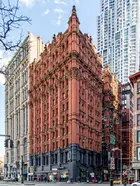
According to a site plan in the Landmarks presentation, amenities on the ground floor alone are to include a library lounge, a children's playroom, a mail room, a pet wash station, and a courtyard. Setbacks on upper levels naturally create terraces, though these were not shown in renderings. Permits have not yet been filed, but the developer's goal is to start construction in early 2027 and wind up work in early 2029.
During the hearing, Chris Cooper, Design Partner of SOM, noted that they looked very closely at the materiality of the district, finding it to be dominated by masonry, stone, brick, and terra cotta. That inspired their use of a deep orange-red, fluted terra cotta facade for the new building. It frames oversized windows in a tribute to the surrounding prewar architecture, but is designed to exceed 2020 Energy Code requirements.
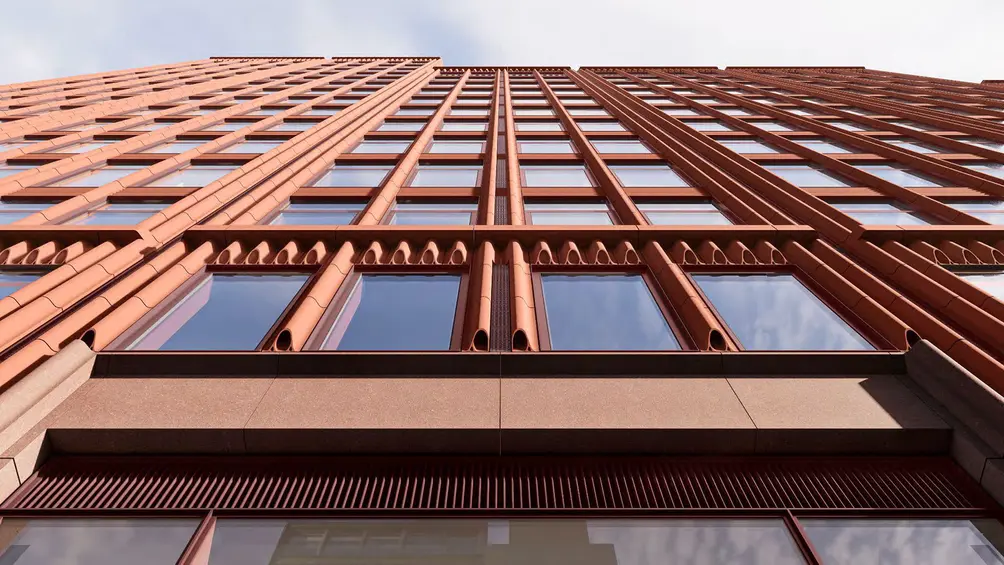 Facade detail of 375 Lafayette Street
"A 19-story wall of uniform terracotta rising above Great Jones does not add to this neighborhood. It takes something from it that cannot be returned" - Miriam Nachiricht, Noho resident and opponent of 375 Lafayette Street
After the presentation, there were nearly two hours of public testimony from elected officials, preservation groups, and Noho residents past and present. Those in favor of the project and those against it both emphasized the need for new housing in the neighborhood, but this aspect is not supposed for factor into Landmarks' decisions. The majority of opponents objected to the size of the design, finding it out of scale with the surrounding buildings and that it would obscure nearby landmarked buildings. In the end, there was so much public testimony that Landmarks invited the applicant to come back at a later date to talk about what they had heard, at which time commissioners are expected to consider everything and take a vote.
The use of terra cotta, Latin for "baked earth," dates back to ancient Greek, Egyptian and Roman civilizations. But at the turn of the 20th century, New York City architects embraced it as a fireproof skin for the steel skeletons of high-rises. Not only did it provide a practical solution, but it also allowed architects to create elaborate designs on buildings at a lower cost than carved stone, not unlike cast iron. Studio Potter notes that many corporations asserted their identities through the buildings that housed them, citing the grapevine and bell of the American Telephone Company at 140 West Street and the musical motifs of Carnegie Hall.
"The terracotta is a nod to historic materials. It reminds me of Louis Sullivan's use of terracotta on some of the first skyscrapers" - Grace Omira, former Noho resident and proponent of 375 Lafayette Street
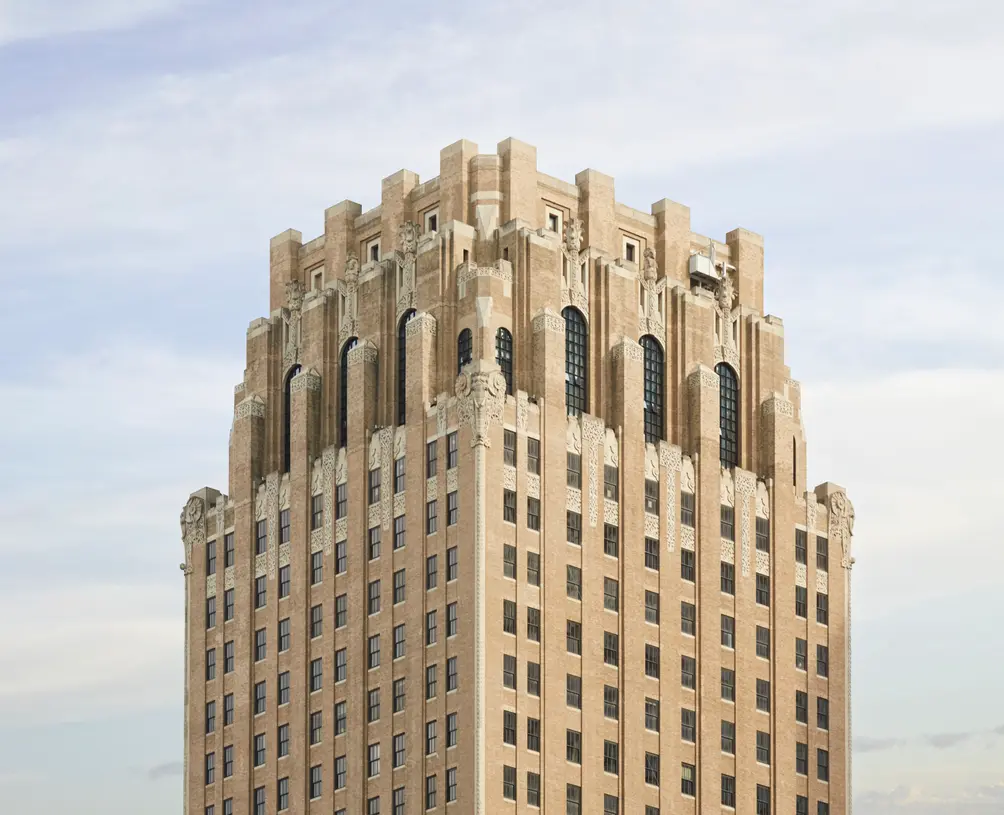 Crown with terra cotta ornamentation on Ralph Walker's Barclay Vessey Building / One Hundred Barclay
Additionally, terra cotta could be used in its natural clay colors that sometimes resembled brick, painted to resemble stone or metal, or painted in brighter, more elaborate colors. Colorful terra cotta accents proved especially popular during the Art Deco period.
As skyscrapers grew taller, ornate terra cotta facades grew less practical even with their cost effectiveness. However, terra cotta in architecture is far from forgotten. White terra cotta reflects sunlight and creates intriguing shadows, while terra cotta of all shades nods to prewar materiality and gives new construction character. Below, we look at New York City's 10 most beautiful prewar terra cotta buildings, as well as new construction that has used the material to great effect.
 36 Gramercy Park East
Top 10 historic terra cotta residential buildings in NYC
Developer: Resolution Real Estate Partners
Architect: Raymond Hood and J. Andre Foulihoux (original); SLCE Architects (renovation)
33 floors | 224 rental units
Completion TBD
"The McGraw-Hill Building is a unique skyscraper, being both one of New York's major Art Deco monuments and a herald of the newly emerging International Style" – Landmarks designation report
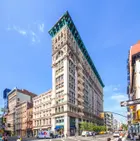
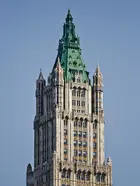
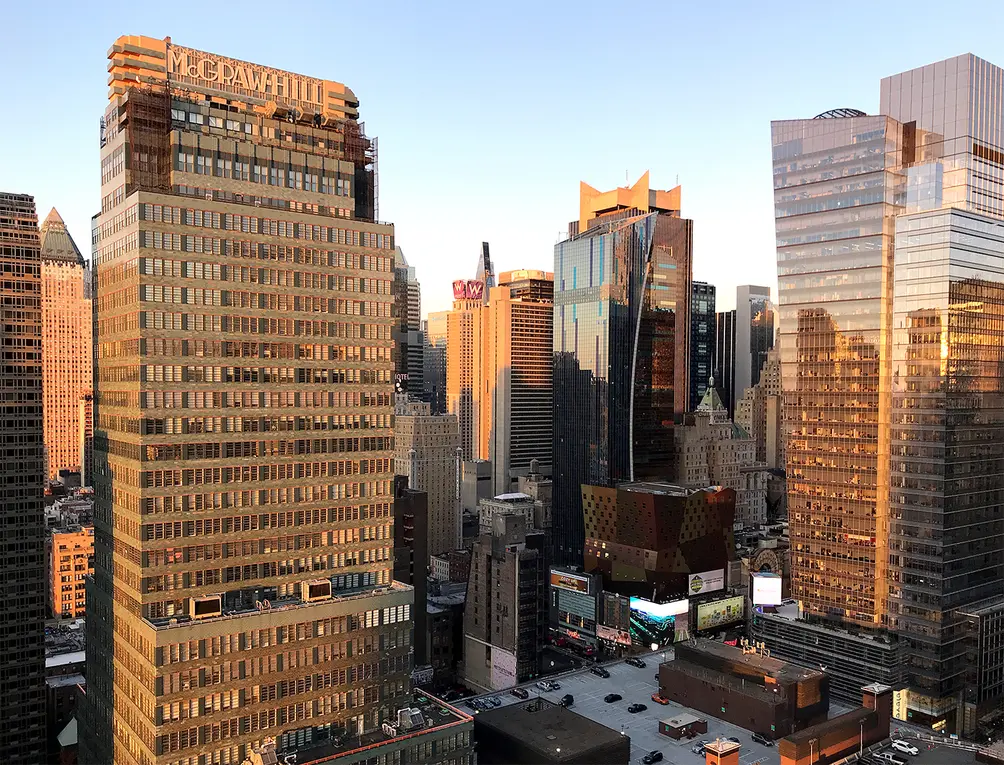 The McGraw-Hill Building (CityRealty)
The McGraw Hill Building, which is also known as the Art Deco Tower in honor of one of its architectural influences, is made of blue-green terra cotta ceramic tiles and designed to blend in with the sky. It was designated a New York City Landmark in 1979. More recently, as an early entrant in a wave of office-to-residence conversions in New York City, permits were filed to convert floors 12-32 to studio through two-bedroom housing units. But in July 2024, a venture between Blackstone and Rialto Capital Advisors filed to foreclose on the building, claiming the owners defaulted on a mortgage. No work has apparently been done since then.
Developer: JDS Development
Designer: Roman and Williams Buildings
10 stories | 14 condo units
Completed in 2019
"A very elegant, green terracotta mid-block building in Chelsea with Art Deco-style accents" – Carter Horsley
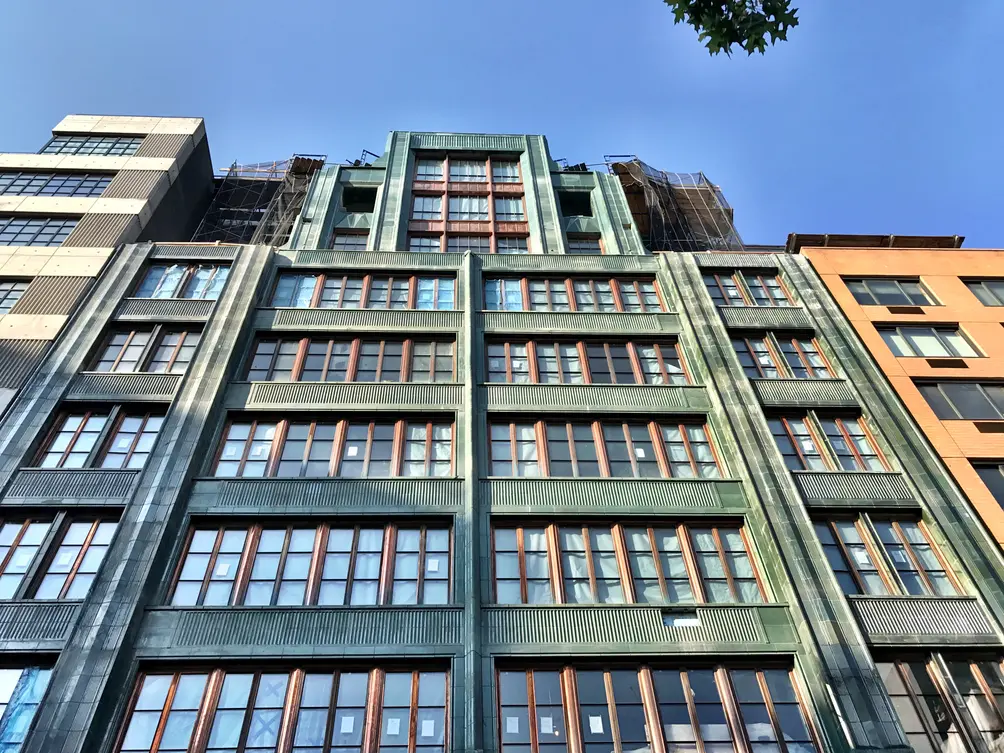 The Fitzroy (CityRealty)
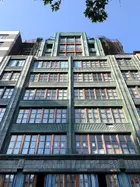
On a side street near the High Line, midblock boutique condominium The Fitzroy pays tribute to Art Deco design with its copper spandrels, setback at the eighth floor, and fluted, dark green terra cotta facade. Facades Plus found that the building comprises approximately 5,600 terra cotta blocks divided across 500 unique types, and that the fluting creates refraction and shadow. The building is punctuated with copper-clad oak casement windows that fill the apartments with natural light.
Developer: El Ad Properties
Designer: Henry Janeway Hardenbergh (original); Costas Kondylis & Partners LLP (conversion)
21 stories | 181 condo units
Completed in 1907; converted in 2007
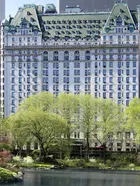
"For those who enjoy luxury and legend – and being steps from Central Park – The Plaza is 'simply irresistible'" - Carter Horsley
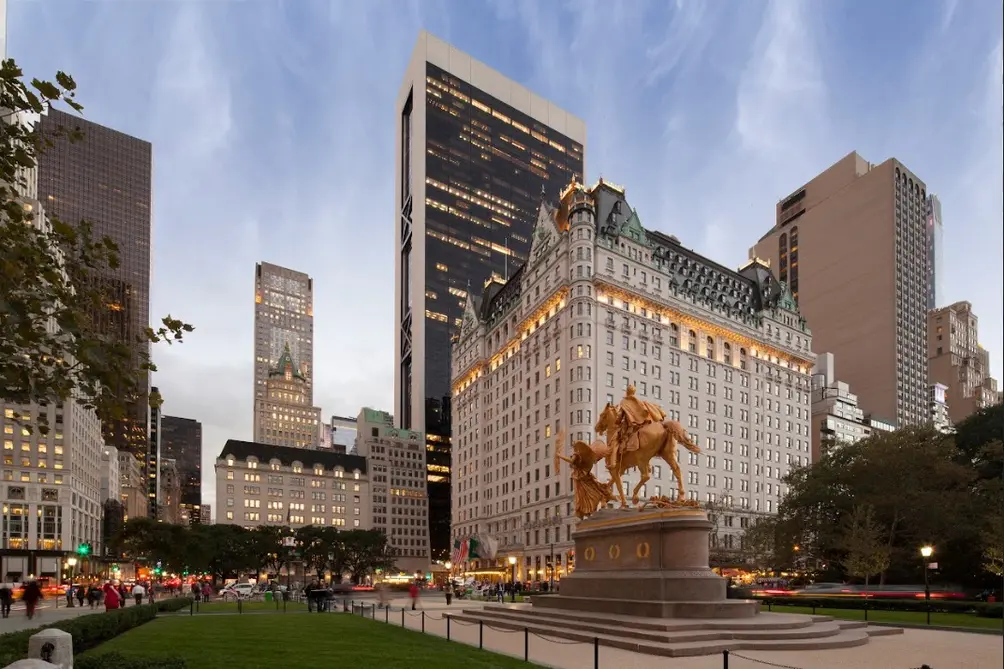 The Plaza
Located at the beginning of Central Park South, The Plaza stands out for its white brick facade, its turreted corners, its mansard roof, and its ornamental terra cotta details. Such features were carefully restored to their original glory when the hotel was partially converted to condo residences. Behind its landmarked facade, condo owners and hotel guests have access to The Palm Court, The Oak Room and Bar, the fitness center, the Warren Tricomi salon, and 111 Skin Spa.
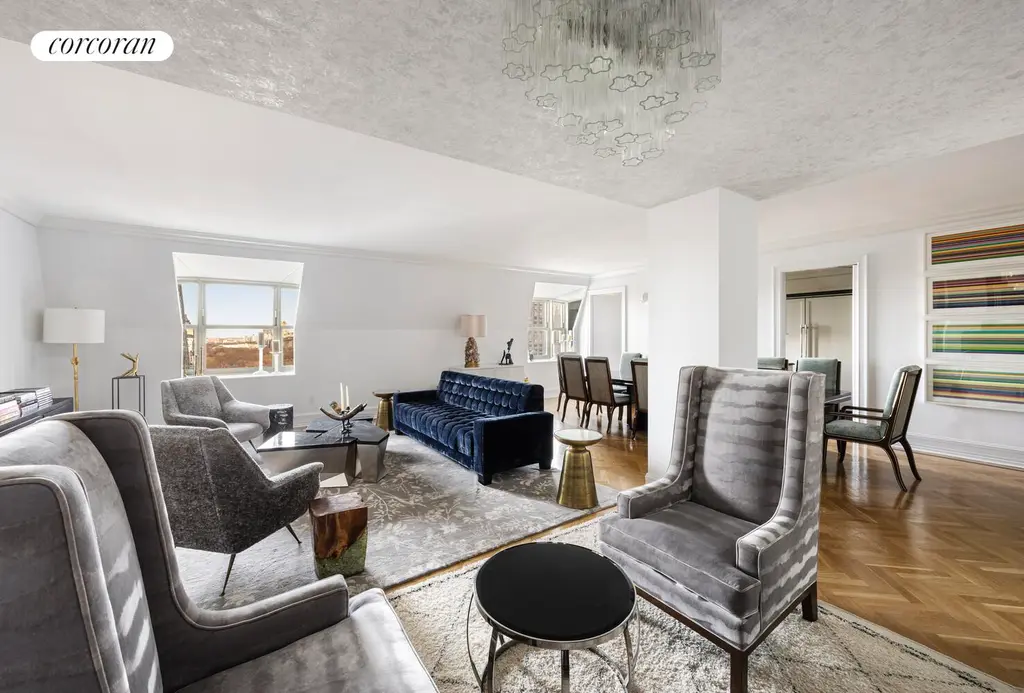
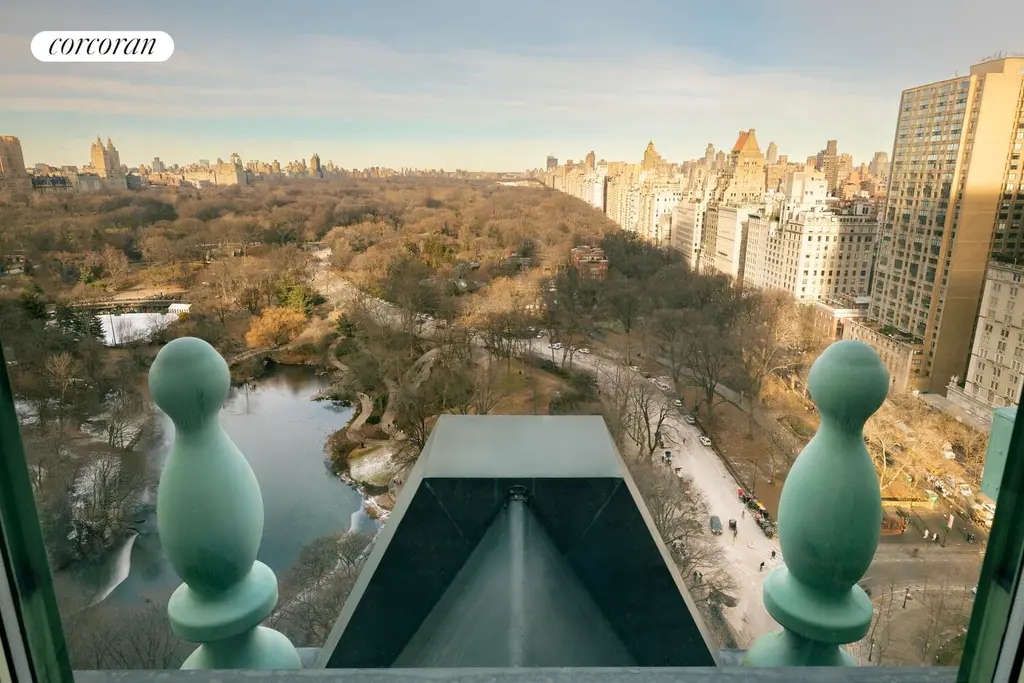
The Plaza, #1707 (Corcoran Group)
Developer: James B. Haggin
Designer: John T. Williams
13 stories | 25 condo units
Completed in 1895; converted in 1985
"An extravagance in stone, brick, terra cotta, and iron" - Soho Cast Iron Historic District designation report
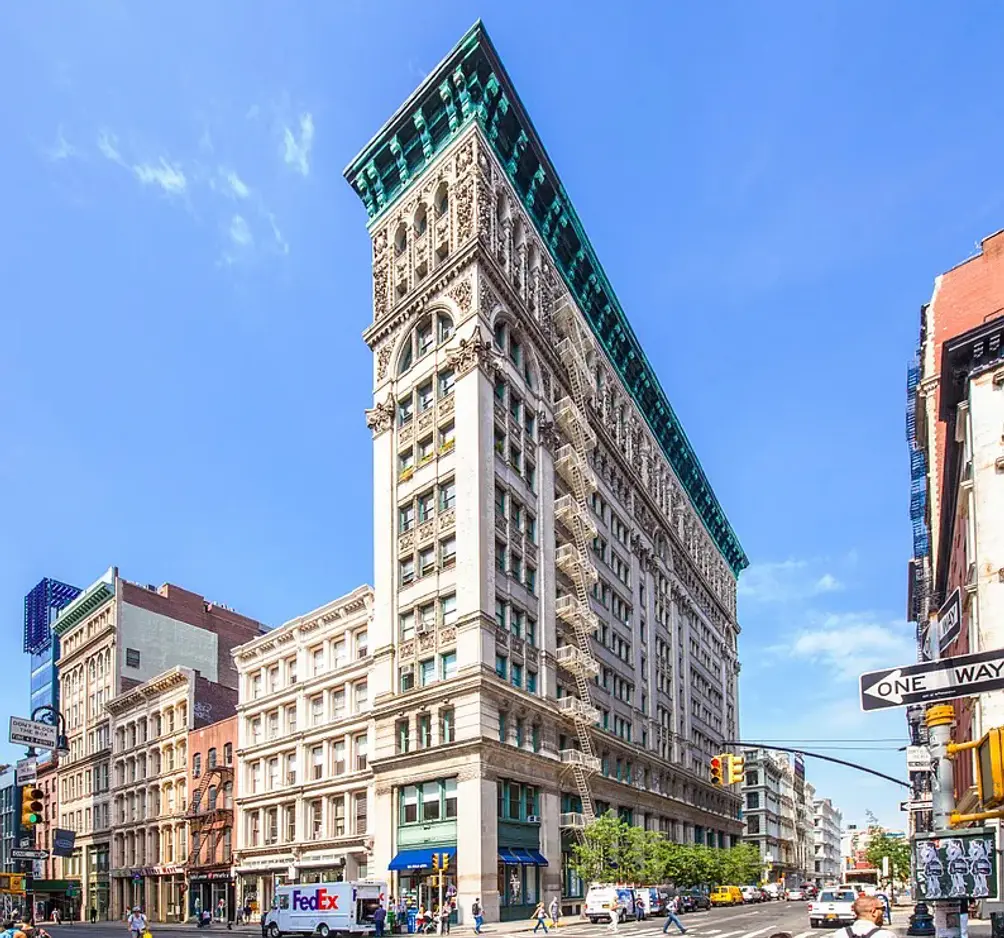 The Silk Exchange Building (Compass)
When the wedding cake-like building at 451 Broome Street was completed in 1895, it served as the home of the Silk Exchange. In the 1970s, it served as live-work space for artists before being converted to cooperatives. Most recently, a facade restoration project from June 2017 to October 2019 included the careful repair and replacement of the terra cotta units that add charm and character to the building.
Developer: Sunlight Development
Designer: Barney & Cold (original) | FXCollaborative (conversion)
16 stories | 65 condo units
Completed in 1912; conversion estimated for 2027
"The decoration of the Emmet Building combined early French Renaissance ornament with a strong vertical effect" - Landmarks designation report
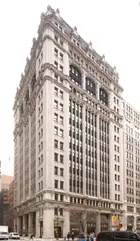
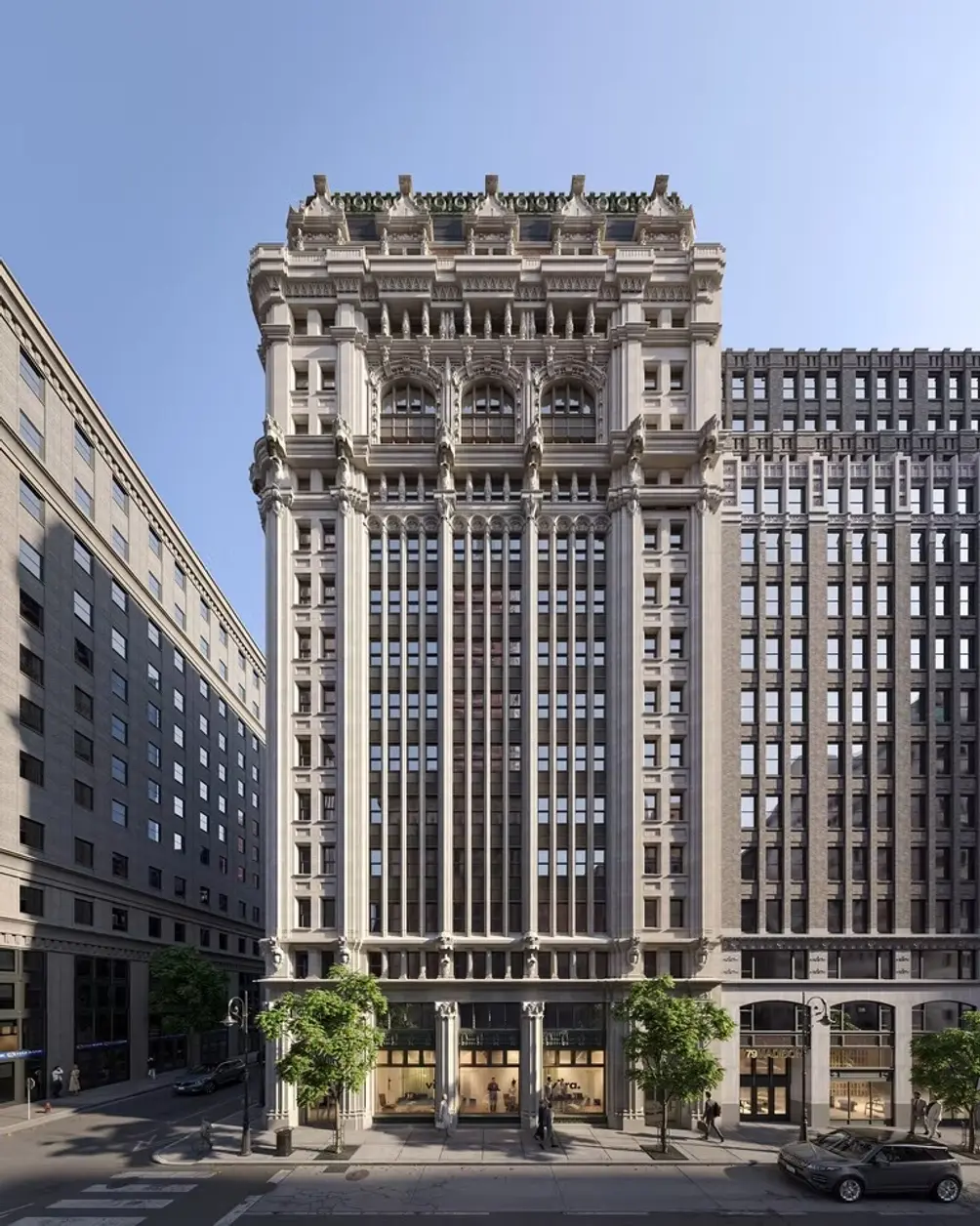 The Emmet Building
The Neo-Renaissance building at 95 Madison Avenue was constructed in 1912 as an office building with a penthouse on top for pioneering gynecological surgeon Dr. Thomas Addis Emmet. Over 100 years later, it has been designated a New York City Landmark and is in the midst of a residential conversion. A rooftop addition is being converted, and the limestone and terra cotta facade will be carefully restored.
Developer: John E. Olsen (original); Mann Realty Associates (conversion)
Designer: James Riely Gordon (original) | CTA Architects (conversion)
12 stories | 53 condo units
Completed in 1910; converted in 2009
Designer: James Riely Gordon (original) | CTA Architects (conversion)
12 stories | 53 condo units
Completed in 1910; converted in 2009
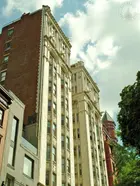
"One of the grand dames of Gramercy Park" - Carter Horsley
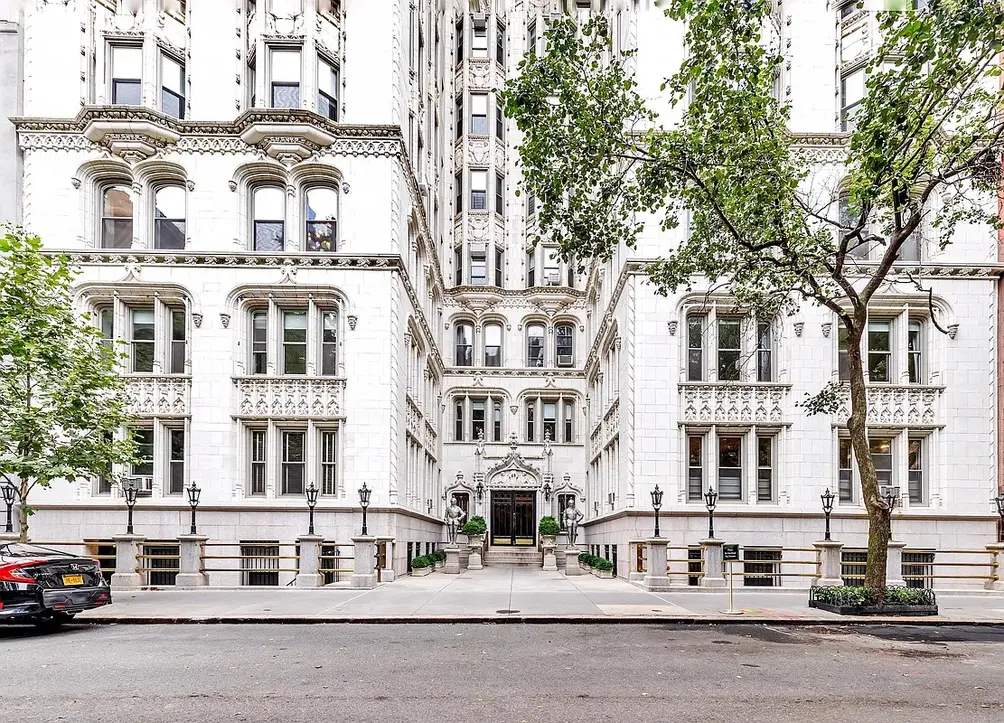
When a marble based proved too expensive for 36 Gramercy Park East, architect James Riely Gordon turned to terra cotta. The result looks incredibly opulent with its Gothic arches, colonnettes, cherubs, and gargoyles carved into the surface. The historic character was carefully preserved amidst the condo conversion, and residents receive keys to Gramercy Park.
Developer: Orlando B. Potter (original)
Designer: N.G. Starkweather
11 stories | 41 co-op units
Completed in 1886; converted in 1980
"A glorious red confection of a very ornamental late 19th century office building" - Carter Horsley
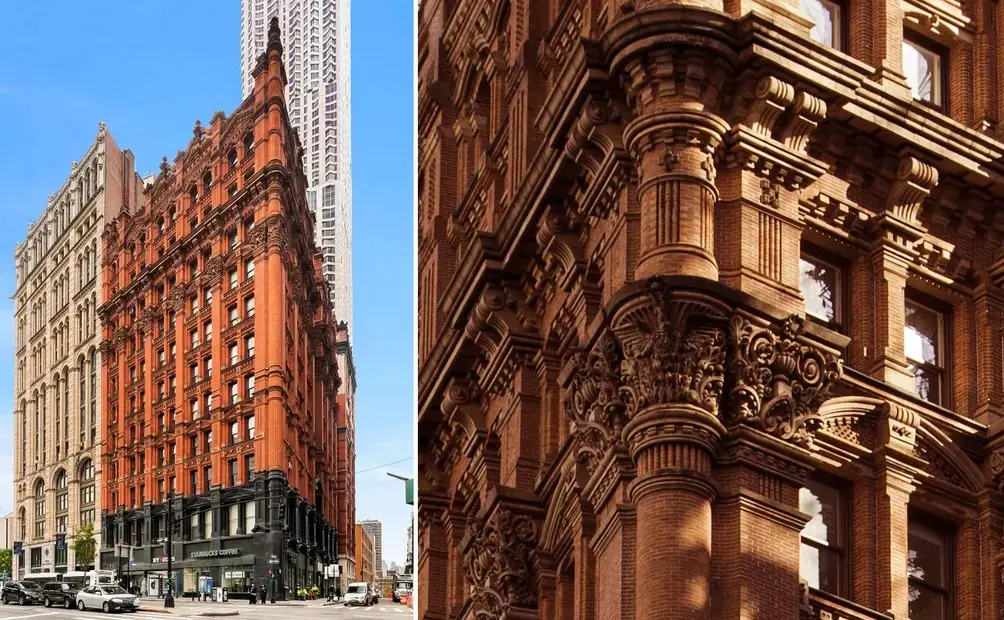 The Potter Building
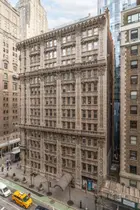
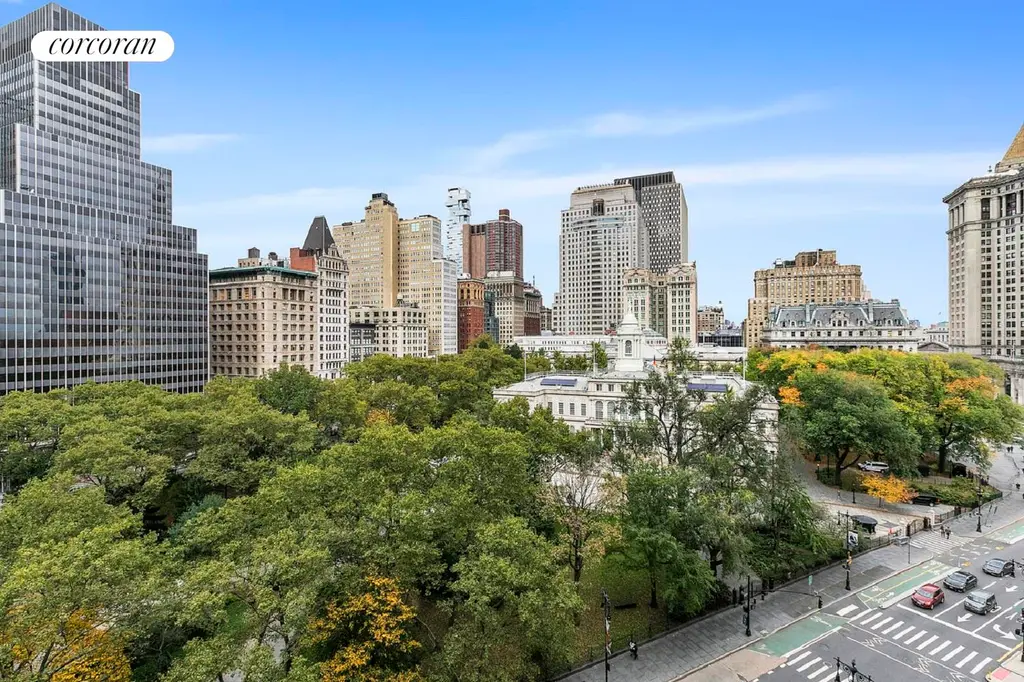
Located on the former site of the New York World headquarters, which was destroyed in an 1882 fire, the Potter Building used the most advanced fireproofing methods available. These included a red terra cotta facade with highly sculpted detailing reminiscent of the churches in N.G. Starkweather's portfolio.
The Potter Building, #8A
$1,660,000 (-7.5%)
Financial District | Cooperative | 3 Bedrooms, 2 Baths | 1,600 ft2
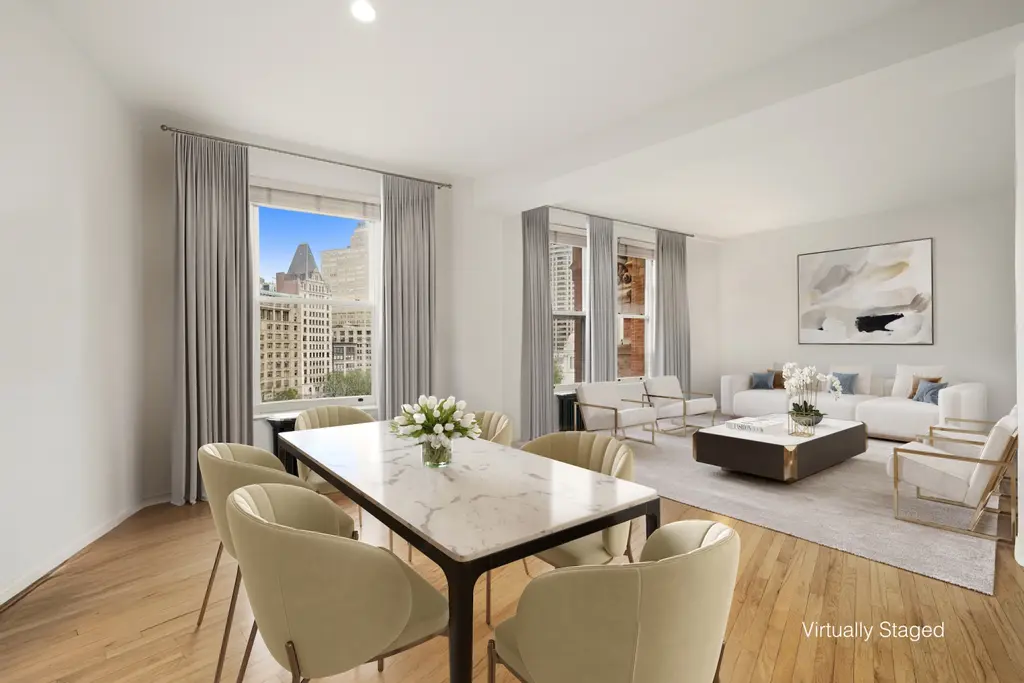
The Potter Building, #8A (Corcoran Group)
Developer: Alwyn Ball Jr.
Designer: Harde & Short
12 stories | 74 co-op units
Completed in 1910; converted in 1980
"The building...is a confection, a hint of great follies and wonderful imaginations, the promise of fertile creativity - the promise of New York" - Carter Horsley
 The Alwyn Court (CityRealty)
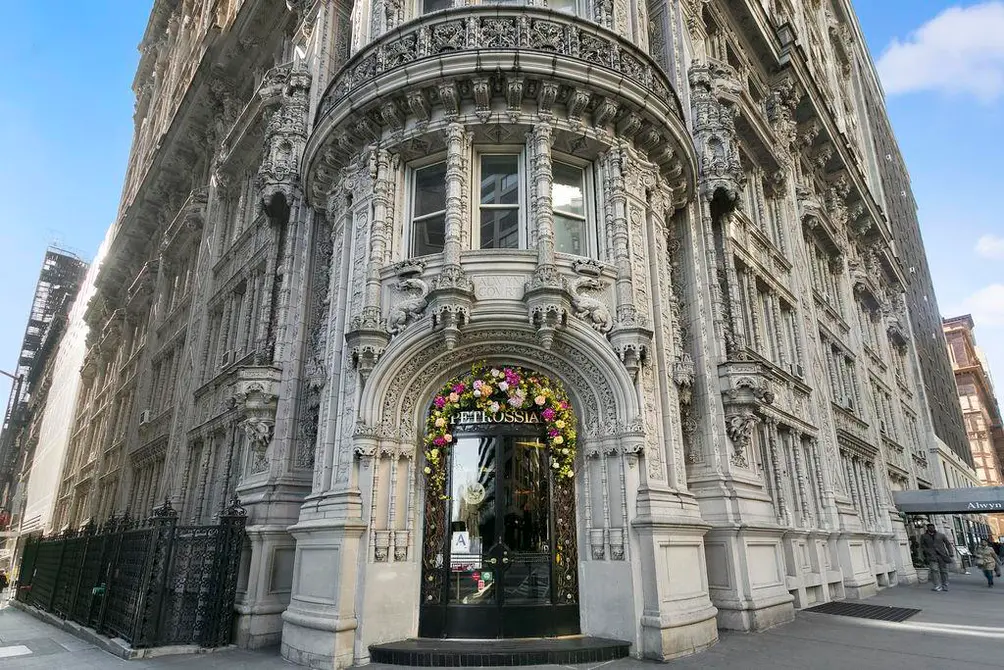
The Alwyn Court stands in the shadow of glassy supertalls on Billionaires' Row, but nothing has come along here or anywhere else to rival it in terms of sheer ornamentation. The entire facade is festooned in terra cotta cherubs, flowers, plants, and animals that include fire-breathing crowned salamanders. Acclaimed designer Amy Lau told Architectural Digest that she had always been fascinated with Alwyn Court's ornate facade, and her remodeled home inside honored the building's history while applying her own eye for style. The apartment sold at a 73% profit in January 2026.
Would you like to tour any of these properties?
Just complete the info below.
Or call us at (212) 755-5544
Developer: The Brodsky Organization and The Sorgente Group
Designer: Daniel Fuller (original); SLCE Architects (conversion)
24 stories | 38 condo units
Completed in 1902; converted in 2026
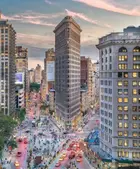
"Due to the prow-like effect of its northern end, it
creates an impression of gr eat slenderness and hei ght, that it displays a wealth
of ornamental detail representative of its time" - Landmarks designation report
 The Flatiron Building
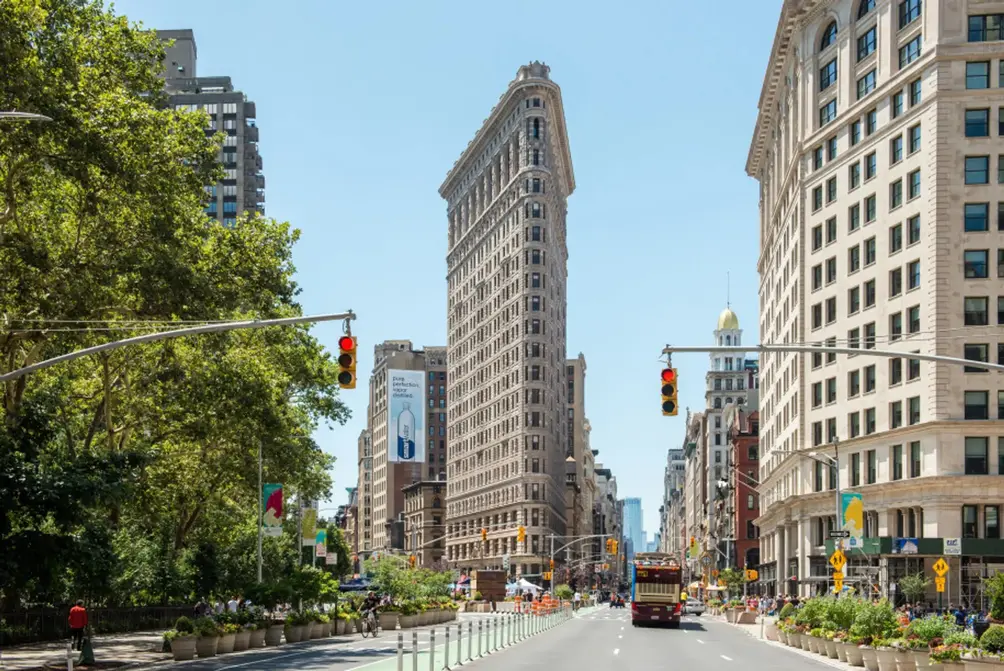
The Flatiron Building is well known for its triangular shape, but this might not have been as effective or interesting without its ornate Beaux-Arts facade. During the office building's conversion to luxury condos, thousands of terra cotta pieces were meticulously restored to their original glory. A new, Landmarks-approved lighting scheme illuminates the top floors and decorative features on lower levels, putting the facade in the spotlight.
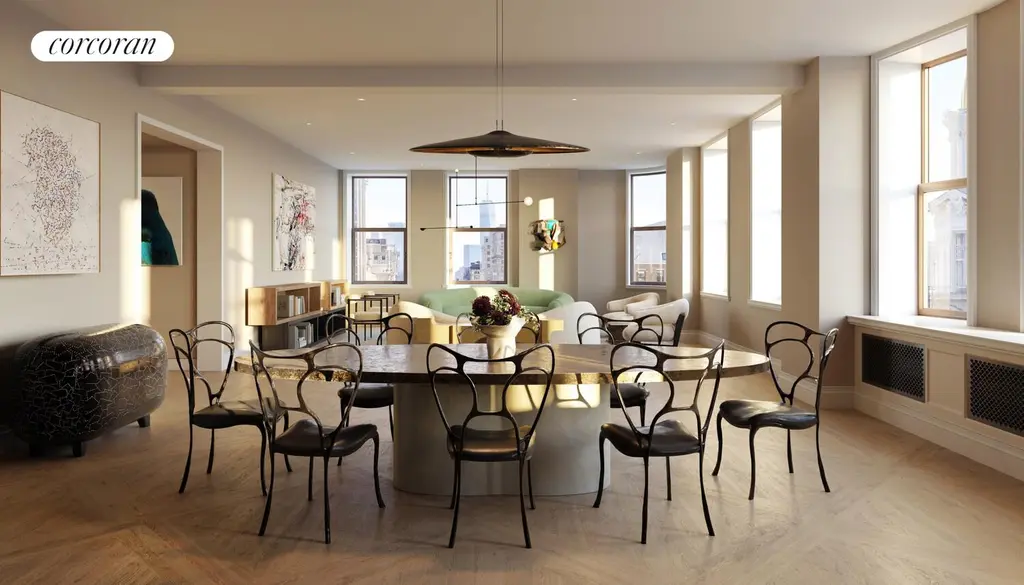
Flatiron Building, #11SOUTH
$16,000,000
Flatiron/Union Square | Condominium | 4 Bedrooms, 4 Baths | 3,828 ft2
Flatiron Building, #11SOUTH (Corcoran Sunshine Marketing Group)
Developer: F.W. Woolworth (original); Alchemy Properties (conversion)
Designer: Cass Gilbert (original)
60 stories | 33 condo units
Completed in 1913; converted in 2018
"One of the world's most distinguished and historic skyscrapers" - Carter Horsley
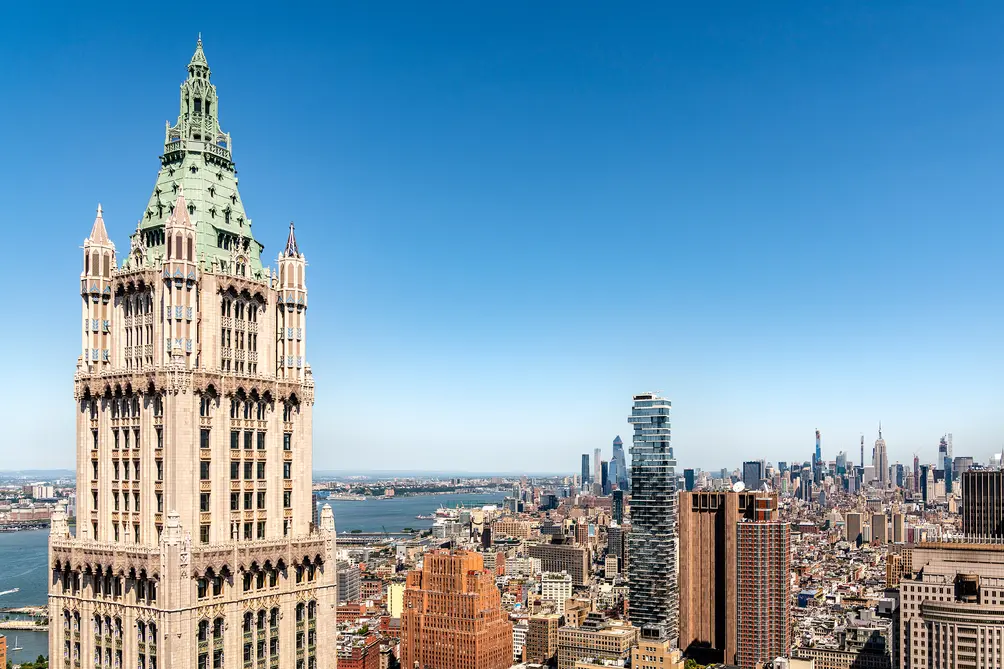 The Woolworth Tower Residences (Sotheby's International Realty)
When the Woolworth Tower was under construction, architect Cass Gilbert considered limestone and granite for exterior materials before deciding on terra cotta for all but the first four stories, creating a colorful, richly ornamented facade. The result has been designated a New York City Landmark, and the uppermost floors are now luxury condominiums with access to amenities that include a basement-level swimming pool originally commissioned by Frank W. Woolworth.
The Woolworth Tower Residences, #41B
$5,790,000 (-1.7%)
Tribeca | Condominium | 2 Bedrooms, 2.5 Baths | 2,548 ft2
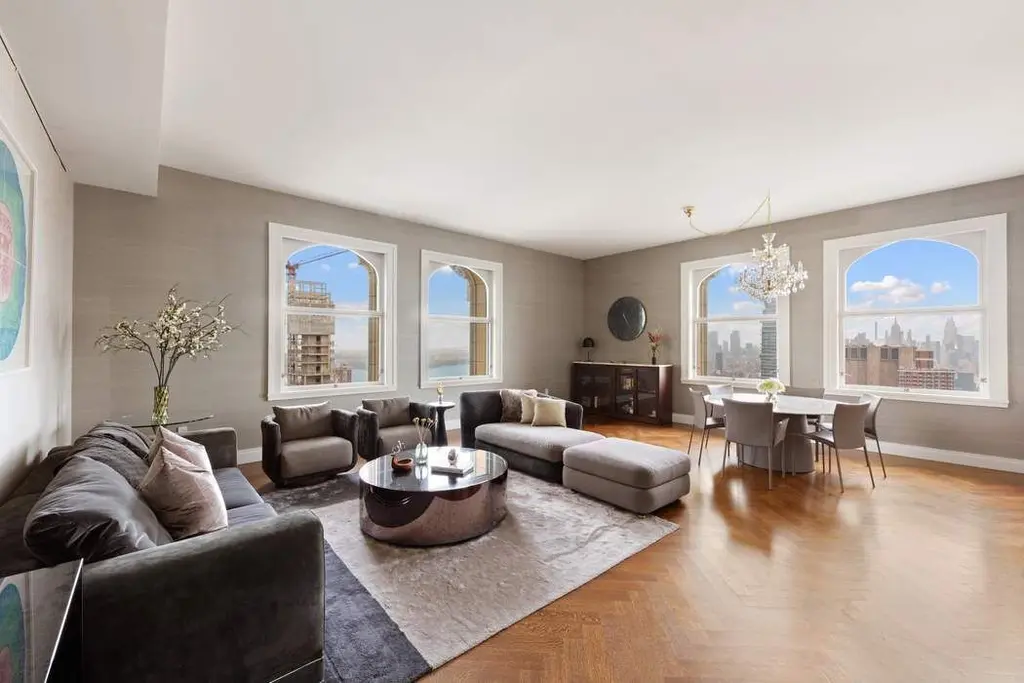
The Woolworth Tower Residences, #41B (Sothebys International Realty)
New construction terra cotta buildings
Developers: The Albanese Organization, Starwood Capital Group
Designer: Pelli Clarke Pelli
33 stories | 251 condo units
Completed in 2008
"One of the most stunning towers at Battery Park City" - Carter Horsley
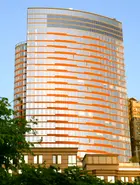
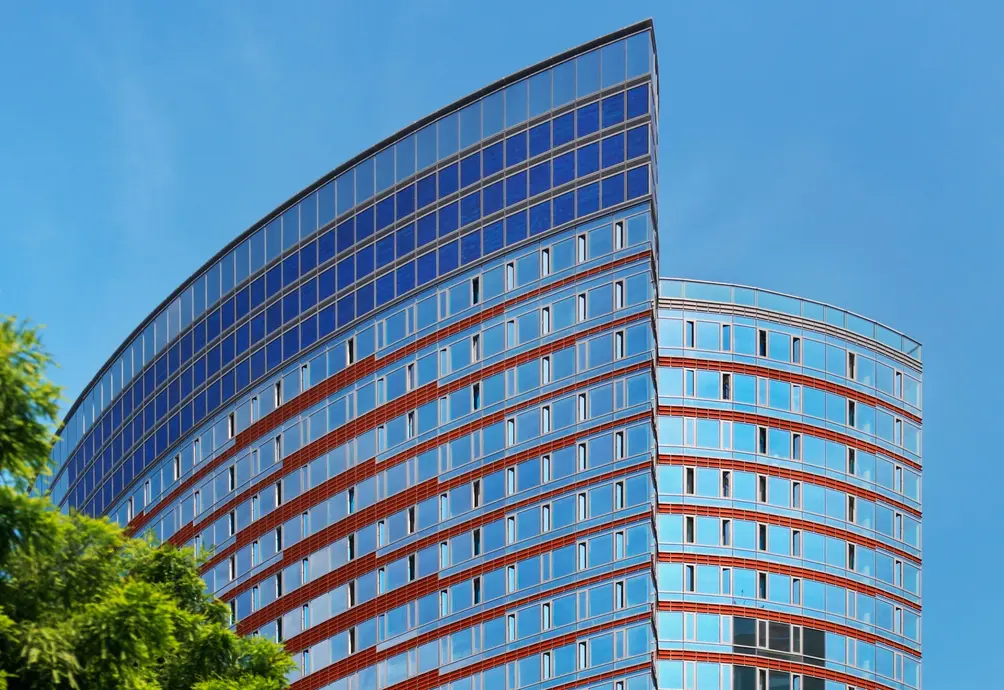 The Visionaire (Corcoran Group)
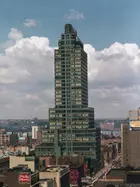
In Battery Park City, The Visionaire stands out for its tall height, curved facade, and red terra cotta bands. However, it is not all style and no substance: With its rooftop solar panels, high-efficiency fresh air supply and exhaust system, water filtration systems, and environmentally safe materials, it was the first New York City apartment building to receive LEED Platinum certification.
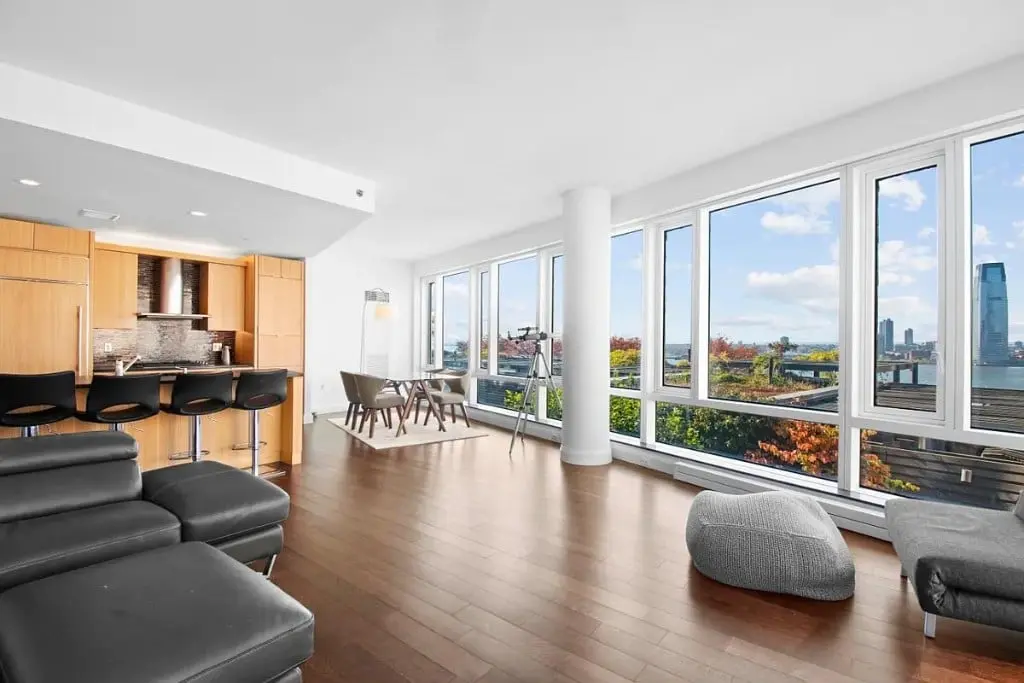
The Visionaire, #14C (Hauseit LLC)
Developer: GAIA House LLC
Designer: Selldorf Architects
19 stories | 16 condo units
Completed in 2010
"The bottom and top of 200 Eleventh Avenue have two completely different and equally stunning façades" - Carter Horsley
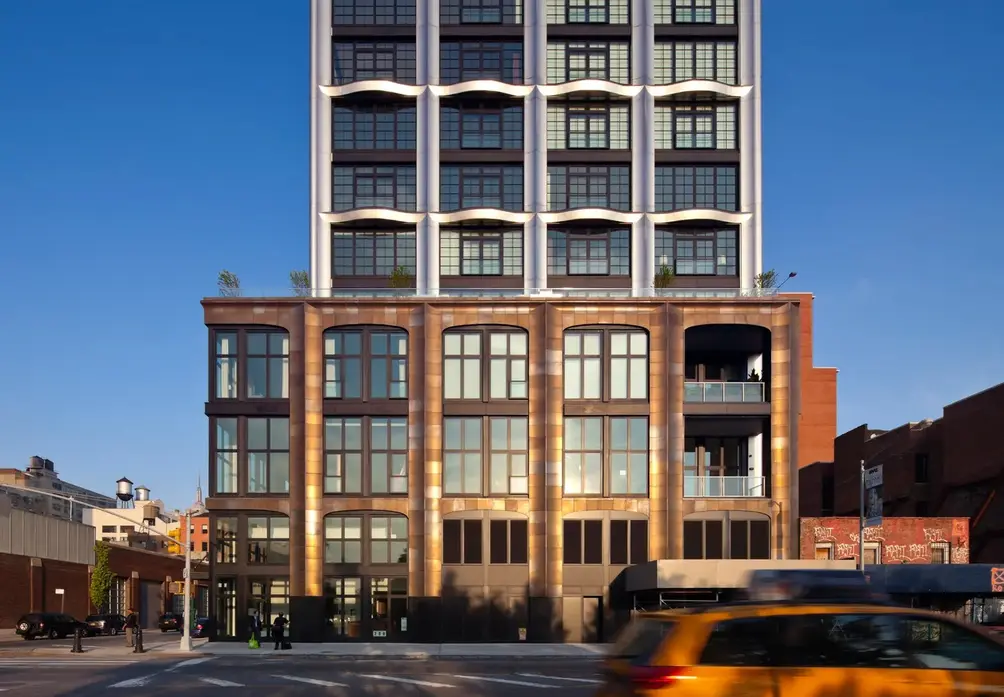 200 Eleventh Avenue (Selldorf)
Located between the High Line and Hudson River Park, 200 Eleventh Avenue would appear to encapsulate West Chelsea's history and future with its combination of an attractive terra cotta base and a steel and glass tower. Residents of the simplex condos enjoy expansive views of the Hudson River, and the majority of owners have "sky garages" that allow them to park their cars directly adjacent to their apartments.
Developer: SK Ironstate
Designer: Selldorf Architects
7 stories | 11 co-op units
Completed in 2016
Designer: Selldorf Architects
7 stories | 11 co-op units
Completed in 2016
"A very nice, solid, small building that keeps up the extraordinarily high standard of design established in recent years on Bond Street, New York’s most fascinating architectural enclave" - Carter Horsley
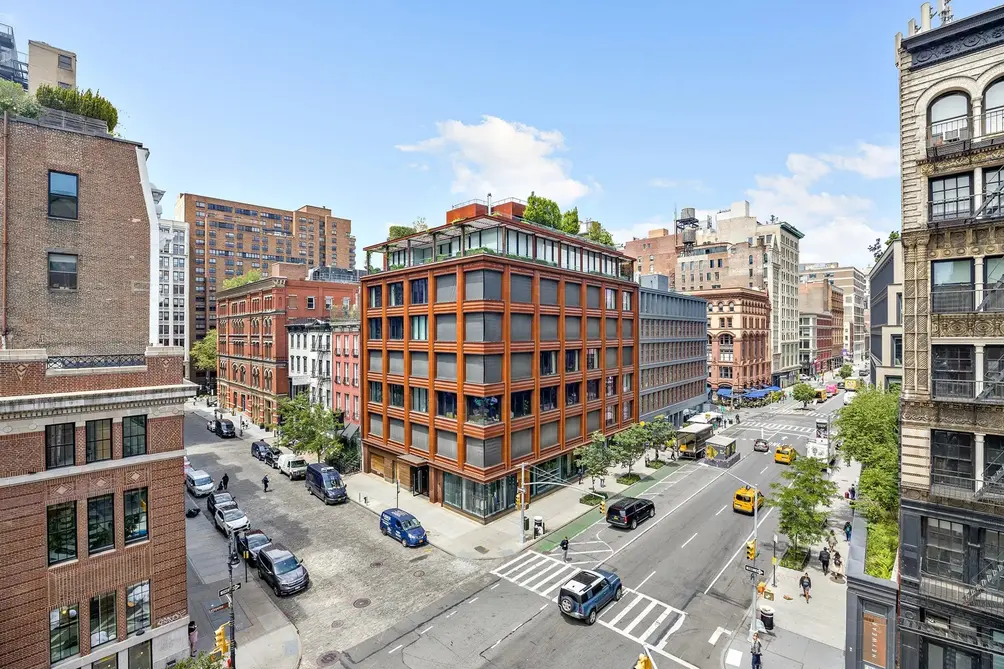 10 Bond Street
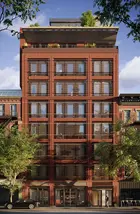
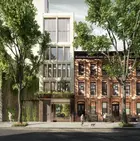
The Landmarks presentation for 375 Lafayette Street cited 10 Bond Street as an example of new, Landmarks-approved development in the historic district. Between its low-rise height and weathered steel and cast terra cotta facade, it offers a contemporary take on historic cast iron architecture.
Developer: Madison Realty Capital
Designer: BKSK Architects
12 stories | 14 condo units
Completed in 2019
"A combination of high-tech and Zen" - Carter Horsley
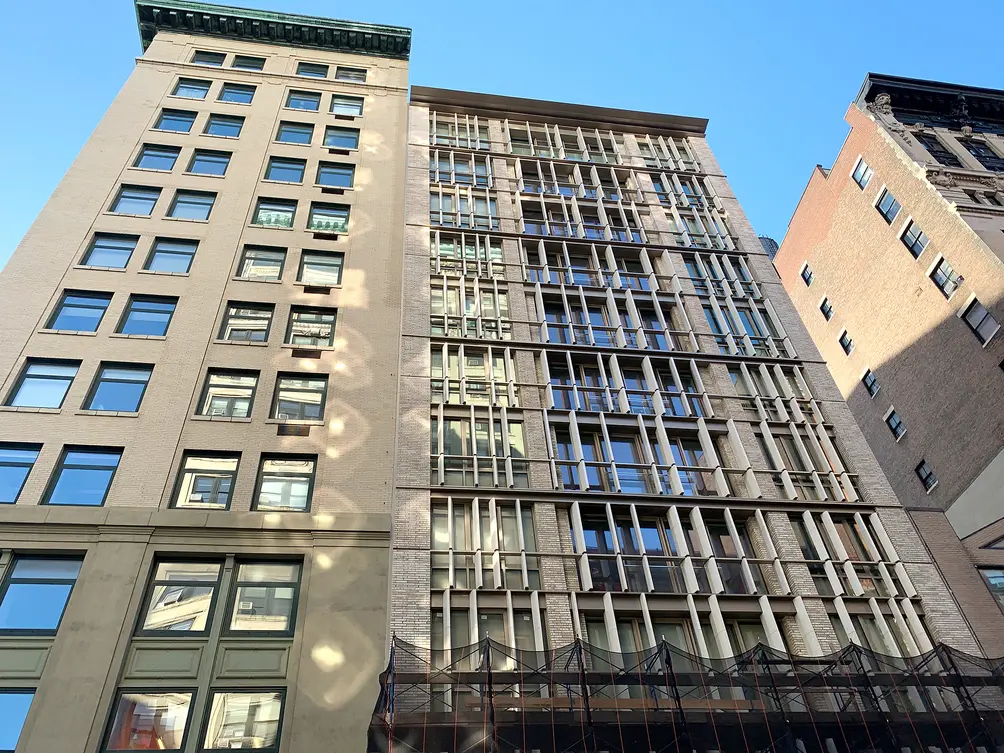 1 Great Jones Alley (Douglas Elliman)
One Great Jones Alley was also cited in 375 Lafayette Street's Landmarks presentation as an example of new development in the historic district. But between its ornate terra cotta facade and cobblestone alley, one could be forgiven for confusing it for one of the historic district's contributing buildings. Interiors also feature grand proportions characteristic of prewar apartments, and the building has a small but thoughtfully curated amenity suite.
Developer: Roe Corporation
Designer: BKSK Architects
8 stories | 7 condo units
Completed in 2021
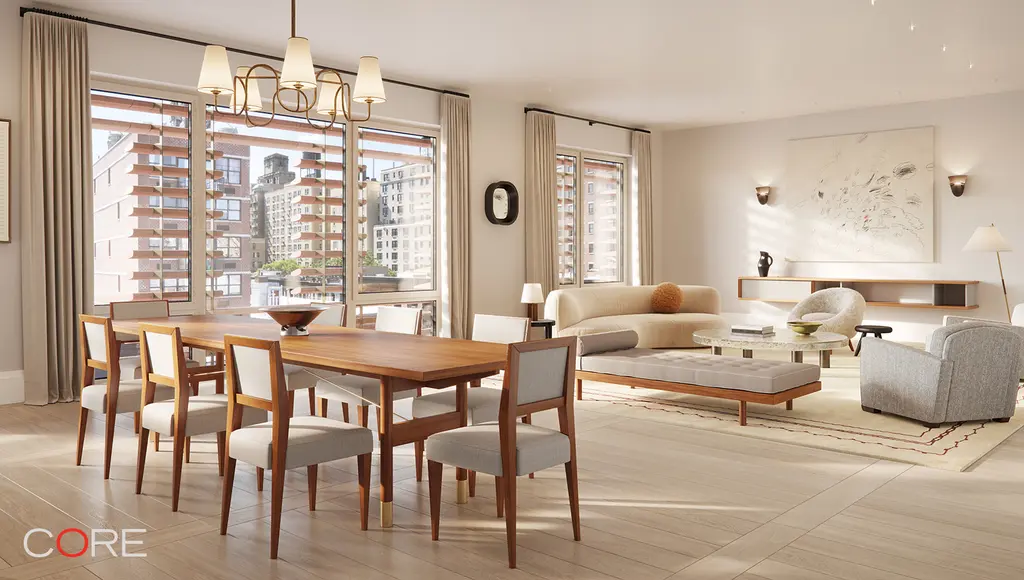
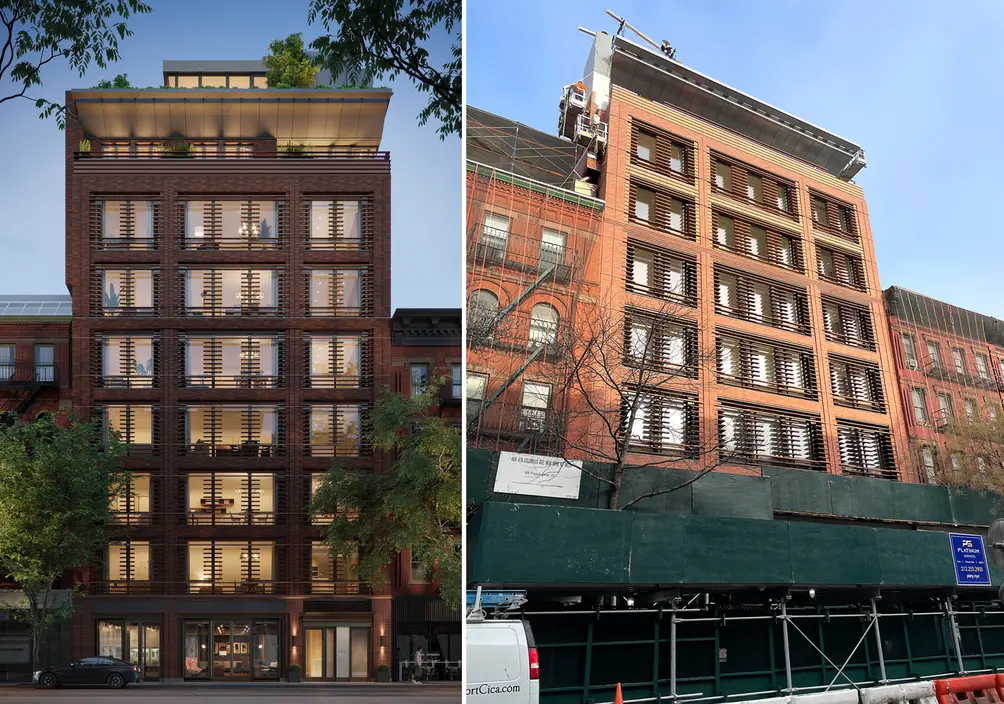 Charlotte of the Upper West Side
When Charlotte of the Upper West Side was under construction, the team noted that it was only the fourth ground-up building to rise in the Central Park West Historic District in the past 30 years. Its red brick facade with a terra cotta louver system are respectful of surrounding buildings, and the project was constructed to Passive House standards with triple-layered windows, an airtight building envelope, non-toxic materials, and state-of-the-art Energy Recovery Ventilation system.
Charlotte of the Upper West Side, #3
$7,750,000
Broadway Corridor | Condominium | 4 Bedrooms, 4.5 Baths | 3,570 ft2
Charlotte of the Upper West Side, #3 (CORE Group Marketing LLC)
Developer: JDS Development
Designer: SHoP Architects
60 stories | 91 condo units
Completed in 2022
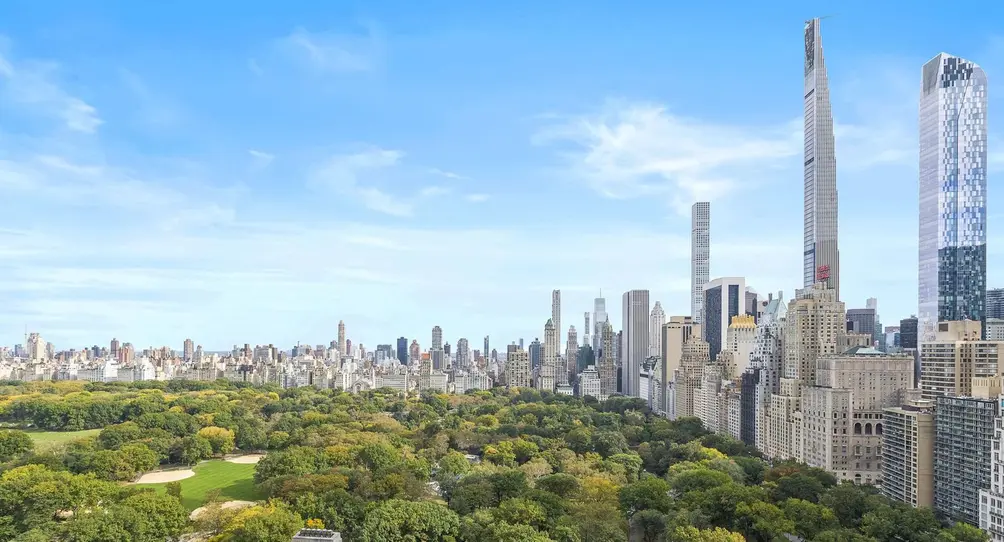 111 West 57th Street
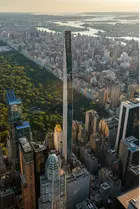
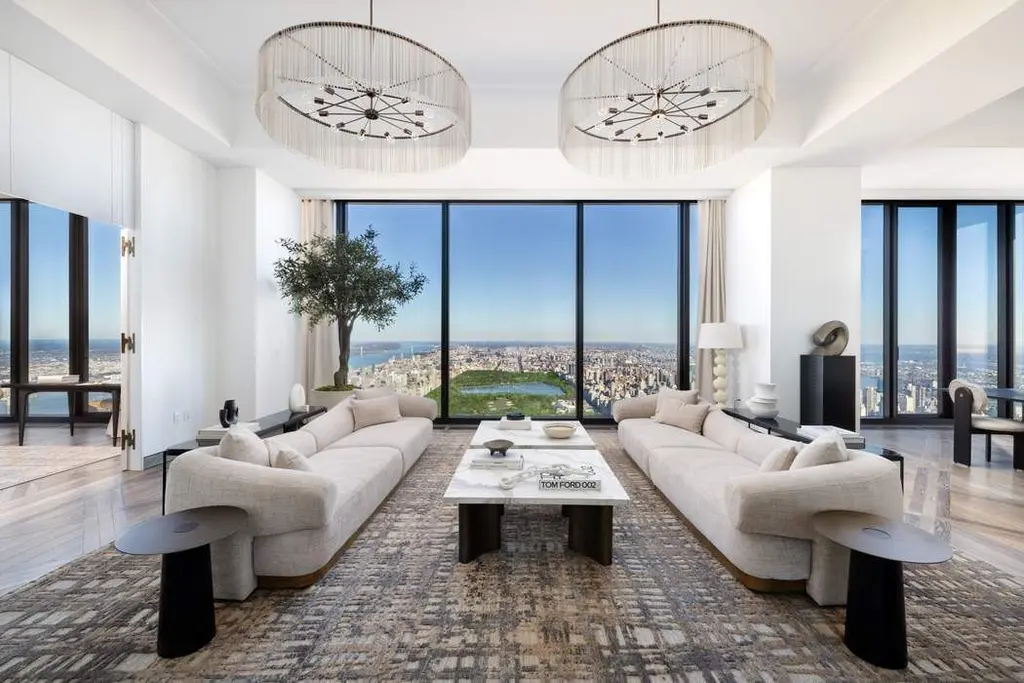
The building at 111 West 57th Street comprises a super-skinny, super-tall tower that houses full-floor condo residences, and the beautifully restored Steinway Hall that houses loft-style condo residences. Steinway Hall's brick, limestone, and terra cotta facade was restored during the construction, and the tower's beige and terra cotta piers were designed to complement the color of Steinway Hall.
111 West 57th Street, #QUADPLEX80
$98,000,000 (-10.9%)
Midtown West | Condominium | 5 Bedrooms, 6+ Baths | 11,480 ft2
111 West 57th Street, #QUADPLEX80 (Sothebys International Realty)
Developer: Avdoo & Partners
Designer: INC Architecture
12 stories | 100 condo units
Completed in 2022
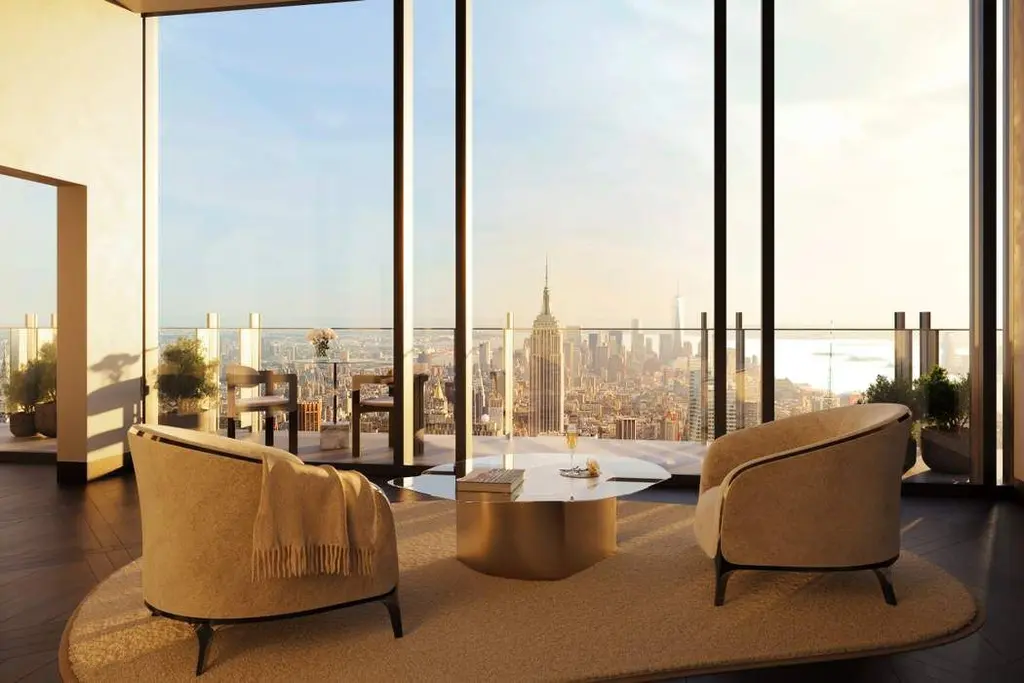
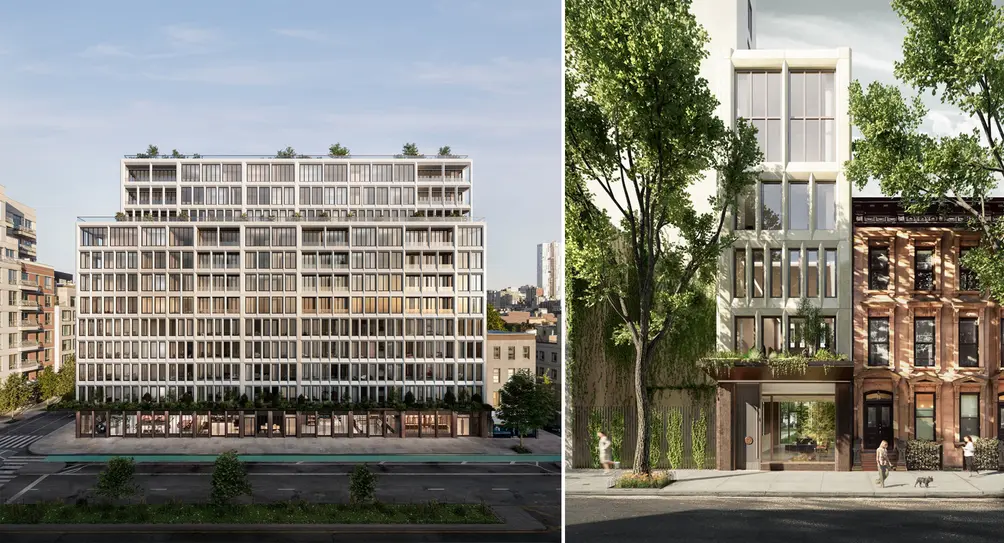 Saint Marks Place (Avdoo Development)
The full-block Saint Mark's Place's scale and height maximizes the area's zoning envelope, the better to accommodate 100 apartments and approximately 19,000 square feet of indoor and outdoor residential amenities. However, the building's terra cotta modules pay tribute to the surrounding brownstones. This modern take on local architecture sold out quickly, and resale availabilities are few and far between.
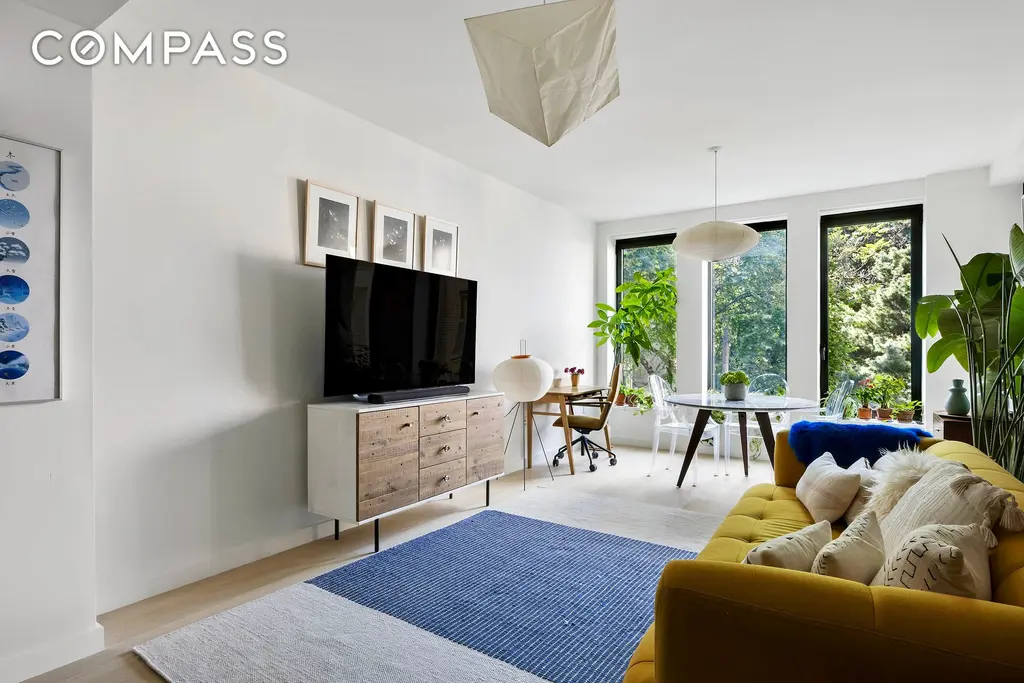
Saint Marks Place, #212 (Compass)
Developer: SB Development Group
Designer: Fogarty Finger
24 stories | 86 condo units
Completed in 2022
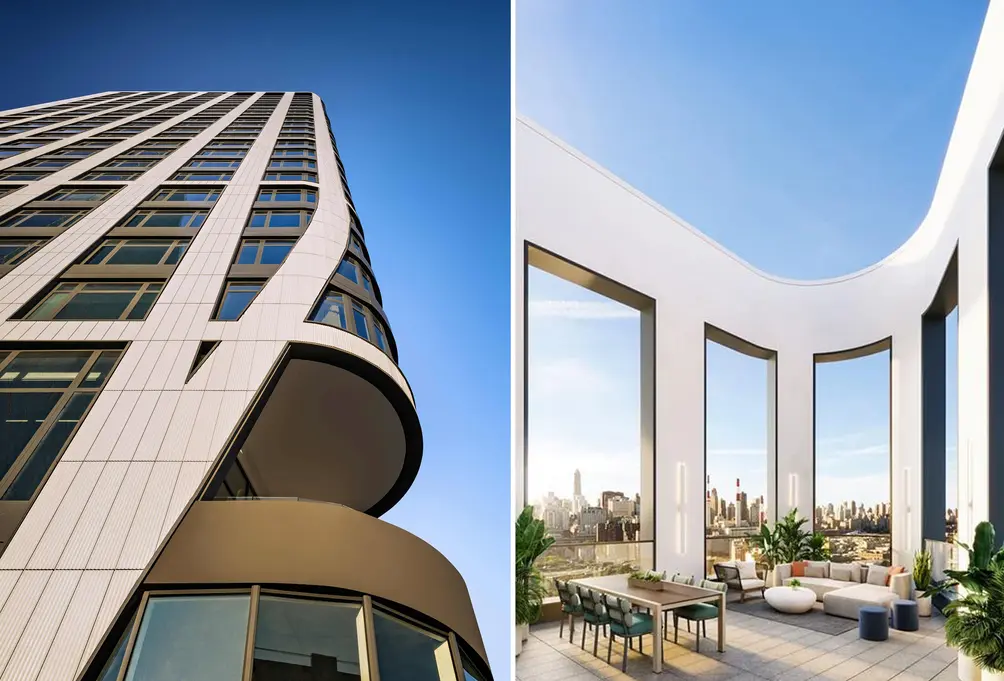 Nova (Fogarty Finger)
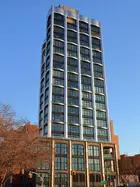
The angle of Jackson Avenue to the Long Island City street grid resulted in a triangular-shaped lot at 41-05 29th Street. Between its unique shape and its terra cotta facade, NOVA brings a certain New York City Landmark to mind; however, it boasts a taller height and sleeker facade than its Manhattan counterpart. The Scandinavian-inspired interiors are similarly austere, the better to keep from competing with beautiful skyline views.
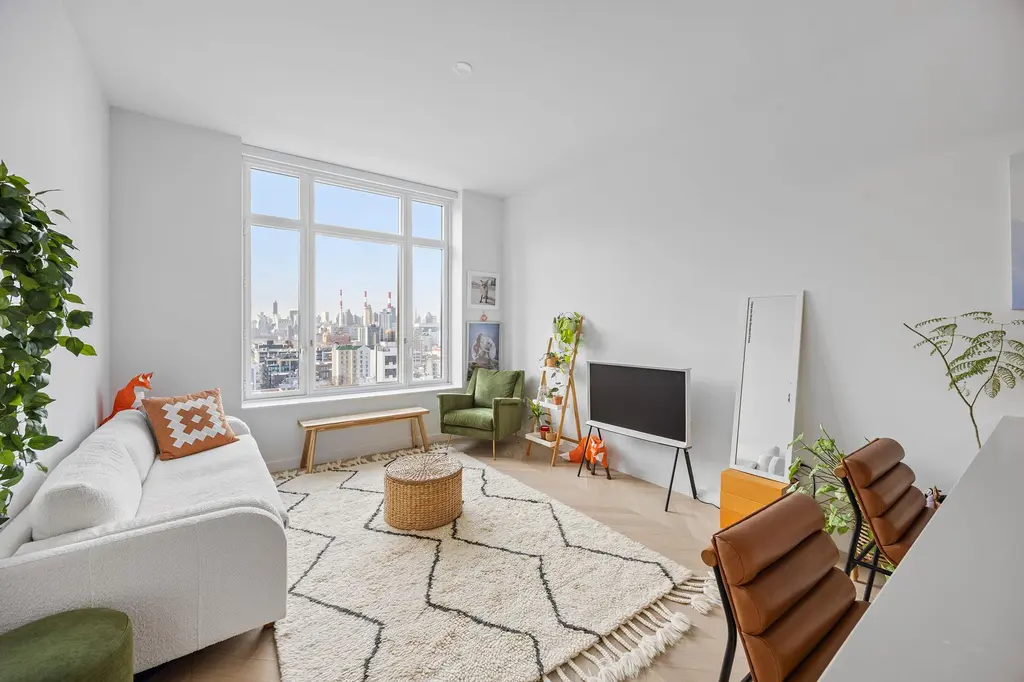
NOVA, #16B (Modern Spaces)
Developer: Elad Group
Designer: Pelli Clarke Pelli
32 stories | 42 condo units
Completed in 2025
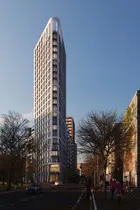
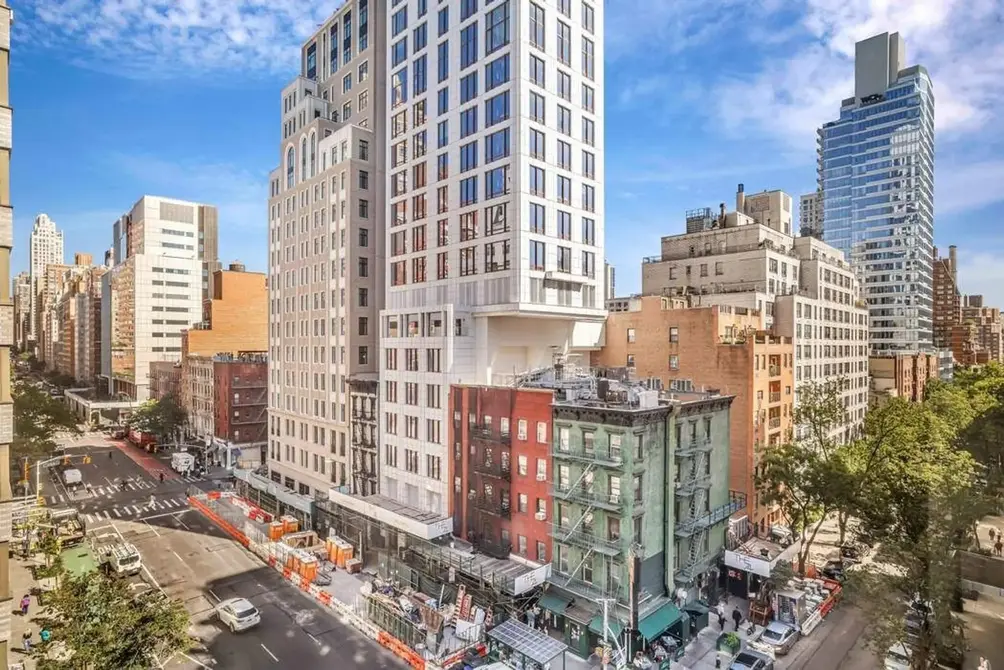 The 74
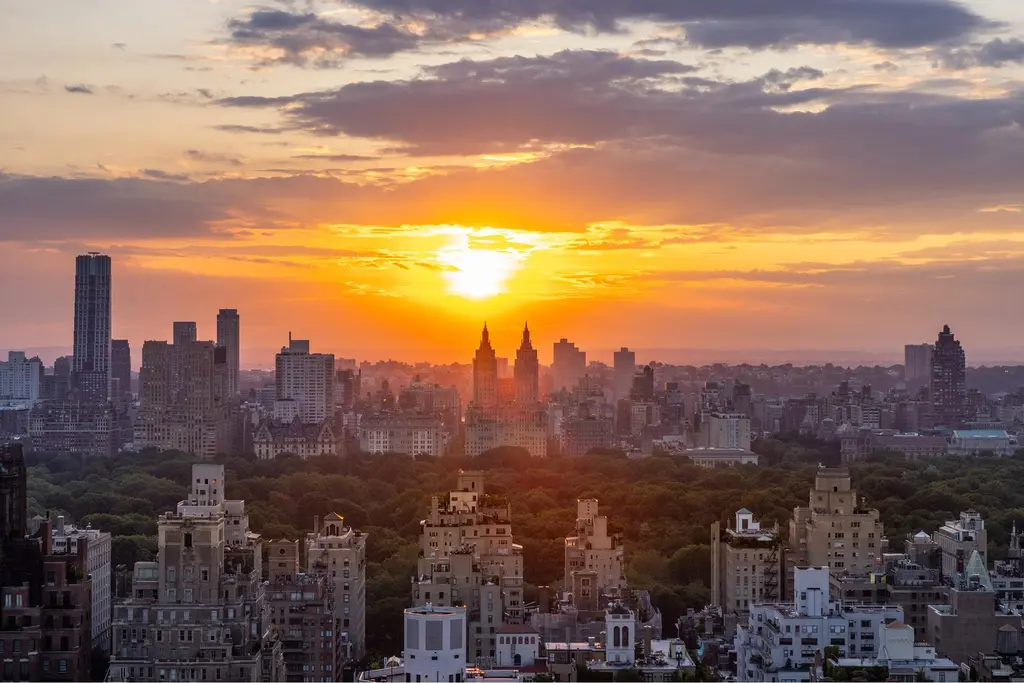
The 74 is a new construction condo on the Upper East Side, and its height allows for the expansive views luxury buyers have come to expect. But with its pleated terra cotta facade and Art Deco-inspired crown, it pays tribute to its prewar neighbors. Closings began in May 2025, and the building was one of New York City's best sellers of 2025.
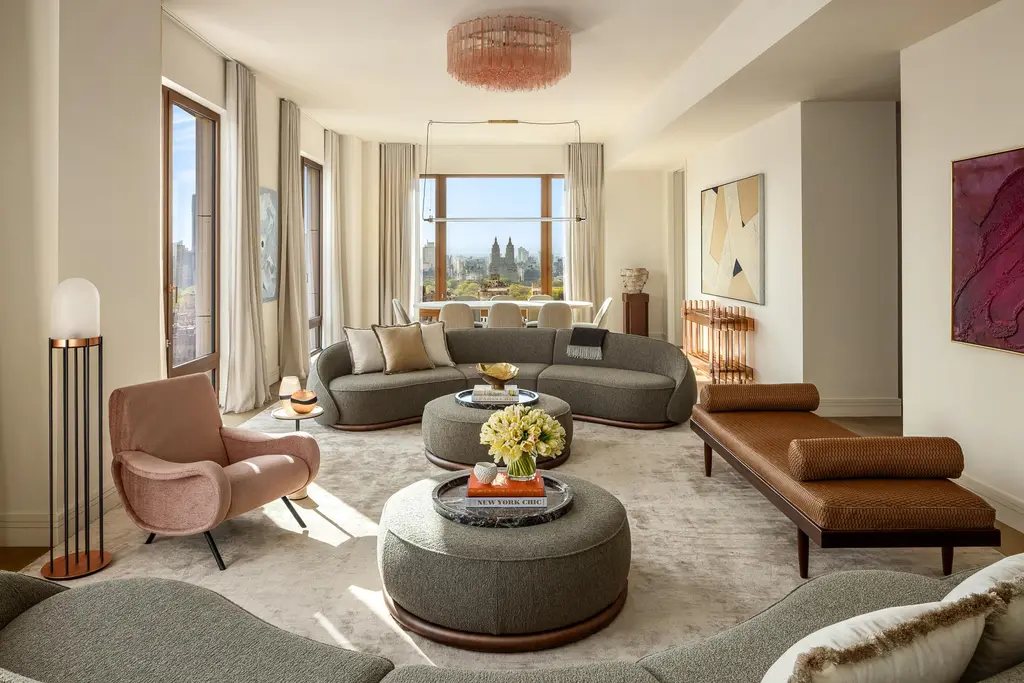
The 74, #27 (Douglas Elliman Real Estate)
Related Articles

Future New York
Top 25 NYC condos with the best playrooms and kid-friendly amenities
Thursday, September 3, 2026
Future New York
Draped in Concrete, 10W17 Rises in Flatiron Ahead of Sales Launch
Tuesday, September 1, 2026
Future New York
Private by Design: Full-floor NYC apartments with direct elevator access under $2.5 million
Friday, August 28, 2026
Future New York
Price Cuts: Full-floor at 432 Park Avenue slashed by $10M; Charles Mingus' former Noho loft reduced by $100K
Wednesday, August 26, 2026
Get To Know
In honor of National Dog Day, see pet-friendly apartments near dog parks + Rescue dogs in search of a home
Wednesday, August 26, 2026
Financial District
As CityPicklePalooza takes over Times Square, see NYC buildings with pickleball and padel courts
Wednesday, August 26, 2026
Get To Know
What to know about combining two (or more!) NYC apartments + Unique combination residences available now
Tuesday, August 25, 2026
Get To Know

 6sqft delivers the latest on real estate, architecture, and design, straight from New York City.
