
In this article:
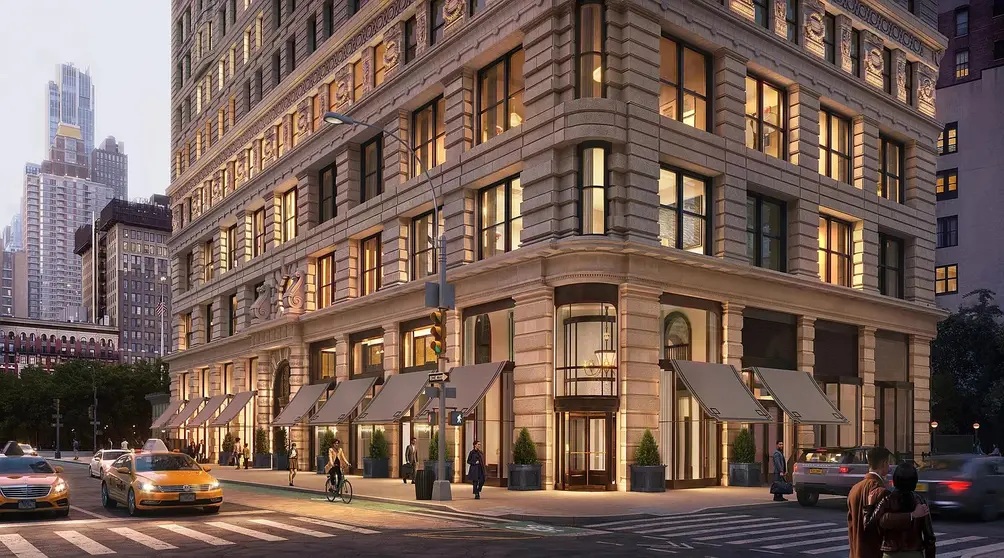 The Flatiron Building entrance
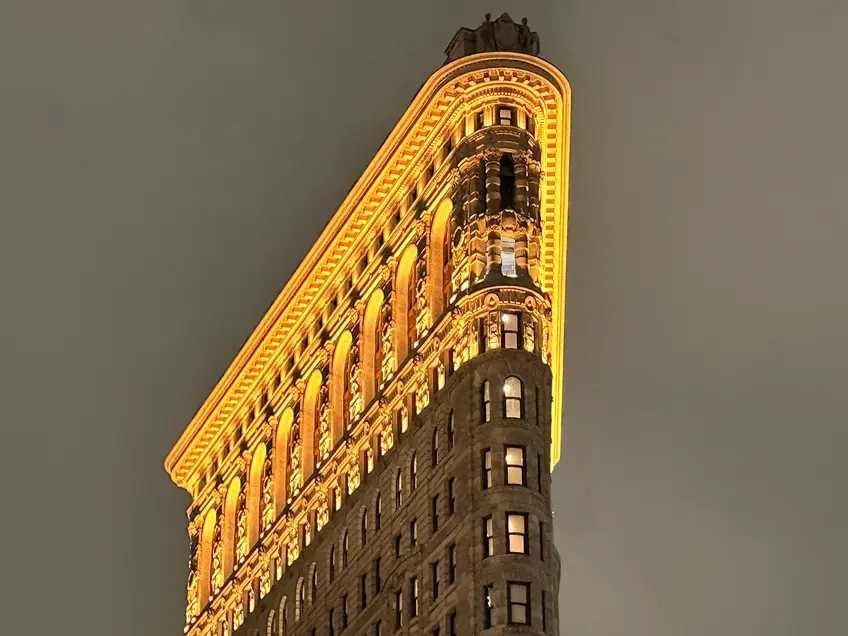
“The architectural significance of The Flatiron Building can’t be measured. The Flatiron Building is such an important part of New York’s collective memory and for me personally it is so strong. The building is beloved and an instantly recognizable symbol of the city that celebrates both its rich history and its future.
Very few buildings in the world elicit an emotional response like The Flatiron Building and reimagining this iconic landmark as residential homes has been an exciting and deeply meaningful experience; one we approach with great care and respect.” – William Sofield, Designer and Founder of Studio Sofield
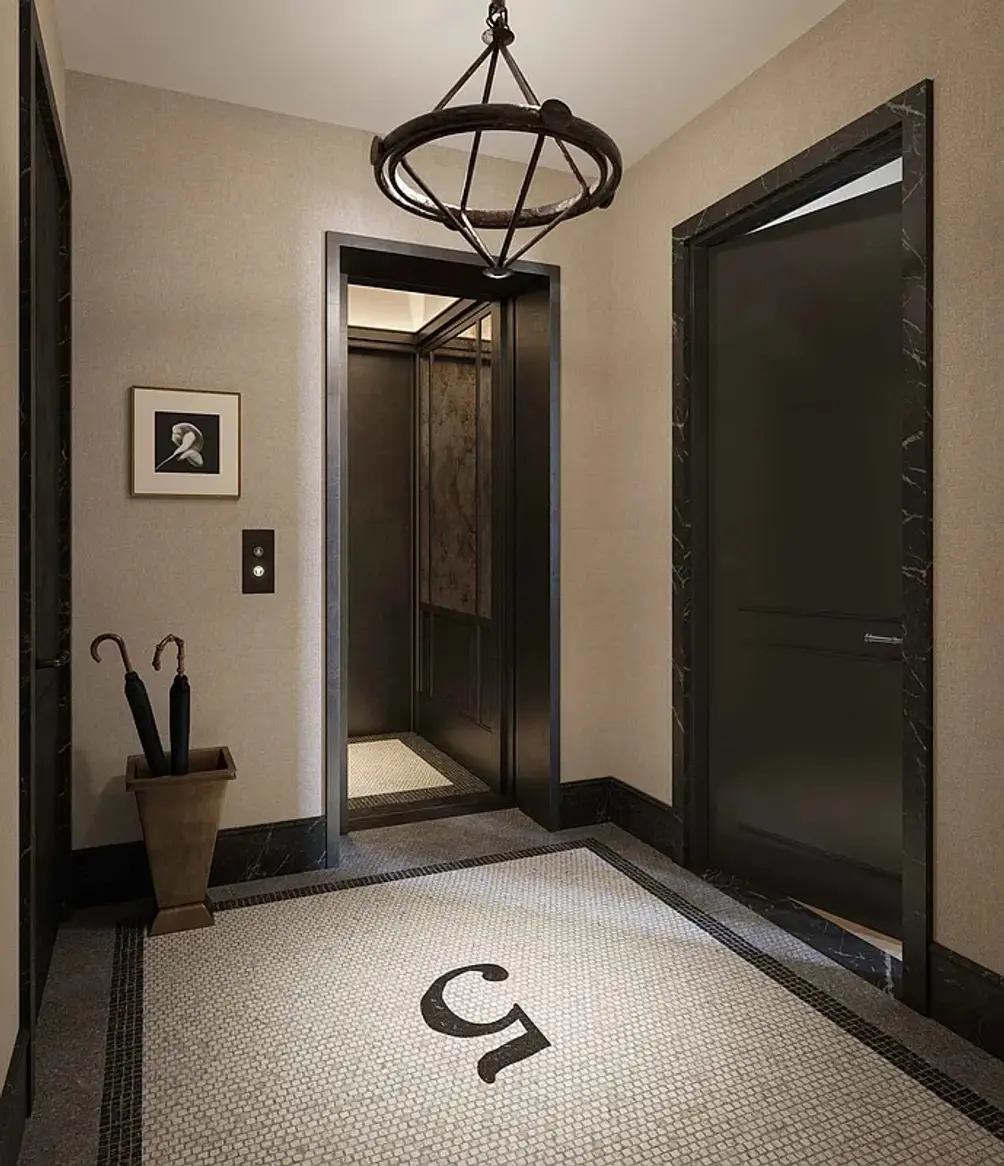 Private vestibule entrance
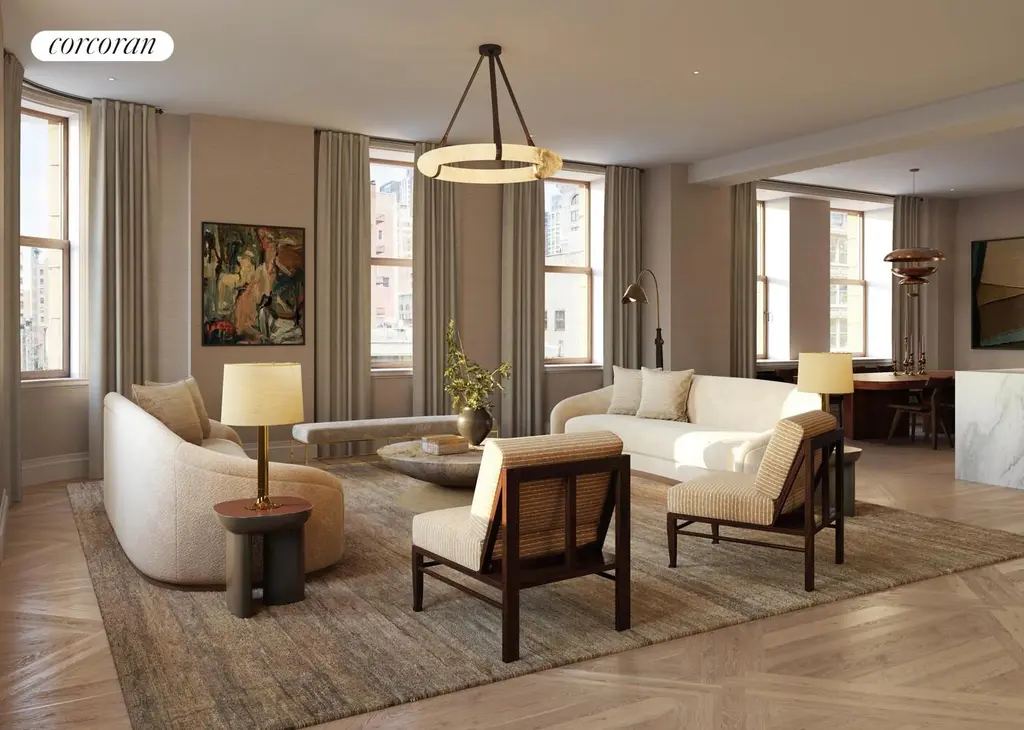
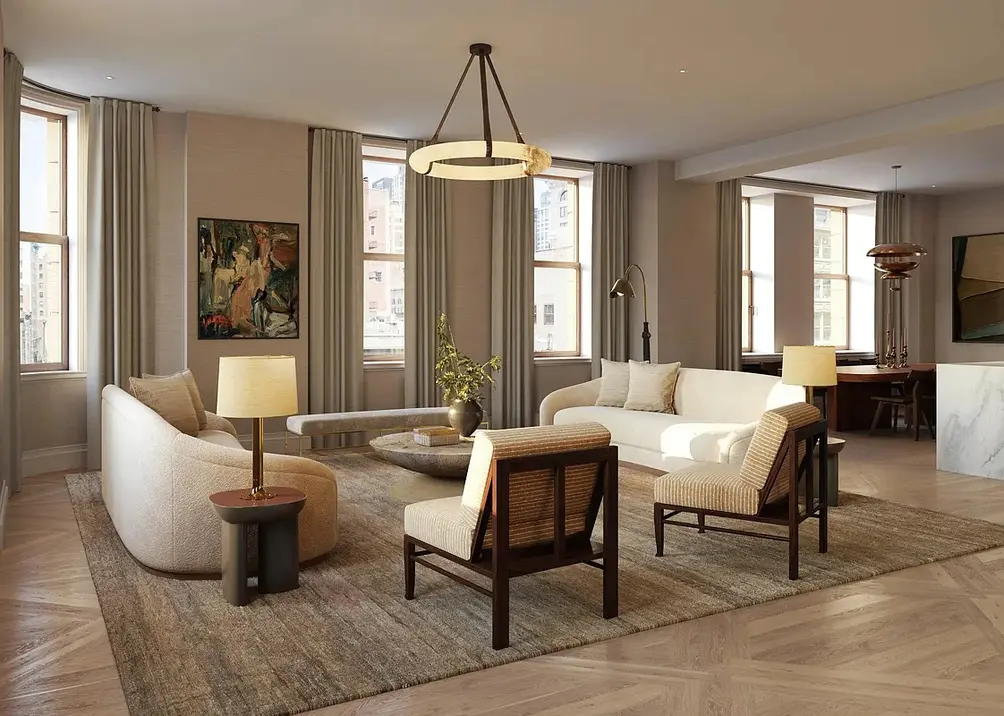 Living room
“What was modern about The Flatiron Building in 1902 is still what’s modern about it today. That is a rarity, and we’ve fully embraced the building’s archeology in our designs for the project’s next chapter.
The reimagined interiors reflect a love of craftsmanship, texture, and history. We carefully considered what kind of design would best honor the site’s integrity and its place within the city. Every material, color palette, and detail in the reimagined interiors was chosen with that intention in mind.” – William Sofield
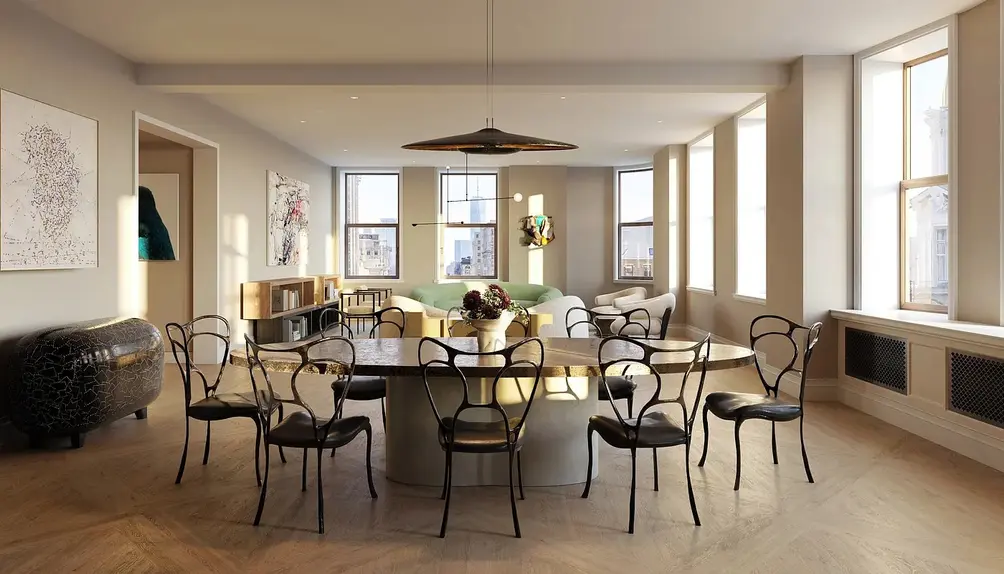 Great Room
"Our designs embrace the modernity of the building’s timeless architecture and design while incorporating contemporary elements inspired by original materials uncovered during the multi-year restoration process; Historic cast iron railings, marble mosaic flooring, and original ironwork are a few of the materials that helped guide our design process and provided a great jumping off point for what the interiors could be.” – William Sofield
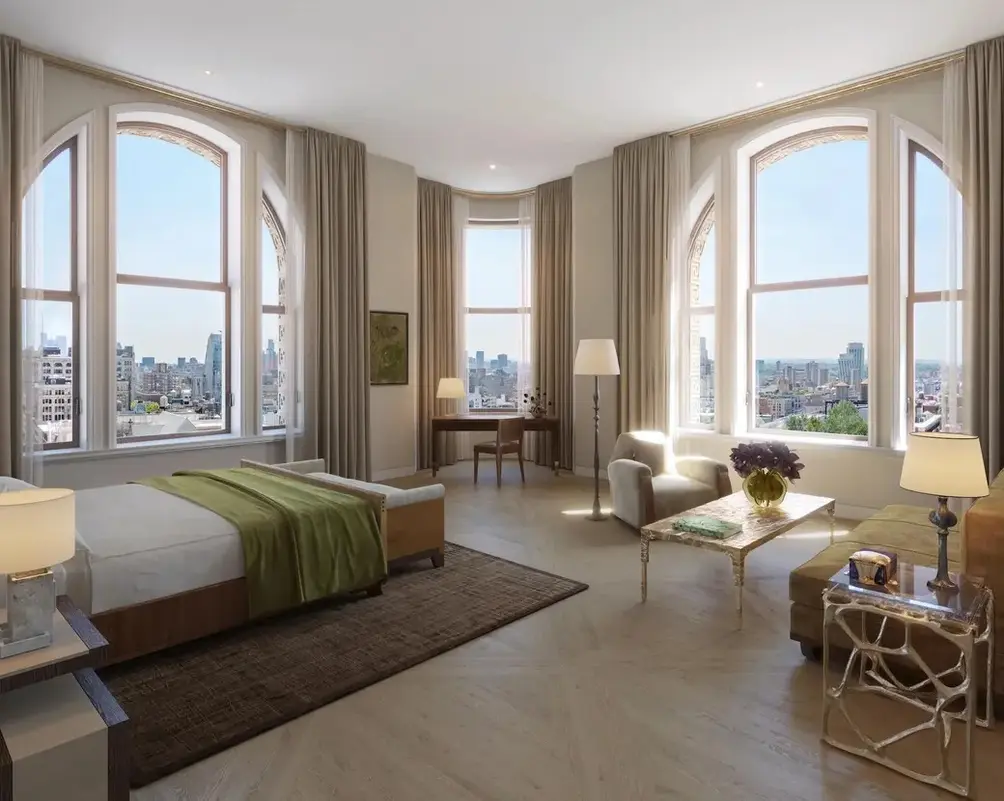
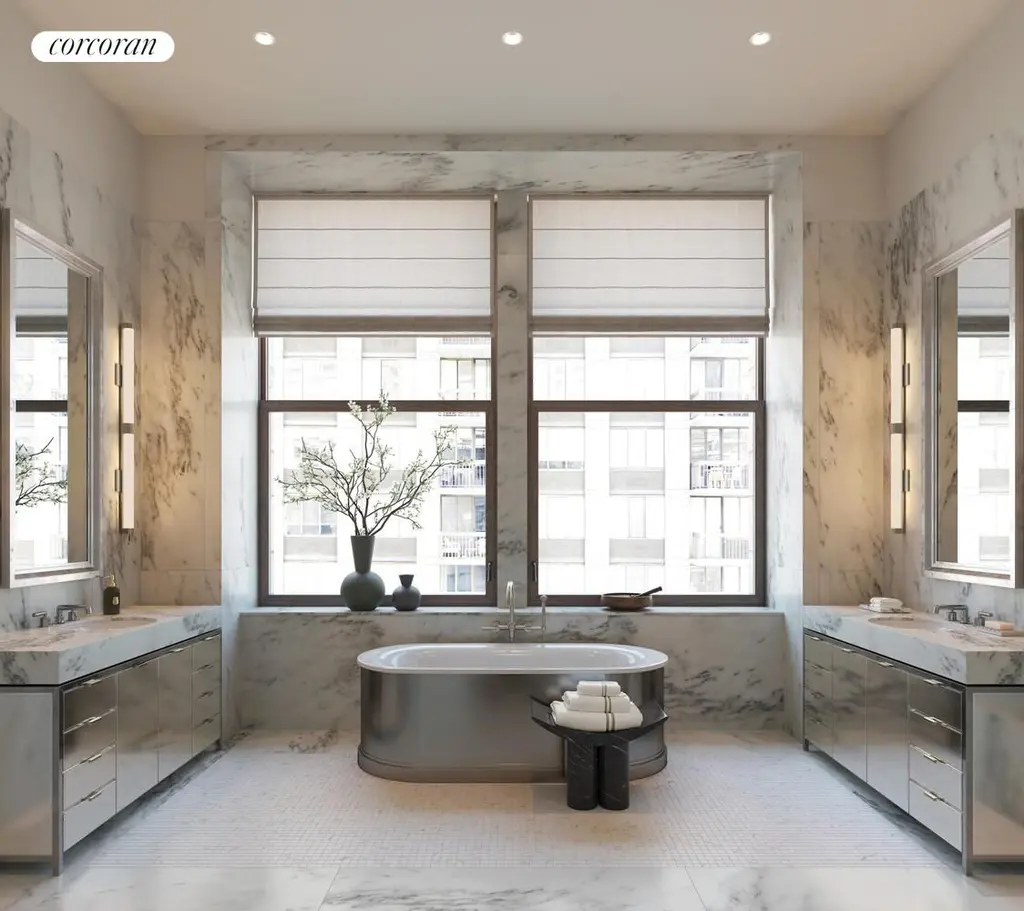
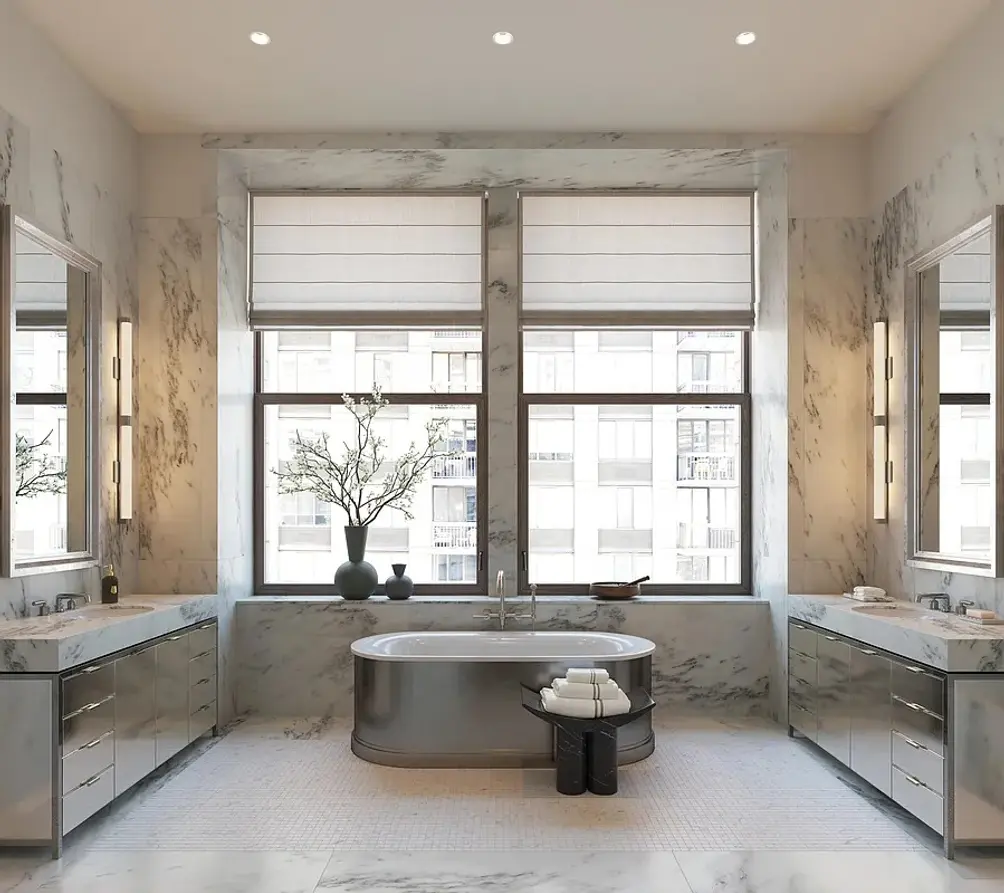 Primary bath
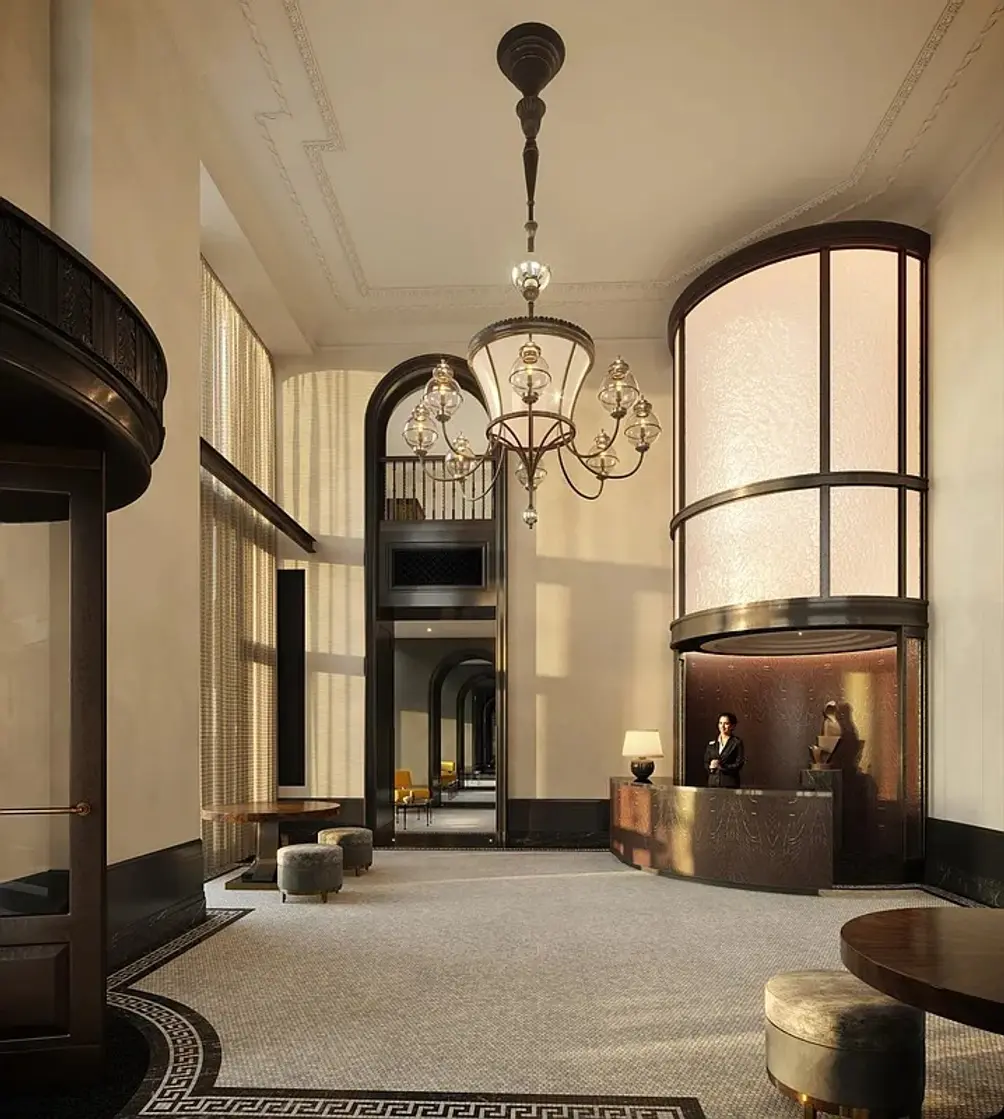 Attended lobby
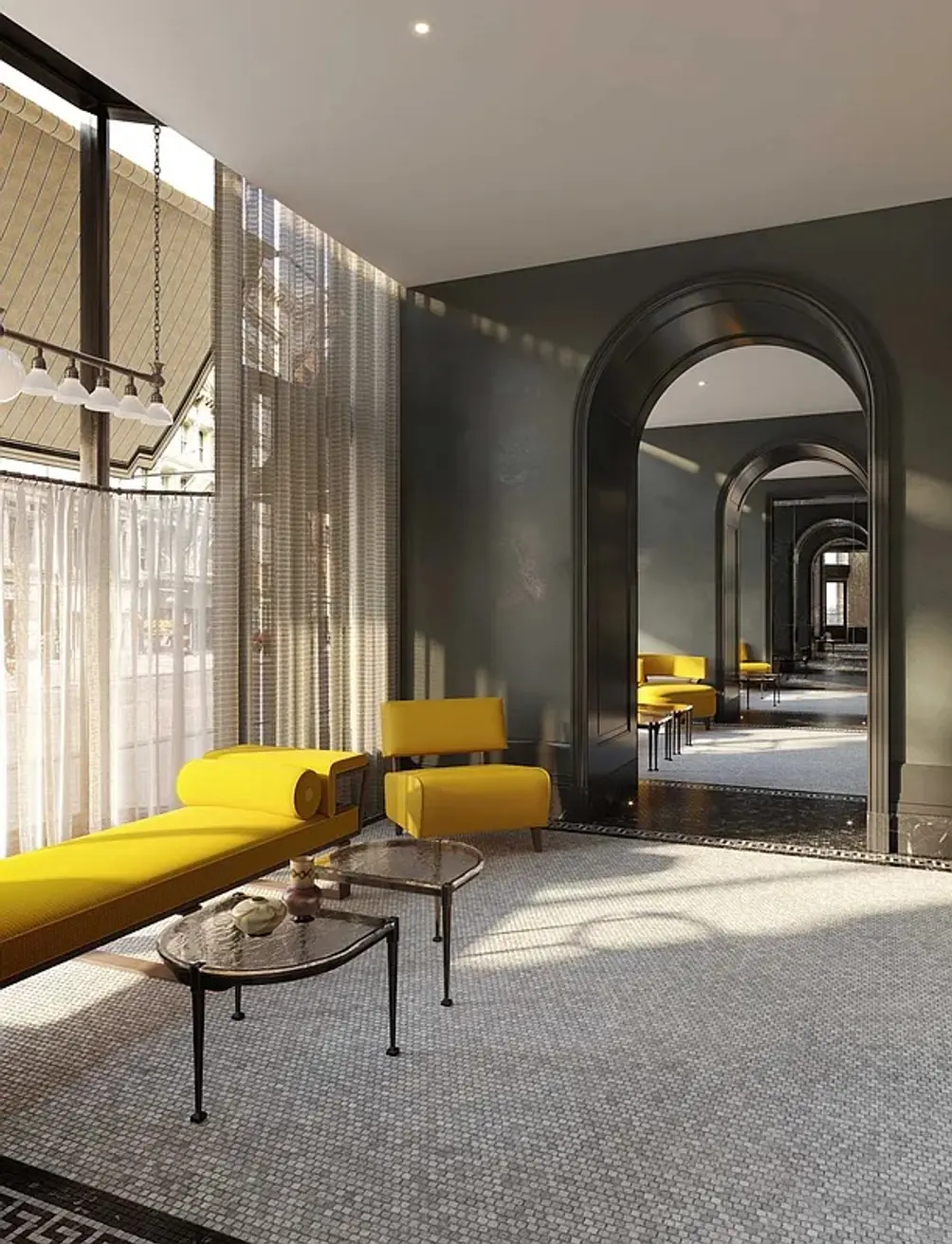
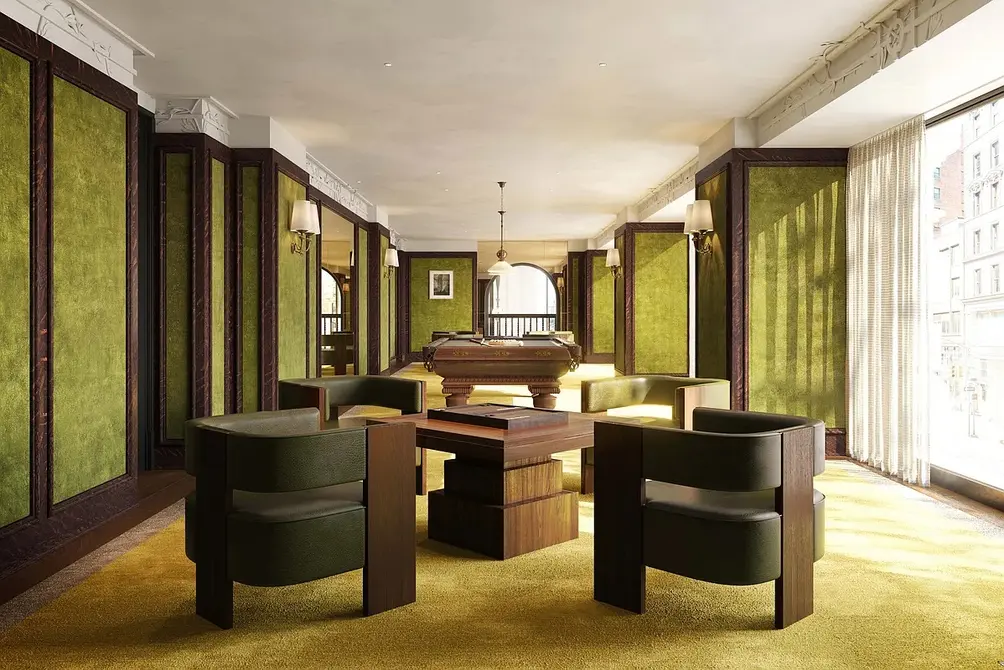 Billiards lounge
15 Things You might not know about The Flatiron Building
1. It wasn’t originally called the Flatiron
When it opened in 1902, the building was officially named the Fuller Building after the George A. Fuller Company that developed it. The public quickly nicknamed it the Flatiron because it resembled a cast-iron clothes iron. Take that "Gherkin"
2. It went up incredibly fast
Construction took just about a year, extremely fast for a skyscraper at the time (and even for today), thanks to steel-frame construction pioneered in Chicago.
3. People thought it would blow over
Because of its narrow wedge shape and height, critics called it “Burnham’s Folly.” Many believed strong winds would knock it down. The steel skeleton, however, was engineered to withstand four times the expected wind loads.
4. The building helped create the Flatiron District
Before the tower existed, the area was part of the Ladies’ Mile retail district. The building became so iconic that the entire neighborhood eventually took its name from it. Most of the area is designated a historic district, meaning substantial changes to building exteriors need to be reviewed by the Landmarks Preservation Commission.
5. The triangular tip is only about 6.5 feet wide
At its narrowest point, the famous prow facing Madison Square is only 6 to 6.5 feet wide, helping make it one of the most dramatic building corners in the world.
6. Offices had odd-shaped rooms
Because of the wedge shape, many interior spaces were triangular or trapezoidal. Tenants often struggled to place desks and furniture. Likely the reason the building has been a prime candidate for a residential/hotel conversion for several decades.
7. The building was modeled after a classical column
Architect Daniel Burnham divided the facade into three vertical sections: base, shaft, and capital, mimicking the proportions of a Greek column. Many buildings of the Chicago School follow this template, such as Louis Sullivan's Bayard Building in NoHo.
8. The winds made women’s skirts fly up
Strong winds created by Broadway and Fifth Avenue converging there would whip around the building. Men used to gather hoping to see women’s skirts blow upward. Police frequently chased them away, supposedly shouting “23 skidoo!” which helped popularize the phrase.
9. There were originally no women’s restrooms
The building initially had bathrooms only for men. Early 20th-century office culture was still overwhelmingly male. Later, management designated alternating floors for men and women restrooms on odd-numbered floors.
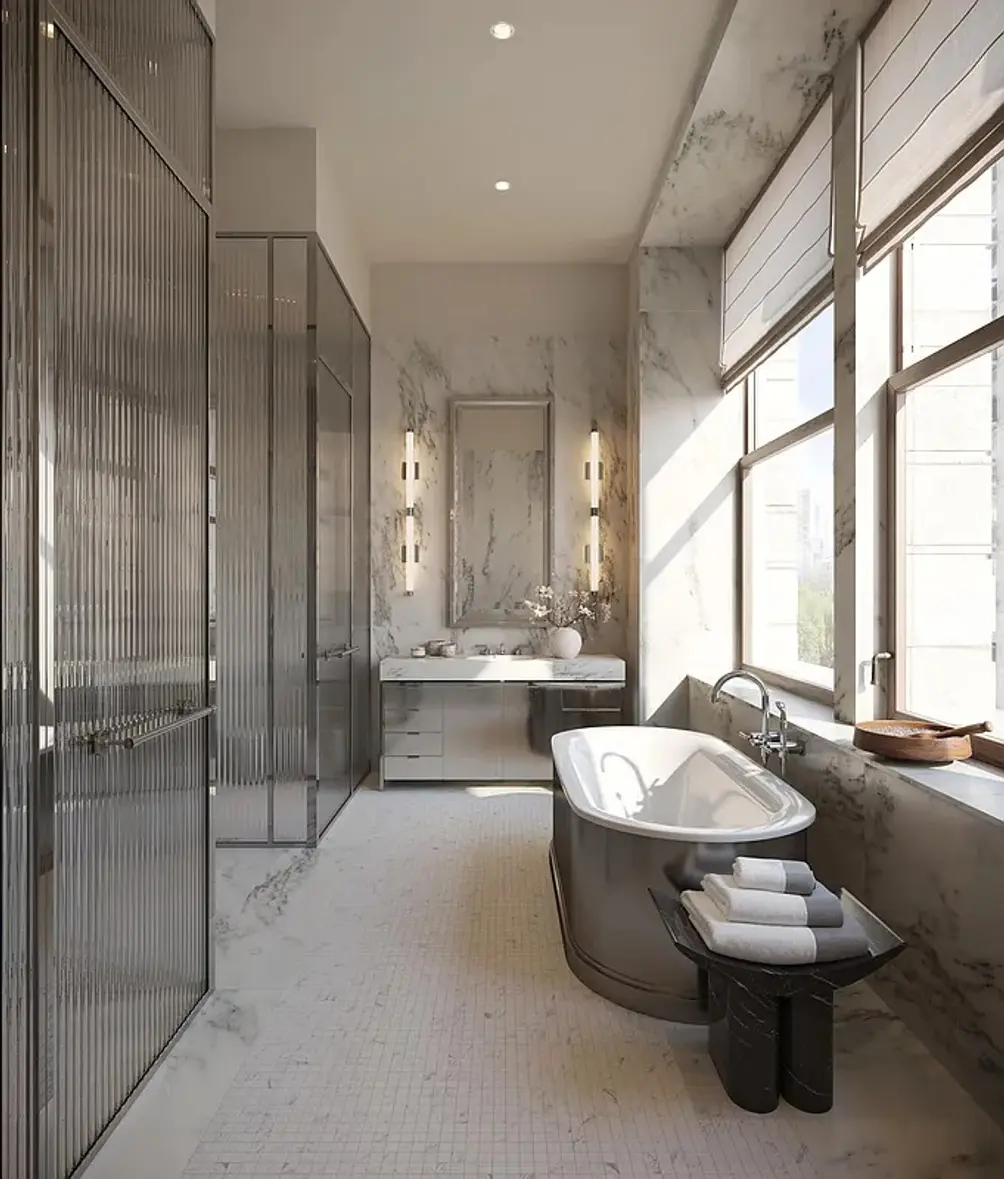 Primary bath in the new residential offering
10. The very top offices were the most desirable
Even though they were small, the pointed prow offices were highly coveted because they offered spectacular views down Fifth Avenue.
11. The building helped define early skyscraper style
It’s one of the oldest surviving steel-frame skyscrapers in New York, representing a transition from masonry buildings to modern towers
12. It once had a secret restaurant and club
In the early 1900s, a restaurant and social club operated inside the building, popular with publishers and business leaders.
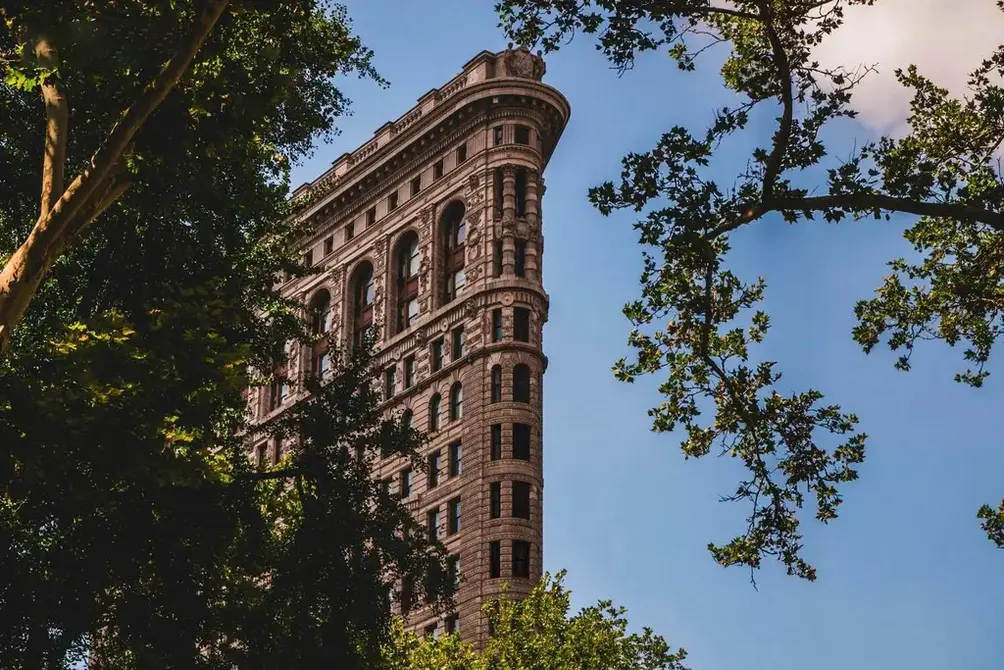 The Flatiron Building (Corcoran Sunshine Marketing Group) | https://www.cityrealty.com/nyc/flatiron-union-square/flatiron-building-175-fifth-avenue/187971
13. Famous photographers made it legendary
Some of the most famous early architecture photographs in history feature the Flatiron, including Edward Steichen’s moody 1904 image taken in snow and fog.
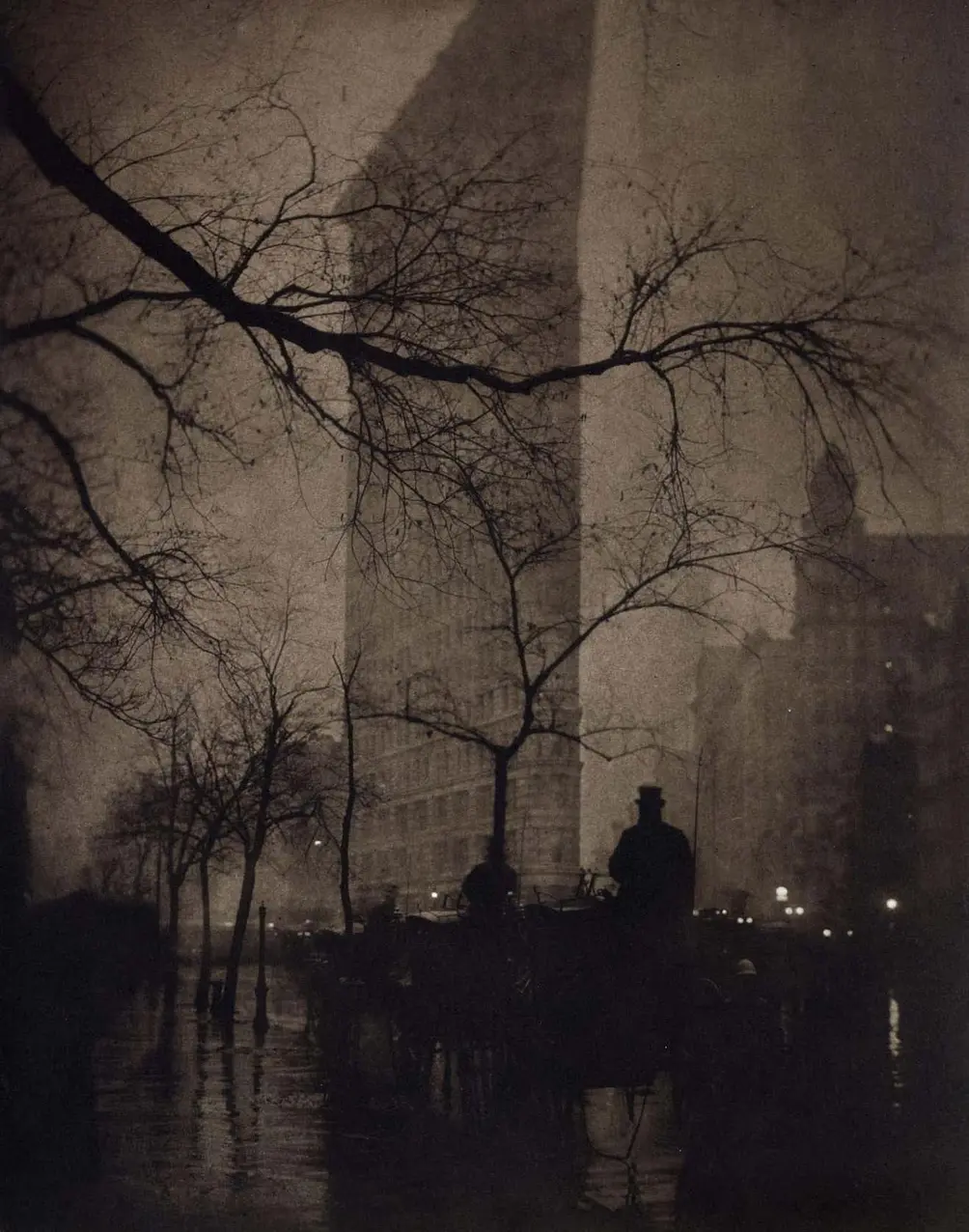 Flatiron Building by Edward Steichen, Public Domain, https://commons.wikimedia.org/w/index.php?curid=147295377
14. For decades it was dominated by one tenant
The publishing company Macmillan occupied a huge portion of the building for much of the 20th century before leaving in 2019.
15. It’s becoming apartments and receiving architectural exterior lighting for the first time in its history
After more than a century as offices, the building is finishing its conversion into high-end condos, marking the first time people will actually be able to live the building. It joins other Madison Square-are conversions such as the Sohmer Piano Building, The International Toy Factory Building (10 Madison Square West), and 212 Fifth Avenue.
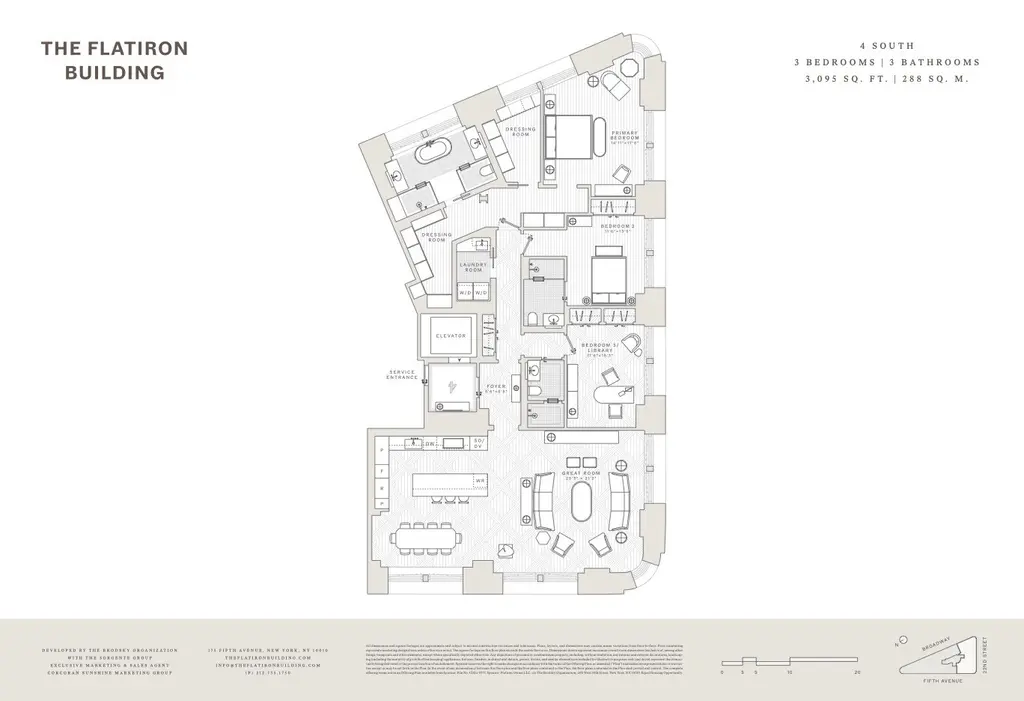
Flatiron Building, #4SOUTH
$11,750,000
Flatiron/Union Square | Condominium | 3 Bedrooms, 3 Baths | 3,095 ft2
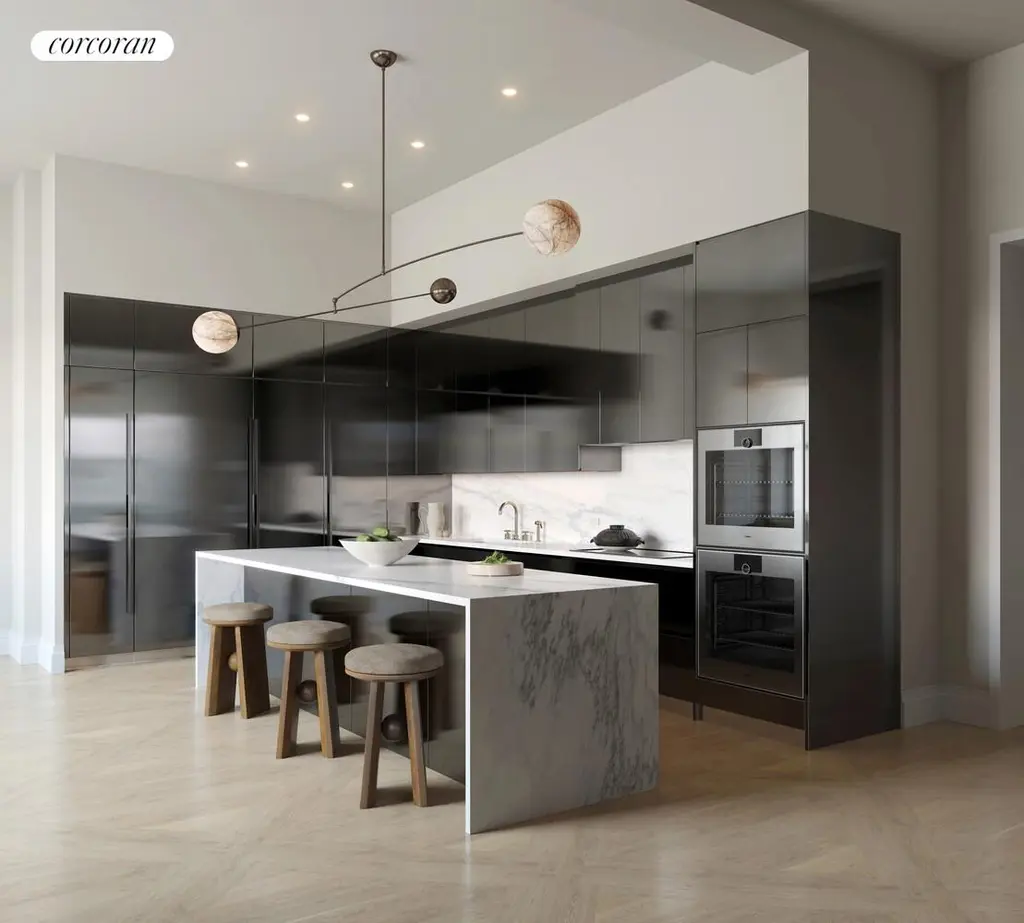
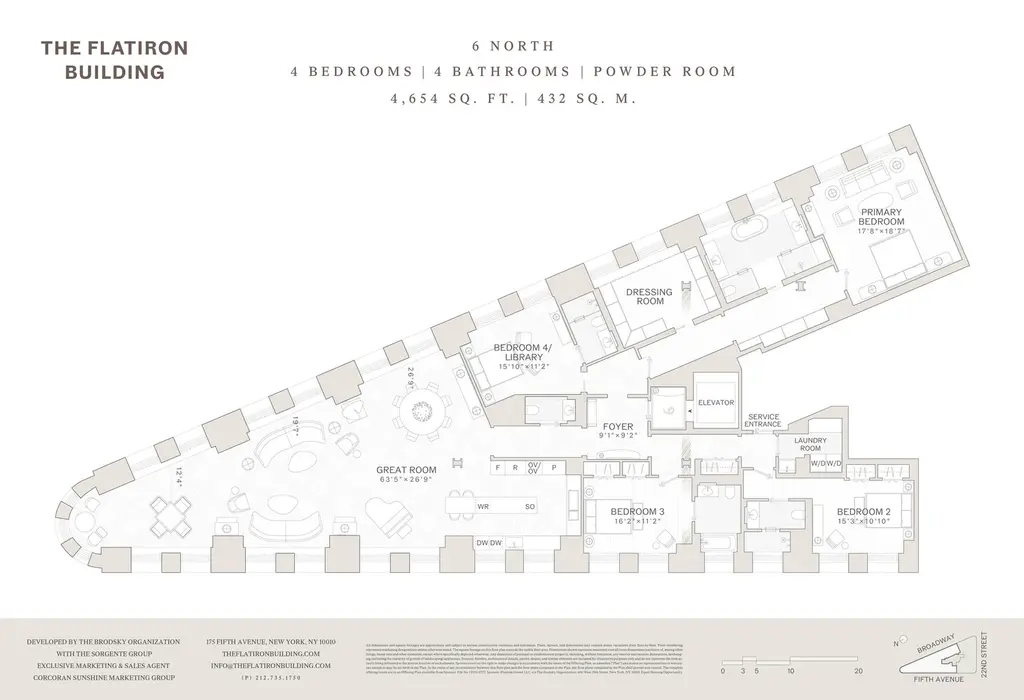
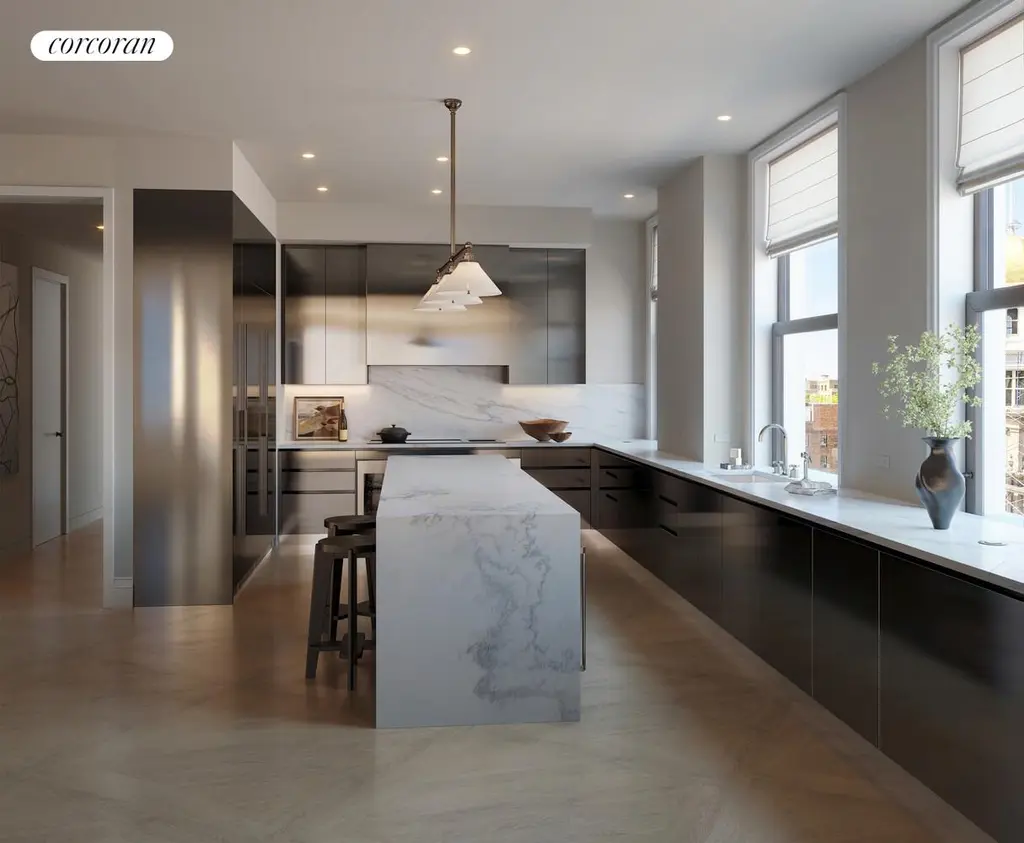
Flatiron Building, #6NORTH
$19,150,000
Flatiron/Union Square | Condominium | 4 Bedrooms, 4.5 Baths | 4,654 ft2
Related Articles
Draped in Concrete, 10W17 Rises in Flatiron Ahead of Sales Launch
Tuesday, September 1, 2026
Flatiron Building half-floor leads quiet summer contract week; Sohmer Piano penthouse sells at auction for 64% discount
Tuesday, August 4, 2026
Where to find salvaged architectural materials around NYC + 21 homes with character on the market now
Tuesday, July 28, 2026
The Emmet Building’s second act: Inside a NoMad landmark reborn as the refined residences of 95 Madison
Tuesday, July 28, 2026
In honor of Bastille Day, see NYC's grandest Beaux-Arts and French Renaissance-style buildings
Wednesday, July 15, 2026
‘Indiana Jones’ penthouse finds buyer as $22.5M Fifth Avenue maisonette tops Manhattan contracts
Today, September 15, 2026
Five luxury Jersey City rentals offering up to four months free rent
Monday, September 14, 2026

 6sqft delivers the latest on real estate, architecture, and design, straight from New York City.
