The Heritage at Trump Place CLOSE 
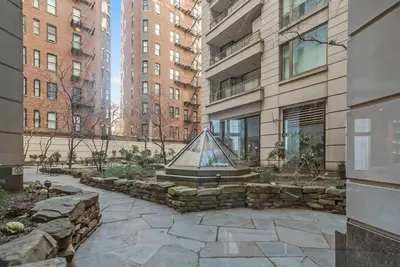
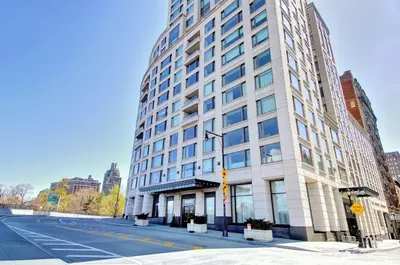
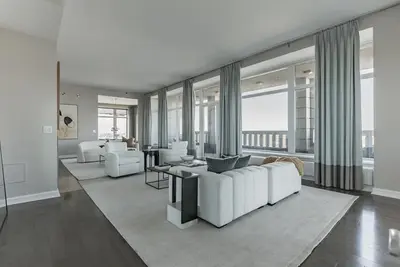
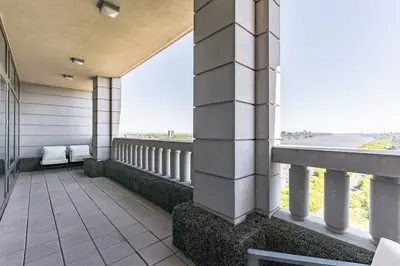
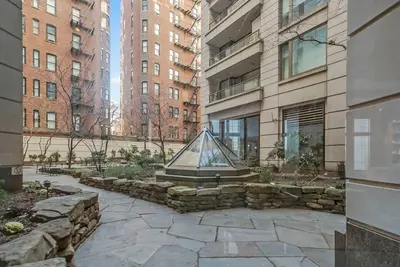
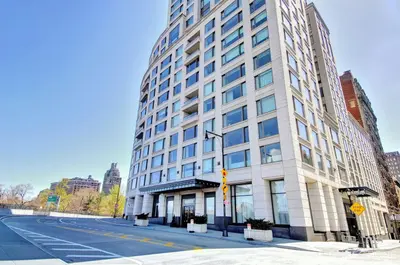
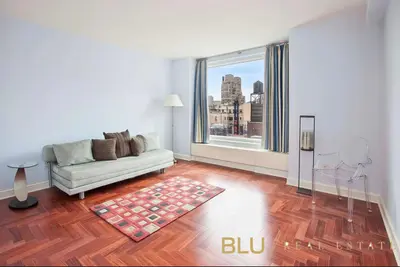
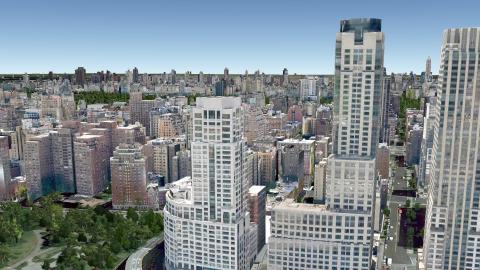
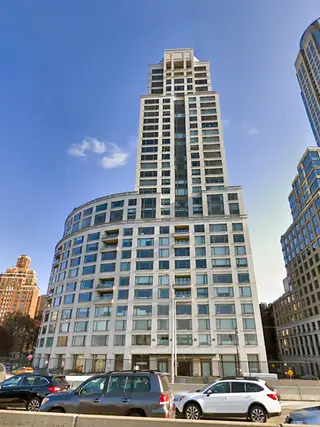
This handsome, 31-story condominium apartment tower was completed in 2003 as the northernmost building in Donald Trump's enormous redevelopment, known as Trump Place, of the former rail yards at the south end of Riverside Park.
Designed by Costas Kondylis & Associates, it is notable for its curved base.
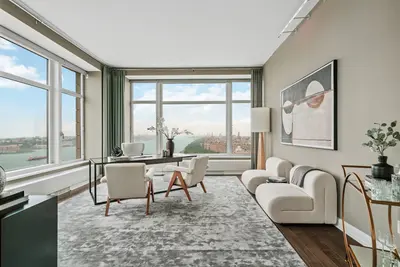
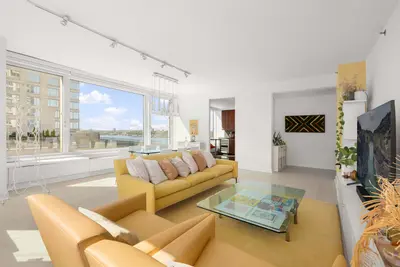
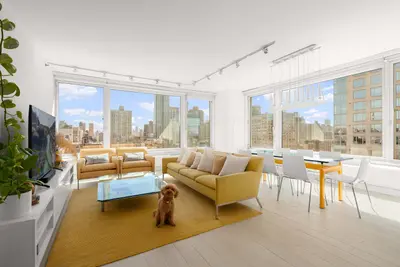
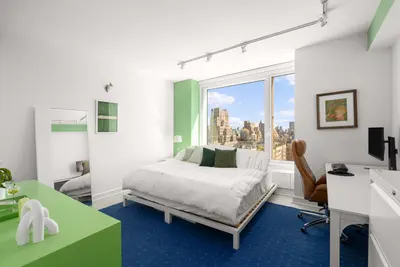
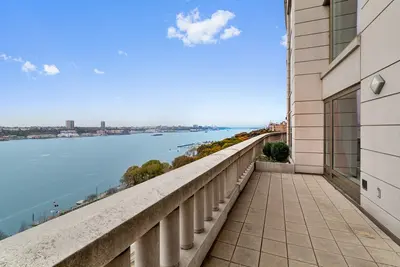
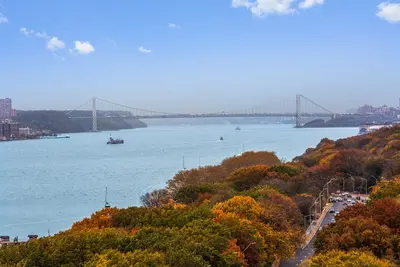
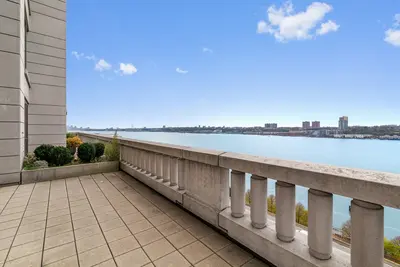
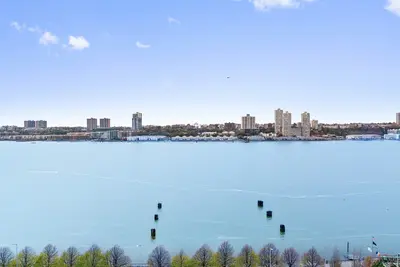
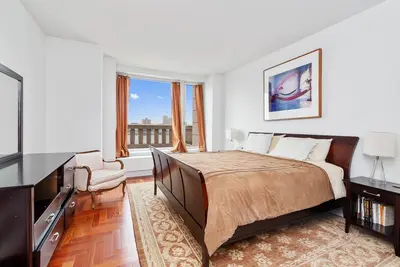
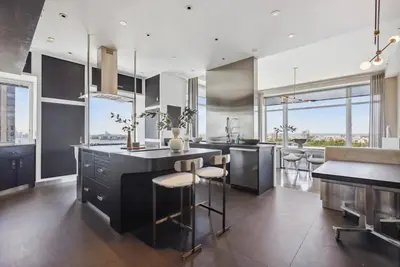
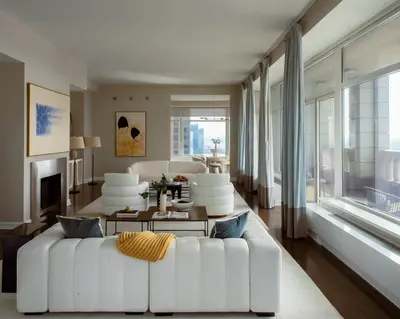
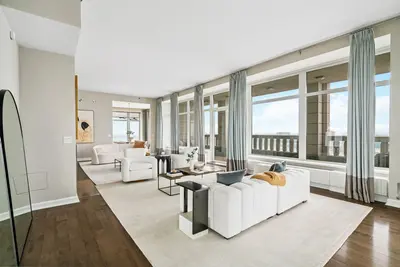
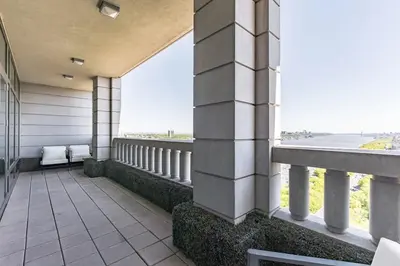
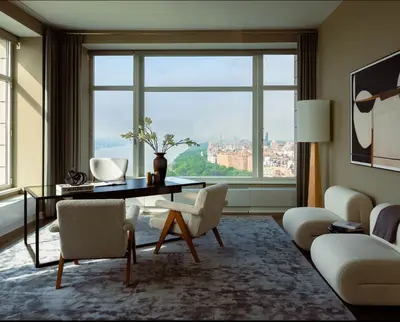
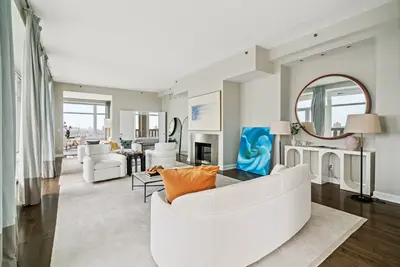
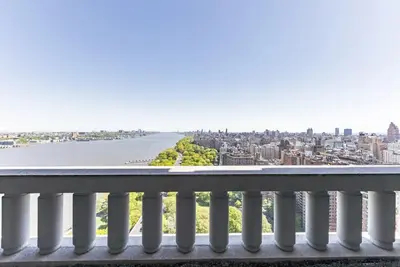
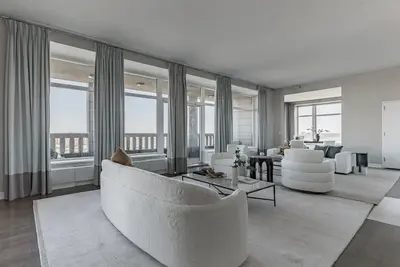
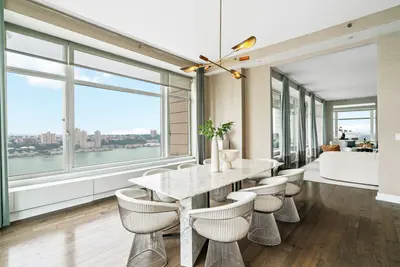
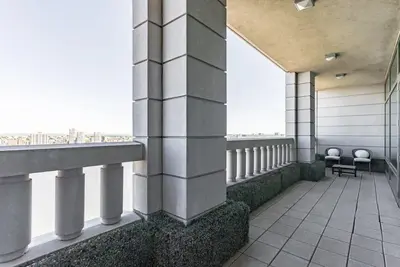
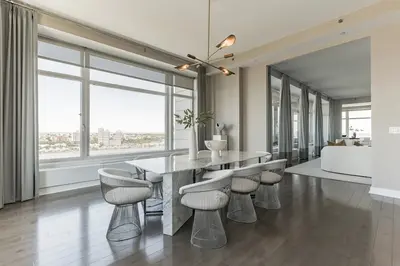
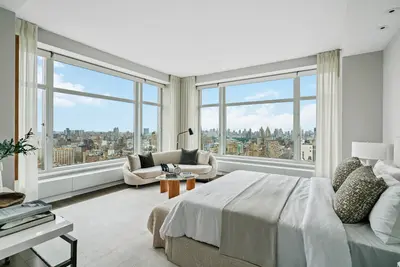
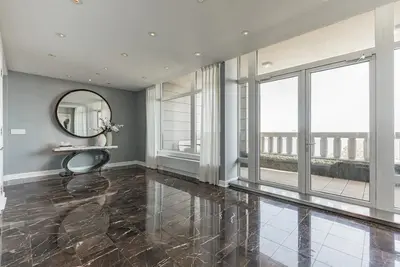
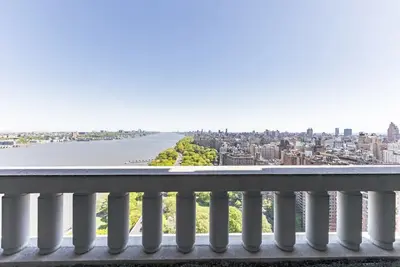
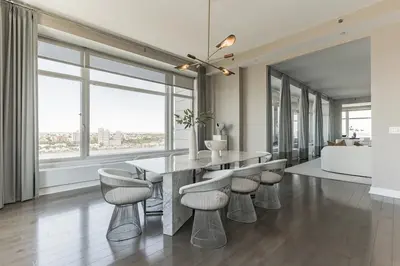
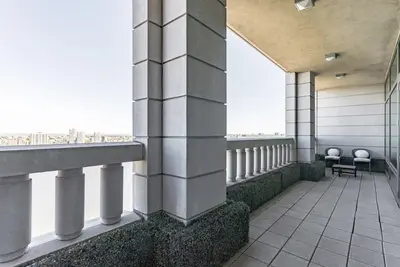
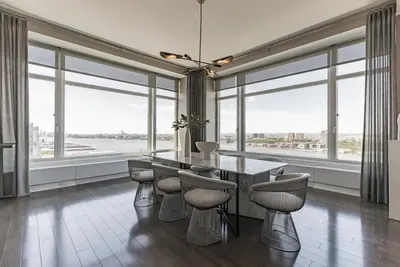
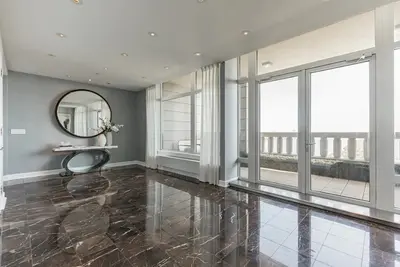
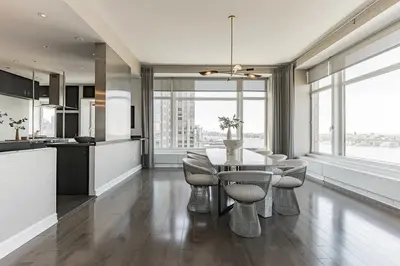
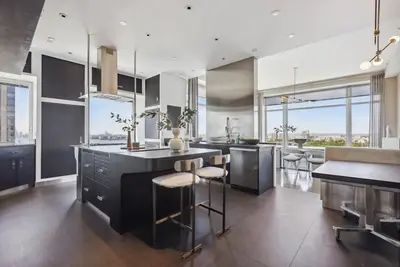
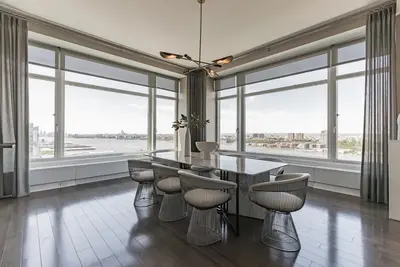
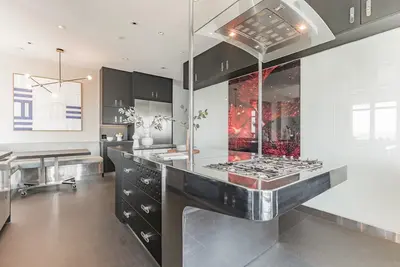
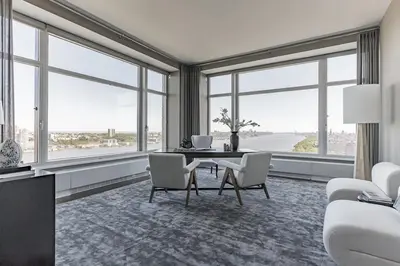
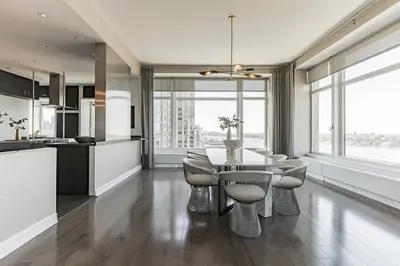
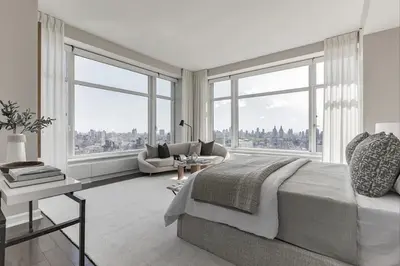
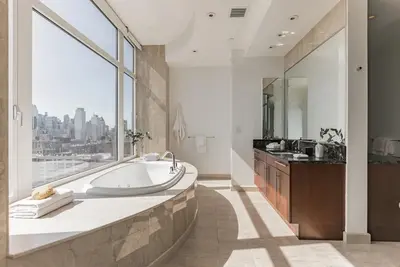
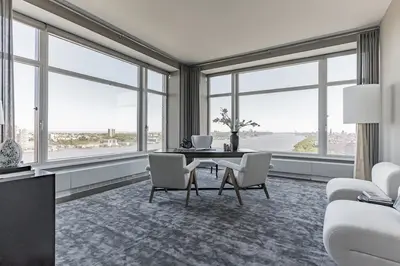
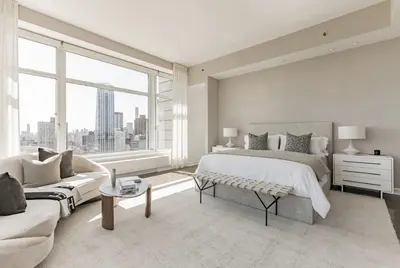
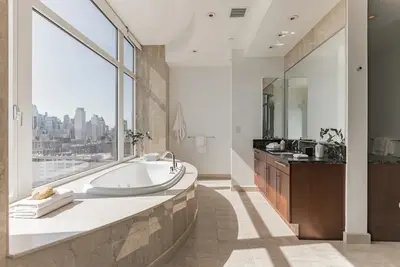
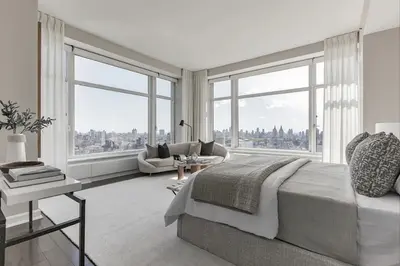
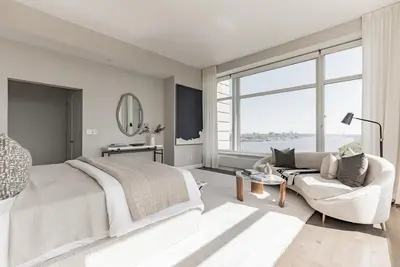
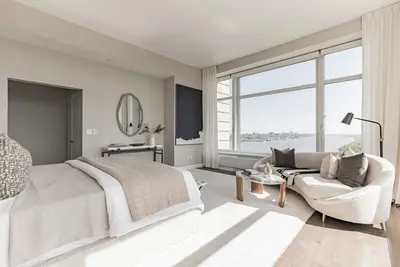
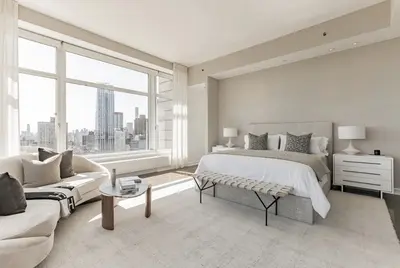
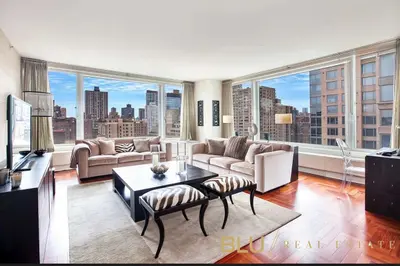
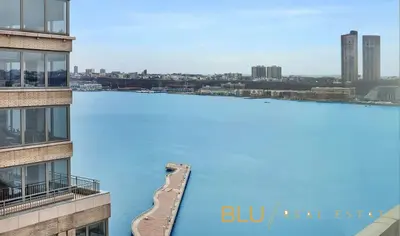
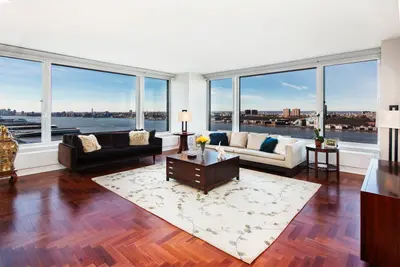
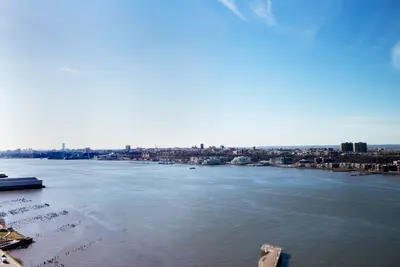
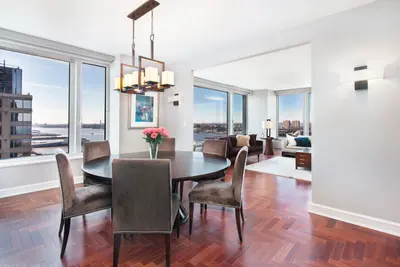
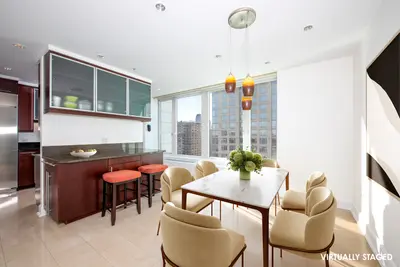
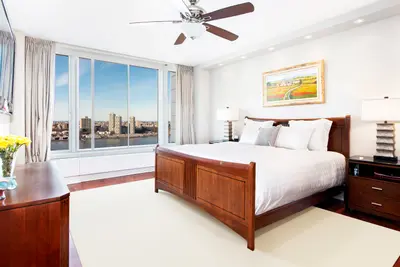
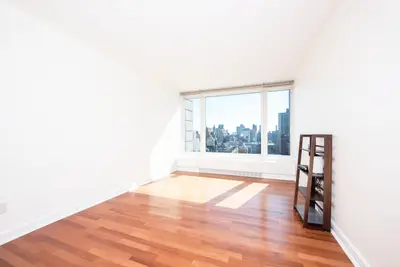
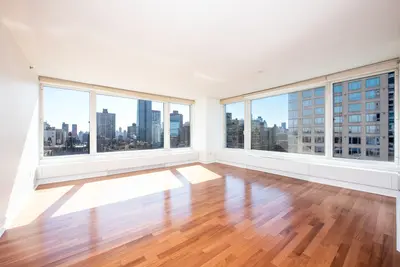
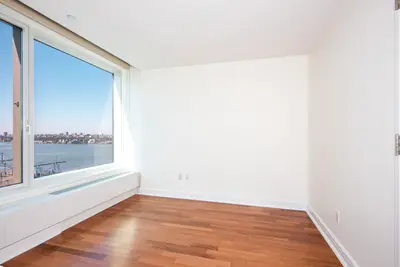
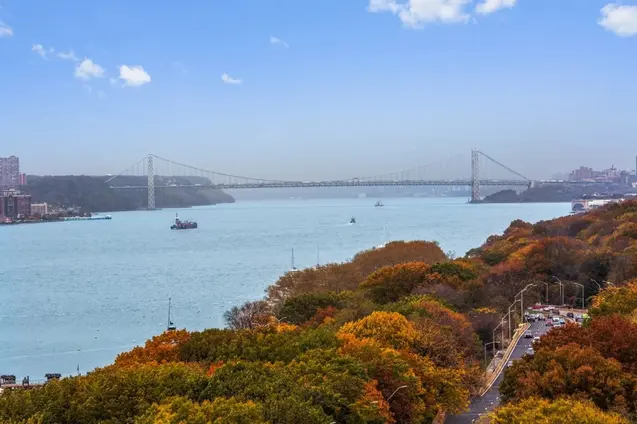
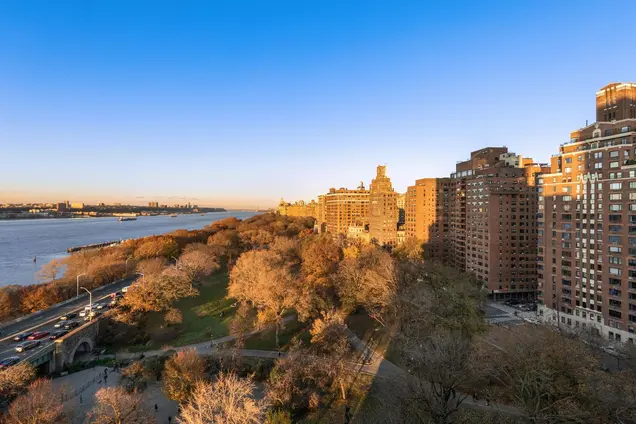
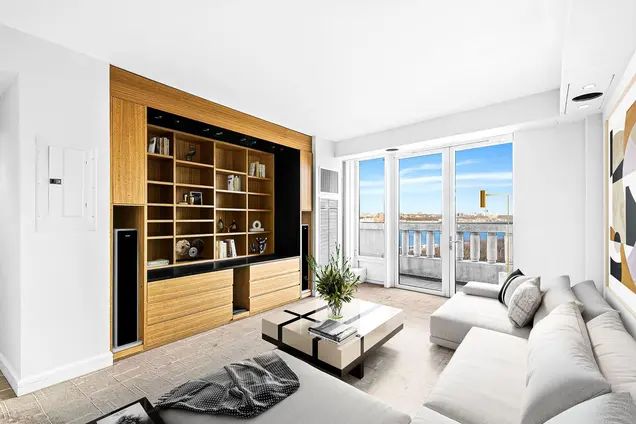
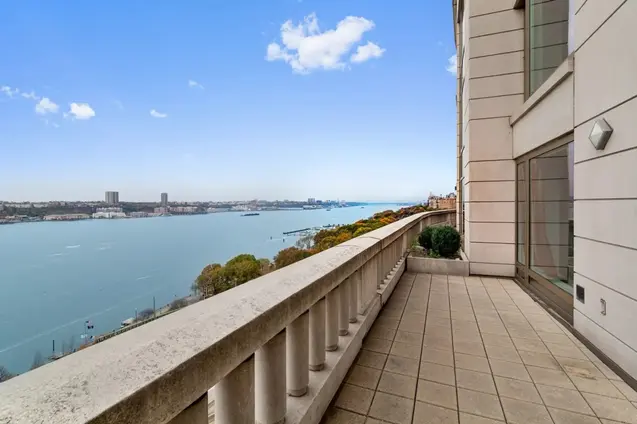
The tower has 170 apartments and commanding views of the Hudson River and much of Upper Manhattan.
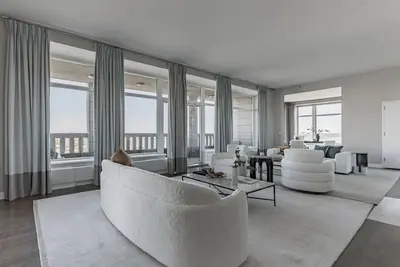
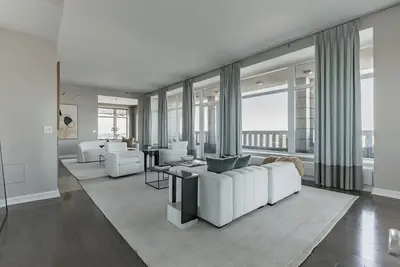
Trump Place was a $3 billion, 75-acre project that calls for a total of about 5,700 apartments, about 140,000 square feet of retail space and a 21.5-acre park to be completed by about 2012 between 59th and 72nd Streets south of Riverside Park.
At one point, Mr. Trump planned to erect the world's tallest building at the south end of the site and hired Helmut Jahn, the flamboyant Chicago architect, to design it. The project, which at one point was called "Television City" when Mr. Trump sought to convince a major network to lease a lot of space at the project, ran into considerable community opposition. Mr. Trump had acquired the development rights many years before he finally won approval for the project in 1992 from the City Planning Commission.
This tower faces an exit ramp from the West Side Highway at 72nd Street that the city agreed in 2004 to close to facilitate the widening of Riverside Boulevard, the interior north/south road in the complex.
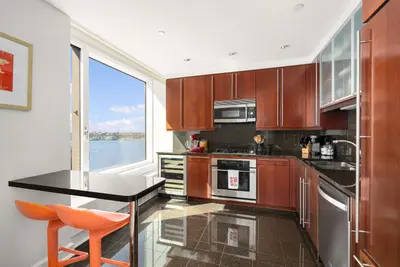
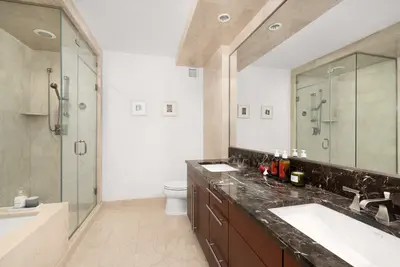
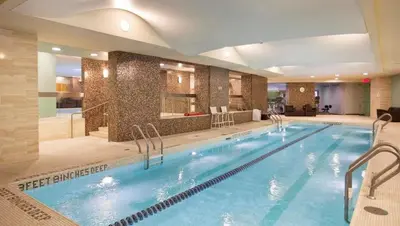
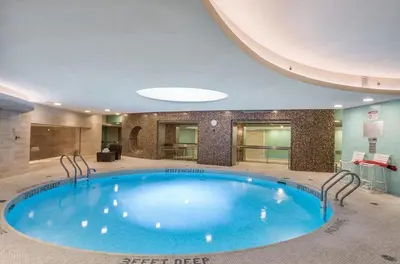
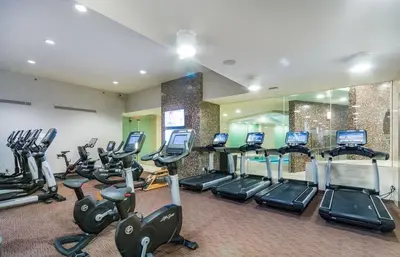
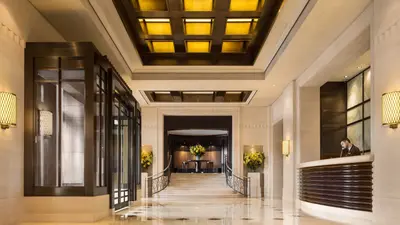
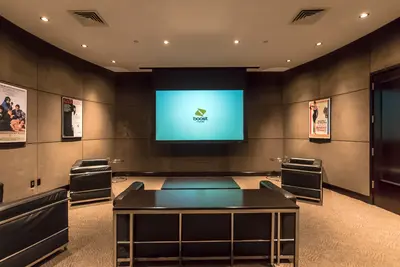
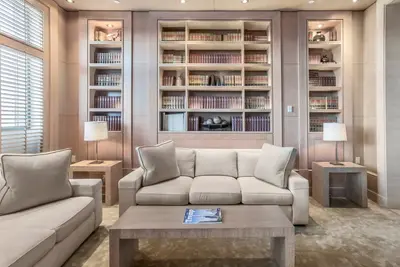
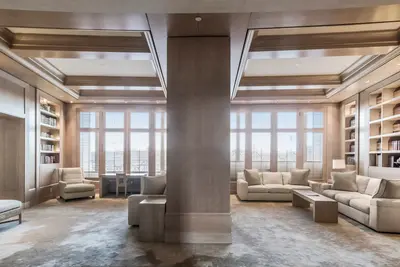
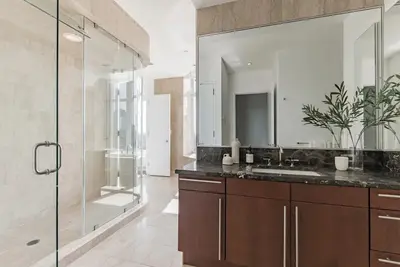
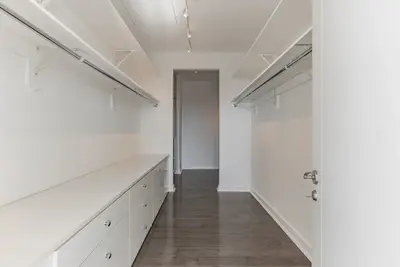
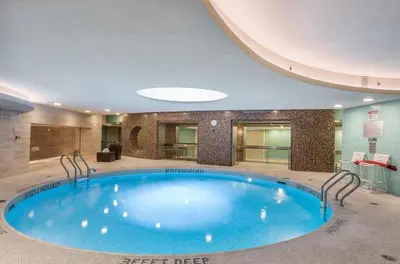
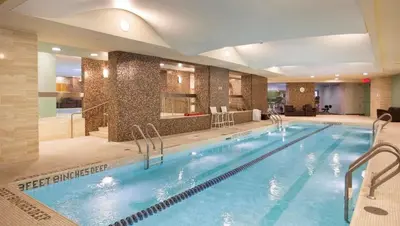
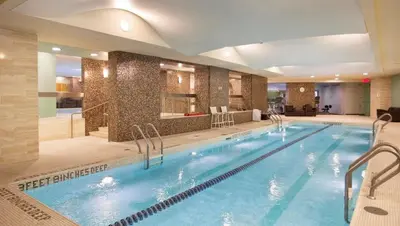
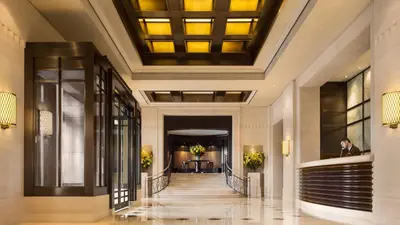
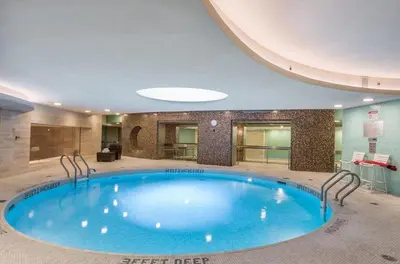
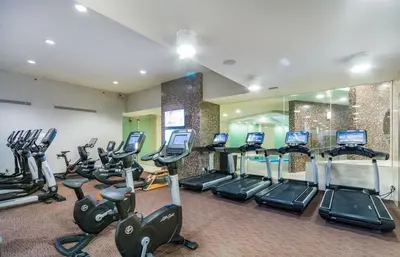
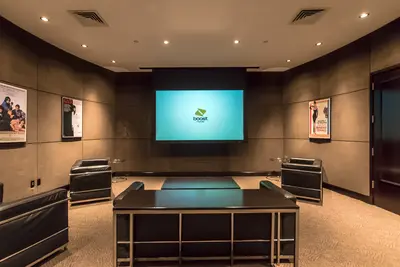
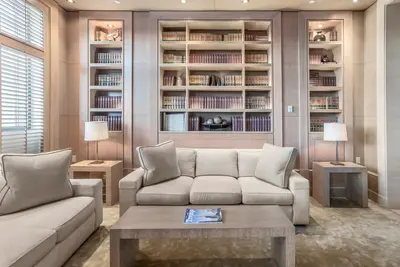
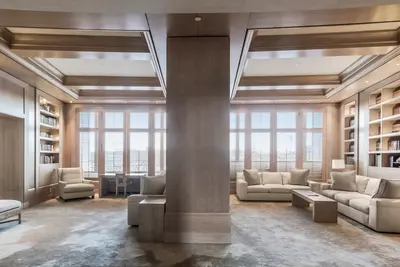
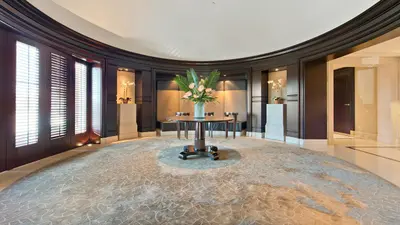
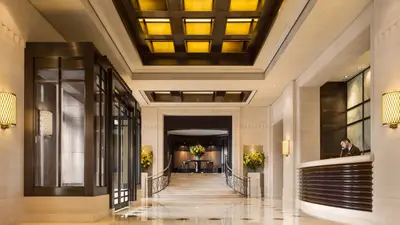
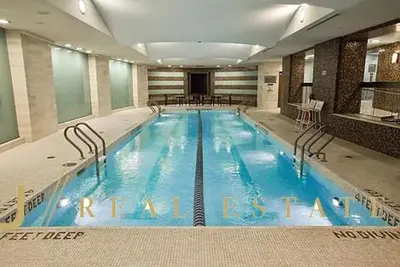
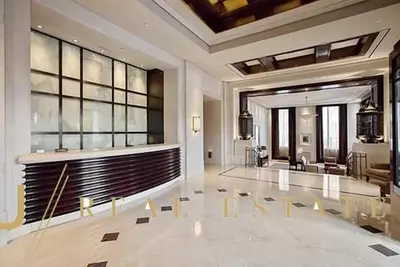
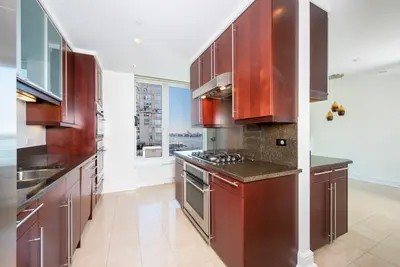
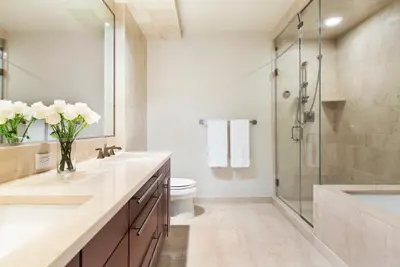
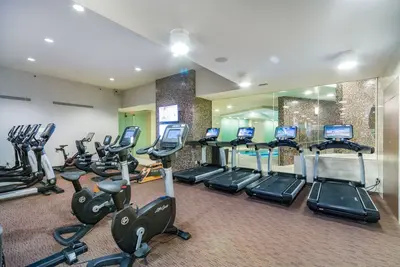
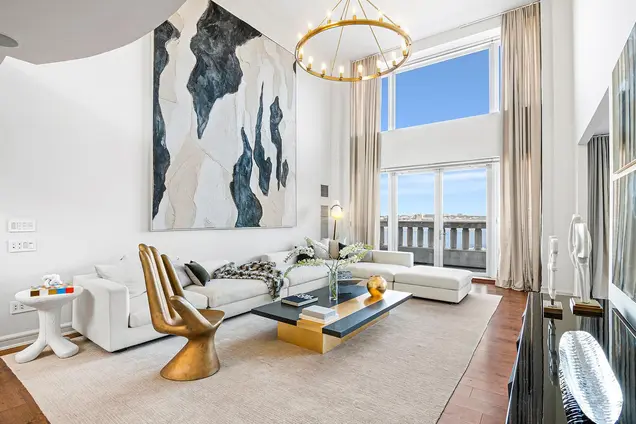
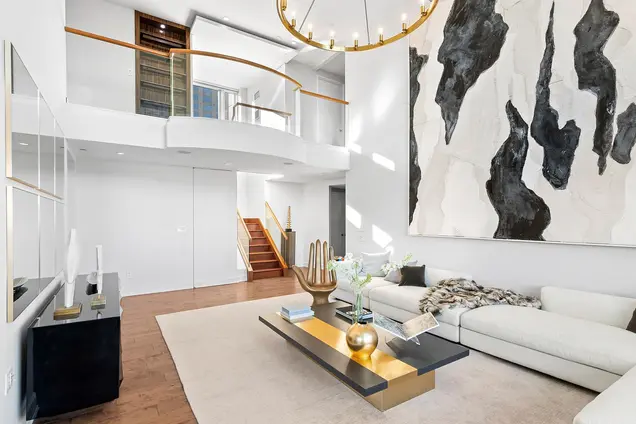
It has a concierge, a doorman, a garage, a health club, basement storage and central air-conditioning.
Amtrak trains that run up along the Hudson River are in a tunnel at this site but the West Side Highway is elevated. The towers, however, are on a ridge so the highway's obstruction of views is minimized.
There is a very handsome pier that extends, with sinuous curves, about 750 feet into the river close to this building.
There is an express subway station that was nicely renovated in 2003 at 72nd Street and Broadway and the Lincoln Center for the Performing Arts is nearby to the project's southern end.
With the completion of this building in 2004, Trump Place now has a major and impressive skyline along the Hudson River. As a group, the buildings are heavily influenced by the pre-war towers along Riverside Drive, which is not inappropriate. The existing buildings in the complex will be supplemented by more, many of which at the southern end will be developed by Extell, which acquired the properties from the Trump interests.
In an article by Eliot Brown in the August 11, 2008 edition of The New York Observer, Donald Trump recalled that this project was a "war to the death" with local politicians and community groups. The article reported that Extell was "seeking to reopen a can of worms that was sealed shut 16 years ago, with plans to fidget with the hard-fought development restrictions approved in 1992."
Extell, the article continued, "is calling for more development rights to allow a series of five mostly residential towers to rise on the large southernmost parcel of the site, a complex that would mark the final chapter of the storied West Side fight that began a generation ago....While Extell's plans do not seem to be the hornet's nest that marked Trump's early proposals, the local community board is skeptical of a host of issues, and area politicians are cool to the idea of added density and a potential Costco that Extell has proposed....Mr. Trump sold off much of his stake in the mid-1990s to a group of investors from Hong Kong - and the first building permit was not issued until 1997, slowly advancing from north to south. In mid-2005, Extell and the Carlyle Group bought the remaining property for $1.76 billion, though Mr. Trump later filed a lawsuit claiming his Hong Kong investors could have gotten a higher price. Now, Extell has set its sights on the final three lots at the southern base of the development, known as lots L, M and N; and with no desire to build the 1.7 million square feet of predominantly television studio space that the 1992 agreement stipulates, the developer wants public approval to allow for a giant complex of residential buildings in its place. The proposal, shown to members of the community boards and representatives of elected officials, calls for five mostly residential towers on the large two-block site, with one on each corner and another near the middle. Extell has brought on Pritzker Prize-winning architect Christian de Portzamparc to design the towers, one of which would rise to 594 feet, as currently envisioned. The scale being proposed is significantly greater than what was initially planned for the site. According to figures Extell presented to members of the community board, the complex would be about 3 million square feet in size, with perhaps 2,500 apartments, well above the approximately 2.4 million square feet that remains under the development rights allowed by the restrictive declaration. In addition, Extell wants about 280,000 square feet of below-ground retail space - roughly half of which would go to Costco, should Extell ultimately win the company as a tenant - accompanied by 2,300 parking spaces, up from about 780 in the restrictive declaration....George Arzt, an Extell spokesman, said the additional density is desired in order to provide larger apartments, to build more affordable units, to create more varied retail and to allow for better architecture. Still, he noted that plans were far from final.
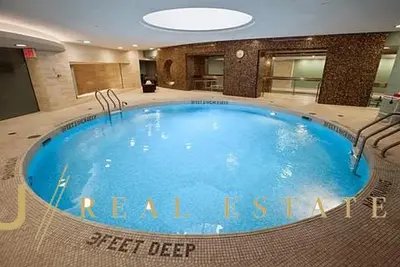
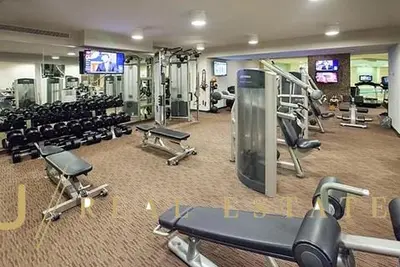
Given that such a major, largely vacant, waterfront site does not become available every decade, one might argue that the design and scale of Trump's project was a bit conservative and too "Post-Modern" as opposed to being brazenly modern.
Trump, in fact, had at one time some very grandiose plans for the site, but that was back at the time when the NIMBY (Not In My Back Yard) Syndrome was rampant, particularly on the Upper West Side. Mr. Trump would have to scale back his plans, but, on the other hand, the superheated real estate market of the early 2000s, made up for Mr. Trump s reduced plans.
Furthermore, the design of the towers to date while not daring is not terrible and Mr. Trump has long wielded a golden wand as far as delivering a desirable residential product to his targeted consumers.
Some critics might insist that each age make its own "signature" stamp upon the built environment and "context" be damned. Others might caution that "context" can sometimes disguise timidity and a lack of imagination and creativity. And some might suggest that context should always be considered but not always followed. Where some boulevards such as Park Avenue, West End Avenue, Fifth Avenue, Central Park West, Broadway and Riverside Drive have highly consistent and compatible development it is appropriate that new development take heed of that development and respect it and most likely follow it. In the post-World War II era, these avenues have been aesthetically, albeit not lethally, compromised, but at various times they did present cohesive "environments." The basic nature of New York City, of course, is change and chaos, and there are instances throughout the city when strange and startling juxtapositions make the urban fabric surprising, if not sublime.
Given such considerations plus the not unimportant consideration of economic realities in long-term real estate developments, the Trump Place designs were logically appropriate: stylistically respective of the pre-war architectural triumphs of Riverside Drive and Central Park West, but also bigger in scale with less detailing to accommodate contemporary tastes and economic realities.
The site has considerable history.
In an article for the January, 2004, monthly newsletter of the Manhattan Institute's Center for Rethinking Development, Julia Vitullo-Martin provided the following commentary:
"...the most savage development wars of the last few decades have centered on the waterfront and its lost heritage of shipping and railroads. And none was more brutal than the 40-year war fought over the 75-acre Penn Yards site, stretching from 59th Street to 72nd Street on Manhattan's West Side. Amazingly, enough, the Penn Yards war is coming to a productive, fairly peaceful end with the construction of Riverside South, a development of 16 residential buildings holding 5,700 apartments, 1.8 million square feet of commercial space, and a 21.5-acre waterfront public park. Financed by investors from Hong Kong, built by the Trump Organization, owned by the Hudson Waterfront Company, and overseen by a coalition of civic groups called the Riverside South Planning Corporation (RSPC), Riverside South is a triumph of harmony out of acrimony. Not all issues are settled - transportation problems in particular remain - but basically the development is rapidly becoming a part of the West Side neighborhood that had once fought it to a draw. The Riverside South saga of travail and triumph is worth pondering. After all, the huge, derelict site was long top-grade, prime waterfront real estate that had the most prized trait of all in New York: it was vacant. No residents had to be moved, no businesses displaced. So why did development prove to be so difficult, and what can be learned from the struggle?"
"Trump was far from the first suitor for the site," the article continued, adding that "The first development proposal was made by Penn Central itself in 1962....Penn Central wanted to partner with the Amalgamated Lithographers Union to build a mixed-use development, Litho City, on platforms over the trains."
In the 1960's, the city looked at plans for a "megastructure" in Lower Manhattan where Battery Park City would be created on landfill from the excavations for the World Trade Center. The "megastructure" plan was subsequently abandoned although a "megastructure" plan had also been contemplated for "Litho City." Litho City, which was proposed by Local 1 of the American Lithographers Union called for 5,000 housing units, parking for 5,000 cars, 1,000 dormitory rooms for foreign students and a 500,000-square-foot international conference city.
In 1969, the New York City Educational Construction Fund proposed a 12,000-unit residential development but the proposal was soon abandoned and six years later, Trump optioned the site and also proposed 12,000 apartments but economic times were tough and nothing happened.
Then, according to Ms. Vitullo-Martin's article, "in 1980, the Macri Group, which came to be known locally as the Argentines, optioned the site, and quickly proposed Lincoln West - a 7.3-million-square-foot project with 4,300 residential units. They were serious. They got the necessary rezoning in 1982 from the Koch administration. But then they failed to get financing, and lost the site.
The Lincoln West proposal of Macri Associates and Hirschfeld Realty was designed by Gruzen & Partners and Rafael Vinoly, a Argentine-educated architect, in 1981, although other archtitects such as Cesar Pelli, Edward Larrabee Barnes, Kohn Pedersen Fox, I. M. Pei & Partners, Mitchell/Giurgola and Richard Meier were expected to design individual buildings. As part of its proposals, the developers committed to a reconstruction of the 72nd Street subway station and to assist the New York State Department of Transportation in financing new rail freight facilities in the Harlem River Yard in The Bronx.
In their magnificent book, "New York 2000, Architecture and Urbanism Between The Bicentennial and the Millennium," Robert A. M. Stern, David Fishman and Jacob Tilove wrote that the project did not go ahead, "doomed to failure because it was economically impractical, promising far more in up-front improvements than any single private developer could afford."
"In January, 1985, Donald Trump bought the site for $100 million in partnership with A. Hirschfield - who had also been a partner with the Argentines - and proposed a 16.5 million-square-foot project, Television City, designed by architect Helmut Jahn. It included the world's tallest building at 152 stories. Trump hoped to entice NBC to move in as the prime tenant. Outraged West Siders and civic groups, which had been active but relatively polite regarding Lincoln West, organized immediately in opposition. In late 1986, Trump proposed a new 14.5-million-square-foot project, with 7,600 apartments in 60- and 70-story towers, and a regional shopping mall. This time his architect was Alex Cooper, who had been the lead architect for Battery Park City's master plan and was well-regarded by nearly everybody, including the good government groups. But Cooper's reputation didn't diminish West Side outrage, and opposition to the project's size swelled. Mayor Koch aligned himself with the community opposition, and also rejected....Trump's request for zoning waivers and a $1 billion tax abatement to attract NBC. An uneasy NBC announced in 1987 that it would not be moving to Television City....In 1990, the banks restructured his $2 billion in loans for the project, which he began calling Trump City....Meanwhile, a coalition of civic groups led by the Municipal Art Society, that had been suing to stop the project, riveted Trump's attention. They were willing to see a much smaller project go forward....In March 1991 Trump and the coalition of civics, which also included the Parks Council, Regional Plan Association, Riverside Park Fund, Natural Resources Defense Council, and Westpride, agreed to reduce the project's size by 40 percent to 8.3 million square feet. The buildings would range from 30 to 40 stories, and the waterfront park would cover 23 acres. Design standards would impose variations among the towers, and the street plan would respect the existing West Side grid. In exchange, the civic groups promised to usher the Trump proposal through the land review process. Despite the disapproval of Community Board 7, the project was almost unanimously approved by the City Planning Commission and by Manhattan Borough President Ruth Messinger. The project passed the City Council in December 1992. Still, construction didn't begin until the spring of 1997."
The authors observed that Jahn's supertower for Trump was "ingenious," but added that "in fact, the plan was a parodistic version of Le Corbusier's urbanistic ideas for the Paris of the 1920s but with imagery that seemed nostalgic for the twenty-fifth-century world of Buck Rogers." Trump decided to replace Jahn with Alexander Cooper who had, with Stanton Eckstut, created the design guidelines for Battery Park City. The authors quoted Mr. Trump as stating that "Cooper is good at working with the community. I don't want to take the best piece of urban land in America and do something urban America doesn't like." At one point, Trump proposed selling his site to the New York State Urban Development Corporation for $1, which would enable him as developer to avoid New York City zoning and building regulations and also allow tax incentives for NBC, which he was wooing as a major tenant.
Cooper's plan called for a 150-story mixed-use tower, a 65-story office building and six 76-story apartment towers and 13.6 acres of parks. NBC, however, decided not to relocate from Rockefeller Center. Cooper's plan was revised but in June, 1990, the Penn Yards Task Force of the New York City Chapter of the American Institute of Architects opposed the project, noting that its density was twice what had been approved in 1982. Three weeks later, the Municipal Art Society, the Regional Plan Association and the Parks Council proposed a different plan that had been developed by Paul Willen, the chairman of the Penn Yards Task Force, Daniel Gutman and Andrews & Clarke.
In early 1991, six civic groups led by Richard A. Kahan, the former president of Battery Park city Authority advocated a version of Willen's proposal that contained only about half of the square footage in Cooper's plan and Trump soon thereafter accepted the plan that also called for moving the elevated West Side Highway to the east where it would supposedly be rebuilt at grade level. The civic groups and Trump formed the Riverside South Planning Corporation and David Childs and Marilyn Taylor of Skidmore, Owings & Merrill replaced Mr. Cooper.
Led by Congressman Jerrold Nadler, opponents, however, succeeded in killing the relocation of the highway and in July 1992, Community Board 7 voted to reject the plan by a vote of 35 to 1. Trump then agreed to contribute $5 million to the renovation of the 72nd Street subway station and to allocate 10 percent of the apartments for subsidized housing and to guarantee that the project would not increase sewage for the North River treatment plant in Harlem and to bear half of the annual maintenance costs for the new park.
In their book, authors Stern, Fishman and Tilove also provided the following commentary about two alternate proposals that were offered about this time:
"In 1990, Michael Sorkin, an architect much better known as a critic, offered his Tracked Housing project, which proposed the recycling of outmoded passenger railway cars as housing. The cars, enhanced with small towers, skylights, and balconies, would presumably be shunted around the abandoned Penn Yards. Sorkin's proposal was not only intended as a rebuke to Trump's ambitions but also as a response to the deplorable conditions that existed just north of the site where a sizable homeless colony flourished in the late 1980s. Also in 1990, Steven Holl, another architect-provocateur, offered a West Side proposal. But Holl's Parallax Towers, improbably thin skyscraper apartments, were set offshore in the river between Sixty-sixth and Seventieth Streets, leaving the entire freight yard site free for development as an Olmsted-inspired park that would cover a rebuilt West Side Highway. Additionally, a floating public space was proposed for use as a concert stadium, large-screen movie-theater complex, or grand festival hall. The Parallax Towers were to bracket, but not block, the view of the upland Lincoln Towers. Horizontal underwater transit systems would link the buildings to each other and to park-side lobbies."
In December, 1992, the Trump plan was approved and the next November Trump announced that Philip Johnson and Costas Kondylis would design the first four buildings and authors Stern, Fishman and Tilove noted that "Robert A. M. Stern, Frank Gehry and David Childs were said to be in line for later buildings."
Congressman Nadler continued his opposition to the highway relocation, claiming that the park would be a "private backyard" for the people in the Trump buildings.
Ms. Vitullo-Martin noted that the portion of the West Side Highway (also known as the Miller Highway) that runs through the site has been a bone of contention as it is elevated over 8 acres of the proposed parks and city officials agreed to have the highway moved and tunneled under the park, "but the agreement was never made legally enforceable." "Many elected officials, most notoriously Congressman Jerrold Nadler who has held up federal funding for the relocation, seem to believe that moving the highway was a Trump initiative, meant primarily to enhance his property values. But it was always a civic initiative, part of the civic agenda long before they coalesced with Trump. The highway blights the park and the waterfront," Ms. Vitullo-Martin added.
The issue of the elevated highway remains unresolved. Hopefully it will be buried beneath a new park, which would make a meaningful and important extension of Riverside Park, which, in fact, was erected over train yards that had long cut-off access to the waterfront.
Construction of the first two towers began in 1997. The 46-story, 377-unit building at 200 Riverside Boulevard between 69th and 70th Streets and the 40-story, 516-unit building at 180 Riverside Boulevard between 68th and 69th Streets were completed in 1999. The 34-story, 455-unit 160 Riverside Boulevard building between 67th and 68th Street was completed in 2001.
Kondylis designed, without Johnson, the 49-story 200 Riverside Boulevard tower between 70th and 71st Streets and the 30-story 140 Riverside Boulevard between 66th and 67th streets, both of which were finished in 2003.
In 2005, Trump completed 240 Riverside Drive between 71st and 72nd Street. Designed also by Kondylis, the 31-story tower has a curved base and is very visible because it is at the base of Riverside Park.
The authors Stern, Fishman and Tilove summed up the entire project thusly:
"Although there were few kind words for the architecture of the individual buildings at Trump Place, there was some relief that progress was made on the reconstruction of the Seventy-second Street subway station, which the developer helped fund....Despite the disruptive presence of the elevated highway, there was also praise for the seven completed acres of Thomas Balsey's planned twenty-one-acre waterfront park, the highlight of which was the 750-foot-long Pier 1 (2001), near Seventieth Street, along with a new promenade and baseball and soccer fields and basketball courts. Contrary to Nadler's arguments, the park attracted a broad audience from across the city. David Dunlap was impressed with the fifty-foot-wide pier, which jutted into the river at a 55-degree angle, providing 'an entirely new way to see the towering palisade skylines of New York and New Jersey and the broad waterway between them, liberated from the shoreline and unconfined by gunwales.' Despite cost-saving measures such as a deck composed of pre-cast concrete paving blocks instead of wood plants, Dunlap took note of several design touches, including the scalloped southern edge of the pier that created 'a job at the end, which contributes considerably to the feeling of being afloat and cut off from the land.' Moved by the effect of the pier, Dunlap went so far as to note that the elevated highway 'undulates like a ribbon, fused almost seamlessly to the roller-coaster-like outline of Pier D to the south, which was twisted by fire into a polymorphous contortion worthy of Frank Gehry. Even the towers of Trump Place momentarily take on Venetian magic, glimpsed as sensuous, rippled reflections in the wake of a passing ship.'"
In the early 1970s, the city was grappling with a depressed economy, a deteriorating waterfront and a decrepit Times Square. The Westway Project then current held forth the tempting promise of $2 billion in federal funding for a waterfront park from Riverside Park to the Battery with the West Side Highway beneath it. That project was defeated by Marcy Benstock who convinced a federal judge that it might disturb some of the habitats of some stripped bass in the Hudson River.
In the 1980s, the West 42nd Street Development Project designated Park Tower Realty and Prudential Insurance Company to make over the lower end of Times Square and they commissioned Philip Johnson and John Burgee whose first design was a Frenchified version of Rockefeller Center and whose second design was a flamboyant and interesting abstract modern design with mixed fa??ade treatments. Some people objected as this was the height of NIMBY mania and eventually the developers withdrew and civic officials decided to carve up the enormous site and eventually a "new" Times Square emerged when Disney decided to take over the New Amsterdam Theater on 42nd Street.
In the late 1980s, the M.T.A. decided to sell the New York Coliseum since the Jacob K. Javits Convention Center was nearing completion along the Hudson River further south in midtown. A major controversy erupted when opponents of the huge project argued that the winning development team was chosen on the basis of how much money it was offered. Plans were changed, and a new "competition" was held, while the market gyrated widely and it was not until 2004 that a new, "twin-towered," Time Warner Center opened on the site with a Mandarin Hotel, many luxury condominium apartments, a large retail space and a new facility for the jazz component of the Lincoln Center for the Performing Arts.
Huge projects are not easy to achieve in New York City and they often turn out much differently than originally planned. Even harder to gauge often is their impact and sometimes smaller plans are more influential because of their timing in economic cycles.
A century from now, it will be interesting to gauge the relative importance to the Upper West Side of the Dakota, the twin-towers of Central Park West, Robert Moses's creation of Riverside Park, the New York Coliseum, designation in the 1950s of the West Side Urban Renewal Project, the Lincoln Center for the Performing Arts, the Time-Warner Center and Trump Place.
In New York City, nothing is inevitable, but a lot is possible.
To view all NYC apartment information and prices, log in or register now it's quick, easy and free.
You'll get access to all NYC apartments available including thousands of listings all for free.

Forgot Password?
If you need assistance, please call us at 212-755-5544.
|
Comments or questions? · Phone: 212.755.5544
|
|
An equal housing opportunity.
|
| All data is deemed reliable but is not guaranteed accurate by the REBNY / RLS or CityRealty. See Terms of Service for additional restrictions. All information furnished regarding New York City property for sale, rental or financing is from sources deemed reliable, but no warranty or representation is made as to the accuracy thereof and same is submitted subject to errors, omissions, change of price, rental or other conditions, prior sale, lease or financing or withdrawal without notice. All dimensions are approximate. For exact dimensions, you must hire your own architect or engineer. The number of bedrooms listed on this website is not a legal conclusion. Each person should consult with his/her own attorney, architect or zoning expert to make a determination as to the number of rooms in the unit that may be legally used as a bedroom. |