30 office-to-rental conversions to bring over 10,000 apartments to New York City
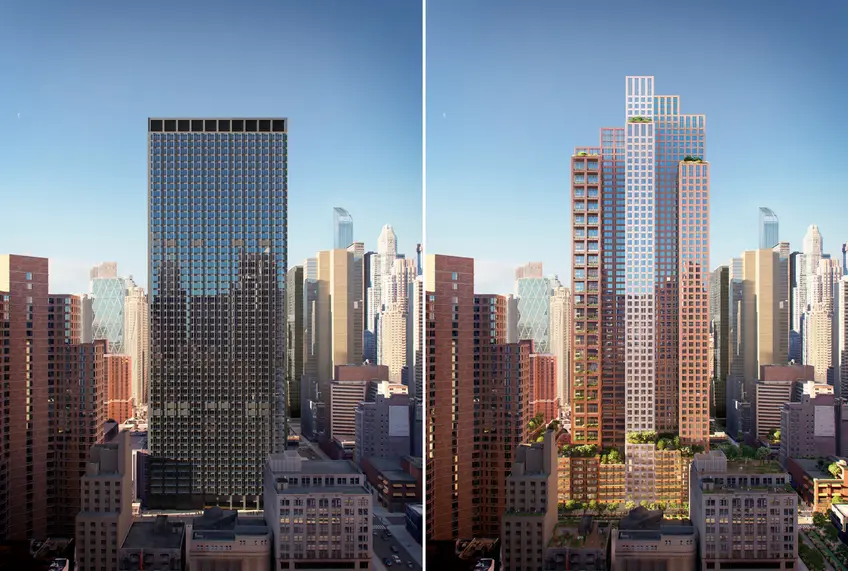
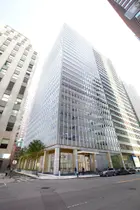
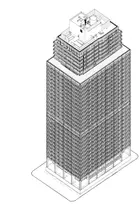
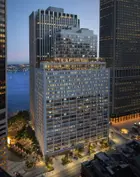
1633 Broadway: current condition and proposed redesign (SOM | miysis)
Saturday, Oct 11, 2025By CityRealty Staff, CityRealty contributor
In a perfect storm of New York City real estate dynamics, the COVID-19 pandemic emptied office towers just as the city’s housing crisis deepened. Buildings that were already becoming outdated for modern workspaces sat vacant while apartment seekers faced low inventory and sky-high rents. Suddenly, office-to-residential conversions, once a niche strategy that helped revitalize Lower Manhattan after 9/11, became a serious, citywide solution. Years later, many are talking about office-to-residentials, and some are moving into them.
The motivations behind the surge in conversions have largely been due to the sharp increase in office vacancy rates, stagnant/declining rents in Class B and C buildings, all while residential rents remain near record highs due to intense demand and limited supply. Remote work and hybrid models have changed how companies use space. Older office buildings, particularly those with deep floor plates, outdated layouts, and inefficient mechanical systems, are increasingly difficult to lease. Meanwhile, converting some of these properties into apartments provides landlords a lifeline in a high-demand residential market.
Former NYC Deputy Mayor Maria Torres-Springer said in 2024 that New York has roughly 135 million square feet of outdated office space that could be put to better use. A study by Cushman & Wakefield found that 3.3 million square feet of conversions were underway in 2024, up from 1.6 million square feet the year before, and 4.1 million square feet of conversions have begun through August 2025 (h/t New York Post). A report from the City Comptroller's office found that the first wave of office-to-residential conversions could yield over 17,000 new housing units (h/t 6sqft).
To make these conversions more viable, the city and state have stepped in. Last year, legislators passed New York State budget includes a package of incentives, including tax abatements and zoning changes, meant to lower barriers for developers. Mayor Eric Adams’ “City of Yes” plan also includes rezoning initiatives to support more housing development, including conversions in commercial districts. In summer 2025, the New York City Council approved the Midtown South Mixed-Use plan, a rezoning that allows thousands of new apartments to be built in commercial areas.
Three new office-to-rental conversions in the Financial District including SoMA and Pearl House. (Credit: Williams New York and Collaborative Construction Management / Gensler)
Despite the promise, office-to-residential conversions are anything but straightforward. Building layouts, zoning restrictions, and the lack of natural light in deep office floorplates all pose major obstacles. Residential units require access to windows in most rooms, kitchens, and bathrooms - requirements that office buildings weren’t designed for.
As developer Jonathan Ainbinder put it, “Most office buildings are not poised for good residential conversion given light and air and depth of buildings.” In fact, some buildings are so poorly suited for reuse that it may be more cost-effective to demolish and rebuild, especially without substantial tax incentives.
Even when conversions do move forward, they don’t always succeed. At 20 Broad Street in the Financial District, a former stock exchange building turned rental, residents have complained of awkward layouts and uncomfortable spaces, revealing the potential downsides of poorly executed redesigns. Indeed, several such units were among last week's price cuts.
A Case Study in Innovation: Rethinking 1633 Broadway
A test project is 1633 Broadway, where several firms participated used the aging building as a protype for an adaptive reuse and rehabilitation of aging office buildings. We feature three below.
SGA’s plan tackles one of the biggest hurdles in office conversions: a lack of natural light. With massive 45,000-square-foot floor plates, the building’s interior would be unlivable without drastic intervention. The firm proposes removing parts of each floor to reduce the size to 34,000 square feet, carving the structure to allow light and air to penetrate.
They envision a new facade and flowing architectural form that makes the once-blocky building more dynamic and livable. The result is not just a functional redesign, but a complete aesthetic reinvention, turning the tower into a true urban residence.
Studios Architecture imagines 1633 Broadway as a "Vertical Village," transforming the tower into a self-sustaining community. Their plan introduces “Superfloors” between two residential towers, each floor dedicated to different functions: work, live, and play.
By removing the center of the building and constructing new structures upward using repurposed materials, they dramatically improve air flow, reduce carbon emissions, and create shared spaces that foster social interaction. The concept envisions a new type of high-rise living where sustainability and community intersect.
https://www.buroehring.com/work/mic23
SOM: From Monolith to Mixed-Income Model
Skidmore, Owings & Merrill (SOM) offers perhaps the most radical rethinking of the site, one that seeks to address the housing and climate crises in tandem. Their plan reuses much of the original structure, cutting into the monolithic form to bring in light and air, then adding new volume to the base and top.
What sets SOM’s proposal apart is its equity-driven model. The redesigned building would include a mix of luxury units, co-living spaces, and micro-affordable apartments distributed horizontally to give all residents access to natural light and views. Instead of stacking luxury above and affordability below, the layout promotes social integration and livability.
As the city’s need for housing grows more urgent and office demand remains uncertain for older buildings, conversions are likely here to stay in the near term. However, their viability depends on the right building, government support, and market realities aligning.
Echoing the great race to the sky when the Chrysler Building, the Empire State Building, and 40 Wall Street were all trying to be the world’s tallest building, the race to be the biggest office-to-residential conversion has been heating up in Manhattan. Pearl House boasted the largest office-to-residential to date but was soon surpassed by the nearby, newly launched SoMA. SoMA is expected to hold the title at least until 219-235 East 42nd Street (the former Pfizer Building) comes to market.
Below is a list of office buildings in various stages of conversion to rental housing, signaling a future in where yesterday’s 9 to 5 hubs become tomorrow’s 24-hour neighborhoods.
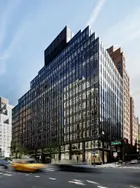
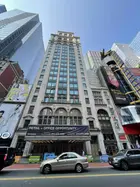
Pearl House holds the distinction of being one of the largest and most successful office-to-residential conversions in New York City to date. Vanbarton Group, a privately owned, vertically integrated real estate development, investment, and advisory firm, announced earlier this winter that Pearl House has reached a remarkable milestone of being 99% leased.
With only a handful of units remaining among its 588 apartments, the property's 30,000 square feet of luxury, resort-style, private club-inspired amenities are now complete, including Sky House rooftop amenity complex featuring an expansive wraparound terrace with landscaped seating areas, cozy cabanas, and gas grills for autumn barbecues, further helping drive demand and interest. Pearl House has established itself as a standout in the Seaport District. Compass Development Marketing Group is the exclusive marketing and leasing partner.
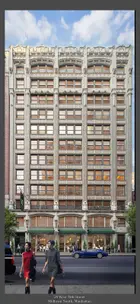
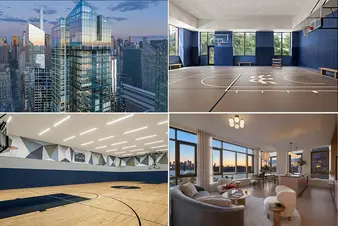
GFP Real Estate, Metro Loft and Rockwood Capital recently announced the launch of leasing for SoMA, a premier new luxury rental tower, at 25 Water Street, signifying the largest completed office-to-residential conversion in the country to date. The 32-story property was the former home of JPMorgan Chase, the National Enquirer, and the Daily News. The residential conversion, designed by CetraRuddy,has brought 1,320 apartments to the Financial District, featuring high ceilings, custom Italian kitchens, in-unit laundry, and beautiful skyline and water views.
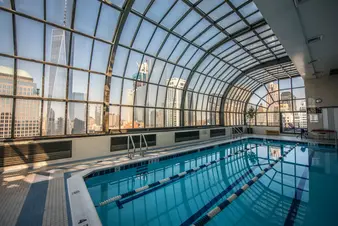
Approximately 100,000 square feet of lifestyle amenities includes a wellness and fitness component as well as a landscaped roof terrace with vistas of the New York Harbor, Brooklyn, and Downtown Manhattan, grilling stations, private dining, and an indoor serenity lounge overlooking Battery Park, a basketball court, two private indoor pickleball courts as well as access to the 18,000-square-foot SoMA Athletic Club, encompassing a top-of-the-line fitness center, Training Studio, Pilates Studio, and Yoga Studio. The All Season 75’ Pool isn’t the only pool as there is an additional outdoor pool on the 25th floor. Compass Development Marketing Group is the exclusive marketing and leasing partner.
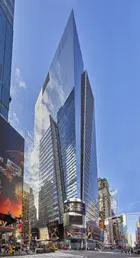
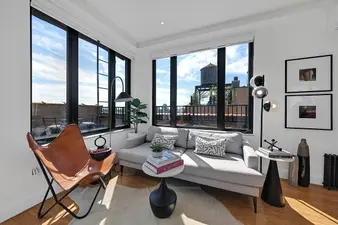
Metro Loft in partnership with Silverstein Properties tapped architecture and interior design firm CetraRuddy to reimagine the 36-story office building into 571 studios to three-bedroom rental residences. Most apartments enjoy striking river and Downtown views by virtue of the Lower Manhattan location, and many homes also feature a designated home office, reflecting today’s increase in remote and hybrid work. Other hallmarks of the residences include soaring 10-foot ceilings, oversize, energy efficient and sound-insulated windows, keyless entry, and in-unit Bosch washer and dryer.
Residents of the apartments enjoy access to approximately 25,000 square feet of indoor and outdoor amenities. These include a 24-hour attended lobby with library, a fitness center with Technogym equipment and separate yoga studio, a residents' lounge, and coworking space. A rooftop terrace features an outdoor pool and resort-style sun deck with dining and lounging areas. An affordable lottery took place over the summer, and market-rate leasing is underway.
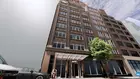
650 First Avenue dates back to 1904, when it was constructed as the headquarters of the Kips Bay Brewing Company. Both the company and its building survived Prohibition, a time when many breweries were torn down to make way for new apartment buildings, and the building was later repurposed as offices and then the home of NYU Langone Health's internal medicine offices.
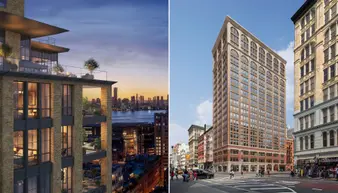
Most recently, four floors were added and the southern wing was converted to 111 residential units. All apartments are reached via keyless entry and feature interiors with high ceilings, stone and wood flooring, kitchens with LED countertop lighting and stainless steel appliances, central heating and air conditioning, and in-unit laundry. Amenities include a 24-hour attended lobby, bike storage, a fitness center, two resident lounges, and a roof deck with stunning views of the East River.
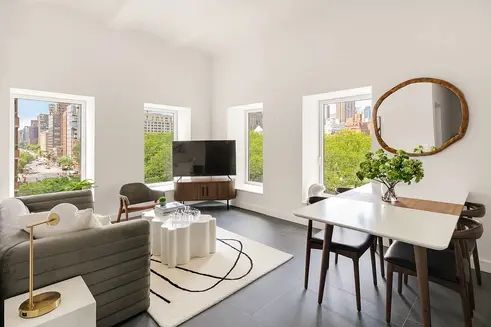
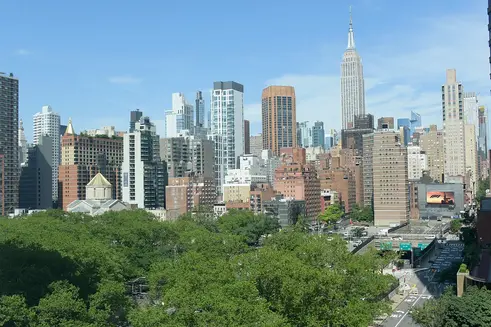
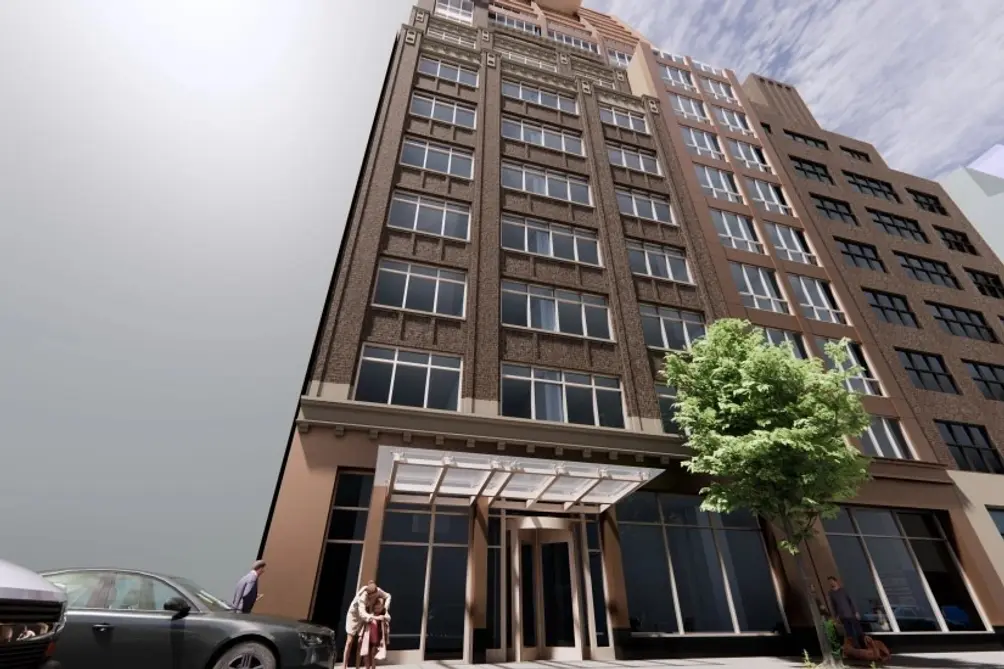
At the nexus of Hudson Yards and the Garment District, an office building has been expanded and converted into a residential building. All apartments feature oversized windows, high-quality finishes, central air conditioning, and in-unit laundry. Amenities include an attended lobby, a fitness center, a lounge, bike storage, and a rooftop terrace. An affordable lottery took place in summer 2024, and market-rate leasing launched in spring 2025.
1,600 units | Under construction | Anticipated Leasing Launch: 2027
Rendering courtesy of Streetsense.
Following Pfizer's move to The Spiral in Hudson Yards, Metro Loft and David Werner Real Estate Investments are in the process of converting the pharmaceutical firm's 1.3 million-square-foot former headquarters into approximately 1,600 luxury rental apartments and 100,000 square feet of amenity space, including a rooftop pool and fitness center. All interiors will feature high-end finishes throughout, kitchens with stone countertops and built-in appliances, bathrooms with deep soaking tubs, in-unit washer/dryers, and integrated smart home technology.
The project involves adding four new levels to a 33-story building, adding 19 new levels to a neighboring 10-story structure, replacing the facades and windows, and reconfiguring the interiors. A spokesperson for acclaimed architecture and design firm Gensler described it to Bloomberg as "quite a bit of surgery." The end result will be New York City's largest office-to-residence conversion to date upon completion, which is estimated for the fourth quarter of 2027.
224 units | Under Construction | Anticipated Leasing Launch: TBD
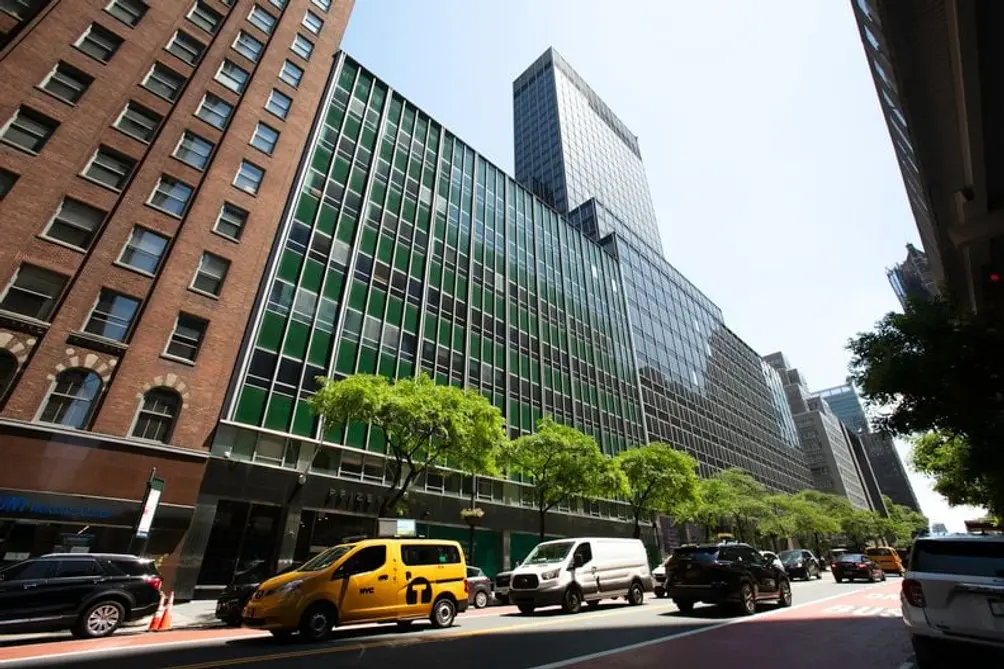
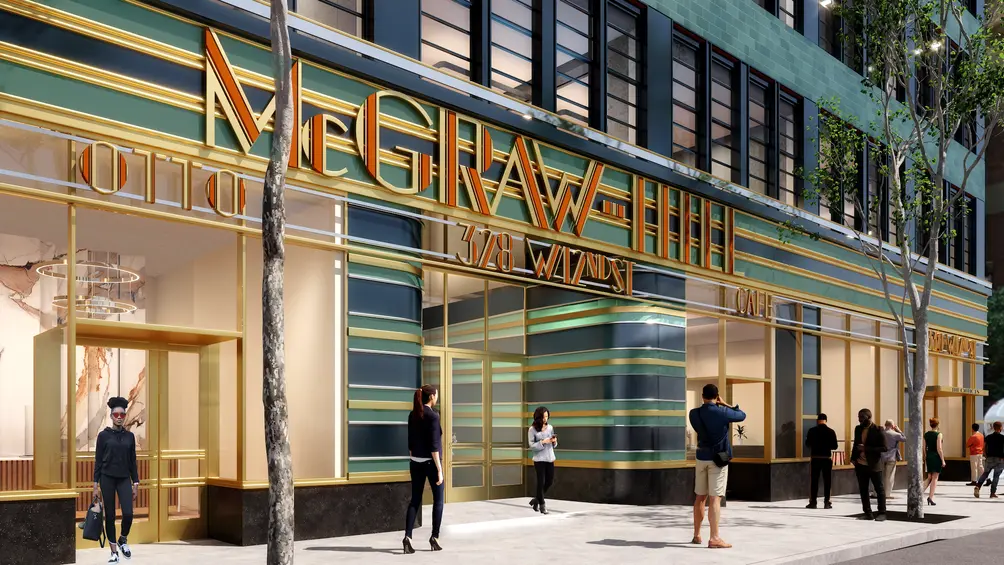
Resolution Real Estate is at the helm of a partial residential conversion of the Midtown McGraw-Hill Building, a 33-story landmarked tower at 330 West 42nd Street. MdeAS Architects will lead the office and residential conversions with SLCE Architects designing the interior spaces. The residential section will include 224 rental apartments, offering a variety of floor plans from cozy studios to expansive two-bedroom layouts. With high ceilings, oversized windows, and generous floor spans, these loft-style homes will be filled with natural light and offer stunning views of the Midtown skyline.
In July 2024, a venture between Blackstone and Rialto Capital Advisors filed to foreclose on the building, claiming the owners defaulted on a mortgage. Exterior work is not currently apparent, but recently filed permits show that interior work is underway.
The Candler Building is a historic 24‑story office skyscraper at 220 West 42nd Street, commissioned by Coca‑Cola founder Asa G. Candler and completed in 1914. At roughly 235,000 square feet and 315 feet tall, it was reportedly the tallest structure in Midtown Manhattan north of 24th Street when built. Its façade is clad in white terra-cotta adorned with Late Gothic and early Renaissance ornamentation. Notably, the design by Willauer, Shape & Bready included freestanding enclosed “smokeproof” stair towers—a cutting-edge fire safety feature that eliminated the need for exterior fire escapes.
The individual city landmark was added to the U.S. National Register of Historic Places in 1982. In 2022, Yellowstone Real Estate Investments, headed by Isaac Hera, took ownership of the Candler Building via a deed-in-lieu settlement, according to The Real Deal. With many of its floors vacant since the pandemic, Yellowstone filed plans for a 265-room hotel in 2024 and, in March 2025, for a 192-unit residential conversion. Issac & Stern Architects is listed as the architect of record. Although full plans are not yet public, the project will gut and reconfigure the former office floors into residential units while preserving the ornate lobby and exterior façade.
It remains to be seen how much demand there is to live on this bustling stretch of West 42nd Street. But with the massive conversions of 5 Times Square and the McGraw-Hill Building nearby, developers appear to be betting renters will be open to raucous crowds and bright lights of the area.
The Candler Building, 224 West 42nd Street, New York City (center), with the New Amsterdam Theatre. Signage on the theatre advertises Oh! Oh! Delphine, which played there from February 3 to May 3, 1913. (Wikimedia)
77 Water Street via VTS | https://marketplace.vts.com/building/77-water-street-new-york-ny
In September 2025, Vanbarton Group filed plans to convert 77 Water Street, a 26-story office tower dating back to 1970, to 647 housing units. CetraRuddy is the architect of record, and the apartments will start on top of retail space.
The mid-century tower was designed by Richard Roth (one of the sons in Emery Roth & Sons), and its minimalist-style facade offered such quirks as a life-size model of a World War I airplane and a penny candy store. Sadly, though, the plane fell into disrepair over the years and the candy store has closed. Locals are also disappointed at the demolition of a landscaped public plaza during the conversion; but as the permit does not modify the site plan, it is widely expected that the plaza will be restored to its original condition after construction is complete.
Less than two months after the Midtown South Mixed Use rezoning plan was approved, one of the first major office-to-residential conversions within its boundaries was announced. A joint venture between Infinite Global Real Estate Partners, Buttonwood Development, and 400 Capital Management LLC acquired 29 West 35th Street and announced an intention to convert the office building to residences. The project will use the new 467-m tax abatement program along with the Mandatory Inclusionary Housing program to create affordable housing units alongside the market-rate units.
Several of the 107 studio residences will include flexible spaces like home offices and alcoves. Interiors will feature high ceilings, designer kitchens, and in-unit laundry. Amenities will include an attended lobby, bike storage, private storage, a dedicated pet wash system, and a rooftop terrace with multiple seating areas, game tables, an outdoor movie screen, and views of the Empire State Building.
In February 2025, investor David Werner entered contract to buy 300 East 42nd Street, an office building a stone's throw from the former Pfizer headquarters (see below). Developer CSC Real Estate bought the office portion for $52 million from Mr. Werner in April 2025, and took out a loan for the conversion a short time later. The upper and lower floors will continue to house office tenants under the new plan, but there will be new residential units on floors 6-18. These are estimated to be delivered by November 2026 (h/t Crain's New York Business).
In May 2025, developer Vanbarton Group filed permits to convert 1011 First Avenue, the former headquarters of the Archdiocese of New York, to over 400 new housing units. They also seek to expand the building by six stories and renumber the site to 1005 First Avenue. The Archdiocese relocated to new space near St. Patrick's Cathedral earlier this summer.
In April 2025, Yellowstone Real Estate Investments filed permits to convert the 26-story office building once known as The MONY building to a 422-unit rental building with BKSK Architects listed as the architect of record (h/t Commercial Observer). Amenities are not yet available, but one perk will be a central address near Central Park, Columbus Circle, the Theatre District, and myriad shopping, dining, and transportation opportunities.
Given its proximity to Billionaires' Row condos like 432 Park Avenue and Malabar Residences, a condo conversion of office building Tower 57 wouldn't have been unthinkable. But in August 2025, rental developer TF Cornerstone signed a new ground lease with the owners and announced plans to convert the interiors to 350 apartments, 25 percent of which will be affordable to households earning 80 percent of the Area Median Income. They hope to start construction before June 2026 and aim for a late 2028/early 2029 completion.
Marvel fans will recognize the building as the Oscorp tower in the 2002 Spider-Man movie. The exterior will be largely unchanged, and the office floor plates' high ceilings and walls of windows lend themselves surprisingly well to a residential conversion. However, TF Cornerstone is planning a new public plaza and a full floor of residential amenities. The conversion will also eliminate the building's retail space, which includes Saks Off Fifth (h/t Crain's New York Business).
The Stewart Hotel is catty corner to Penn Station and Madison Square Garden
Isaac Chetrit and Jack Yadidi are moving forward with plans to convert the former Stewart Hotel at 371 Seventh Avenue into a 625-unit residential building. Sioni Group, led by Yadidi, recently filed plans for the 31-story, 470,000-square-foot project, following a withdrawn 2022 proposal by Chetrit's Patriarch Equities and Sioni.
P.S. This is not the team's only project in the area. They are also at the helm of Casoni, a mixed-use tower on the corner of Sixth Avenue and West 37th Street with retail space, rental units, and condo units on the uppermost floors.
798 units | Permits filed - Completion estimated for 2027
Google Earth image showing the location of 222/212 Broadway
Work is underway on the CetraRuddy-designed FiDi conversion project by TPG and GFP Real Estate, which will feature 798 residential units and expand the 724,000-square-foot building slightly modestly while adding a new floor. Renderings show a new terrace at the midpoint of the building, and a roof-level amenity deck will include an outdoor swimming pool. Retail tenants like Zara remain open during construction.
This monstrous building, finished in 1962 as the headquarters of Western Electric, replaced The St. Paul Building, one of the tallest buildings in the city upon completion in 1898. What a fine residential conversion that would have made.
A section of the St. Paul Building's facade, preserved in Holliday Park, Indianapolis | By Karl Bitter - Original publication: 1890Immediate source: I Einar E Kvaran, aka carptrash, took the picture, Public Domain, https://commons.wikimedia.org/w/index.php?curid=68334653
1,250 units | Permits Filed - Completion estimated for 2027
Rendering of 5 Times Square the former Ernst & Young Building (DBOX)
At the end of 2024, Apollo Global Management, in partnership with co-owners SL Green Realty and RXR, announced plans to transform the office building 5 Times Square into residential units. Designed by Gensler, the 1.1 million-square-foot redevelopment will incorporate a "triptych" concept, blending residential, retail, and office spaces. The 1,250 housing units, 313 of which will be permanently affordable, will comprise 1,050 studios and 200 one-bedrooms. Retail tenant Red Lobster will reportedly stay on in the conversion.
Before the Memorial Day holiday in May 2025, the Empire State Development board of directors unanimously voted to approve the conversion project. The first phase of construction is estimated to be completed in 2027.
Google Earth aerial showing location of 2 Wall Street
Plans have been filed to convert the upper floors of 2 Wall Street into 121 residential units while keeping the lower levels as office space. The 21-story, 1932-built tower will feature amenities like a coworking space, game room, and lounge, with TD Bank remaining a major tenant on the lower floors. GKV Architects is listed as the architect of record. Owned by Fieldstone Capital and linked to Hong Kong-based Aegis Asset Management, the property is across from the landmarked One Wall Street which recently finished a conversion into 566 condominium units, many of which have been rented out.
114 Chambers Street (SM Tam Architect for Landmarks Preservation Commission)
Tribeca was an early testament to the desirability of industrial-to-residential conversions, and is part of the office-to-residential phenomenon. In February 2025, the Landmarks Preservation Commission voted 8-1 to approve an application to combine two circa-1850s buildings in the Tribeca South Historic District, add one floor to each, and convert the offices on top to residential use. The plan also involves removing an external fire escape, installing an elevator, and refurbishing street-level retail space.
At the crossroads of Penn Station and Koreatown, a 10-story office building at 110 West 32nd Street will be undergoing a residential rental conversion led by Tony Park and Korean media firm MediaWill. After purchasing the 113,000-square-foot property for $37 million in September 2024, the developers sold the retail condo portion for $30 million and plan to transform the office space into 77 market-rate rentals, featuring studios and one-bedrooms with amenities such as a gym and rooftop lounge. The project, designed by architect Gene Kaufman, has permits filed and approved, with construction costs estimated between $16 million and $18 million.
This is Park and his team at PD Properties' largest redevelopment to date, aiming to complete the conversion at a time of limited rental inventory in Manhattan. The project is seen as a potential model for smaller-scale office-to-residential conversions, a trend gaining traction in response to high vacancies in older Class B and C properties, and government incentives to make such conversions feasible. Park has secured $22 million in financing from Alma Bank and Bank of Hope.
A section of the proposed project shows the lower levels will remain retail. Long live Jack’s 99 cent store! or, R.I.P.
110 West 32nd Street (CoStar)
80 Pine Street/110 Maiden Lane
Financial District
500 units | Proposed
Google Earth aerial showing location of 80 Pine Street
In October 2024, Bushburg Properties filed plans to convert this 800,000-square-foot office tower into 500 housing units on floors two through 17 in the 38-floor office tower that once served as the home of American International Group, Inc. Details are sparse on amenities, but its address between Pearl and Water Streets puts it close to the Seaport, the Tin Building, Wall Street offices, and the Wall Street 2/3 trains.
Metro Loft Management and InterVest have engaged Gensler to design the conversion of 111 Wall Street’s 1.2 million-square-foot tower into over 1,500 residential units, about 25% of which will be designated affordable to residents earning 80% or less of the Area Median Income. Amenities will include a spa, bowling alley, and rooftop swimming pool, and gorgeous water views are all but guaranteed. The development team is working to secure financing (h/t Crain's New York Business).
Shortly after acquiring 6 East 43rd Street, also known as the Emigrant Savings Bank Building for its longtime tenant, developer Vanbarton Group filed plans to convert it to a 441-unit residential tower (h/t 6sqft). The circa-1968 building was formerly considered too new to be converted to housing, but City of Yes adjusted that rule and allows buildings construction as recently as 1991 to undergo residential conversions.
Shortly after filing plans to convert 845 Third Avenue from offices to residences (see below), Rudin Management filed plans to convert 355 Lexington Avenue to residences as well. Located a short distance from Grand Central Terminal, the building will rise four stories and include retail space on the ground floor and 297 residential units on top. Details are not yet available about interiors and amenities.
In April 2025, David Werner Real Estate bought 675 Third Avenue from The Durst Organization and brought on Metro Loft Management as the property manager. More recently, Metro Loft Management filed plans to convert the postwar office building at 675 Third Avenue to a residential building in September 2025. The project will add four stories to the building and turn the interiors to 464 housing units. A timeline is not yet available, but a source told Crain's New York Business that demolition was already underway in fall 2025.
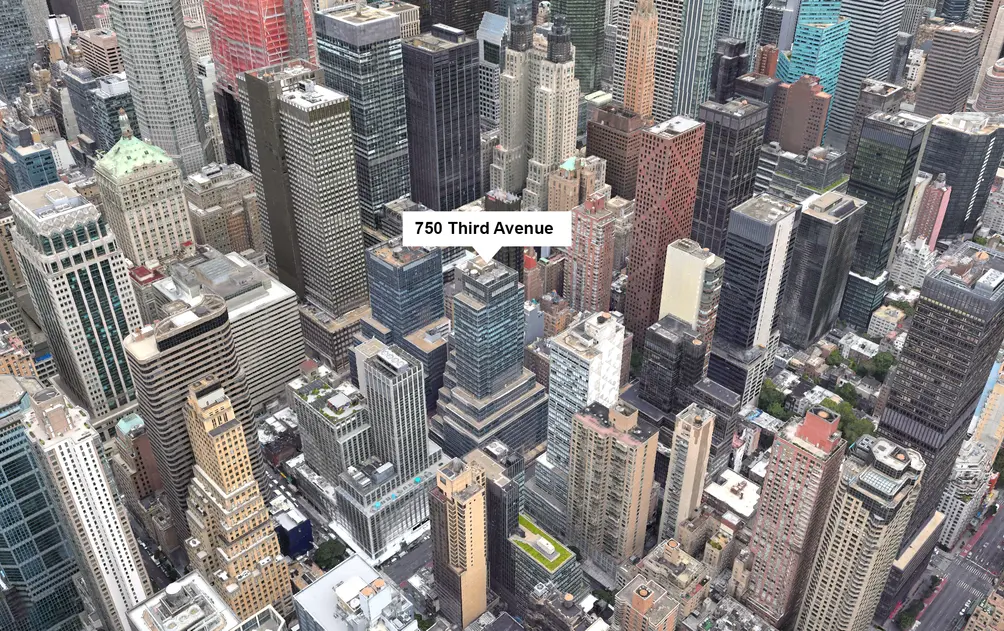
In May 2025, SL Green filed permits to convert the 800-square-foot, 34-story office building at 750 Third Avenue to a 680-unit rental building. It will have retail space on the ground floor and lower level, office and coworking space on the second and third floors, and apartments from the fourth floor up. Amenities will reportedly include a fitness center with yoga room, a sauna, and half an acre of private outdoor space. The conversion is expected to take three years.
Google Earth aerial showing location of 845 Third Avenue
845 Third Avenue was designed by Emery Roth & Sons and opened in 1963. More recently, Rudin Management filed plans to convert the office building at 845 Third Avenue to a mixed-use apartment building in September 2025. Permits call for 9,100 square feet of ground-floor retail space and 411 apartments on the second through 21st floors, and CetraRuddy is listed as the architect of record.
Amenities will include a party room, a gym, a spa with sauna and plunge pool, media rooms, and coworking spaces. Residents will also benefit from a central address near Midtown offices, popular restaurants, and Grand Central Terminal.
100 Wall Street
Financial District
Proposed
Google Earth image showing the location of 100 Wall Street
This 29-story FiDi high-rise incorporates nearly 520,000 square feet of office space that will be converted into “efficient floor plans, and good air and light on all four sides were among the most attractive features of the asset” (h/t Commercial Cafe). An acquisition loan for the project was issued in August 2024.
345 Seventh Avenue
North Chelsea
Proposed
In January 2025, Crain's New York Business reported that a 25-story office tower at 345 Seventh Avenue, just south of Penn Station, has sold for $85 million and is set for a residential conversion. The property was acquired by Katan Realty Group, Kohan Retail Investment Group, and investor Ilya Mikhailov, with Katan citing the city's zoning initiatives as an inspiration for a conversion project. Originally purchased for $107 million in 2021, the building faced foreclosure before a deal was reached to facilitate the sale. It is located within the boundaries of the Midtown South Mixed Use Plan.
The residential conversion is being designed by the prolific S. Wieder Architect P.C.
Williamsburg-based developer Watermark Capital Group has acquired the nine-story loft office building at 175 Pearl Street with plans to double its size into an 18-story, 230,000-square-foot residential complex. Backed by a $50.6 million construction loan from Bridge City, the project is expected to include around 184 luxury residential units according to recently approved building permits. The project could be either rentals or condos, won’t require a rezoning, and will benefit from the state’s new 467-M tax incentive for office-to-residential conversions.
Rendering of roof terrace from when the building was a Class B office building
RXR Realty will transform a block-long campus of 10 former manufacturing buildings at 47 Hall Street in Clinton Hill into a mixed-use campus into 611 rental apartments, up to 183 of which would be marked as affordable housing. According to a July 2024 article in The Real Deal, “The property has been vacant since last year, when it was leased to New York City Health + Hospitals to use as a migrant shelter. Portions of the space are presently being used to house more than 3,000 asylum seekers.
Sadly, this gorgeous loft building is proposed to be demolished as part of the block-long redevelopment
To be surely replaced with something more anonymous and uninspiring









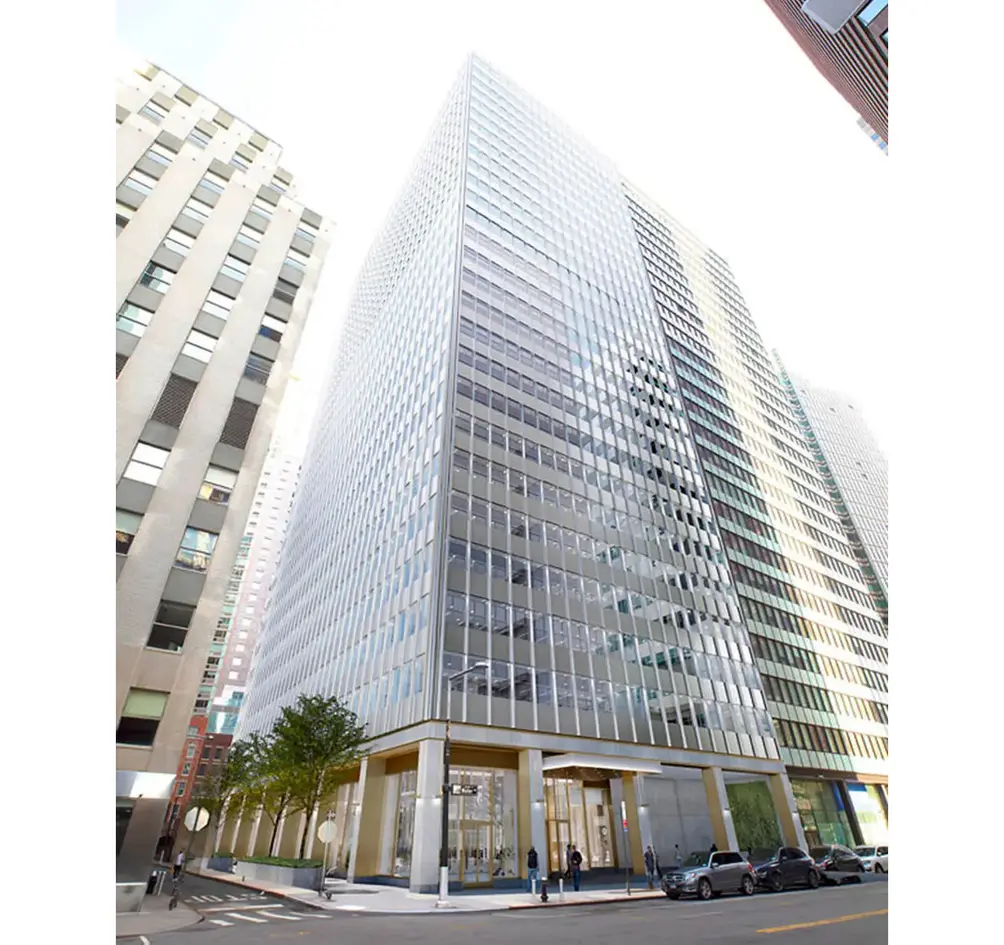 Pearl House exterior (Credit: Williams New York)
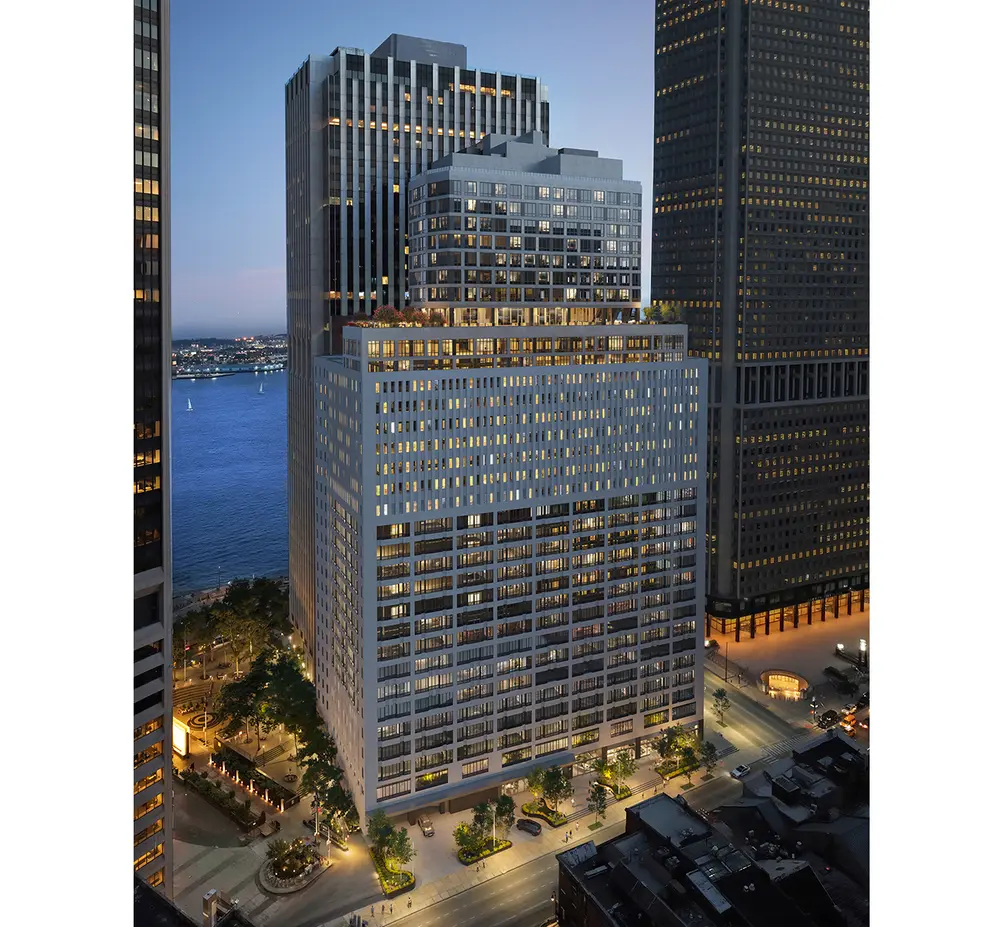 SoMA (Credit: Streetsense)
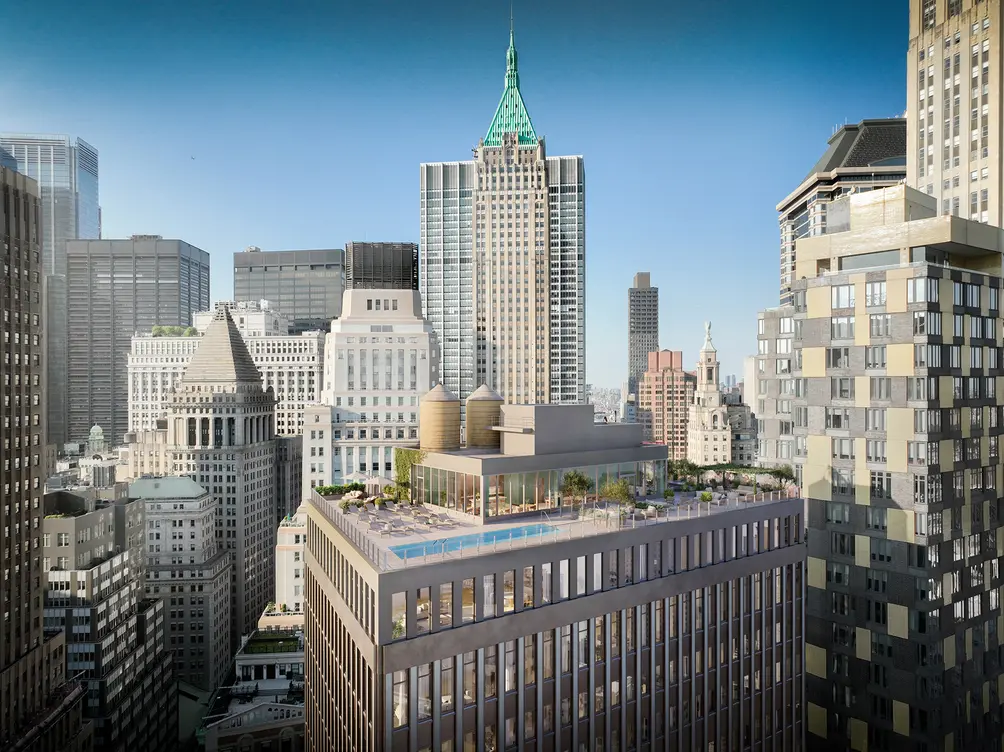 55 Broad Street (Rendering credit: Streetsense)
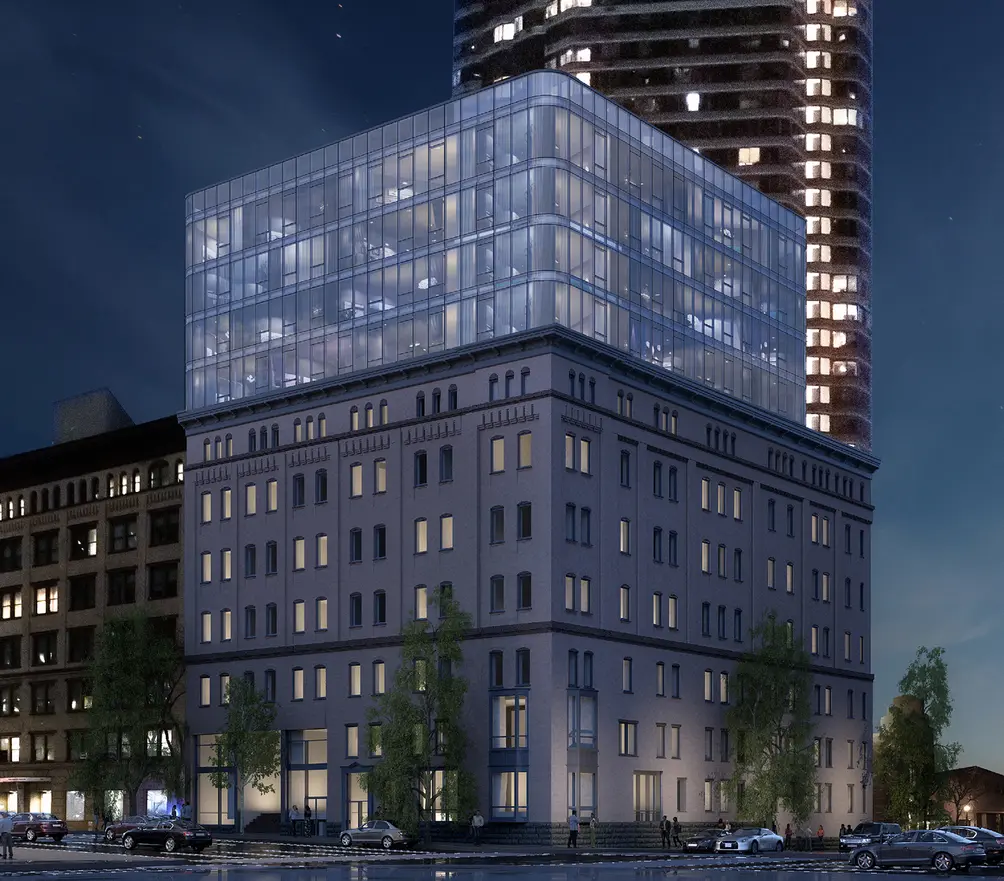 650 First Avenue (Lalezarian Properties)
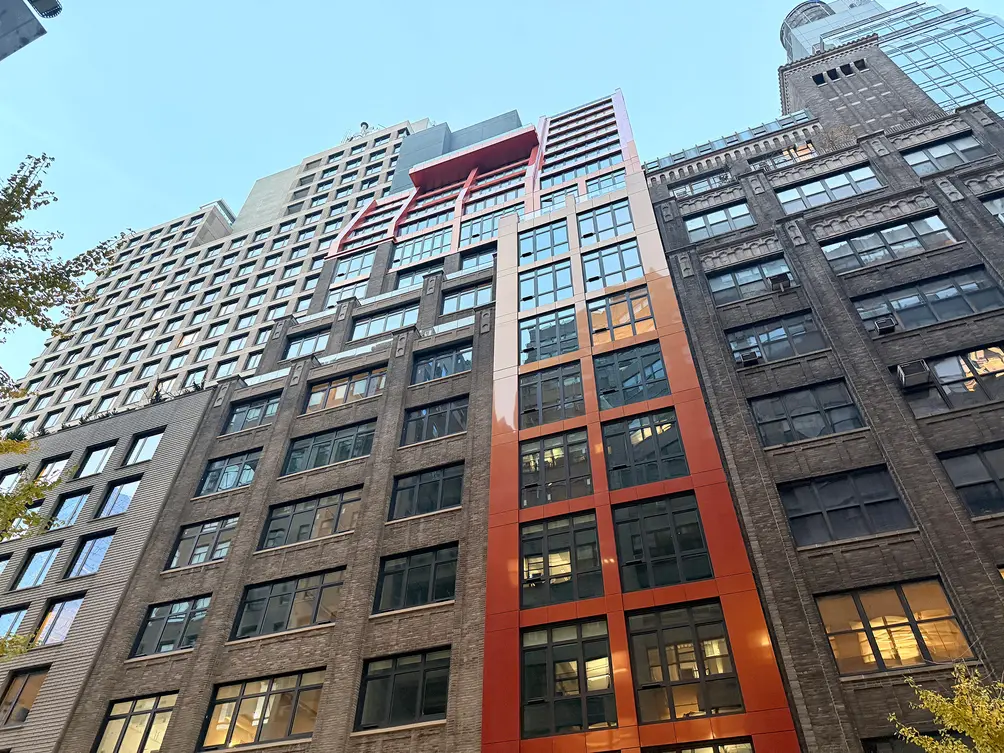 339-341 West 38th Street as of Fall 2024
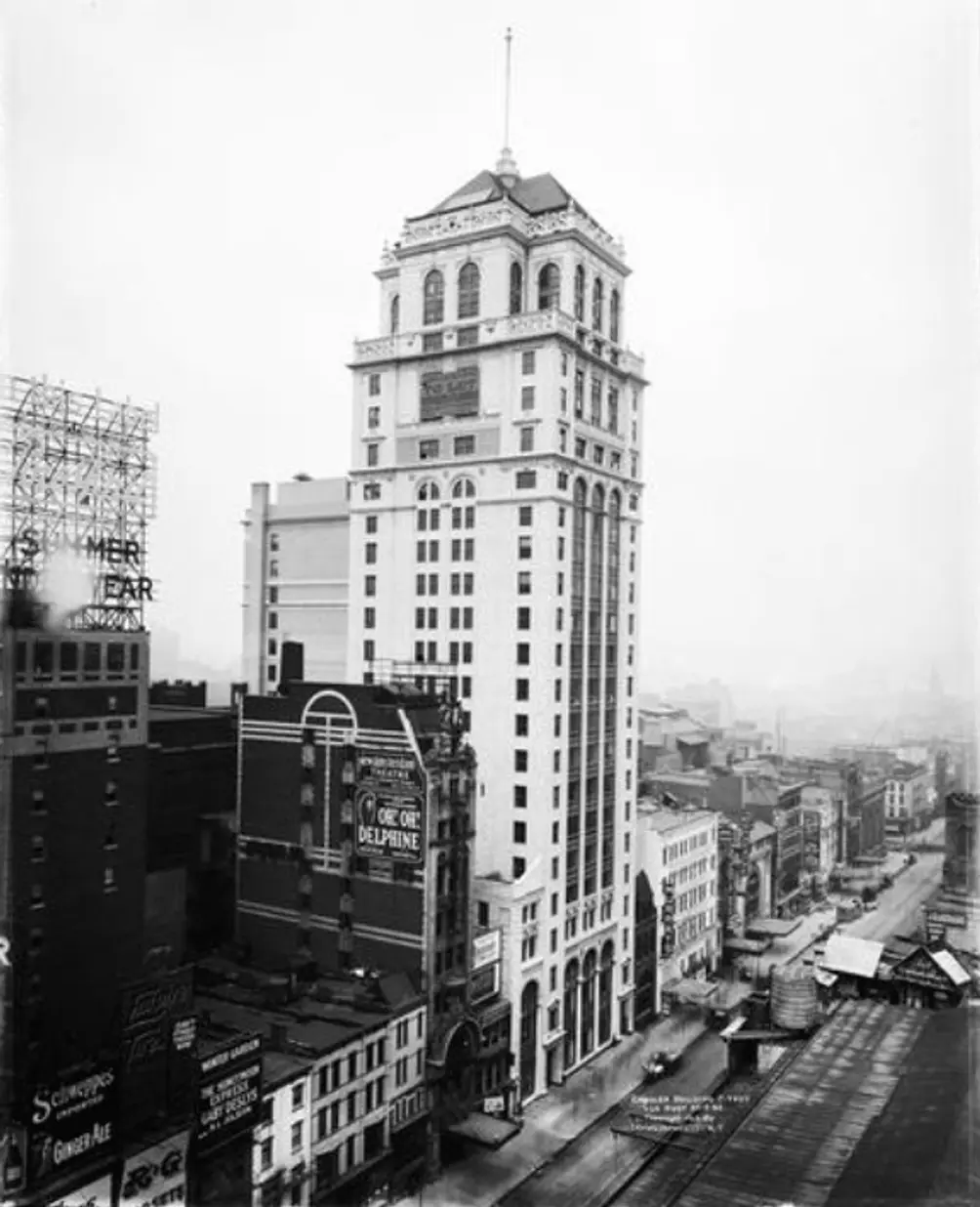 The Candler Building, 224 West 42nd Street, New York City (center), with the New Amsterdam Theatre. Signage on the theatre advertises Oh! Oh! Delphine, which played there from February 3 to May 3, 1913. (Wikimedia)
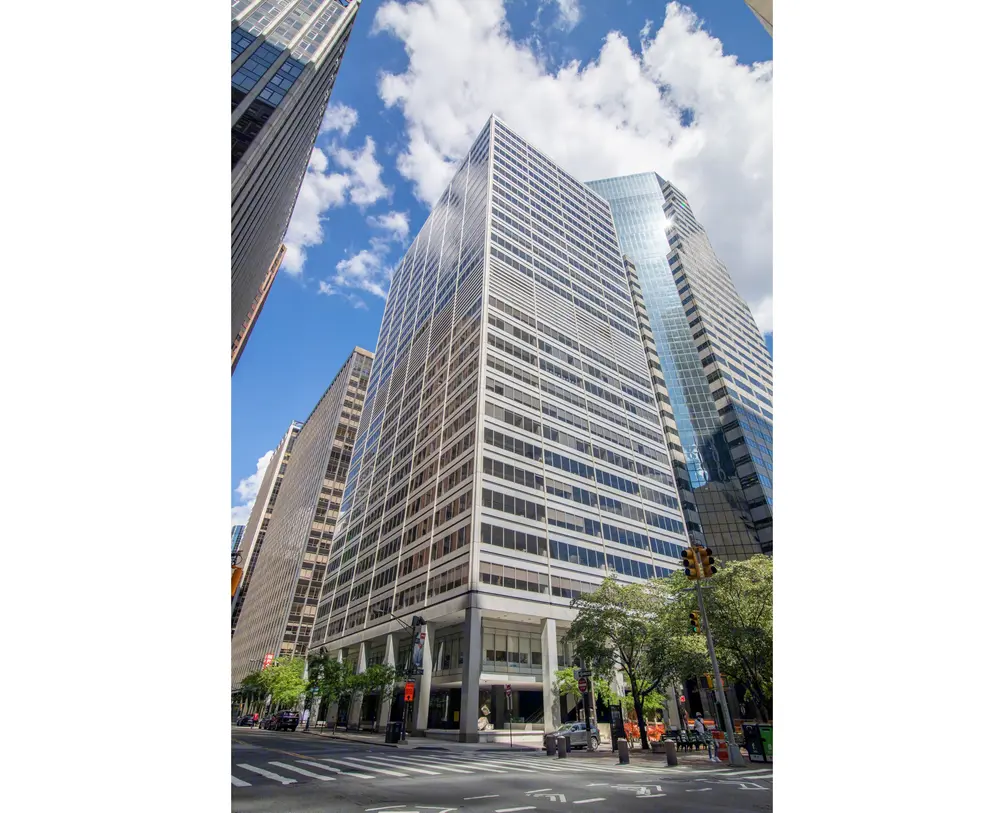 77 Water Street via VTS | https://marketplace.vts.com/building/77-water-street-new-york-ny
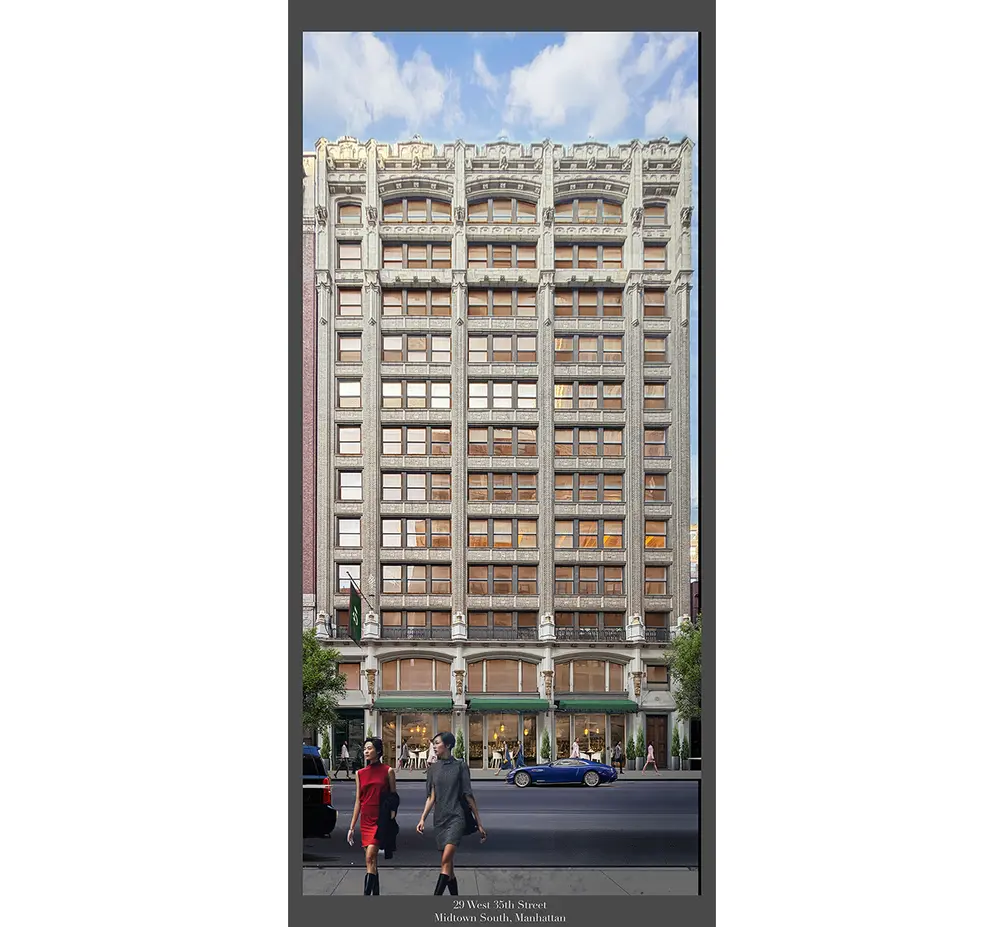 Rendering of 29 West 35th Street
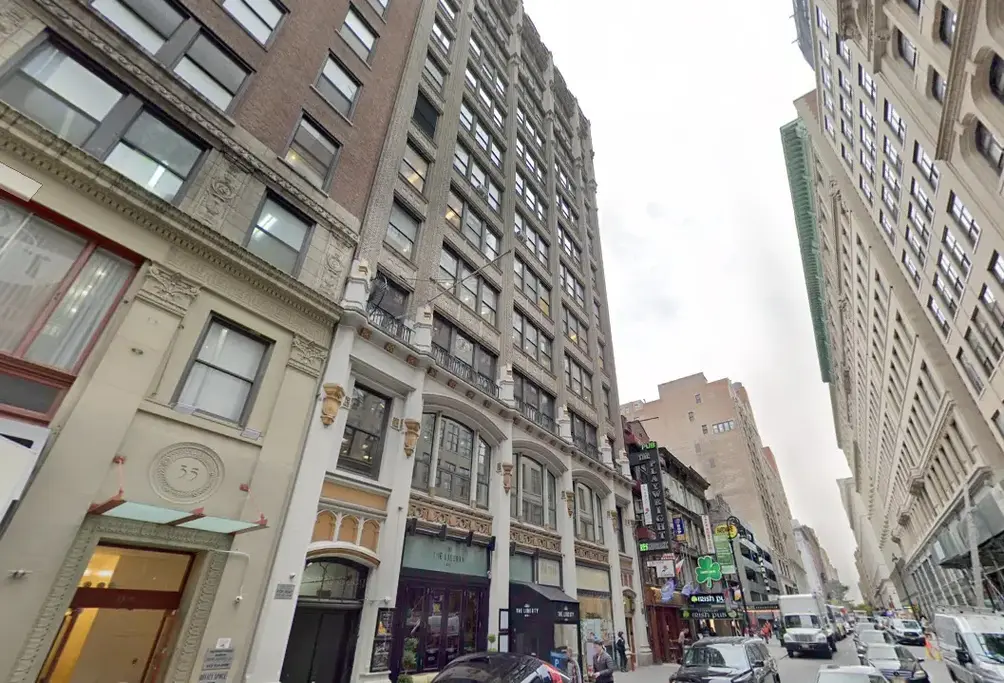 Google Streetview of 29 West 35th Street
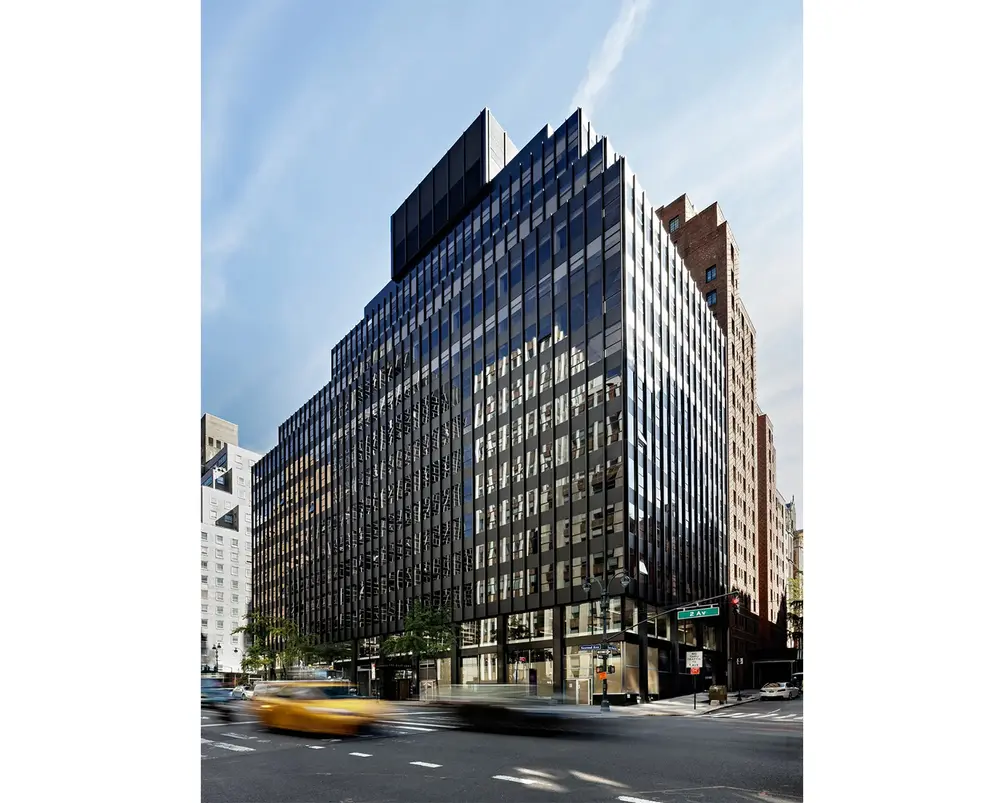 300 East 42nd Street (CityRealty)
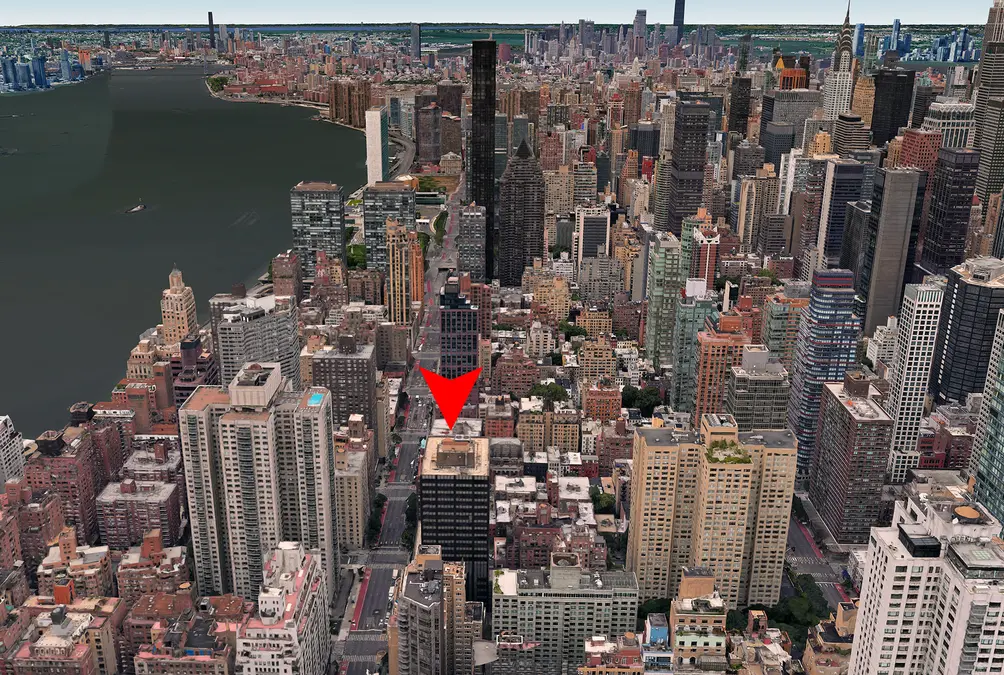 Google Earth view of 1005 First Avenue
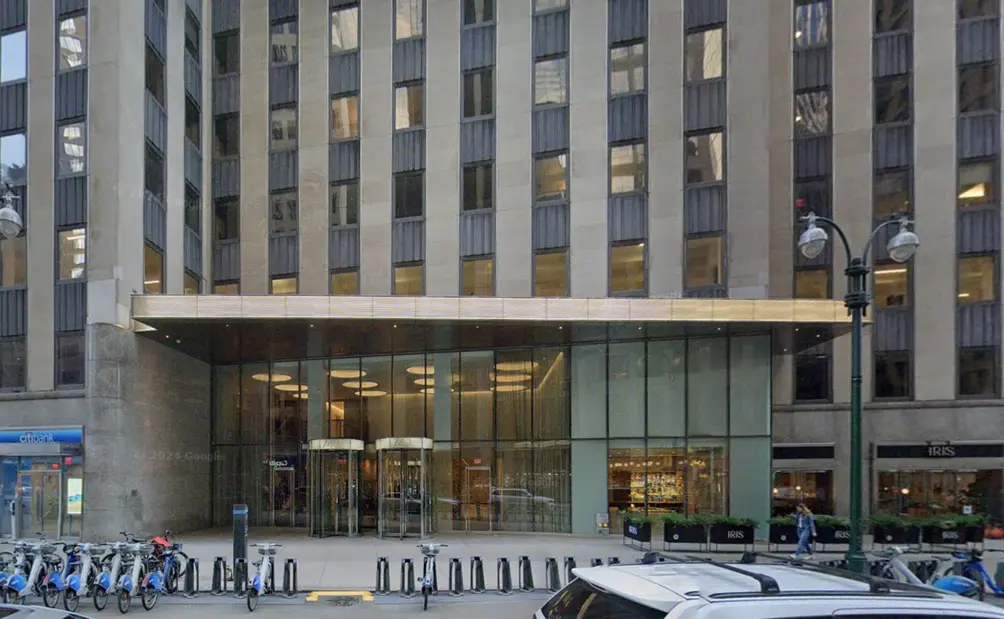 Google Streetview of 1730 Broadway
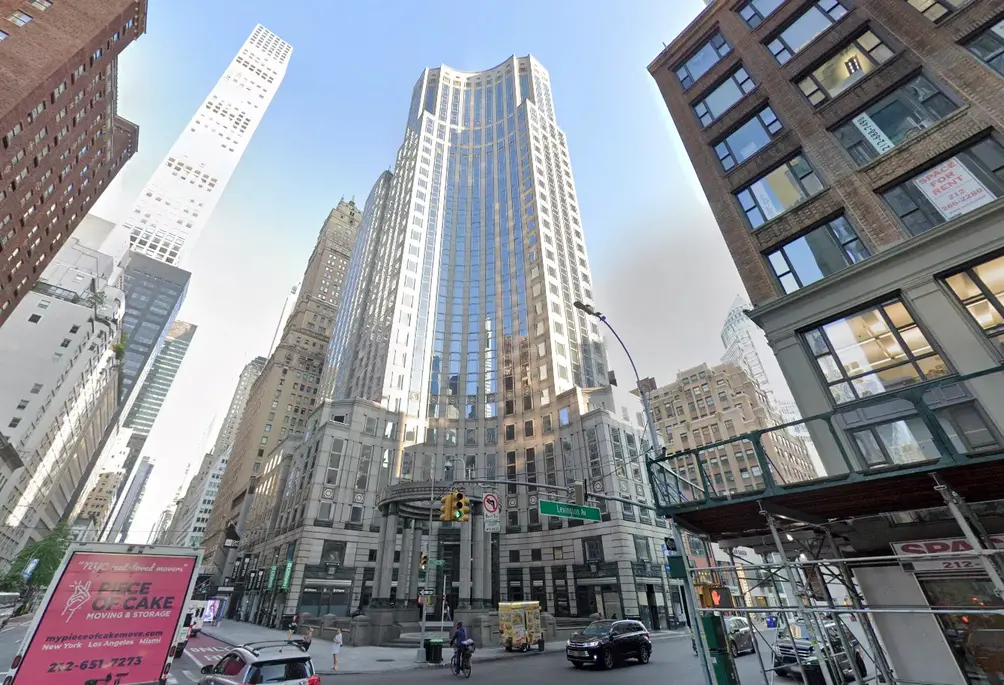 Tower 57 (TF Cornerstone)
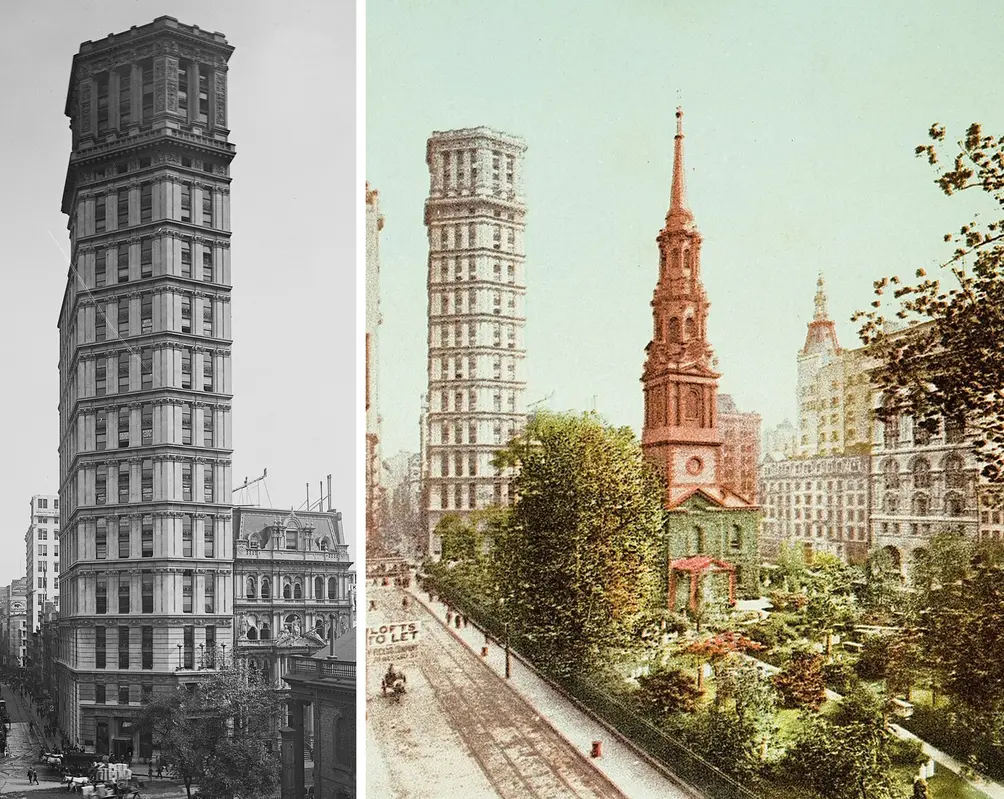
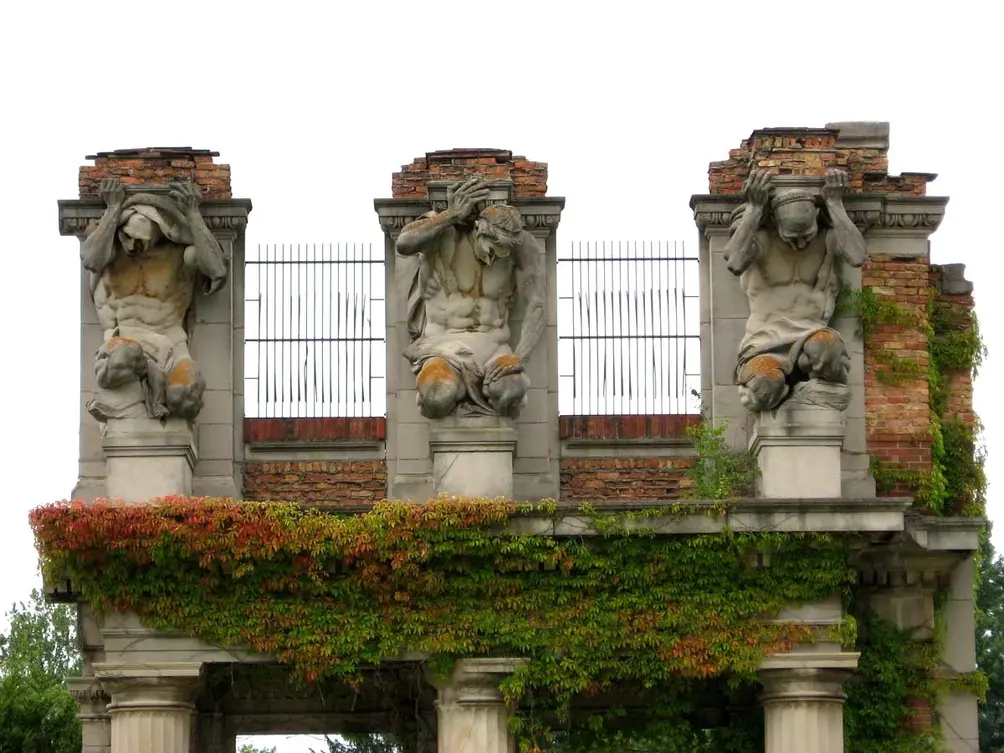 A section of the St. Paul Building's facade, preserved in Holliday Park, Indianapolis | By Karl Bitter - Original publication: 1890Immediate source: I Einar E Kvaran, aka carptrash, took the picture, Public Domain, https://commons.wikimedia.org/w/index.php?curid=68334653
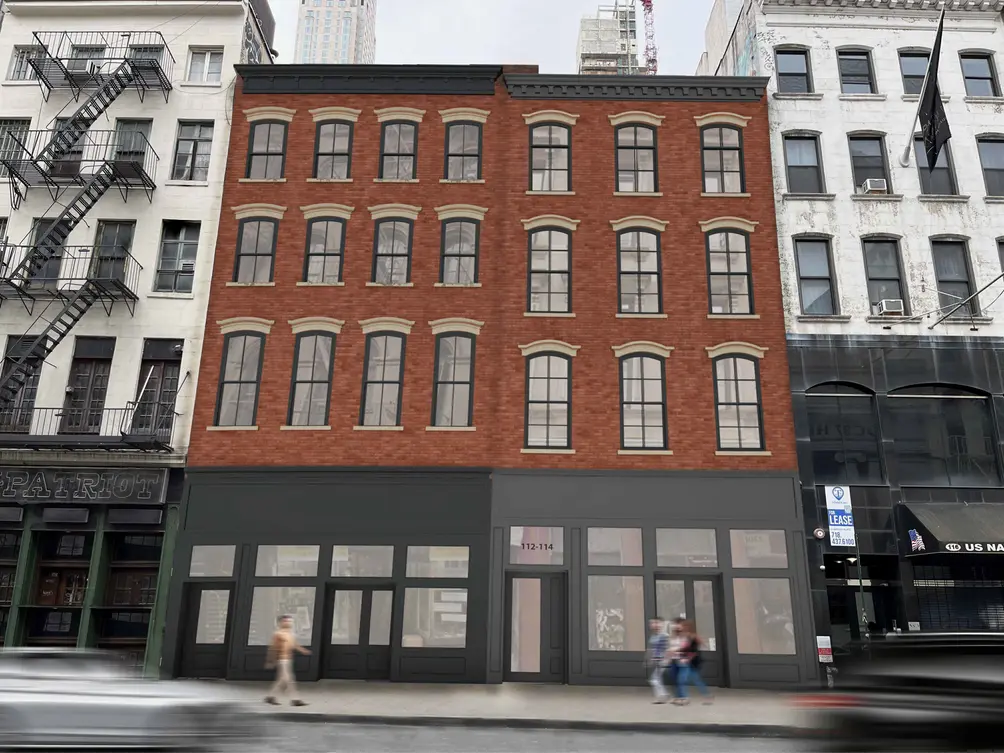 114 Chambers Street (SM Tam Architect for Landmarks Preservation Commission)
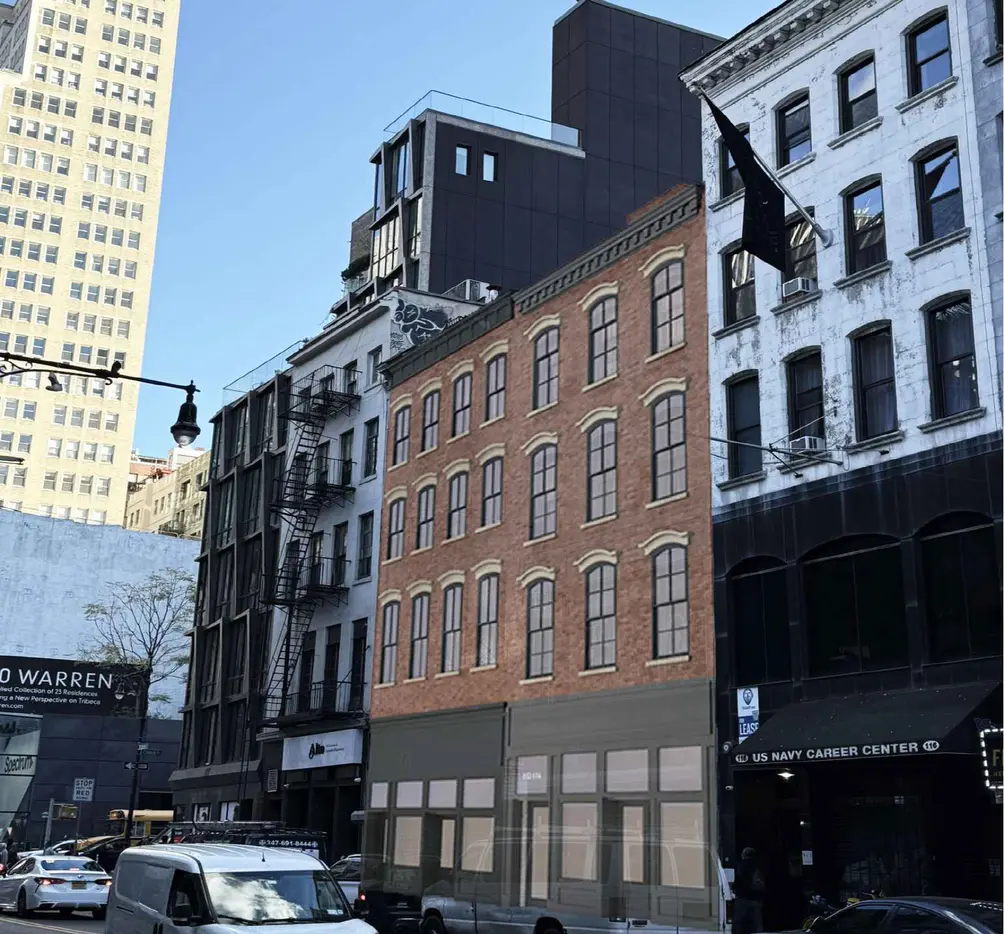
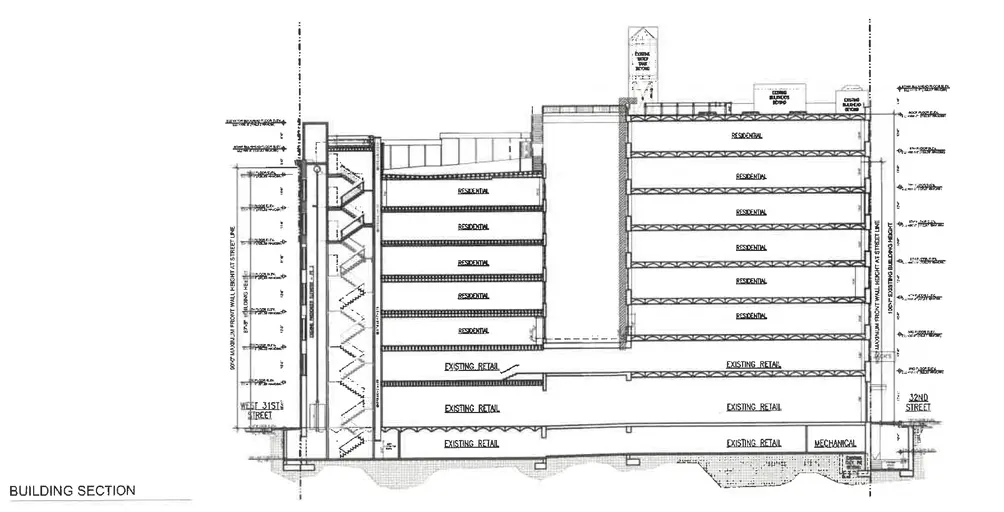 A section of the proposed project shows the lower levels will remain retail. Long live Jack’s 99 cent store! or, R.I.P.
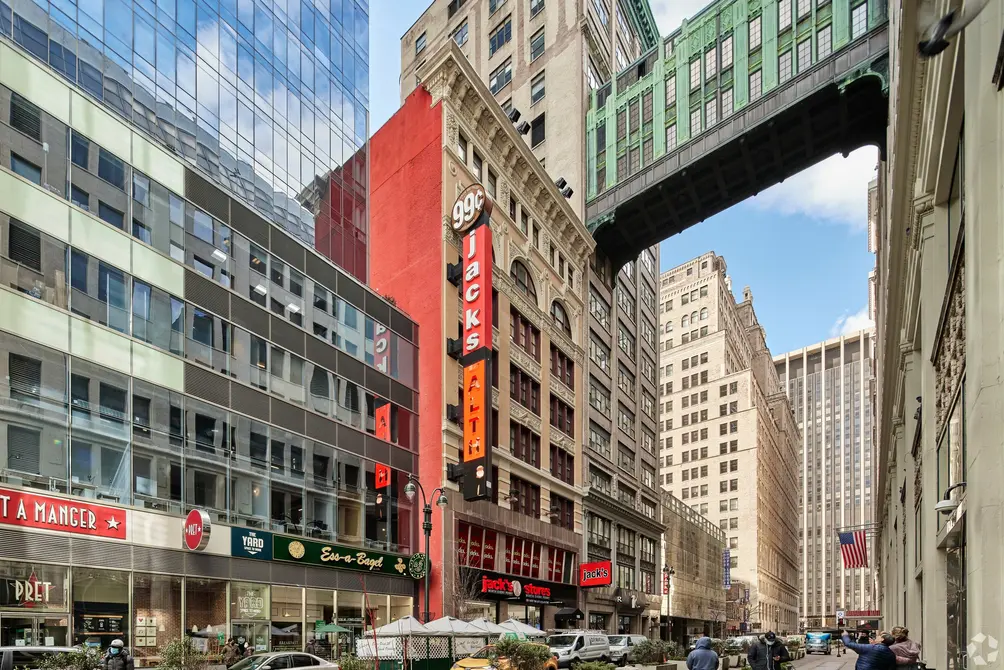 110 West 32nd Street (CoStar)
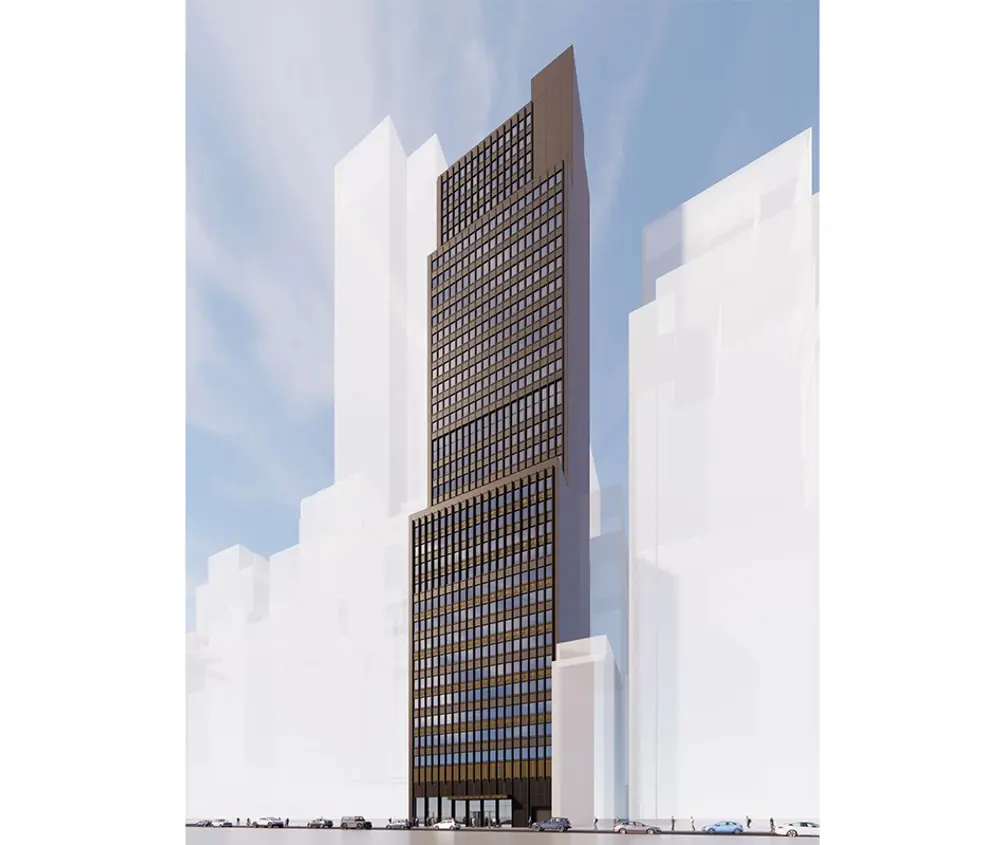
 111 Wall Street (STUDIOS Architecture / Wicona)
 Rendering of 6 East 43rd Street (Gensler)
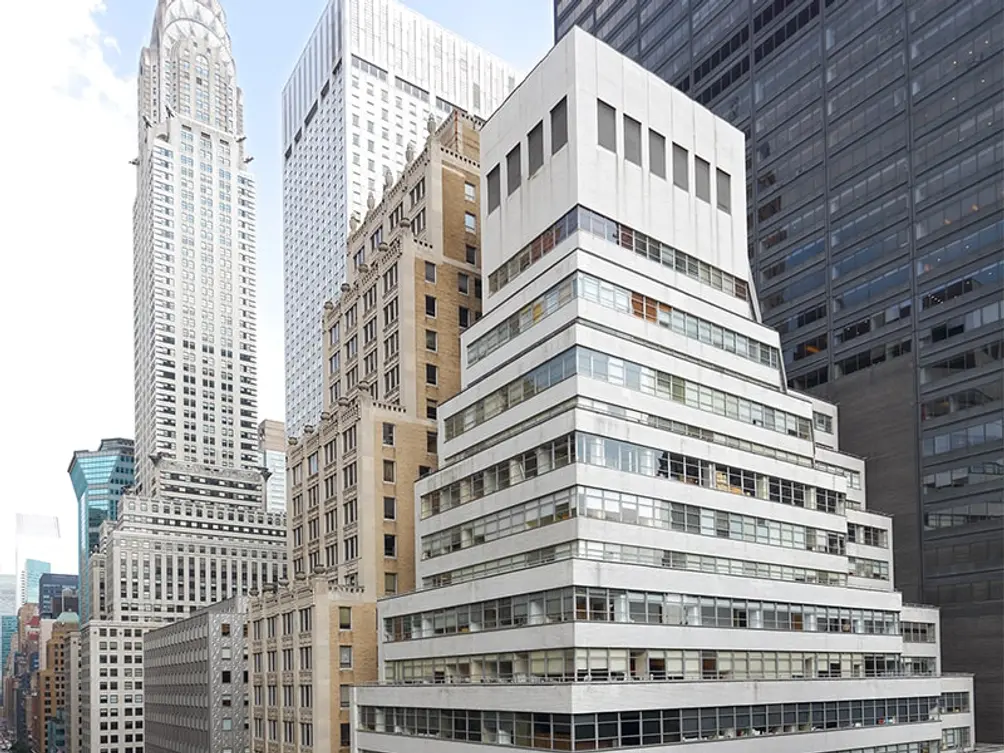 355 Lexington Avenue (Rudin Management)
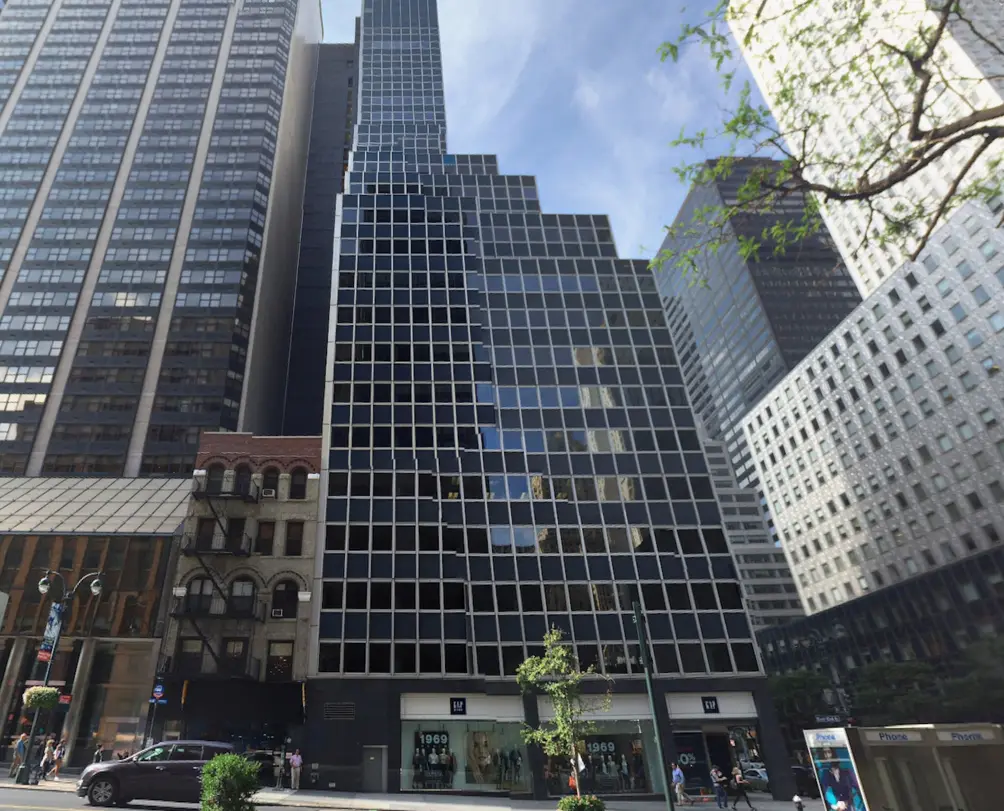 Google Streetview of 675 Third Avenue
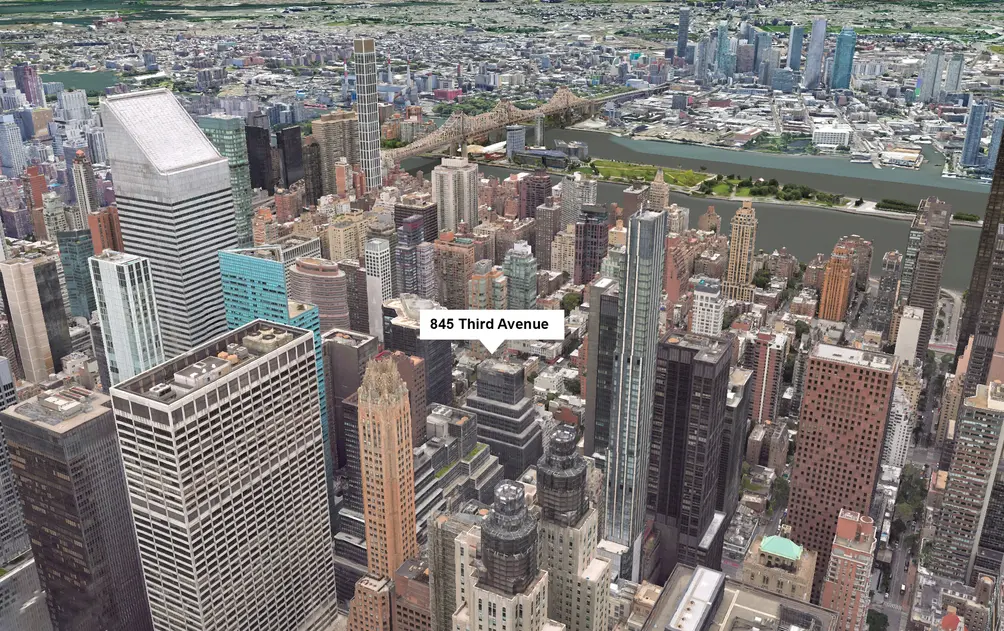 Google Earth aerial showing location of 845 Third Avenue
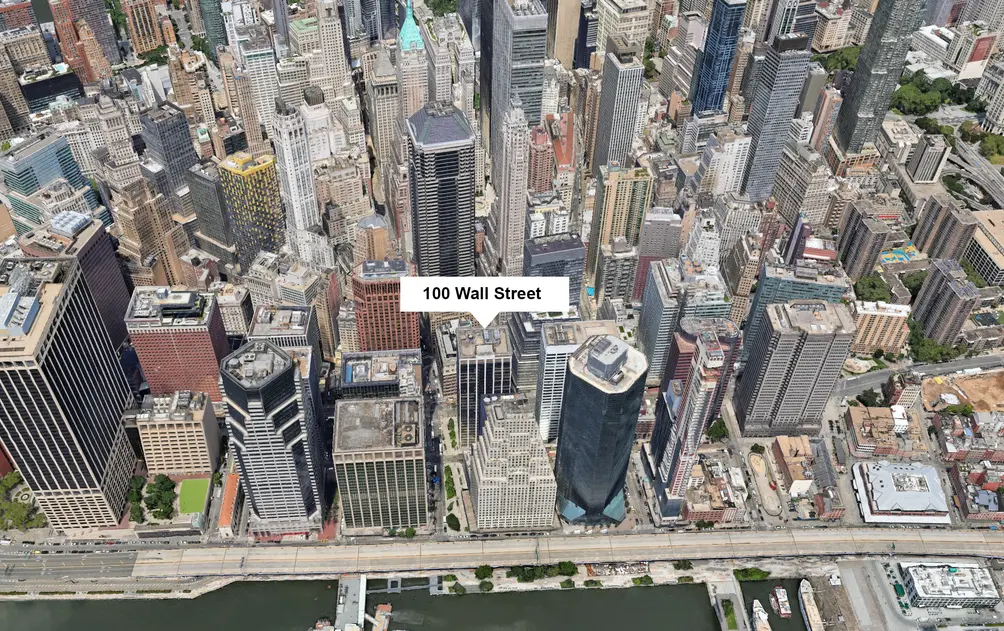 Google Earth image showing the location of 100 Wall Street
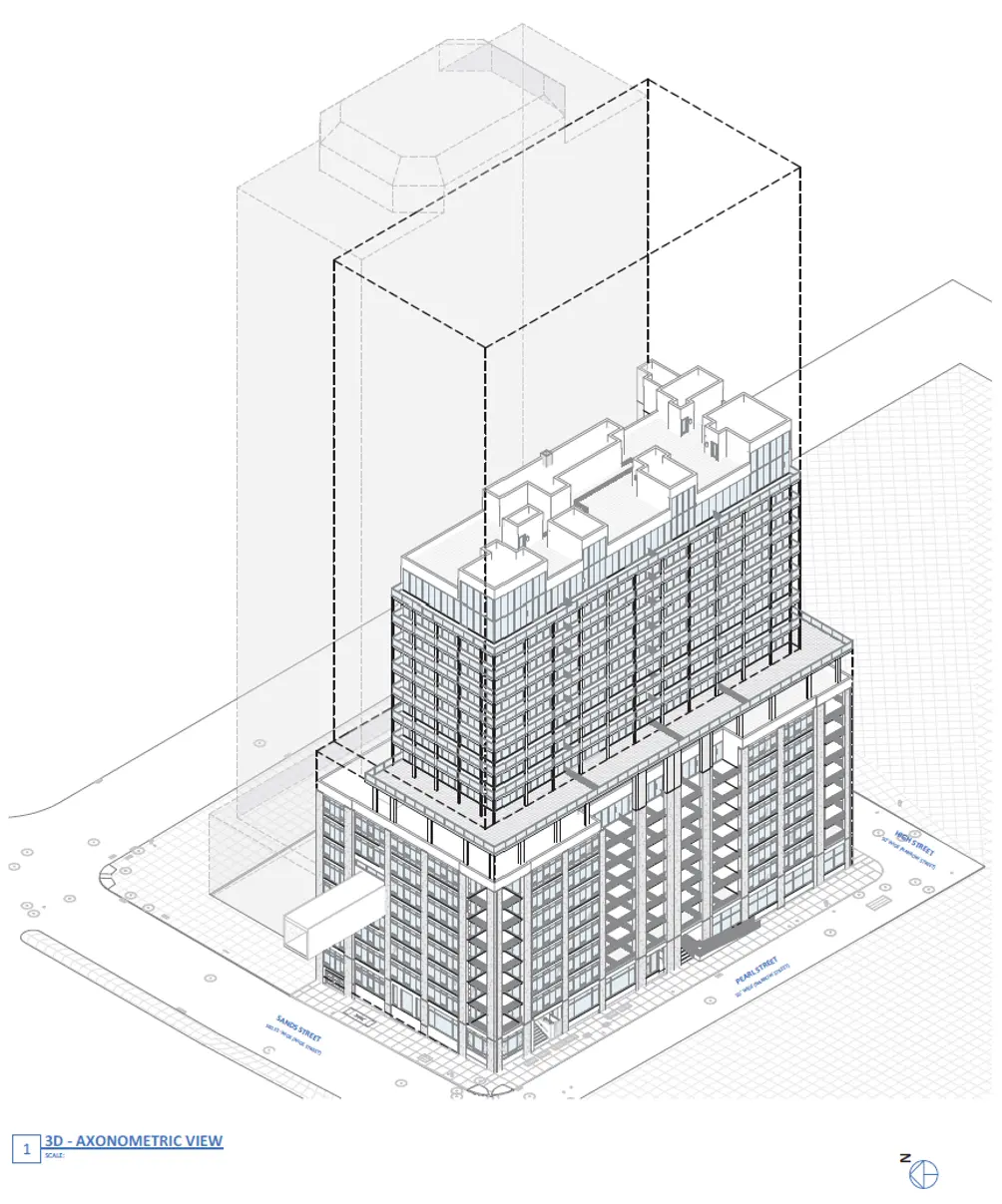 The residential conversion is being designed by the prolific S. Wieder Architect P.C.

 6sqft delivers the latest on real estate, architecture, and design, straight from New York City.
